For decades, the pickup truck has been a cornerstone of American automotive life—a symbol of practicality, power, and personal freedom. But in the late 1990s and early 2000s, one truck broke free from tradition and redefined what a pickup could be.
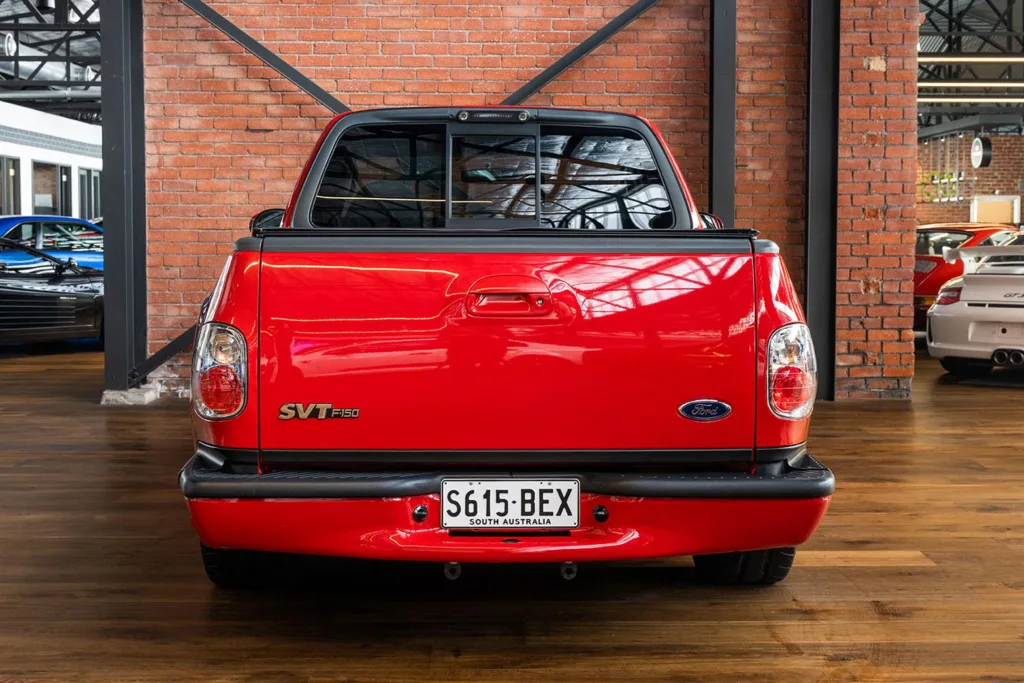
It wasn’t just a workhorse; it was a performance weapon with muscle car DNA. That truck was the Ford SVT F-150 Lightning, a creation that could tow a trailer one minute and outrun sports cars the next.
Developed by Ford’s Special Vehicle Team (SVT), the Lightning embodied the engineering spirit that led Ford to build vehicles like the Mustang Cobra and GT. It was SVT’s second-generation performance truck, built between 1999 and 2004, and it represented the boldest attempt yet to fuse utility with adrenaline.
Born from the Heart of SVT Engineering
The second-generation SVT Lightning was based on the tenth-generation Ford F-150 platform and produced at Ford’s Ontario Truck Plant in Canada. While it looked like a standard F-150 at first glance—simple body, clean lines, and functional shape—it was, beneath the surface, a completely reengineered machine designed for speed.
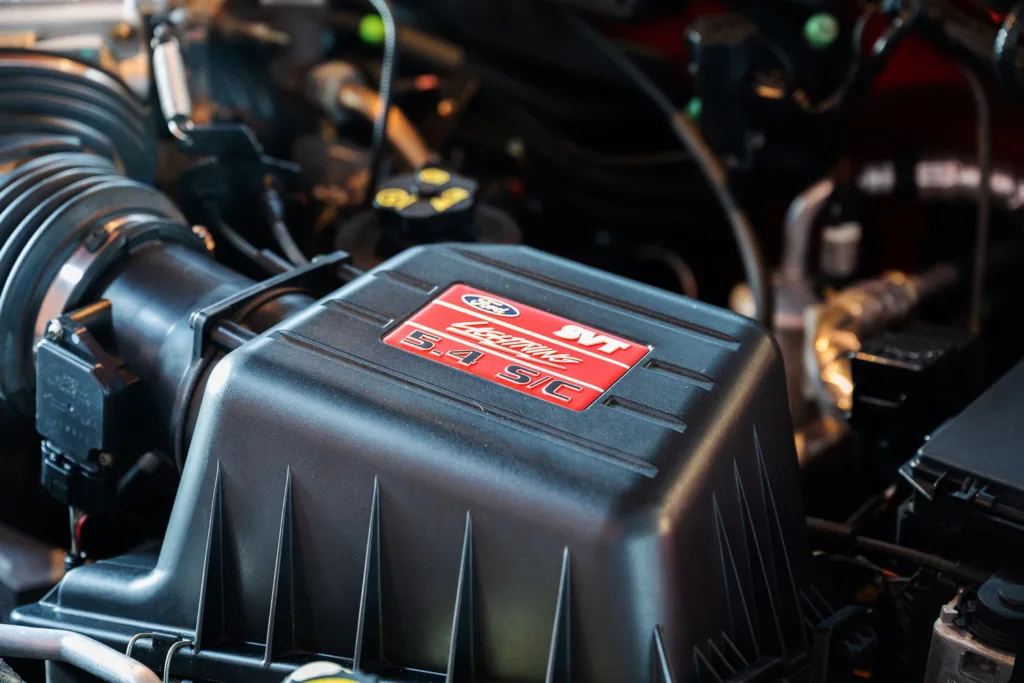
At the heart of the Lightning roared a 5.4-liter SOHC Triton V8, but this engine was far from stock. It featured an Eaton Roots-type supercharger paired with an air-to-water intercooler, effectively transforming the traditional F-150 power plant into a supercharged monster.
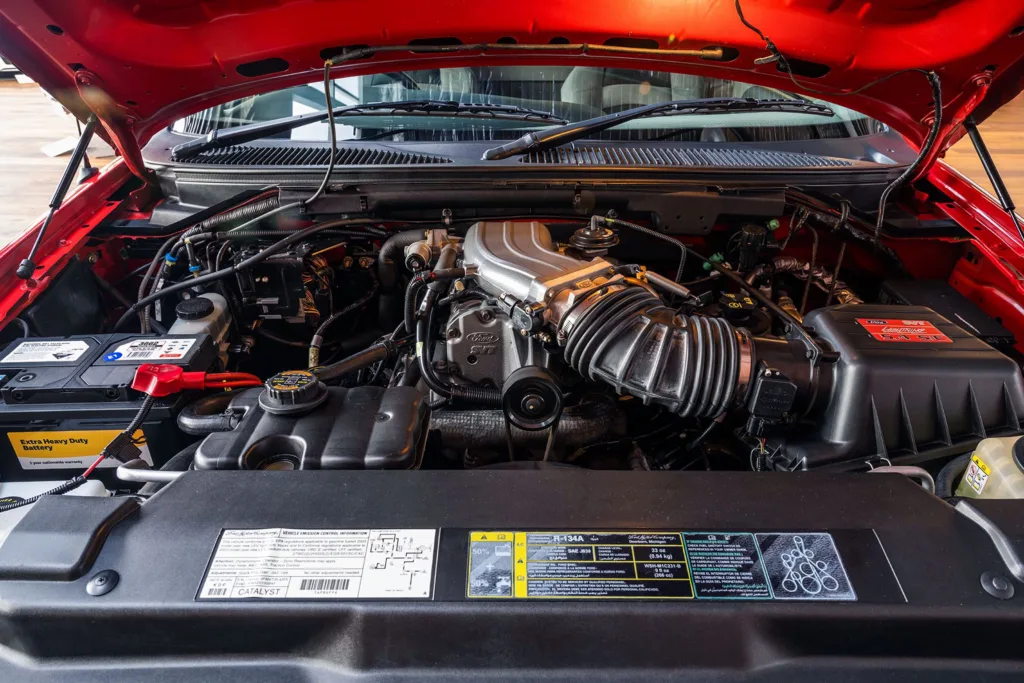
This setup delivered 360 horsepower at 4,750 rpm and 440 lb-ft (597 Nm) of torque at 3,250 rpm in the 2003 model year. That immense torque was channeled through a four-speed automatic transmission (4R100) connected to a 3.73:1 limited-slip rear differential, optimized for sheer launch performance.
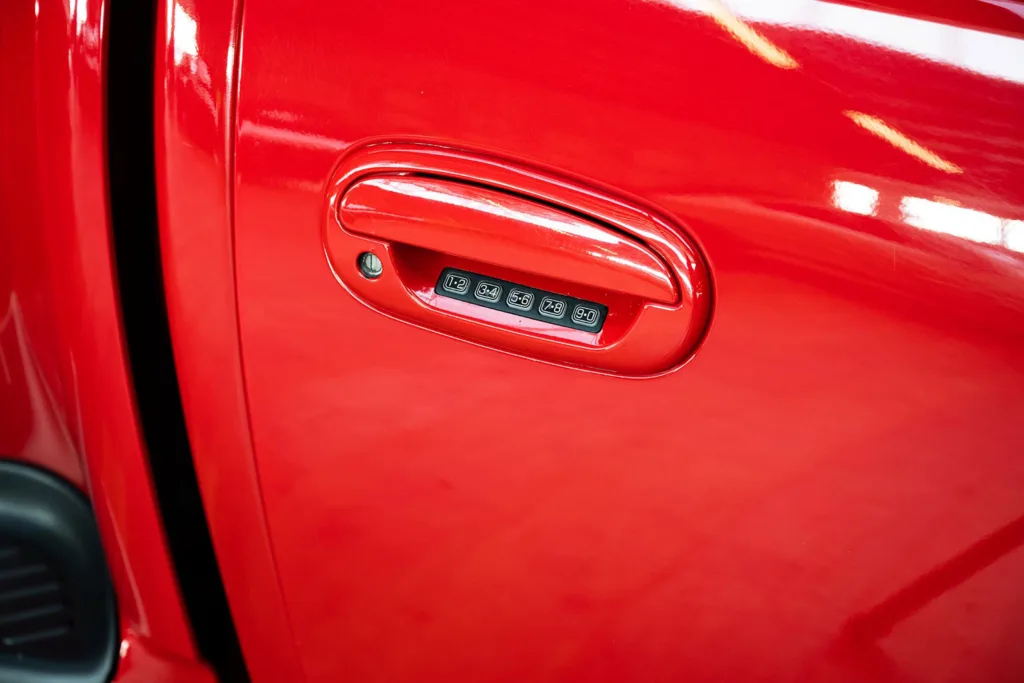
In 2004, Ford’s engineers refined the tuning and boosted output to 380 horsepower and 450 lb-ft of torque, making it one of the most powerful factory-built trucks in the world at the time.
Performance Numbers That Redefined Expectations
Despite its large frame and work-truck heritage, the SVT Lightning delivered acceleration figures that rivaled high-performance coupes of the era. Independent tests confirmed impressive results: 0–100 km/h (0–62 mph) in 5.2 seconds, 0–160 km/h in 13.6 seconds, and a quarter-mile sprint in just 13.7 seconds, crossing the line at nearly 160 km/h (100 mph). Top speed was electronically limited to 235 km/h (147 mph)—an astonishing figure for a vehicle shaped like a brick and weighing over 1,950 kg.
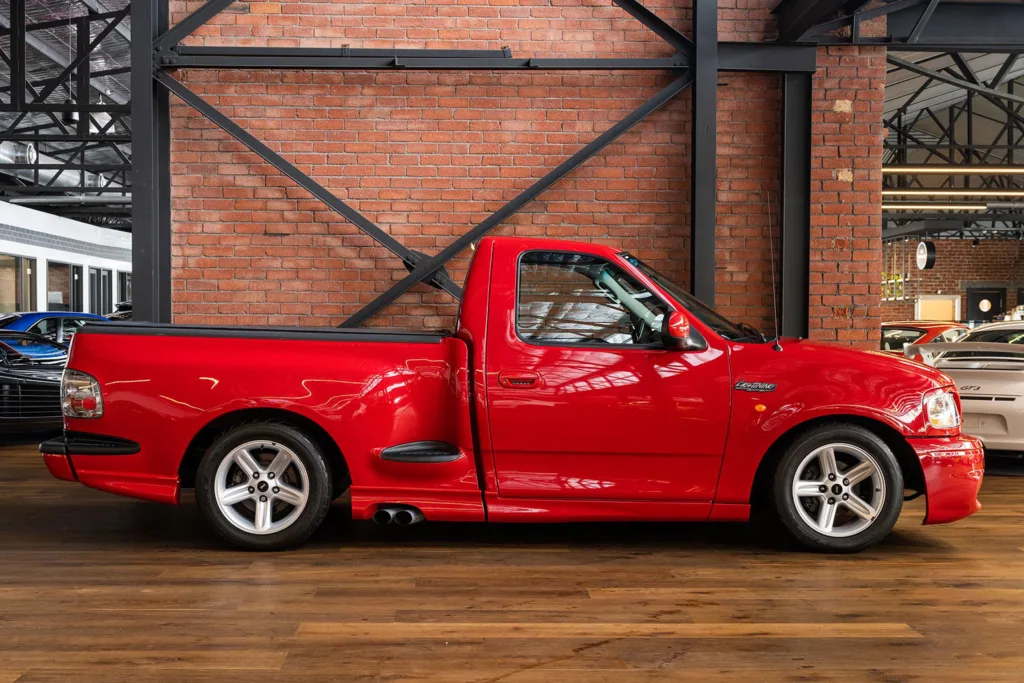
Even more surprising, the Lightning proved it could handle corners with poise. Thanks to its lowered sport suspension, heavy-duty Bilstein shocks, anti-roll bars, and Goodyear Eagle F1 tires mounted on 18-inch alloy wheels, it recorded lateral grip figures as high as 0.88 g on the skidpad—numbers unheard of in the pickup segment at the time.
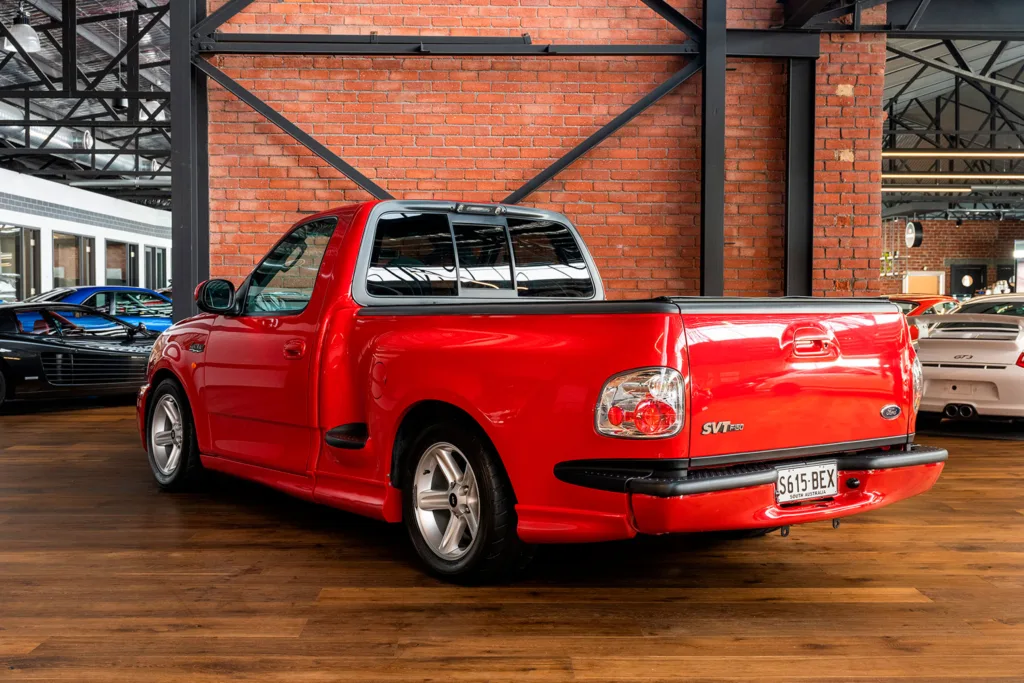
This combination of straight-line acceleration and real handling skill established the Lightning as more than a novelty—it was a legitimate performance truck capable of embarrassing sports cars on the street and the drag strip alike.
Built by SVT for Real Drivers
Every SVT Lightning was hand-finished and tested by Ford’s performance division, which meticulously re-engineered core systems to match its high-output nature. The frame was reinforced, the braking system upgraded with vented discs, and the ride height reduced by more than an inch compared to the regular F-150.
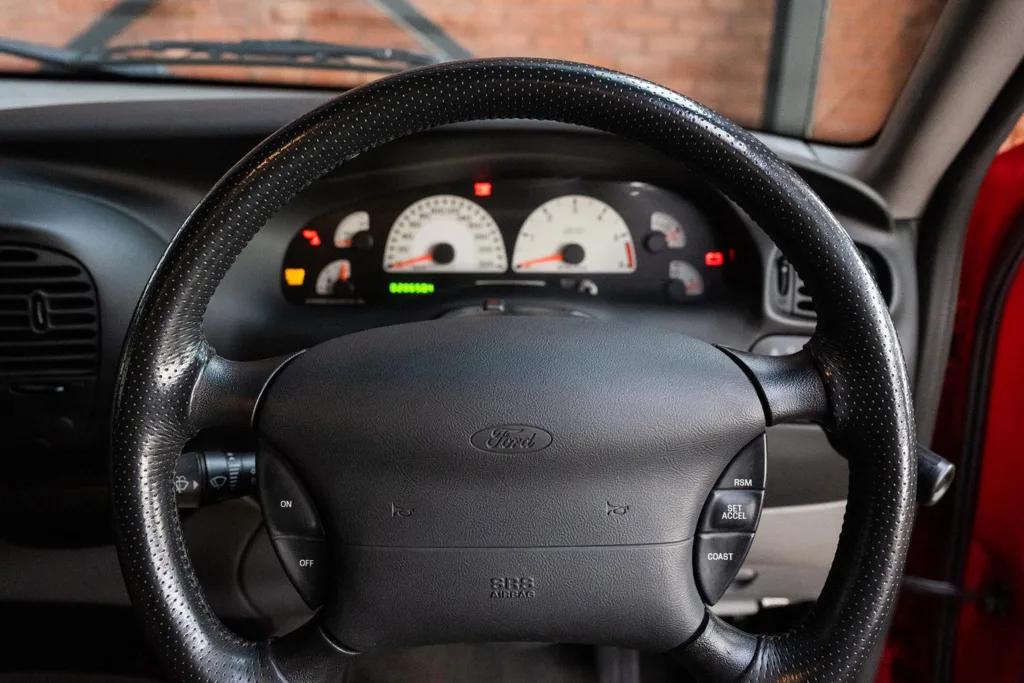
The steering rack was specially calibrated for quicker response, providing precise feedback through the thick-rimmed leather steering wheel.
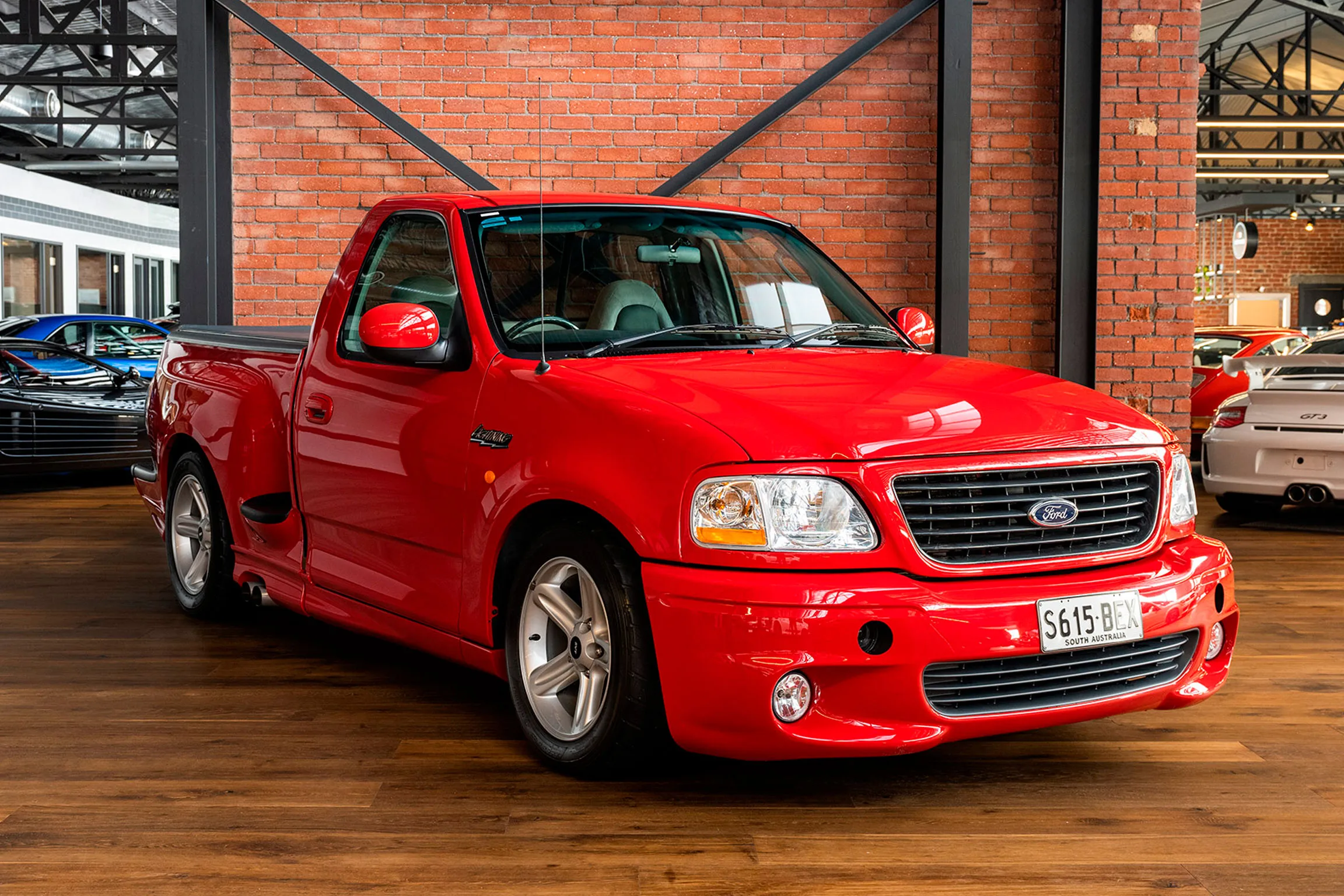
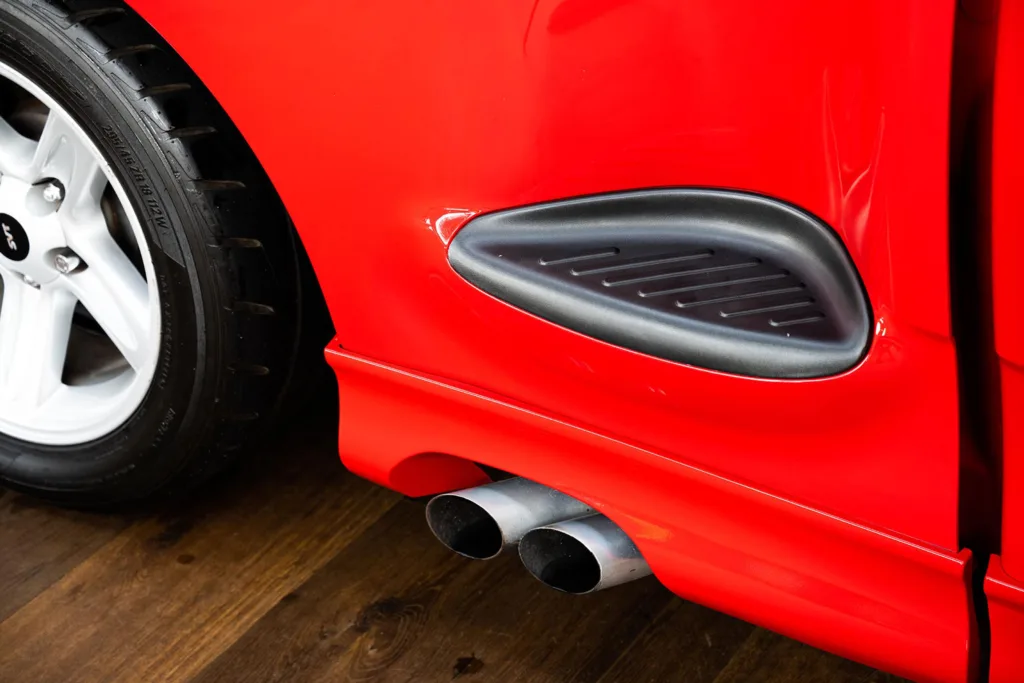
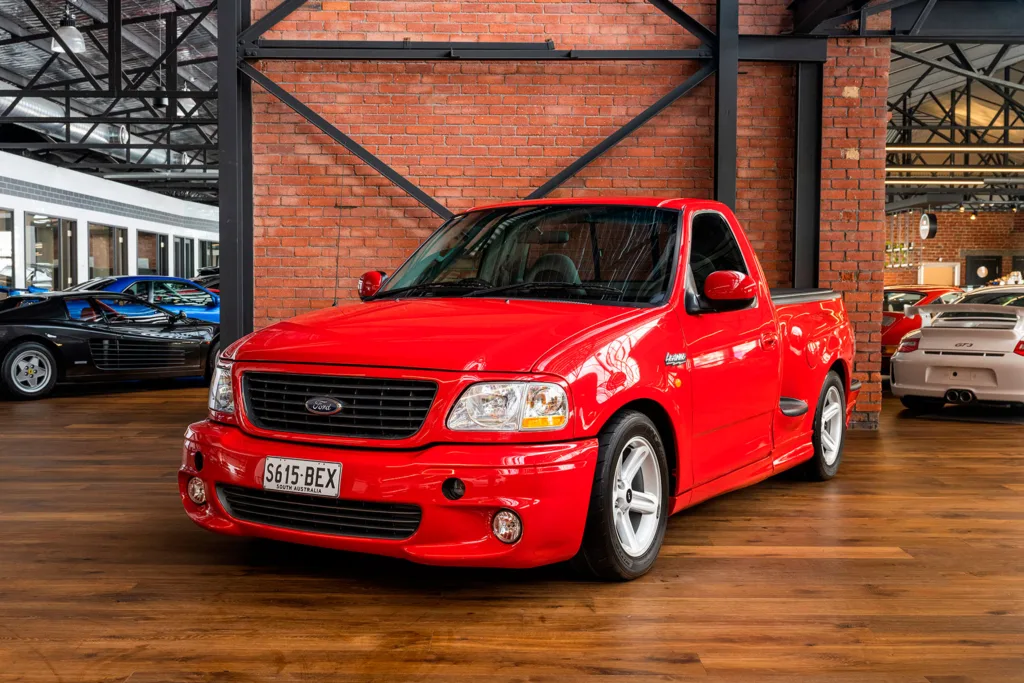
Externally, the Lightning carried a subtle aggression. Distinguishing features included a body-color grille, lower front air dam, integrated fog lights, and unique side exhaust outlets tucked strategically under the lower fenders. Despite its imposing presence, it lacked the flamboyant styling of typical performance machines, allowing drivers to surprise unassuming rivals at stoplights.
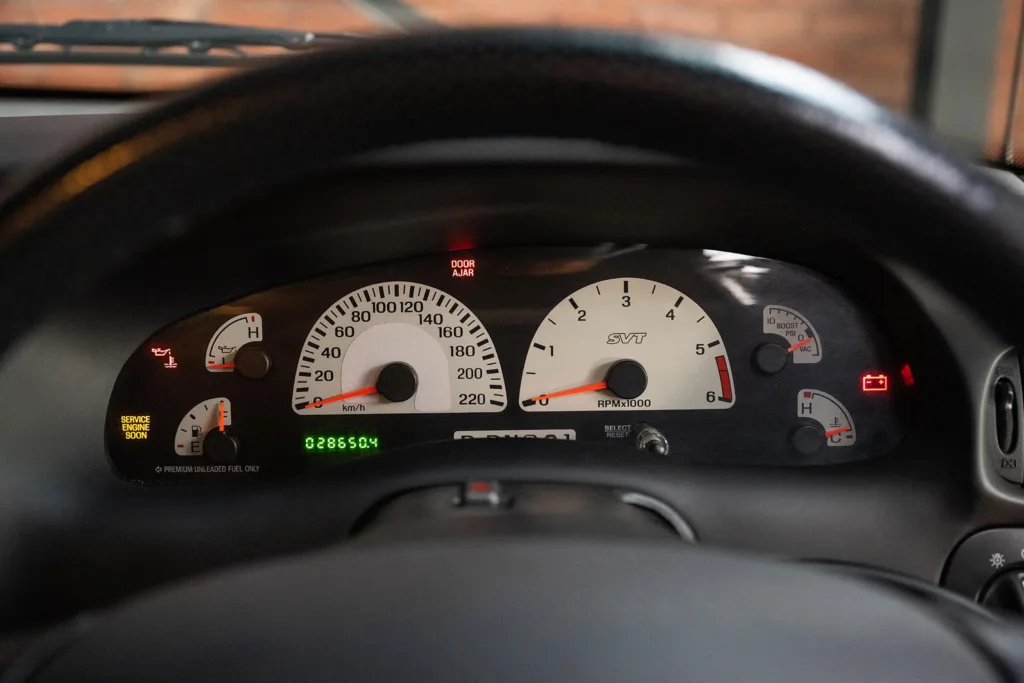
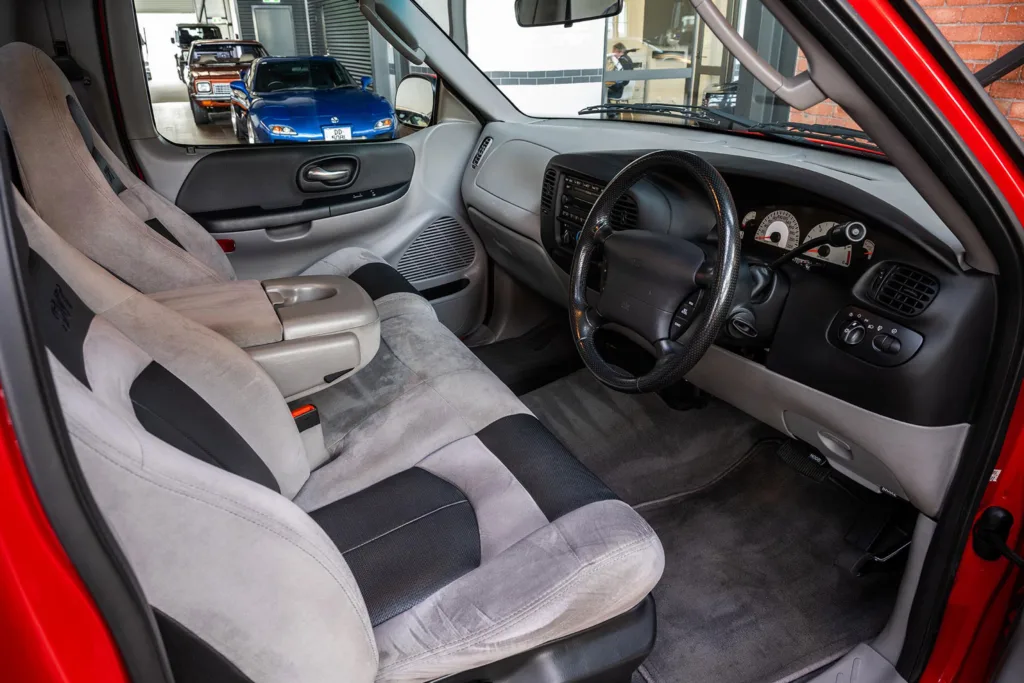
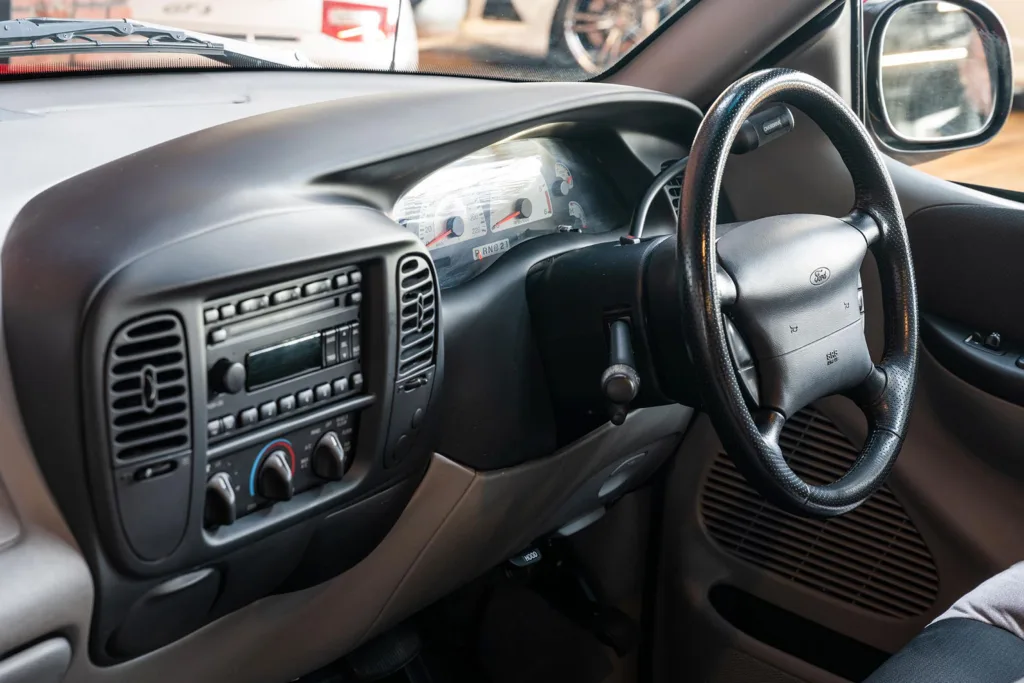
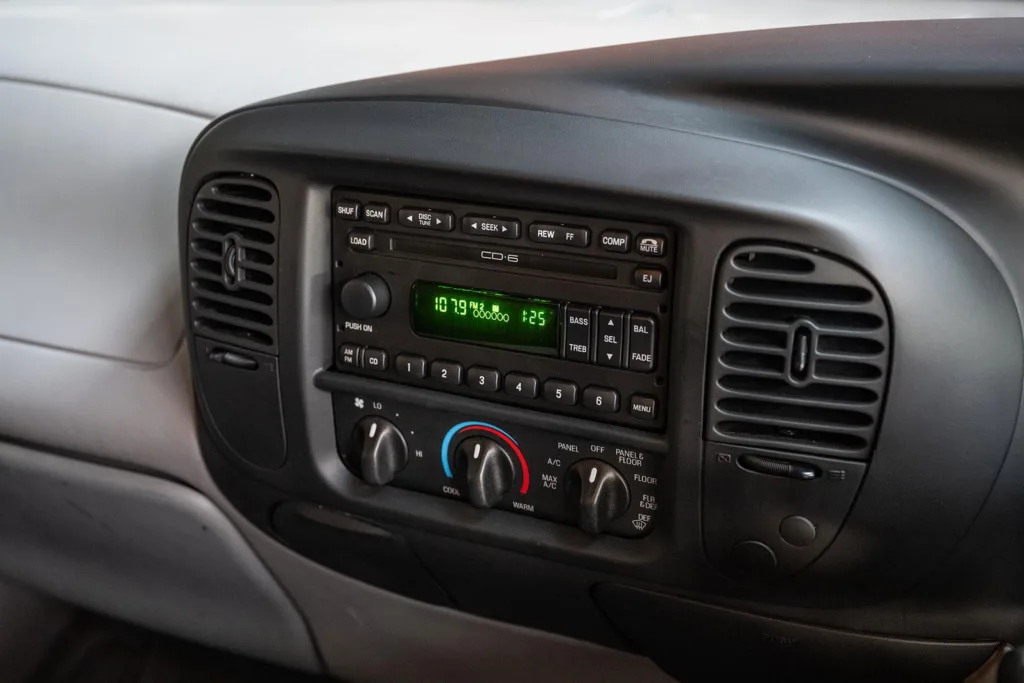
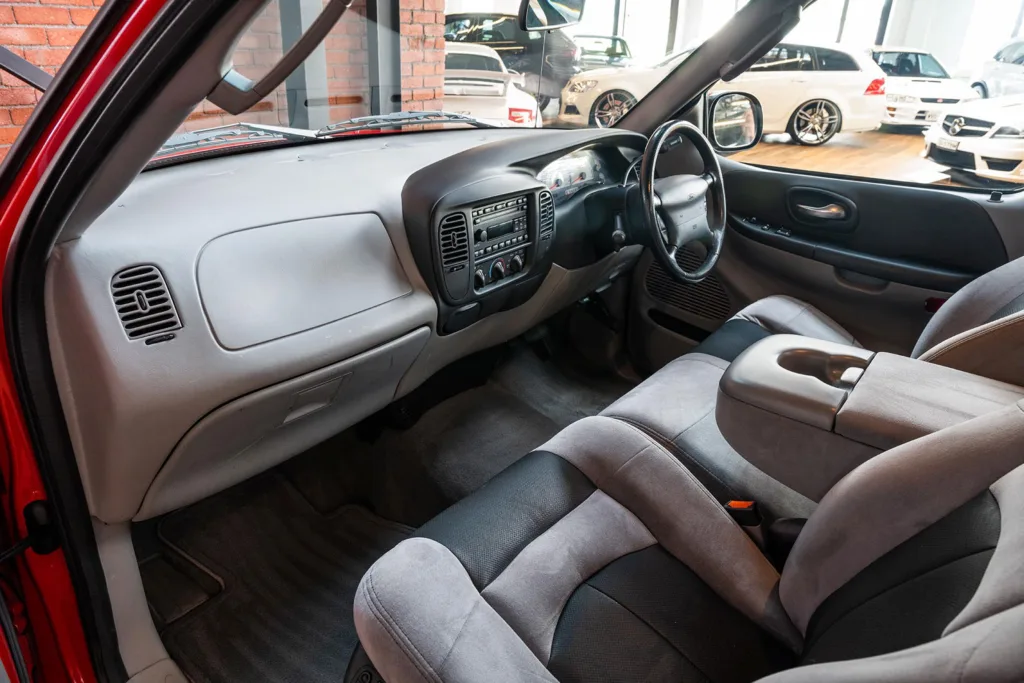
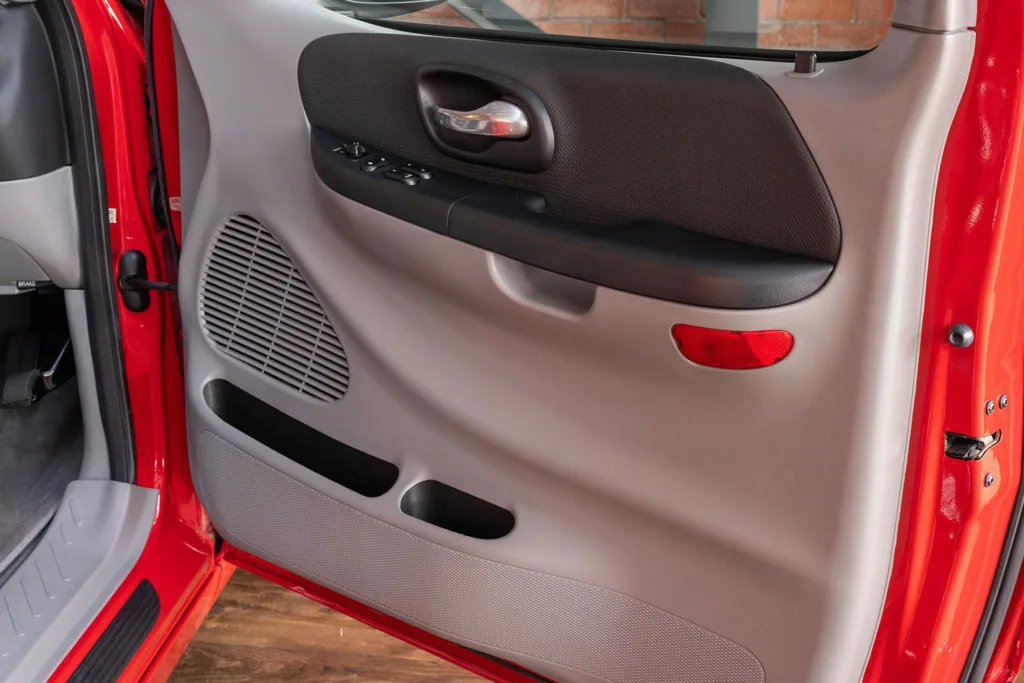
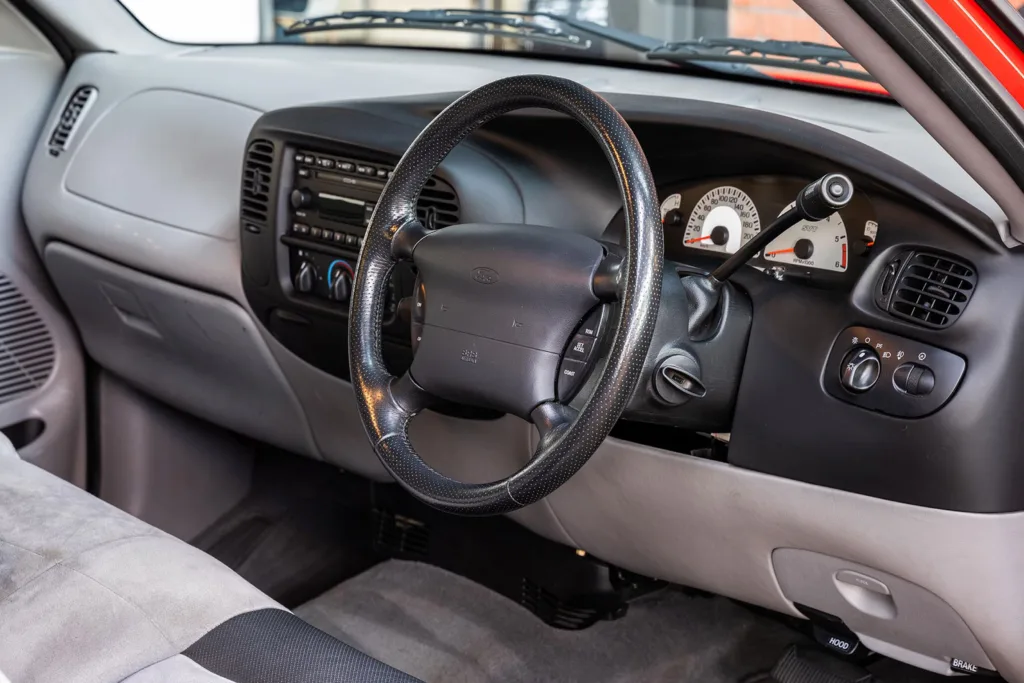
Inside, the truck maintained a familiar F-150 layout, but SVT added sport bucket seats with supportive bolsters, white-faced gauges, and embossed Lightning logos. The cabin struck the perfect balance between utility and performance ambiance, with a focus on driver engagement rather than luxury.
Everyday Use Meets Adrenaline
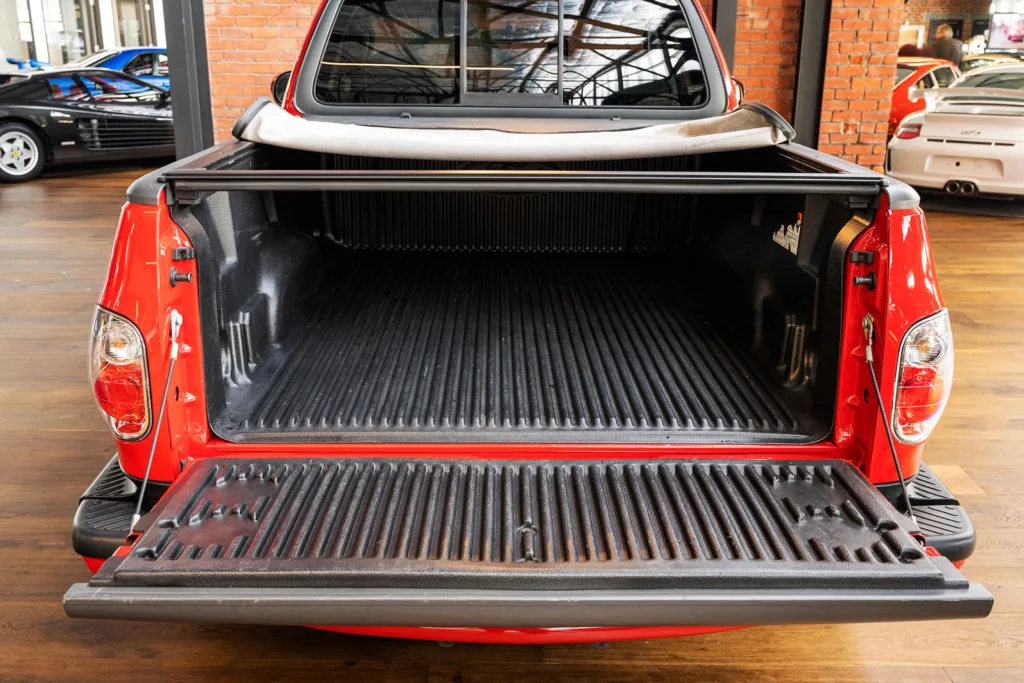
What made the SVT Lightning especially remarkable was its dual personality. Owners could commute comfortably, haul loads like any other truck, and still unleash blistering acceleration at will. Its payload capacity of around 500 kg (1,100 lbs) and towing capacity of over 2,200 kg (5,000 lbs) meant it retained the essential utility that defined the F-150 badge.
Yet, behind the wheel, the supercharged whine from the Eaton blower, combined with the deep-throated V8 exhaust note, created one of the most gratifying driving experiences ever offered in a pickup. For enthusiasts, this balance of brute strength and daily usability made the Lightning irresistible.
Legacy of the American Supertruck
By the end of its production run in 2004, the SVT Lightning had cemented itself as a trailblazer—proving that pickup trucks could deliver genuine performance without sacrificing practicality.
Its success also laid the groundwork for future high-performance trucks, including the F-150 Raptor and Ram SRT-10, which would take the idea even further. Today, the 2003 Ford SVT F-150 Lightning remains a cult classic among collectors and enthusiasts.
Its combination of affordability (under $40,000 new), durability, and astonishing speed earned it a status few vehicles achieve: the world’s first modern muscle truck. It stands as a reminder that Ford’s SVT division didn’t just build cars—they built legends.