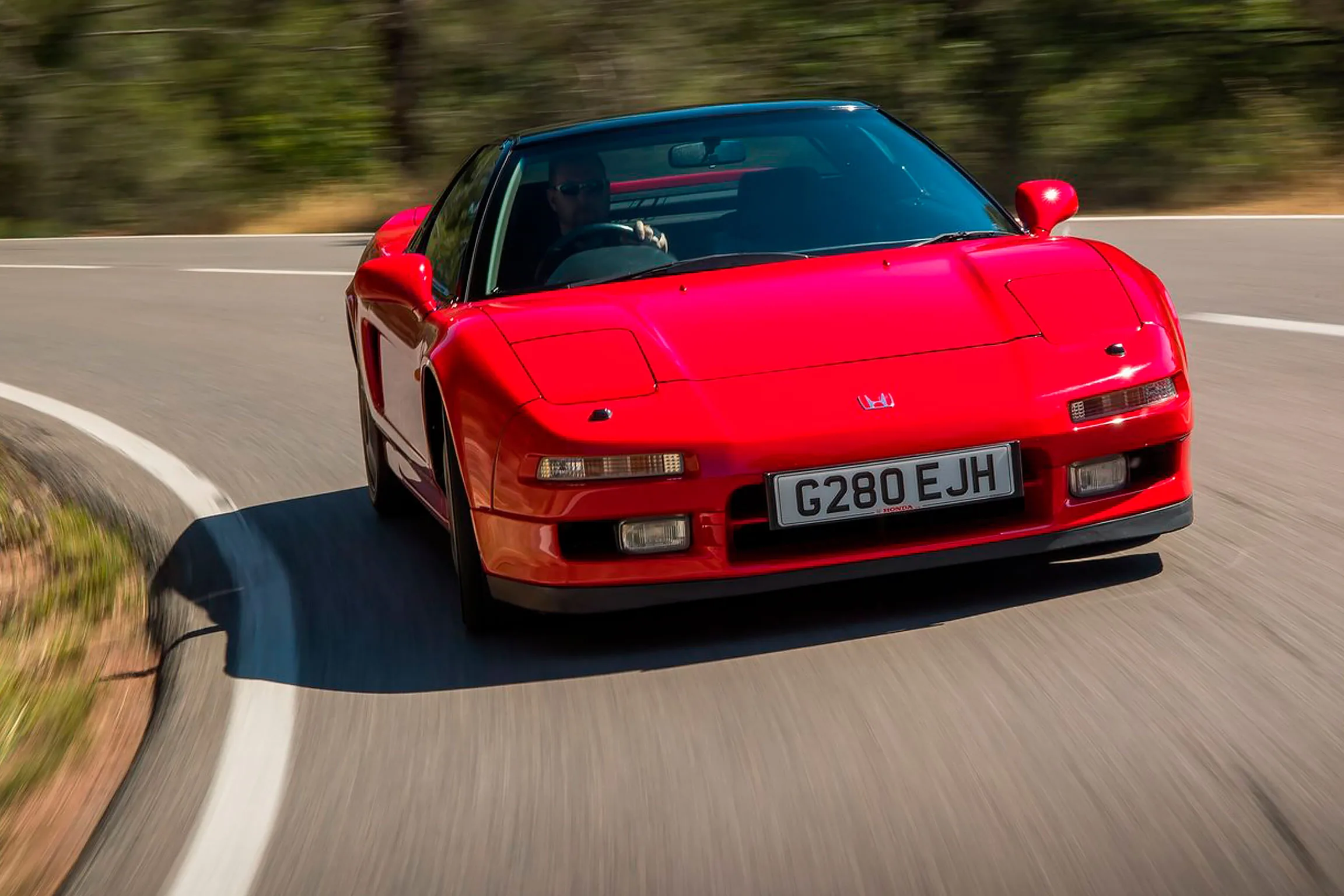
In the late 1980s, Honda was already known globally for its engineering integrity and success in Formula One, but not yet for producing an exotic road car. That changed dramatically in 1990 with the introduction of the Honda NSX—a machine that forever altered the global perception of Japanese performance cars.
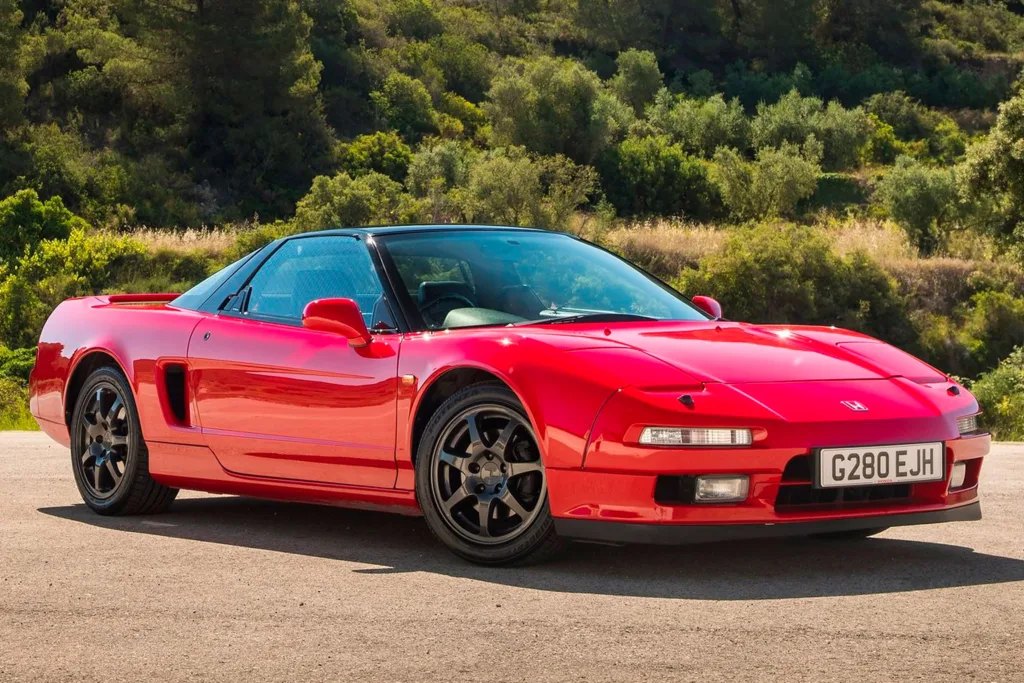
Unveiled first as the NS-X Concept at the 1989 Chicago Auto Show, the production model arrived later that year, fulfilling Honda’s ambition to create a mid-engine sports car that could challenge Ferrari and Porsche—yet be driven daily with reliability and ease. It wasn’t just a new car; it was a revolution.
Engineering a Lightweight Marvel
What truly set the NSX apart from every other sports car of its era was its pioneering use of an all-aluminum monocoque chassis—the first of its kind in a production car. This engineering breakthrough reduced body weight by approximately 200 kilograms compared to a conventional steel structure, giving the NSX a curb weight of just 1,365 kg (3,009 lbs).
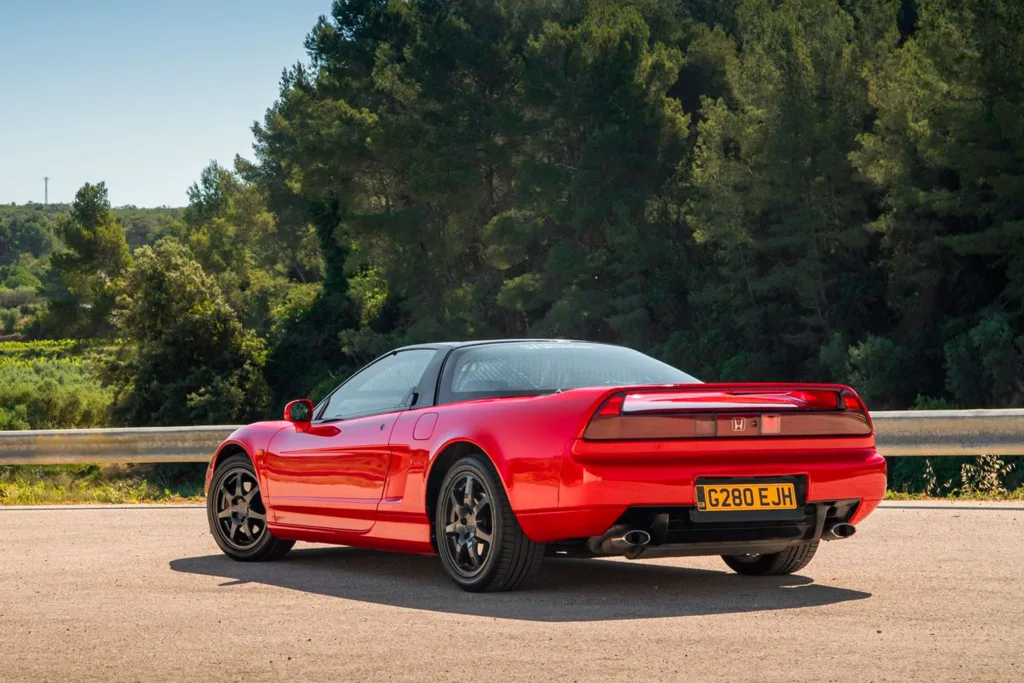
The body, suspension arms, and much of its substructure were also crafted from aluminum, resulting in a combination of lightness, rigidity, and corrosion resistance unmatched in the segment. This approach not only saved weight but also elevated the NSX’s handling precision—laying the foundation for one of the most balanced chassis ever developed for a road car.
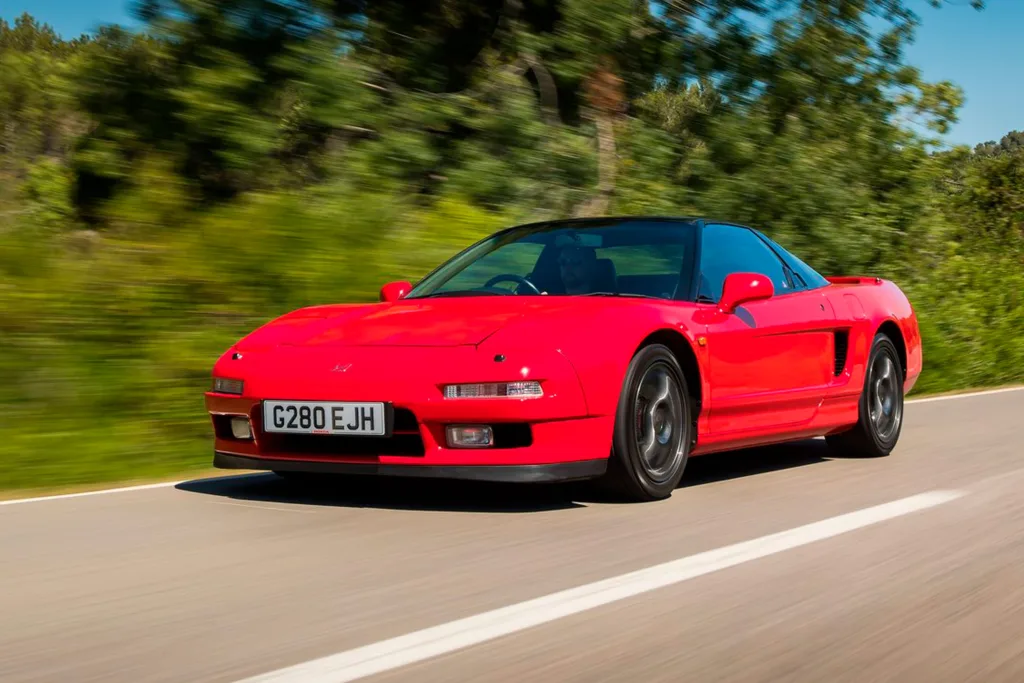
The design was co-developed with Ayrton Senna, then a star of Honda’s McLaren Formula One team, whose feedback directly shaped the car’s chassis tuning and dynamic responsiveness. Testing at Suzuka Circuit and the Nürburgring transformed it from a technical masterpiece into a driver’s car that achieved a stunning harmony between speed and refinement.
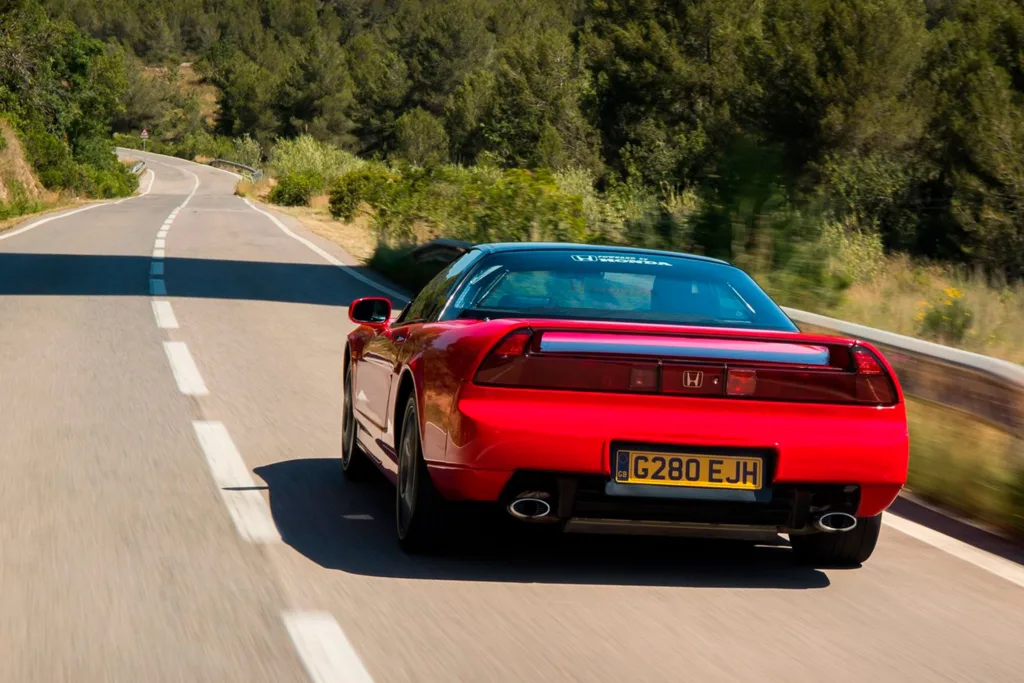
Powertrain: Naturally Aspirated Perfection
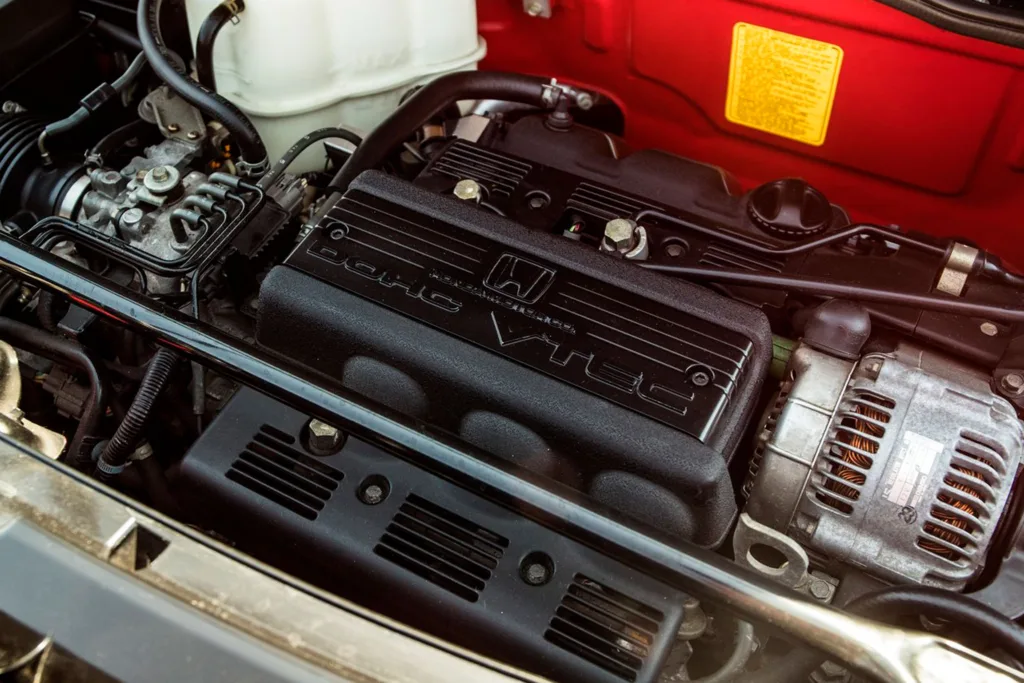
Positioned directly behind the driver sat Honda’s C30A—a 3.0-liter DOHC V6 engine featuring the company’s revolutionary VTEC (Variable Valve Timing and Lift Electronic Control) system. It was one of the most sophisticated naturally aspirated engines ever built, combining ultra-lightweight internals with razor-sharp throttle response.
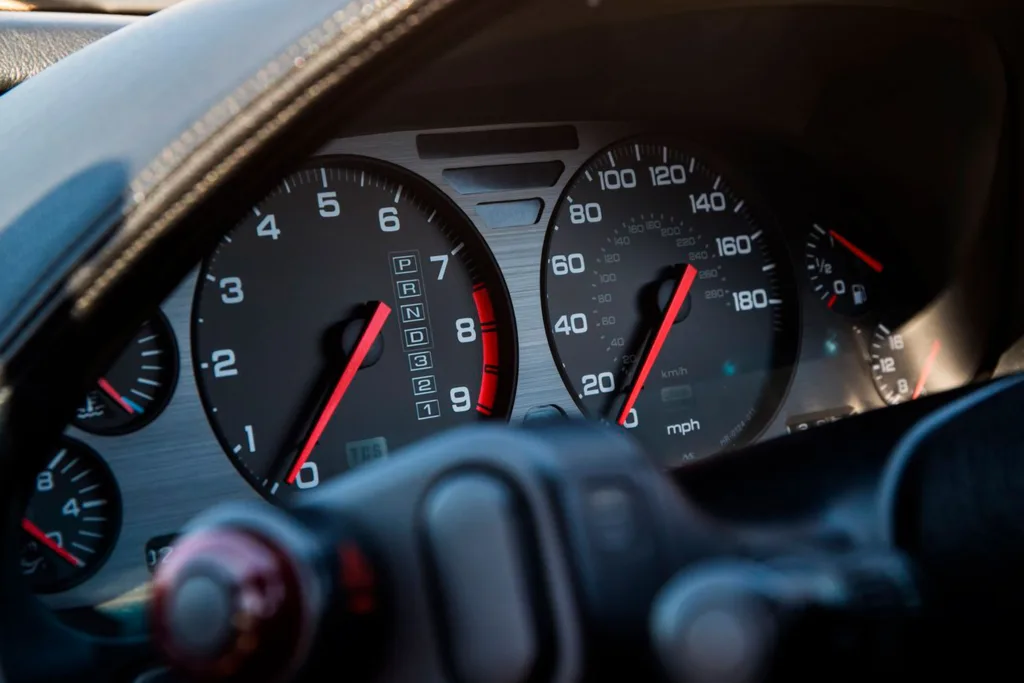
Constructed with a forged steel crankshaft, titanium connecting rods, and aluminum pistons, it revved eagerly to 8,000 rpm, producing 270 horsepower (export spec) and 294 Nm (217 lb-ft) of torque. Japanese domestic models were limited to 280 PS, conforming to the country’s voluntary output cap at the time, though the real-world output often exceeded that.
The engine’s placement—mid-mounted and longitudinally aligned—ensured optimal balance and a 42/58 front-to-rear weight distribution. Coupled with a 5-speed manual transmission (a 4-speed automatic was also available), the NSX rocketed from 0–100 km/h (62 mph) in around 5.5 seconds and reached a top speed of approximately 270 km/h (168 mph).
Beyond numbers, however, it was the linearity of its power delivery and the sound of its high-revving V6—a mechanical symphony echoing Honda’s F1 legacy—that made the NSX an engineering marvel of its time.
Handling and Chassis Dynamics
Handling was where the NSX truly broke new ground. The independent double-wishbone suspension, front and rear, used aluminum components to minimize unsprung mass, while meticulous geometry tuning delivered feedback rarely experienced outside of pure track cars.
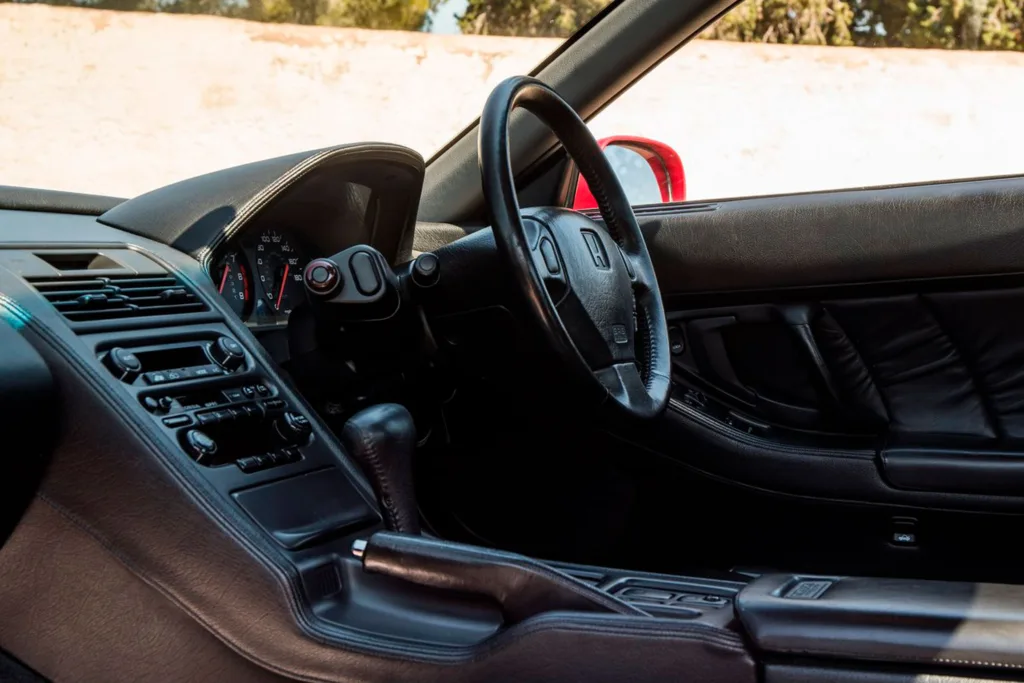
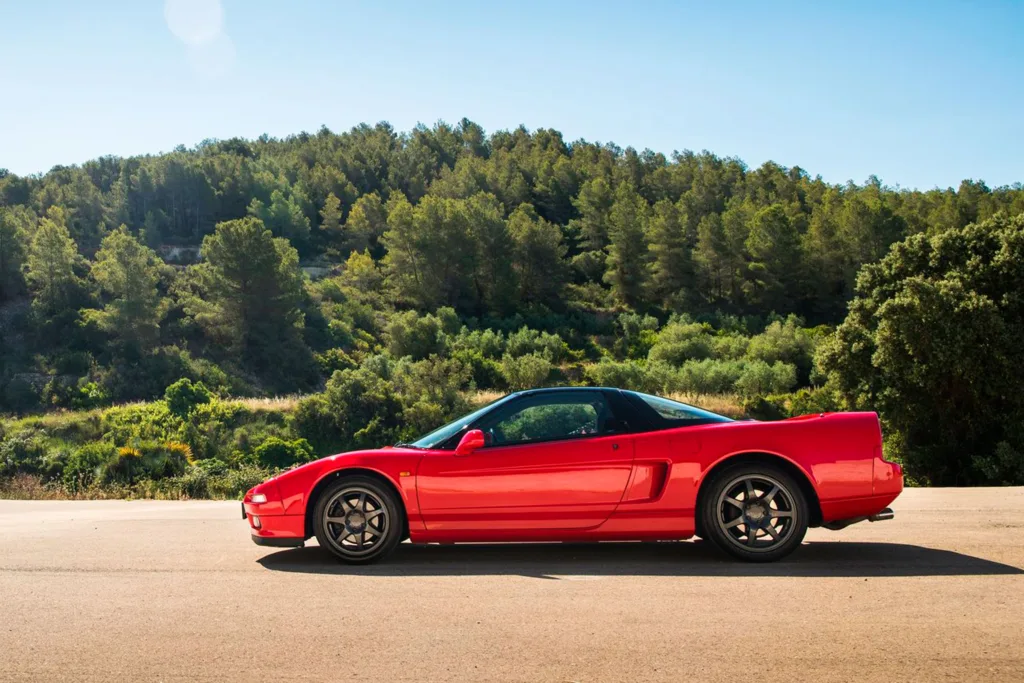
The NSX employed electronically assisted rack-and-pinion steering, which provided seamless precision without isolating the driver. With a low 1,170 mm (46.1 in) roofline, the car’s center of gravity sat lower than most contemporary exotics, enhancing stability and responsiveness.
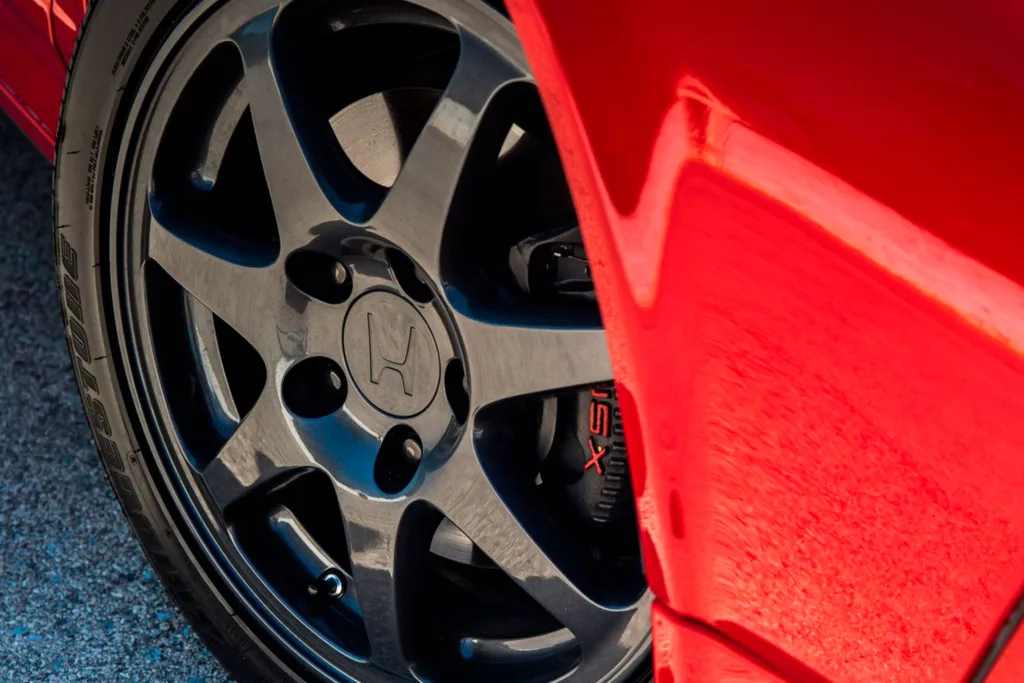
Honda also developed a bespoke 4-wheel disc braking system, with vented rotors and aluminum calipers, ensuring fade-resistant stopping power. When combined with the rigid monocoque and forgiving mid-engine layout, the NSX delivered immediate reactions to every input—precise but never punishing.
Critics worldwide praised it as a car that offered “supercar performance with sports-sedan civility,” a statement that held true from city streets to full-speed track testing.
Everyday Comfort and Design Philosophy
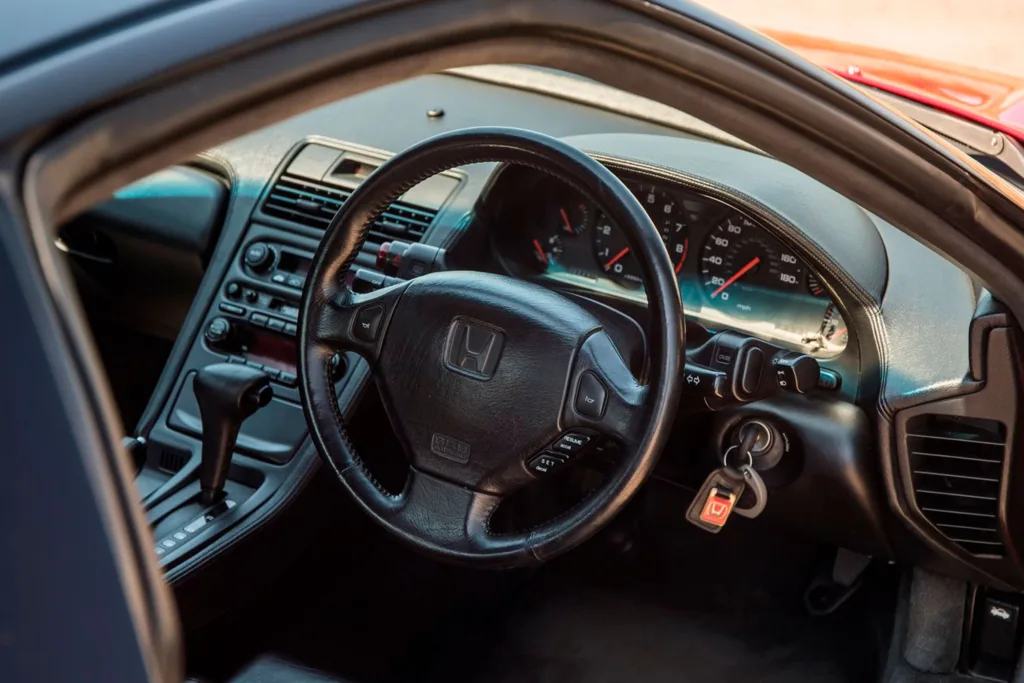
Unlike the temperamental Italian exotics it was benchmarked against, the NSX emphasized daily usability, reliability, and comfort—qualities previously unheard of in the supercar world. The cabin’s ergonomic design was inspired by F-16 fighter jets, placing all primary controls within the driver’s natural reach and offering unmatched visibility thanks to a curved all-glass canopy.
Leather sport seats offered exceptional comfort and adjustability, while standard amenities such as air conditioning, power windows, and premium audio underscored Honda’s determination to build a supercar that didn’t punish its owner.
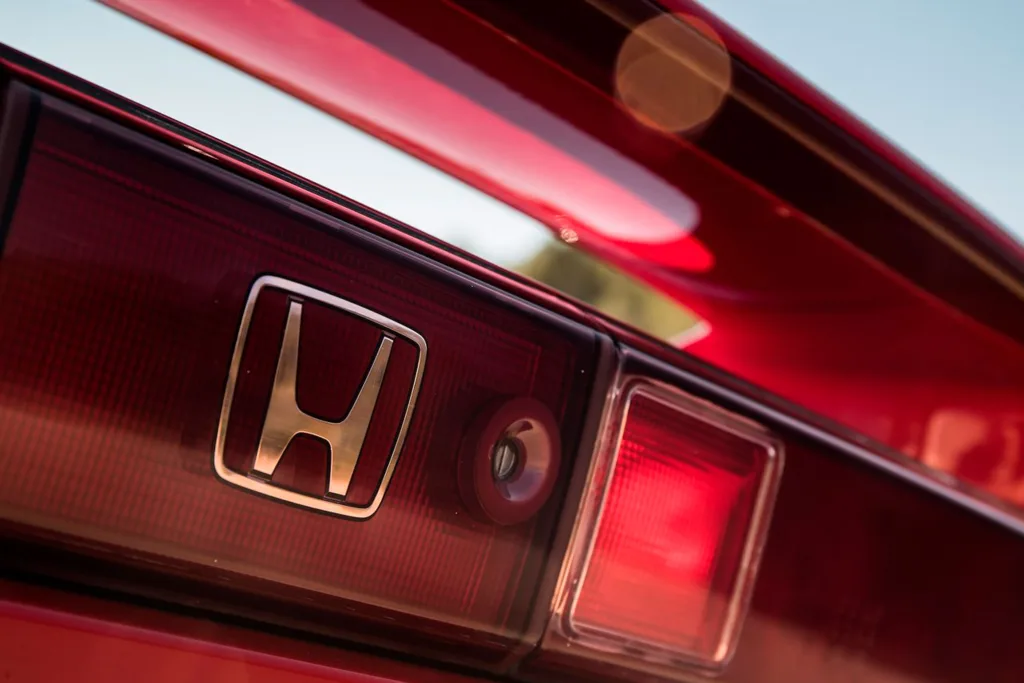
The car’s designers focused on balance and purity over extravagance. Its exterior lines—simple, sharp, and free of unnecessary ornamentation—were sculpted through aerodynamics rather than fashion.
The tapered nose, integrated spoiler, and pop-up headlights became defining stylistic elements of the early-1990s performance era.
The NSX Legacy
The Honda NSX wasn’t simply a fast car—it reshaped the standards by which all supercars were judged. It proved that outstanding performance didn’t require unreliability or discomfort and forced manufacturers like Ferrari, Porsche, and Lamborghini to dramatically improve their engineering quality in response. Even Gordon Murray, designer of the McLaren F1, cited the NSX as a key inspiration for its mechanical purity and usability.
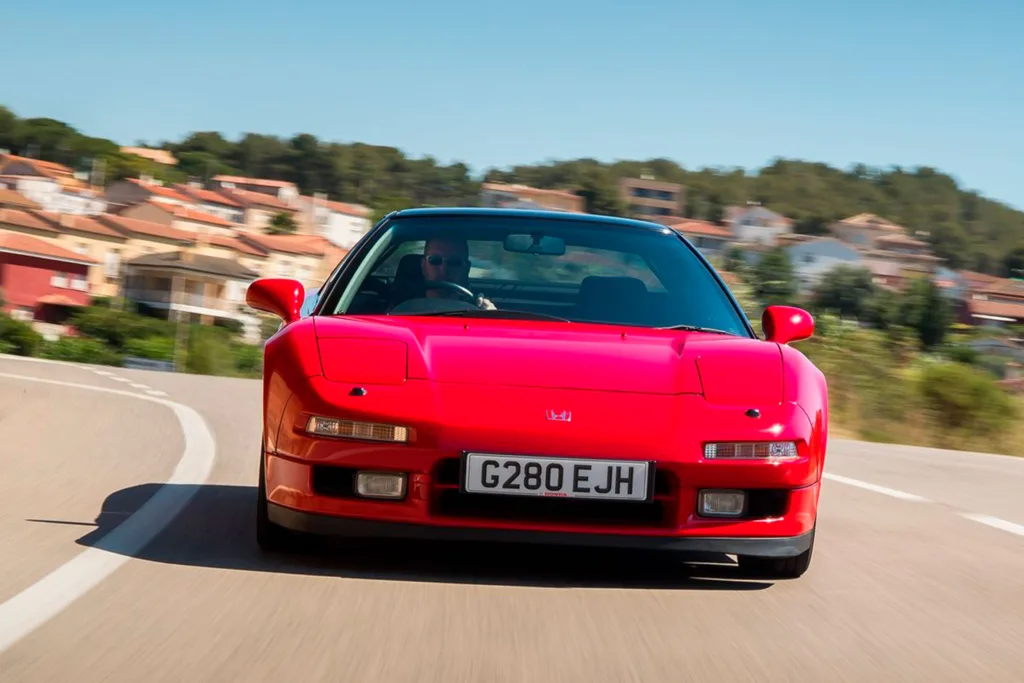
In subsequent years, the NSX family evolved through variants such as the NSX Type R (1992)—a lightweight, race-oriented version for Japan—and the NSX-T (1995), the open-top model that preserved rigidity while offering grand-touring freedom. Later cars saw engine displacement grow to 3.2 liters, power increase to 280 PS, and transmission upgraded to six speeds, but the fundamental character remained unchanged: analog precision paired with technological brilliance.
Even today, enthusiasts and collectors regard the first-generation NSX as a watershed moment—a benchmark for mechanical balance, build quality, and engineering discipline. It marked the moment when Japan didn’t just participate in the supercar world—it redefined it.