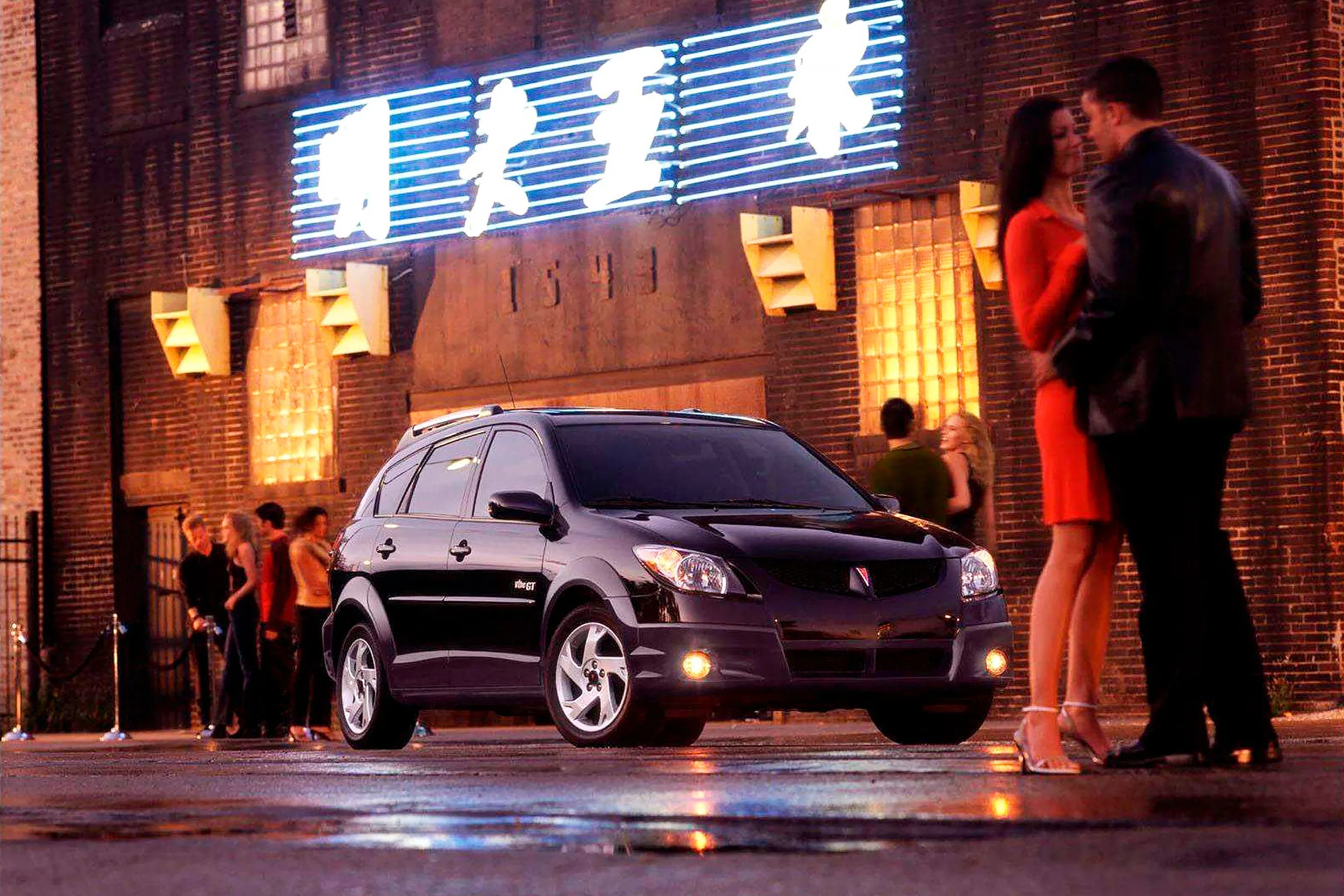
At the turn of the 21st century, the automotive world was rapidly changing. Drivers wanted practicality without sacrificing personality, fuel efficiency without giving up spirit. Few cars embodied that balance better than the Pontiac Vibe, a subcompact crossover born from an unlikely alliance between General Motors (Pontiac) and Toyota.
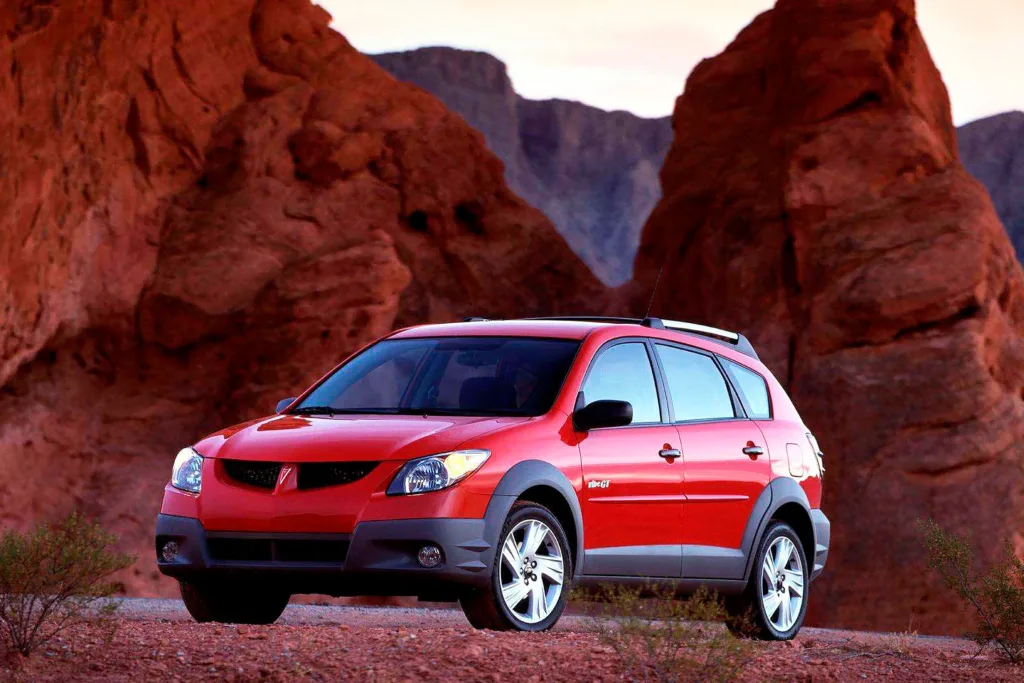
Launched in 2002 for the 2003 model year, the Pontiac Vibe was more than just another small family car—it was a creative blend of American styling and Japanese mechanical sophistication. Built at NUMMI (New United Motor Manufacturing, Inc.), a joint venture between the two companies in Fremont, California, the Vibe was the American twin of the Toyota Matrix, sharing its platform and powertrain but dressed in Pontiac’s signature design language.
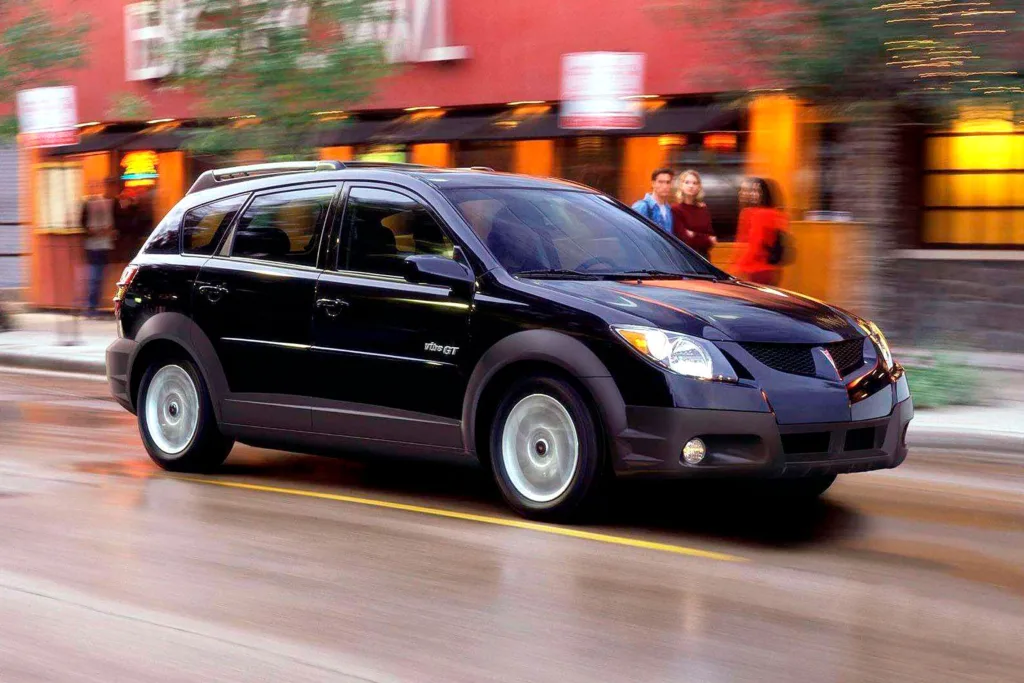
Design and Concept
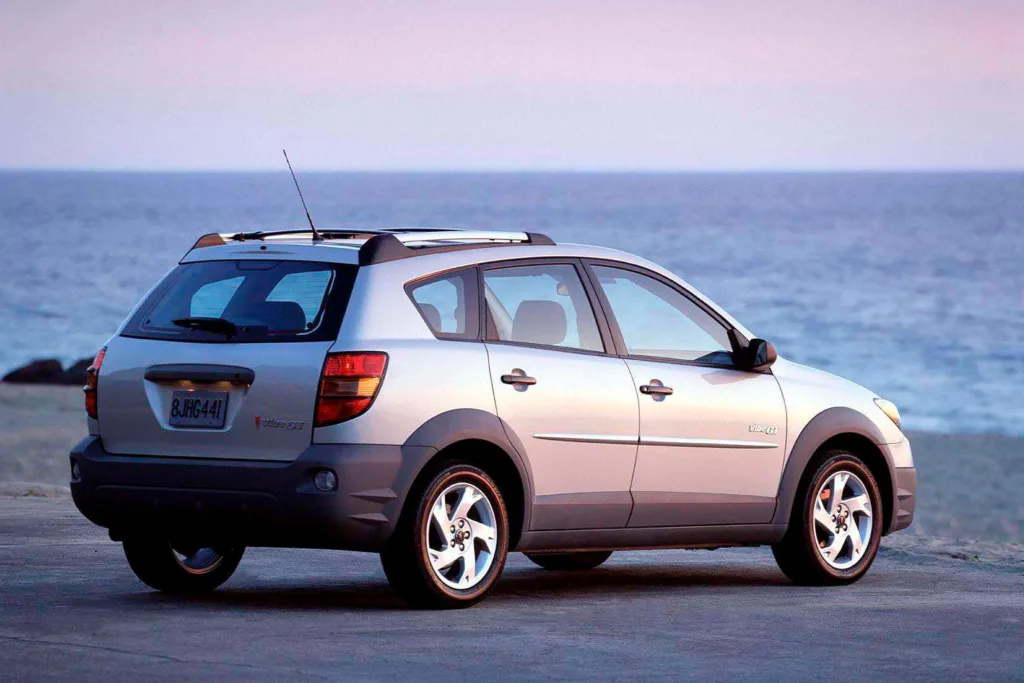
From the outset, the Pontiac Vibe carved a niche of its own. Its compact wagon-SUV hybrid form combined the versatility of a crossover with the proportions of a sport compact. Measuring around 4,300 mm in length and riding on a 2,600 mm wheelbase, it offered more stability and cabin space than a typical hatchback while remaining nimble in tight city traffic.
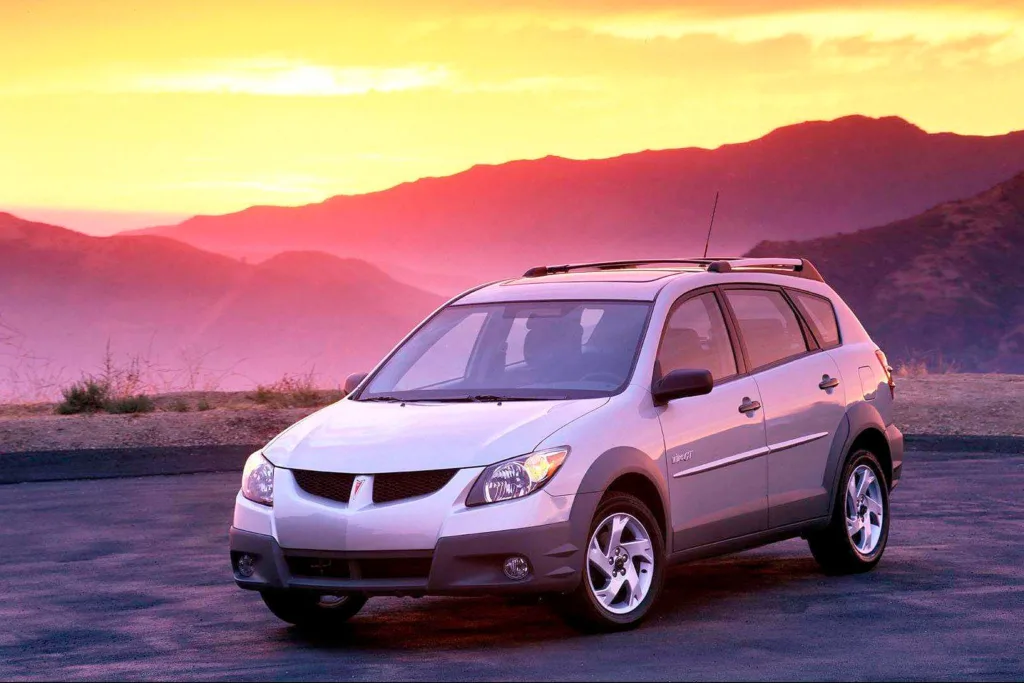
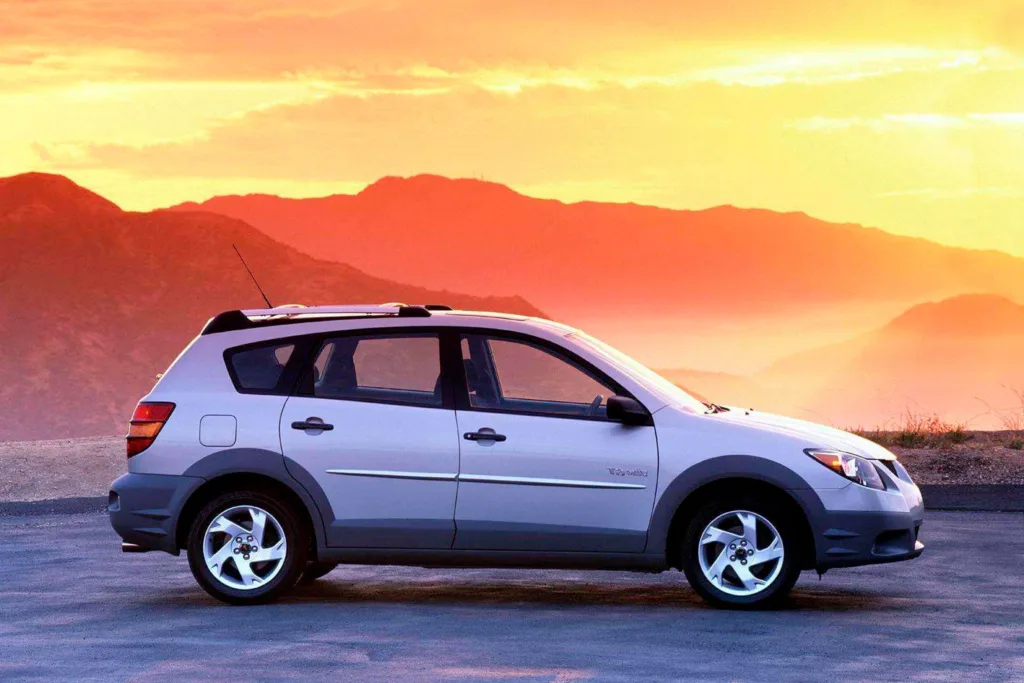
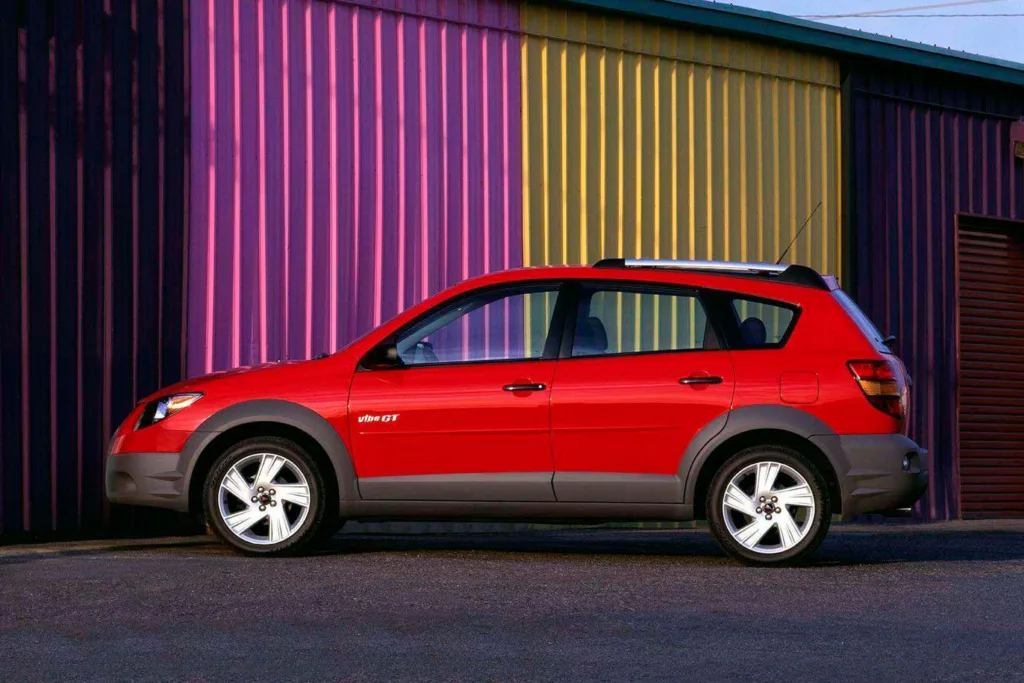
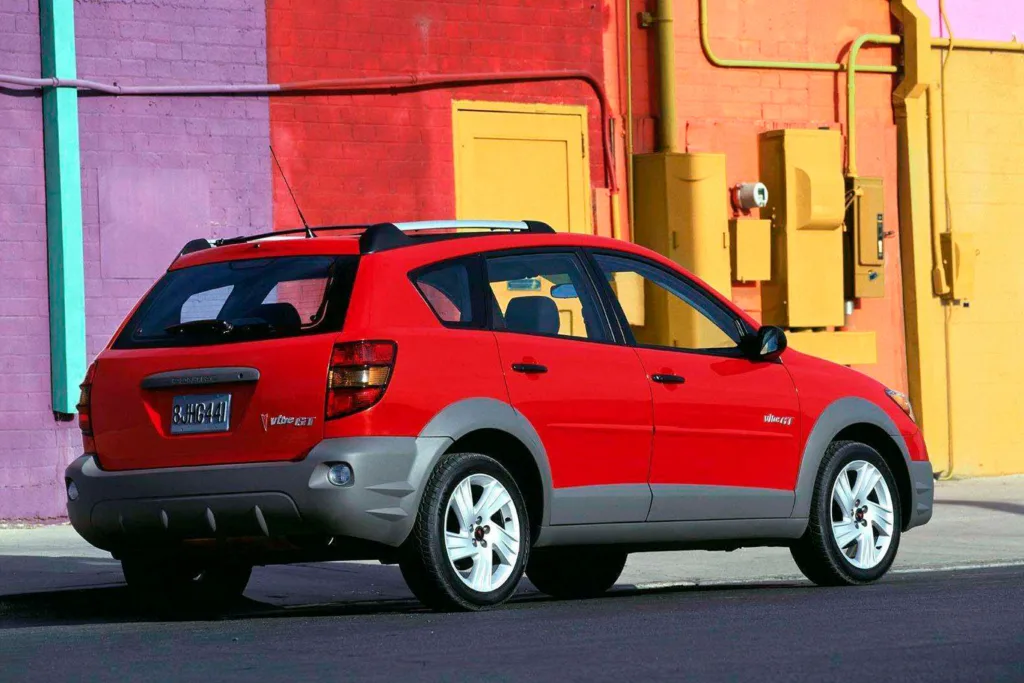
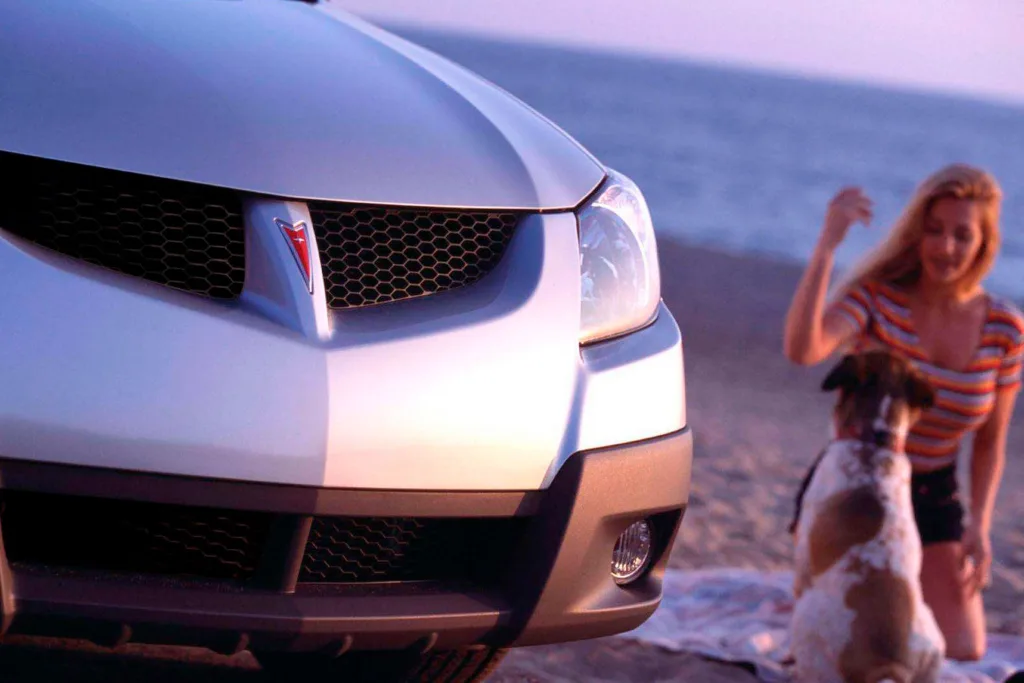
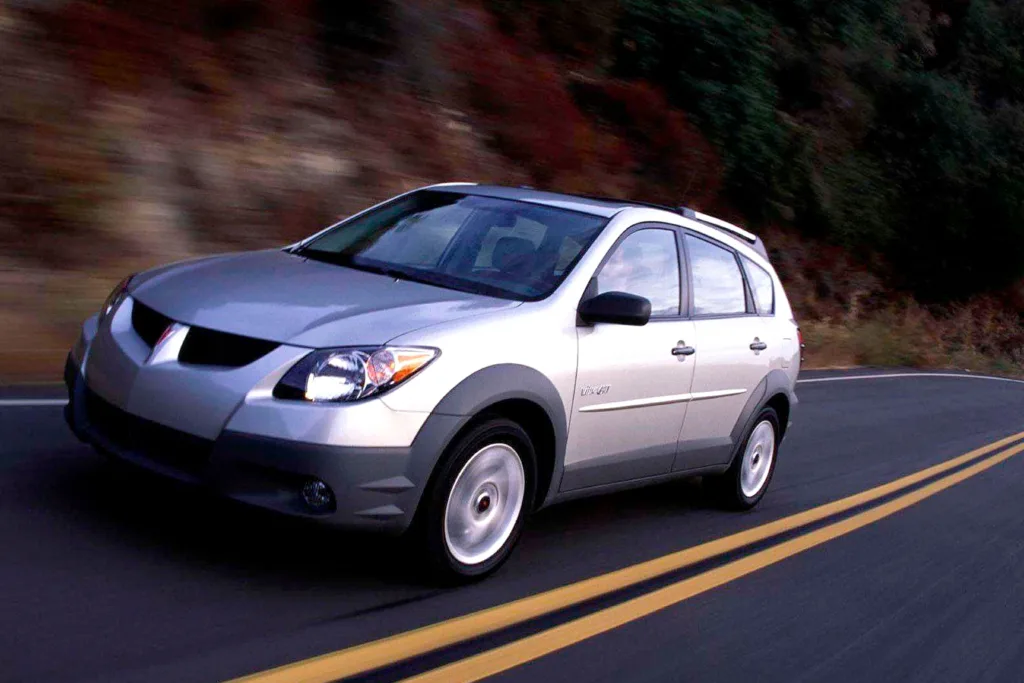
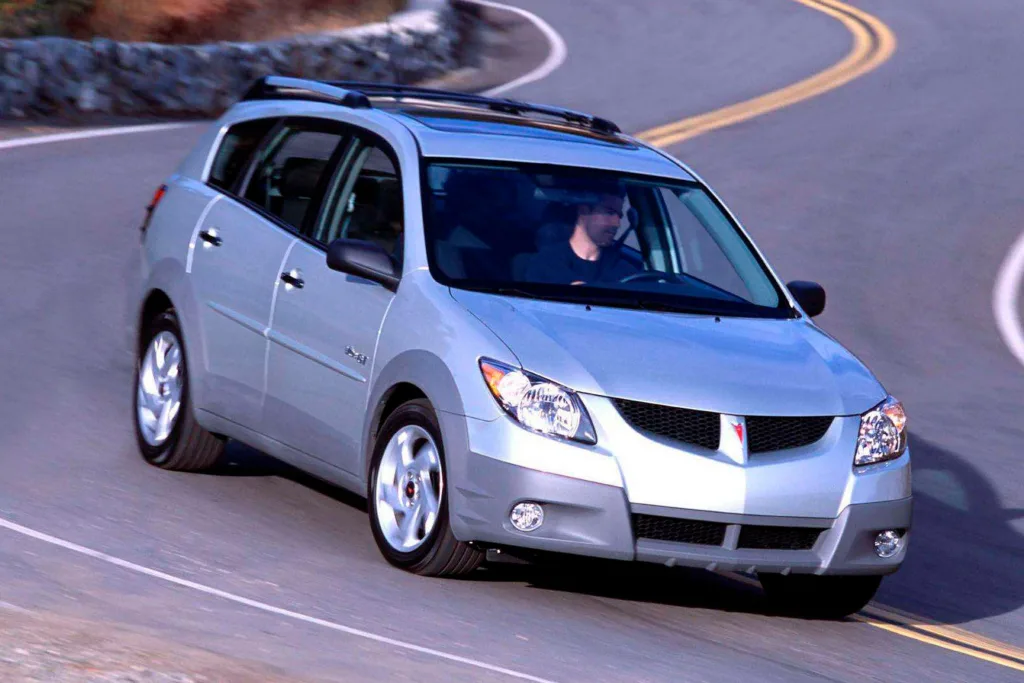
The design featured bold Pontiac cues: a split twin-port grille, muscular fender lines, roof rails, and sharply creased tail lamps—all giving it a rugged aesthetic that complemented its practical shape. Inside, the Vibe showcased intelligent packaging, with flat-folding rear seats and a durable cargo floor, making it a genuine utility vehicle that didn’t look or feel utilitarian.
Pontiac’s engineers and designers envisioned a car that would appeal equally to young professionals, outdoor enthusiasts, and compact performance fans—a mission that culminated in the top-of-the-line Vibe GT.
The Vibe GT: Toyota Precision Meets Pontiac Performance
The 2003 Vibe GT was the sportiest trim in the lineup—a model that transformed the sensible crossover platform into something genuinely exciting to drive. Beneath its unassuming body lived Toyota’s high-performance 2ZZ-GE engine, the same 1.8-liter DOHC variable-valve timing (VVTL-i) unit from the Celica GT-S and Corolla T-Sport.
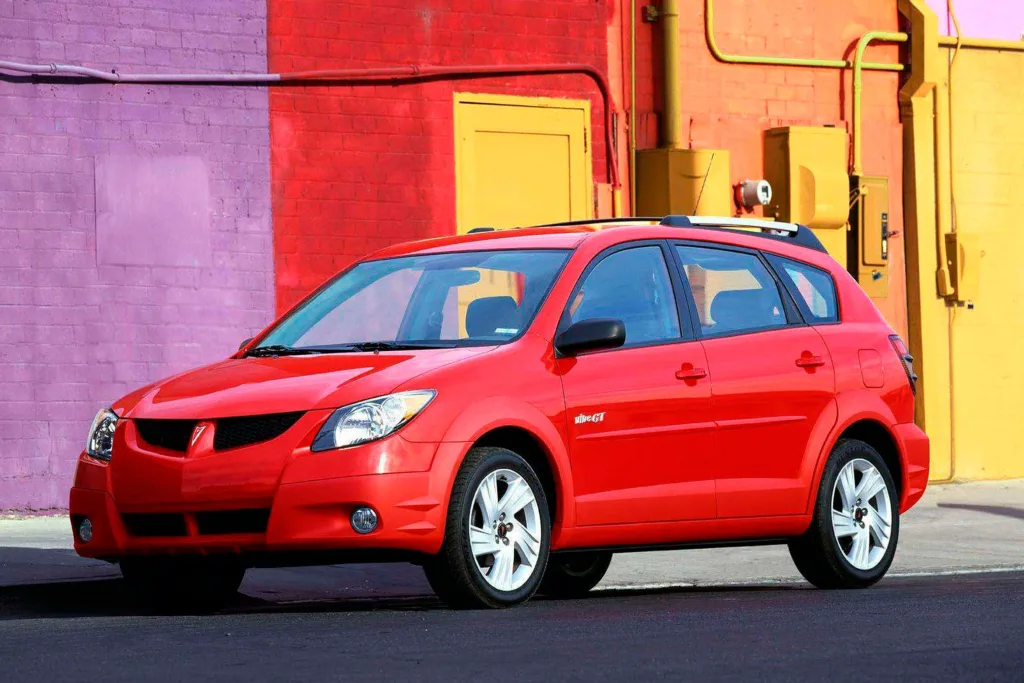
This all-aluminum powerplant produced 180 horsepower at 7,600 rpm and 133 lb-ft (180 Nm) of torque at 6,800 rpm. It featured dual-stage cam phasing and lift control, letting it rev beyond 8,000 rpm—a rarity among affordable crossovers of its day.
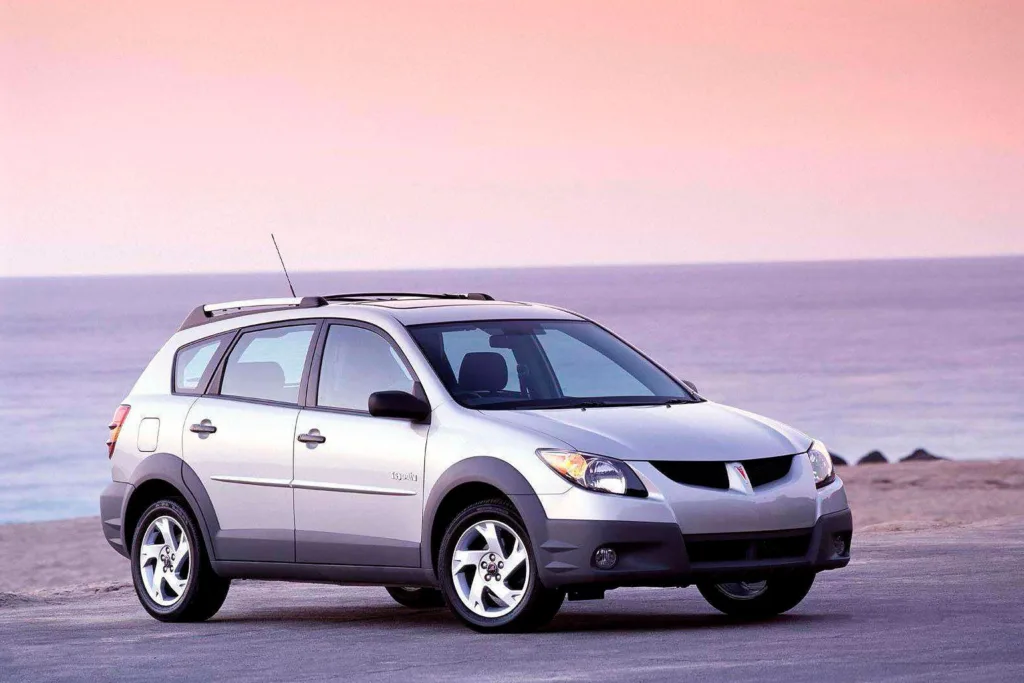
Paired exclusively with a 6-speed manual transmission sourced from Toyota, power was sent to the front wheels, making the GT both responsive and engaging.
The dramatic step up from the standard model’s 1ZZ-FE 138 hp engine completely changed the Vibe’s attitude, giving it the soul of a hot hatch wrapped in a crossover body.
Independent road tests at the time recorded 0–60 mph in approximately 7.3 seconds, impressive numbers for a car that could also carry adventure gear and groceries with ease.
Chassis, Suspension, and Handling
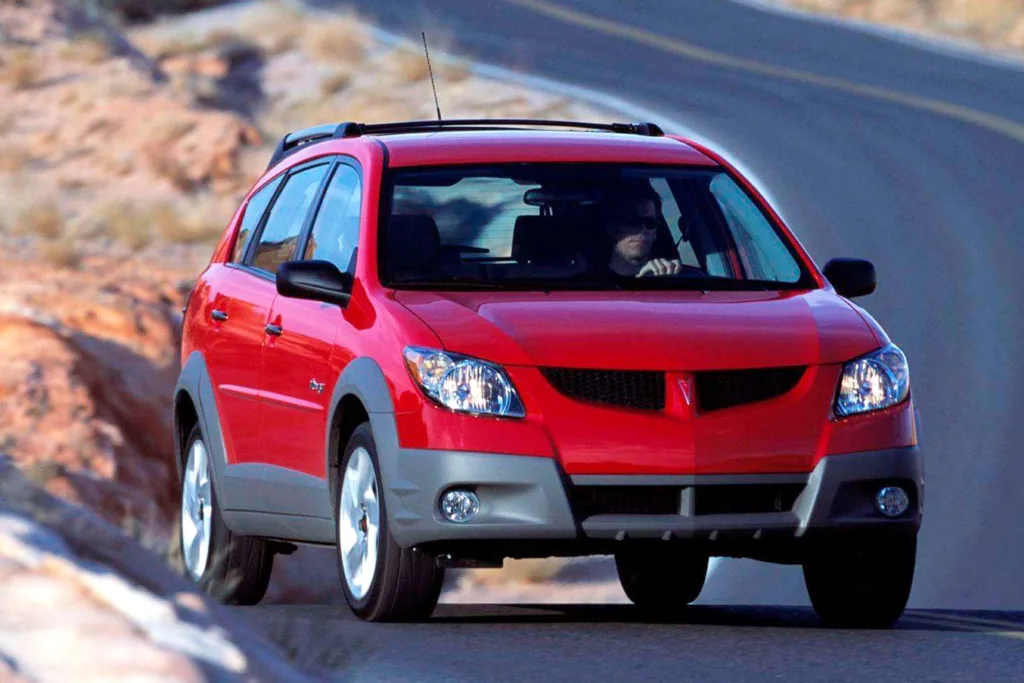
The Vibe GT’s extra power demanded more than a stronger engine—it required mechanical upgrades throughout. Engineers reinforced the chassis, added stiffer coil springs and gas-charged dampers, and installed a sport-tuned suspension with revised geometry. Combined with a front MacPherson strut setup and rear torsion beam, the GT delivered sharper turn-in and more planted cornering without sacrificing ride comfort.
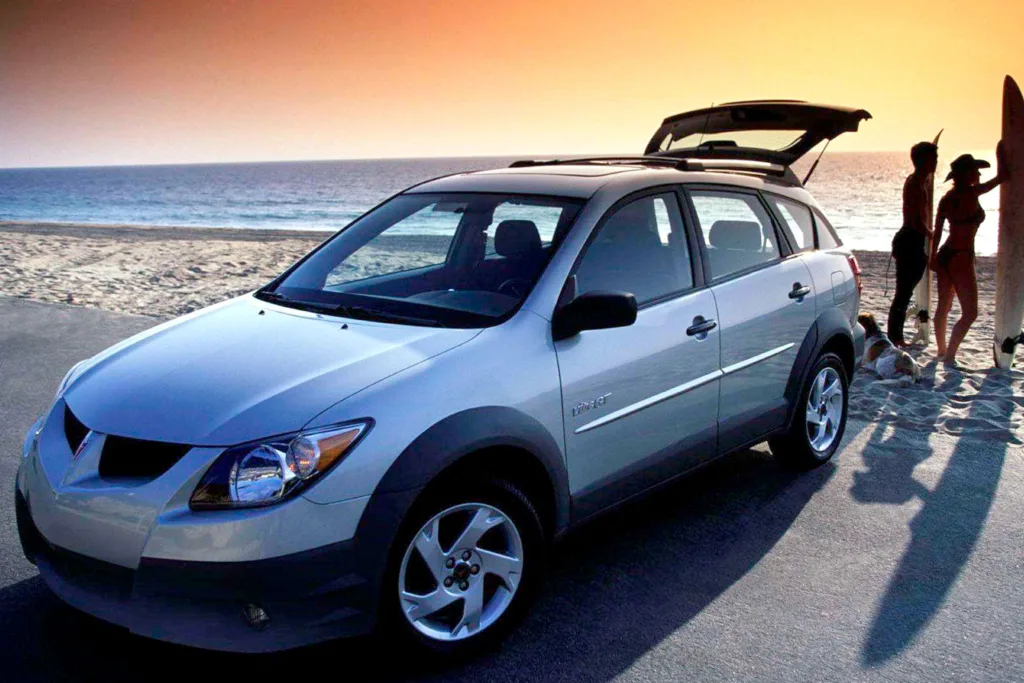
Pontiac equipped it with larger anti-roll bars and performance-oriented four-wheel disc brakes, ensuring the Vibe GT could handle spirited driving as confidently as it carried passengers. The steering was electrically assisted but tuned for direct feedback, a feature rare among small crossovers at the time.
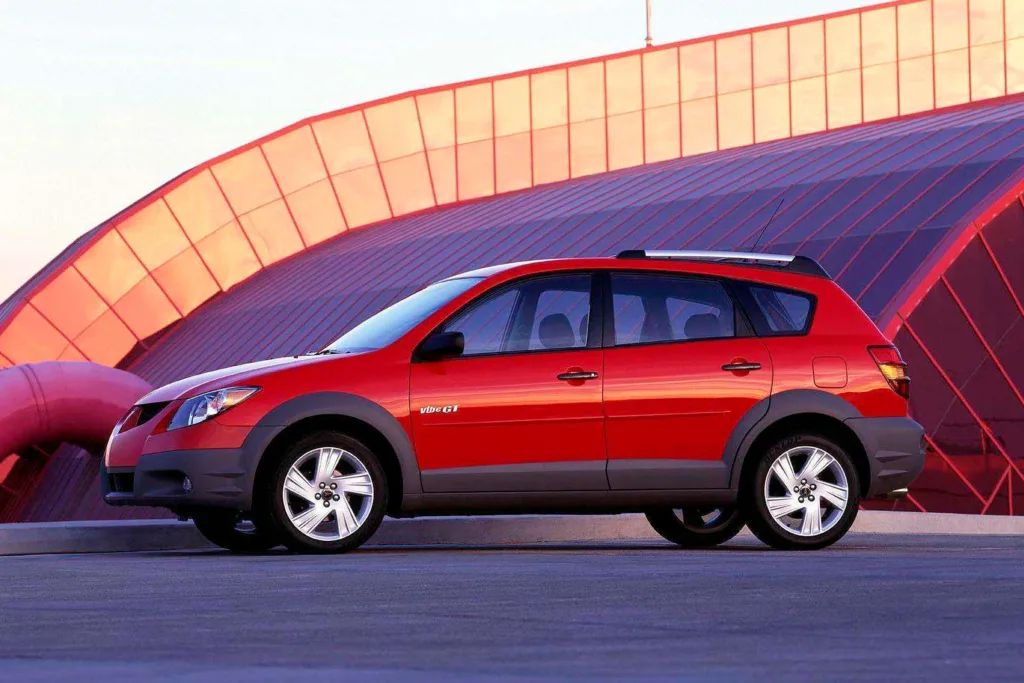
For traction, the car wore high-grip 16- or 17-inch alloy wheels fitted with performance tires that complemented its chassis tuning. This combination of lightweight agility, predictable behavior, and rev-happy power gave the Vibe GT a reputation as one of the most enjoyable affordable sporty vehicles of the early 2000s.
Interior: Utility Wrapped in Sport
While the Vibe GT added serious performance credentials, it didn’t lose sight of its crossover origins. The black-themed interior emphasized functionality and space efficiency. Thanks to its 2,600 mm wheelbase, passengers enjoyed generous legroom and head clearance both front and rear.
The cabin featured bucket-style front seats, metallic accents, and an instrument cluster marked by sporty red illumination and a high-rev tachometer reflecting its 8,200 rpm potential. Fold-flat seats created a nearly level cargo bay—large enough for bikes, surfboards, or camping equipment—making the GT a car that could haul both gear and emotion in equal measure.
Standard amenities included air conditioning, a 6-speaker audio system, and power accessories, while optional upgrades brought in Moon & Tunes packages with a subwoofer and premium head unit. Despite its sporty edge, practicality remained one of the Vibe GT’s proudest strengths.
The Untold Story: The GT-R That Never Was
Pontiac once teased an even more extreme version—the Vibe GT-R—equipped with further tuning by TRD (Toyota Racing Development). This prototype reportedly featured all-wheel drive and boosted output nearing 200 horsepower, aiming to take on the Subaru WRX Sport Wagon and Mitsubishi Lancer Sportback of the era. However, it remained a concept, shelved before reaching production.
Had it launched, the GT-R might have earned Pontiac a lasting place in the compact performance crossover market long before the segment’s explosion in the 2010s.
The End of the Vibe Era
In 2008, Pontiac and Toyota introduced a second-generation Vibe and Matrix, but the partnership’s days were numbered. The closure of NUMMI in 2010 and General Motors’ restructuring led to Pontiac’s discontinuation as a brand. Production halted, and the sporty, practical Vibe faded into history.
Yet its significance remains undeniable—the Vibe demonstrated how American and Japanese collaboration could yield a versatile, fun-to-drive, and reliable vehicle that appealed across markets. In Japan, the car was rebadged and sold as the Toyota Voltz, sharing the same architecture but tailored for domestic tastes, complete with right-hand drive.

Legacy
Today, the 2003 Pontiac Vibe GT has earned cult status among enthusiasts who appreciate its rare formula: a high-revving Toyota engine, manual gearbox, and the versatility of a crossover hatchback. It represented a moment in automotive history when collaboration across borders produced something neither parent company would have made alone—a car that proved affordable sportiness could coexist with real-world usefulness.
The Vibe GT remains a celebration of engineering teamwork and performance spirit—a forgotten hero of the early-2000s import scene that carried equal parts Toyota precision and Pontiac personality.