
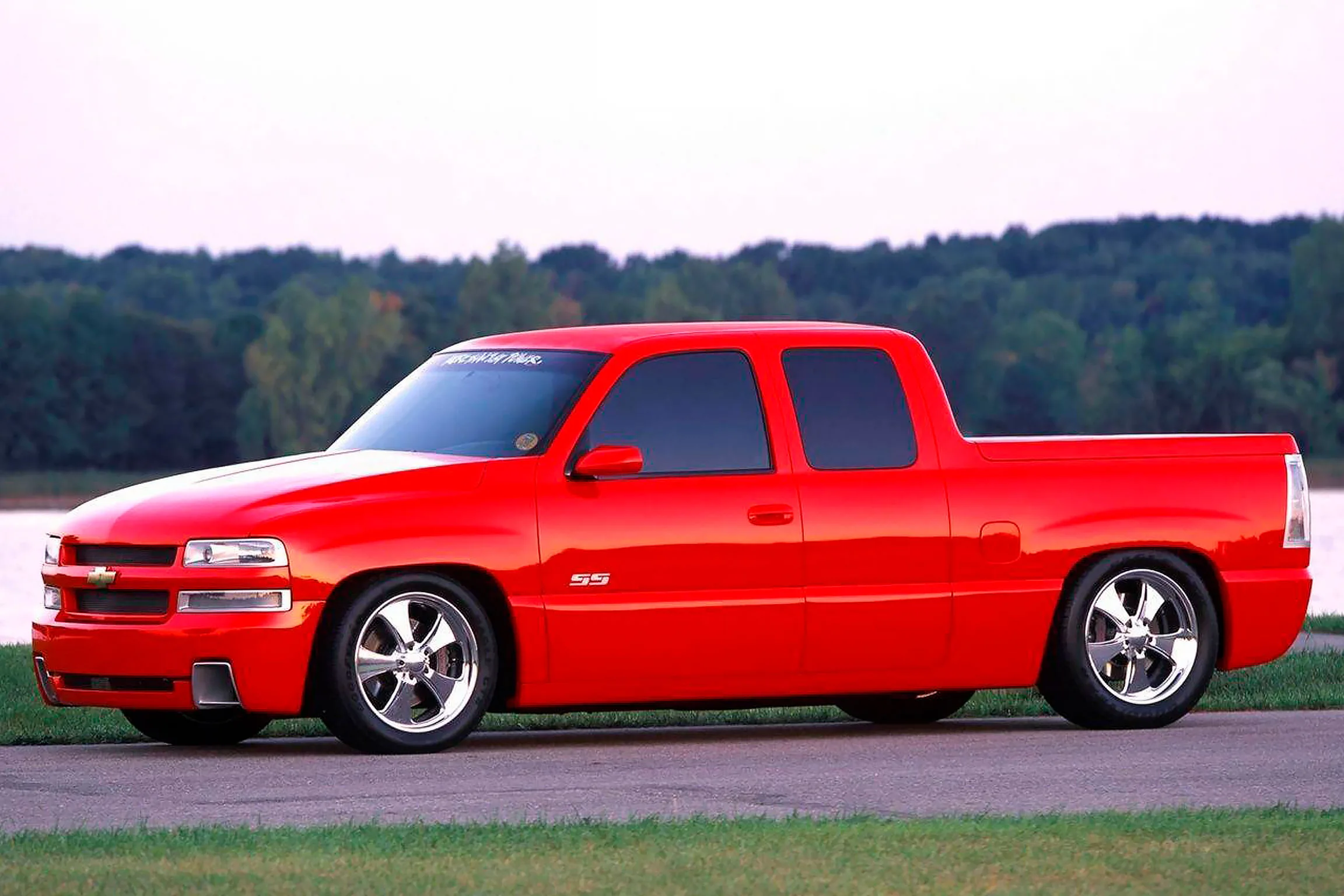
In the early 2000s, the American automotive world was obsessed with power, performance, and practicality. Pickup trucks were no longer just for work—they were becoming symbols of speed and strength. Amid this shift, Chevrolet sought to prove that a truck could perform like a sports car without sacrificing its rugged utility. The result was the Chevrolet Silverado SST Concept, a machine that blended muscle truck aggression with Corvette-inspired engineering precision.
The Silverado SST, unveiled in 2002, was Chevrolet’s bold response to the Ford SVT Lightning, a truck that had turned heads by merging sports car performance with pickup utility. But Chevrolet didn’t just want to compete—it wanted to dominate.
The “SST” stood for Super Sport Truck, a name that paid homage to the brand’s performance heritage dating back to the Chevelle SS and Camaro SS. While the project ultimately remained a concept, it showcased General Motors’ engineering ambition and cemented the early-2000s rivalry among American performance trucks.
Corvette DNA in a Pickup Body
At the heart of the Silverado SST lay a heavily modified 6.6-liter OHV Vortec V8 engine—an evolution of GM’s proven small-block architecture used in heavy-duty pickups and SUVs. Engineers tuned this powerhouse to deliver around 487 horsepower, making it one of the most potent V8s ever fitted to a Chevrolet truck at the time. This configuration placed the SST squarely in the same performance bracket as the era’s American muscle cars.
Power was routed through a six-speed T-56 manual transmission, borrowed directly from the Chevrolet Corvette, reinforcing the truck’s sports car pedigree. This gearbox gave the SST a level of driver engagement virtually unseen in pickup trucks of the period. Chevrolet paired this transmission with a performance-oriented limited-slip differential and a custom-tuned suspension setup.
Underneath, the engineering story became even more fascinating. Instead of sticking to conventional leaf springs, the Silverado SST used a fully adjustable air suspension system, providing a smoother ride and improved handling.
The front and rear suspension geometries were directly influenced by the Corvette’s independent setup, resulting in a uniquely balanced performance feel that blurred the line between muscle car and utility vehicle. To handle its immense power, the Silverado SST came equipped with ventilated disc brakes on all four wheels—a major upgrade over standard Silverado hardware—and a rack-and-pinion steering system that contributed to its precision handling. Combined, these systems allowed the SST to deliver an unexpectedly athletic driving experience for a full-size pickup.
The Design That Turned Heads
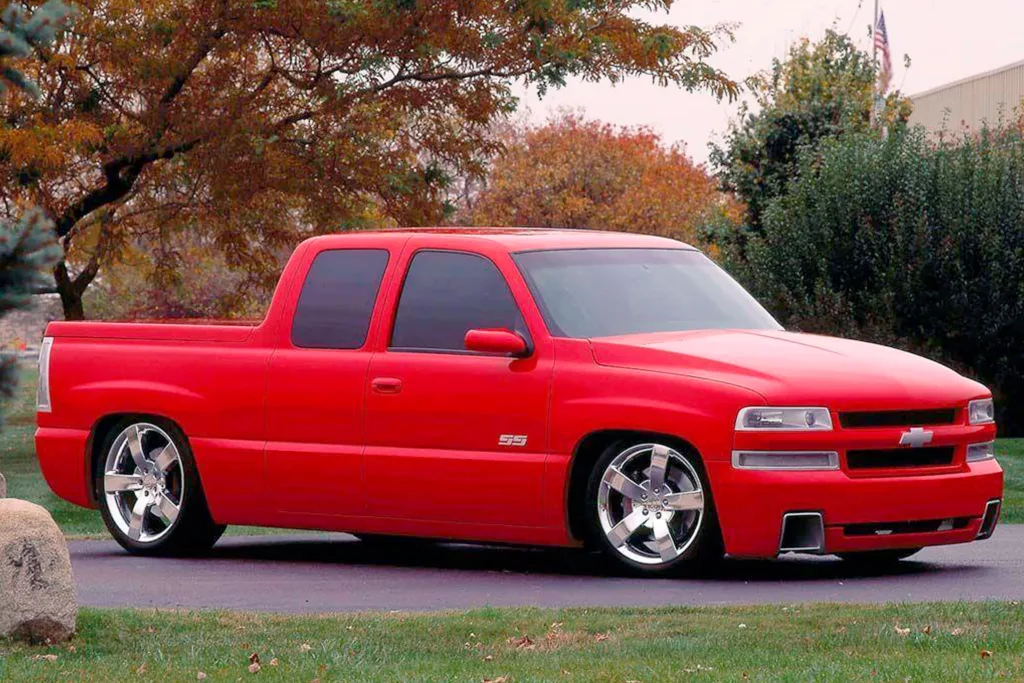
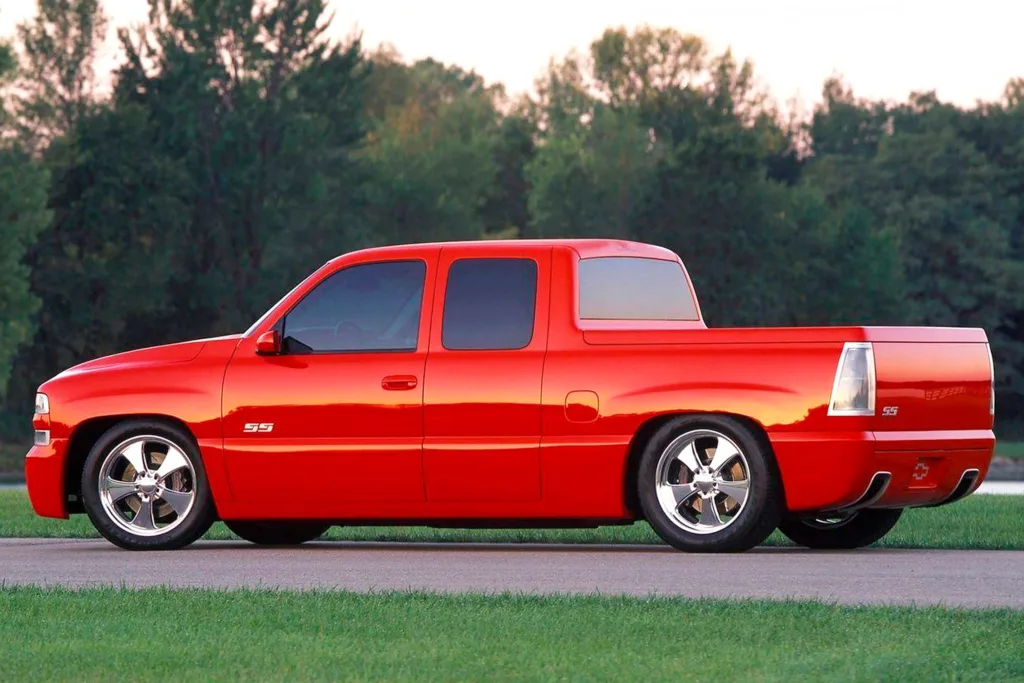
Chevrolet designers gave the Silverado SST Concept a strong, aerodynamic stance that visually reflected its performance roots. The body featured widened fenders, lowered ride height, and massive 22-inch wheels wrapped in low-profile performance tires. The aggressive front fascia integrated a prominent grille, streamlined headlights, and subtle aerodynamic detailing for improved airflow. The bed featured niche performance-inspired elements, including a tonneau cover and integrated rear spoiler—functional cues that mirrored sports car aerodynamics.
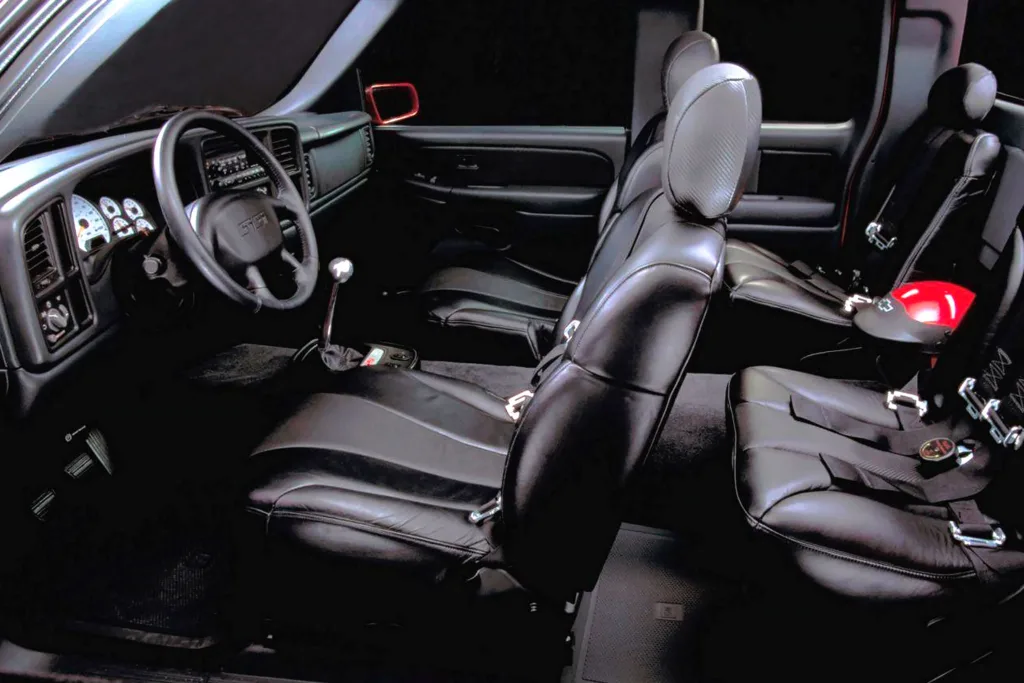
Inside, the cabin adopted a driver-focused layout with sport seating, aluminum accents, and Corvette-style instrumentation. It looked more at home on a racetrack than a construction site, signaling Chevrolet’s goal to position the SST as both a performance showcase and a future design statement for high-output trucks.
Market Context: Competition Heats Up
At the time of its unveiling, Chevrolet’s performance truck concept was surrounded by fierce rivals. The 2003 Ford SVT Lightning, powered by a supercharged 5.4-liter V8 producing 380 horsepower, had already captured public imagination.
Meanwhile, Chrysler was developing the Dodge Ram SRT-10, launched in 2004 with its monstrous 8.3-liter V10 engine borrowed from the Viper, pushing over 500 horsepower. This created a horsepower war that turned the pickup segment into a new frontier of speed. Chevrolet attempted to respond quickly with the Silverado SS production model, released in 2003.
However, that version, equipped with a 345-horsepower 6.0-liter V8, was significantly less powerful than both the Lightning and the upcoming SRT-10. The SST Concept’s 487-horsepower rating would have placed it directly in competition with these rivals, but General Motors ultimately chose not to bring the truck to market—likely due to development costs and shifting consumer priorities at the dawn of the SUV boom.
Legacy of the Silverado SST
Although it never reached production, the Silverado SST left a lasting impression on Chevrolet’s design and engineering teams.
The innovations it introduced—the air suspension, performance-oriented handling, and Corvette-inspired powertrain—forecasted the future of performance trucks. It also influenced later high-performance trims in the Silverado lineup and inspired future design studies within GM’s performance division.
Today, the 2002 Silverado SST Concept is remembered as a “what-if” legend of American truck history—proof that Chevrolet was willing to push boundaries and reimagine what a pickup could be. It fused sports car agility, muscle car power, and truck utility into one unforgettable experiment, offering a glimpse into the unfulfilled potential of early-2000s performance engineering.


Functional Always active
Preferences
Statistics
Marketing