
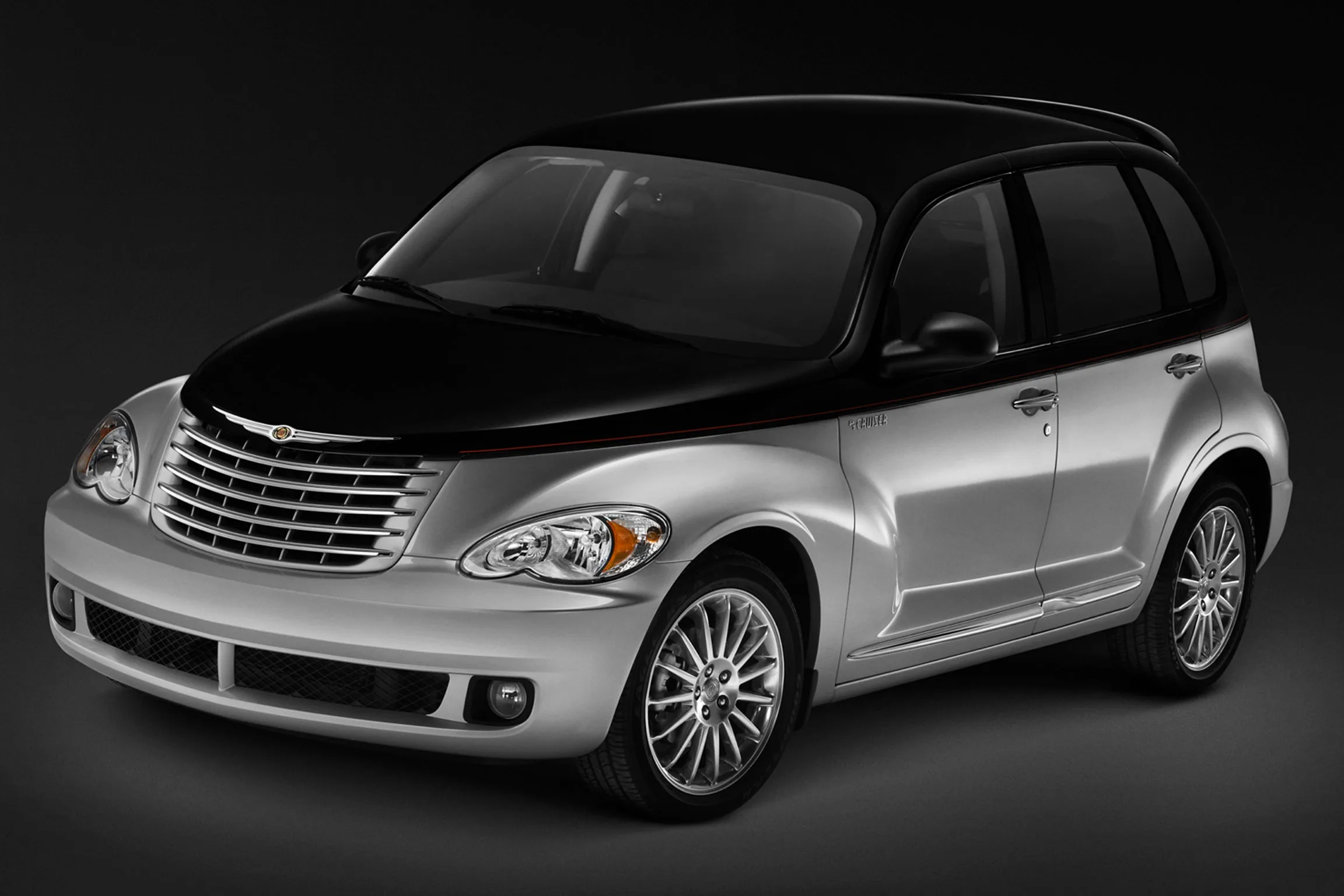
When the Chrysler PT Cruiser debuted in 2000, it became an unexpected cultural phenomenon. With styling that blended the nostalgia of 1930s American sedans and the practicality of a modern compact car, the PT Cruiser was unlike anything else on the market. Its distinctive character, affordable price, and surprising versatility made it one of Chrysler’s most successful launches of the early 21st century—an instant classic of the retro design movement.
A Design Inspired by the Past, Built for a New Millennium
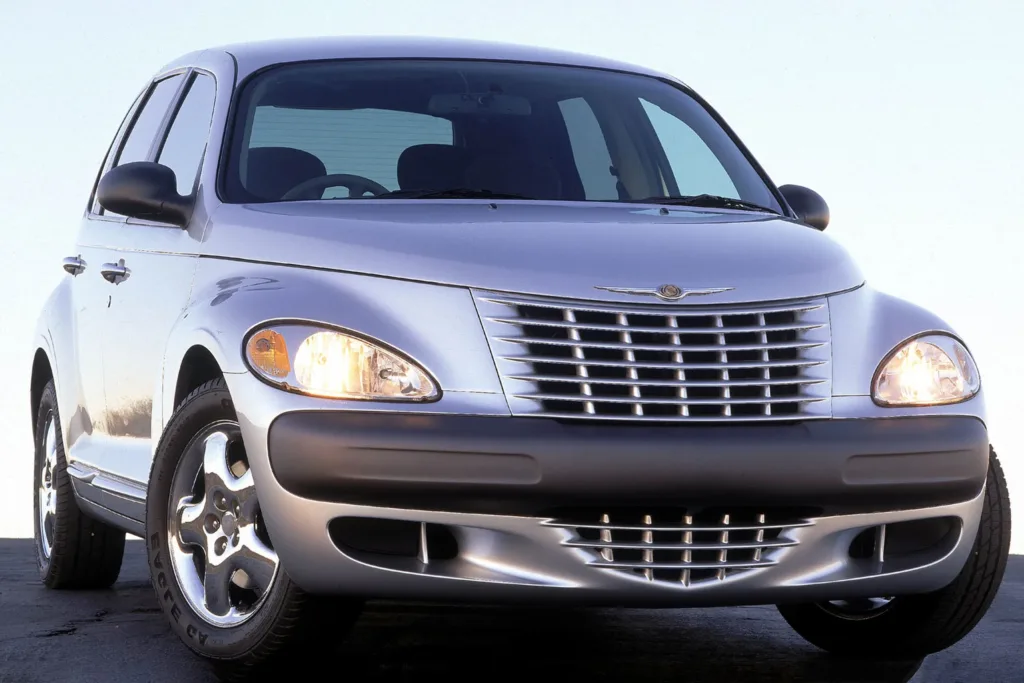
The PT Cruiser’s story began in the mid-1990s, when Chrysler’s design team, led by Bryan Nesbitt, sought to create a compact car that stood apart from typical hatchbacks and sedans. The goal was to evoke the spirit of 1930s and 1940s American iron, echoing vehicles like the Chrysler Airflow and 1937 Ford sedans, while retaining the everyday usability of a modern family car. What they produced was a small, front-wheel-drive wagon that looked like a hot rod crossed with a vintage sedan.
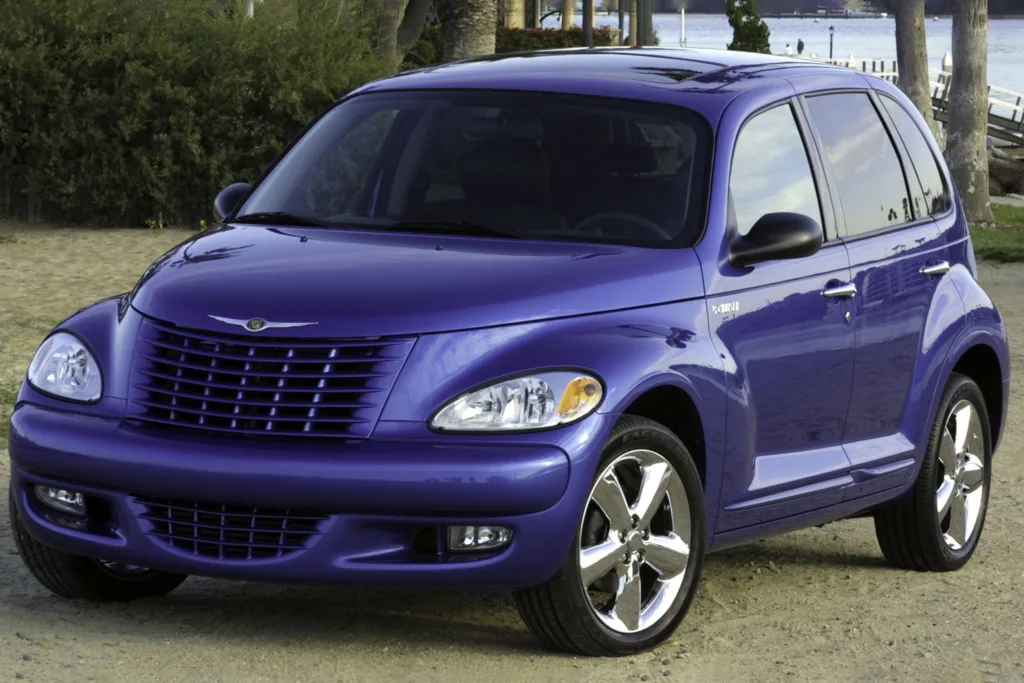
The “PT” in its name originally stood for Personal Transport, though Chrysler marketing cleverly let buyers interpret it as “Panel Truck” or even “Plymouth Truck” during development. It reflected Chrysler’s philosophy at the time—cars should have personality, not just practicality. With its tall body, arched fenders, short overhangs, and high roofline, the PT Cruiser looked like a custom build straight out of a 1950s car show, yet it rolled off the assembly line as a mass-market vehicle.
From Concept to Sales Sensation
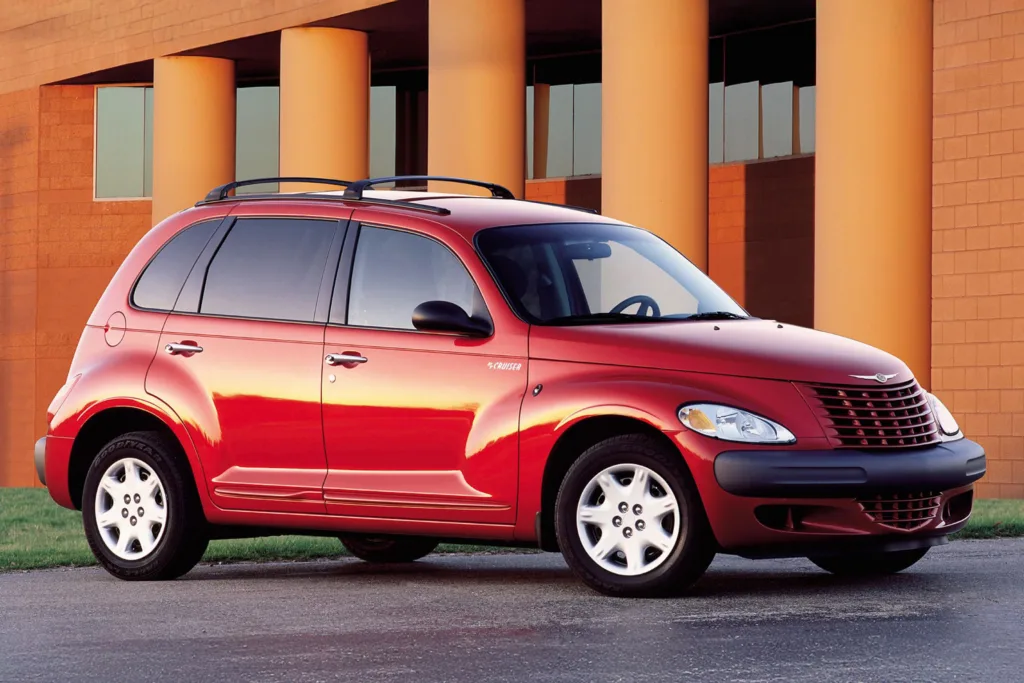
The PT Cruiser evolved from the 1997 Chrysler Pronto Cruizer concept, which received overwhelming attention for its neo-retro design. By the time the production version arrived in 2000, it retained nearly all of the concept’s visual cues. Built at Chrysler’s Toluca Assembly Plant in Mexico, the car officially launched as a 2001 model year vehicle in the U.S. at a starting price of under $20,000, a strategic decision that made its head-turning looks accessible to the masses.
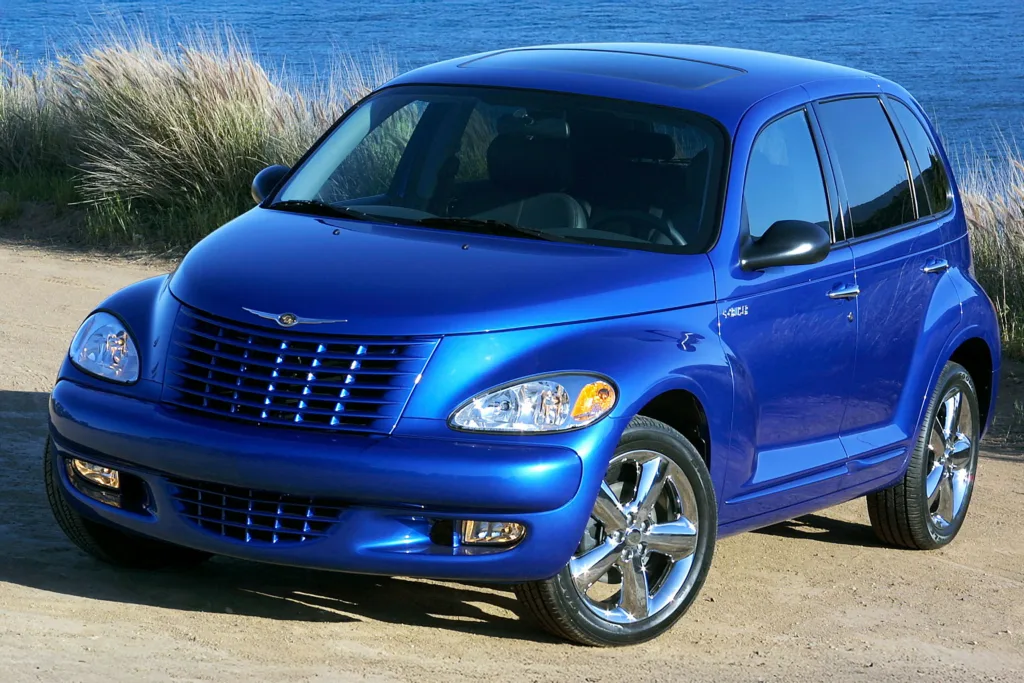
Immediately after its launch, the PT Cruiser became a runaway success. Demand was so intense that dealerships often sold them above retail price, and waiting lists stretched for months. Chrysler could barely keep up with orders during its first years of production, selling over 144,000 units in the U.S. in its debut model year alone.
Under the Hood: Simple but Effective
While the PT Cruiser drew admiration for its styling, its powertrain was more conventional. The U.S. version featured a 2.4-liter inline-four engine producing 150–152 horsepower and 162 lb-ft of torque, mated to either a five-speed manual or a four-speed automatic transmission. The mechanical foundation was adapted from the Dodge and Plymouth Neon, with Chrysler reengineering the platform for greater height and space—transforming a compact car base into a mini multi-purpose vehicle.
For overseas markets like Europe and Japan, Chrysler offered 2.0-liter and 1.6-liter gasoline engines, along with a 2.2-liter Mercedes-Benz–sourced diesel for efficiency-conscious buyers. While none of these engines turned the PT Cruiser into a performance car, they provided adequate power for urban driving and highway cruising. The tall, upright seating position and surprisingly roomy cabin made the PT Cruiser practical for everyday use, which contributed significantly to its charm and success.
Driving Impressions and Comfort
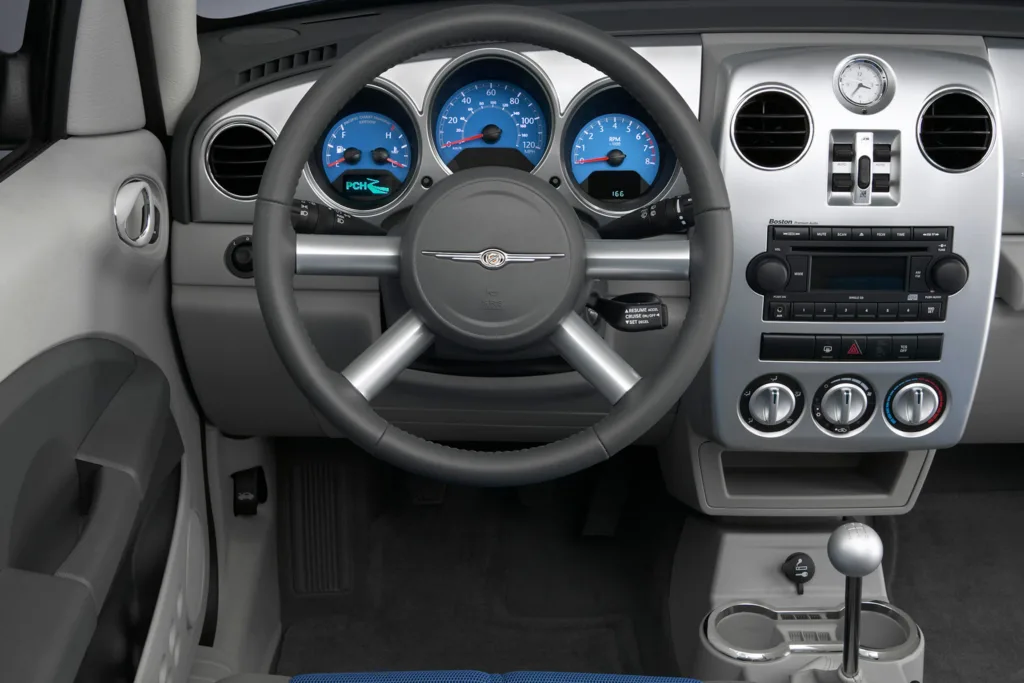
The PT Cruiser offered more utility than nearly any small car of its time. Its high roofline and flat floor created SUV-like interior space within a compact footprint. Rear seats could be folded, tumbled, or even removed entirely, providing up to 64 cubic feet of cargo space, rivaling small station wagons. Chrysler marketed the car’s versatility heavily, drawing comparisons to both sedans and compact SUVs.
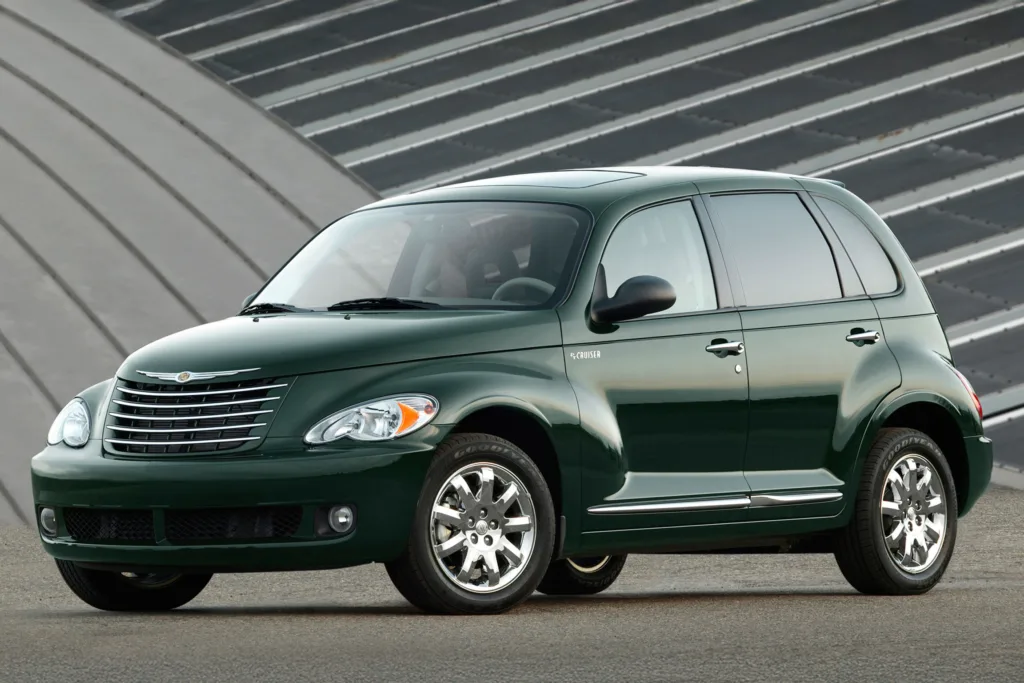
Ride quality leaned toward comfort rather than sportiness, with front MacPherson struts and rear torsion-beam suspension. Though its handling couldn’t match European hatchbacks of similar size, the PT Cruiser’s charm came from its ease of use and distinctive driving position—a crossover of nostalgia and practicality.
Variants and Special Editions
Chrysler maintained interest in the PT Cruiser lineup by releasing a variety of trims and limited editions each year. Among the most notable was the PT Cruiser GT (Turbo) introduced in 2003, powered by a 2.4-liter turbocharged engine producing up to 230 horsepower—the same unit found in the Dodge SRT-4.
This engine gave the car genuine performance credentials, transforming it from a retro commuter into a spirited compact hot hatch.
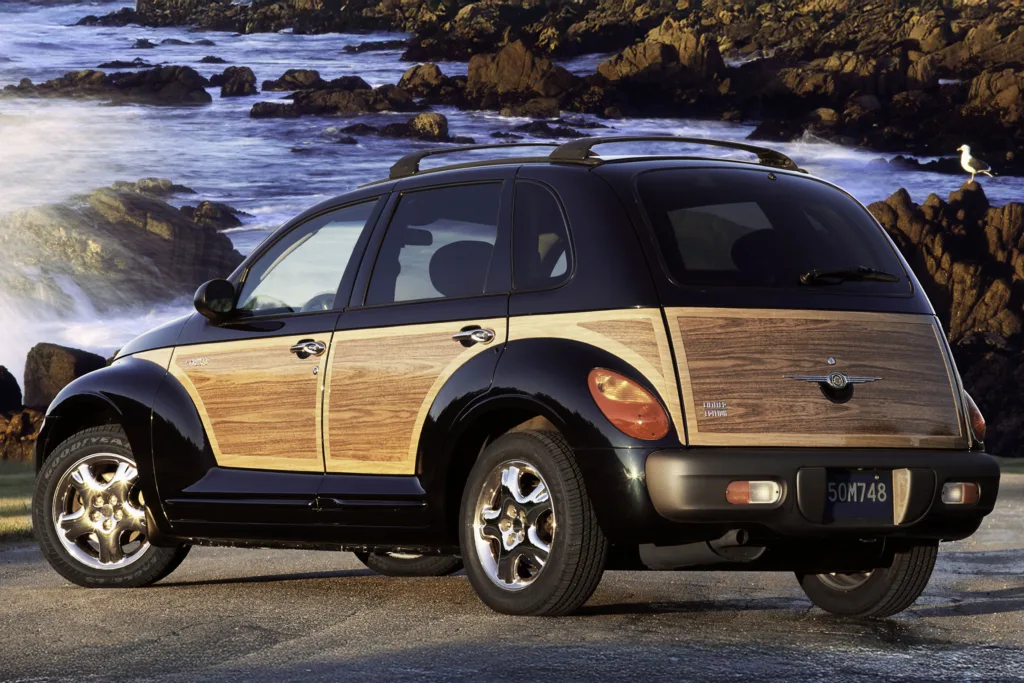
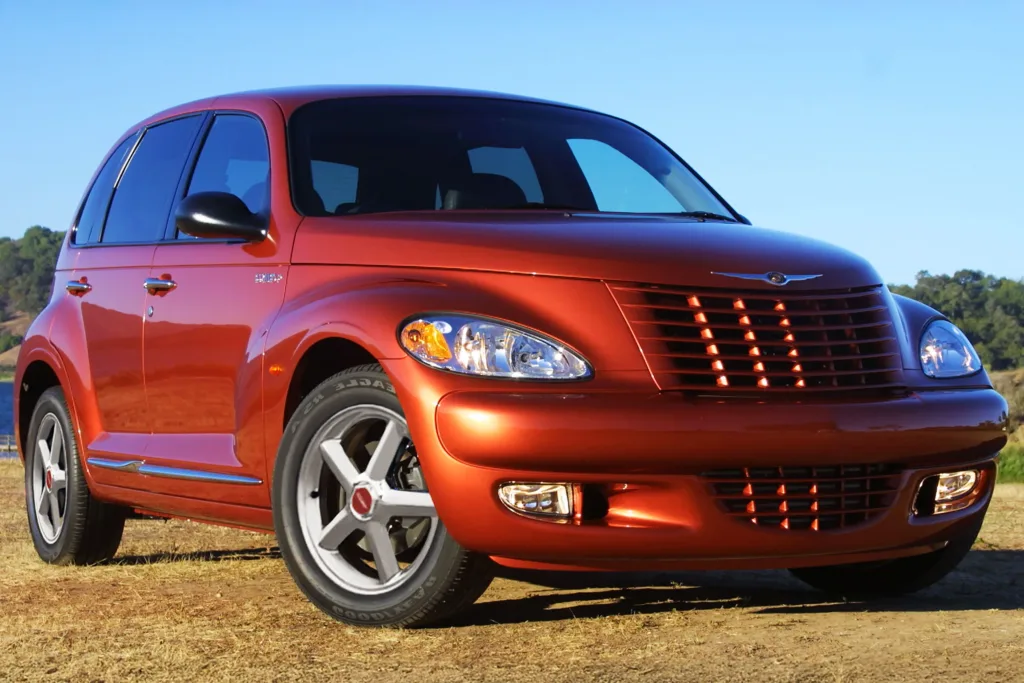
In 2005, Chrysler added the PT Cruiser Convertible, which retained the distinctive retro aesthetic but offered an open-top driving experience. The convertible featured a reinforced body structure and remained in production through 2007. Other special editions, such as the “Dream Cruiser,” “Woodie Edition,” “Street Cruiser,” and “Pacific Coast Highway Edition,” featured unique paint schemes, chrome details, and interior upgrades designed to attract enthusiasts seeking personalization straight from the factory.

Global Popularity and Fan Culture
Part of the PT Cruiser’s lasting appeal lies in its dedicated global fan community. Enthusiasts around the world formed PT Cruiser owner clubs, hosting rallies and custom car shows. Many turned their cars into rolling works of art, adding flame decals, wood panels, and chrome accessories reminiscent of vintage hot rods. Chrysler fully embraced this culture, even running design contests under the theme “Cruiser of Your Dreams”, encouraging owners to personalize their vehicles in creative ways.
The PT Cruiser’s unique shape and nostalgic design also made it a popular choice among collectors of unconventional cars. Even today, well-preserved examples appear at retro car meets across North America and Europe.
Legacy and Conclusion
Although production ended in 2010, the PT Cruiser’s legacy remains significant. Over its lifespan, Chrysler produced more than 1.3 million units worldwide, proving that emotional design could still sell in the mass market. It bridged multiple categories—part hatchback, part wagon, part crossover—and reintroduced the idea that small cars could have big personalities.
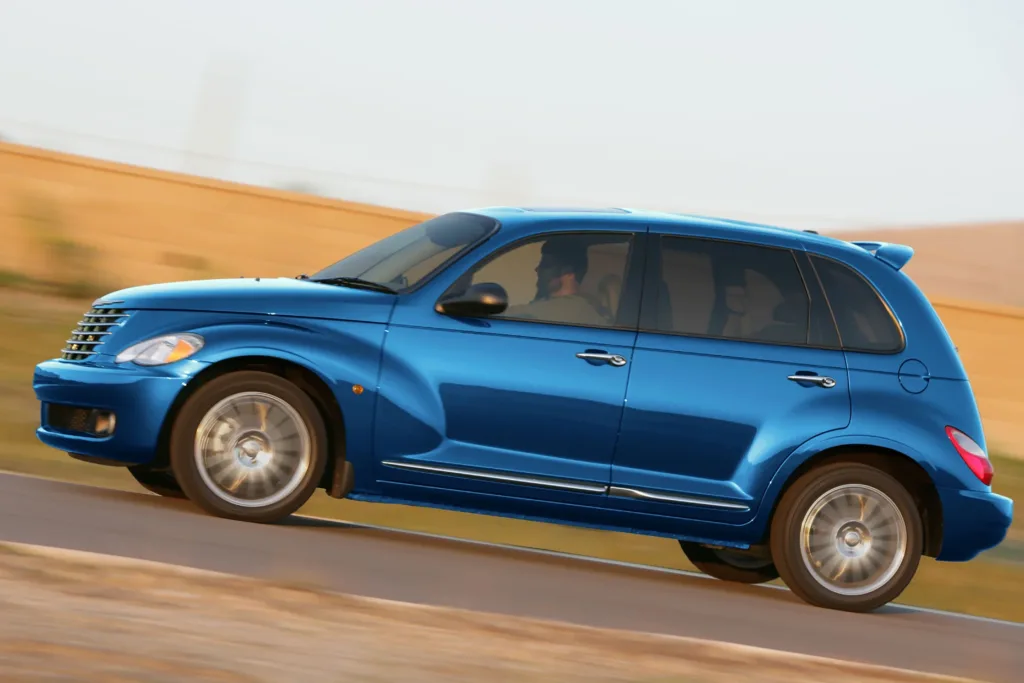
For many drivers, the PT Cruiser represented an intersection of practicality and individuality—a car with the soul of a classic cruiser but the heart of a dependable daily driver. Its distinctive retro styling and unmistakable character ensured that, love it or hate it, the PT Cruiser could never be ignored.



Functional Always active
Preferences
Statistics
Marketing