
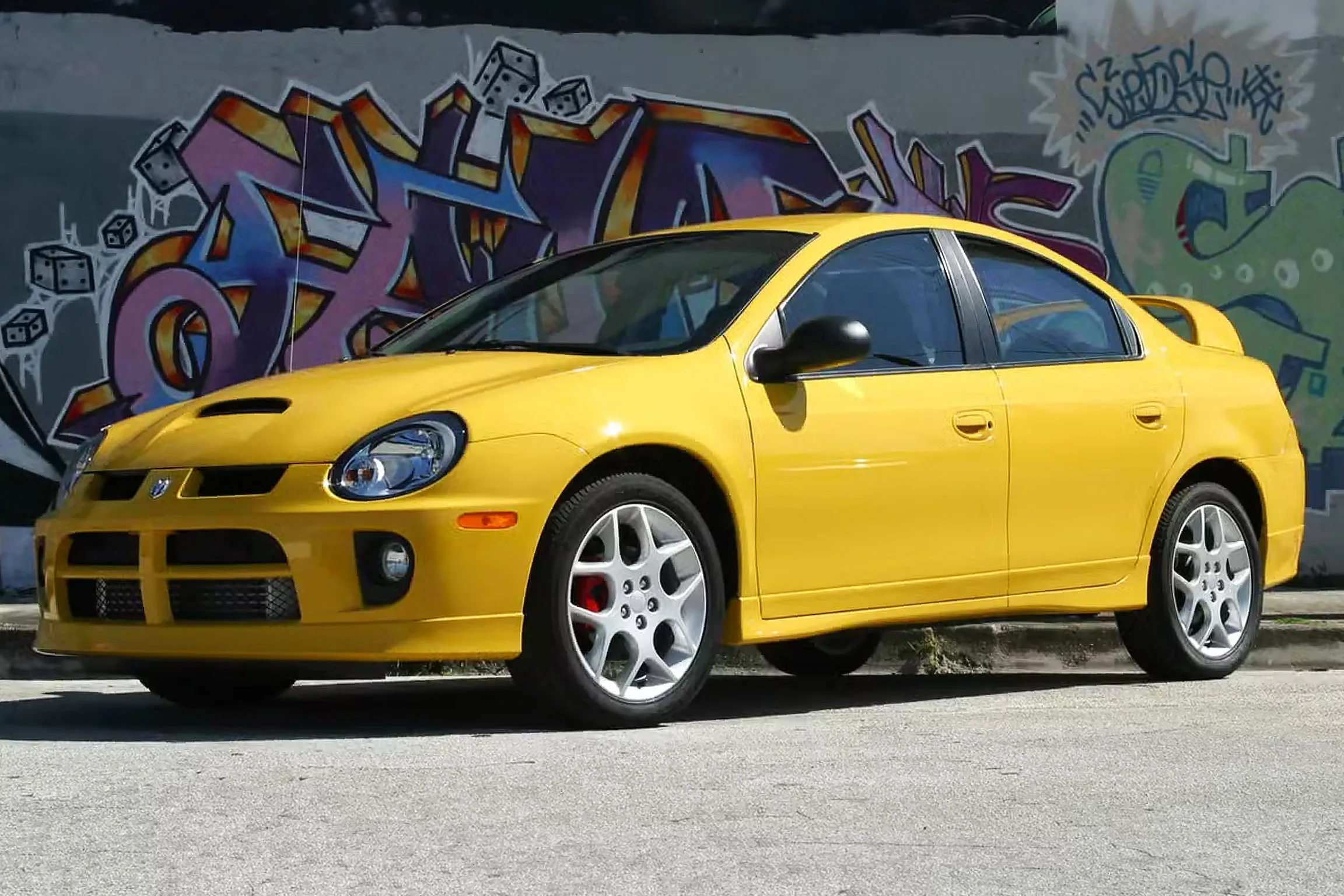
In the early 2000s, a new breed of affordable performance cars began to dominate the streets. Compact, light, and turbocharged, these “pocket rockets” blended everyday practicality with track-ready excitement. Among them, one car stood apart—not from Japan, but from the heart of Detroit.
The 2003 Dodge Neon SRT-4 was Chrysler’s improbable answer to the turbocharged imports of the day, turning the humble Neon economy car into one of the fastest, most aggressive front-wheel-drive machines America had ever built.
From Commuter Hatchback to Street Hero
The legacy began with the original Dodge Neon, introduced in 1994 as a budget-friendly subcompact known for its low price, lively handling, and cheerful design. Starting at under $10,000, it gave Dodge a global foothold in the small-car market. Yet as the decade progressed and the rise of powerful Japanese compacts like the Mitsubishi Eclipse, Honda Civic Si, and Subaru WRX captivated younger drivers, Chrysler saw an opportunity to push its engineering boundaries—and its image.
Enter SRT (Street and Racing Technology), Chrysler’s in-house high-performance division responsible for the Viper SRT-10, Ram SRT-10, and other extreme models. The Neon SRT-4 became one of its earliest mainstream production projects, meant to showcase what could happen when American engineering met turbocharged innovation.
Engineering an American Turbo Compact
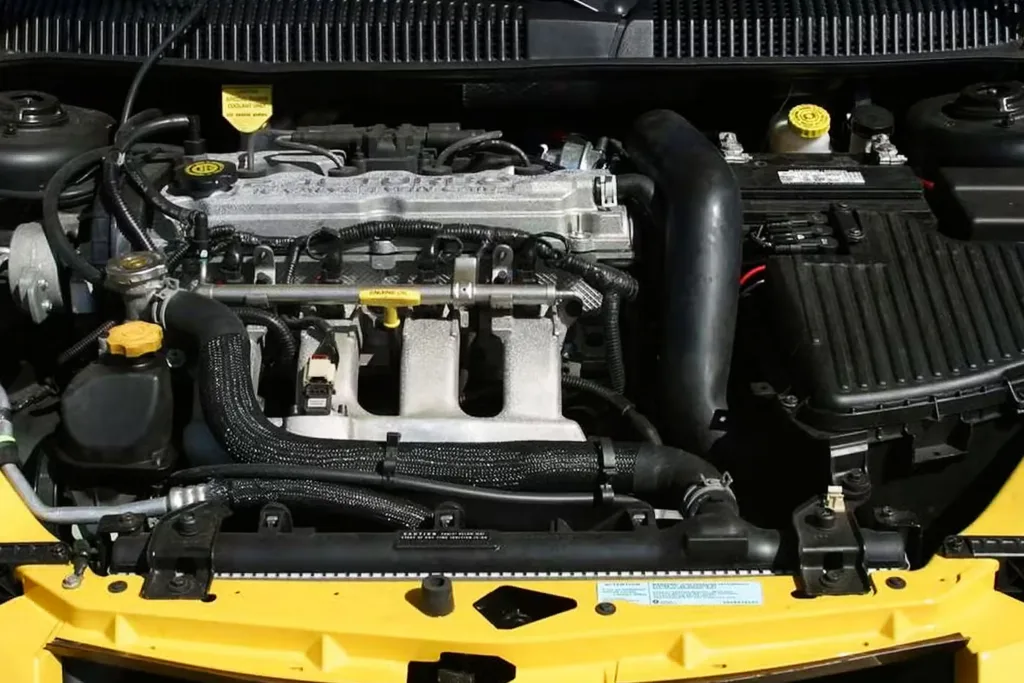
Under the hood sat a heavily modified 2.4-liter DOHC inline-four engine, originally derived from Chrysler’s corporate engine used in the PT Cruiser. In SRT form, the motor received a Mitsubishi TD04LR-16GK turbocharger, intercooler, forged internals, and an upgraded fuel system, raising output to 215 horsepower (officially rated at 212 hp at launch) and 245 lb-ft of torque—numbers unheard of for a U.S. compact in its price range.
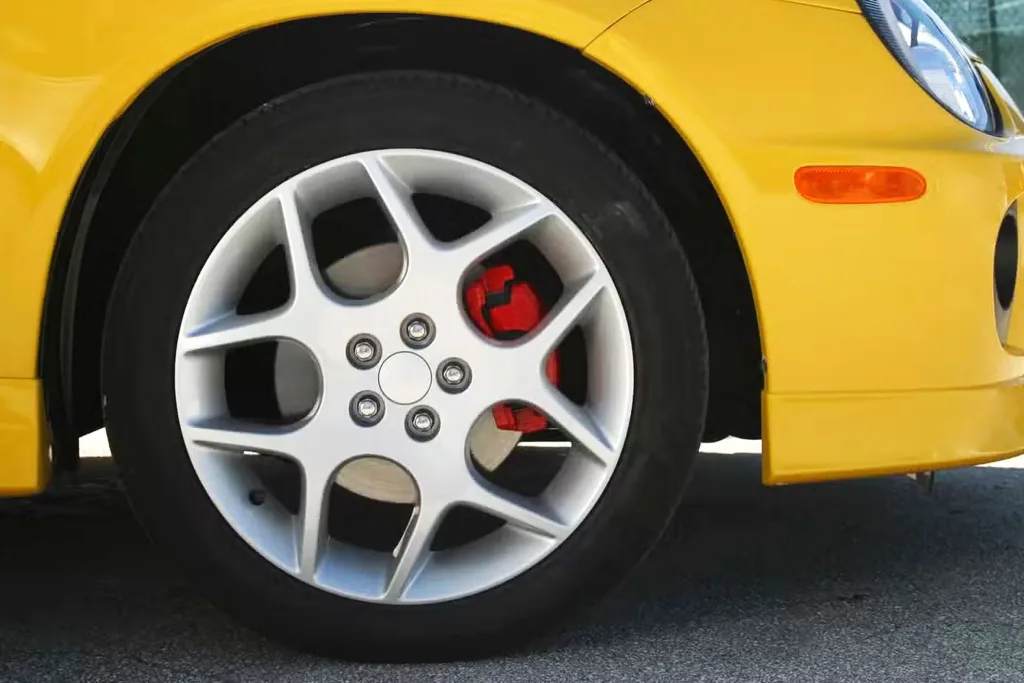
Power was sent exclusively to the front wheels through a five-speed manual transmission built by New Venture Gear, with stronger synchros and gears designed to handle turbocharged torque. Chrysler’s engineers also reworked the suspension geometry, adding stiffer springs, thicker anti-roll bars, and 17-inch alloy wheels wrapped in Z-rated tires. Large disc brakes on all four corners improved stopping power dramatically, while a limited-slip differential became standard in later model years to help manage traction under aggressive acceleration.
Performance that Shocked the Imports
On paper, the Neon SRT-4’s numbers didn’t seem revolutionary—but behind the wheel, it was a different story. According to independent testing, the car could rocket from 0 to 60 mph in 5.6 seconds and cover the quarter-mile in just over 14 seconds, with a verified top speed of 239 km/h (148 mph). These figures trounced most of its front-wheel-drive rivals and even challenged more expensive rear-wheel-drive sports coupes of the era.
Despite being a four-door compact that weighed just over 1,300 kg (2,900 lb), the SRT-4’s turbocharged punch and short gearing transformed it into a genuine street weapon.
Enthusiasts praised its explosive mid-range power, durable gearbox, and raw driving attitude—a welcome contrast to the more polished but softer Japanese competitors. The SRT-4 wasn’t about refinement; it was about attitude, speed, and bang-for-your-buck performance.
Race-Ready DNA
The Neon SRT-4 wasn’t simply built for straight-line speed. It quickly proved itself in motorsport, too. Dodge positioned the SRT-4 to compete in the NHRA’s new sports compact drag division, where it dominated thanks to its torque-heavy turbo engine and strong aftermarket support.
It also shined in SCCA Showroom Stock and Solo II autocross events, often outpacing rivals from Honda, Nissan, and Subaru. Chrysler even sponsored teams to showcase the car’s racing credibility, turning it from a tuner curiosity into a legitimate performance platform.
The “SRT” division backed the model with a full catalog of factory-approved upgrades, from performance exhaust systems and intercoolers to stage tuning kits, allowing owners to push horsepower well past the 250-hp mark with minimal modification. These upgrades turned the SRT-4 into one of the most tuner-friendly performance cars ever made by an American manufacturer.
Design and Driving Experience
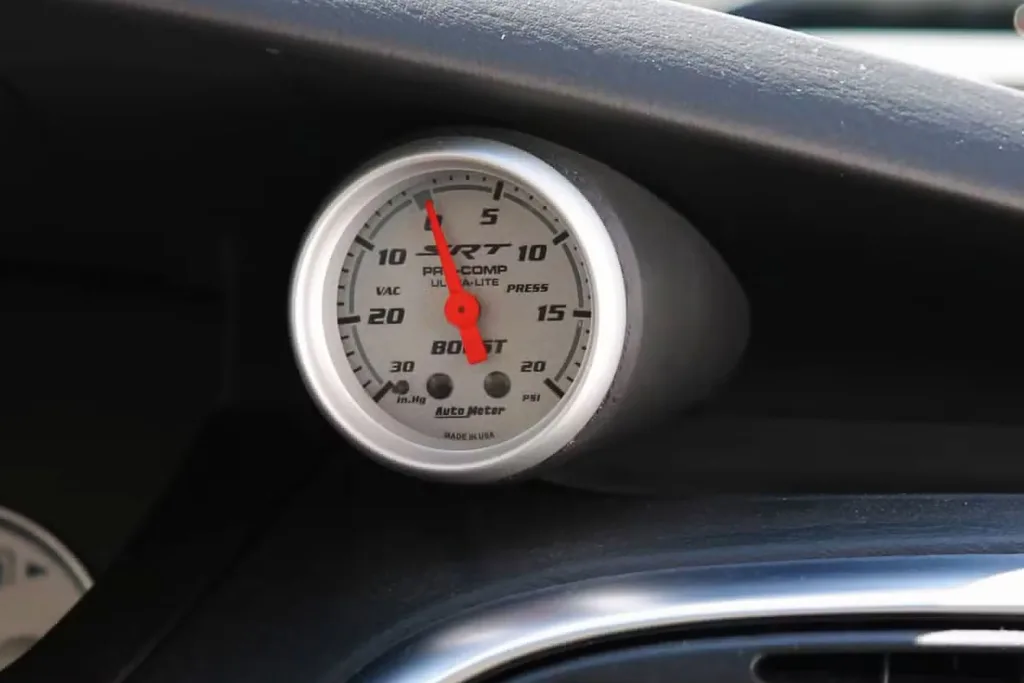
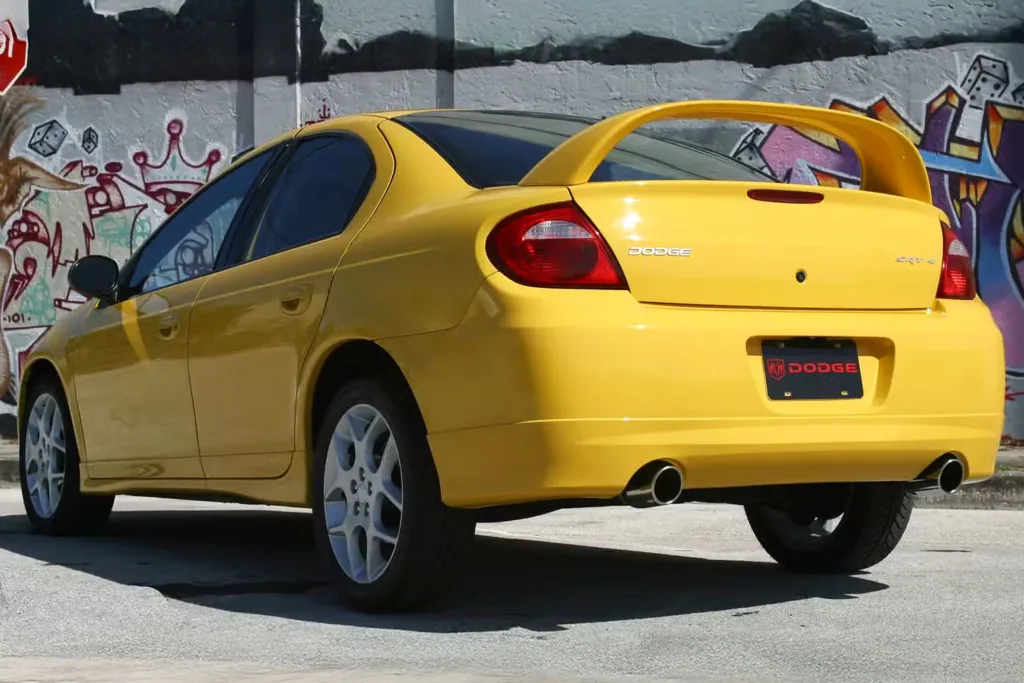
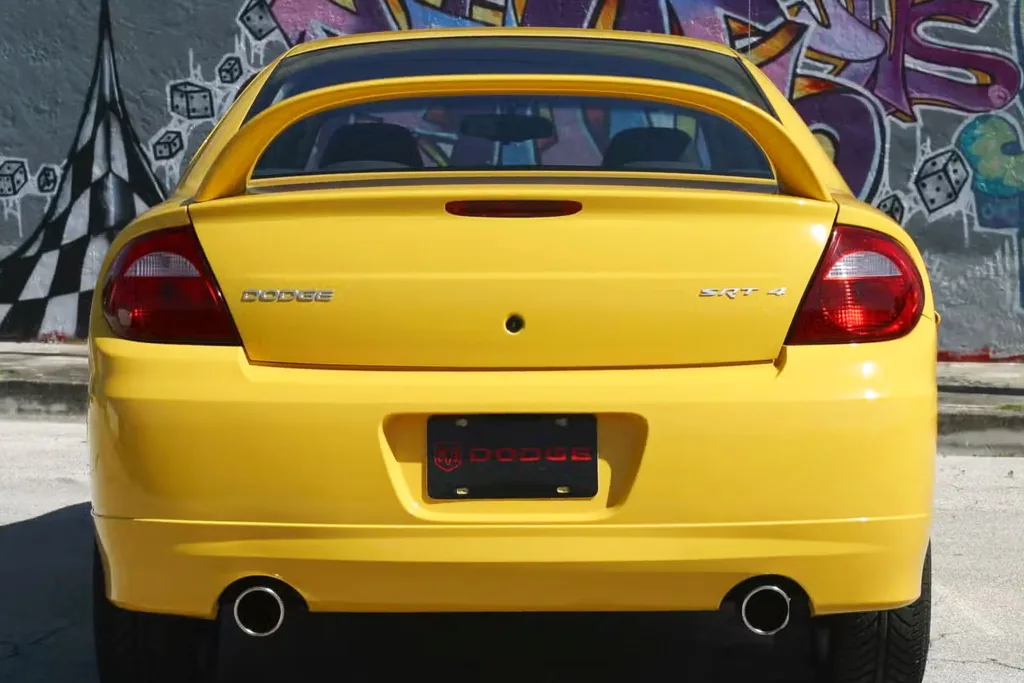
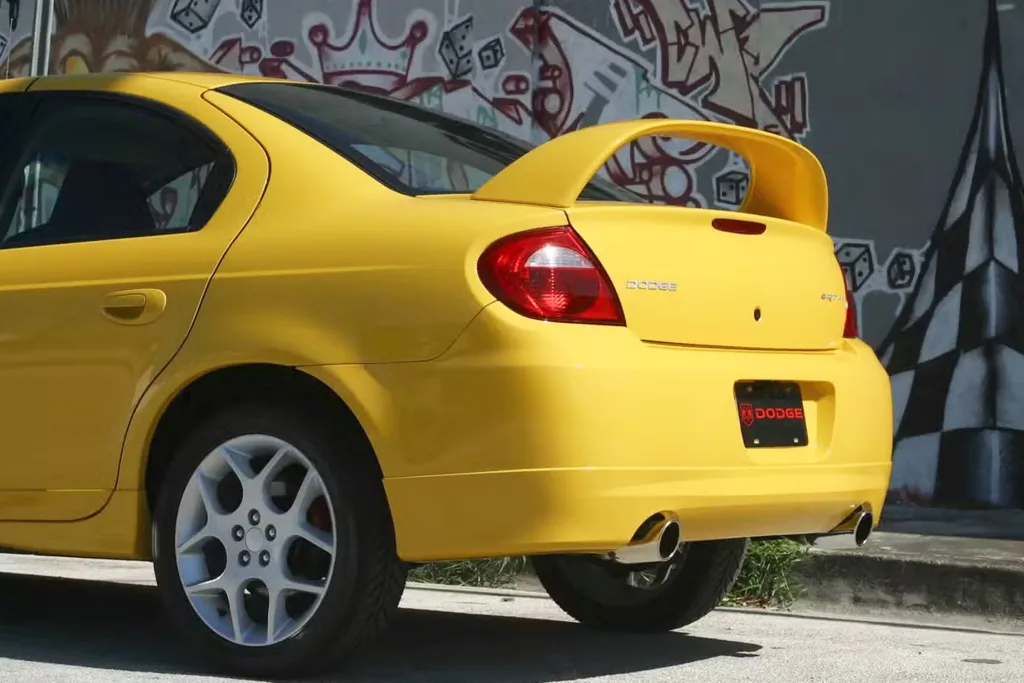
While its styling remained recognizably Neon, the SRT-4 carried a distinctly aggressive look. Its large intercooler opening, hood scoop, rear wing, and dual chrome exhaust tips left no doubt about its intentions. Inside, the car received deep-bolstered sport seats, silver-faced gauges, and boost-pressure instrumentation, reinforcing its focused, no-nonsense personality.
The cabin design was simple but efficient—lightweight materials kept costs and mass low, while SRT engineers prioritized driver engagement above all else. The unfiltered driving feel and turbocharged whistle soon became part of the SRT-4’s unmistakable personality, earning it a devoted following.
Legacy and Cultural Impact
Production of the Dodge Neon SRT-4 ran from 2003 to 2005, with incremental upgrades along the way, including a factory Quaife limited-slip differential and subtle ECU refinements. By the end of its short life, the SRT-4 had shattered expectations of what an American compact could deliver.
More than two decades later, it stands as a cult classic among enthusiasts. Its combination of affordability, raw power, and factory-backed performance makes it one of the most significant American sport compacts ever built. The SRT-4 represented a turning point for Dodge—proof that U.S. automakers could take on the tuner world and win on their own terms.


Functional Always active
Preferences
Statistics
Marketing