
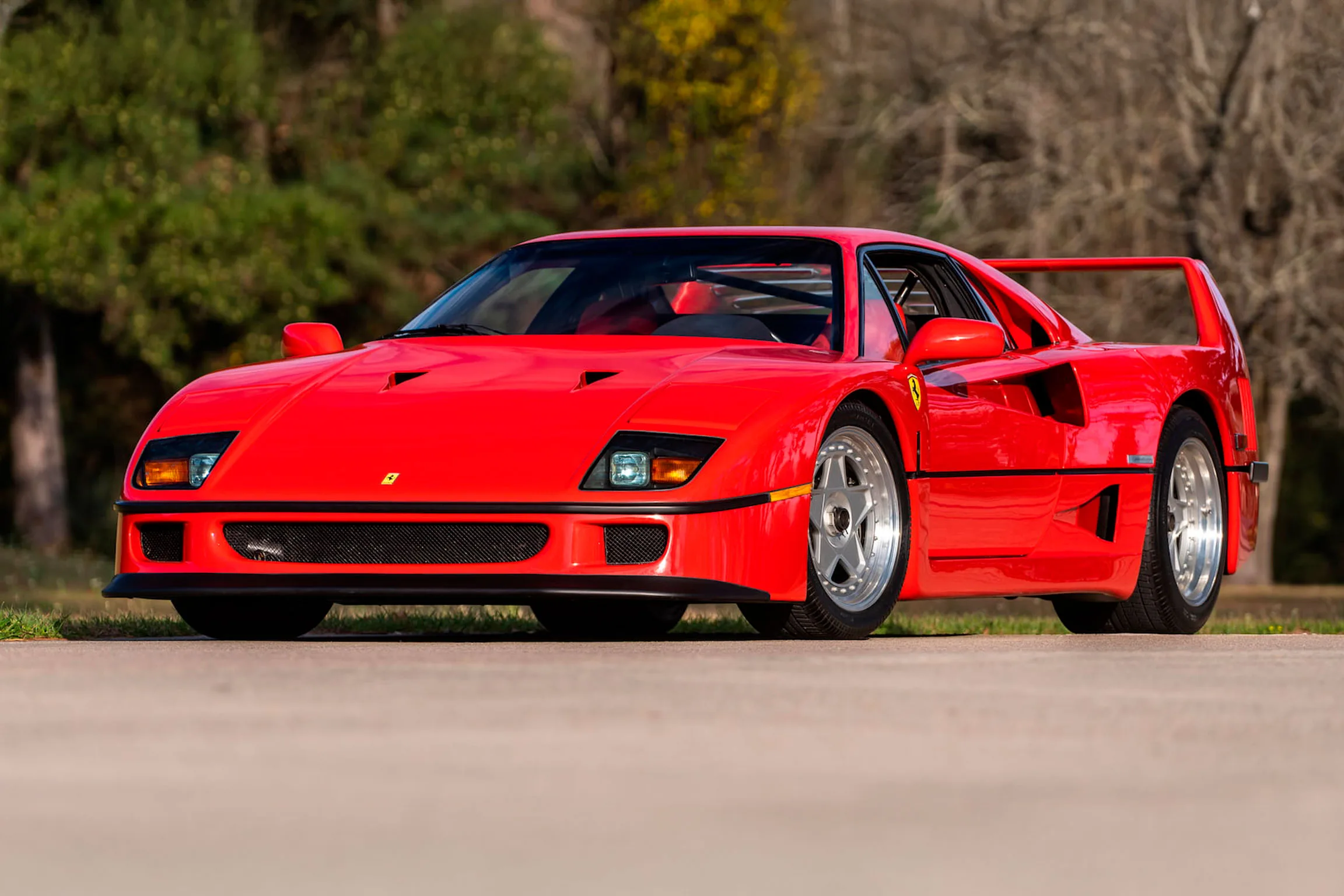
When Ferrari unveiled the F40 in July 1987, it wasn’t merely celebrating 40 years of the brand—it was enshrining the life’s philosophy of Enzo Ferrari himself. Built as a “street-legal race car,” the F40 represented the purest manifestation of Ferrari’s motorsport heritage translated onto public roads. It was a car conceived without compromise, a raw, analog machine that embodied the essence of speed, precision, and racing authenticity.
The F40 would become more than a celebration model—it would become a legend, the last supercar personally overseen by Enzo before his death the following year.
A Legacy Born from Racing DNA
The F40 traced its mechanical lineage to Ferrari’s Group B homologation project, the 288 GTO, launched at the 1984 Geneva Motor Show. Although Group B racing was canceled before the 288 GTO could compete, its technology and chassis design laid the groundwork for something even more extraordinary. Ferrari’s engineers, led by Nicola Materazzi, seized the opportunity to create the ultimate road car—a machine that captured the thrill of Formula racing yet remained drivable outside the circuit.
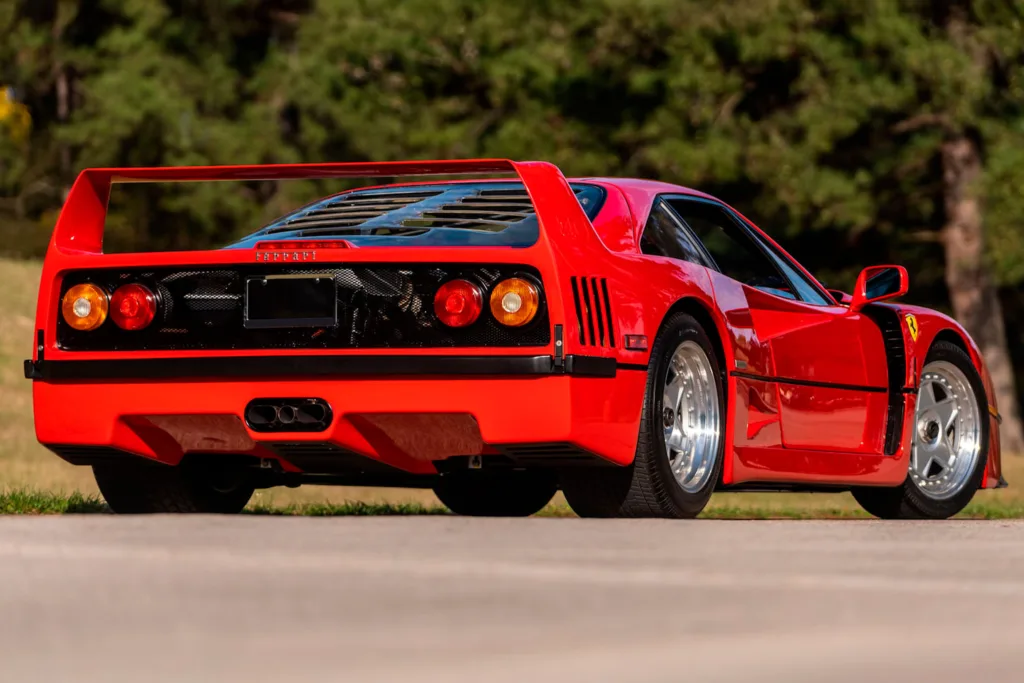
The design and development process was relentless. Every decision was guided by Enzo Ferrari’s demand for mechanical purity: “Make it functional, make it fast, and above all, make it uncompromising.” The result was a masterpiece that fused the technology of the track with an unmatched sense of occasion behind the wheel.
Lightweight Engineering: Simplicity Perfected
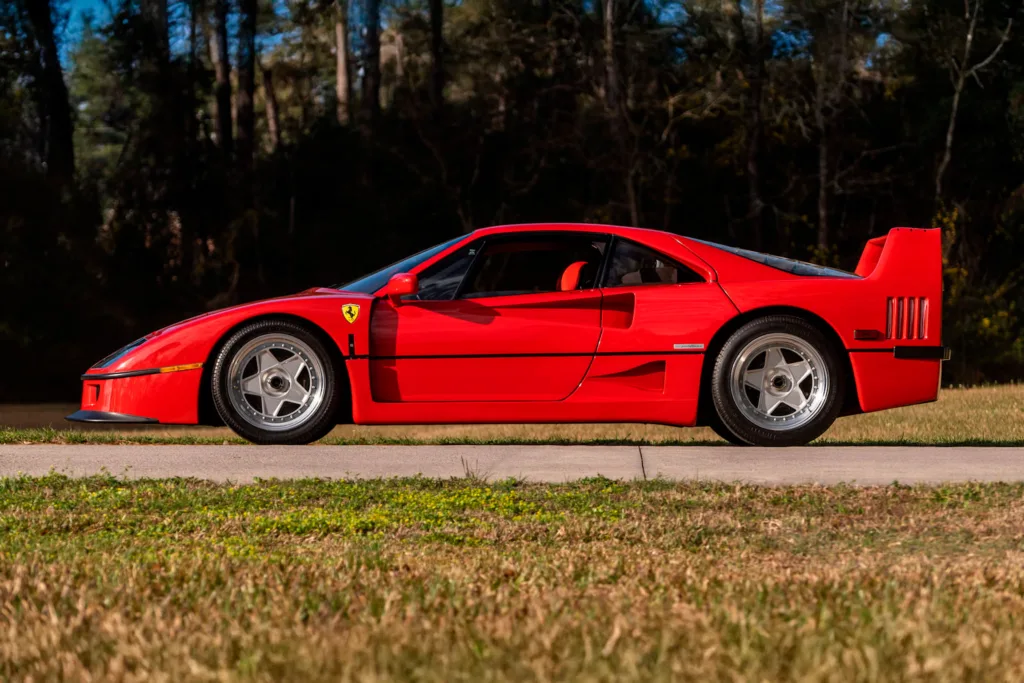
The F40’s structure represented a breakthrough in Ferrari’s approach to road car construction. While the basic frame used a traditional tubular steel spaceframe, it was heavily reinforced with carbon fiber, Kevlar, and aluminum honeycomb composites—materials that had previously been reserved for Formula One cars. Every surface, from the body panels to portions of the chassis skin, was engineered for one purpose: to reduce mass and maximize stiffness.
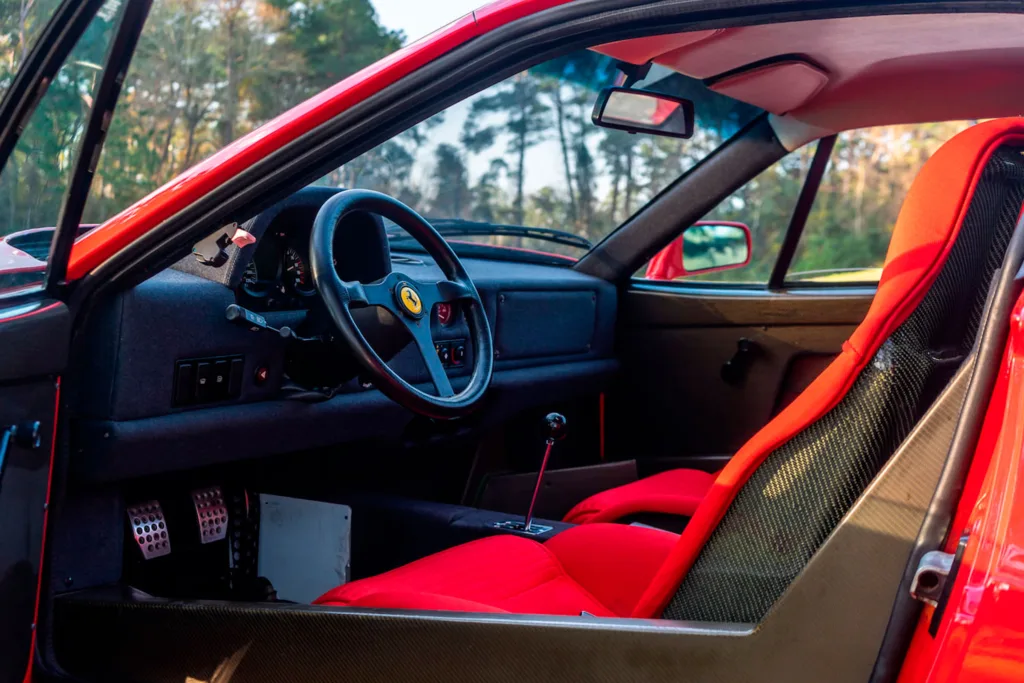
At just 1,100 kilograms (2,425 lbs), the F40 was astonishingly light for a car of its size and power. Even the interior reflected this obsession with weight savings: no carpet, minimal insulation, bare carbon panels, and simple lightweight bucket seats. The F40 stripped away every unnecessary detail—it was an instrument of performance, not luxury.
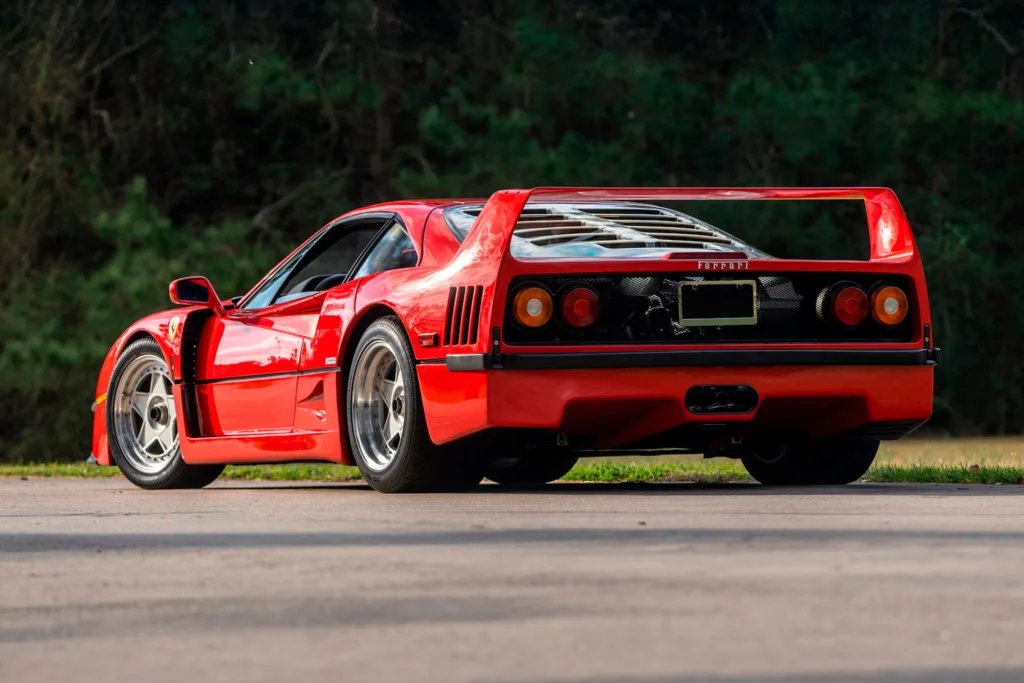
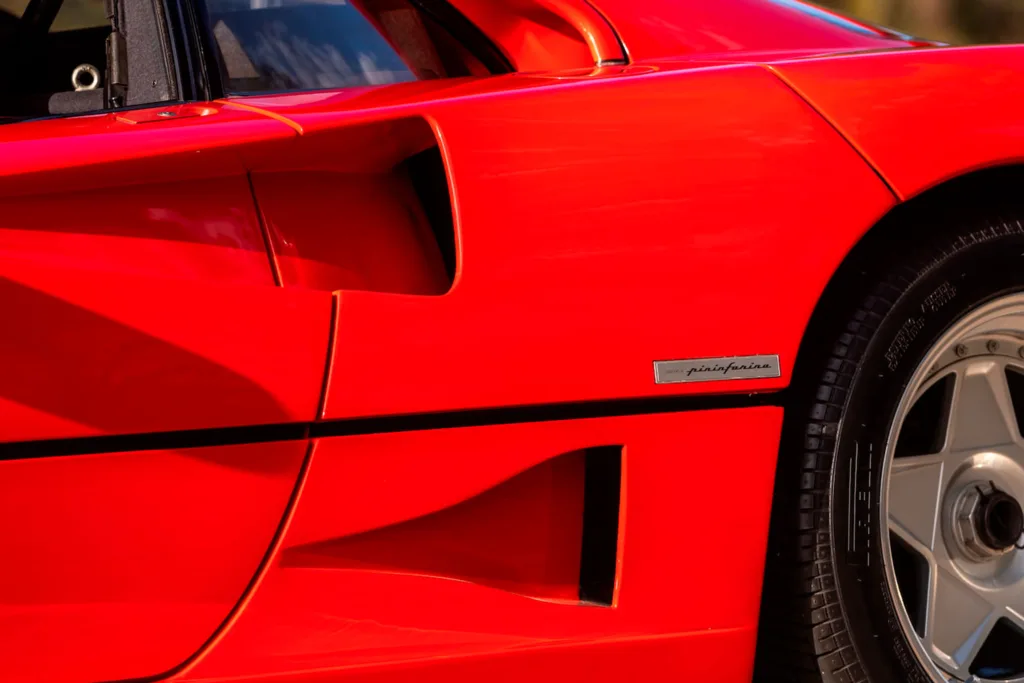
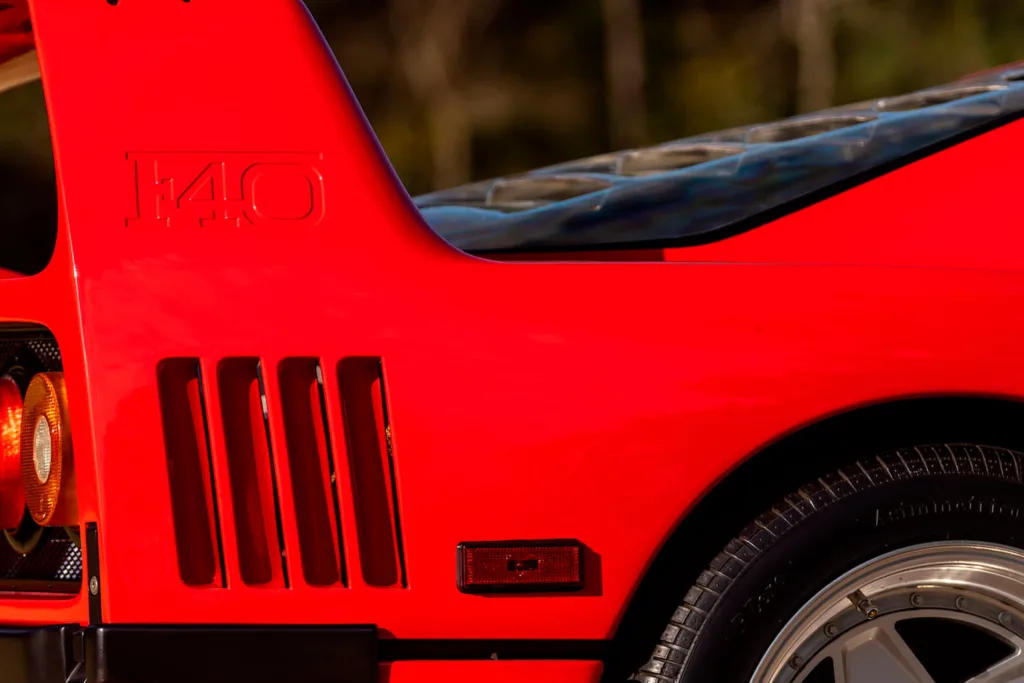
Aerodynamics were handled with race-grade precision. Its wedge-shaped profile, large rear wing, and air-intake channels carved into the body were not aesthetic flourishes but functional necessities, developed through wind-tunnel testing at Pininfarina. The car’s uncompromising design produced high downforce at speed while maintaining balance and stability, defining its unmistakable silhouette.
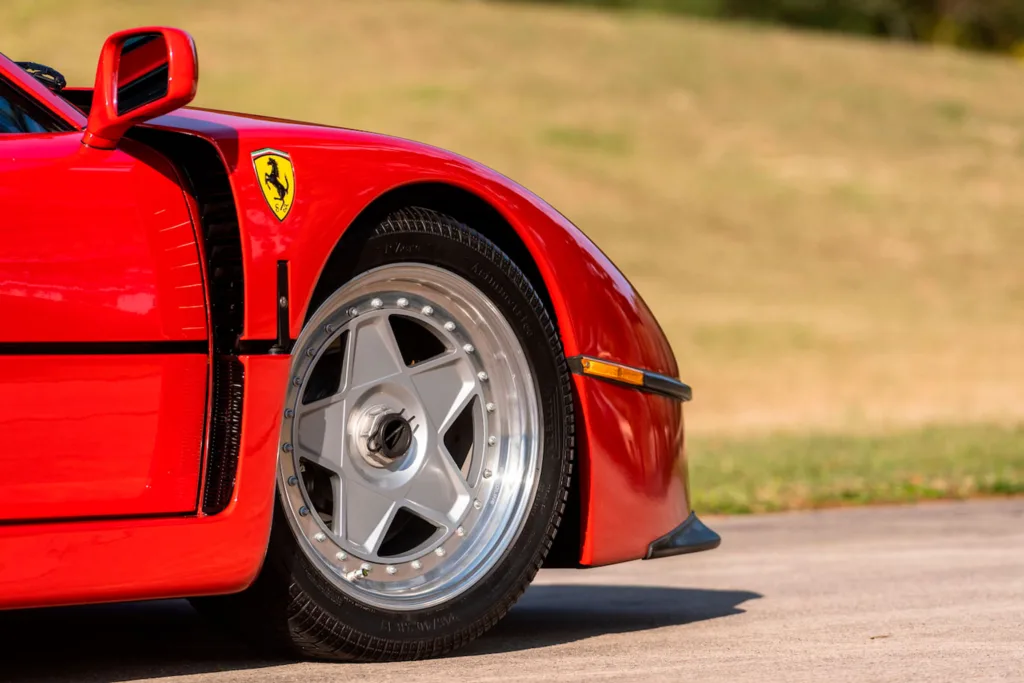
Twin-Turbocharged Power: Brutal and Beautiful
At the heart of the F40 lay a ferocious 2.9-liter DOHC V8 twin-turbo engine, a descendant of the 288 GTO’s F114B block, modified for even greater displacement and performance. Its twin IHI turbochargers, revised intercoolers, and updated boost control system pushed output to an explosive 478 horsepower at 7,000 rpm and 58.8 kgfm (577 Nm) of torque.
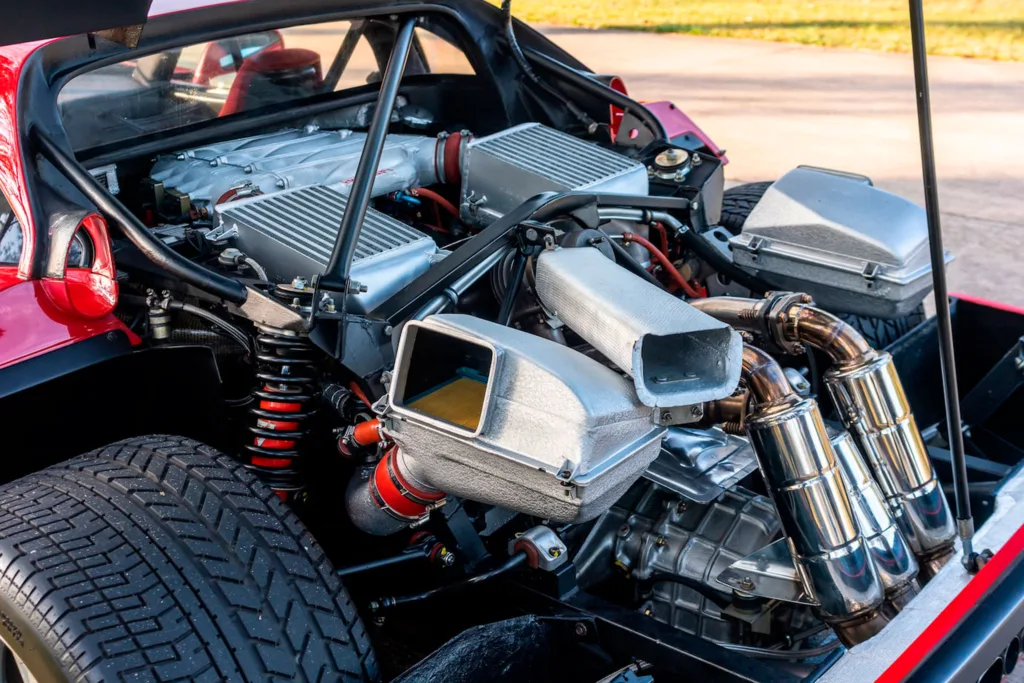
This power was transmitted through a five-speed manual gearbox, the only transmission option—true to Enzo’s belief that a driver’s connection to a car should never be filtered through automation. The result was staggering: 0–100 km/h (0–62 mph) in 3.9 seconds, 0–200 km/h (124 mph) in 11 seconds, and a verified top speed of 324 km/h (201 mph), making the F40 the fastest production car in the world in 1987.
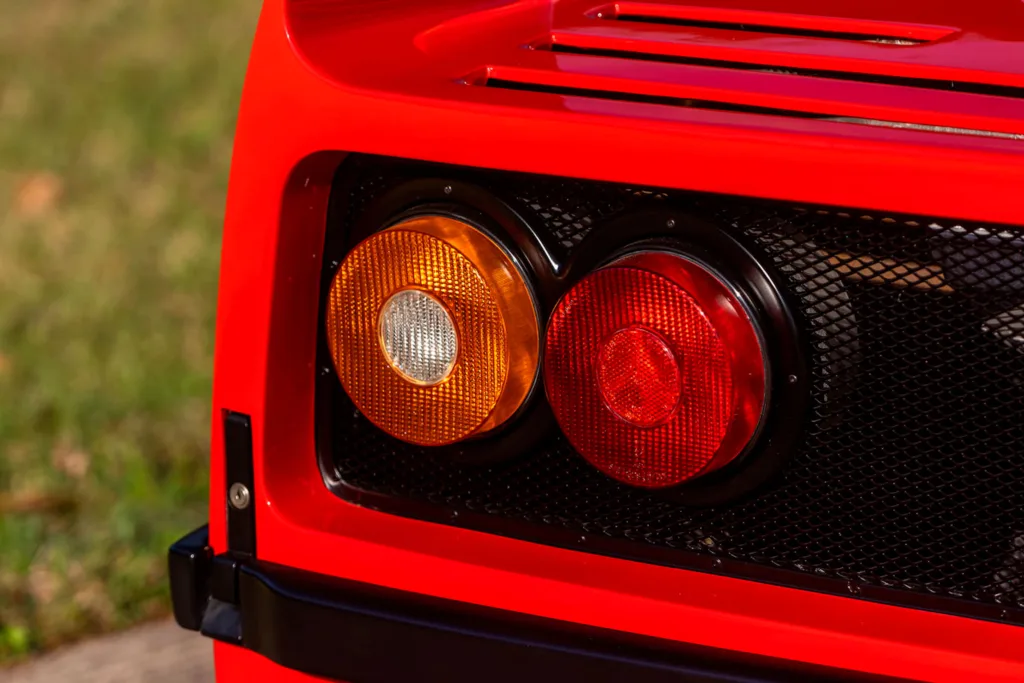
Driving the F40 was an experience of unfiltered adrenaline. Its turbo lag was pronounced, but once the turbos spooled, the car erupted forward with explosive force, demanding precision and respect. There were no stability systems, no traction aids—only the driver’s skill stood between control and chaos.
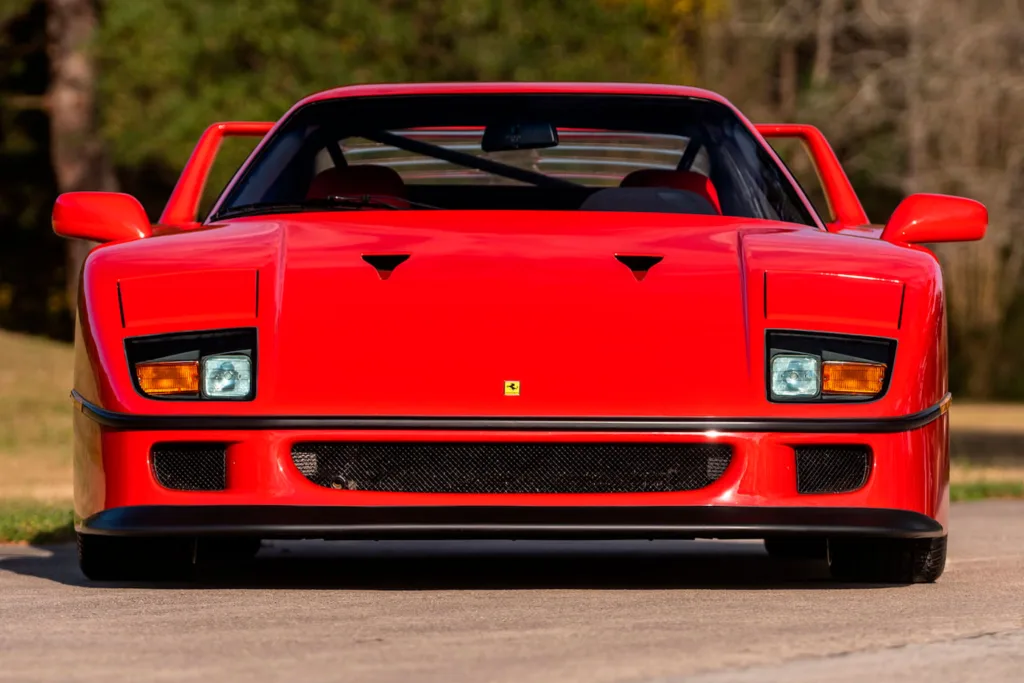
Built by Hand, Driven by Passion
Production of the F40 began in 1987 and continued into the early 1990s, with the final examples completed in 1992. Originally intended for a limited run of 400 units, the car’s overwhelming popularity led Ferrari to build over 1,300 examples due to unprecedented global demand. Each car was hand-assembled at Maranello, with tolerances and materials reflecting Ferrari’s meticulous craftsmanship.
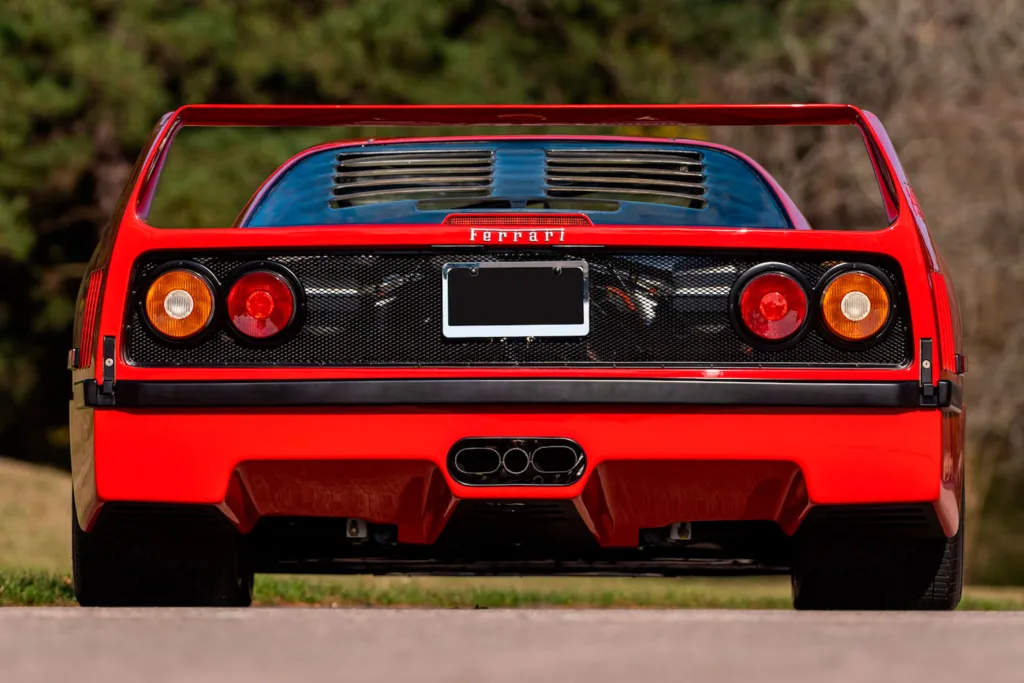
Distinct visual features included its NACA ducts, plexiglass engine cover, and lightweight Lexan windows, all emphasizing weight reduction and aerodynamic priority. Inside, early models even lacked door handles—simple pull straps replaced them, further reinforcing the car’s racing philosophy.
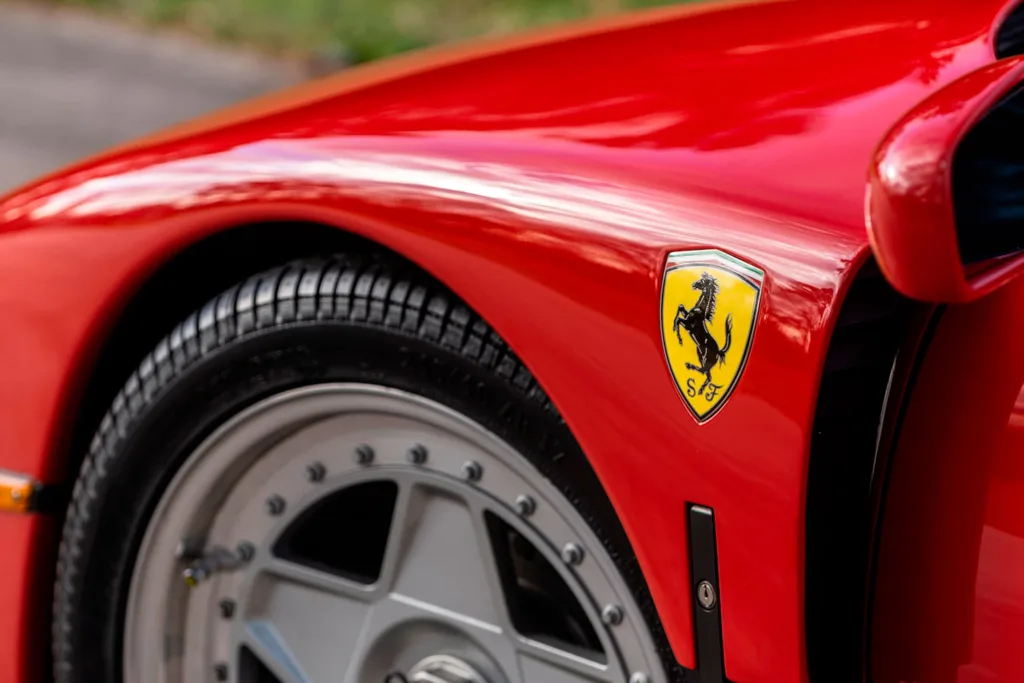
The Final Vision of Enzo Ferrari
Perhaps what makes the F40 truly immortal is its symbolism. It was the last Ferrari supercar created under the supervision of Enzo Ferrari, who passed away in 1988 at age 90. The F40 wasn’t designed to please marketing departments or comfort-seeking customers—it was crafted to demonstrate what Ferrari could accomplish when performance was unrestrained by convention.
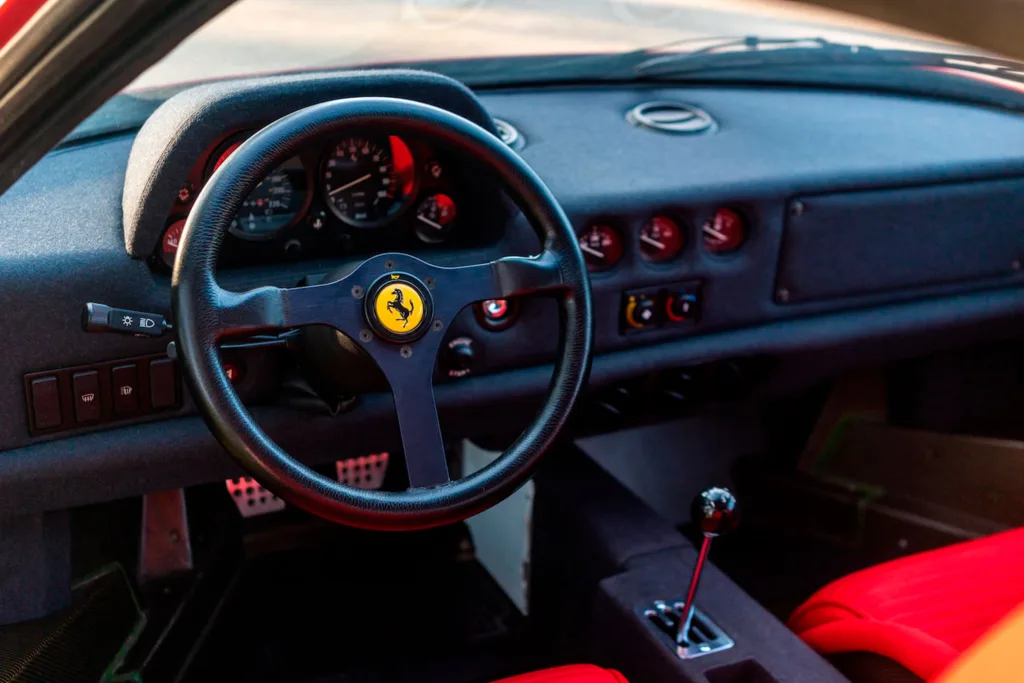
With its unyielding focus on speed, simplicity, and engineering honesty, the F40 became the definitive expression of late-20th-century supercar purity. It bridged the analog age and the modern era, setting new benchmarks for aerodynamics, turbocharging, and weight reduction that influenced generations of Ferraris to come.
Over 30 years later, the Ferrari F40 remains one of the most coveted and revered cars ever built—a machine not just of steel and carbon, but of legacy and soul. It stands as a monument to a man and a company that defined passion through performance, forever echoing Enzo Ferrari’s mantra: “Race cars are neither created nor designed—they are born.”


Functional Always active
Preferences
Statistics
Marketing