
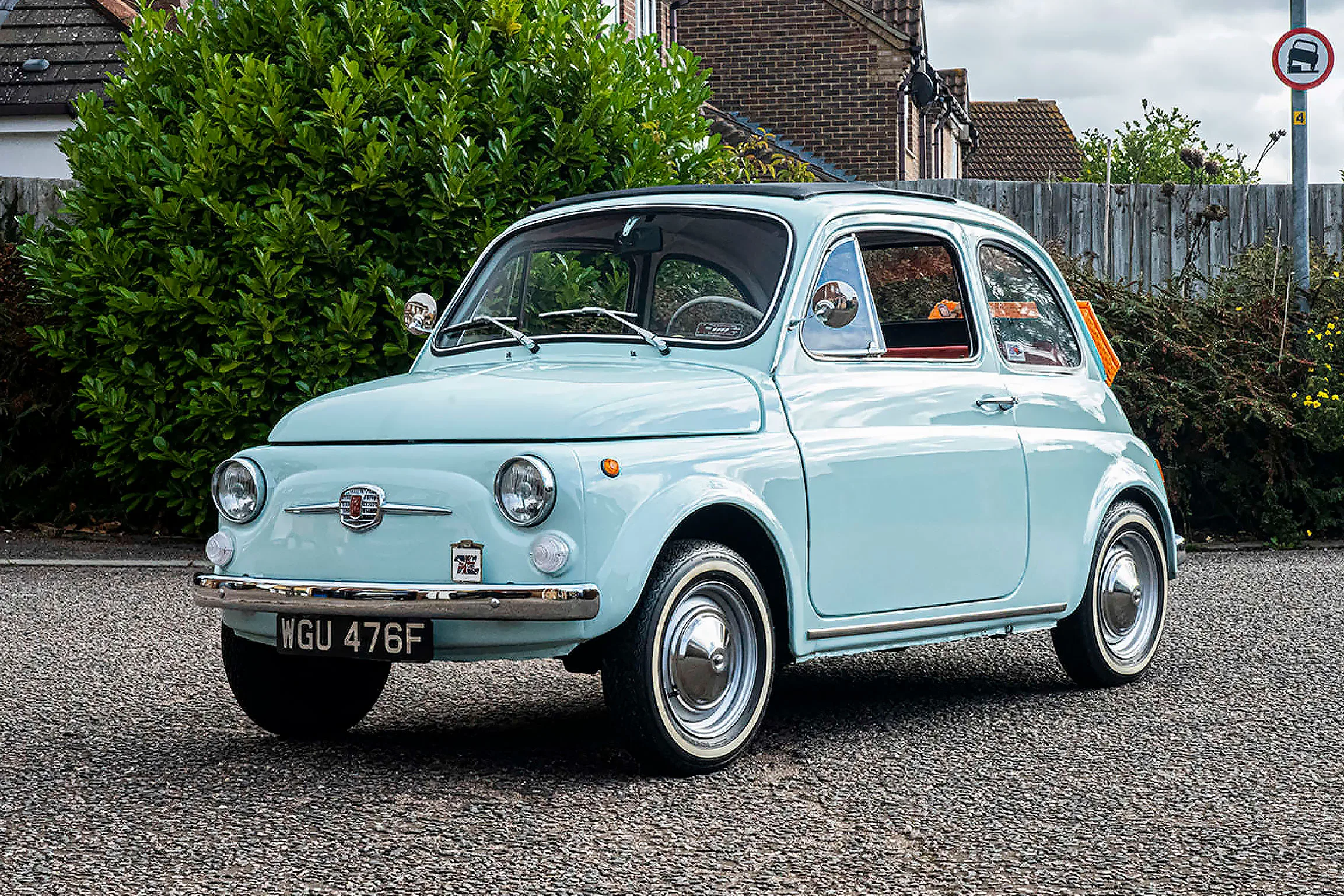
In the postwar years, as Italy set about rebuilding its cities and economy, there emerged a pressing need for a vehicle that was affordable, simple, and practical enough to carry families through the narrow streets of the new urban landscape. Fiat—the cornerstone of Italy’s industrial rebirth—answered this need with a car that would go on to define an era: the Fiat 500. Introduced in 1957, this tiny vehicle transformed mobility, not only in Italy but across Europe, by bringing personal transport within financial reach of ordinary people.
The model most widely remembered today, the Fiat 500 F, debuted in 1965 and continued production until the early 1970s. It represented the definitive form of the classic cinquecento, blending practicality, reliability, and unmistakable charm. Even decades later, its distinctive design—rounded roofline, compact stance, and cheerful face—remains a universal symbol of Italian ingenuity and optimism.
Origins: A Small Car for a Big Idea
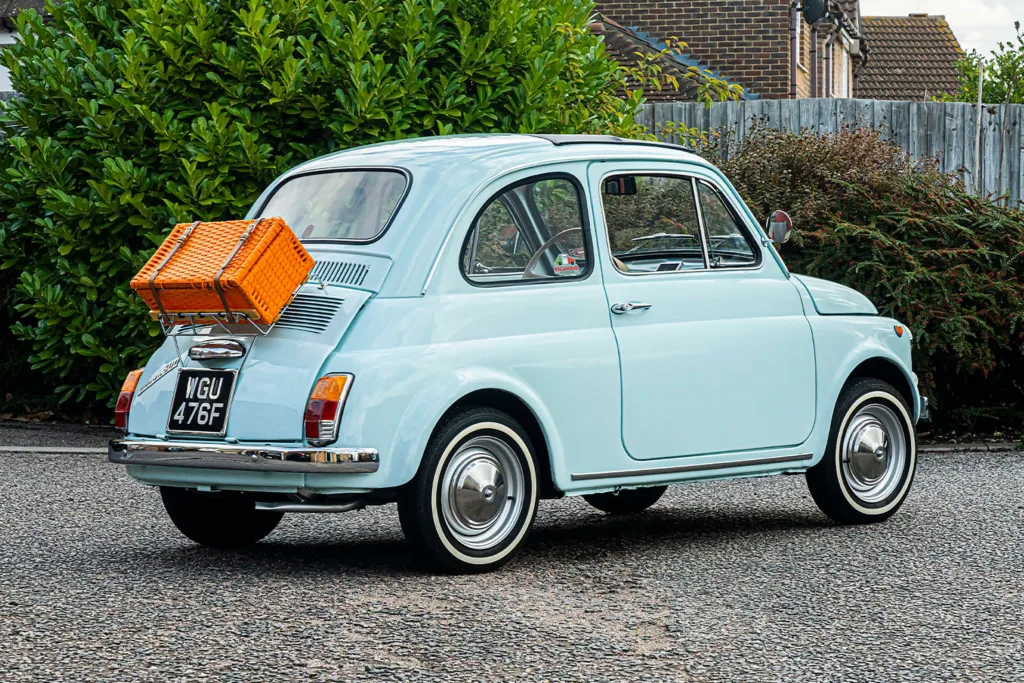
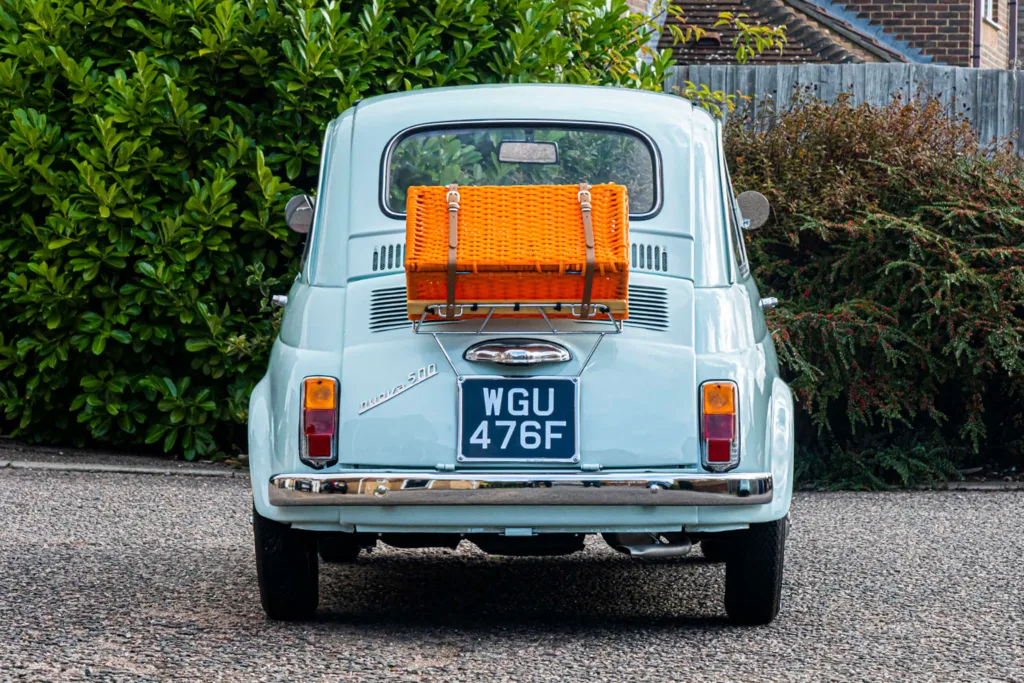
Although it bore a passing resemblance to Fiat’s prewar Topolino, the 500 was entirely new from the ground up. Its mission was clear: to deliver practical transport for the masses in a car that was economical both to buy and run. Unlike the Topolino, which seated only two passengers and had a traditional front-engine layout, the Fiat 500 featured a rear-mounted engine and a monocoque body, marking an important shift in Fiat’s design philosophy.
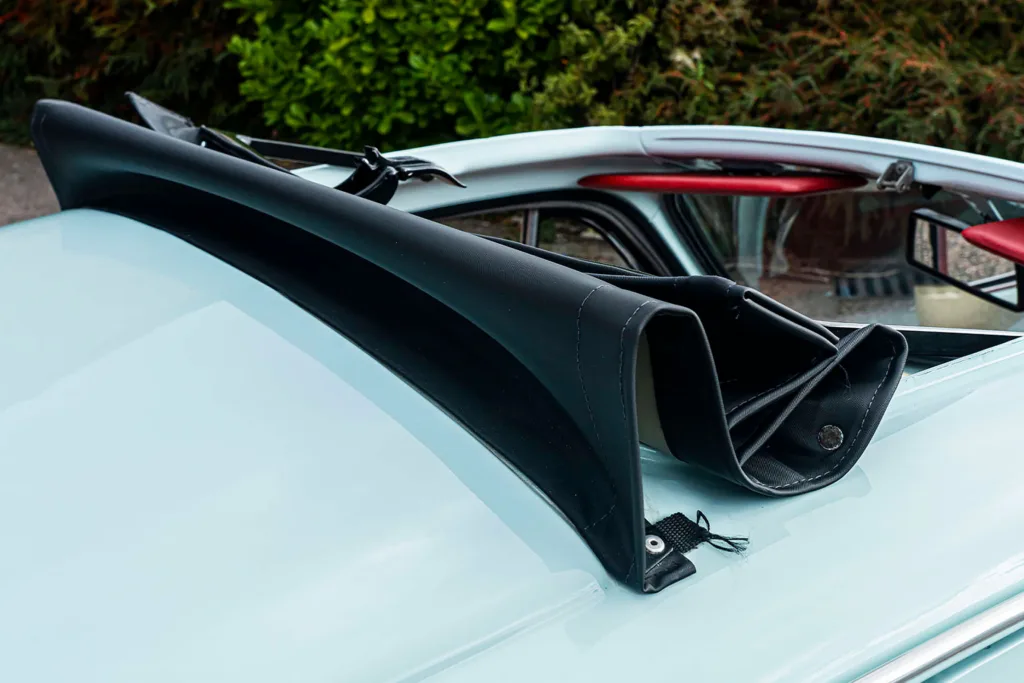
The newfound interior space allowed four occupants—two adults and two children—to travel in surprising comfort for such a small vehicle. The semi-convertible fabric roof, which rolled back down to the rear deck, served both as a ventilation solution and a cost-effective feature, reducing weight and complexity while giving the 500 a breezy, open-air personality perfectly suited to Mediterranean living.
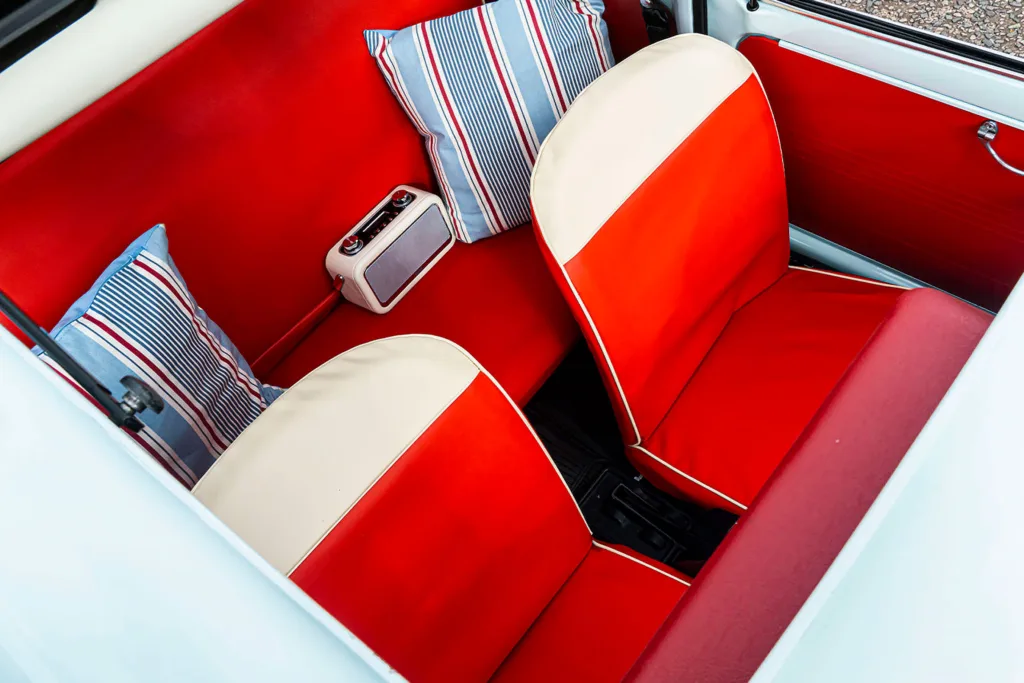
Engineering Simplicity with Character
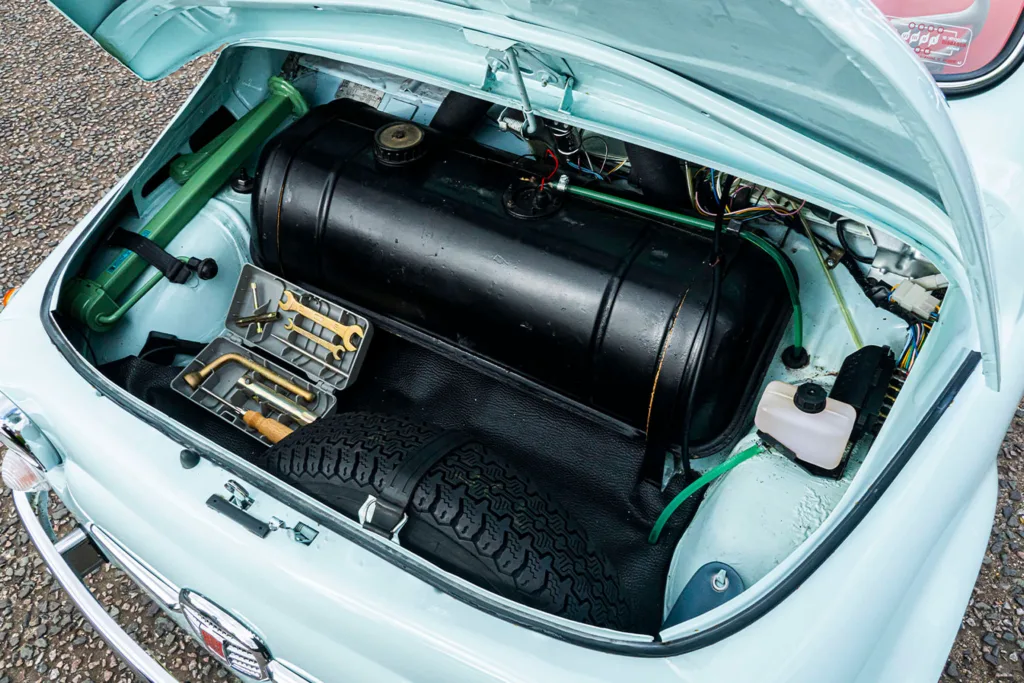
The earliest versions of the Fiat 500 were powered by a 479 cm³ air-cooled, two-cylinder engine with a single camshaft producing 15 horsepower. Modest by any standard, yet more than sufficient to propel the lightweight body to 90 km/h (56 mph). This simplicity was not seen as a limitation but as a strength—it minimized maintenance costs and kept the car’s weight to a mere 470 kilograms, enhancing both efficiency and charm.
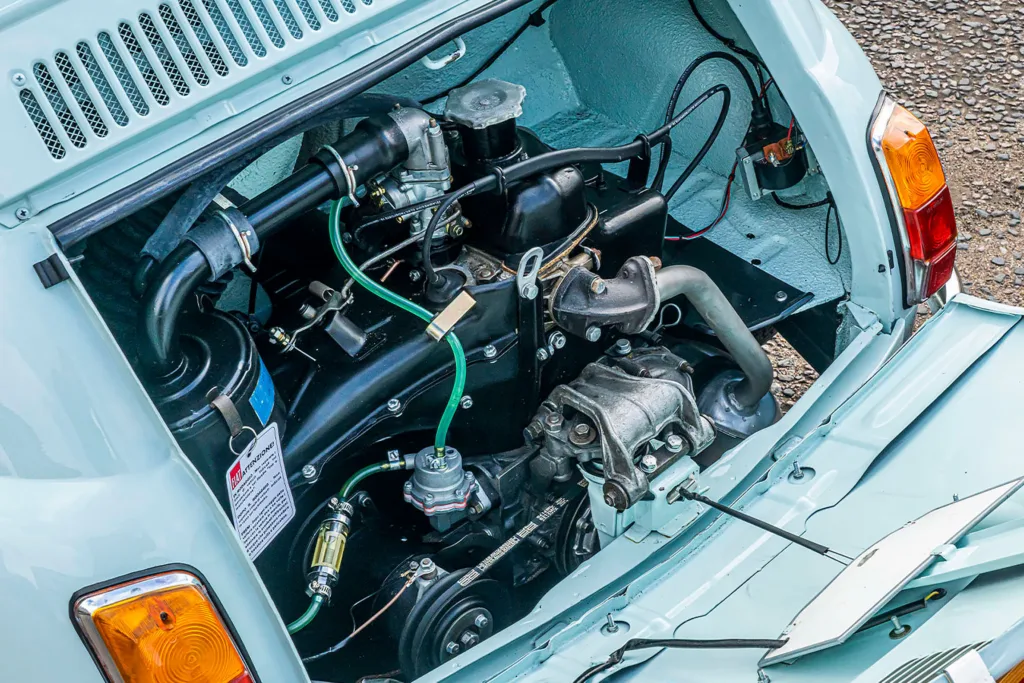
Fiat’s engineers mastered the art of doing more with less. The rear-engine setup improved traction on Italy’s rough rural roads, and the car’s narrow wheelbase and short turning radius made it perfect for navigating the tight alleys of Rome or Milan. Despite minimal insulation, its characteristic puttering engine note became an endearing part of daily Italian life—a cheerful soundtrack to the country’s economic recovery.
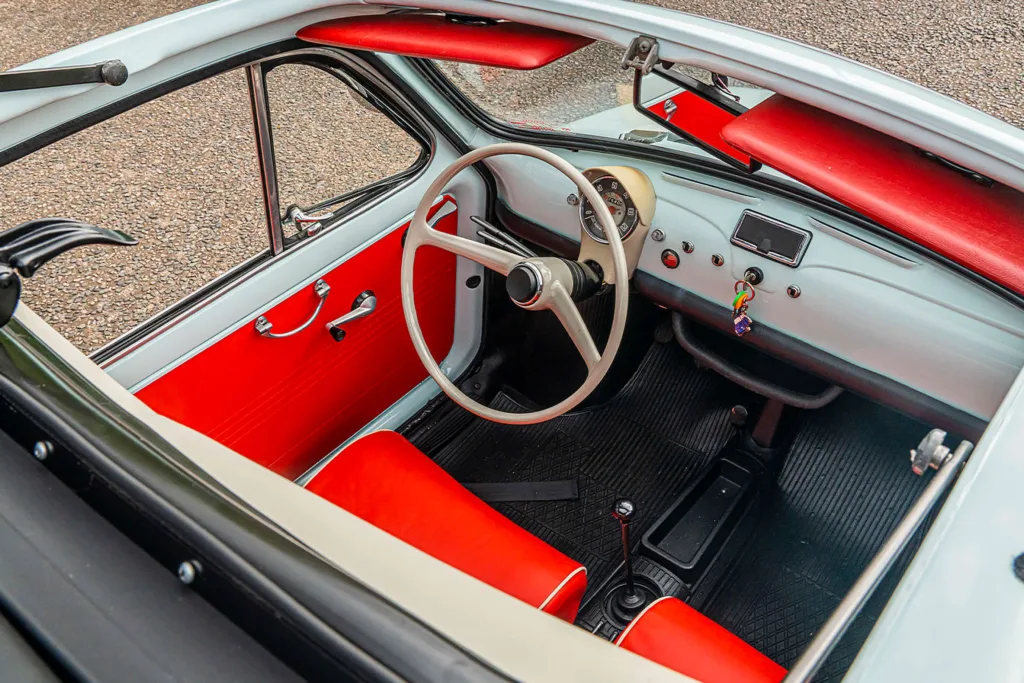
Evolution and the Arrival of the 500 F
Over time, the 500 steadily evolved through small but meaningful technical and design upgrades. In 1959, Fiat introduced the Sport model, which featured a bored-out 499 cm³ engine developing 18 horsepower, boosting both performance and appeal. By 1961, this larger engine became standard with the 500D, extending the car’s usability beyond the city.
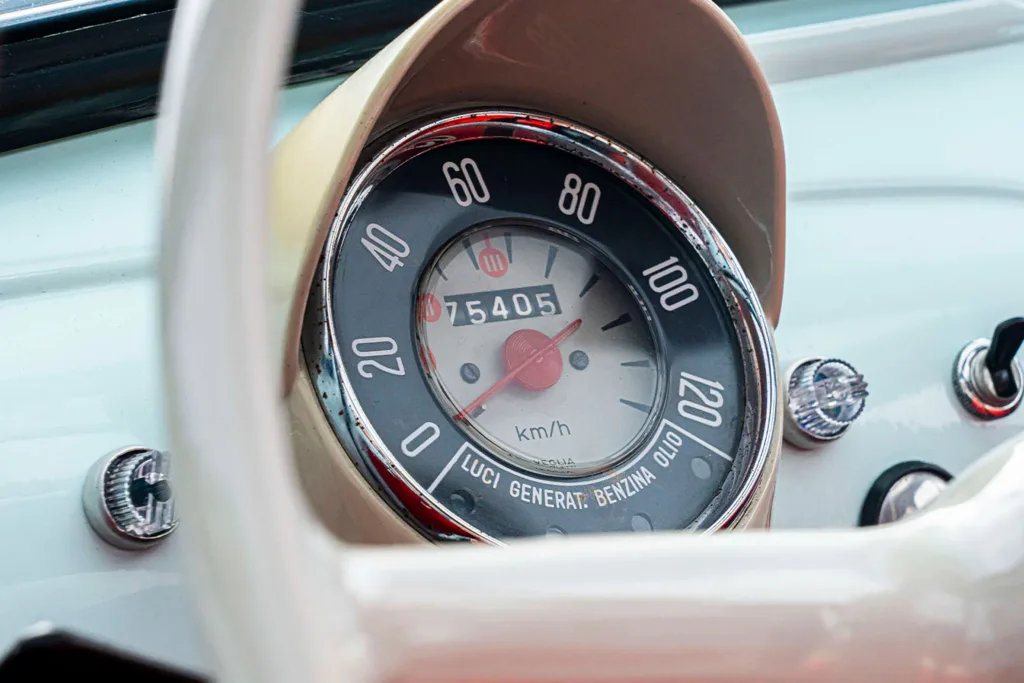
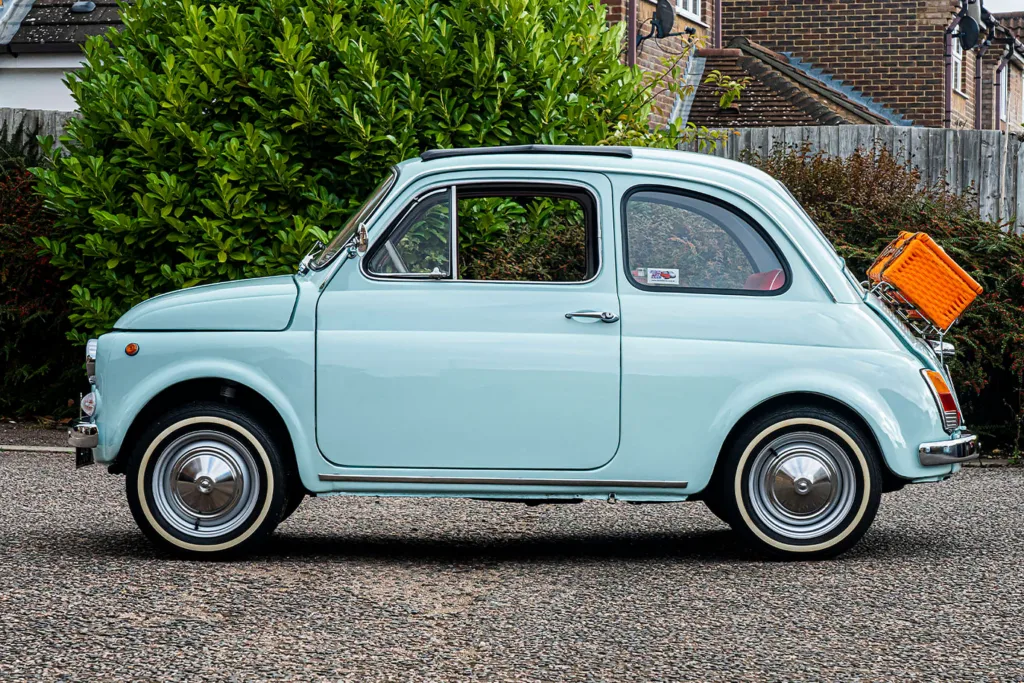
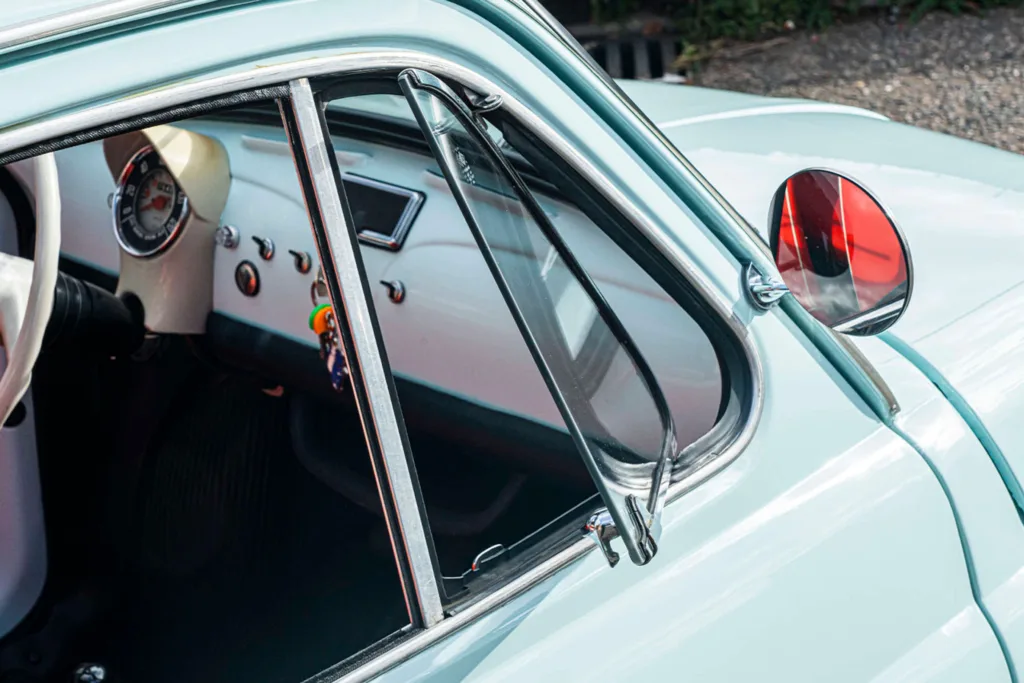
The most significant evolution came with the 500F, unveiled in 1965, which modernized the car’s design without losing its signature personality. Perhaps the most visible change was in the doors: the earlier “suicide doors,” hinged at the rear, were replaced with forward-opening doors to improve safety and rigidity. The new model also included mechanical refinements like a revised gearbox, improved synchromesh system, and better interior ergonomics, making the driving experience both safer and more comfortable.
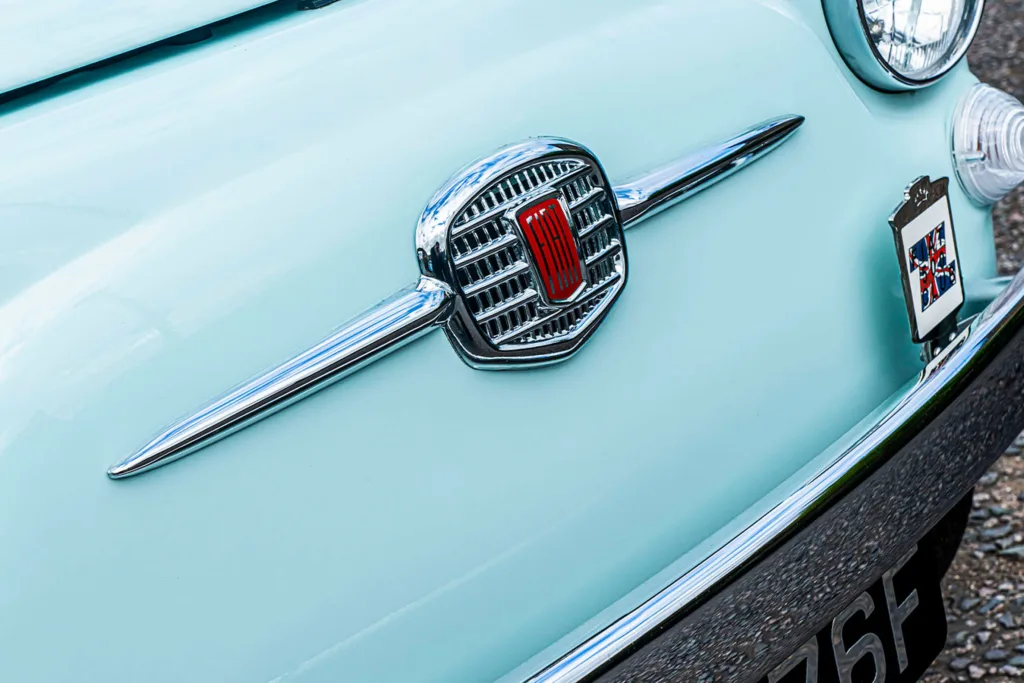
Underneath, however, the 500F retained the same beloved mechanical character: a small, efficient two-cylinder engine mounted in the rear, an air-cooled system that required no radiator, and a minimalist interior with only the essentials—a steering wheel, gear lever, and speedometer. It was simplicity at its most elegant.
The Influence of Abarth and Performance Derivatives
Even though the Fiat 500 was designed as a people’s car, it unexpectedly became a favorite among performance tuners and racers. The legendary Carlo Abarth, known as “the wizard of small engines,” saw enormous potential in the 500’s lightweight design and robust mechanics. Through clever tuning, bore enlargements, and modified exhausts, Abarth transformed Fiat’s humble city car into a competitive racing machine.
Models such as the Abarth 595 and 695 SS became icons of small-displacement motorsport, proving that greatness didn’t have to come with great size. These versions could reach speeds well above 120 km/h, devouring racetracks and mountain roads alike while maintaining the distinct fun-to-drive spirit of the original 500.
Legacy: The People’s Car that Defined an Era
By the time the Fiat 500 F arrived in showrooms, the 500 family had already become a cornerstone of Italian culture. It symbolized freedom and progress in the booming 1960s, giving millions of Italians their first taste of affordable personal transportation. Production of Fiat 500 variants continued into the early 1970s, succeeded by the Fiat 126, but none has matched the original’s timeless emotional connection.
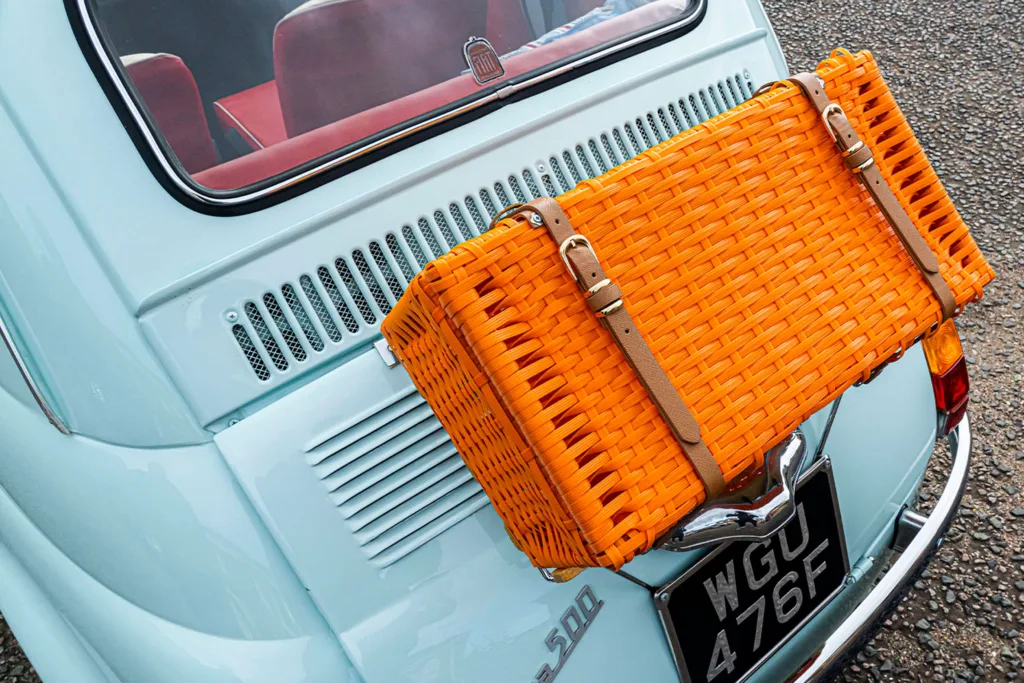
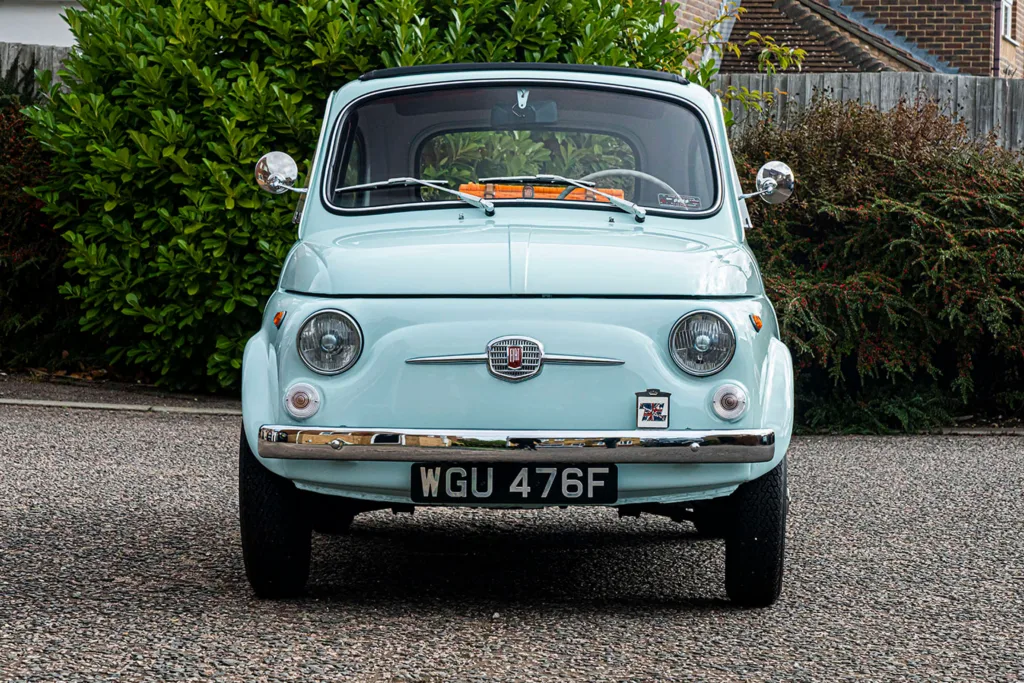
Today, the 1968 Fiat 500 F is celebrated not only as a historical artifact but as a design statement of enduring simplicity. Collectors and enthusiasts around the world treasure it for its compact scale, vintage charm, and cultural significance. More than just a car, it stands as Italy’s automotive ambassador—a reminder that practicality, personality, and artistry can coexist in perfect harmony.




Functional Always active
Preferences
Statistics
Marketing