
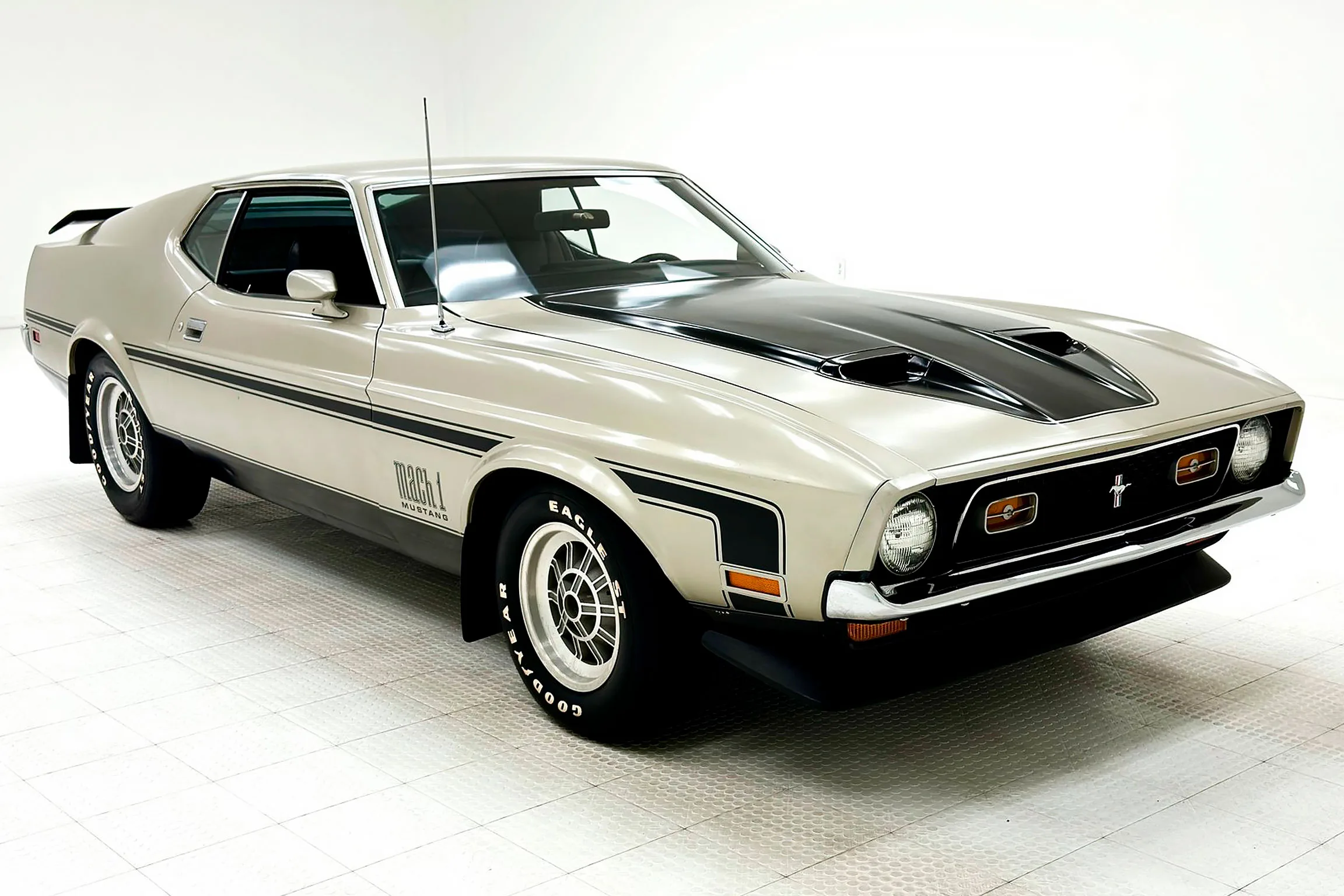
By the early 1970s, American car culture was evolving rapidly. Postwar prosperity had given rise to a generation obsessed with power, style, and freedom on four wheels. Among the many icons that came to symbolize this spirit, one name stood taller than most: the Ford Mustang. Originally launched in 1964, the Mustang represented the perfect blend of youthful performance and affordability. It singlehandedly created the “pony car” segment, combining long-hood proportions, a sporty stance, and brisk acceleration with mass-market appeal.
When the Mustang debuted in April 1964, it was an instant phenomenon. Within a year, Ford had sold over 400,000 units, rewriting every sales record in the industry. It wasn’t just a new car—it was a cultural movement. Over time, Ford expanded the Mustang lineup with bigger engines, louder styling, and racing pedigrees inspired by the Trans-Am and NASCAR circuits. By the end of the decade, America’s appetite for power demanded a bolder evolution, and Ford answered with the muscular and extravagant Mustang Mach 1.
Birth of the Mach 1
Introduced in 1969, the Mach 1 (named after the speed of sound) was conceived as a new flagship performance variant, replacing the earlier GT package. It symbolized the pinnacle of factory-engineered performance within the Mustang range, blending aggressive aesthetics with powerful V8 engines.
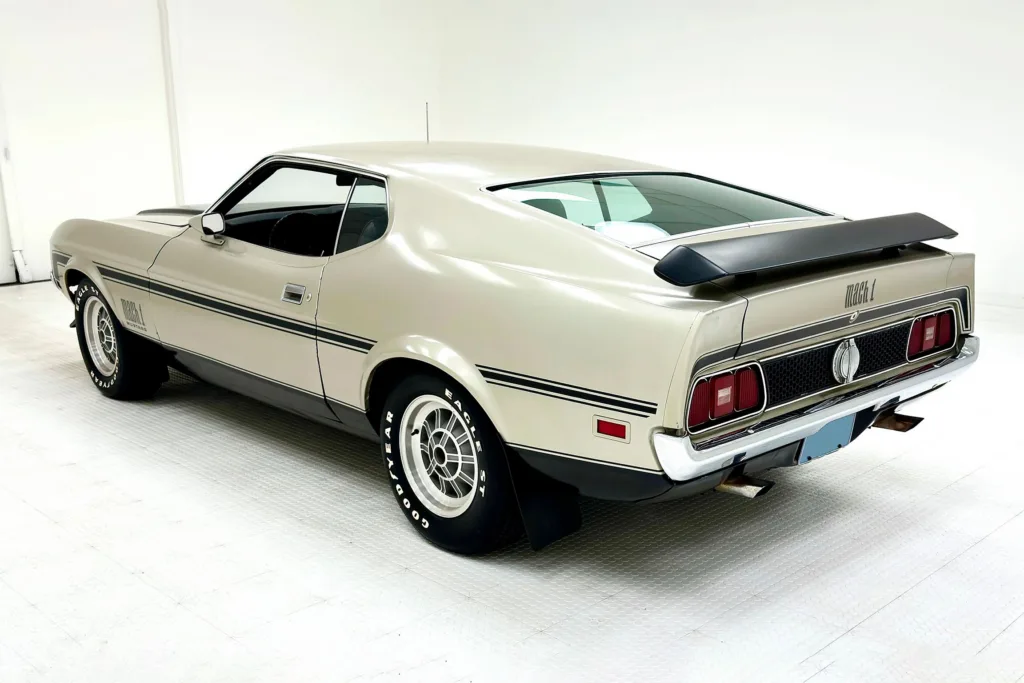
For the 1971 model year, Ford made sweeping changes to the Mustang lineup. While the car’s unmistakable proportions—long hood, short deck, and fastback roofline—remained, everything else grew larger and more purposeful. This new generation, internally coded as the “1971–73 Mustang,” was designed to accommodate Ford’s expanding family of big-block engines and meet tightening U.S. safety regulations.
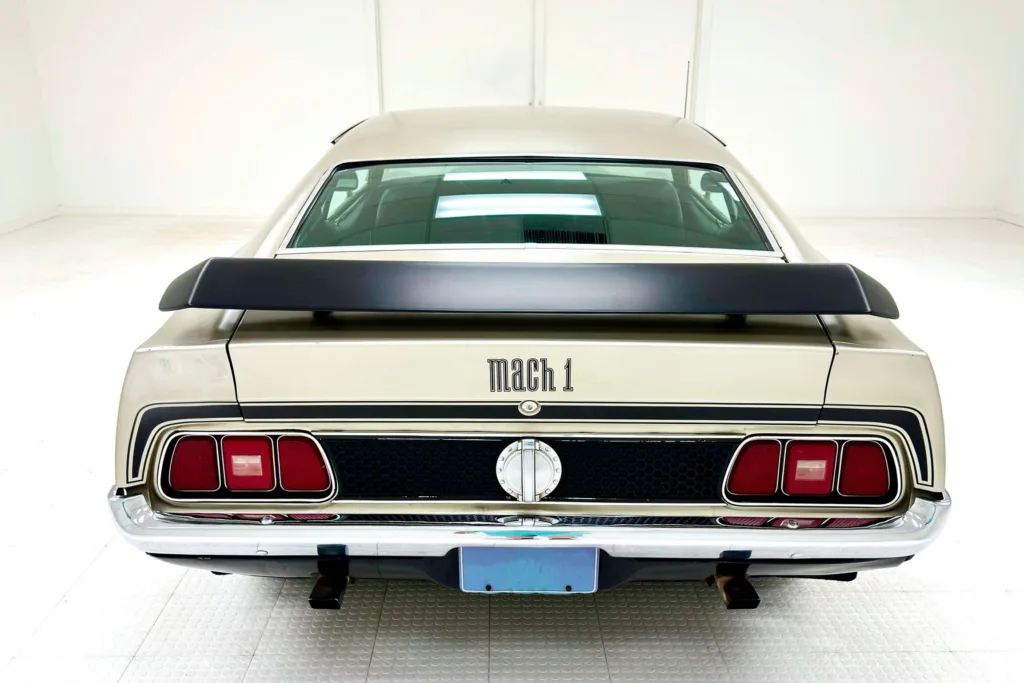
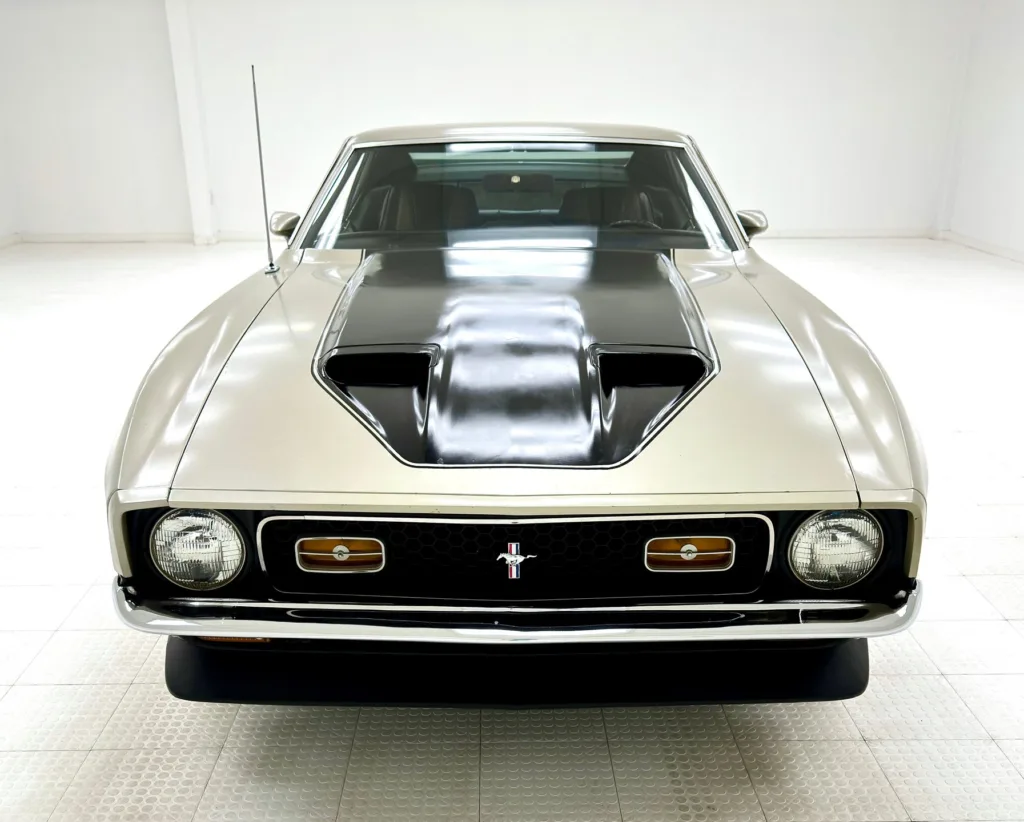
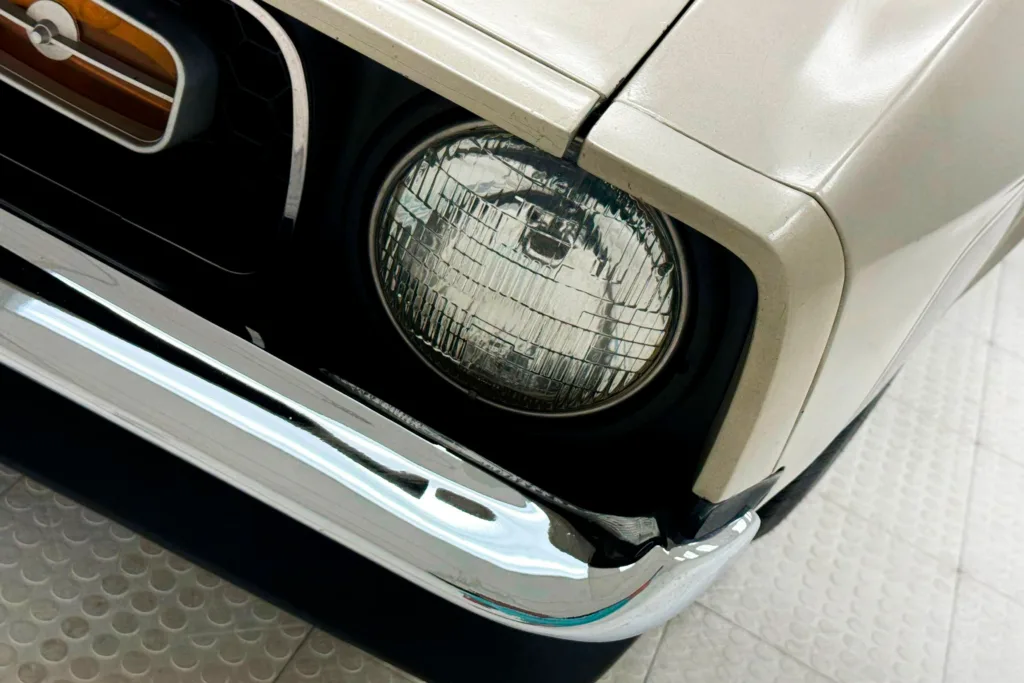
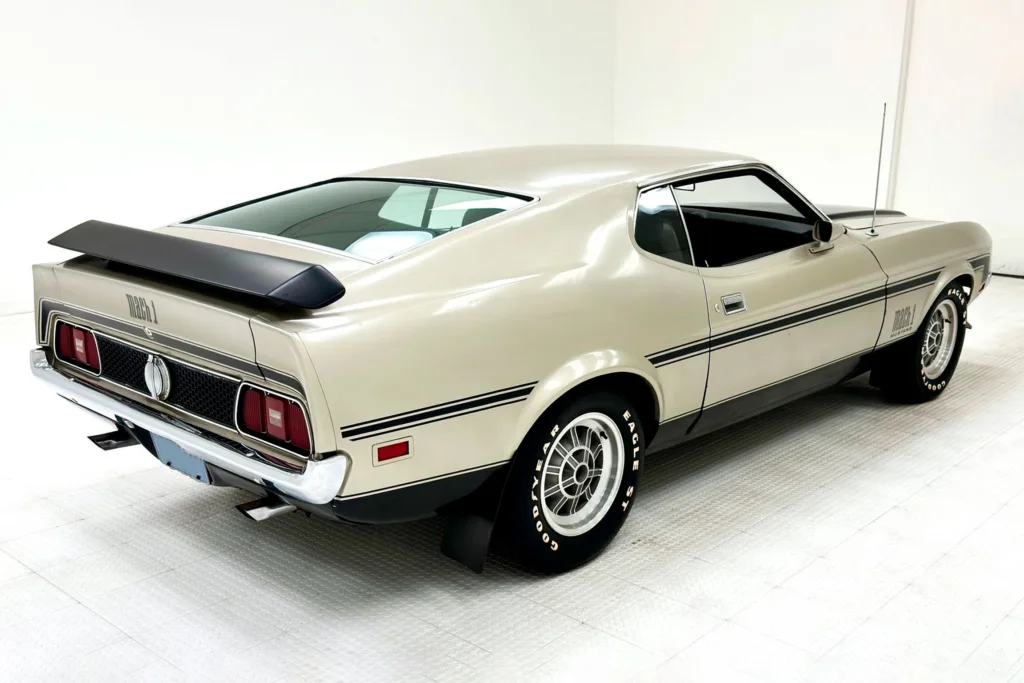
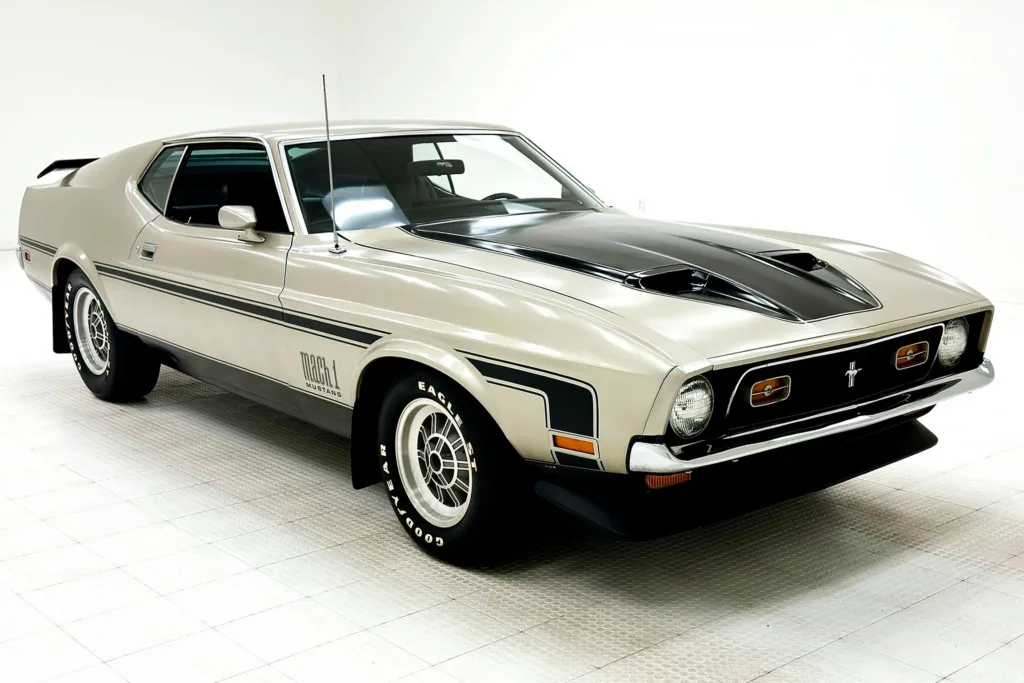
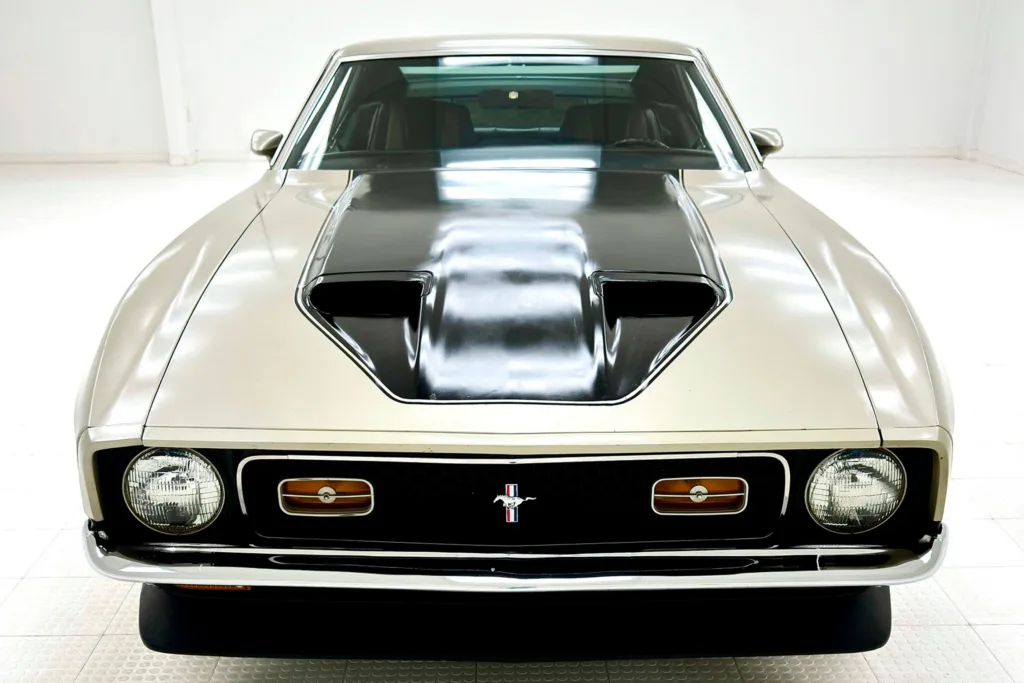
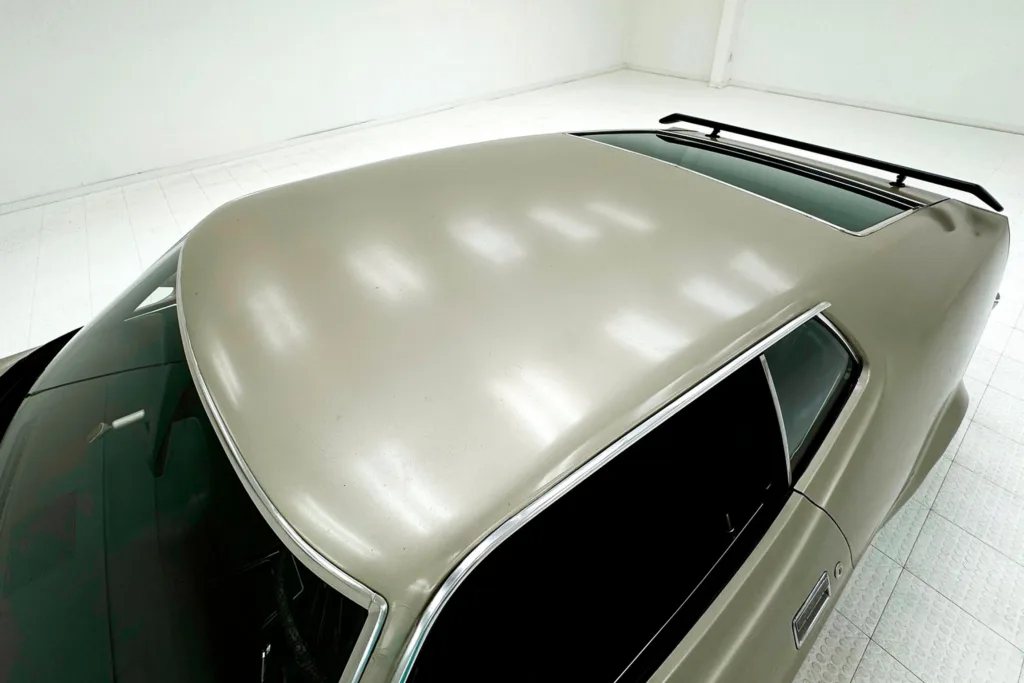
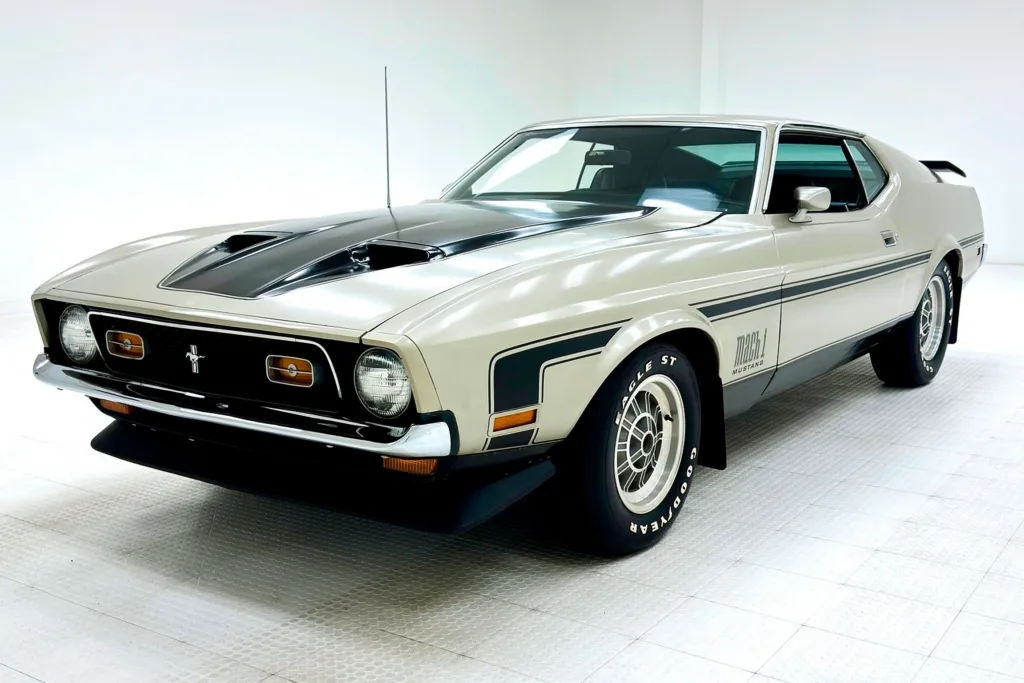
The 1971 Mach 1 encapsulated the design language of the era—bold, aggressive, and audacious. Its body stretched over 187.5 inches (4,760 mm) in length, making it longer and wider than its predecessor. The front end wore a distinctive two-segment grille with integrated headlights and a scooped hood, while the rear showcased quad taillights and a ducktail-style spoiler that emphasized its muscle-bound proportions. The Mach 1’s “SportsRoof” fastback design, introduced with the first generation, became one of its most defining and enduring features, admired even by European sports car designers for its pure aerodynamic flow.
Powertrain and Performance
The 1971 Ford Mustang Mach 1 was available with an impressive lineup of engines—each one more potent than the last. Base models came with a 302 cubic-inch (4.9 L) V8, but most buyers opted for something much hungrier. The most common option was the 351 cubic-inch “Cleveland” V8, available with or without the Ram Air induction system, which used functional hood scoops to channel cold air directly into the carburetors for a tangible power boost.
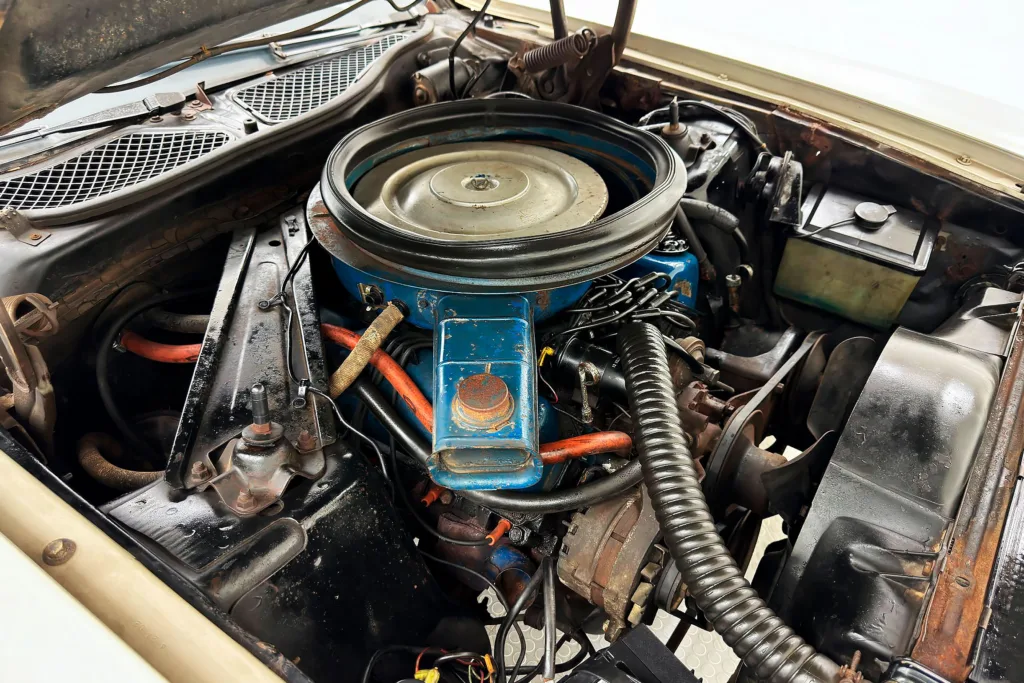
In its 351 Ram Air configuration, the engine produced 330 horsepower (304 hp SAE net) and 385 lb-ft (522 Nm) of torque, giving the Mach 1 explosive midrange acceleration. For maximum performance, Ford offered the legendary 429 Cobra Jet (7.0 L) and the Super Cobra Jet engines—massive big-blocks that turned the car into a straight-line brute capable of running the quarter-mile in the mid-13-second range.
All engines were paired with four-speed manual or three-speed automatic transmissions, both built to handle massive torque. Rear-wheel drive and a 9-inch differential ensured durability under hard launches, while heavy-duty suspension components, staggered shock absorbers, and upgraded sway bars gave the Mach 1 remarkable stability for its size.
Independent tests recorded 0–60 mph times of around 5.8 seconds for the 351 Ram Air model and 5.3 seconds for the 429 Cobra Jet version—supercar-level performance by early 1970s standards.
Engineering and Driving Dynamics
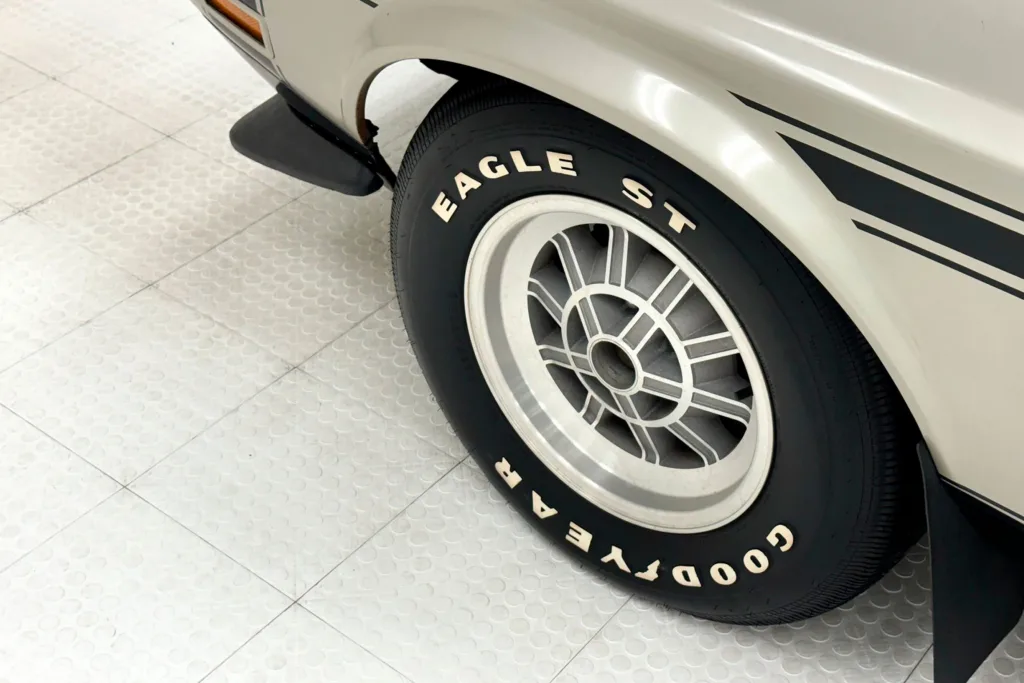
Beneath the aggressive styling, the Mach 1 featured a reinforced chassis, revised front subframe, and double-wishbone suspension in front with leaf springs at the rear, optimized for both ride comfort and high-speed stability. The steering ratio was sharpened compared to standard Mustangs, and the braking system featured power-assisted front discs paired with heavy-duty drums at the rear.
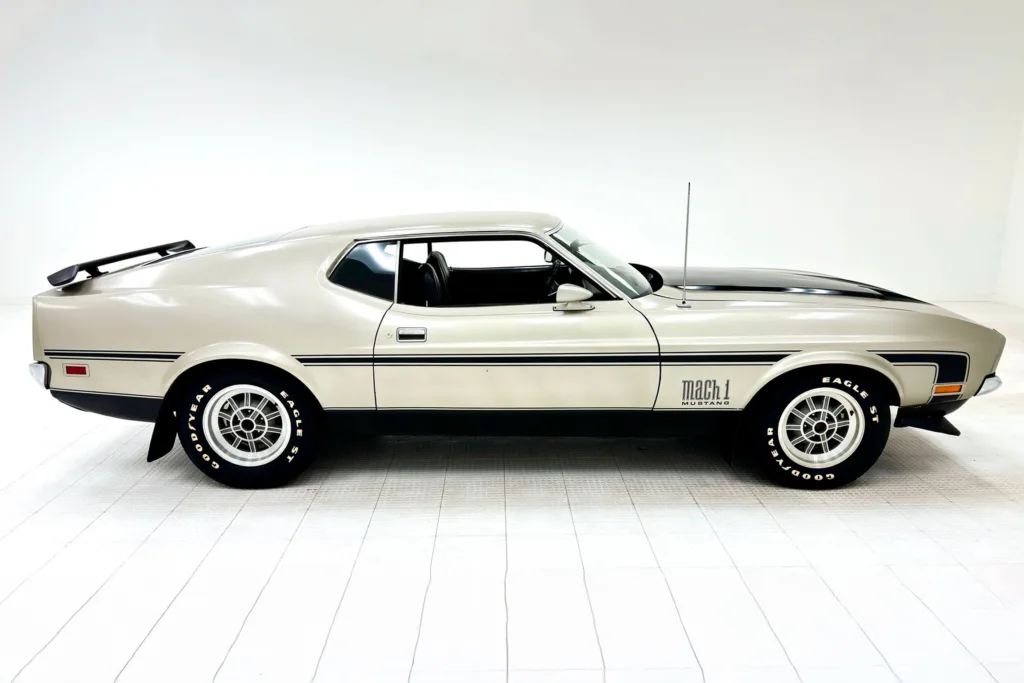
While heavier than its 1969 predecessor—tipping the scales near 1,600 kg (3,500 lbs)—the 1971 Mach 1 used its added mass to advantage, taming the surge of big-block torque while maintaining composure through long high-speed stretches. Its aerodynamics, influenced by Ford’s racing department, helped reduce lift, making it stable even beyond 120 mph (193 km/h)—a feat few muscle cars of the era could claim.
Styling and Interior
The 1971 Mach 1’s interior was one of the most distinctive in American performance cars of the early ‘70s. The cabin combined retro racing flair with comfort upgrades, offering high-back bucket seats, a three-spoke sports steering wheel, and the iconic five-pod dashboard layout that wrapped around the driver.
Unique “Mach 1” badging adorned the seats and exterior panels, while optional features included Rim Blow steering, a tachometer, full instrumentation, and woodgrain accents. Sound-deadening materials and improved ventilation made it more livable than previous generations while still retaining its unmistakable muscle-car soundtrack.
Cultural Legacy
Though the early 1970s brought stricter emissions laws and the first cracks in the muscle car market, the 1971–73 Mach 1 series remains an enduring symbol of American automotive excess and artistry. Its bold form and thrilling performance captured the final flourish of the pre-oil crisis era when raw displacement ruled and design dared to make statements.
The 1971 Mach 1 351 Ram Air in particular became a cult favorite among enthusiasts—it balanced performance with manageability and represented the last truly unrestrained Mustang before legislative and economic realities forced automakers to downsize.
Today, the 1971 Ford Mustang Mach 1 stands tall as both a collectible and a symbol of Detroit’s golden age—a time when horsepower, style, and ambition defined what it meant to drive American.



Functional Always active
Preferences
Statistics
Marketing