
By the early 1990s, Honda had already cemented its reputation as a master of lightweight, high-revving sports engineering through cars like the CR-X, Integra, and NSX. Yet the Honda Prelude occupied a unique space—it represented Honda’s more refined expression of driving enjoyment. The Prelude was not just a compact sports coupe; it was a showcase of the company’s most advanced technologies, engineered to deliver grand touring sophistication with genuine athleticism.
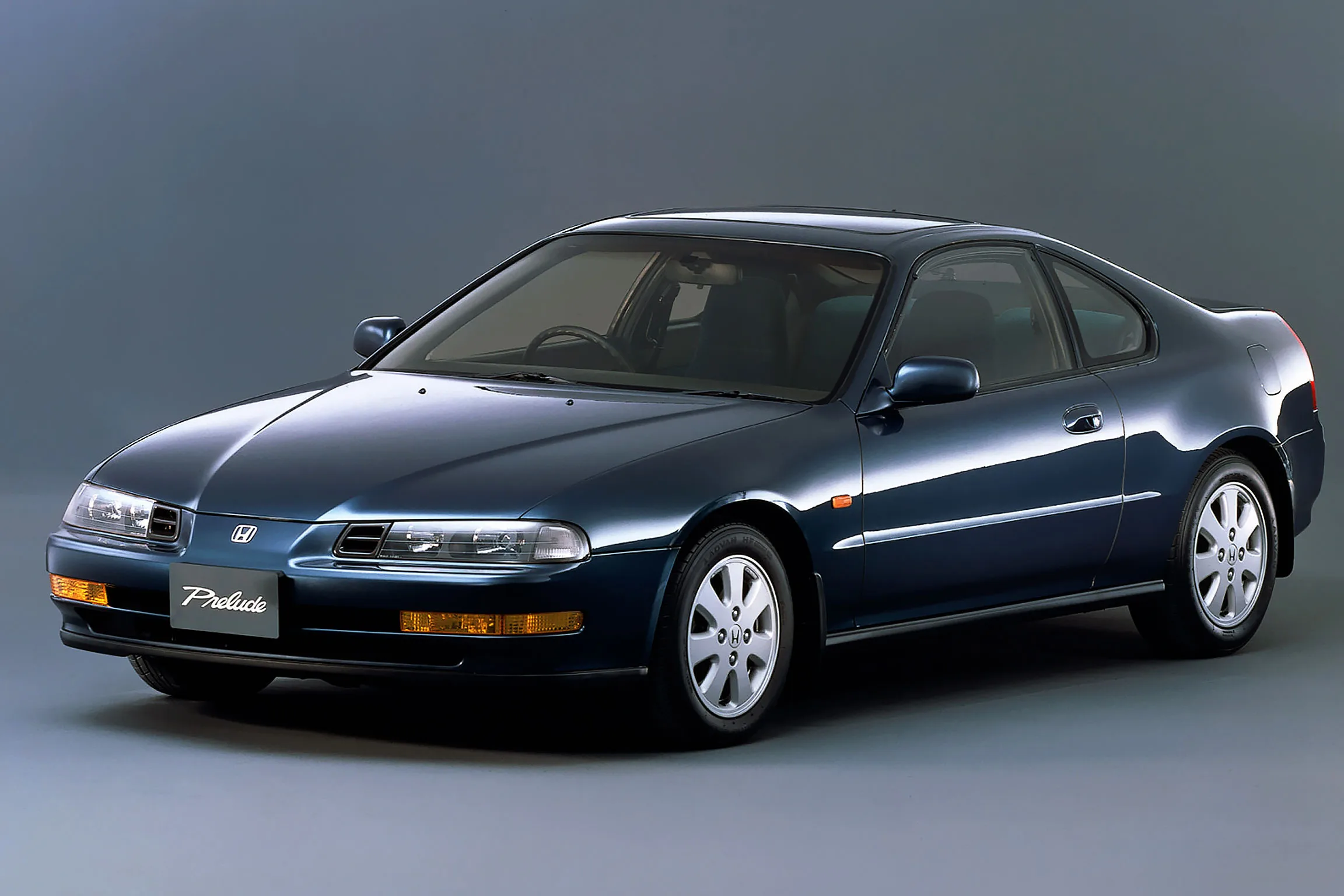
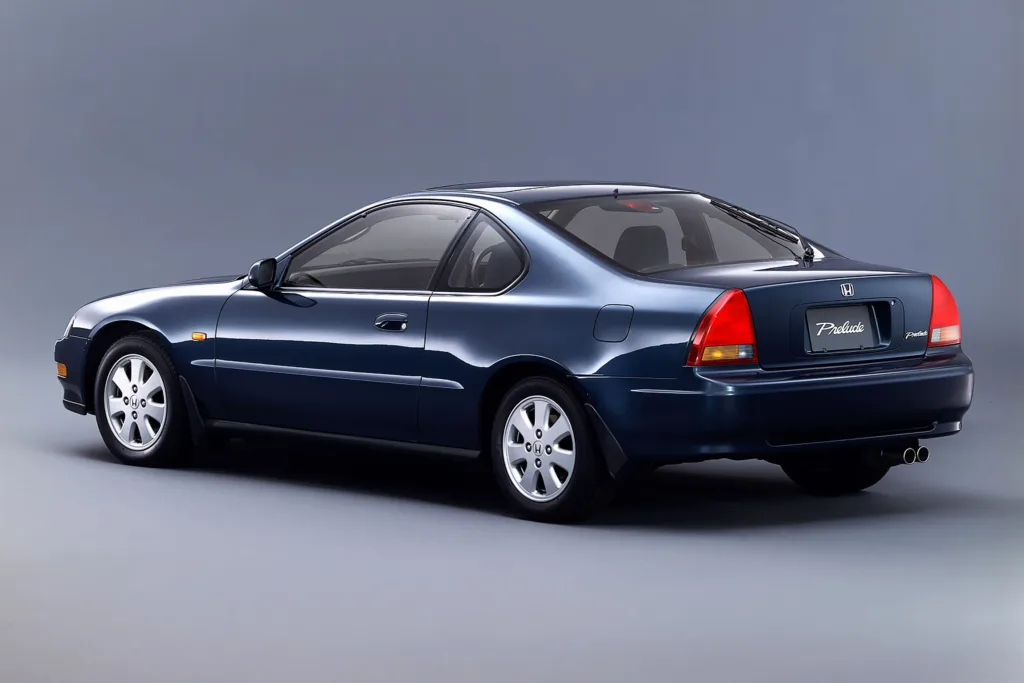
When the fourth-generation Prelude (BA8/BA9/BB1/BB4) debuted in September 1991, it embodied this philosophy perfectly. Wider, lower, and more advanced than before, the car pushed the boundaries of front-wheel-drive performance and became the culmination of Honda’s early-1990s engineering excellence.
Refined Proportions, Modern Character
For the fourth generation, Honda set out to give the Prelude a more muscular and contemporary presence. The body widened by 70 mm and shortened by 80 mm, giving it a lower, wider stance that improved aerodynamics and handling balance. The coupe silhouette gained sleeker lines and a noticeably longer hood, hinting at the mechanical ambition beneath.
Gone were the pop-up headlamps characteristic of the 1980s. In their place came fixed twin headlamps enclosed within a bold, integrated front fascia—a design that became one of the defining features of the 1990s Prelude. The wide “nose” and taut proportions projected seriousness and precision rather than flamboyance.
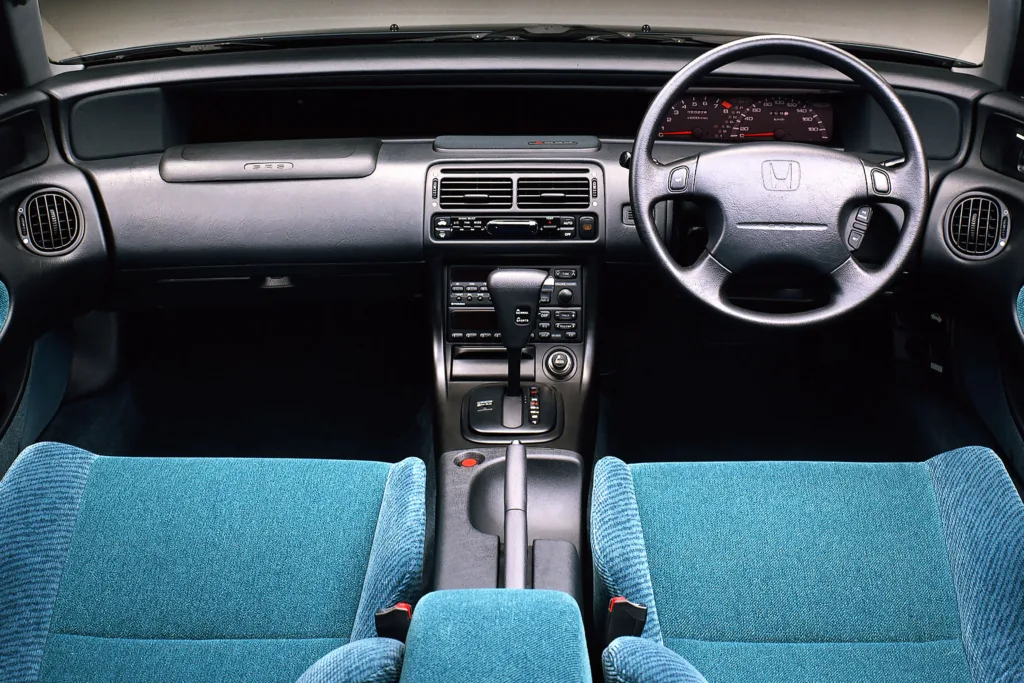
Inside, Honda emphasized an immersive driving environment. The instrument panel was canted toward the driver, bringing controls closer to hand. Notably, the usual dashboard sun visors were eliminated altogether, replaced by a smooth, wraparound console design. The result was a cockpit that felt futuristic and focused—a hallmark of Honda’s ergonomic sensibility at the time.
Engine and Powertrain: Precision in Motion
The 1991 Prelude continued Honda’s tradition of performance innovation through engineering purity rather than brute force. The base Si model featured a 2.0-liter DOHC 16-valve inline-four, producing 160 hp (118 kW) at 6,800 rpm.
This free-revving engine already delivered superior smoothness and throttle precision thanks to Honda’s advanced balancing methods and lightweight internals. However, true enthusiasts sought the flagship Prelude Si VTEC, where Honda debuted the H22A engine—one of the most advanced four-cylinders of its era.
Displacing 2.2 liters (2,157 cc) and featuring DOHC i-VTEC (Intelligent Variable Valve Timing and Lift Electronic Control), the H22A was a technological masterpiece. It produced 200 horsepower at 7,000 rpm and 215 Nm (158 lb-ft) of torque at 5,500 rpm, making it one of the most powerful naturally aspirated engines ever fitted to a front-wheel-drive car at that time.
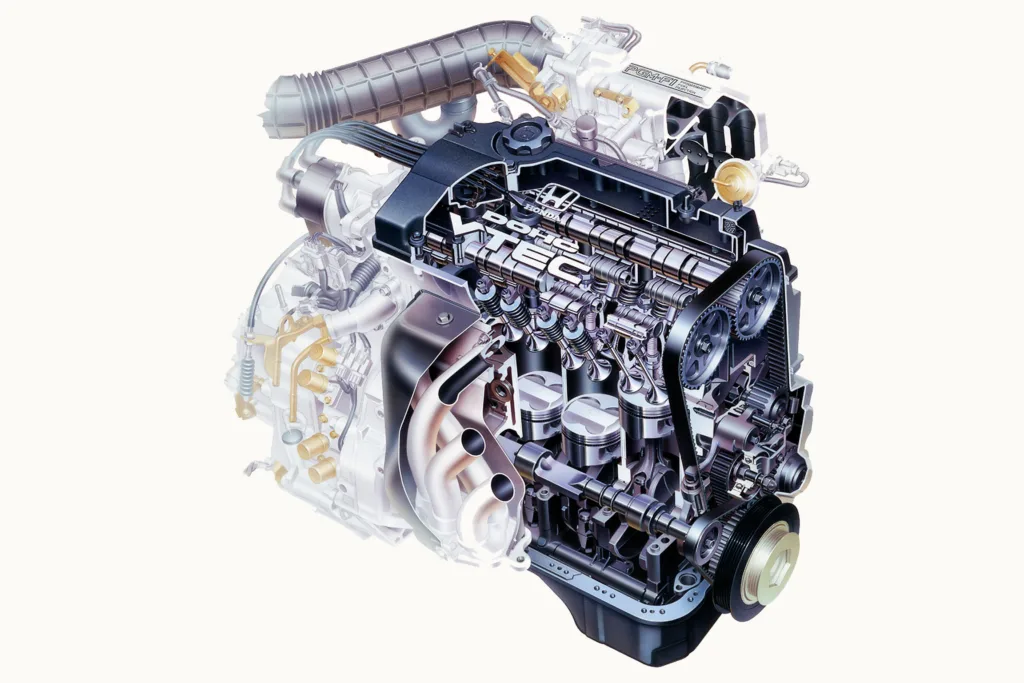
The system’s dual camshaft profiles optimized performance across the rev range—providing efficiency and torque under low loads, then transitioning seamlessly to a high-lift configuration at elevated RPM for thrilling acceleration. The H22A’s power delivery was smooth, linear, and ferocious once the VTEC cam lobes engaged near 5,800 rpm, accompanied by a crisp, mechanical roar that defined the Prelude’s character.
Mated to a 5-speed manual transmission, the Si VTEC accelerated from 0–100 km/h (0–62 mph) in approximately 6.8 seconds and reached a top speed near 230 km/h (143 mph). An optional 4-speed automatic transmission with sport shift logic was available, tuned to exploit the engine’s wide torque band.
Suspension Innovation and Four-Wheel Steering
Beneath its sleek exterior, the Prelude continued to stand apart through its advanced underpinnings. It featured independent double-wishbone suspension at both the front and rear—an engineering layout shared with Honda’s performance icons like the NSX and Integra Type R. This design ensured precise wheel control, exceptional cornering grip, and a refined, composed ride quality.
The 4th-generation Prelude also retained Honda’s legendary “Hyper 4WS” (4-Wheel Steering) system, now in its second generation. This electronic evolution of the original mechanical 4WS used sensors and actuators to adjust rear toe angle in response to steering input and vehicle speed:
- At low speeds, the rear wheels turned opposite to the front to reduce the turning radius.
- At high speeds, they turned in the same direction to enhance stability and cornering confidence.
The system worked seamlessly, giving the Prelude exceptional agility in tight corners and secure composure at highway velocities—dynamics that no rival front-wheel-drive coupe could match.
Driving Dynamics and Handling
The combination of the H22A’s VTEC power delivery, double-wishbone layout, and 4WS precision gave the Prelude handling that bordered on telepathic. The car’s front-to-rear weight balance and low center of gravity provided crisp turn-in and nearly neutral cornering behavior, characteristics that belied its front-driven nature.
Braking performance was equally strong, with vented front and solid rear disc brakes, assisted by ABS on higher models. Chassis stiffening and extensive noise isolation further elevated refinement, allowing the Prelude to feel equally at home devouring switchbacks or delivering smooth highway comfort.
The Si VTEC proved its mettle in Japan’s N1 and JTCC touring car races, where its naturally aspirated precision and chassis sophistication made it a formidable competitor despite its front-drive layout. It was a car that blended sports coupe sensation with a touring car’s composure—a rare equilibrium even among modern vehicles.
Interior Refinement and Design
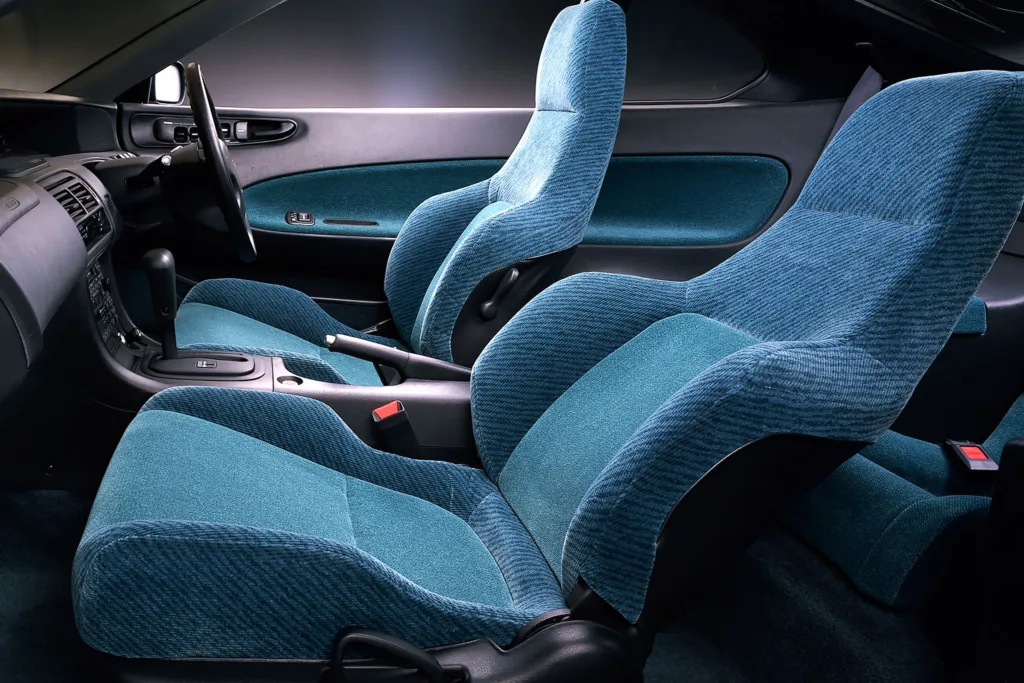
In keeping with Honda’s pursuit of functional beauty, the Prelude’s interior reflected understated elegance. Deeply contoured bucket seats offered strong lateral support, while fine-textured materials and a three-spoke steering wheel emphasized sportiness. The wraparound driver’s console—free from traditional visor overhangs—provided superb visibility and gave the cabin a distinctly “cockpit-like” feel.
Optional amenities included climate control air conditioning, electric sunroof, and even four-wheel steering display indicators. For its time, the level of technology integration was astonishing for a two-door car positioned below luxury coupes.
Legacy and Influence
The 1991–1996 Honda Prelude Si VTEC represented the pinnacle of Honda’s pre-millennium engineering—where cutting-edge technology and driving purity coexisted effortlessly. It was the first production car to pair the H-series VTEC engine with 4-wheel steering, a combination that turned the Prelude into a technological showcase.
While its successor continued the tradition in a larger, more luxurious package, the fourth-generation Prelude remains the most driver-focused of them all—a perfect harmony of sport, refinement, and innovation. Even today, the BB4 Si VTEC’s VTEC surge, agile balance, and timeless design earn it a place among Honda’s most memorable creations.
It wasn’t merely a front-wheel-drive sports car—it was Honda’s declaration that precision engineering could transcend drivetrain layout.




Functional Always active
Preferences
Statistics
Marketing