
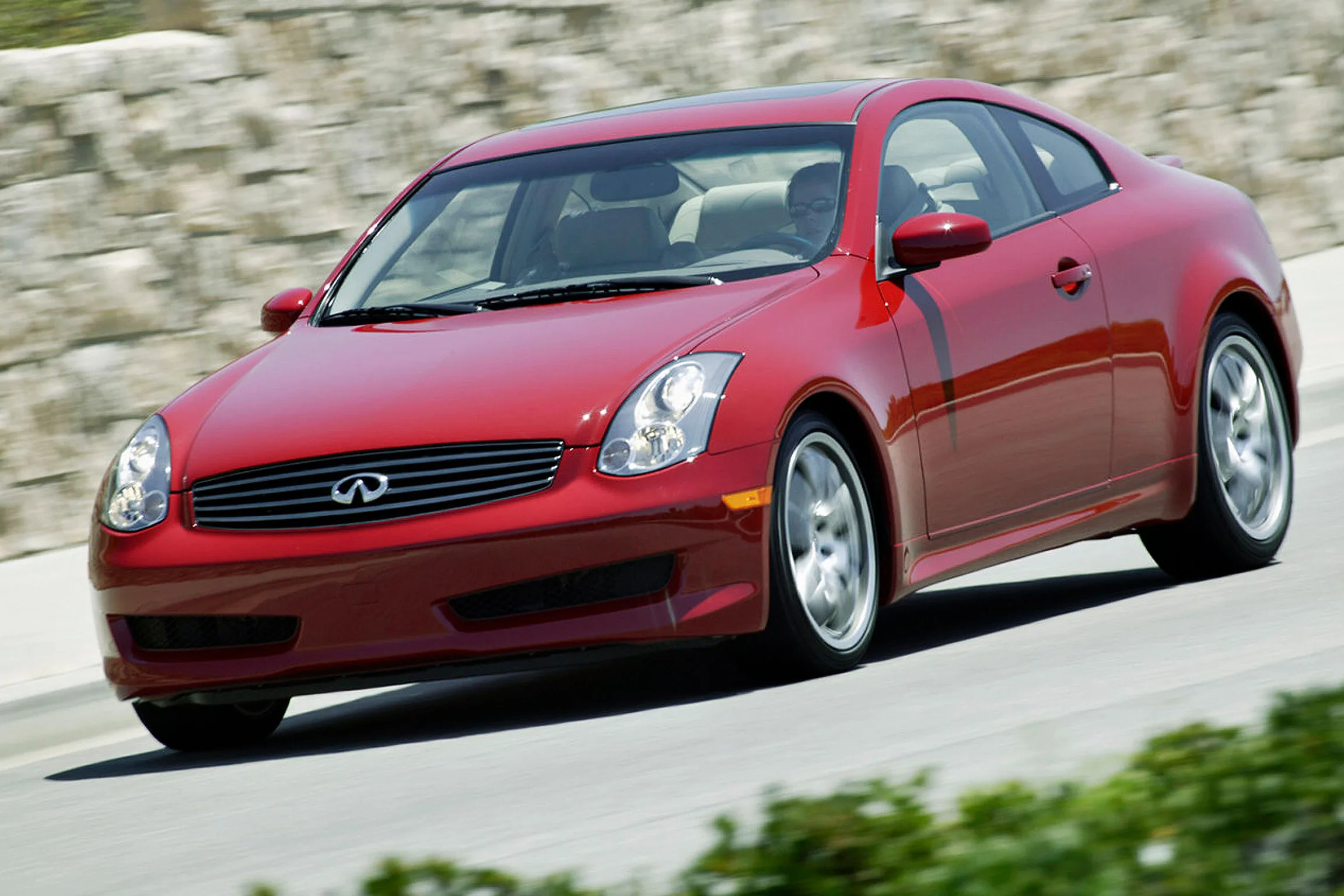
When the Infiniti G35 Coupe arrived in showrooms, it brought a level of excitement and credibility to Nissan’s luxury-performance division unlike anything before it. Debuting in November 2002 and based on the V35 Nissan Skyline platform, the G35 Coupe fused Japanese engineering precision with the dynamic flair and refinement demanded by the American luxury market.

By 2006, this sleek grand touring coupe had established itself as a core pillar of Infiniti’s identity—a machine that could stand shoulder-to-shoulder with European performance icons such as the BMW 3 Series Coupe. It represented the peak of Infiniti’s first modern performance era, created under CEO Carlos Ghosn’s directive to infuse the brand with “attainable sport luxury.”
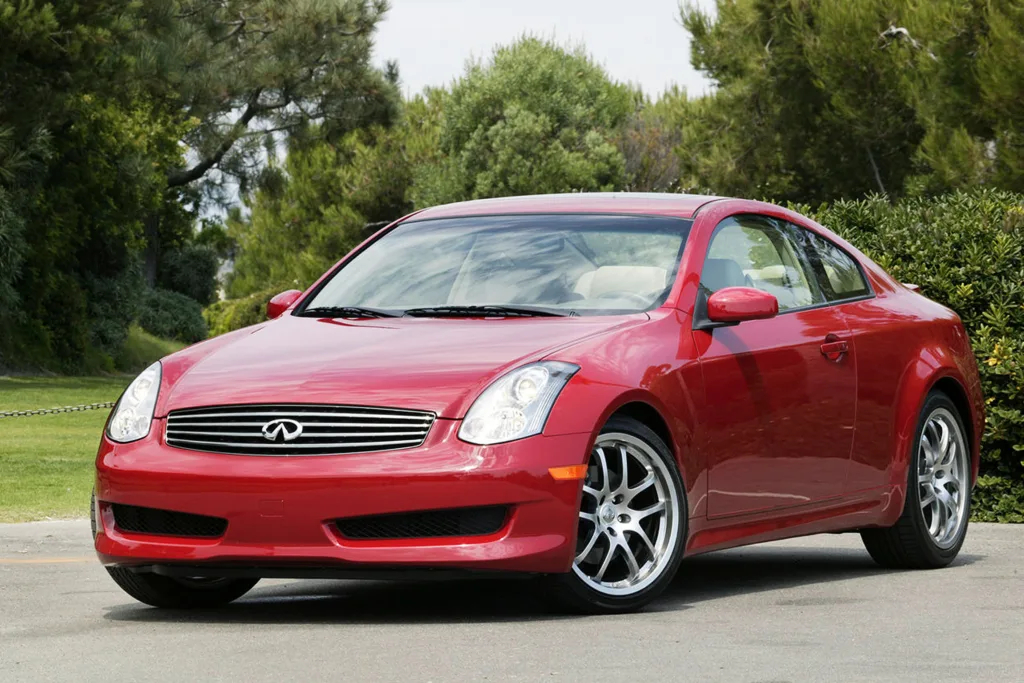
From Sedan to Sports Coupe
The G35 Coupe evolved directly from the award-winning G35 Sedan, itself launched in 2002 and named Motor Trend’s Car of the Year while earning placement in Car and Driver’s “10 Best Cars” list.
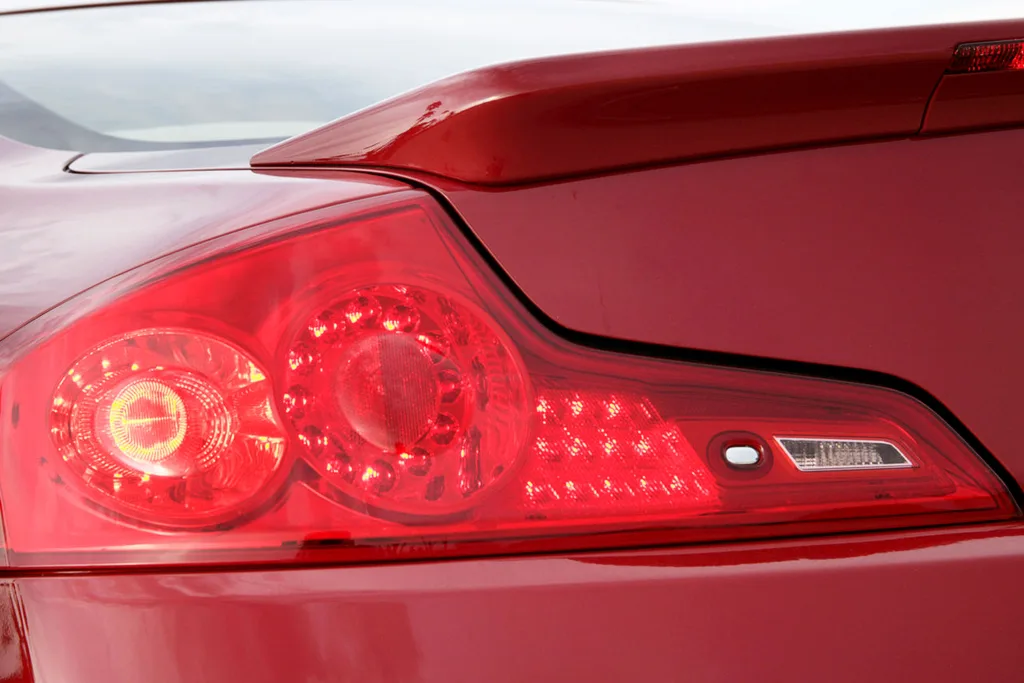
Translating this success into a two-door format required more than removing two doors—it meant reshaping the entire vehicle to capture the essence of a true driver’s grand tourer.
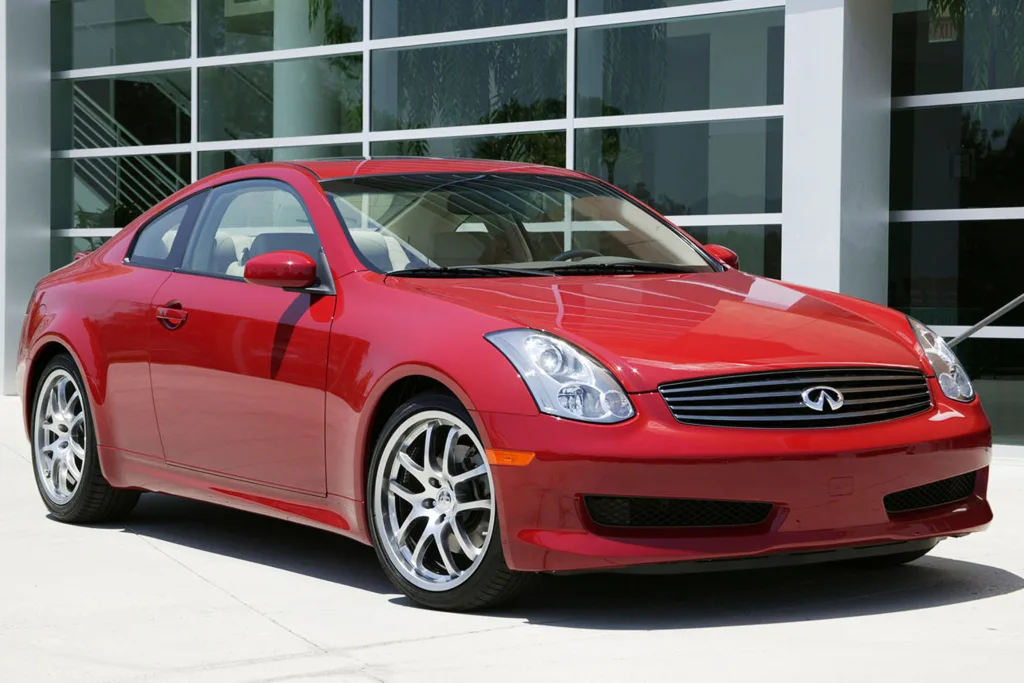
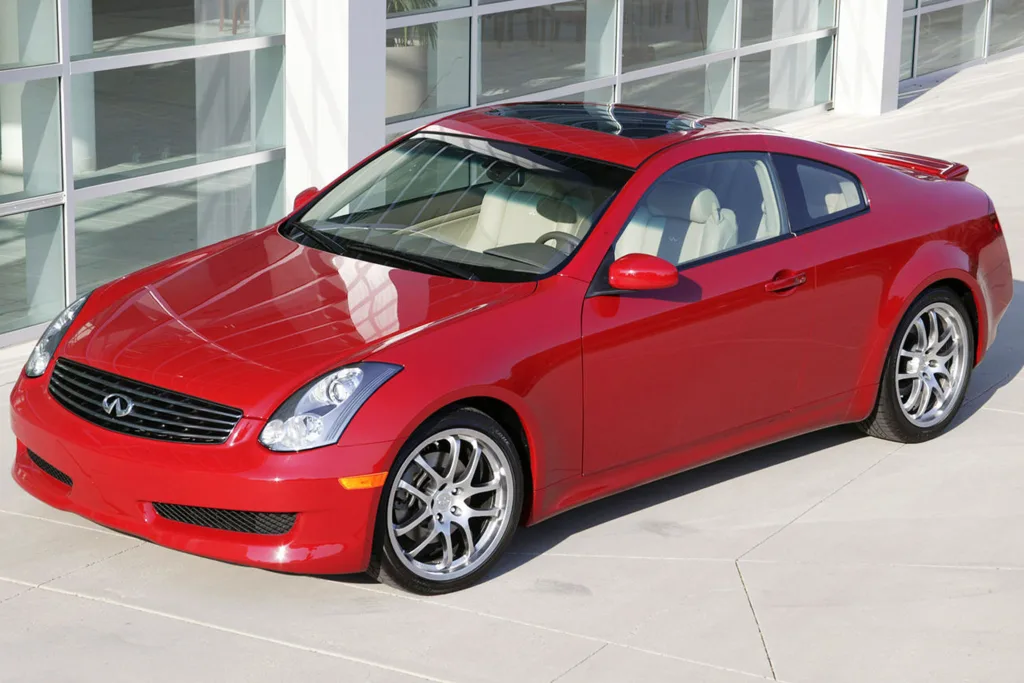
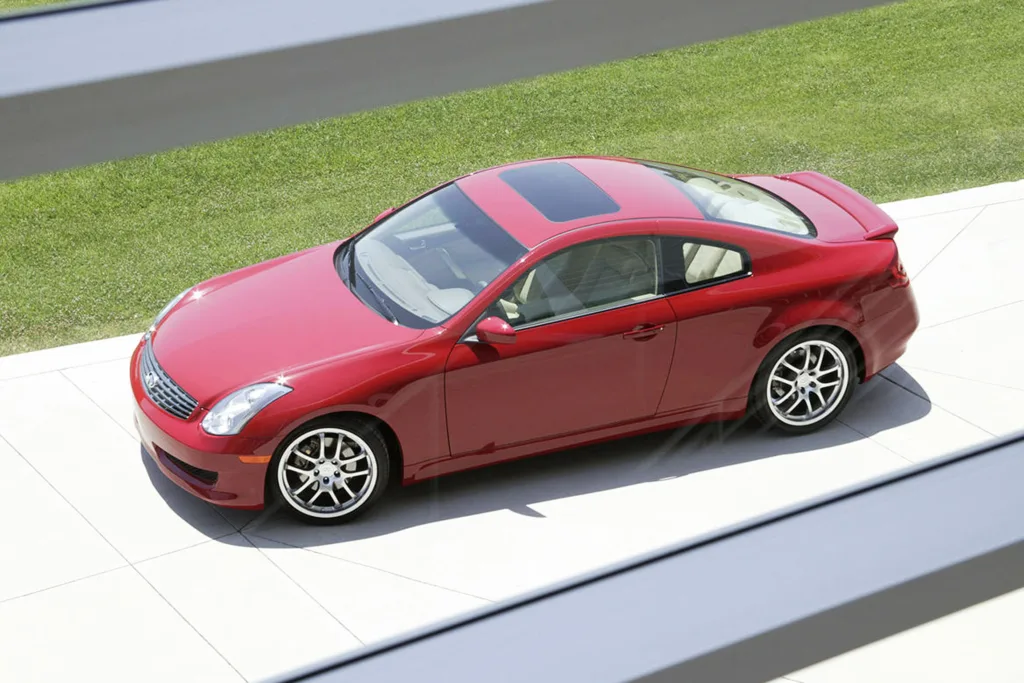
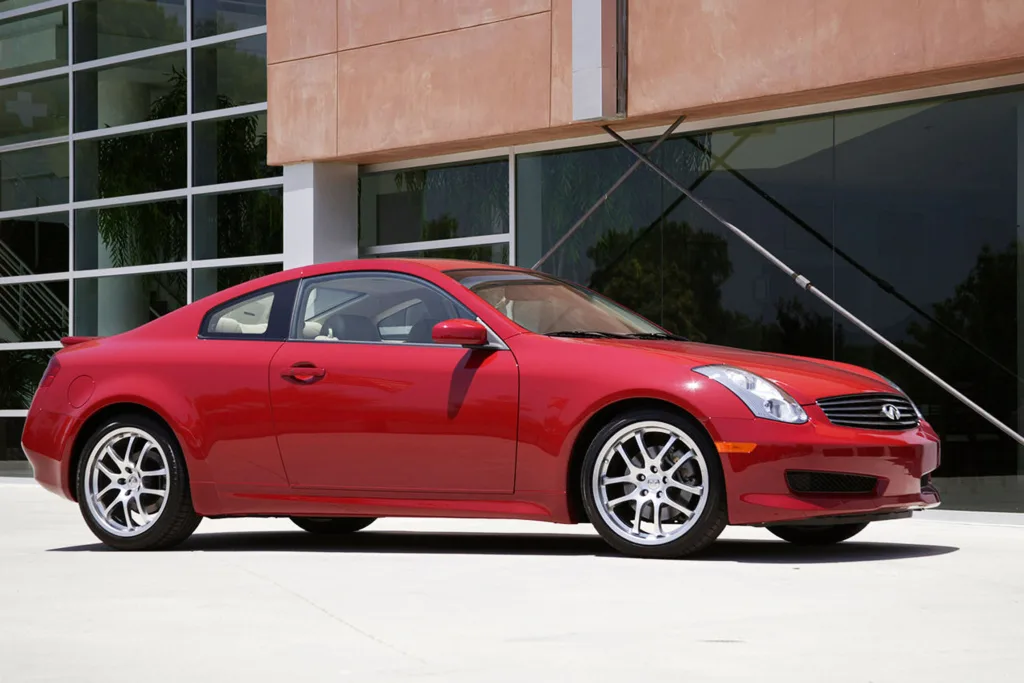
The coupe rode on a shorter wheelbase (2,850 mm) compared to the sedan, with a wider track and lowered stance. Measuring 4,650 mm in length, 1,810 mm in width, and just 1,395 mm in height, the car’s proportions signaled athletic intent from every angle. Flowing body lines, a long hood, short rear deck, and muscular rear haunches created a cohesive, aerodynamic silhouette that conveyed motion even at a standstill.
The VQ Engine: Infiniti’s Performance Core
At the heart of the G35 Coupe lay Nissan’s legendary VQ35DE V6 engine, displacing 3,498 cc—the same powerplant found in the 350Z (Fairlady Z33). Recognized on Ward’s 10 Best Engines list for multiple years, this all-aluminum DOHC 24-valve unit epitomized refinement and versatility. In its later 2006 iteration, the engine was tuned to produce 298 horsepower at 6,400 rpm (officially rated at 289 hp in earlier trims) and 352 Nm (260 lb-ft) of torque at 4,800 rpm.
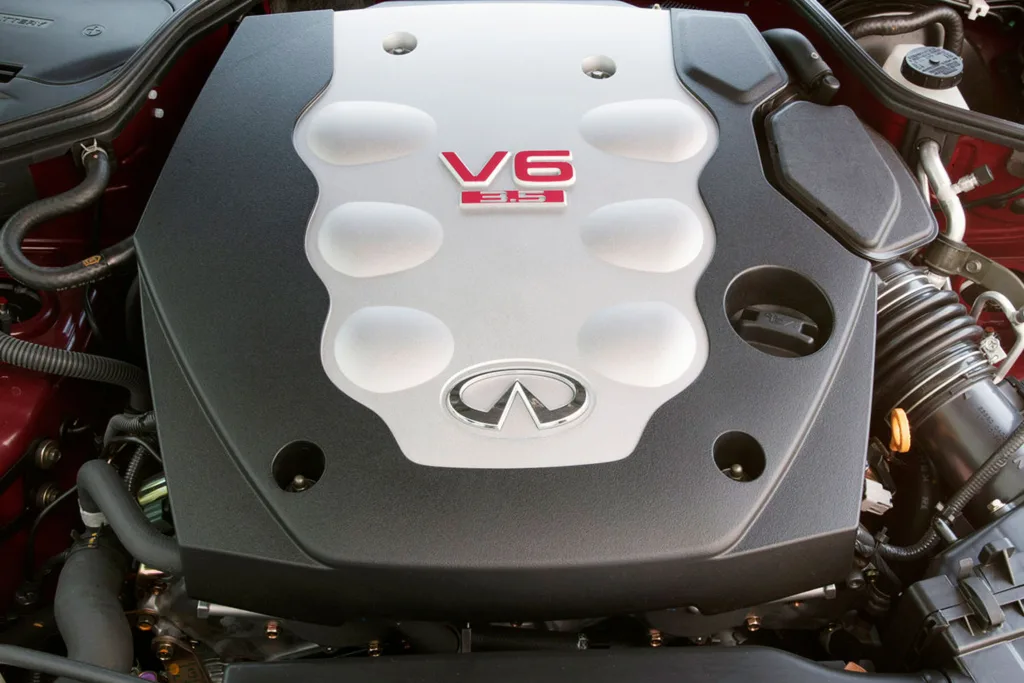
The V6’s combination of dual intake manifolds, continuously variable valve timing, and performance-oriented ECU calibration offered effortless flexibility—smooth in daily commuting yet ferociously responsive at high revs.
Customers could choose between a close-ratio 6-speed manual transmission, fitted to the sport-oriented “6MT” trim, or a 5-speed electronically controlled automatic with Adaptive Shift Control, allowing drivers to select gears manually via the console shifter. Power was channeled exclusively to the rear wheels, reinforcing the car’s handling purity and defining it as a true driver’s coupe.
Chassis: The FR-L Platform
Underlying the G35 Coupe’s poise was Nissan’s FM (Front Midship) platform, shared with the 350Z and the Skyline. This highly advanced structure mounted the engine low and set it far behind the front axle—creating a near 52:48 front-to-rear weight distribution. The result was responsive turn-in, balanced traction, and neutral steering behavior uncommon in heavy luxury coupes.
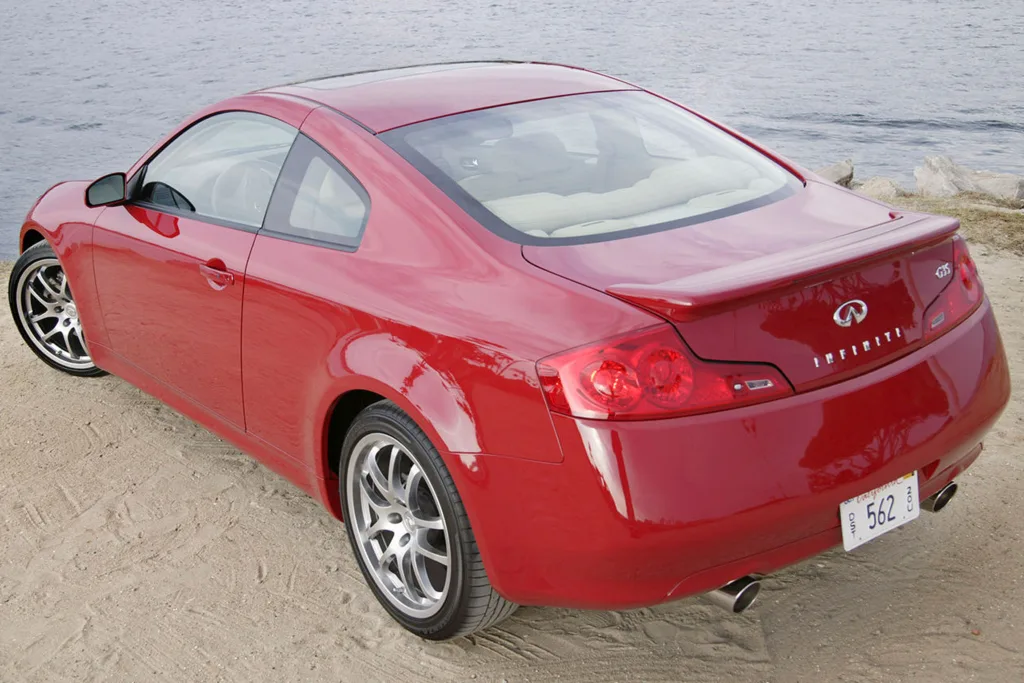
The fully independent suspension system combined double-wishbones at the front and a multi-link setup at the rear, made primarily from aluminum to reduce unsprung mass. Stiffer coil springs, sport dampers, and a reinforced subframe differentiated the Coupe from the Sedan, while large ventilated disc brakes—upgraded to Brembo 4-piston fronts and 2-piston rears in the 6MT version—provided exceptional stopping power.
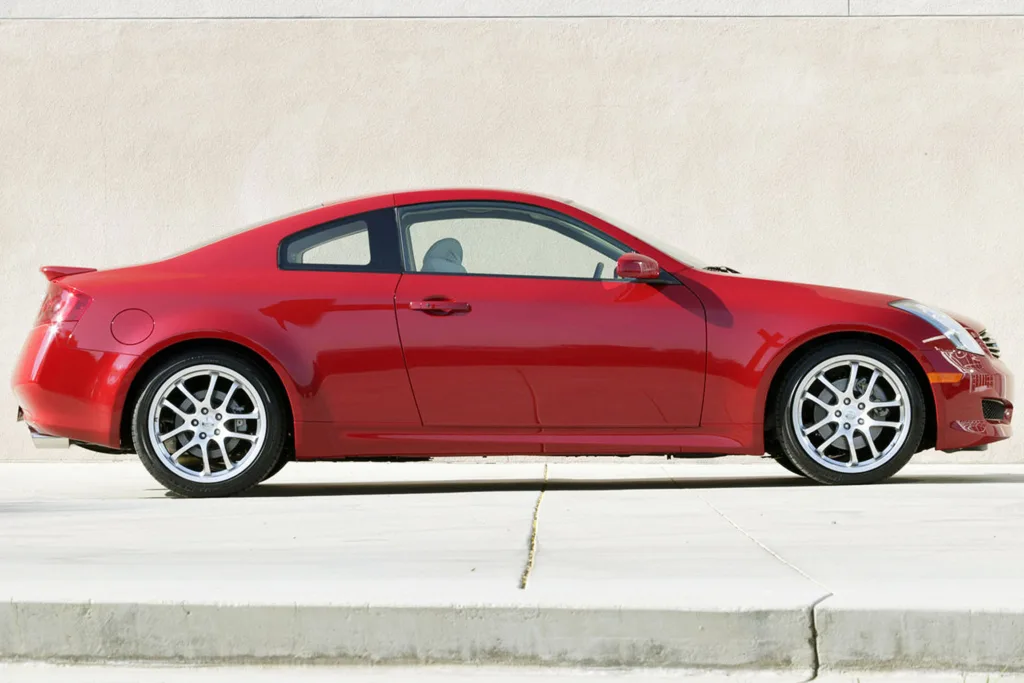
The G35’s body rigidity and low center of gravity contributed not only to cornering stability but also to superior ride compliance. For a car that could attack switchbacks, it was equally capable of covering long highway stretches with the refinement expected of a grand tourer.

Interior: Sport Luxury with Purpose
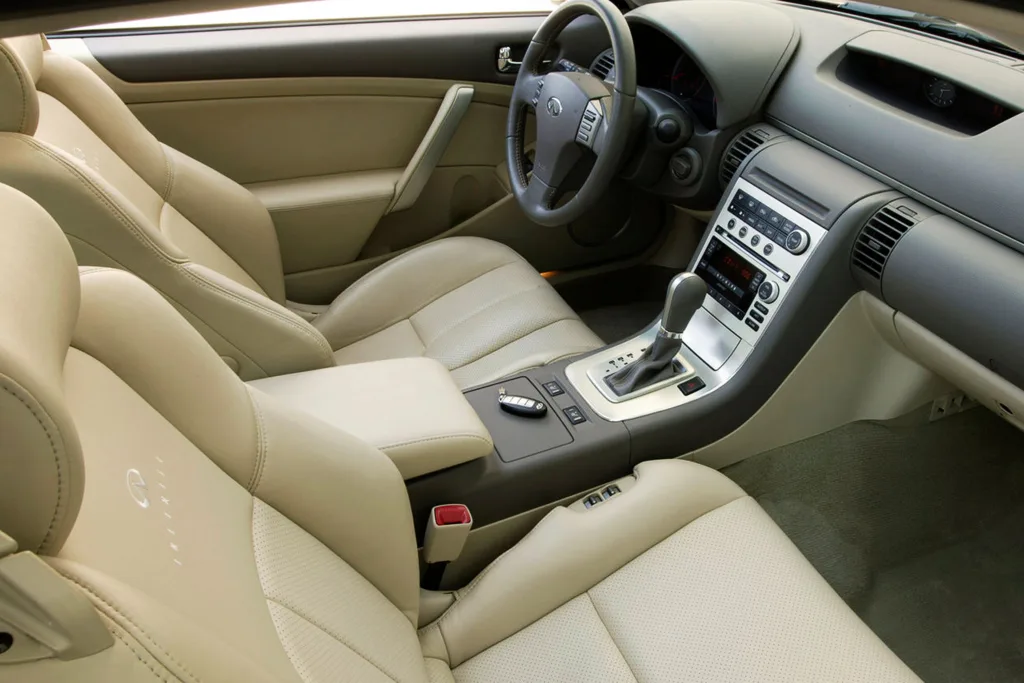
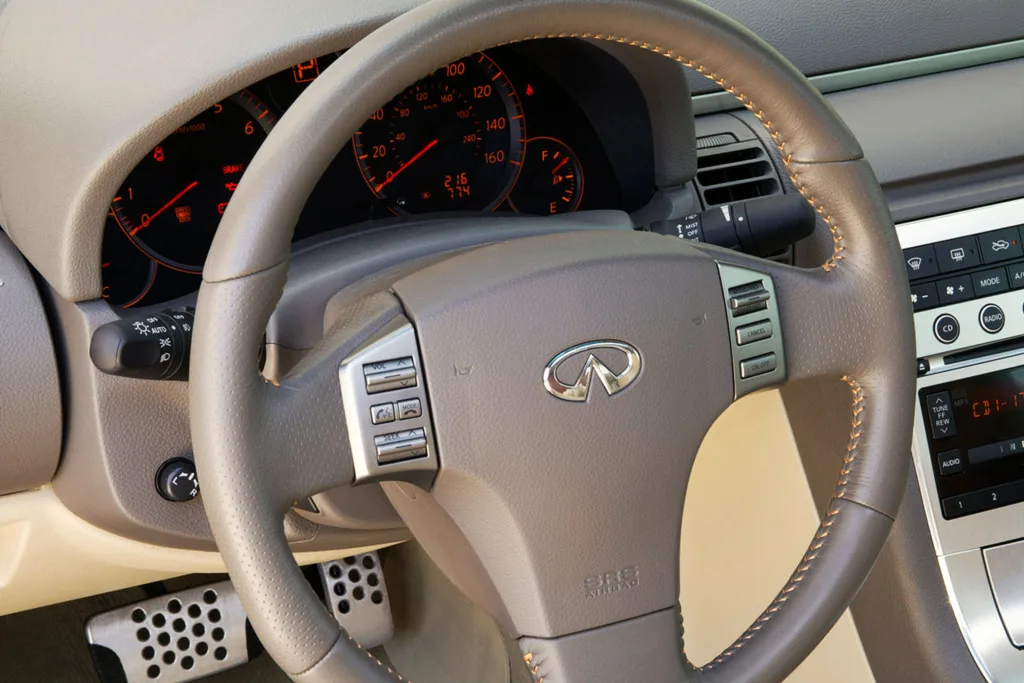
Inside, the G35 Coupe blended performance intent with a premium, driver-centered atmosphere. The dashboard’s dual-cowl design created a sense of depth and cockpit focus, while aluminum trim, clear electroluminescent gauges, and soft-touch materials elevated perceived quality.
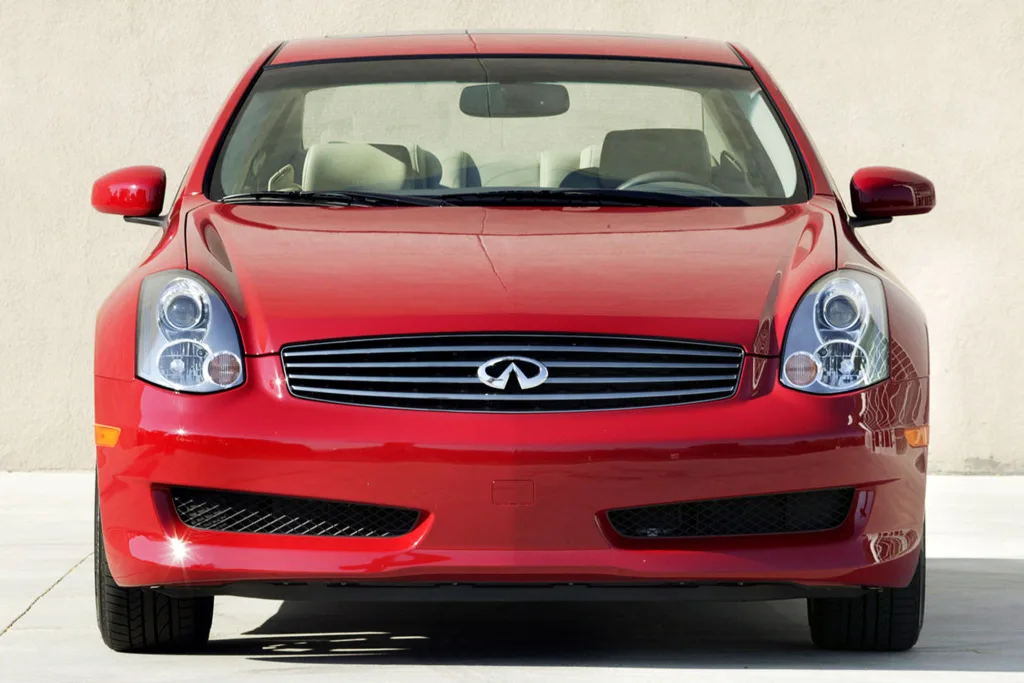
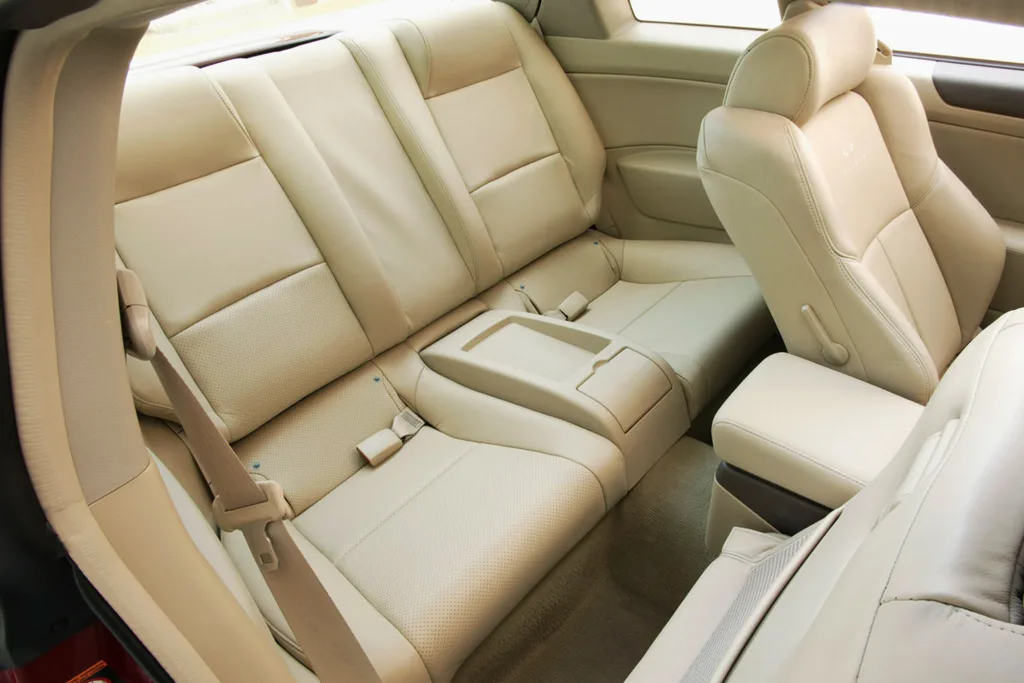
The deeply contoured front sports seats offered exceptional lateral support, particularly on the 6MT variant, while rear seating—though compact—was functional enough for short trips. The driving position was optimized through tilt-and-telescopic steering with leather wrapping and aluminum pedals, giving immediate connection between driver and machine.
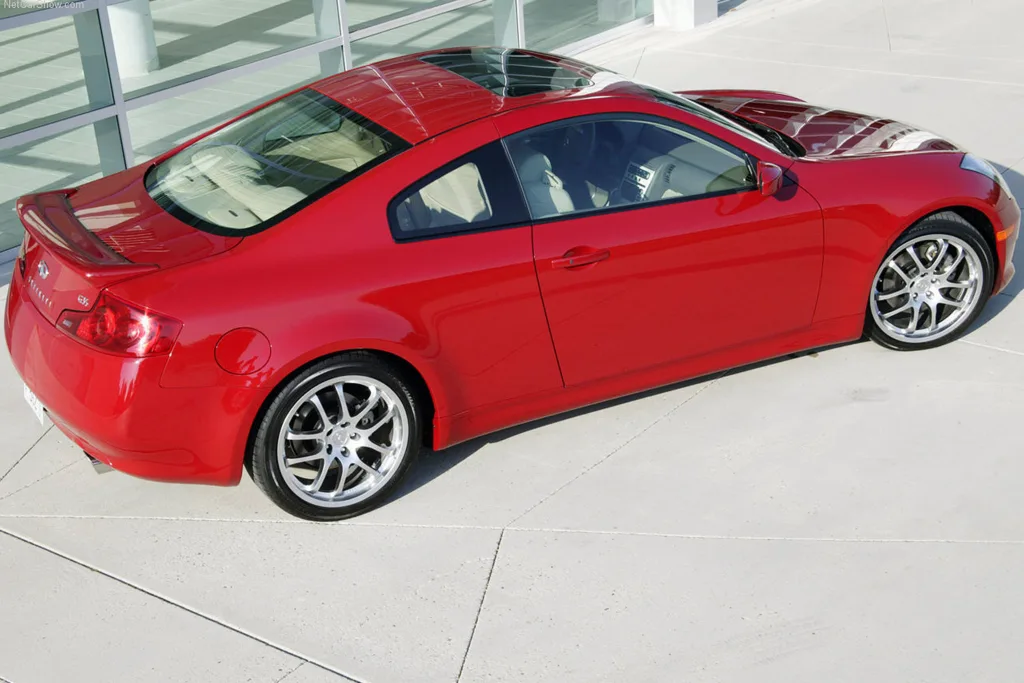
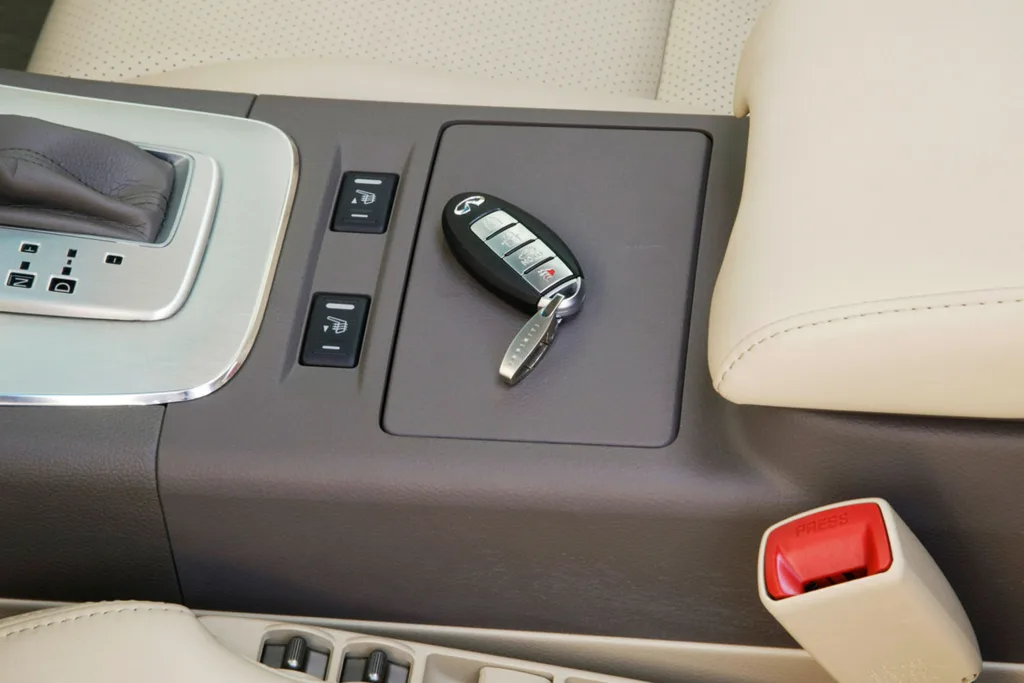
The audio experience matched the car’s refinement, courtesy of an optional BOSE eight-speaker sound system, while automatic climate control, power front seats, and keyless entry were standard. Advanced safety was ensured through front, side, and curtain airbags, ABS, and Vehicle Dynamic Control (VDC) stability assistance.

Driving Dynamics: Balance Above All
On the road, the G35 Coupe struck a harmonious balance between high-speed stability and engaging sportiness. Steering was hydraulic and communicative, with ideal weighting through tight bends and clear feedback during spirited driving. Body control was exceptional thanks to the low-slung chassis design, while the long wheelbase provided confident straight-line composure at highway speeds.
Acceleration from 0–100 km/h (0–62 mph) took approximately 5.6 seconds in the manual variant, with a governed top speed of 250 km/h (155 mph). Yet what impressed most wasn’t outright pace, but fluid handling stability, achieved through refined suspension geometry and tire calibration. The car’s character was distinctly rear-drive and precise, delivering the kind of progressive neutrality usually found in European grand-tour coupes.
Model Evolution and Legacy
By 2006, Infiniti subtly refined the G35 lineup, enhancing interior materials, adding revised wheel designs, and improving standard equipment. The Coupe’s powertrain remained largely unchanged—a testament to its engineering maturity—but attention shifted to the upcoming replacement.
At the 2006 Detroit Auto Show, Infiniti previewed the future with the G35 Concept Coupe, which evolved into the G37 Coupe for the 2007 model year. This new generation carried forward the G35’s legacy with a more powerful 3.7-liter VQ37VHR engine and advanced infotainment, marking the final chapter for the G35 nameplate.

Yet the 2006 Infiniti G35 Coupe remains a defining product of Infiniti’s renaissance. It symbolized the brand’s ability to fuse Japanese reliability with European driving emotion, presenting a genuine alternative to luxury coupes from BMW and Lexus.
Legacy: The Perfect Blend of Muscle and Refinement
Even decades later, the G35 Coupe continues to be revered among enthusiasts as one of the most balanced, rewarding rear-wheel-drive sports coupes of its era. Its VQ35DE engine, FM chassis, and timeless proportions laid the foundation for Infiniti’s modern performance identity and shaped enthusiast culture worldwide.
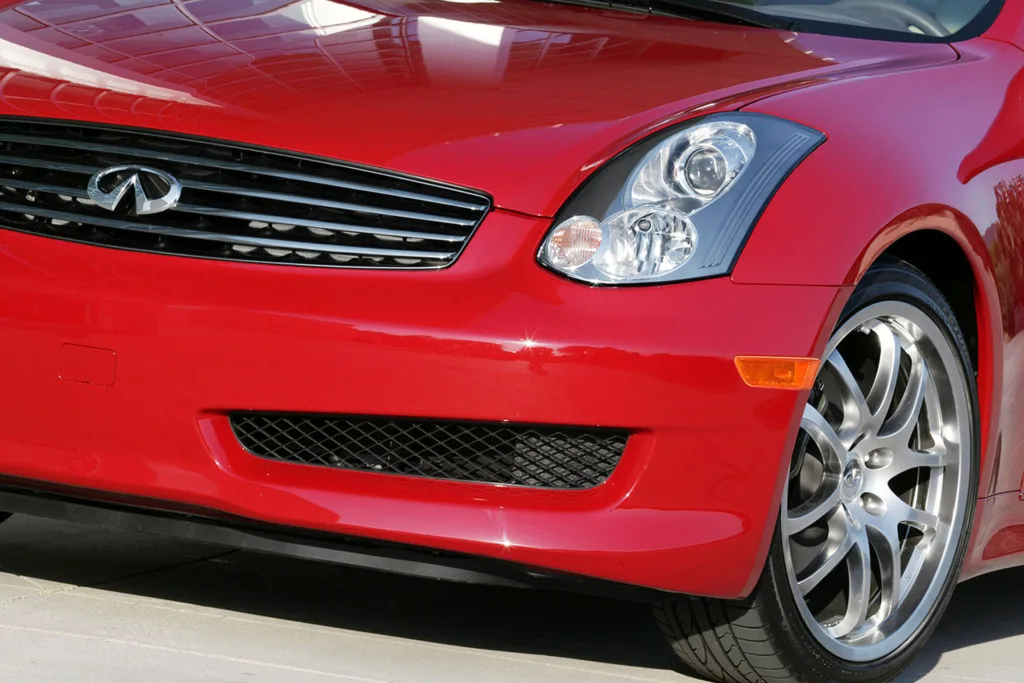
In essence, the 2006 G35 Coupe wasn’t just a luxury coupe—it was Infiniti’s declaration that technical precision and emotional performance could coexist harmoniously.


Functional Always active
Preferences
Statistics
Marketing