
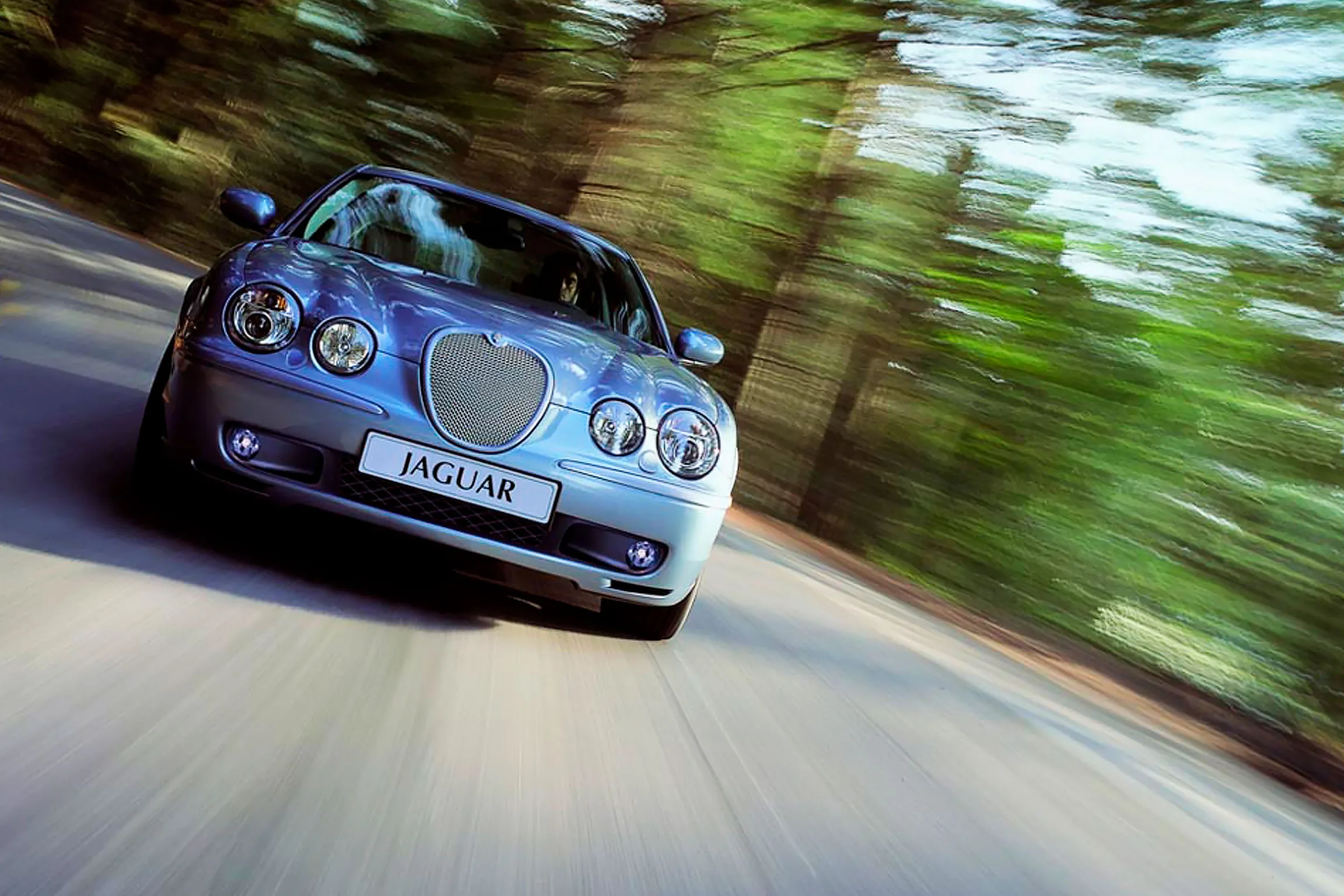
When Jaguar unveiled the S-Type R in 2002 (as a 2003 model), it marked a bold return to the world of high-performance luxury sedans. The move was strategic and symbolic: Jaguar was determined to stand shoulder to shoulder with Germany’s best, challenging the likes of Mercedes-AMG and BMW M with a uniquely British interpretation of speed and sophistication.
The S-Type R took Jaguar’s elegant retro-inspired executive saloon and infused it with the raw energy of a grand tourer. Beneath its graceful exterior lay serious engineering muscle—supercharged power, advanced suspension, and understated aggression—all befitting the marque’s racing heritage.
Design: Subtle Refinement, Hidden Strength
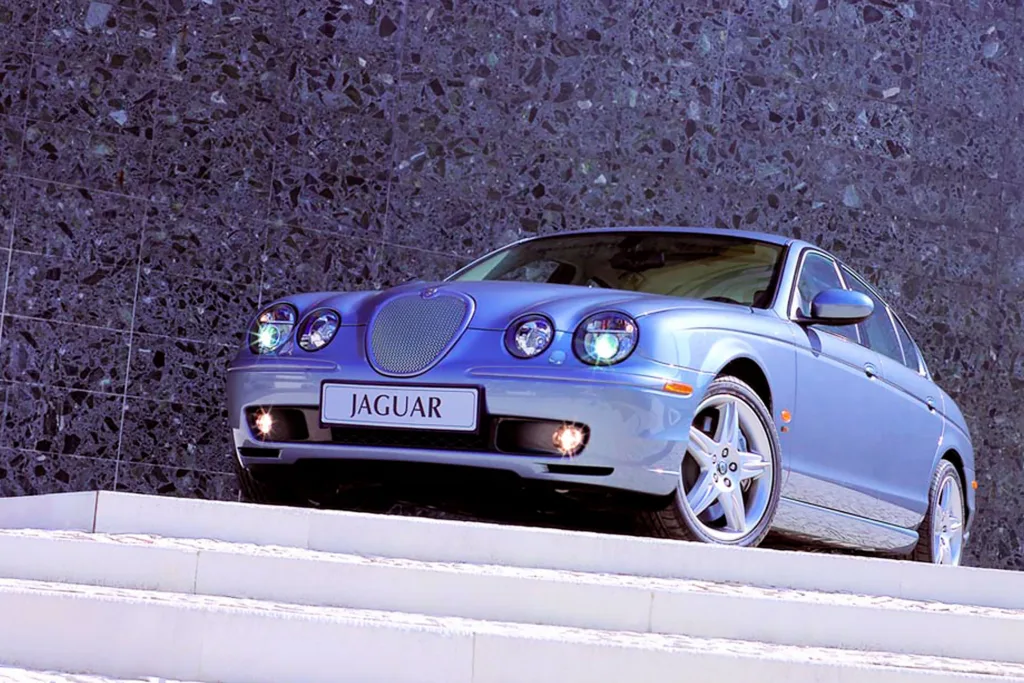
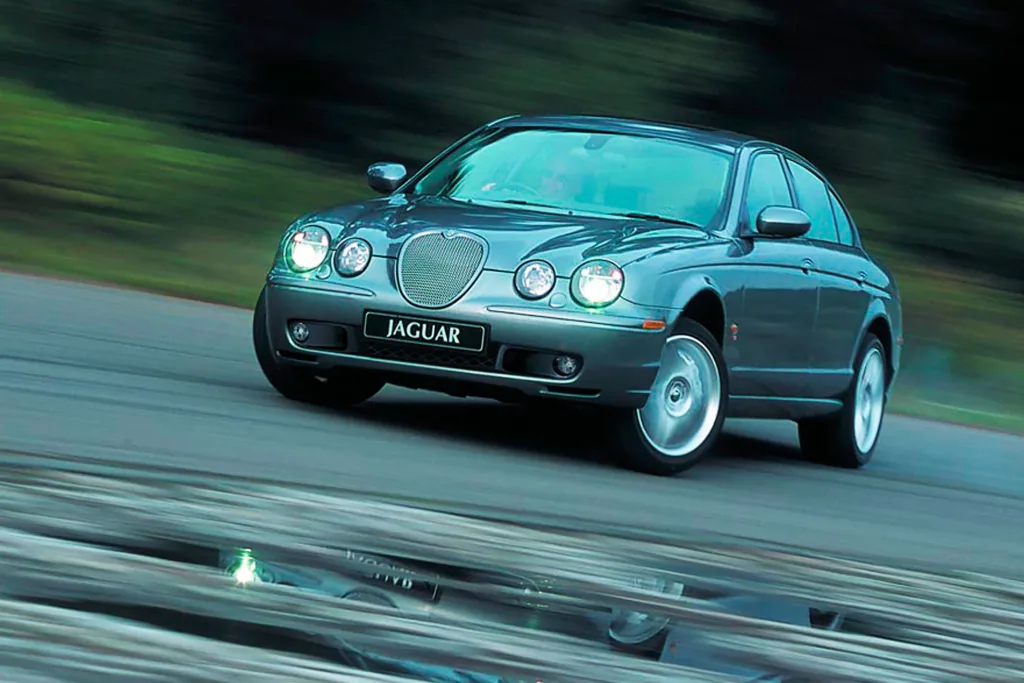
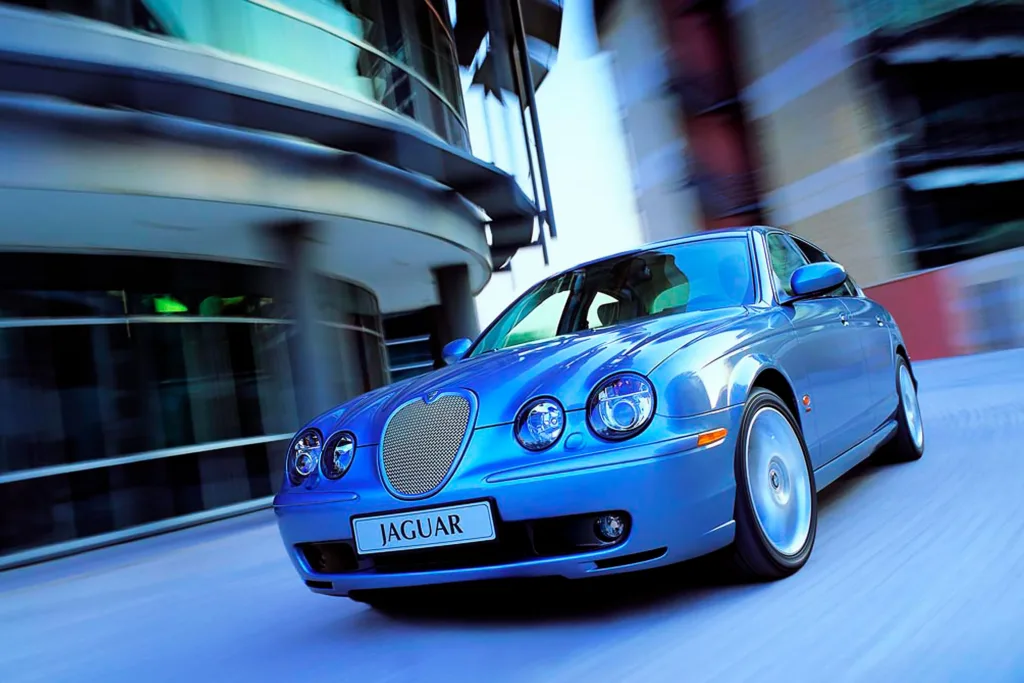
At first glance, the S-Type R retained the restrained, vintage-inspired silhouette of the regular S-Type, with its oval grille and fluid fender lines recalling Jaguar sedans of the 1960s. But a closer inspection revealed design distinctions signaling its intent.
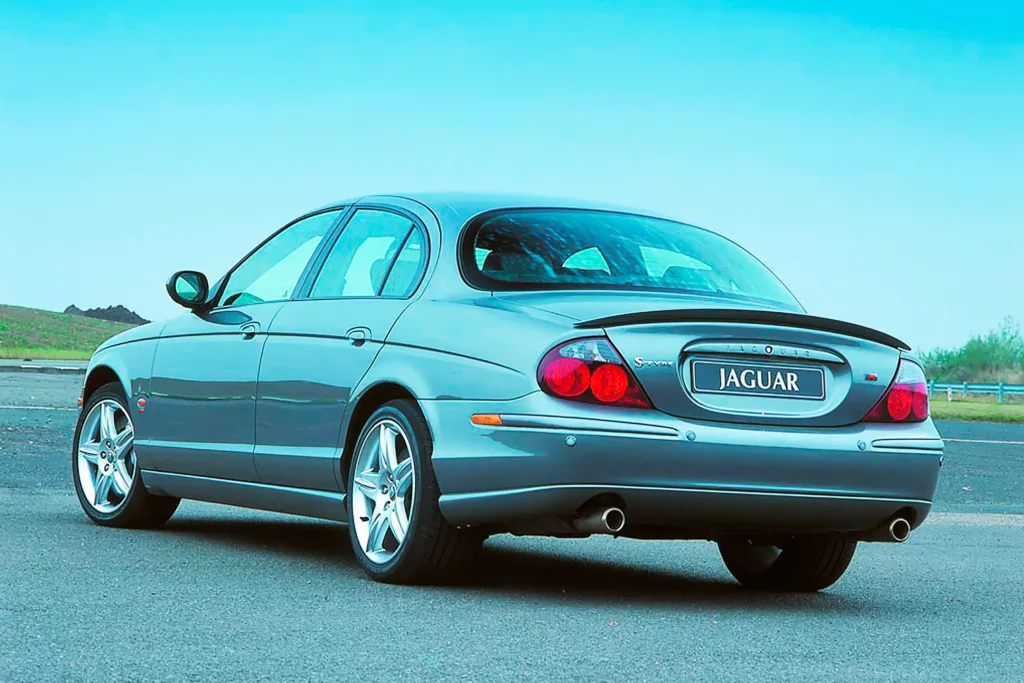
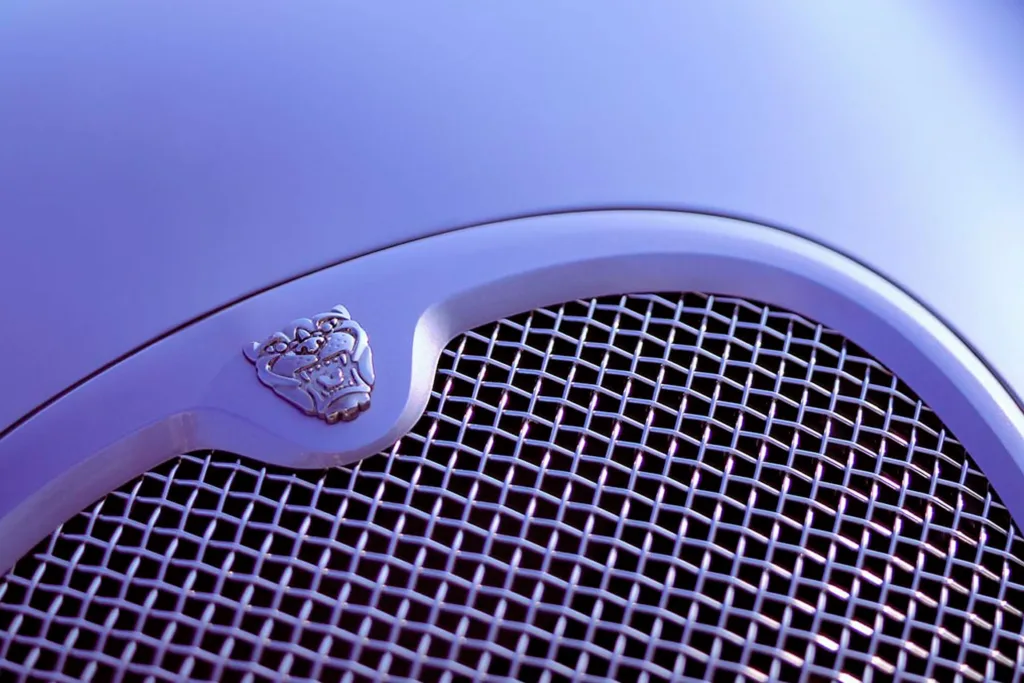
The bodywork had been subtly re-sculpted for aerodynamics and cooling efficiency. The trademark mesh-wire front grille, a nod to classic Jaguars, hinted at the ferocity beneath. Deeper front and rear bumpers, integrated aero splitters, and a discreet rear lip spoiler improved high-speed stability without disrupting the car’s dignified presence.
Its stance was widened thanks to 18-inch alloy wheels shod with 245/40ZR18 front and 275/35ZR18 rear performance tires, while flared arches emphasized the broader track and performance capability. Dual chrome exhaust outlets completed the visual balance—a blend of refinement and authority rather than overt aggression.
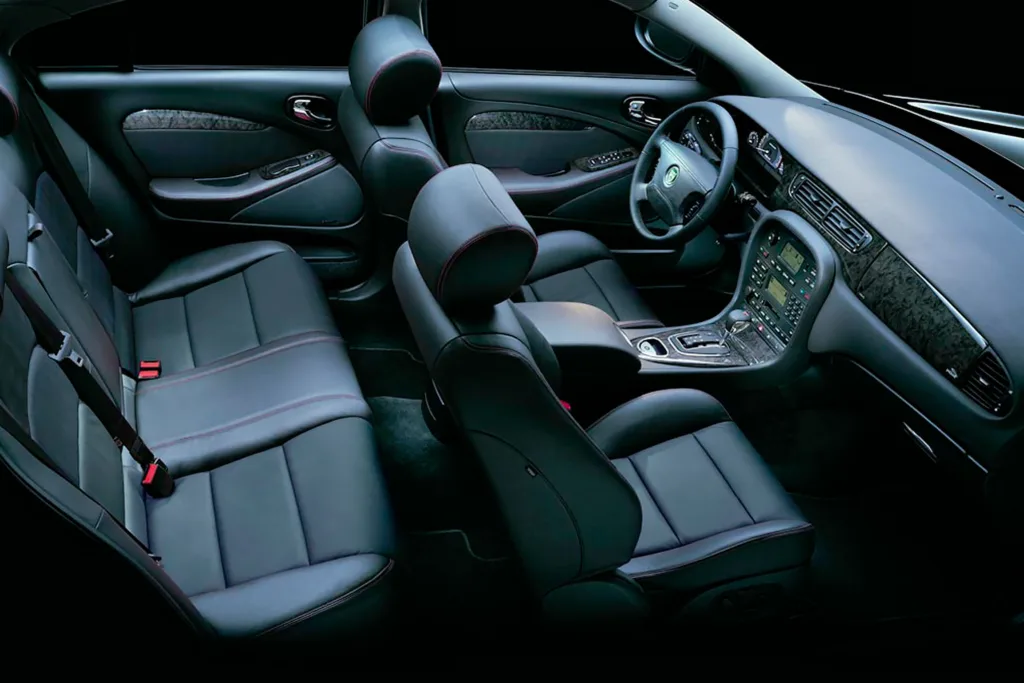
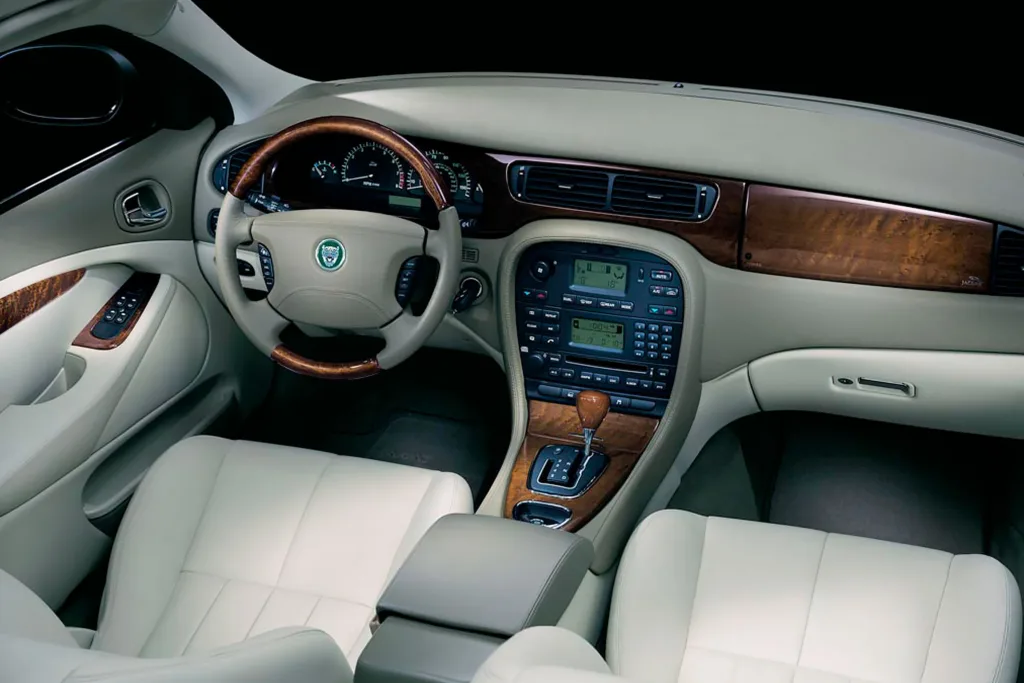
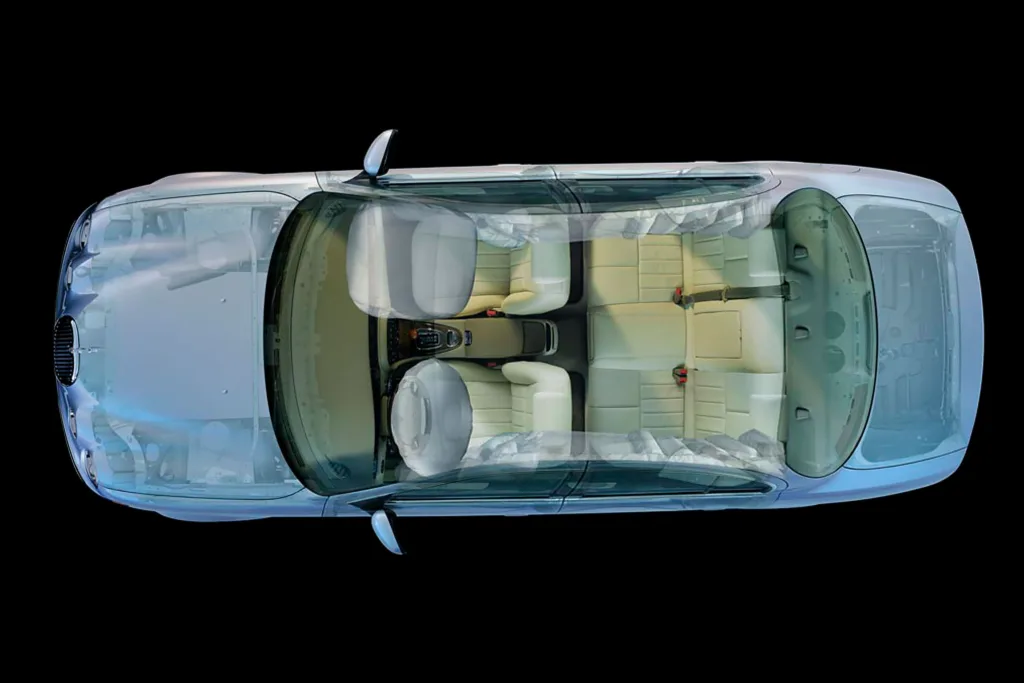
Inside, traditional craftsmanship met high performance. The cabin was trimmed in two-tone Connolly leather, complemented by polished walnut veneer and subtle chrome accents. Sports seats with firm bolstering and an exclusive R-badge steering wheel reminded occupants that this was no ordinary Jaguar.
Heart of a Predator: The Supercharged AJ‑V8
Powering the S-Type R was Jaguar’s formidable AJ34 S—a 4.2‑liter DOHC 32-valve V8 equipped with an Eaton sixth-generation supercharger and twin intercoolers. This setup produced a stellar 400 BHP (298 kW) at 6,100 rpm and 560 Nm (416 lb‑ft) of torque at 3,500 rpm.
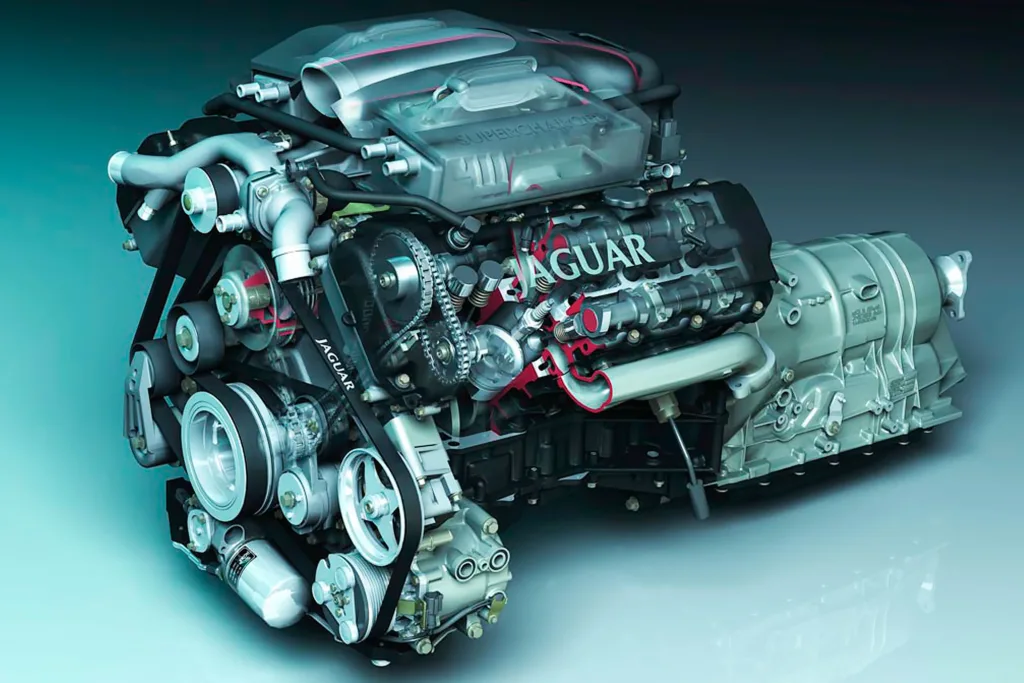
This same engine architecture would later power Jaguar’s XKR and XJR variants, but in the S-Type R, it gave the midsize saloon breathtaking pace. Despite its 1,800 kg curb weight, acceleration from 0–100 km/h (0–62 mph) was achieved in just 5.3 seconds, and top speed was electronically limited to 249 km/h (155 mph)—numbers that placed it firmly within performance executive territory.
The engine’s character was distinctly Jaguar: linear, muscular, and effortlessly smooth. The supercharger’s faint whine and the deep burble of the exhaust gave the car a refined menace, delivering a surge of torque that was available at nearly any speed. Unlike its more track-focused German contemporaries, the S-Type R didn’t shout—it growled, with quiet confidence.
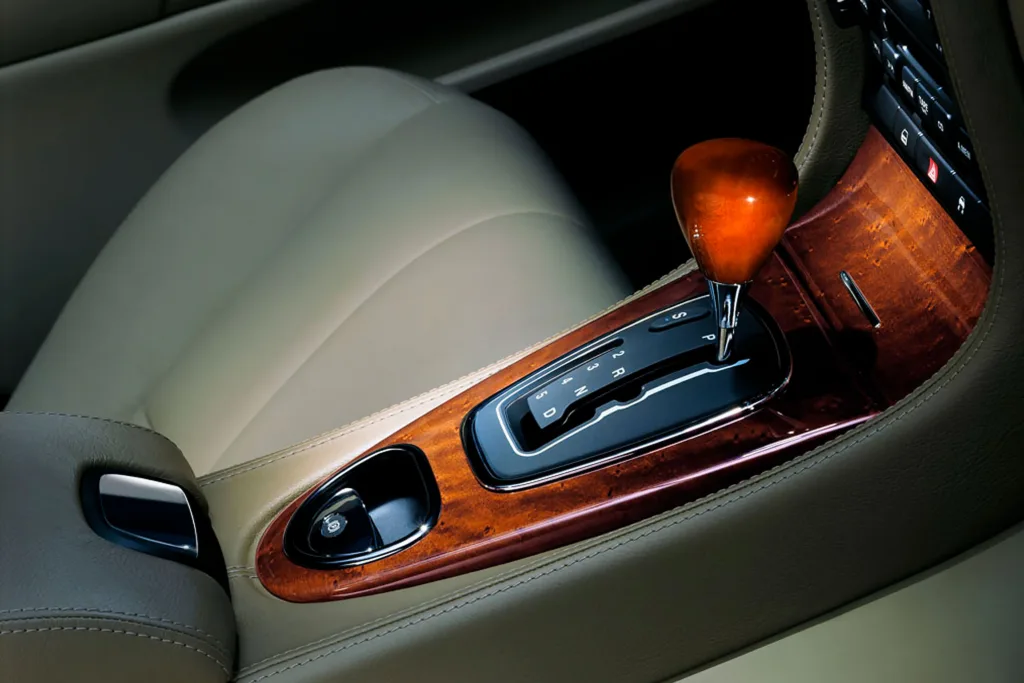
Power was transmitted to the rear wheels through a ZF 6HP26 six-speed automatic transmission, operated via Jaguar’s signature J‑Gate selector. In 2002, this pairing represented a leap in refinement—smooth yet reactive, with perfectly calibrated downshifts during spirited driving.
Chassis and Dynamics: The CATS Difference
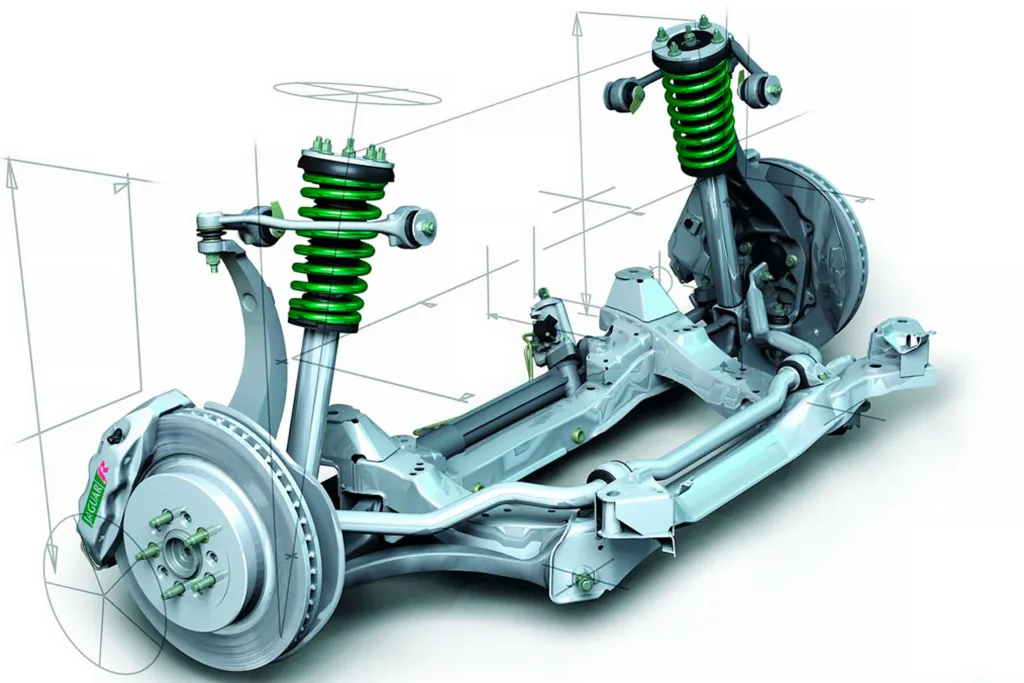
True to Jaguar tradition, the S-Type R offered not only speed but also composure and grace. It employed an all‑aluminum double-wishbone suspension system at both front and rear, delivering exceptional geometry control.
Complementing the hardware was Jaguar’s advanced CATS (Computer Active Technology Suspension)—an electronically controlled damping system that continuously adjusted shock absorber stiffness in milliseconds based on speed, load, steering angle, and body movement. The result was unmatched duality: supple ride comfort for long‑distance cruising and taut body control when the driver called for precision.
Spring rates and anti‑roll bars were strengthened compared to the standard S-Type, while the steering rack was recalibrated for sharper response without sacrificing the creamy feel that defined Jaguar’s road manners.
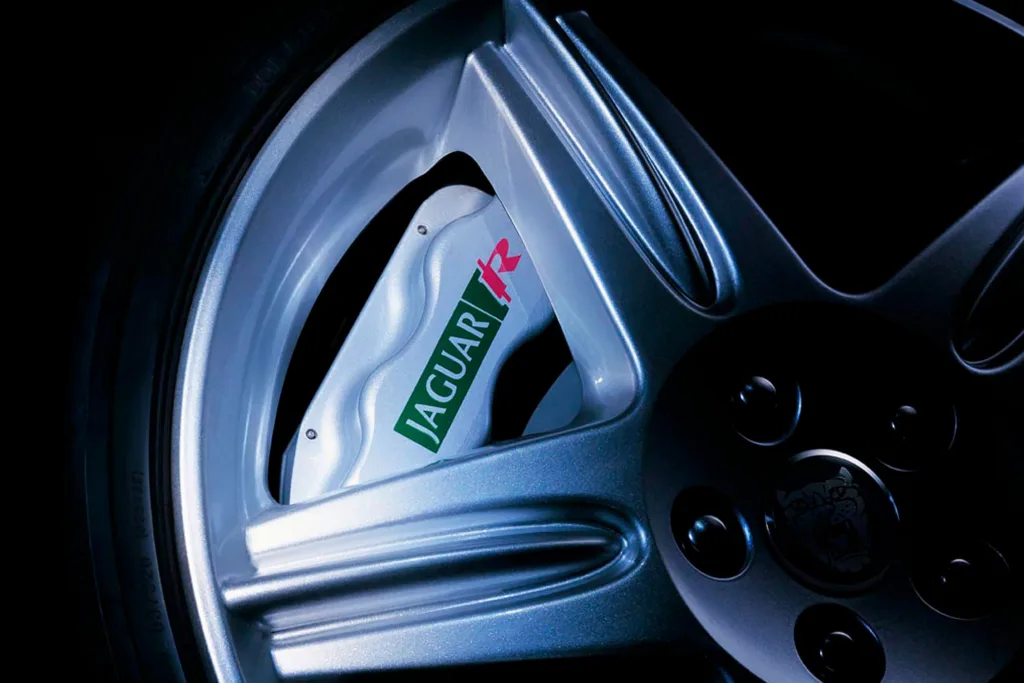
Braking performance was equally impressive. The front end employed Brembo four-piston calipers acting on large ventilated discs capable of handling repeated high-speed stops without fade. Combined with traction and stability management electronics, the system ensured that the S-Type R maintained confidence-inspiring control even at elevated speeds.
Performance and Character
Behind the wheel, the S-Type R delivered a driving experience that balanced British refinement with genuine performance dynamics. The supercharged V8 offered relentless mid-range thrust, propelling the car with turbine-like smoothness accompanied by a satisfying induction note. The steering—fast, direct, yet fluid—gave the car a degree of feedback rare among luxury sedans.
Jaguar’s engineers consciously avoided the harshness that often defined its European rivals. Instead, they created a machine capable of covering vast distances at tremendous pace while cocooning the driver in comfort. Its 50:50 weight distribution and rigid steel monocoque ensured secure handling and minimal body roll, allowing the car to remain poised over imperfect roads.
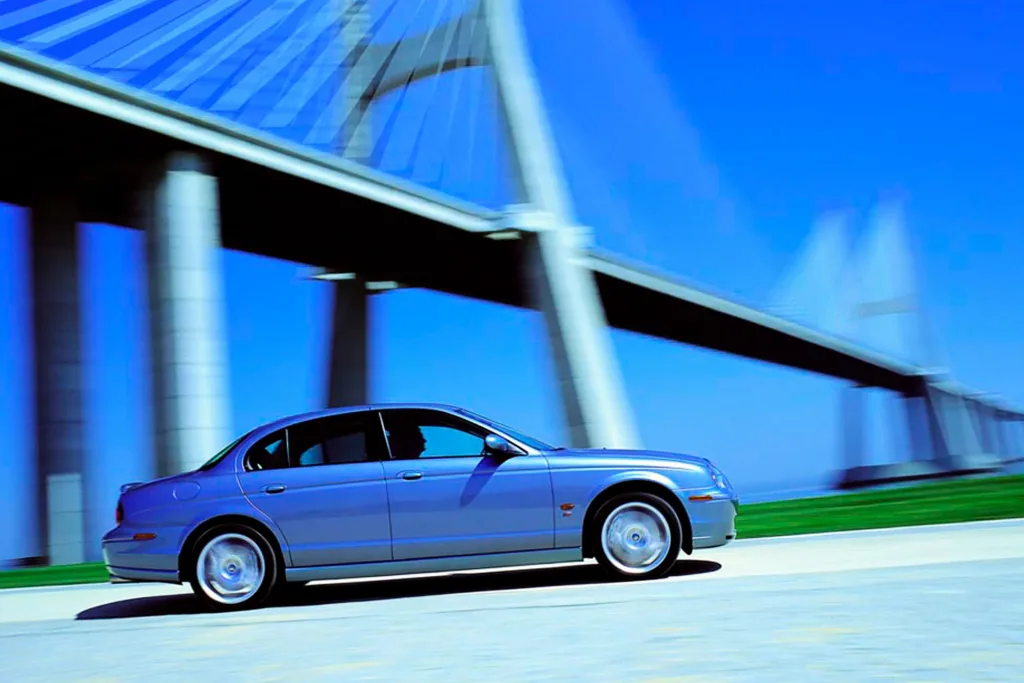
Even under duress, the S-Type R embodied the quintessential Jaguar philosophy of “pace with grace.” It could thunder down an autobahn at 250 km/h one moment and glide through city streets the next, never betraying its dual nature as both business saloon and performance grand tourer.
Legacy
The 2002 Jaguar S-Type R played a pivotal role in Jaguar’s early‑2000s revival under Ford’s stewardship. It revived memories of the brand’s greatest sports sedans—the Mark 2, the XJR, and the XJ 12—while reintroducing the world to Jaguar performance expressed through luxury and discipline rather than brute force.
Its influence extended far beyond its production run. The R‑tuned AJ‑V8 engine became the foundation for later high-performance Jaguars, leading directly to the XKR, XJR, and XFR‑S programs of the 2000s and 2010s. Similarly, the blend of adaptive dynamics and long-distance refinement previewed many of the design philosophies that persist in modern Jaguars today.
The S-Type R may not have been the loudest or most flamboyant of its competitors, but in many ways, it was the most authentic—a car that proved high performance and elegance could still coexist in perfect harmony.


Functional Always active
Preferences
Statistics
Marketing