
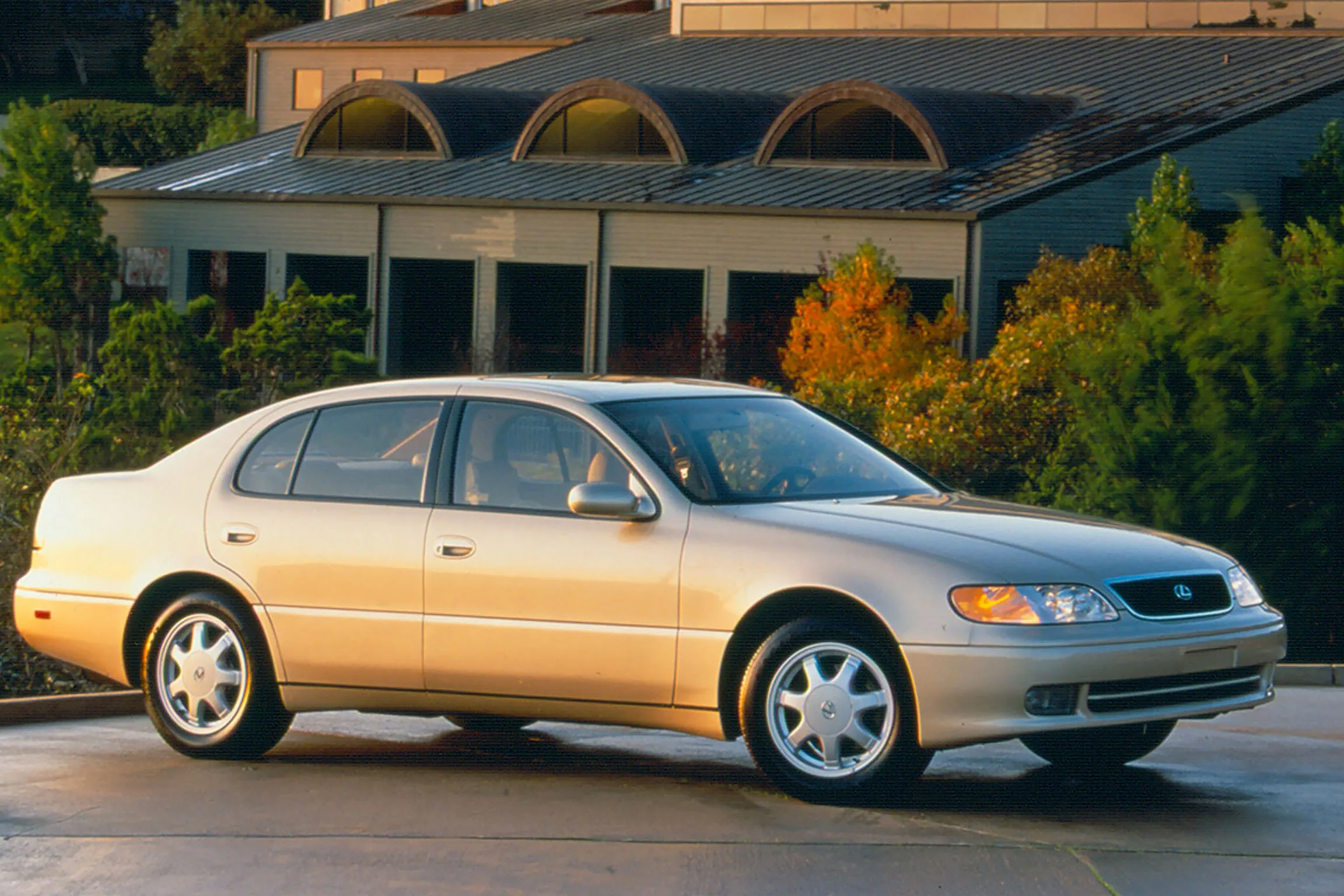
In 1991, Toyota reimagined what a Japanese luxury sedan could be. The result was the Toyota Aristo (JZS147)—a performance‑oriented executive car that paired the refinement of the long‑established Crown with cutting‑edge design and advanced mechanicals. It would later reach global markets under the name Lexus GS 300, serving as the brand’s second rear‑wheel‑drive sedan after the LS 400.
Developed as a true global model, the Aristo blurred the line between sports car and luxury saloon, offering understated aggression beneath a refined exterior.
It marked the beginning of a new era for Toyota—one where high technology met emotional design.
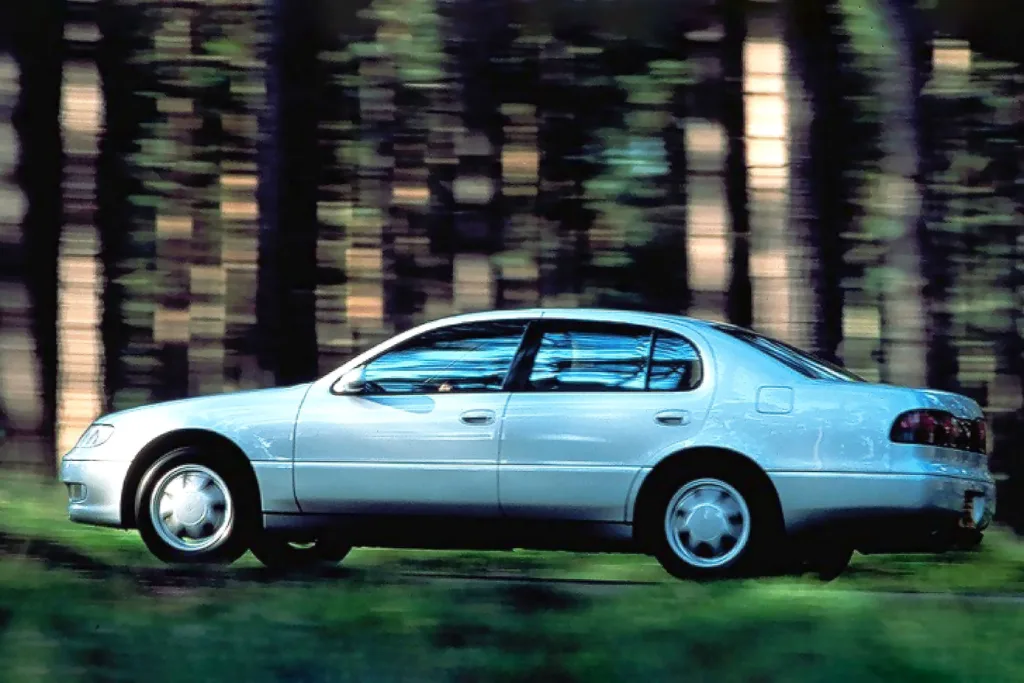
Design by Italdesign Giugiaro
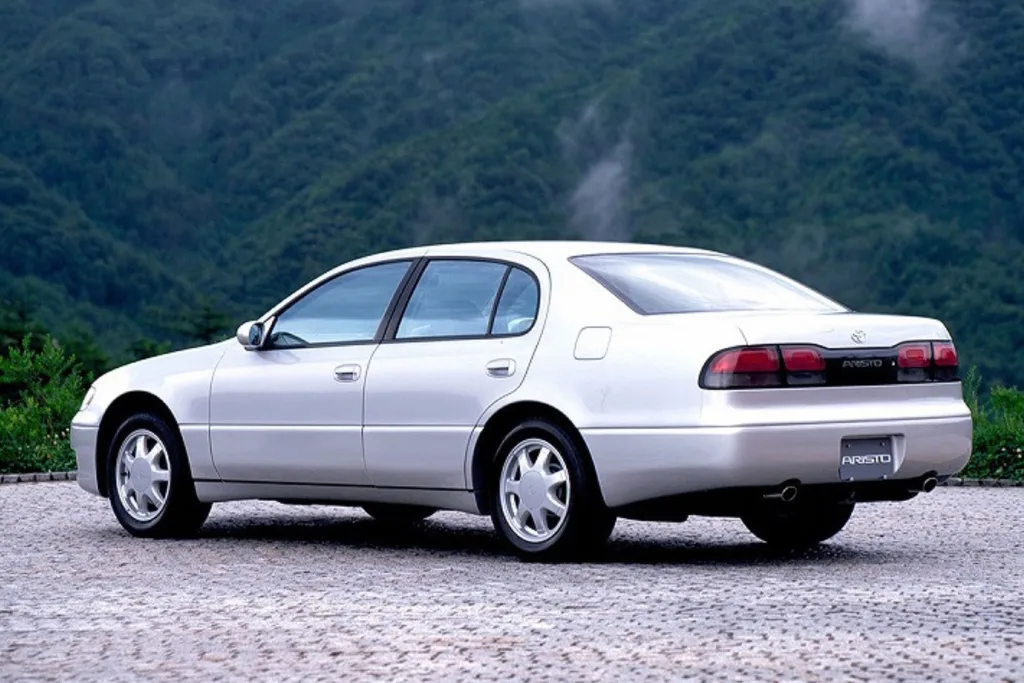
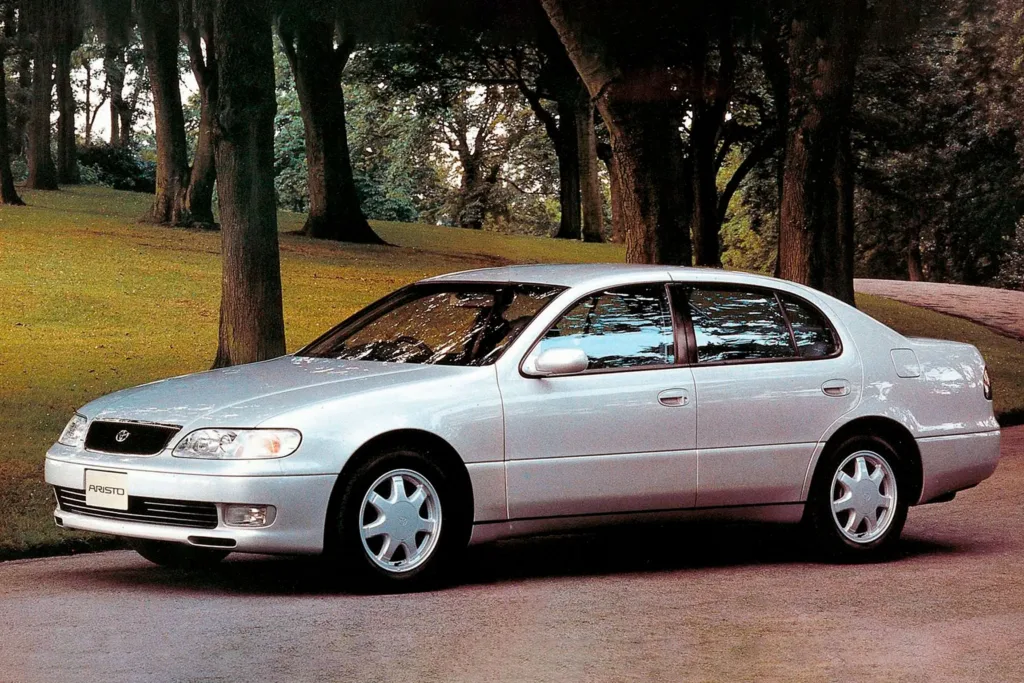
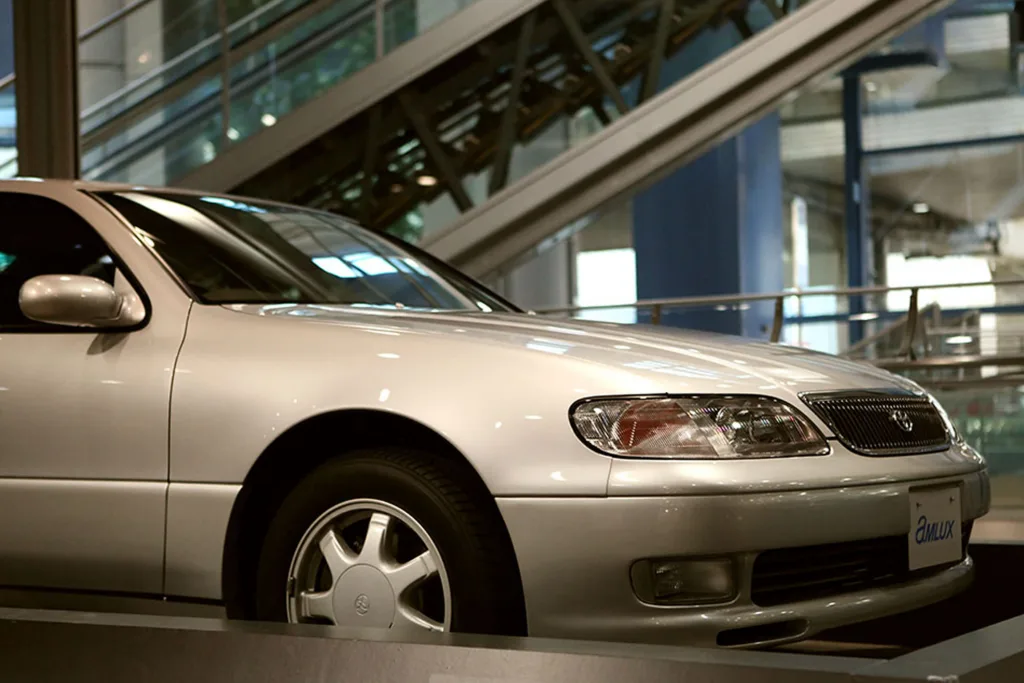
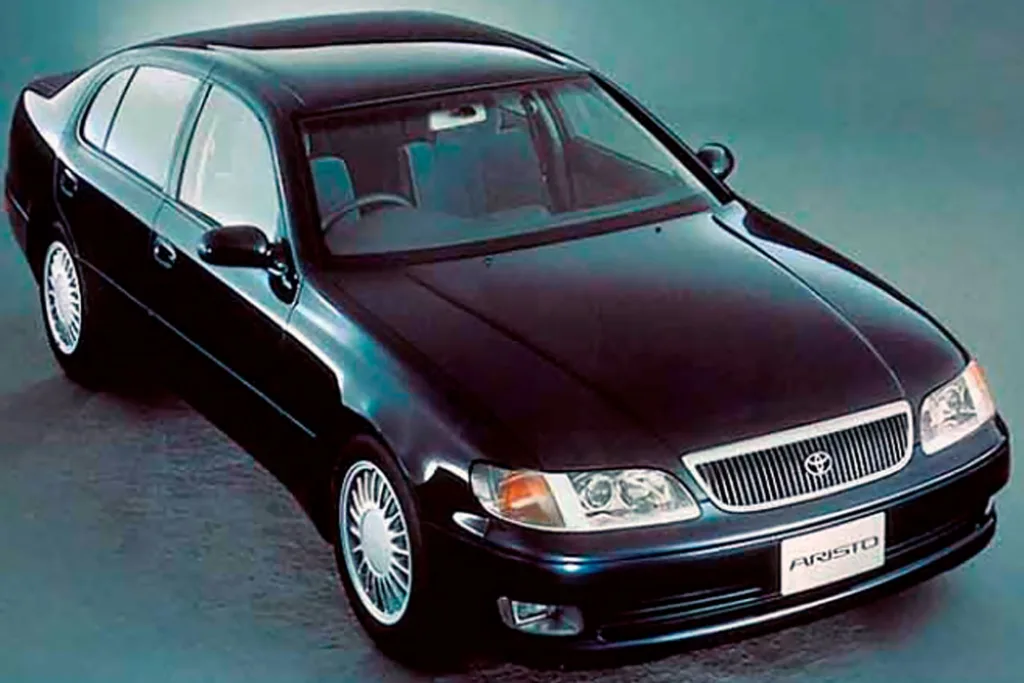
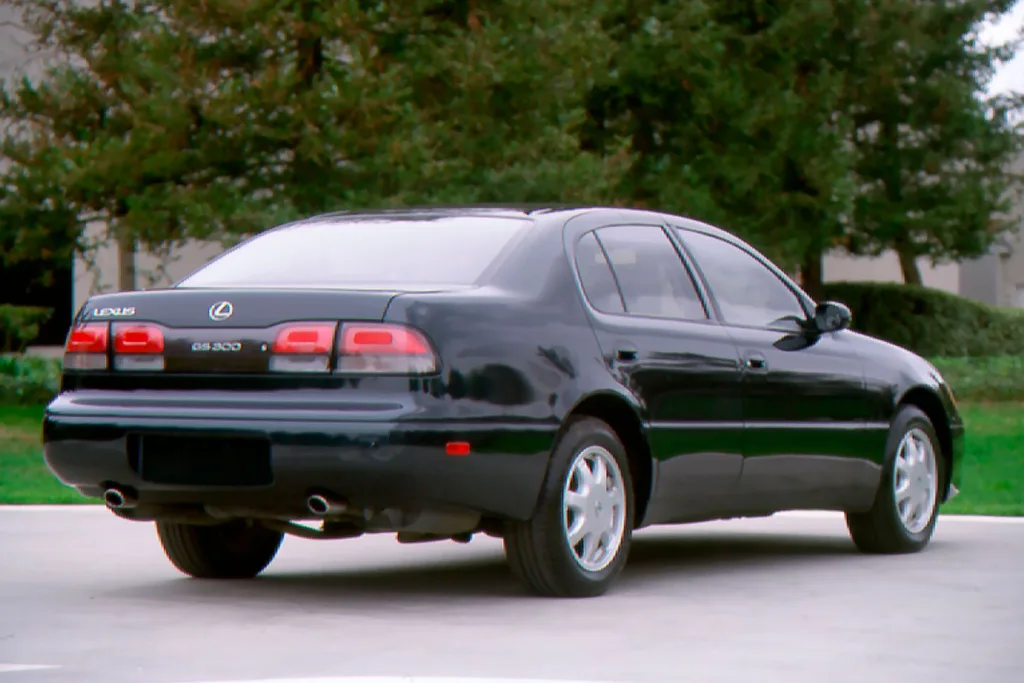
Styling responsibilities were handed to Italdesign Giugiaro, the Italian design house led by Giorgetto Giugiaro. The result was unlike any Toyota of its time—a bold, aerodynamic four‑door body featuring flowing lines, smooth surfacing, and a distinctive greenhouse profile. Its proportions prioritized dynamic stance over conservative form: a long bonnet, short deck, and high waistline delivered presence without ornamentation.
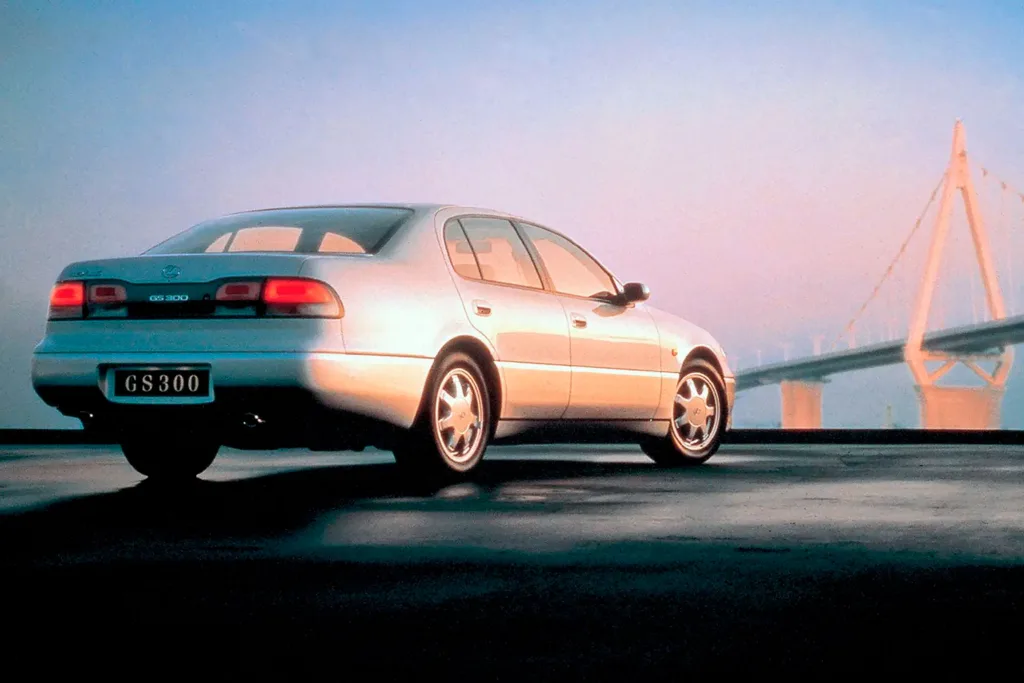
The Aristo’s drag coefficient of just 0.31 placed it among the most aerodynamically efficient sedans of the early 1990’s. Customers in Japan, known for their traditional preferences, instantly embraced this avant‑garde design. The car’s aesthetic became symbolic of modern luxury—progressive, confident, and distinctly global.
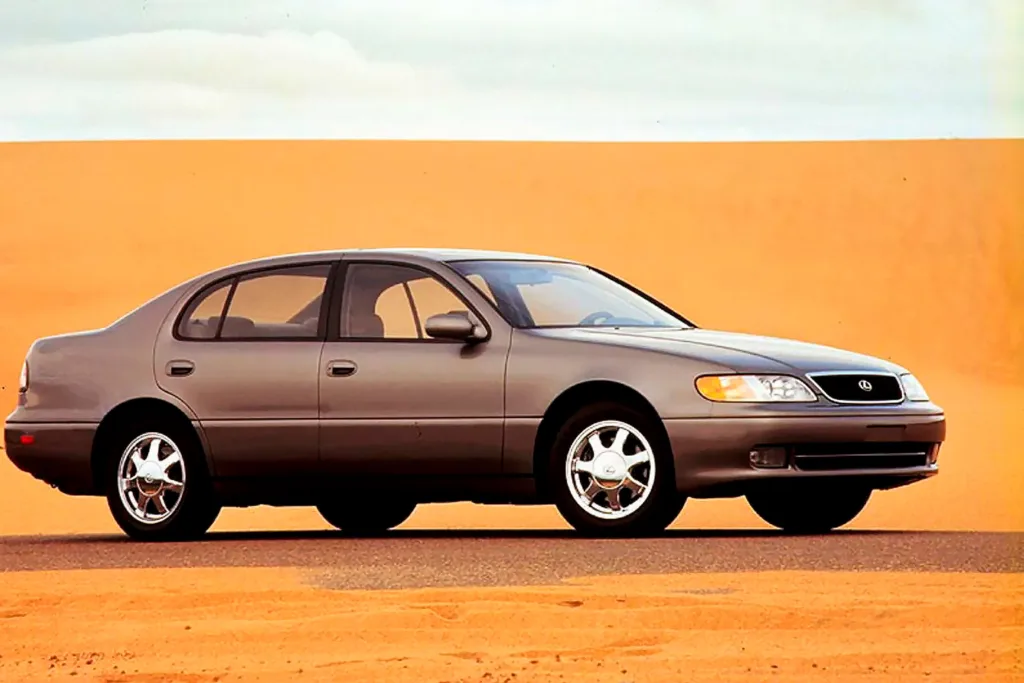
Platform and Engineering
Under the skin, the Aristo used a heavily revised version of the Toyota Crown’s front‑engine, rear‑wheel‑drive platform, re‑engineered for greater torsional rigidity and sharper handling. Suspension geometry was completely overhauled with double wishbones front and rear, employing coil springs and gas‑pressurized shock absorbers tuned for both comfort and stability.

Toyota’s use of lightweight steel, vibration‑isolating engine mounts, and a newly developed electronic traction control (TRC) system ensured that despite its size, the Aristo handled with precision and stability comparable to European sports sedans.
Powertrain: The 2JZ Era Begins
The Aristo was the first production model to debut Toyota’s now‑legendary 2JZ‑series engine—a powerplant that would later achieve cult status in the performance community.
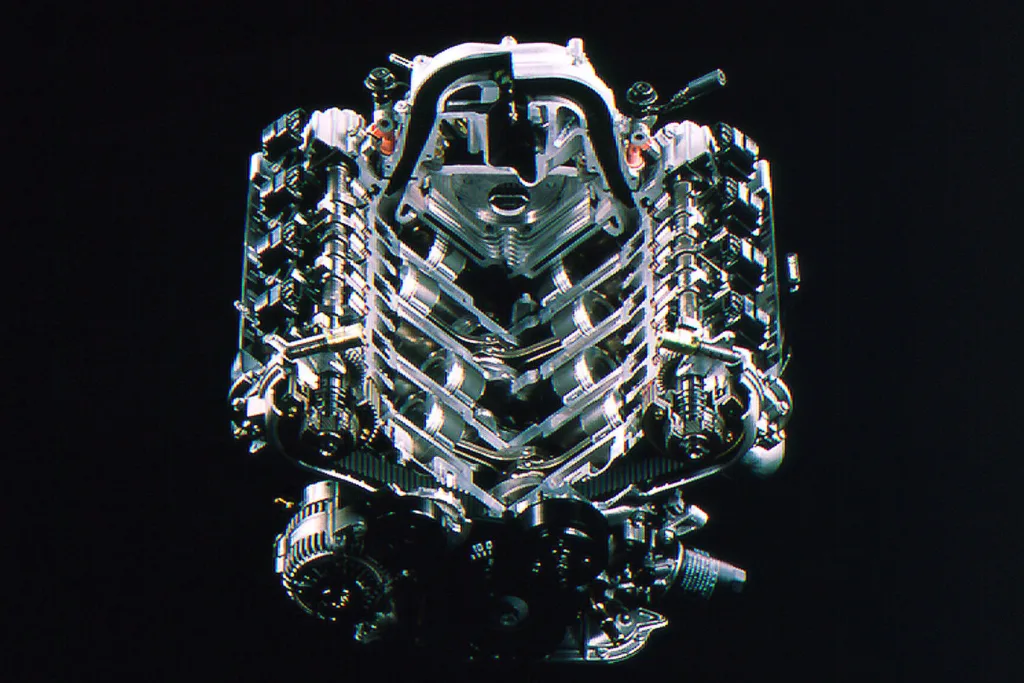
This all‑aluminum DOHC inline‑six displaced 2,997 cc (3.0 L) and was available in two distinct configurations:
3.0 Q (2JZ‑GE) – Naturally Aspirated
- Type: Inline 6 DOHC 24‑valve
- Output: 230 hp (172 kW) @ 6,000 rpm
- Torque: 284 Nm (209 lb‑ft) @ 4,800 rpm
- Compression Ratio: 10.5:1
- Fuel System: EFI (Electronic Fuel Injection)
3.0 V (2JZ‑GTE) – Twin Turbocharged
- Type: Inline 6 with Sequential Twin Turbos (CT12B)
- Output: 280 hp (206 kW) @5,600 rpm
- Torque: 431 Nm (318 lb ft) @3,600 rpm
- Boost Pressure: 0.9 bar (13 psi)
- Transmission: A341E 4-speed Super ECT automatic with manual overdrive
The naturally aspirated 2JZ‑GE offered smooth torque and refinement—ideal for long‑distance touring—while the 2JZ‑GTE version, shared with the later A80 Supra, propelled the Aristo into genuine performance territory. Despite its luxury orientation and weight exceeding 1,700 kg, the twin-turbo Aristo surged from 0–100 km/h in approximately 6 seconds, effortlessly outpacing many sports cars of its day.
Power Delivery and Driving Dynamics
Both engine variants used a rear‑wheel‑drive layout, assisted by sophisticated electronic management systems such as TRC (Traction Control) and ECT-i (Electronically Controlled Transmission with intelligence). The 2JZ engines’ placement near the centerline of the front axle gave the Aristo near 50:50 weight distribution—unusual for its class.
To improve balance further, Toyota mounted key driveline components lower in the chassis. Combined with wide tracks (front 1,550 mm/rear 1,540 mm) and finely tuned damping rates, the Aristo rode with firmness yet maintained Lexus‑grade refinement. Its steering system delivered consistent feedback through a variable‑assist hydraulic rack, offering both precision and effortless maneuverability at any speed.
Comfort, Safety, and Technology
True to Lexus tradition, Toyota ensured that innovation extended beyond performance. The Aristo / GS 300 incorporated the brand’s most advanced technology of the early 1990s, including:
- ABS with EBD (Electronic Brake Distribution)
- Dual SRS airbags
- Electronic Traction Control (TRC) and Stability Management System
- Electronically Controlled Suspension (TEMS) for selectable ride settings
- Power adjustable steering wheel and memory seats
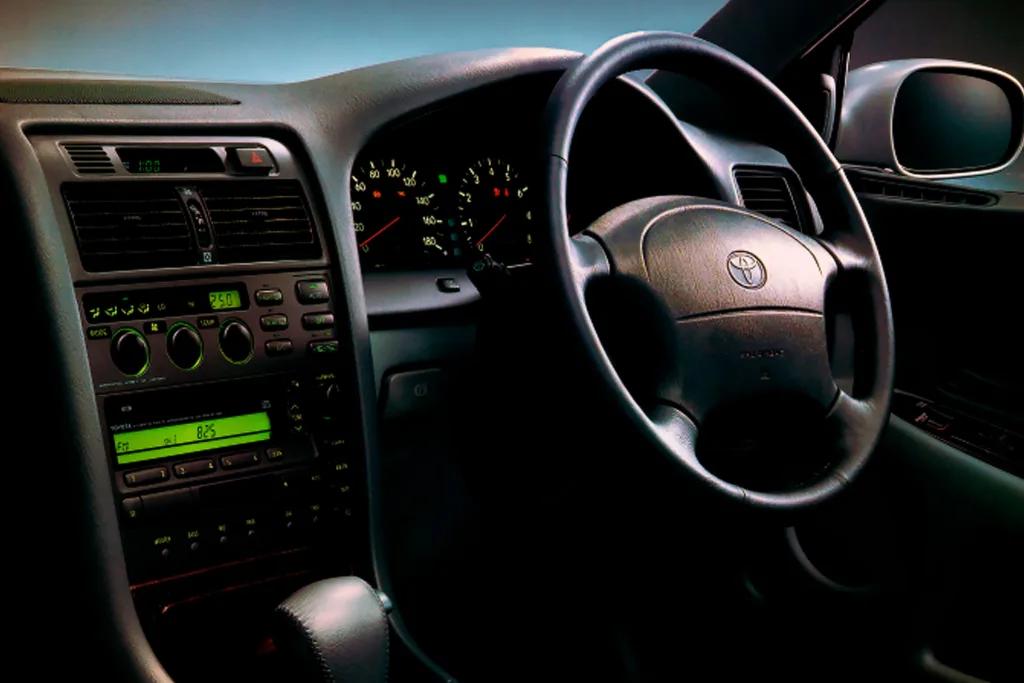
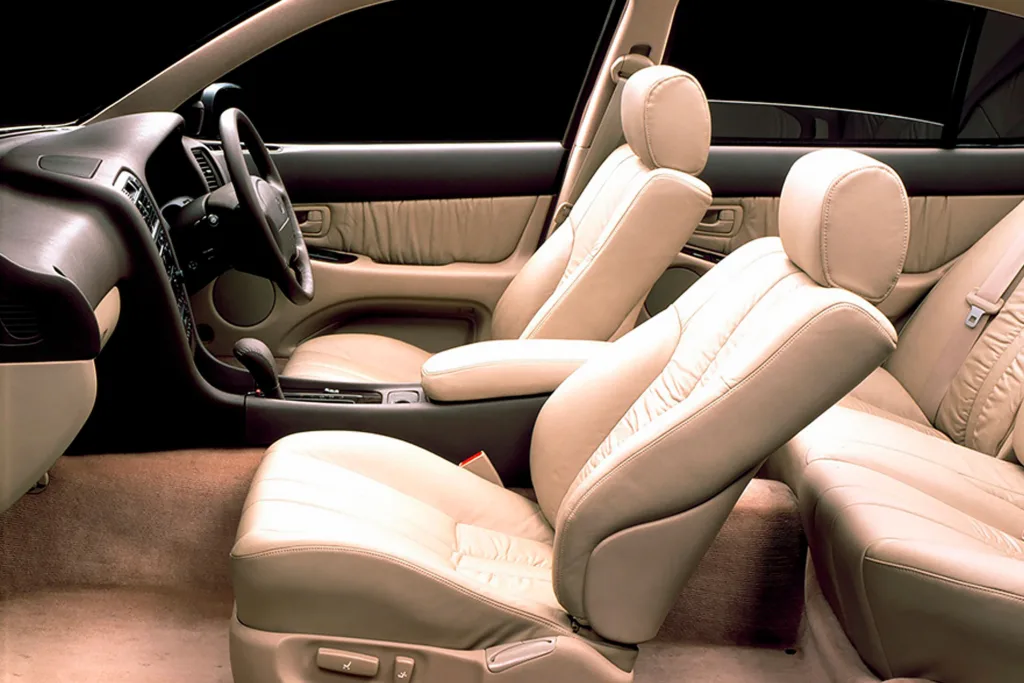
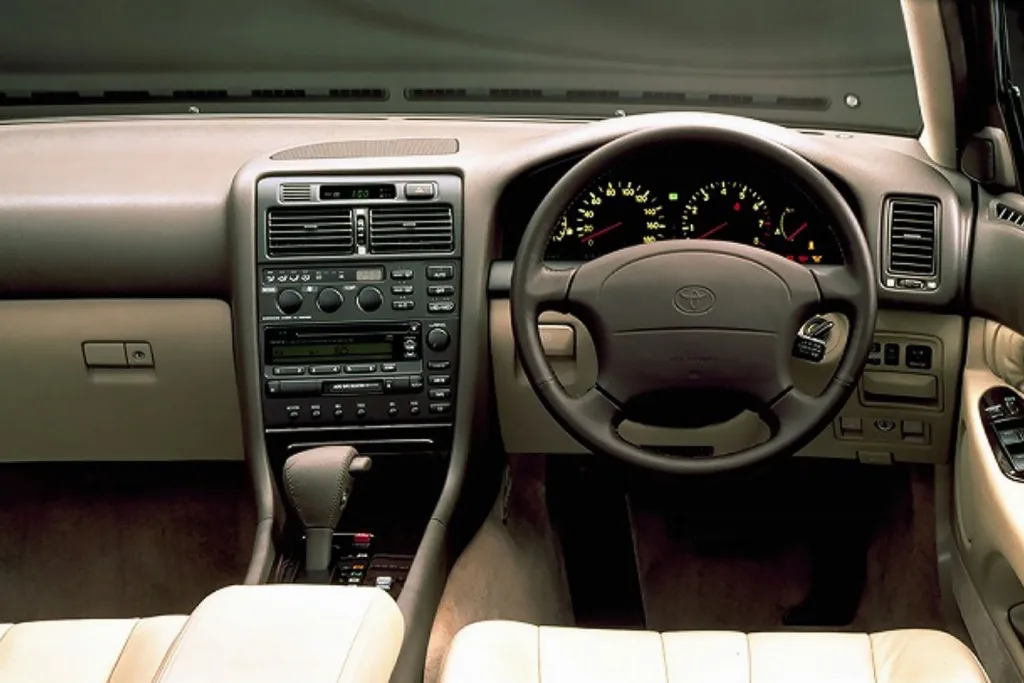
The interior set new standards for mid‑size luxury cars: soft leather upholstery, genuine walnut veneers, and comprehensive instrumentation emphasizing ergonomics. Even the dashboard switchgear displayed the precision that defined Lexus’s craftsmanship ethos.
Market Reception and Expansion
Upon its debut, the Aristo became an immediate hit in Japan’s booming luxury market of the early 1990s. Its appeal rested on two key attributes: the performance credentials of a true driver’s car and the refinement expected of Japan’s top luxury manufacturer.
The twin‑turbo 3.0 V model in particular captivated performance enthusiasts—offering near‑Supra acceleration in a discreet four‑door body.
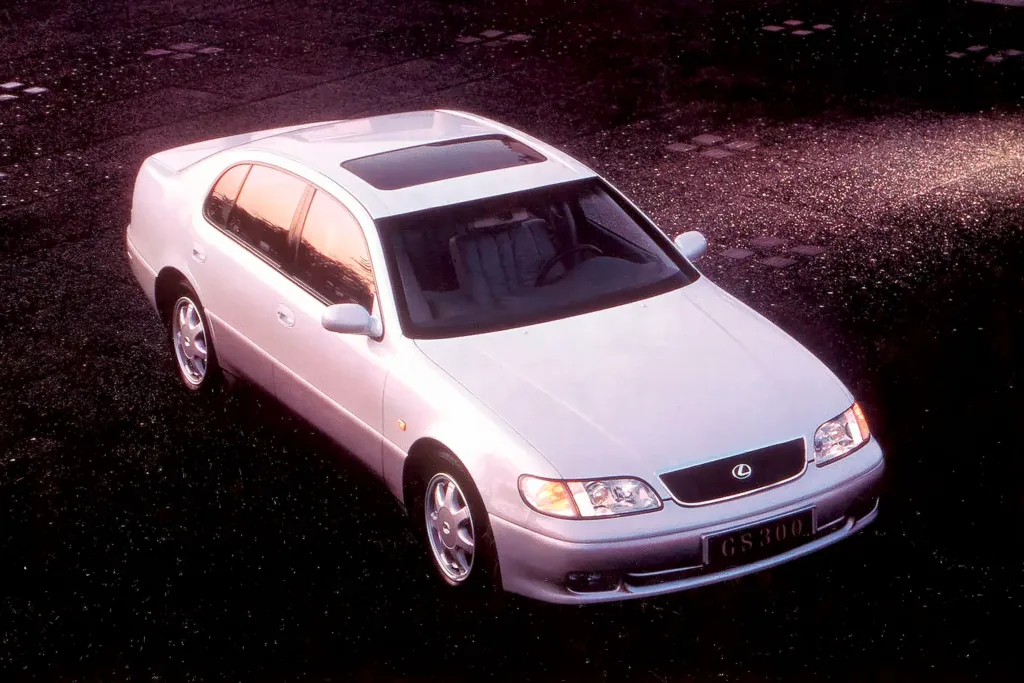
Exported as the Lexus GS 300 beginning in 1993, the model introduced many international customers to the idea of a performance‑tuned Lexus sedan. While the U.S. version initially used only the 2JZ‑GE naturally aspirated engine, its chassis sophistication and understated aesthetics quickly earned praise as an exciting alternative to European rivals.
In 1992, Toyota expanded the Aristo range with a 4.0 L V8 4WD variant based on the Crown Majesta’s 1UZ‑FE engine, coupled with an advanced all‑wheel‑drive system. This derivative prioritized refinement over outright sportiness but further confirmed Toyota’s technical depth.
Technical Specifications
| Parameter | Specification |
| Engine | 2JZ‑GE 3.0 L I6 / 2JZ‑GTE 3.0 L Twin‑Turbo I6 |
| Power | 230 hp (NA) / 280 hp (TT) |
| Torque | 284 Nm (NA) / 431 Nm (TT) |
| Transmission | 4‑speed ECT‑i automatic / overdrive |
| Layout | Front‑engine / Rear‑wheel drive |
| Suspension | Double wishbone (front and rear) |
| Curb Weight | ~1,700 kg (3.0 V) |
| 0–100 km/h | 6.0 s (Turbo) / 8.0 s (NA) |
| Top Speed | 250 km/h (limited) |
| Drag Coefficient (Cd) | 0.31 |
Legacy
The first‑generation Aristo / Lexus GS 300 established a new identity for the Lexus brand: Japanese luxury infused with authentic performance engineering. It paved the way for later GS models and directly influenced the powertrain evolution that culminated in the twin‑turbo Supra and Aristo V300 of the late 1990s.
More importantly, it redefined consumer expectations—proving that a sedan could deliver supercar‑level performance wrapped in discreet elegance. Even today, the 1991 Aristo remains revered among collectors and tuners as the car that introduced the world to Toyota’s legendary 2JZ heritage.




Functional Always active
Preferences
Statistics
Marketing