
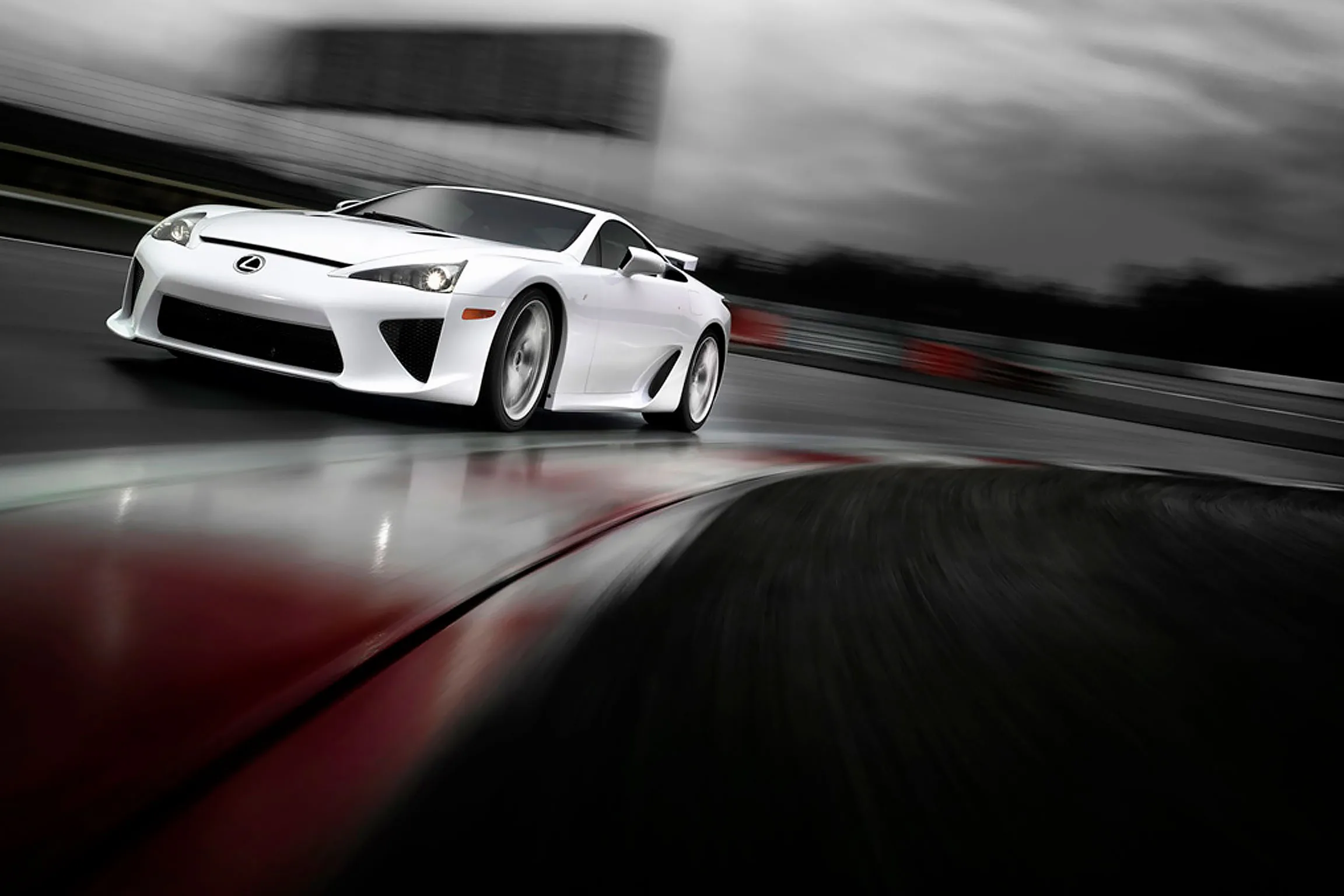
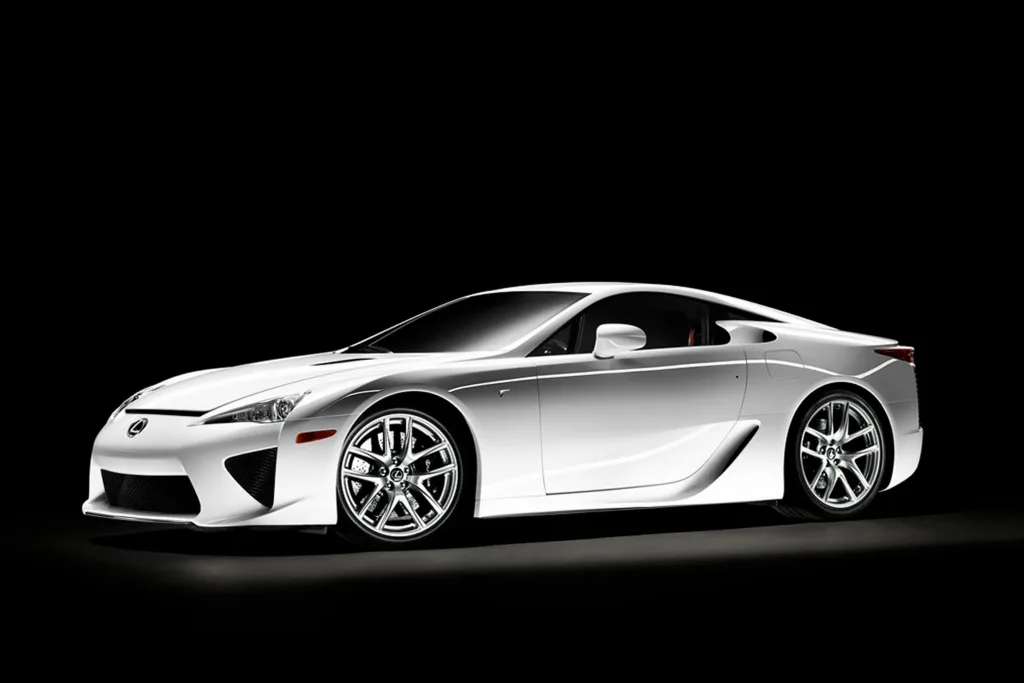
More than four decades after Toyota’s iconic 2000GT introduced Japan to the world stage of performance automobiles, the brand returned with another technological tour de force—the Lexus LFA. Conceived as a halo project to define Toyota’s engineering future rather than merely a production supercar, the LFA symbolized two decades of research, experimentation, and quiet obsession. Development began as early as 2000, with the final production model unveiled in 2010 after multiple prototype phases and Nürburgring testing programs.
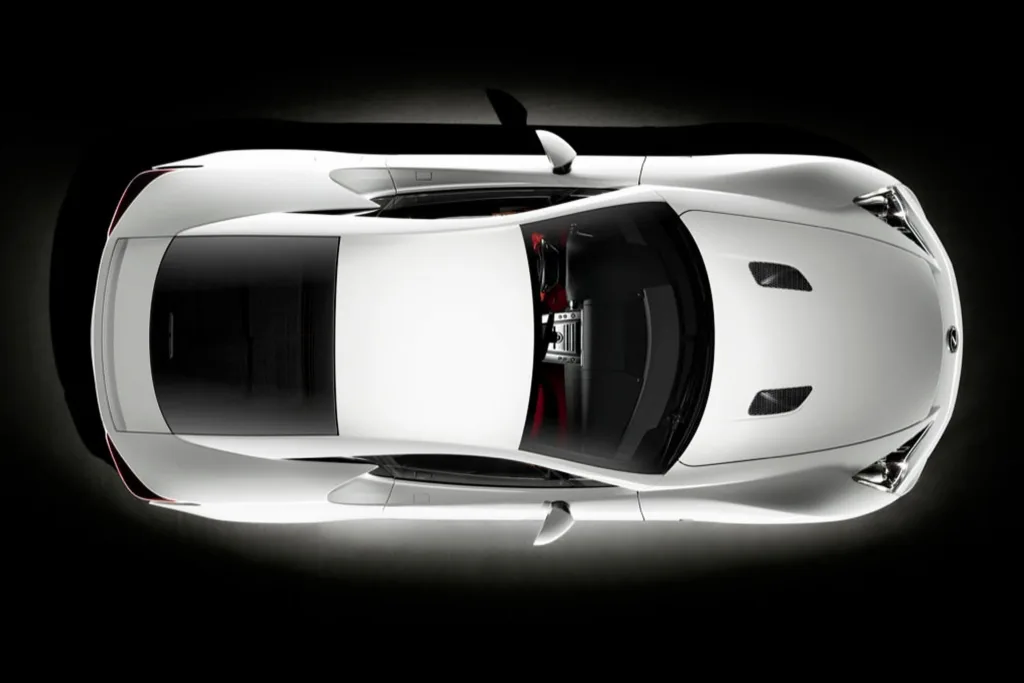
Like the 2000GT of the 1960s, the LFA was designed not only to demonstrate raw performance but also to showcase Japanese precision and craftsmanship in materials technology, acoustics, and manufacturing innovation.
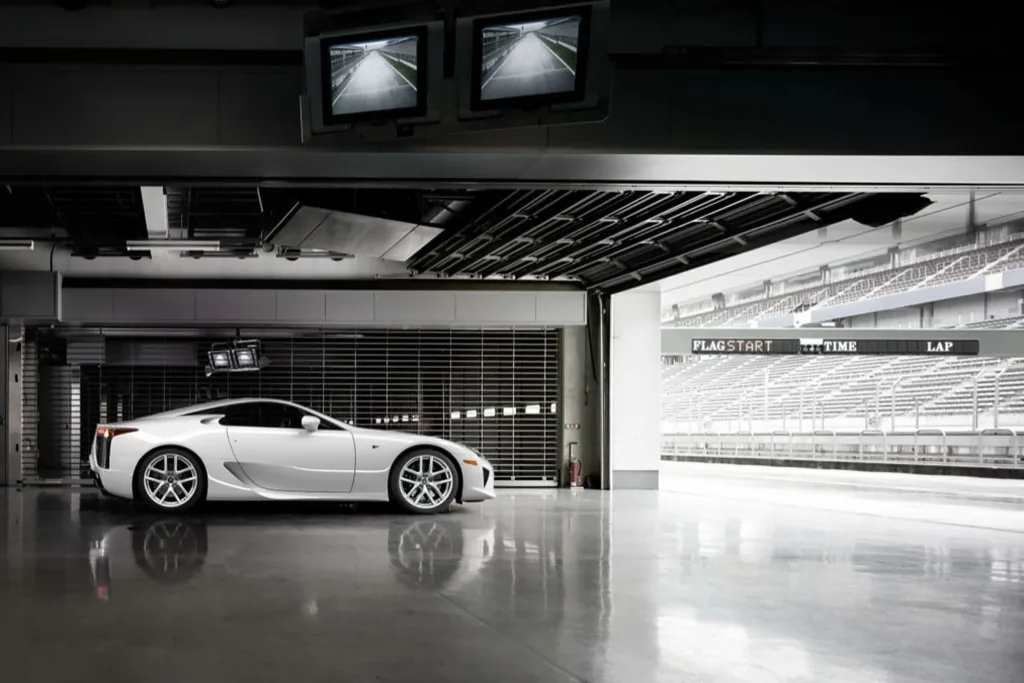
Carbon Fiber Innovation
The LFA’s most critical breakthrough lay in its construction. Initially planned as an aluminum‑based vehicle, it was completely re‑engineered after the introduction of Lexus’s Carbon Fiber Reinforced Plastic (CFRP) expertise. Nearly 65% of the body structure and chassis were made from carbon fiber—a material typically reserved for aerospace and Formula 1 cars at the time.
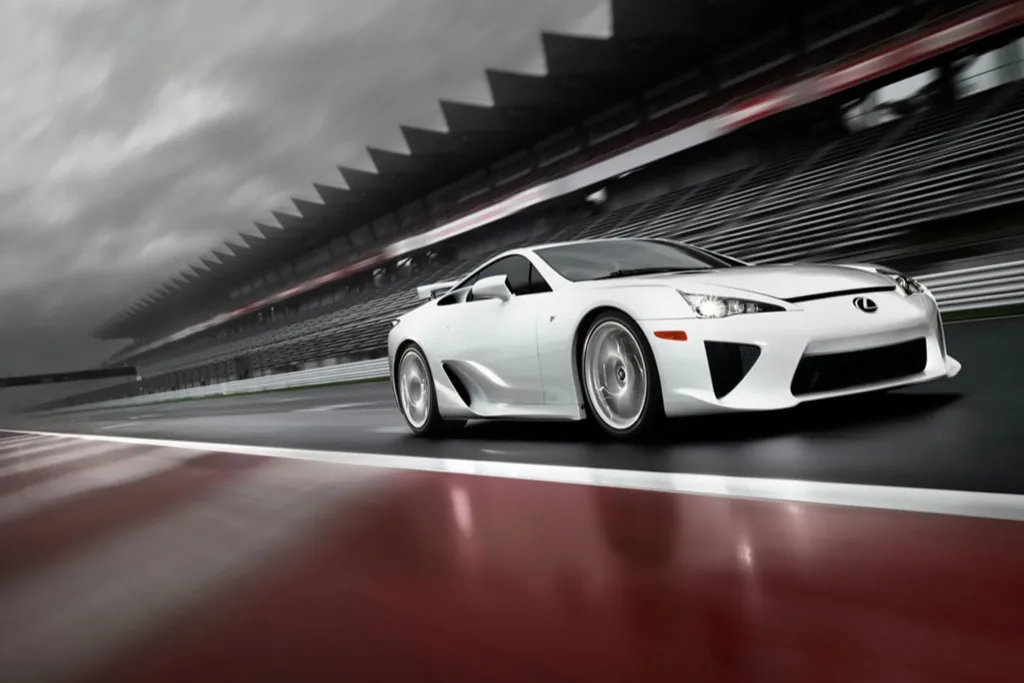
Rather than outsourcing fabrication, Toyota established its own “Carbon Fiber Loom” facility, where engineers developed proprietary weaving methods to produce structural CFRP components with aerospace‑grade consistency. Unlike hand‑laid composites, these carbon fibers were formed using three‑dimensional braiding machines, enabling precise strength control and eliminating weak points. This facility allowed the LFA to be constructed with sub‑millimeter accuracy in every panel.
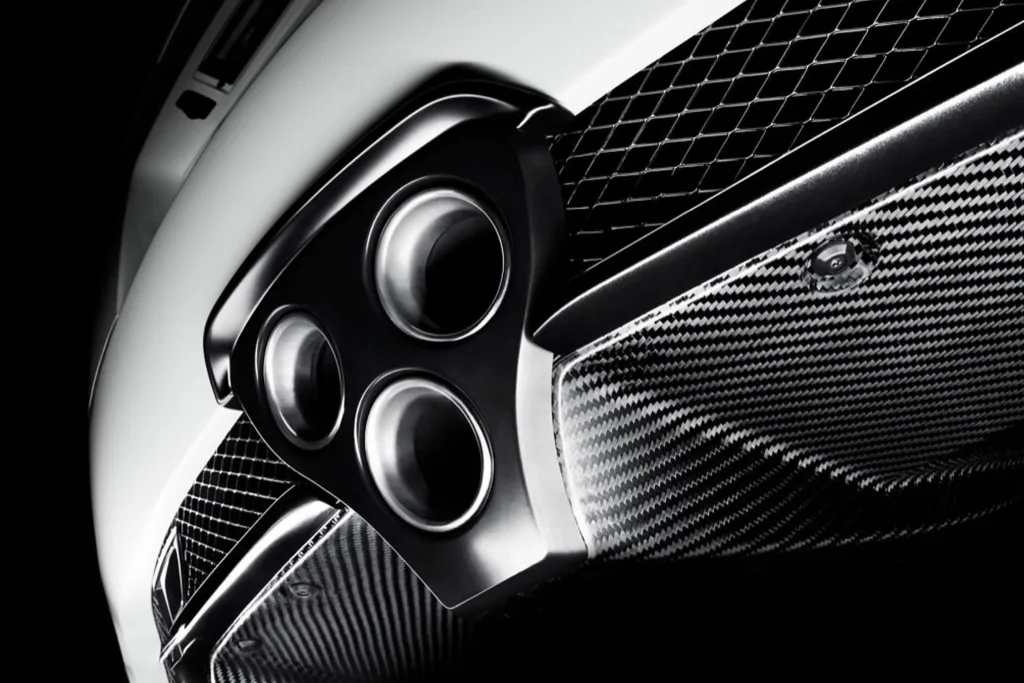
The result: a chassis weighing 100 kg less than an equivalent aluminum design while offering 9‑times higher rigidity‑to‑weight ratio. Total vehicle mass was limited to 1,480 kg, with a front‑to‑rear weight distribution of 48:52—achieved through a front‑mid‑engine transaxle layout and a rear‑mounted radiator and battery for optimal balance.
Powertrain: A Mechanically Perfect V10
At the heart of the LFA was the bespoke 4.8‑liter 1LR‑GUE V10, co‑developed by Toyota and Yamaha Motors, blending racing pedigree with daily‑drivable precision.
- Displacement: 4,805 cc
- Configuration: 72‑degree V10 (DOHC 40‑valve)
- Output: 552 BHP (560 PS, 412 kW) @ 8,700 rpm
- Torque: 480 Nm (354 lb‑ft) @ 6,800 rpm
- Redline: 9,500 rpm
Weighing only 206 kg, the engine was lighter than Toyota’s own 3.5‑liter V6. Its balanced 72‑degree bank angle produced perfect firing intervals and reduced vibration, eliminating the need for a balance shaft. Constructed from forged aluminum and titanium, the 1LR V10 delivered instantaneous response—its revs rose from idle to redline in just 0.6 seconds, too fast for an analog tachometer, prompting Lexus to use a digital display whose needle motion was governed electronically for accuracy.

A dry‑sump lubrication system allowed the engine to sit low within the chassis, while a carbon fiber driveshaft transmitted torque to a rear‑mounted six‑speed Automated Sequential Gearbox (ASG). This gearbox featured paddle‑actuated shifts that occurred in 0.2 seconds, comparable to contemporary Le Mans racers. The AI‑controlled gear logic adapted timing for aggressive or smooth transitions depending on throttle and brake inputs.
Chassis Dynamics and Weight Optimization
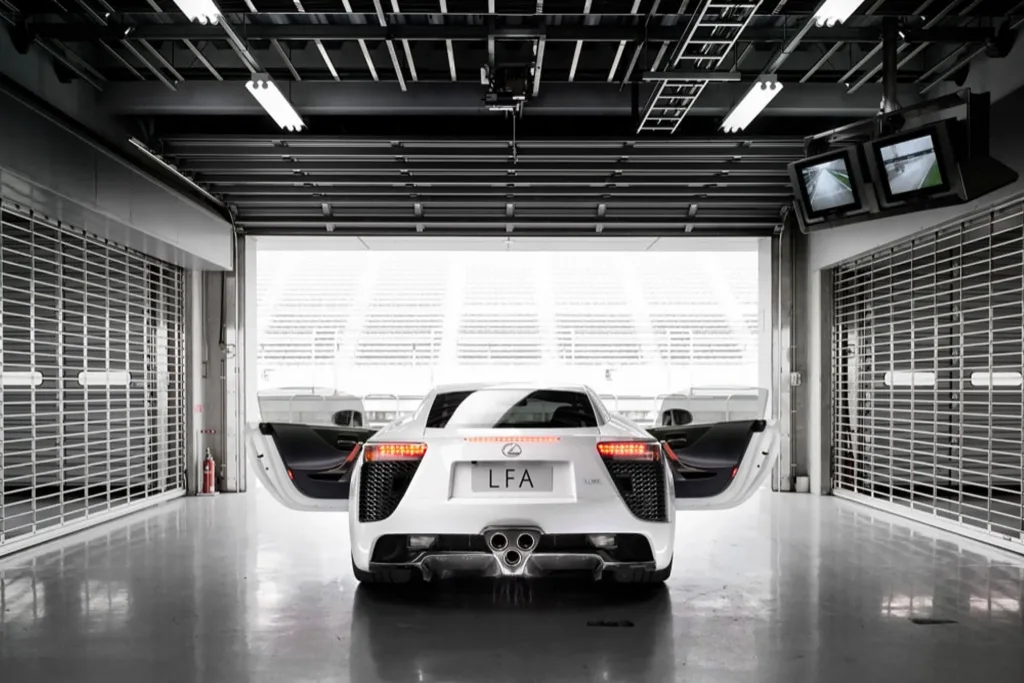
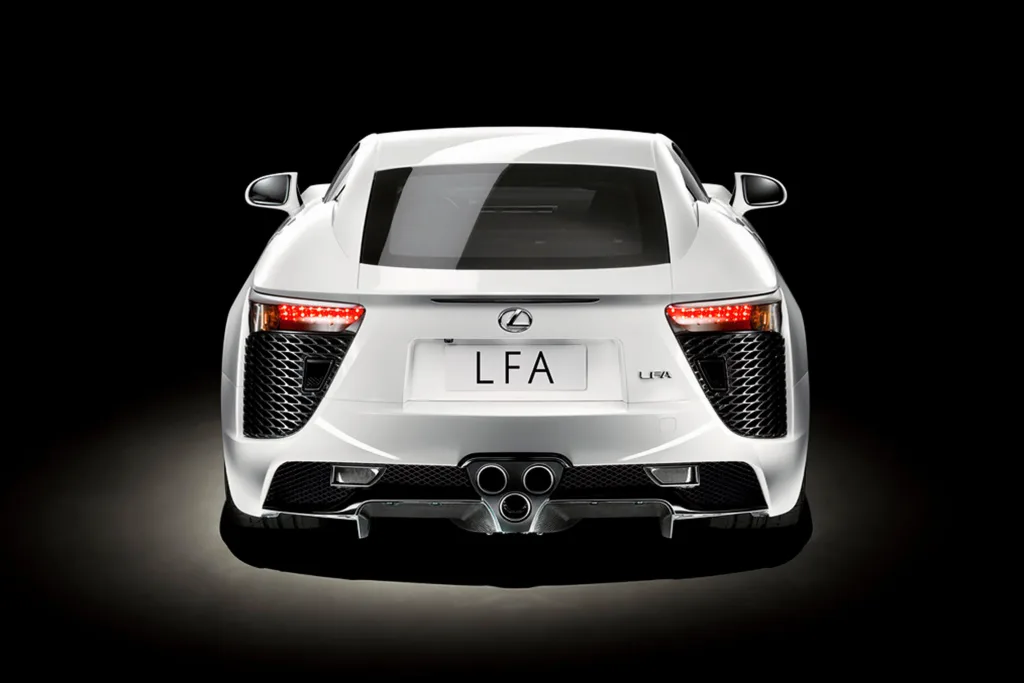
To reach its 1,480 kg curb weight, even the smallest details were engineered for efficiency. The lightweight construction extended to the die‑cast magnesium steering wheel frame, aluminum door inners, and titanium exhaust system, which was hand‑tuned by Yamaha’s acoustic engineers to produce the LFA’s signature note—a symphonic wail scientifically modeled after an F1 engine’s harmonics.
- Layout: Front‑mid‑engine / rear‑transaxle FR
- Center of Gravity: < 460 mm
- Coefficient of Drag (Cd): 0.31
- Downforce: active rear spoiler automatically deploys > 80 km/h
Suspension consisted of forged aluminum double wishbones at the front and multilink rear geometry, paired with Sachs adaptive dampers tuned explicitly for Nürburgring’s elevation changes. Braking performance came from Brembo carbon‑ceramic disc brakes, each integrated with six‑piston calipers (front) and four‑piston rear, varying piston diameters for consistent pressure distribution under high thermal loads.
Performance Metrics
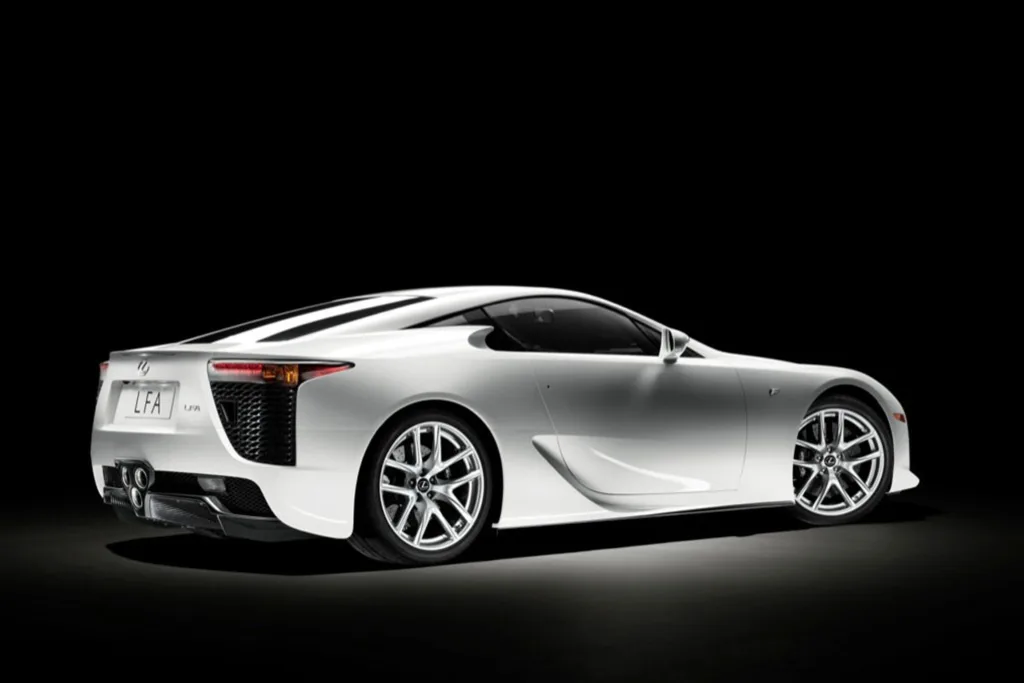
- 0 – 100 km/h (0 – 62 mph): 3.7 seconds
- Top Speed: 325 km/h (202 mph)
- Power‑to‑Weight: 2.68 kg / BHP
- Lateral Grip: > 1.0 G
These figures placed the LFA firmly among the world’s elite supercars, yet its true distinction lay in driver engagement. Every response—steering feel, throttle modulation, and acoustic resonance—was engineered for visceral feedback rather than headline numbers.
Interior: Crafted Technology
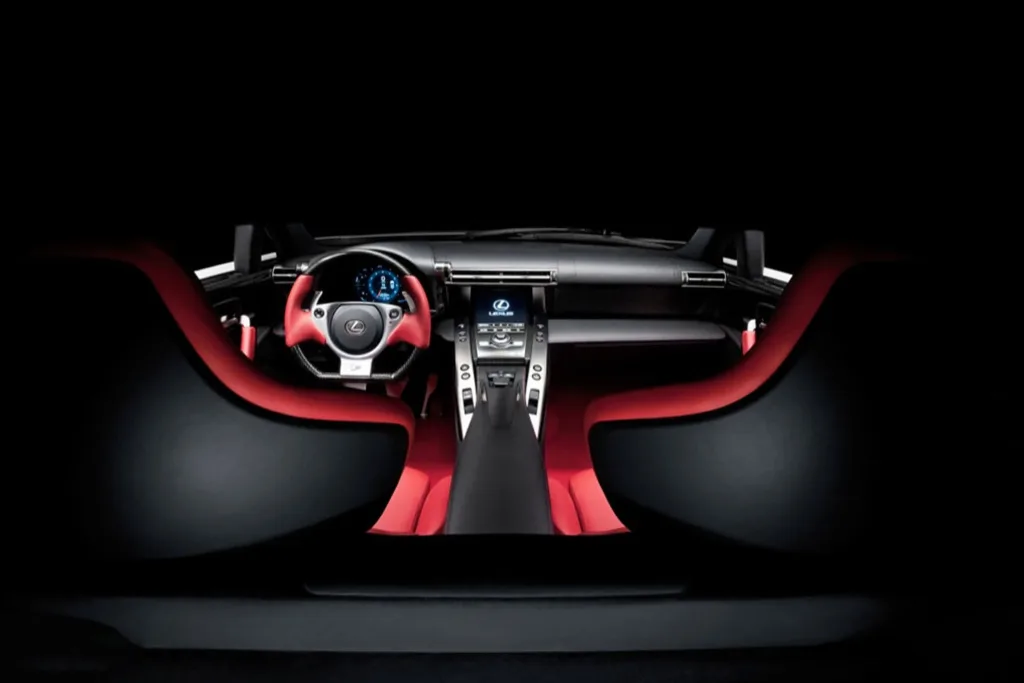
The LFA’s cabin mirrored its exterior ethos—handcrafted precision layered with bleeding‑edge technology. The sculpted carbon‑fiber center console housed a TFT digital multifunction display, its animation sequence adjusting based on drive mode. Aircraft‑inspired toggle switches and magnesium paddle shifters complemented an instrument cluster capable of measuring gear change timing and lateral G‑forces in real time.
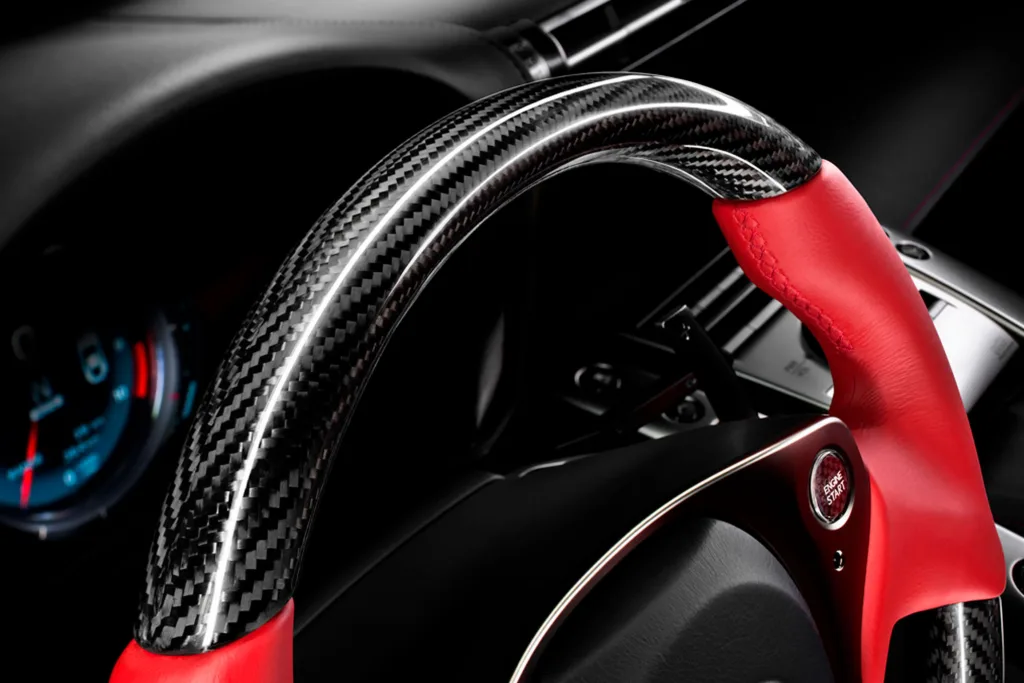
Every component was hand‑assembled by a dedicated LFA Works team at Motomachi, Japan—the same craftspeople responsible for Lexus F line performance models. The leather was hand‑stitched; carbon composite panels were manually inspected; and even the titanium exhaust was adjusted by ear for tonal harmony.
Production and Exclusivity
Lexus limited production to 500 cars worldwide, each hand‑built over a 20‑day cycle. The manufacturing line was so specialized that no concurrent models were built on its tooling. Customers could personalize interior colors, stitching, and exterior finishes through Lexus’s bespoke “LFA Works” program, ensuring no two cars were identical.
A further LFA Nürburgring Package (produced in 50 units) featured +10 PS, stiffer suspension, and a fixed rear wing, shaving another 0.1 seconds off shift times and enhancing aerodynamic stability.
Engineering Significance and Legacy
The Lexus LFA represented not just the peak of Toyota’s engineering, but a cultural statement: proof that Japanese craftsmanship could rival, and in many ways surpass, its European peers in artistry and precision. It stood as a showcase of Toyota’s mastery of materials, acoustic science, and mechanical purity.
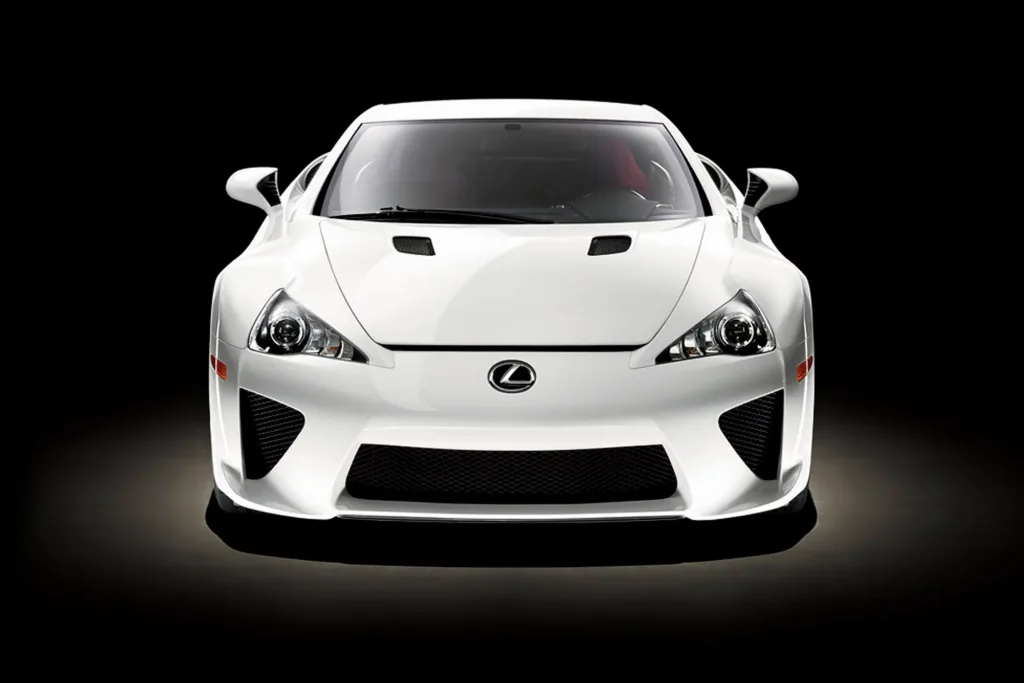
For collectors and engineers alike, the LFA remains a beacon of perfectionism—a culmination of two decades of research distilled into a machine that transcended performance benchmarks to achieve an emotional harmony between human and technology.
Technical Summary
| Specification | Detail |
| Engine | 4.8 L 1LR‑GUE 72° V10 (DOHC 40 valves VVT‑i) |
| Power | 552 BHP @ 8,700 rpm |
| Torque | 480 Nm @ 6,800 rpm |
| Transmission | 6‑speed Automated Sequential Gearbox (0.2 s shifts) |
| Layout | Front‑mid engine / Rear transaxle RWD |
| Weight | 1,480 kg |
| Chassis | Carbon Fiber Reinforced Plastic (CFRP) Monocoque |
| 0–100 km/h | 3.7 s |
| Top Speed | 325 km/h |
| Production | 500 units worldwide |




Functional Always active
Preferences
Statistics
Marketing