
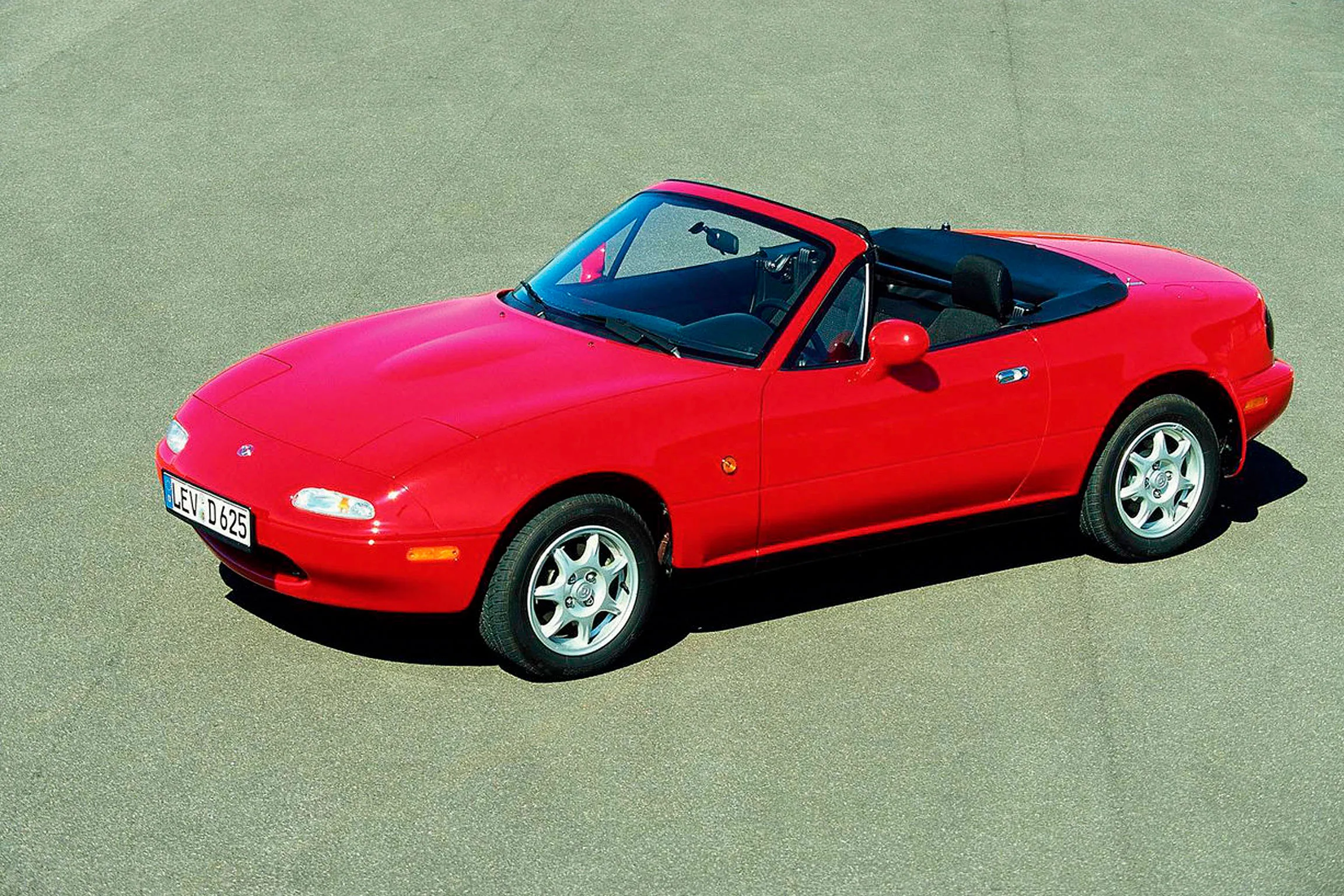
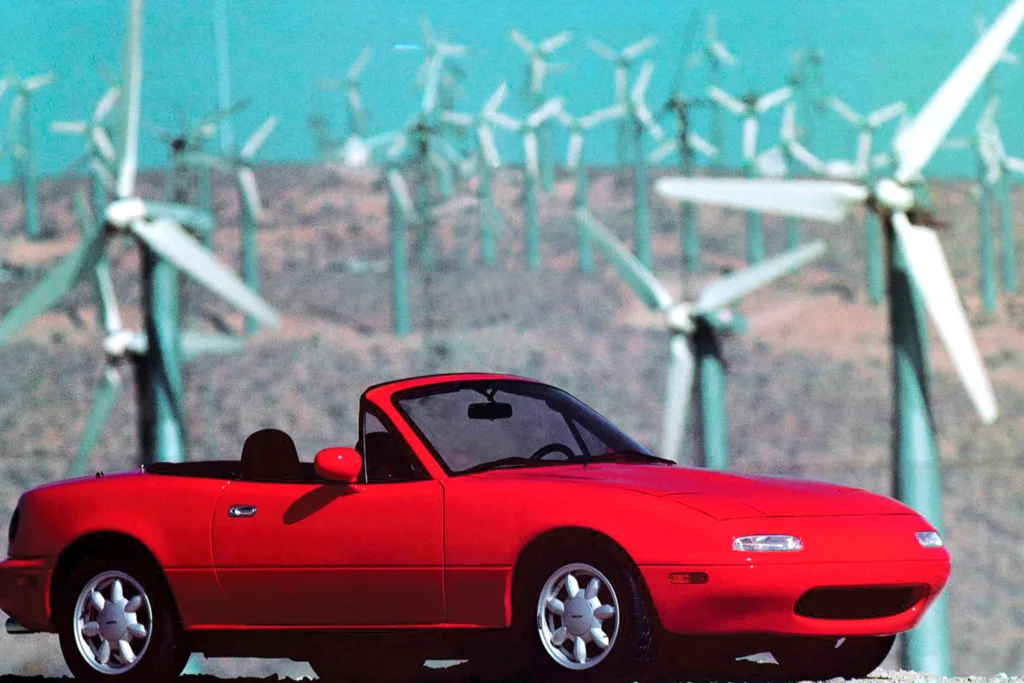
The Mazda MX-5 Miata (NA) is an iconic roadster that revolutionized the landscape of affordable sports cars when it launched in 1989. Also known as the Eunos Roadster in Japan and sold universally as the MX-5 or Miata, the first-generation NA model sparked a global renaissance for lightweight, rear-wheel-drive convertibles—a tradition thought to be lost after the classic British and Italian roadsters of the 1970s faded away.
Historical Background
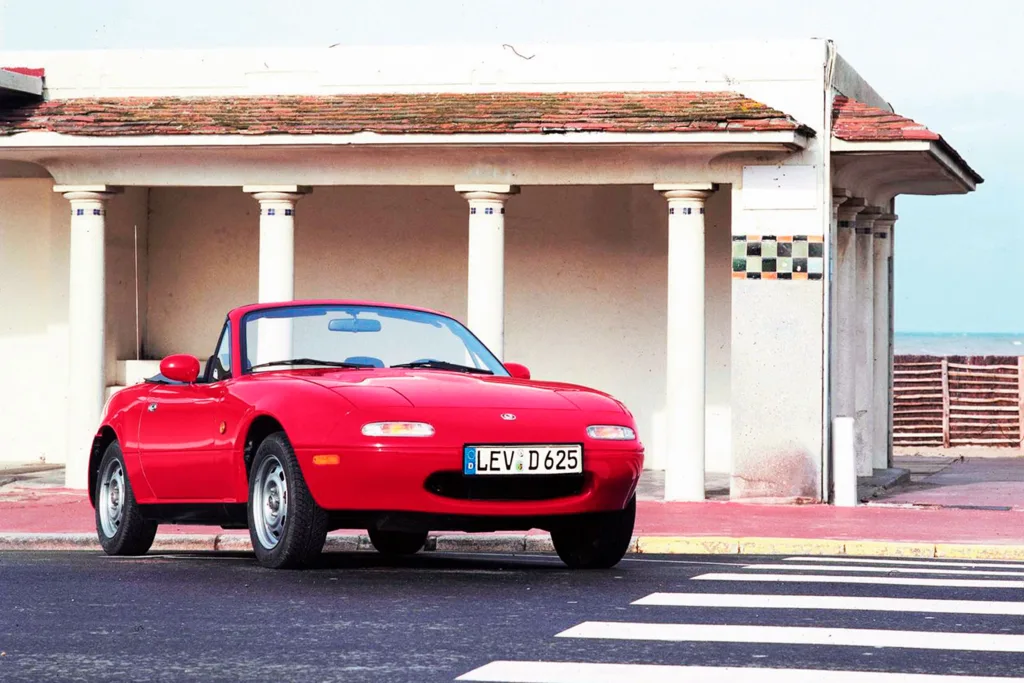
Mazda’s goal to revive the spirit of classic sports cars led them to engineer a car that preserved the ethos of small dimension, engaging drive, and simplicity, inspired directly by legends like the Lotus Elan and MG Midget. Unveiled at the Chicago Auto Show in February 1989, the MX-5 Miata was celebrated for combining vintage styling cues with modern reliability. This timing placed the Miata at the cusp of a wave of enthusiast demand, helping Mazda tap into a market hungry for weekend cruisers and club-level racers.
Technical Features
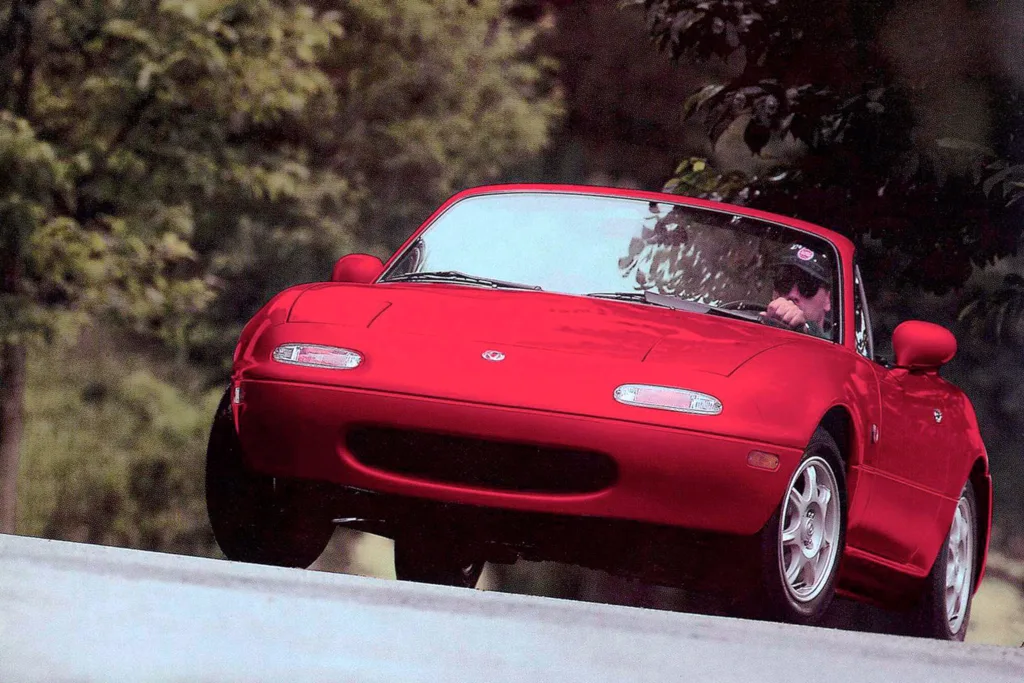
The original NA Miata was powered by Mazda’s B6-ZE engine, a naturally aspirated 1.6-liter DOHC inline-four producing approximately 120 horsepower and 137.1 Nm of torque. Its powertrain was paired with a five-speed manual transmission, delivering power to the rear wheels via an innovative aluminum Power Plant Frame (PPF) that enhanced chassis rigidity during gear changes—a technical solution rare among affordable sports cars at the time.
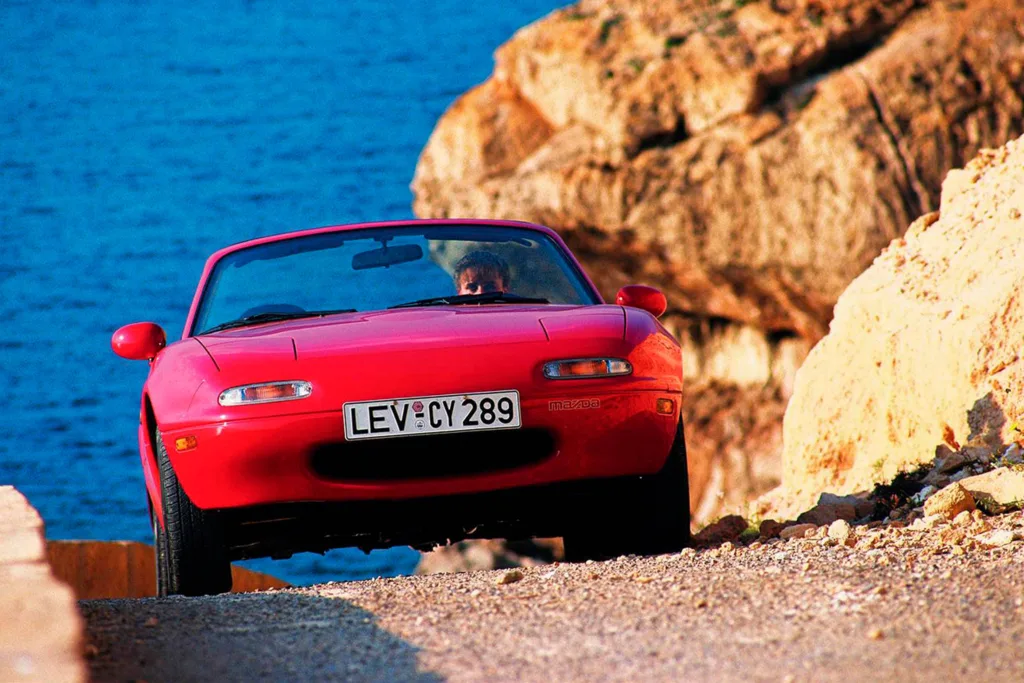
The car’s suspension system was equally forward-thinking, featuring independent double-wishbones both front and rear. This configuration, combined with near-perfect 50/50 weight distribution and lightweight construction (curb weight around 950 kg), resulted in nimble handling characteristics. Disc brakes on all four wheels and a minimal approach to electronic assists allowed for a more pure driving experience, aligning with Mazda’s philosophy of “Jinba Ittai”—the harmony or connectedness between car and driver, like a rider and horse.
Global Impact and Evolution
Upon its release, the Miata gained immediate success among all driver demographics, from newcomers seeking forgiving handling to seasoned racers eager for track-day fun. This versatility, combined with an affordable price point and bulletproof reliability, made the MX-5 Miata a hit in Europe, North America, and Japan.
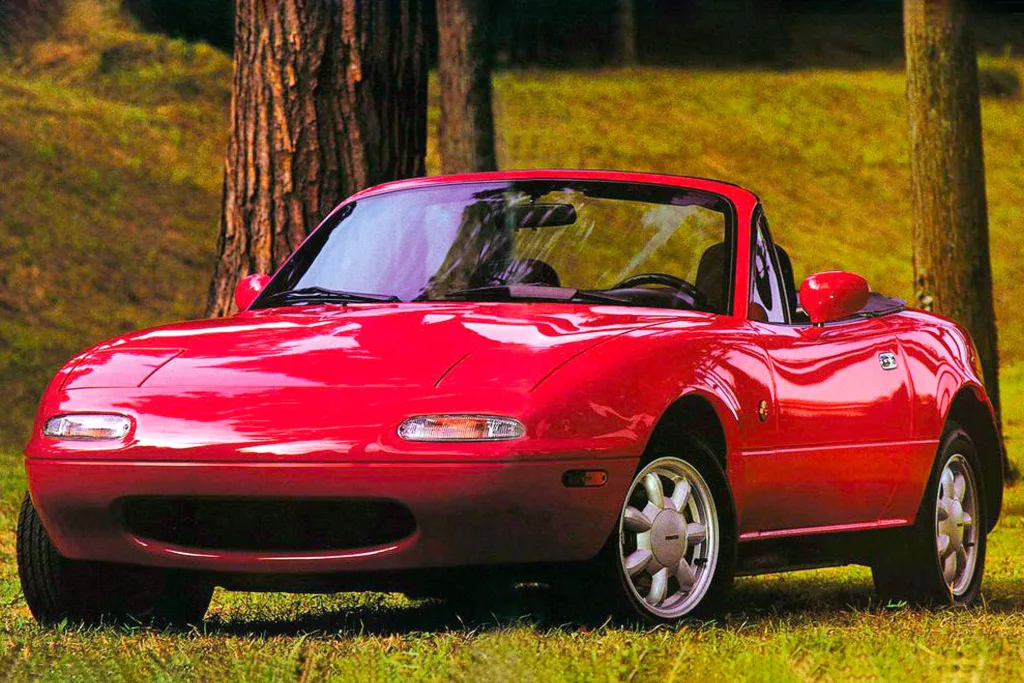
Mazda continually refined the NA during its production run. In August 1993, the model received a more potent 1.8-liter BP-ZE engine rated at 130 hp and 156.8 Nm, offering improved acceleration and mid-range torque. Structural updates included upgraded brakes and improved safety features. By August 1995, further revisions adjusted the car’s final drive ratio and introduced a lighter flywheel, enhancing throttle response and bringing the model inline with the Series II 1.8 variant—a favorite among enthusiasts for its balance of power and finesse.
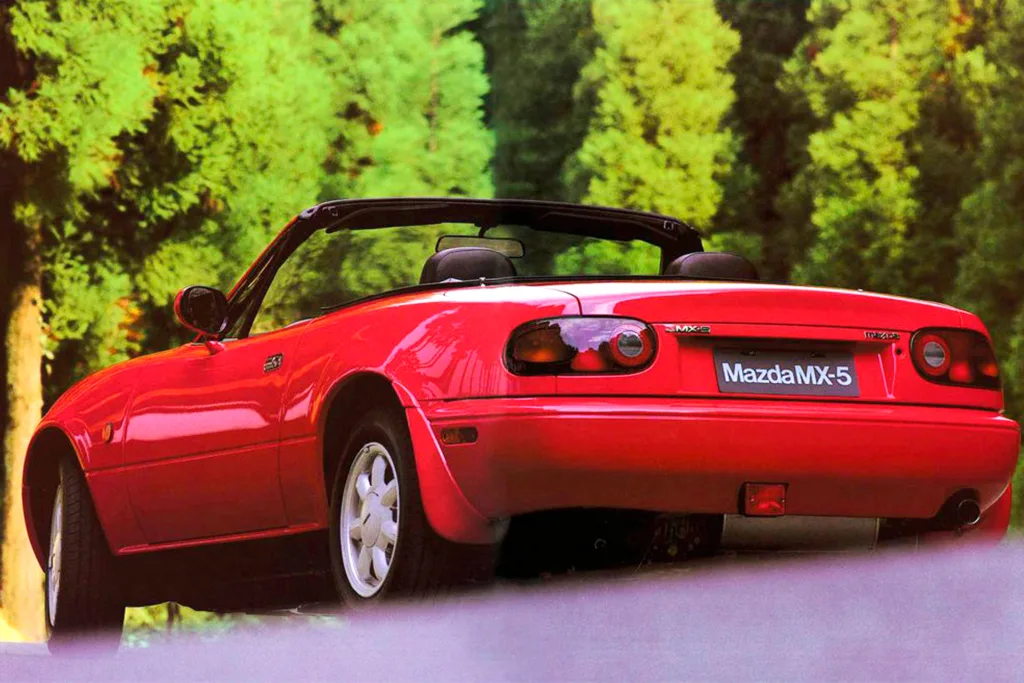
Special Editions and Racing Heritage
Mazda encouraged motorsport involvement by launching several limited-edition and club racing versions of the NA Miata, such as the M-Edition, R-Limited, and UK-specific editions equipped with sportier suspensions and aesthetic tweaks.
The car’s modular platform and enthusiast-friendly engineering sparked a devoted tuning culture, with owners frequently modifying everything from suspension for autocross events to lightweight bodywork for track racing.
Record-Breaking Success
By the time NA production ended in 1997, Mazda had produced 531,890 units—setting a world record for two-seater sports convertibles and earning a place in the Guinness Book of Records. This achievement underscored the Miata’s universal appeal and enduring legacy as a benchmark for affordable driving enjoyment.

Legacy in Today’s Market
Even decades after its debut, the MX-5 Miata remains a living legend in the sports car world. Its approachable design, storied motorsports history, and global fanbase assure the continued demand for both vintage restorations and new models—a testament to Mazda’s visionary approach.
The NA Miata continues to influence modern lightweight sports cars and serves as an entry point for automotive enthusiasts, cementing its place in car culture for generations.



Functional Always active
Preferences
Statistics
Marketing