
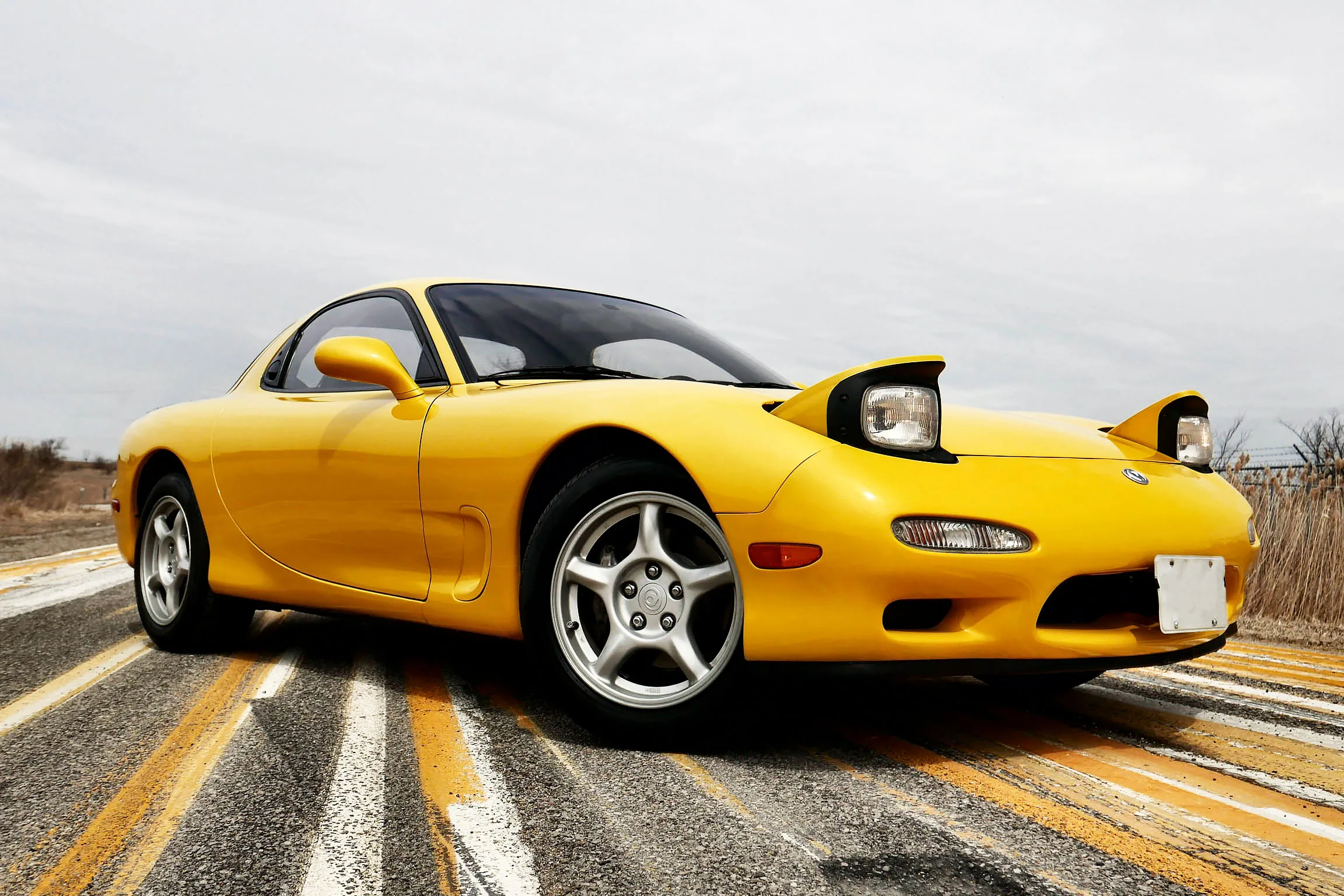
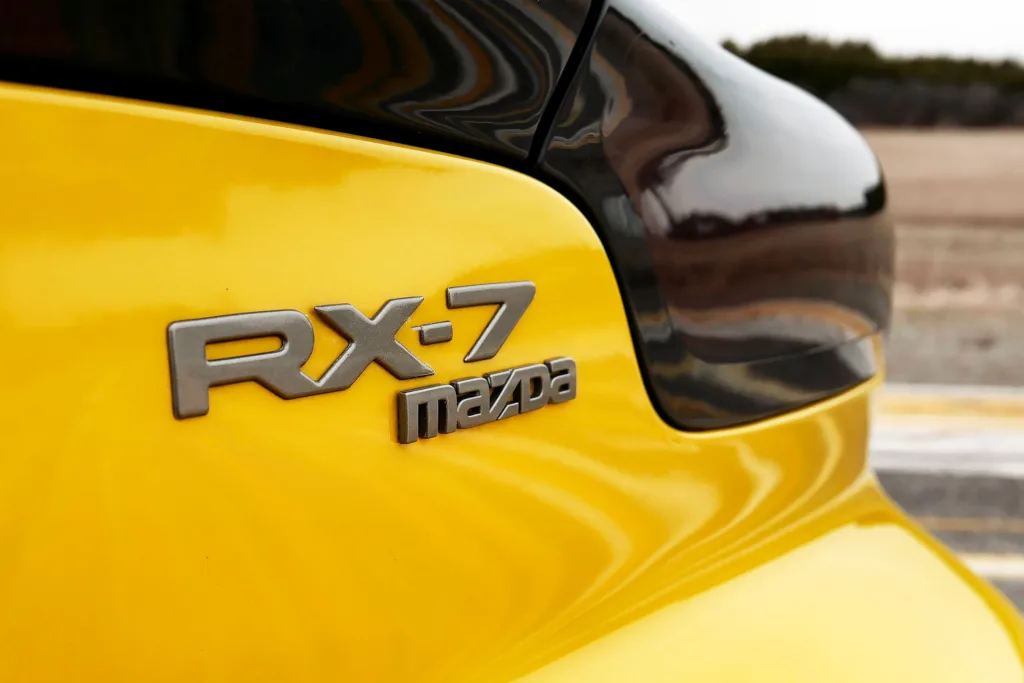
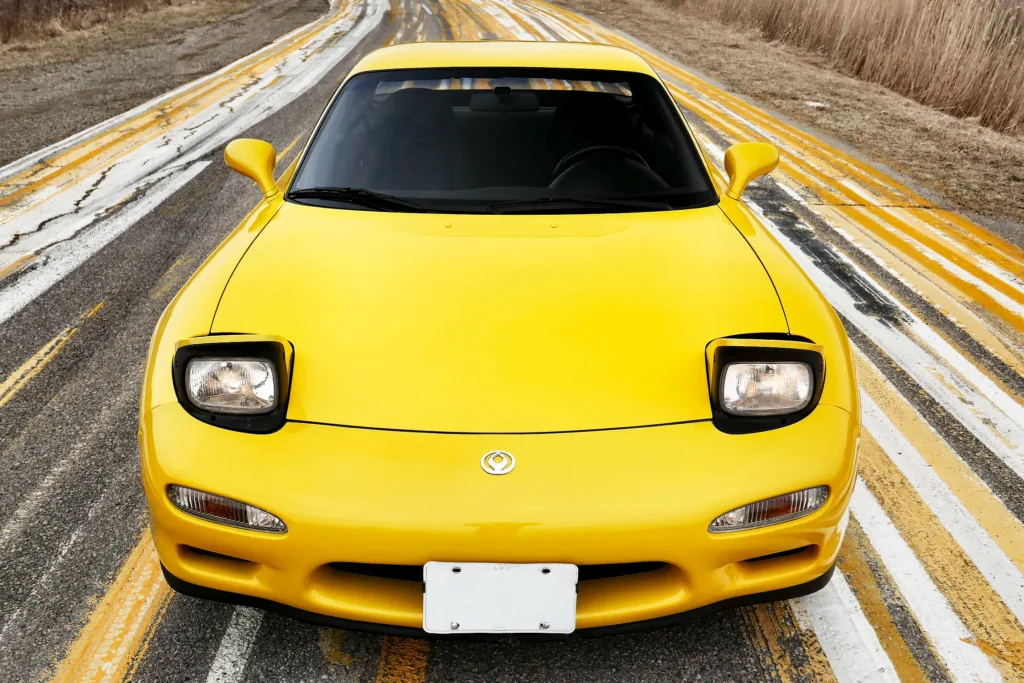
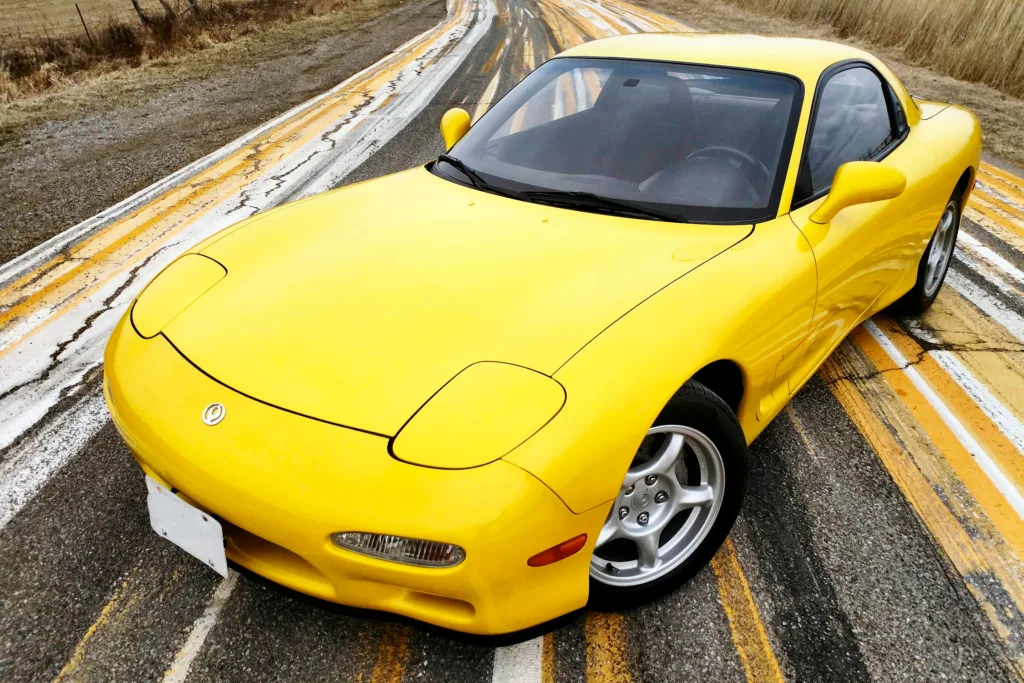
The Mazda RX-7 Type R (FD3S) stands as one of the most celebrated Japanese sports cars of the 1990s, blending groundbreaking rotary engine technology, visionary engineering, and motorsport-derived innovation to create a true icon. Debuting in December 1991, the FD3S RX-7 marked the third and final generation of the RX-7 lineage. Mazda dropped the “Savanna” moniker used for previous versions, rebranding the car globally as the éfini RX-7—a signal of its upscale ambitions and renewed focus on dynamic prowess.
Evolution and Engineering Genius
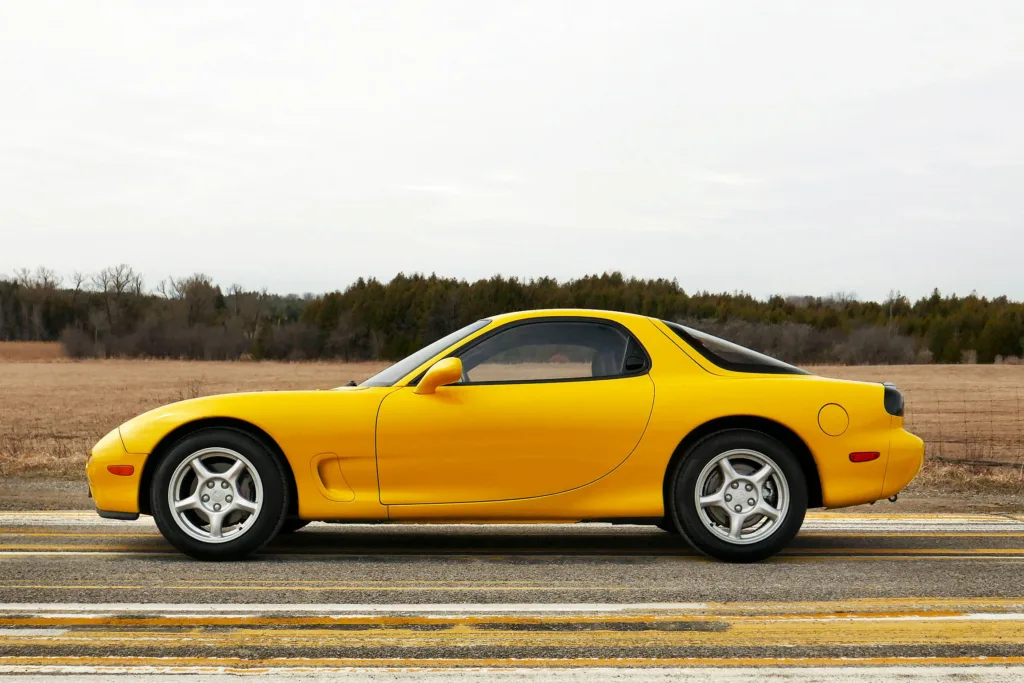
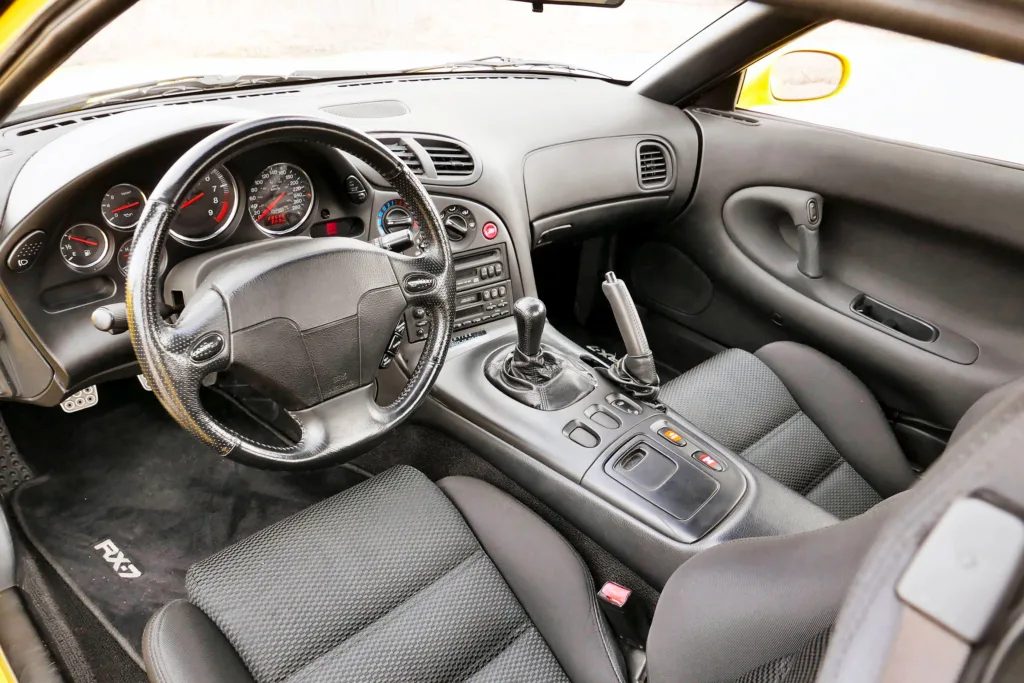
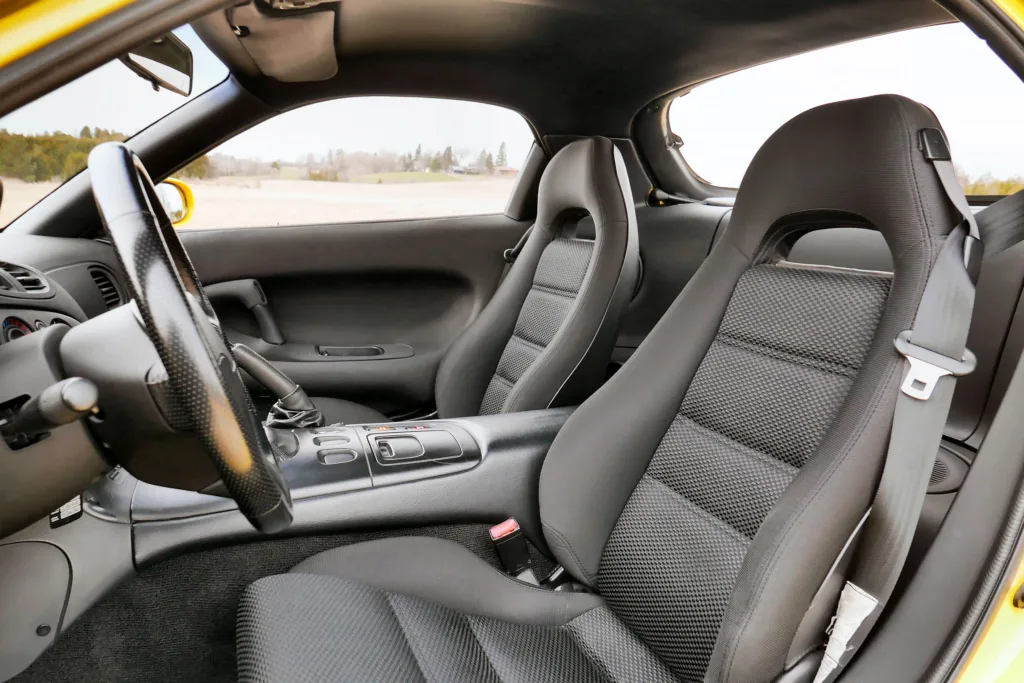
Mazda’s engineers pursued an uncompromising approach to performance, widening the chassis to accommodate larger tires and improved cornering grip. Despite the increased dimensions, they adopted extensive use of aluminum in crucial components—bonnet, spare wheel, jack, and both front and rear double-wishbone suspension arms—resulting in a low curb weight of just 1200 kg. This relentless focus on weight reduction amplified the power-to-weight ratio, placing the RX-7 FD among the fastest and most agile production cars of its time.
Twin-Turbo Rotary Power
Central to the FD3S legacy is its 13B-REW rotary engine—the first in the world to utilize a sequential twin-turbo system. Unlike traditional turbo setups, Mazda’s design employed two turbochargers working in sequence: the primary turbo providing boost at low RPMs and the secondary turbo activating at higher revs, ensuring a broad, uninterrupted torque band and minimal turbo lag. The initial FD3S delivered 251 BHP (185 kW) and 300 Nm of torque, propelling the lightweight chassis from zero to 100 km/h in under 5 seconds—a performance benchmark that rivaled European exotics and changed expectations for Japanese sports cars.

Technical Advancements and Spec Changes
Continuous technical refinement marked the FD era. Each year, Mazda enhanced body rigidity, fine-tuned the ECU and computer systems, and updated ABS specifications for improved driving precision. The FD3S’s model evolution spanned from Type I (1991 debut) through to Type VI in 2000, with each variant offering upgraded features—from stronger body structures to more sophisticated electronic control systems.
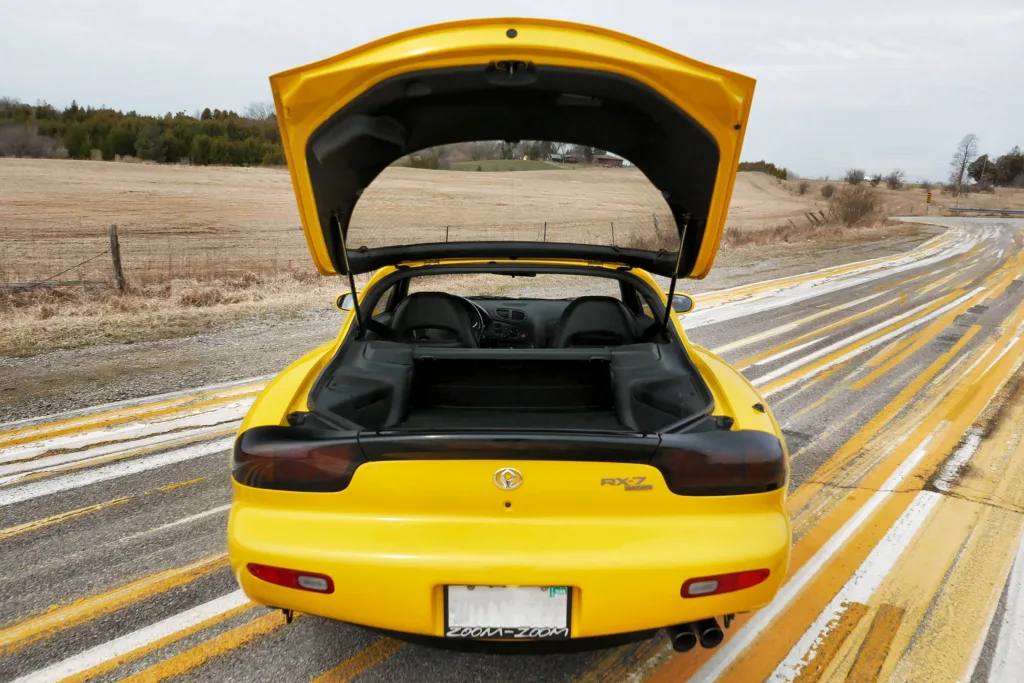
The RX-7’s legendary status was bolstered not only by power and speed, but also by its handling—double wishbone suspension at both axles, low-slung balance, and near-perfect front/rear weight distribution enabled razor-sharp responses. The platform was lightweight and tuneable, making it a favorite for track use, drifting circles, and club racing worldwide.

Special Editions, Racing Heritage, and Tire Innovation
Limited-edition models like the Type RZ showcased Mazda’s willingness to push boundaries. Notably, the Type RZ introduced the first use of 40/45 low-profile tires on a Japanese production car, setting new standards for grip and cornering stability in the domestic market. In 2001, Mazda released the Type R Bathurst R, fitted with a rare height-adjustable suspension—a feature almost unheard of in factory-built road cars and a nod to the RX-7’s success in the Bathurst 12 Hour endurance races in Australia.
Power Upgrades and Supercar Rivalry
Mazda didn’t rest on its laurels. In 1996, ECU calibration, intake, and exhaust modifications bumped output to 261 BHP. By 1998, deeper revisions to the cooling system and engine internals saw the RX-7 reach a staggering 276 BHP, with torque and reliability improved for both road and track use. The car’s power-to-weight ratio for the Type R version hit 4.56 kg/BHP—a supercar-worthy figure that allowed the FD RX-7 to outperform many six-cylinder and V8 rivals in acceleration, handling, and lap times.
End of an Era: The RX-7 Spirit R
Tougher emissions and fuel economy standards forced Mazda to retire the RX-7 FD3S in August 2002. To mark 25 years of rotary-powered sports car excellence, Mazda released the RX-7 Spirit R—a finely tuned, limited-edition model celebrated as the ultimate evolution of the RX-7. The Spirit R blended the peak of Mazda’s rotary engineering with exclusive visual and technical features, wrapping up a chapter of automotive history that continues to inspire fans and collectors worldwide.
Motorsports Legacy and Cultural Impact
Beyond its sales figures, the RX-7 FD3S cemented Mazda’s place in motorsport lore. The car became a staple in endurance racing, time attack, and drift events. Its prominence in car culture—celebrated through films, anime, and the burgeoning JDM tuning scene—ensured its reputation as the definitive rotary-engined hero. Even after discontinuation, the RX-7’s technical innovations and design philosophy remain influential benchmarks for performance cars.


Functional Always active
Preferences
Statistics
Marketing