
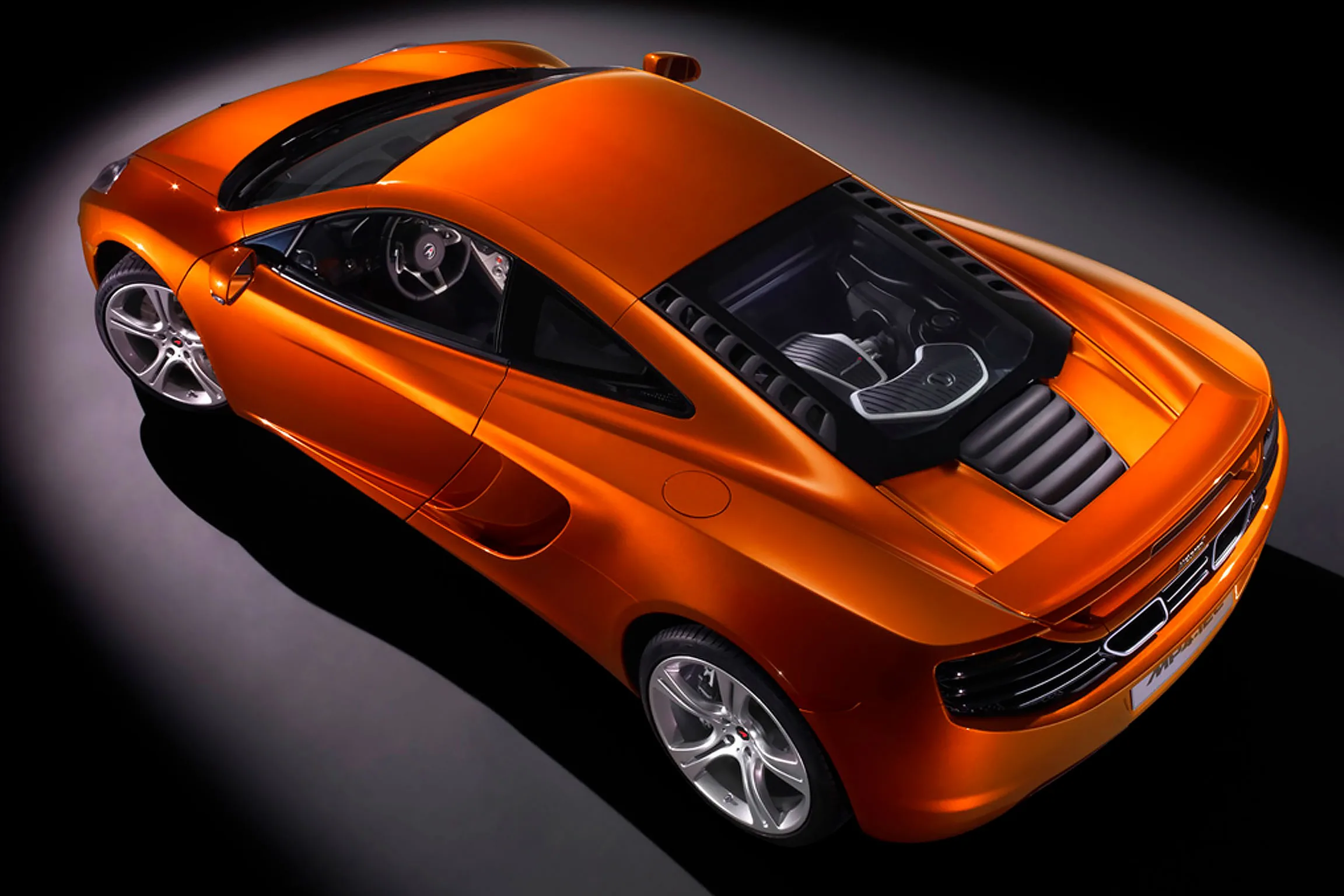
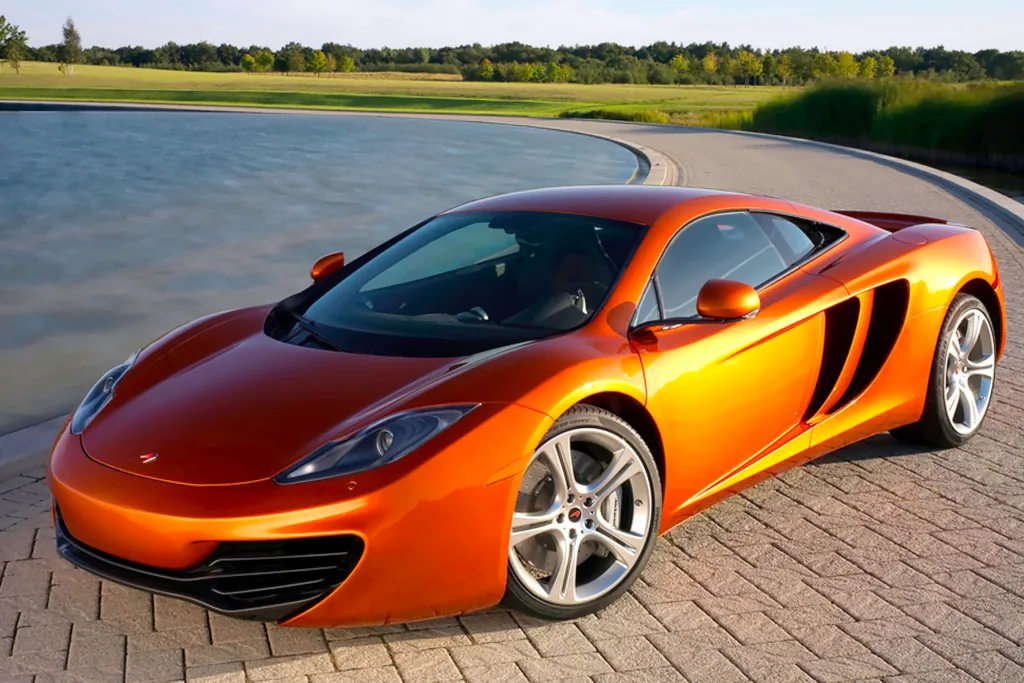
The McLaren MP4-12C, unveiled in 2010, represented a dramatic turning point for McLaren Automotive, seamlessly integrating cutting-edge Formula 1 engineering with luxurious road car refinement and global supercar ambitions.
Unlike previous collaborations—such as the boundary-shattering McLaren F1 and the high-profile SLR McLaren created with Mercedes-Benz—the MP4-12C marked the first time McLaren developed every major aspect of a road car entirely in-house, from its aerodynamic software to its powertrain and suspension tech.
This initiative gave birth to a model that not only honored McLaren’s racing heritage but also set a new paradigm for balance, speed, and real-world usability in exotic automobiles.
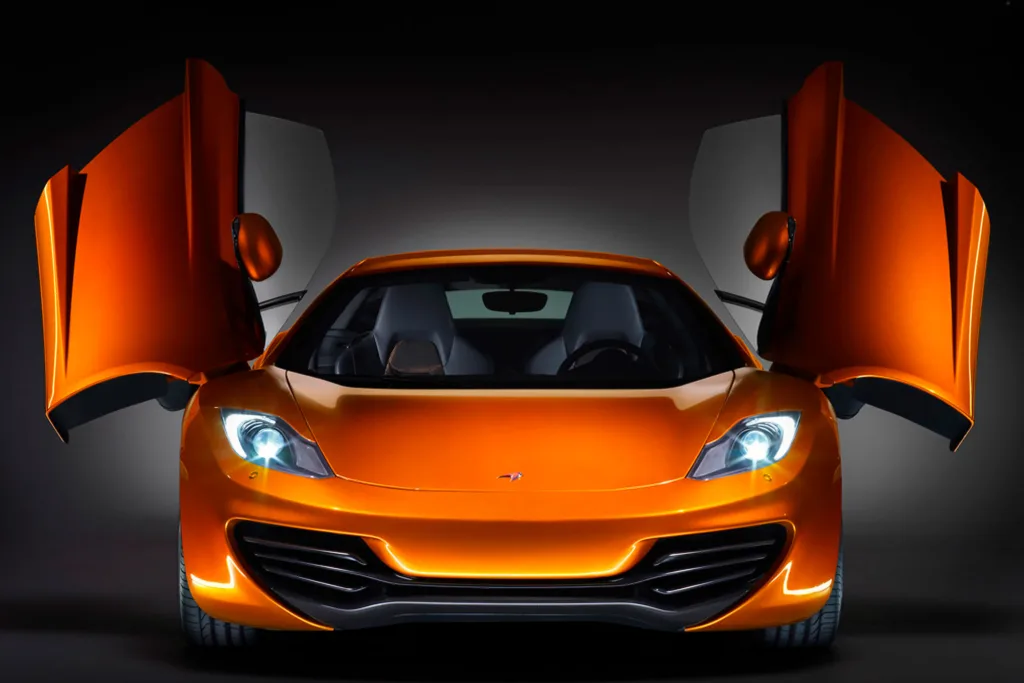
Advanced Formula 1 Heritage and Carbon “MonoCell”
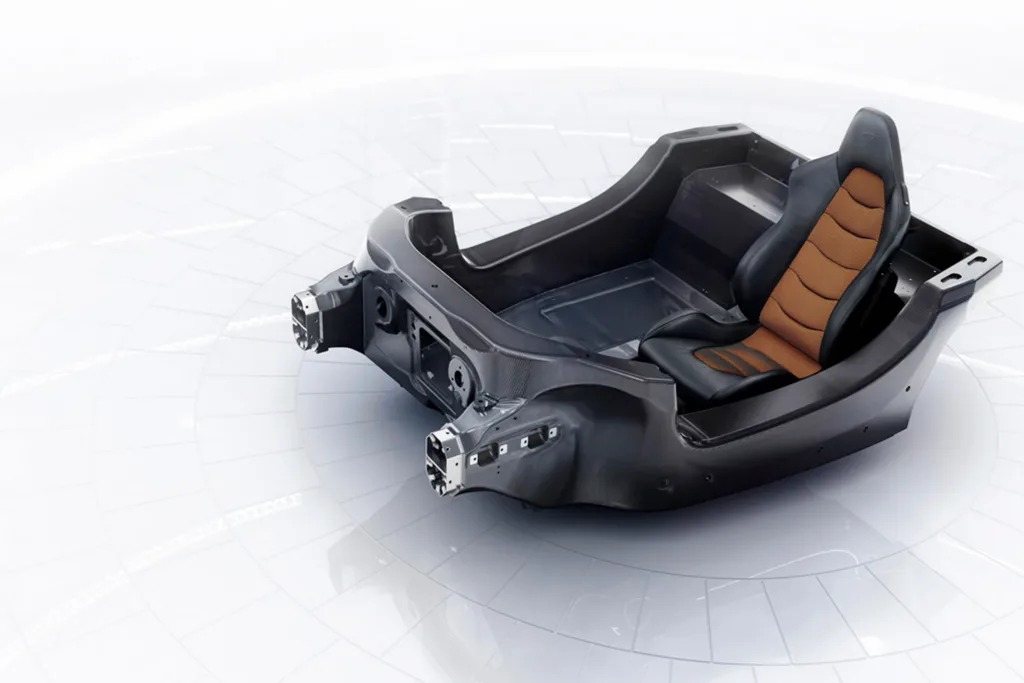
The “MP4” badge is steeped in McLaren’s championship-winning legacy, signifying the technological DNA traced back to the revolutionary MP4/1 Formula 1 car of 1981—the first F1 car to adopt a carbon-fiber monocoque chassis. Leveraging lessons learned over decades on the racing circuit, the MP4-12C’s construction centers around the ‘MonoCell,’ a monolithic carbon composite survival cell manufactured using high-pressure resin transfer molding—a process borrowed from aerospace manufacturing. This innovative approach allowed McLaren to produce an ultra-strong, featherweight chassis element in just hours, compared to the days required with traditional layup methods.
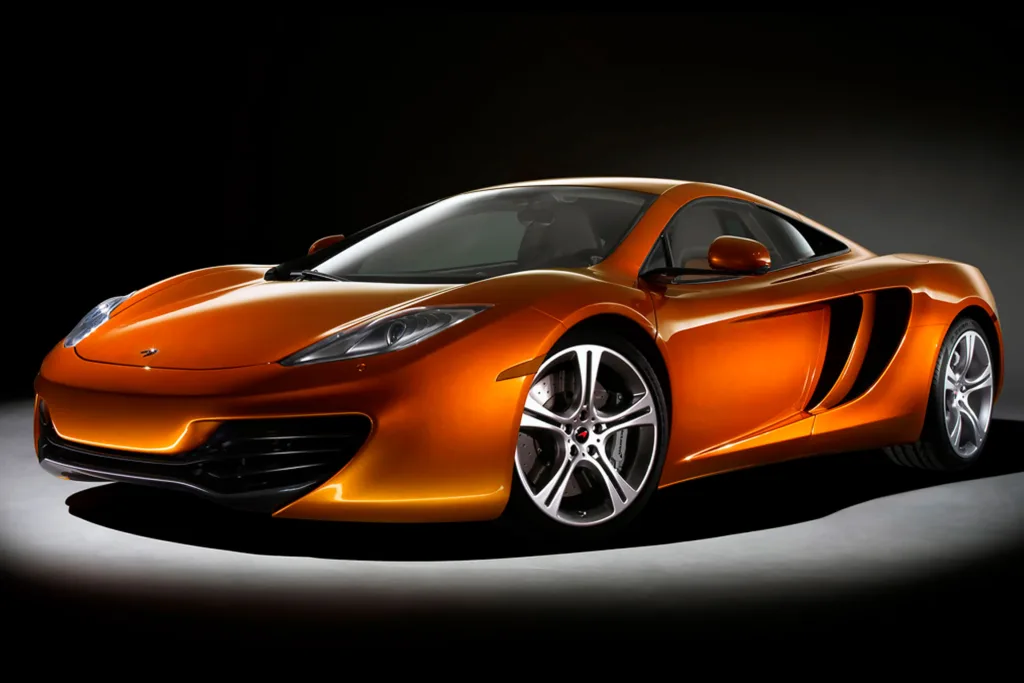
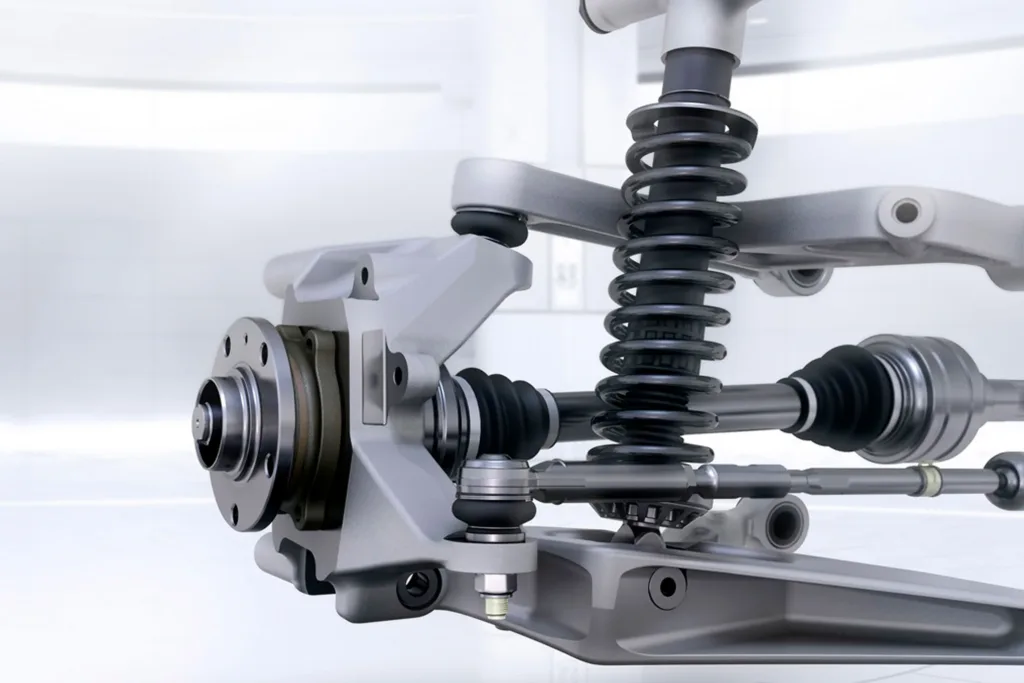
At only 80 kilograms, the MonoCell forms both the safety structure and the backbone for dynamic performance. It contributes to a class-leading curb weight of just over 1,300 kg, maximizing acceleration and agility while preserving exceptional crash integrity—traits essential both on track and for everyday driving safety. The MP4-12C further distinguishes itself with meticulously engineered front and rear aluminum subframes, which are bolted directly to the MonoCell. This arrangement enables fast modular assembly, makes repairs straightforward, and permits the optimal mounting of multilink suspension arms and high-performance axles.
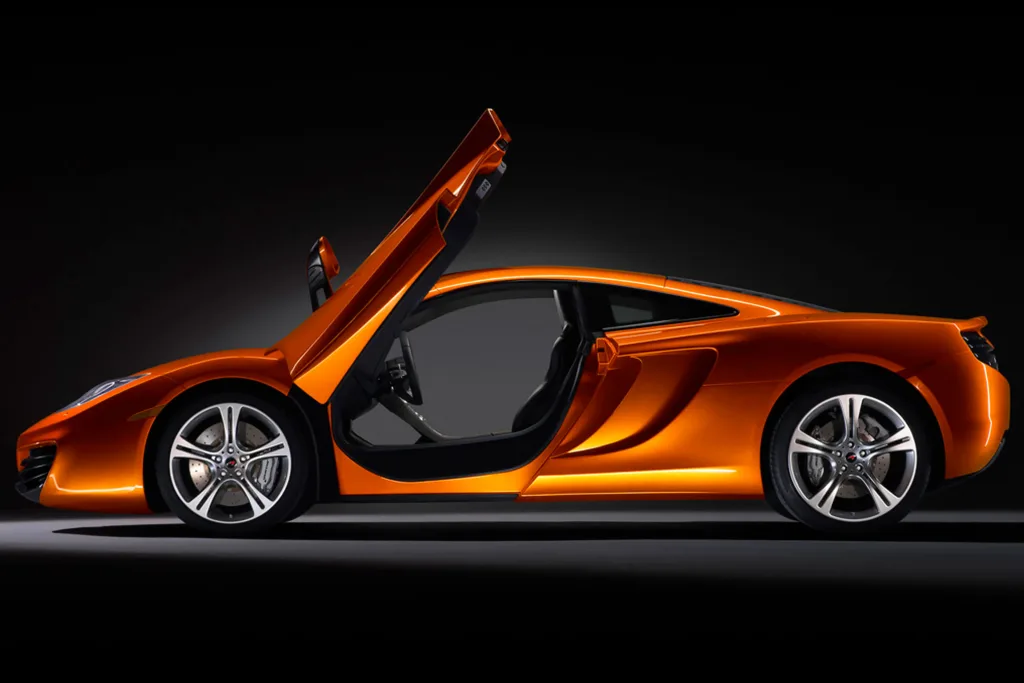
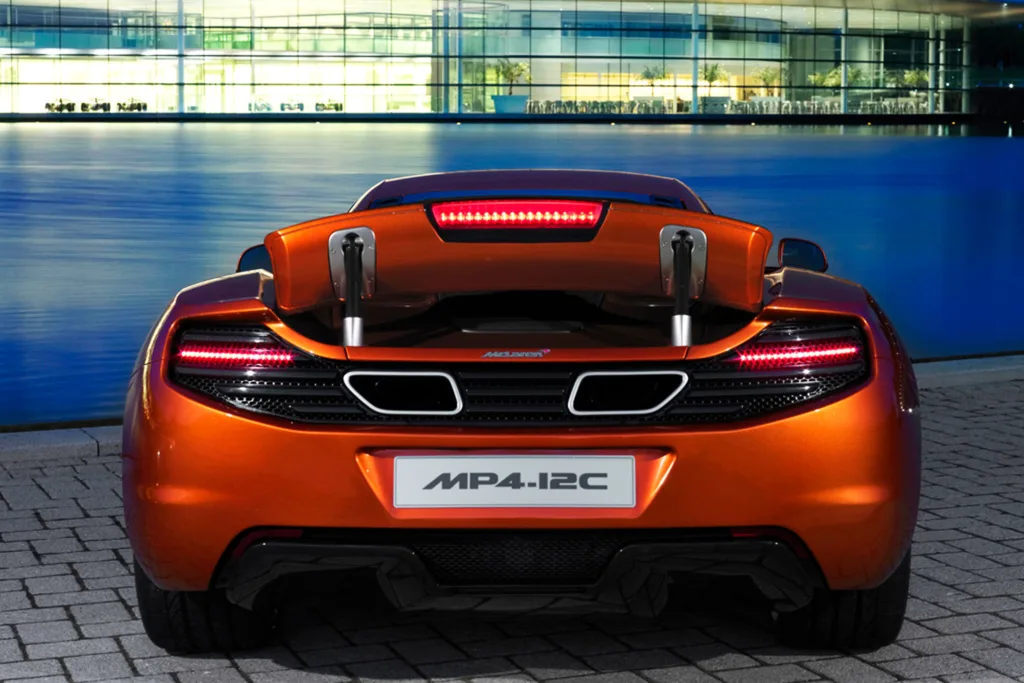
This composite marvel affords the MP4-12C phenomenal torsional rigidity and a notably low center of gravity, greatly enhancing cornering responsiveness and stability at high speeds. The direct lineage from the F1 paddock is evident in the driver’s connection to the road—thanks to the unique way the carbon cell isolates vibrations and delivers razor-sharp chassis feedback, granting drivers road feel and confidence more commonly found in pure race cars. Combined with McLaren’s proprietary aerodynamic expertise (including active air management and an integrated rear wing brake), the MP4-12C carved a unique path in the supercar landscape—one defined by intelligent design rather than brute-force engineering.
This level of technical integration and material science positioned the MP4-12C as the gold standard among its peers, establishing a legacy that would shape the architecture and philosophy of all subsequent McLaren road and race cars.

Powertrain: Twin-Turbo V8 Brilliance
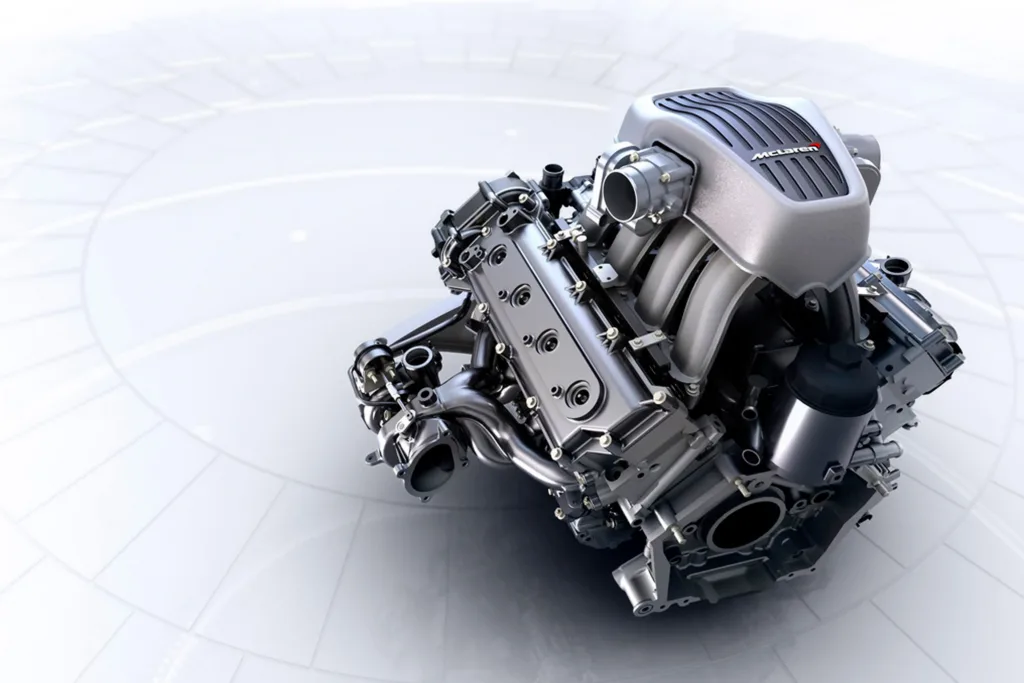
At the core of the MP4-12C sits a bespoke 3.8-liter M838T V8 engine, developed in-house by McLaren. Twin turbochargers push output to 591 BHP (600 PS, 441 kW)—delivering breathtaking acceleration and tractable power across the rev range. While the displacement and peak output may seem modest compared to some rivals, McLaren’s mastery of lightweight engineering and efficient forced induction ensures performance that rivals—and often exceeds—contemporaries like the Ferrari 458 Italia and Lamborghini Gallardo.
Acceleration is explosive: 0–100 km/h in just over 3 seconds, 0–200 km/h in under 10 seconds, and the quarter-mile dispatched in about 11 seconds—establishing the MP4-12C as one of the quickest production cars of its generation. The top speed eclipses 319 km/h, further highlighting McLaren’s commitment to uncompromising speed and track-ready credentials.
Chassis, Suspension, and Brakes: Race Tech Refined
The MP4-12C’s suspension system is a technical tour de force. The car features a 4-wheel double wishbone layout, controlled by the innovative ProActive Chassis Control—a hydraulically linked system that manages roll stiffness, ride comfort, and dynamic responses in real-time. The system replaces traditional anti-roll bars with interconnected dampers, allowing the car to remain supple over bumps yet razor-sharp in hard cornering—earning universal praise for its blend of comfort and handling prowess.
Braking performance is equally advanced. Borrowing from SLR McLaren technology, the MP4-12C employs an air brake system integrated with high-performance carbon-ceramic rotors. Under high-speed deceleration and aggressive stops, the rear wing deploys upward to boost aerodynamic downforce, reduce stopping distances, and stabilize the chassis—mirroring McLaren’s F1 engineering ancestry.
Transmission and Driving Modes
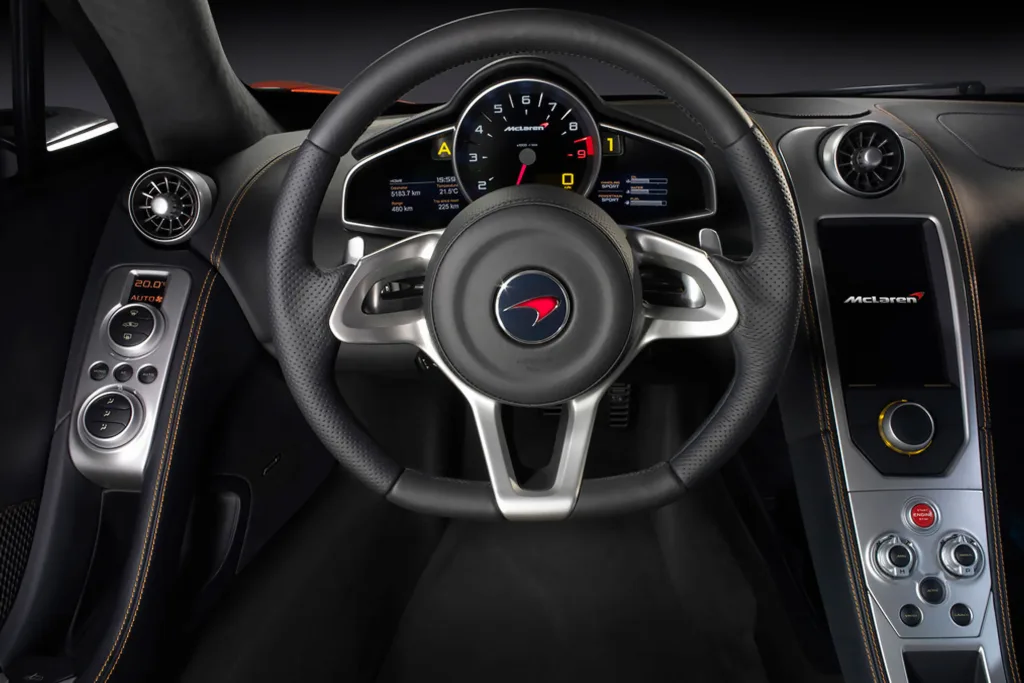
The “Seamless Shift Gearbox” (SSG) is a sophisticated 7-speed dual-clutch transmission designed for maximum performance and effortless operation. Drivers can select between paddle shifters or automatic mode, with six preset driving modes fine-tuned for everything from street commuting to track days. Shift speeds and transmission aggressiveness dynamically adjust depending on the selected mode, offering the flexibility expected of a true supercar.
Interior, Technology, and User Experience
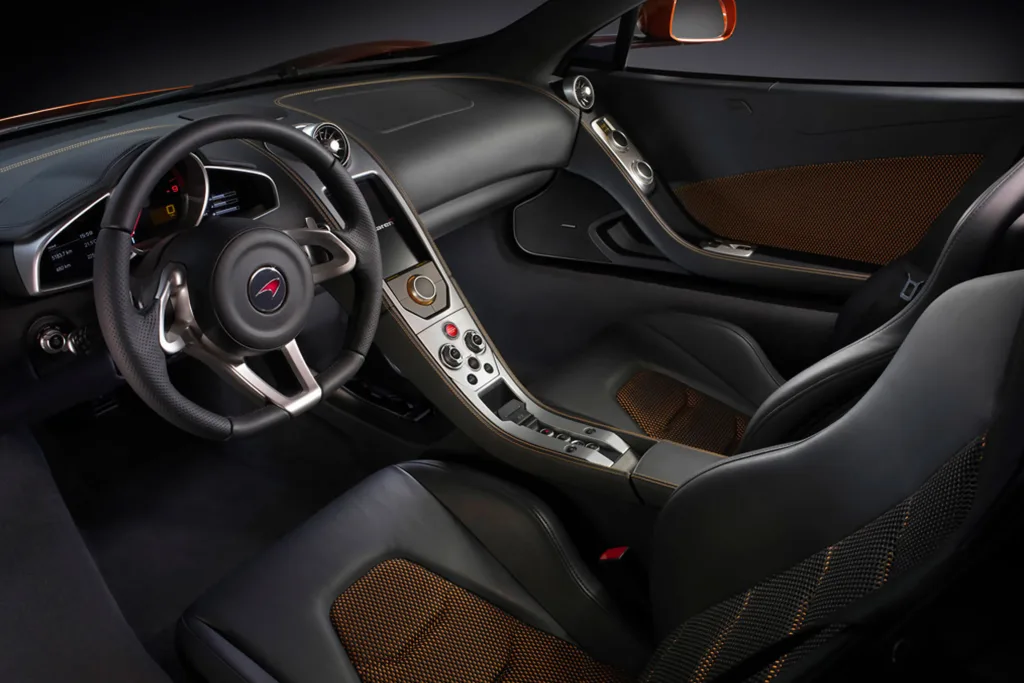
Inside, the cockpit is tailored around the driver—delivering minimalist elegance, superb visibility, and intuitive ergonomics. Alcantara, leather, and metallic accents blend for a purposeful yet plush atmosphere. The digital dashboard and centrally mounted touchscreen offer advanced telemetry, navigation, and entertainment features, integrated seamlessly with McLaren’s electronic driving aids, such as Dynamic Stability Control and the bespoke launch control system.
Standing Out in the Supercar World
Upon its debut, the MP4-12C not only set a new technical standard, but also redefined expectations of what a mid-engine supercar could do off the track. The car’s development focused equally on everyday usability—creature comforts, low-noise operation, and reliability—traits uncommon among street-legal cars boasting race-born chassis and engineering. As a result, the MP4-12C gained a global reputation for merging track-level performance with genuine road comfort, inspiring a new generation of McLaren sports cars, including the P1 hypercar and the Sports Series.

Impact and Motorsport Influence
Throughout its production run, the MP4-12C became a fixture in GT3 racing, further proving its dynamic abilities in endurance events worldwide.
Owners and critics alike celebrated its advanced composite architecture, lightning-fast responses, and the unmistakable feel of Formula 1 technology at the driver’s fingertips.


Functional Always active
Preferences
Statistics
Marketing