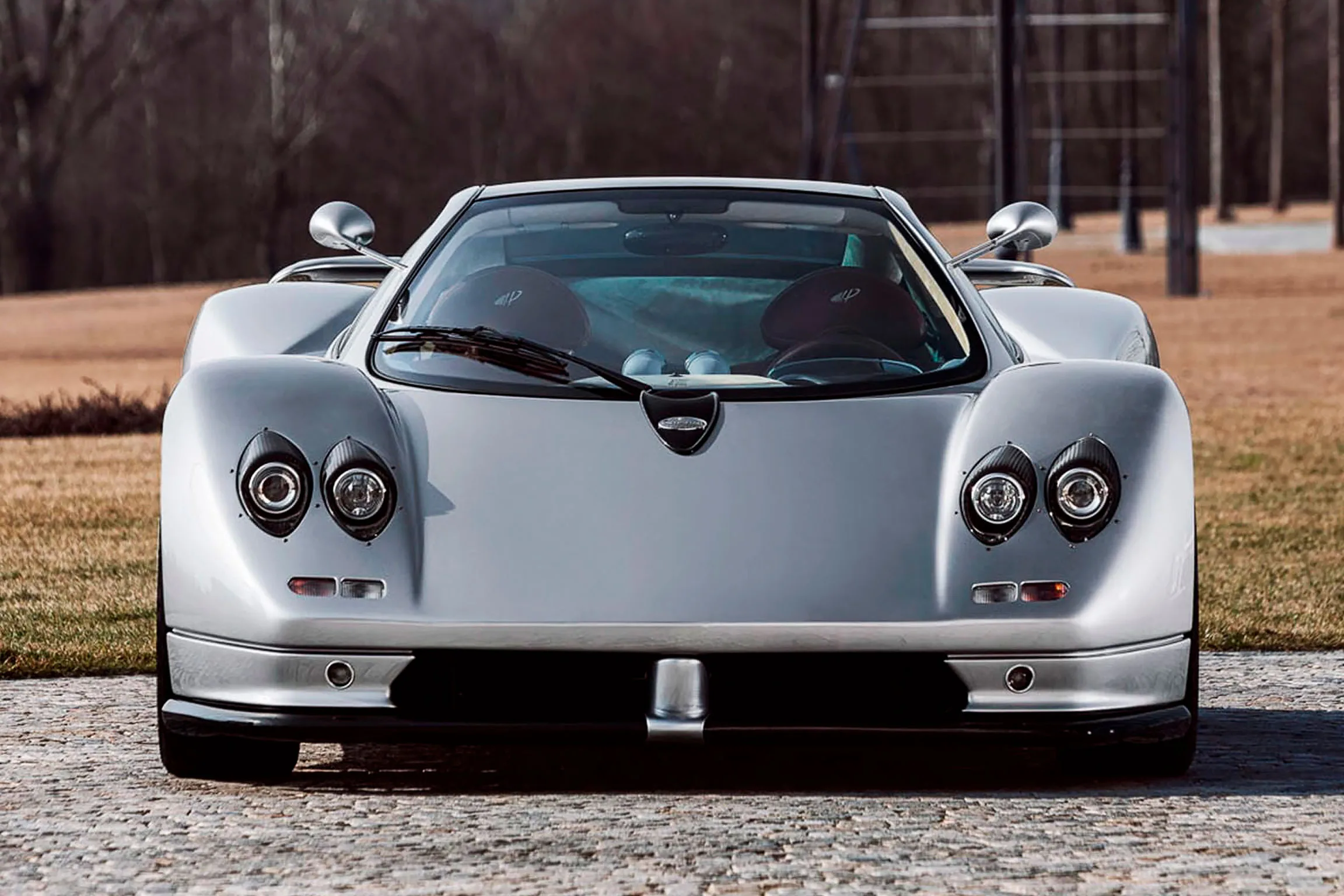
When the Pagani Zonda C12 first appeared in 1999, it did more than just turn heads—it announced the arrival of a completely new force in the world of hypercars. Unlike Ferrari or Lamborghini, which had decades of history behind them, Pagani Automobili began as a small, almost unknown company operating out of Modena, Italy, the spiritual home of Italy’s supercar tradition.
Yet in just one car, founder Horacio Pagani managed to fuse artistic design, cutting-edge engineering, and motorsport passion into a masterpiece that would change the future of performance car manufacturing.
Horacio Pagani: The Visionary and Carbon Fiber Pioneer
Horacio Pagani was born in Argentina and showed a fascination with mechanics and speed from an early age. He raced in Formula 3 in his youth, but his creative energy was always directed toward design and materials science. After moving to Italy in the 1970s, Pagani found his way into the automotive industry, eventually working at Lamborghini as an engineer. There, he made key contributions to models such as the Countach 25th Anniversary and the Diablo.
It was during his time at Sant’Agata that Pagani became deeply interested in carbon-fiber technology—then still a rarity outside professional motorsport. When he suggested that Lamborghini invest in carbon composites, the idea wasn’t adopted, so Pagani took matters into his own hands. He founded Pagani Composite Research in 1988, creating carbon structures and components for Ferrari, Renault F1, and Lamborghini’s own racing efforts. Those years of experimentation laid the groundwork for what would become one of the most technologically sophisticated supercars ever built.
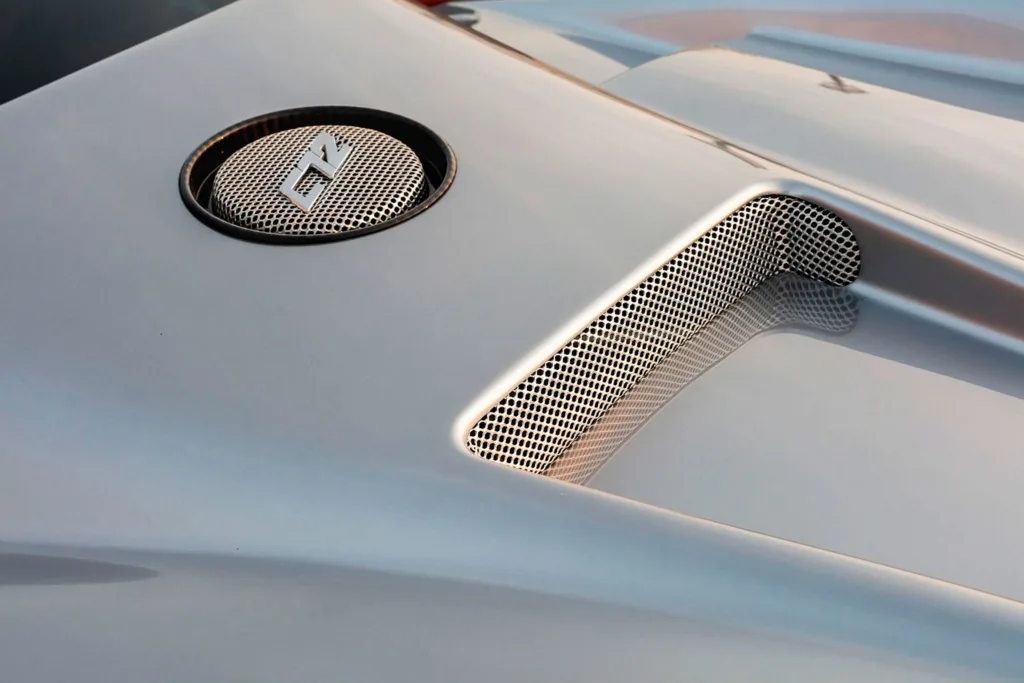
The Zonda C12: Design and Core Specifications
The Zonda project began as a tribute to one of Pagani’s boyhood heroes, Formula 1 legend Juan Manuel Fangio. Initially named the “Fangio F1,” the car was designed to blend Formula 1-style engineering with the drama and elegance of an Italian exotic. Fangio’s death in 1995 led Pagani to drop his name from the final production car, which was instead christened the Zonda—named after a fierce Patagonian wind, symbolizing speed, power, and movement.
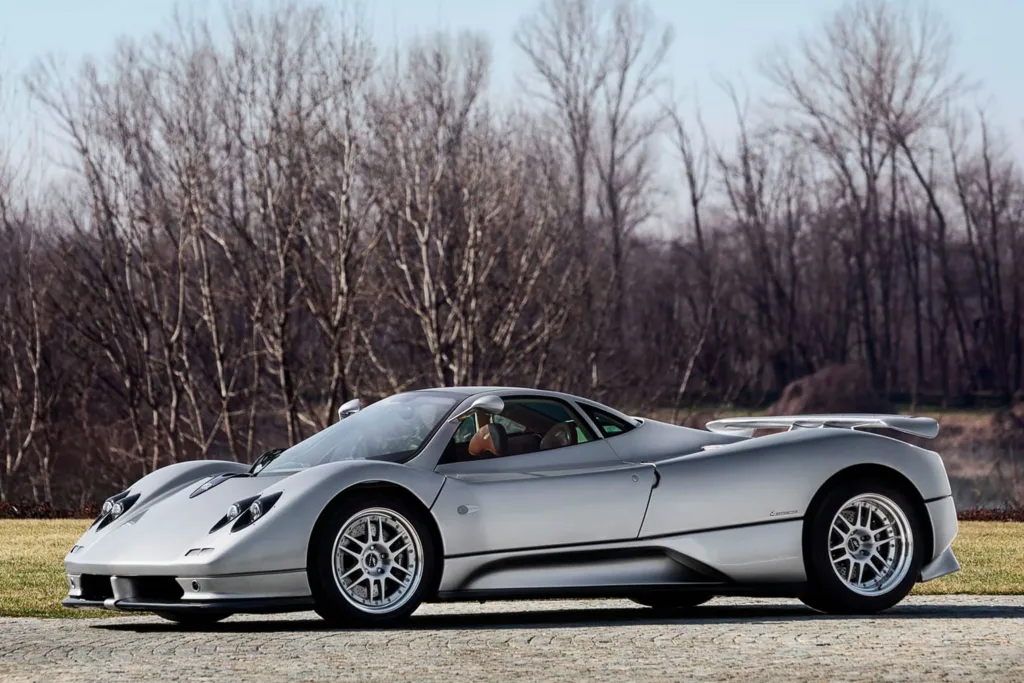
The first production version, the Pagani Zonda C12, debuted at the 1999 Geneva Motor Show, immediately stealing attention from established automakers. At its heart was a Mercedes-Benz M120 engine, a naturally aspirated 6.0-liter V12 sourced from Mercedes-AMG. The engine delivered 394 horsepower (388 bhp) and a mountain of torque—around 580 Nm—enabling the lightweight supercar to reach 100 km/h in just 4.2 seconds and a top speed exceeding 295 km/h. What made this more impressive was not raw output, but the way it was delivered: linear, powerful, and endlessly smooth.
Technically, the Zonda was a revelation. Its carbon-fiber monocoque chassis, fabricated entirely in-house, set new benchmarks in rigidity and lightness, weighing less than 1,300 kilograms overall. The car’s aerodynamic profile—long, sculpted, and flowing—was developed through extensive wind-tunnel testing. Every vent, curve, and contour was functional, channeling air efficiently to cool the engine and generate downforce without compromising its sculptural beauty. The suspension system, modeled after race car architecture, used forged aluminum arms and a push-rod setup, giving the Zonda razor-sharp control that felt both intimidating and intoxicating on the limit.
Art and Craftsmanship: Pagani’s Philosophy
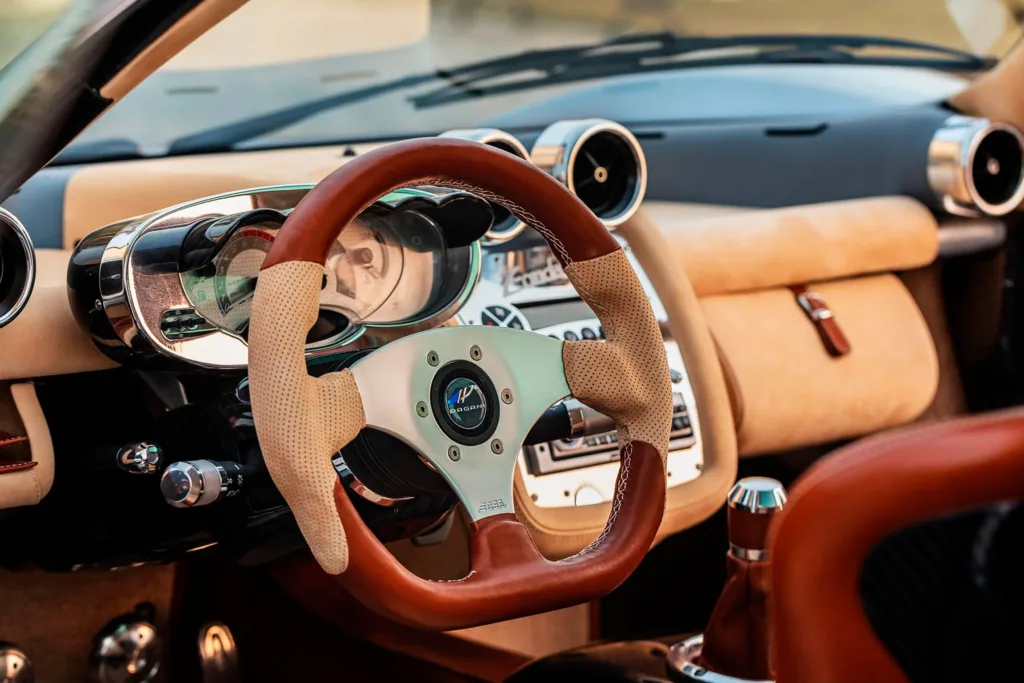
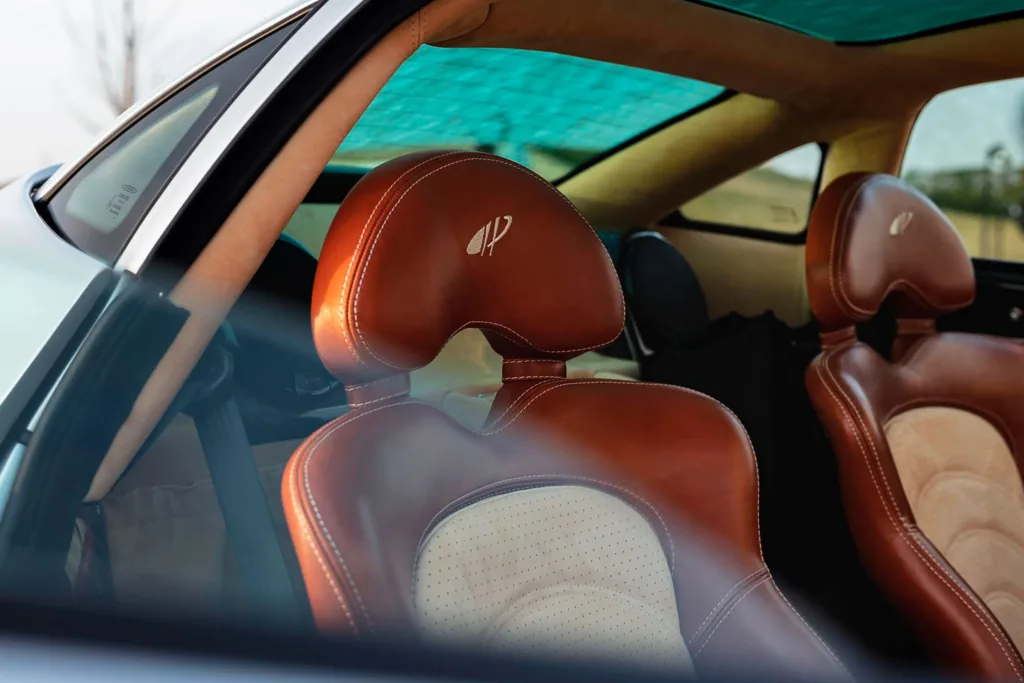
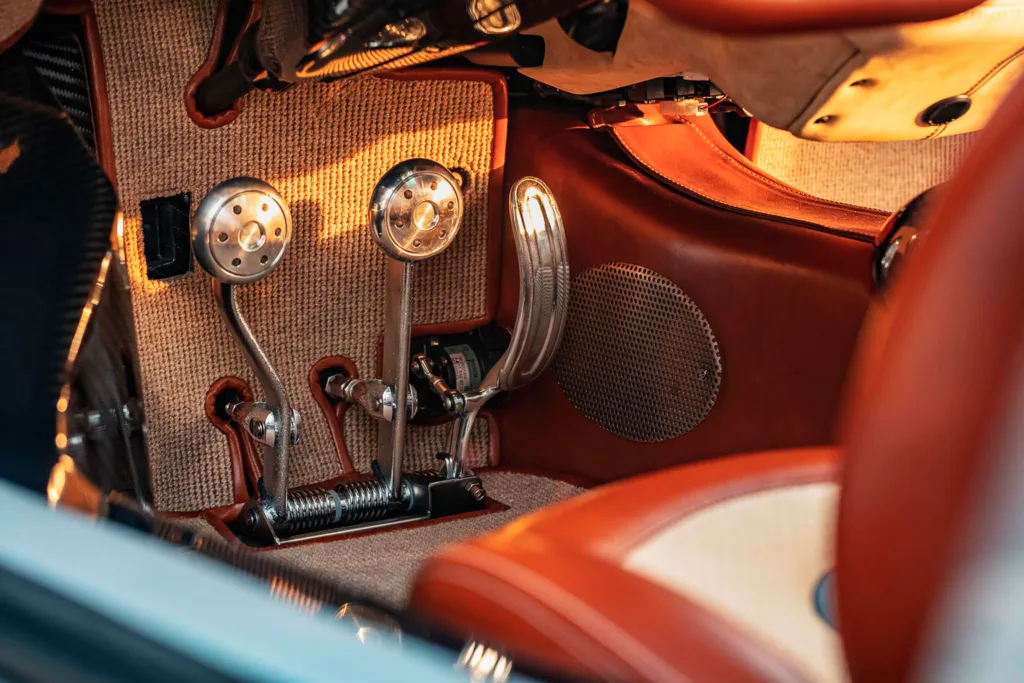
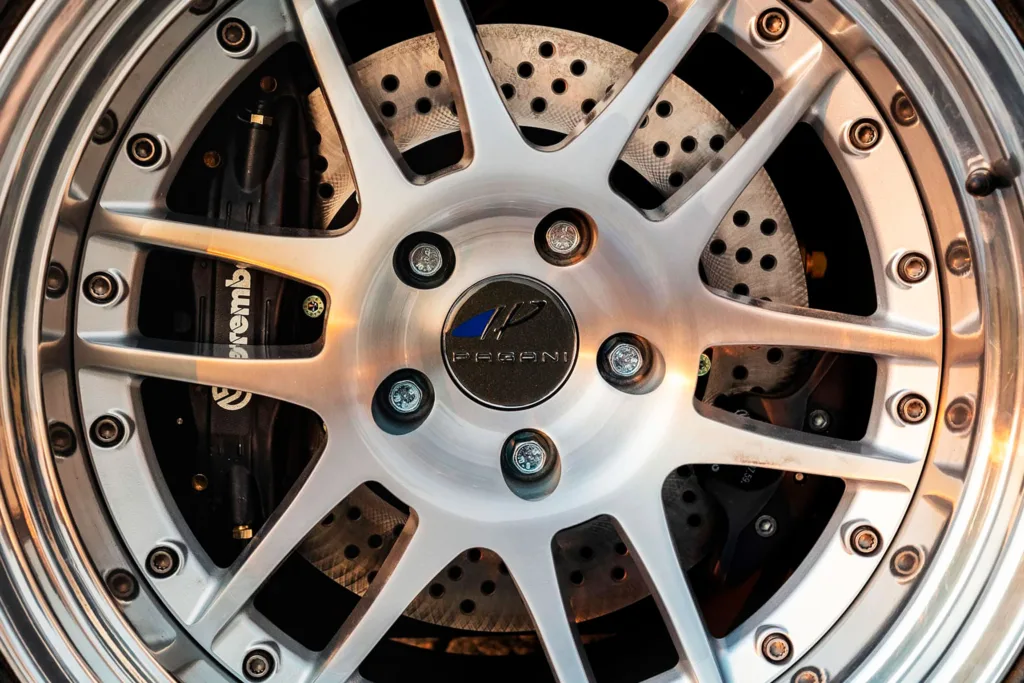
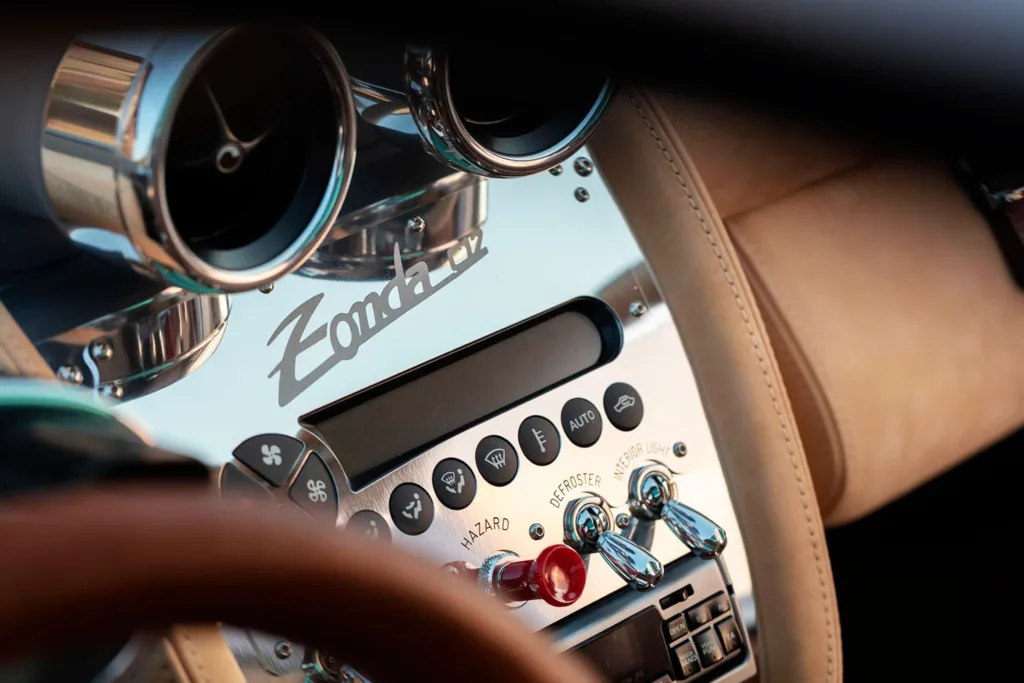
Pagani’s philosophy treated cars not just as machines but as rolling works of art. The Zonda’s cabin exemplified this: carbon weave patterns flowed seamlessly between panels, exposed metal switchgear gleamed like jewelry, and fine leather wrapped the interior with an unmistakable sense of bespoke craftsmanship. Each car was hand-assembled with an obsessive attention to detail that rivaled Switzerland’s best watchmakers.
Evolution of Power: The C12S and C12S 7.3
In 2000, Pagani introduced an upgraded version—the Zonda C12S. This evolution expanded the Mercedes-AMG V12 to 7.0 liters, drastically increasing output to 542 horsepower and 750 Nm of torque. The entire body was now constructed from carbon fiber, further reducing weight and improving chassis precision.
Performance figures improved accordingly: 0–100 km/h took just over 3.9 seconds, and top speed climbed past 330 km/h. The C12S was more than a power upgrade—it marked Pagani’s transition from a niche prototype builder to a recognized manufacturer among elite supercar brands.
A final iteration, the C12S 7.3, arrived in 2002. With its engine enlarged to 7.3 liters, power rose to 547 horsepower, and torque swelled again for even broader drivability. Although the numbers didn’t drastically change, the car’s throttle response and mid-range flexibility were greatly refined, making it extraordinarily usable despite its ferocity. This version set the stage for future high-performance Zondas, including the C12 F and Zonda R, which would eventually dominate circuits and exotic car shows alike.
Legacy of the C12
The Zonda C12’s significance lies in more than just its speed or scarcity—it established Pagani as a legitimate challenger in a segment once ruled by brands like Ferrari, Lamborghini, and McLaren. Its use of carbon-fiber monocoque construction, bespoke handcrafting, and AMG-powered precision foreshadowed trends that would later define the hypercar era. It represented the perfect balance of art, engineering, and philosophy—each unit built not as a serial product but as an expression of its creator’s vision.
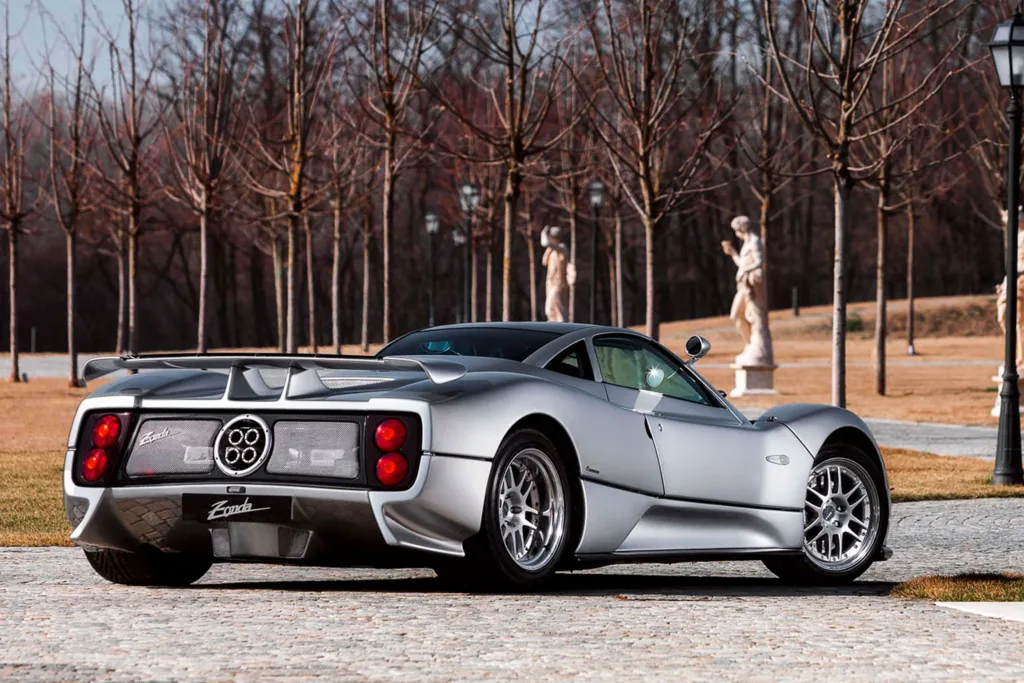
Even today, the 1999 Zonda C12 remains a cornerstone of Pagani’s legend. With its sculptural design, AMG power, and revolutionary materials, it paved the way for boutique supercar makers to prove that small-scale craftsmanship could stand shoulder to shoulder with corporate automotive giants.
The Zonda was not merely a debut—it was destiny realized in carbon fiber, and its spirit continues to shape every Pagani that followed.