The year 1970 marked a turning point for Plymouth. With the American muscle car era at its peak, the company completely redesigned the Barracuda, giving birth to one of the most iconic models in Mopar history—the third-generation Cuda. Built on Chrysler’s new E-body platform, which it shared with the Dodge Challenger, the newly sculpted Cuda featured a shorter wheelbase, wider track, and improved weight distribution. It was lower, leaner, and engineered specifically for performance, reflecting Plymouth’s determination to compete in the increasingly fierce muscle car market.
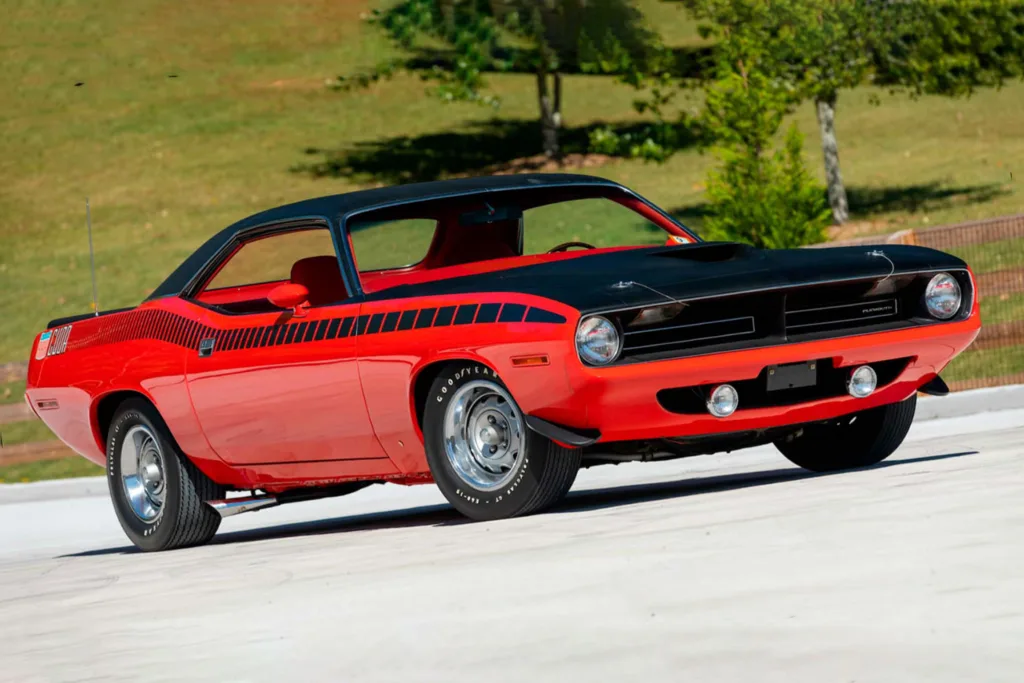
The Cuda lineup offered buyers an array of powertrains ranging from the 318-cubic-inch small-block V8 to the legendary 426 Hemi rated at 425 horsepower. These engines embodied the brute force of Detroit’s horsepower wars. Yet, among all these powerful machines, one stood out not only for its performance but for its racing pedigree—the Plymouth AAR ’Cuda 340 Six Barrel.
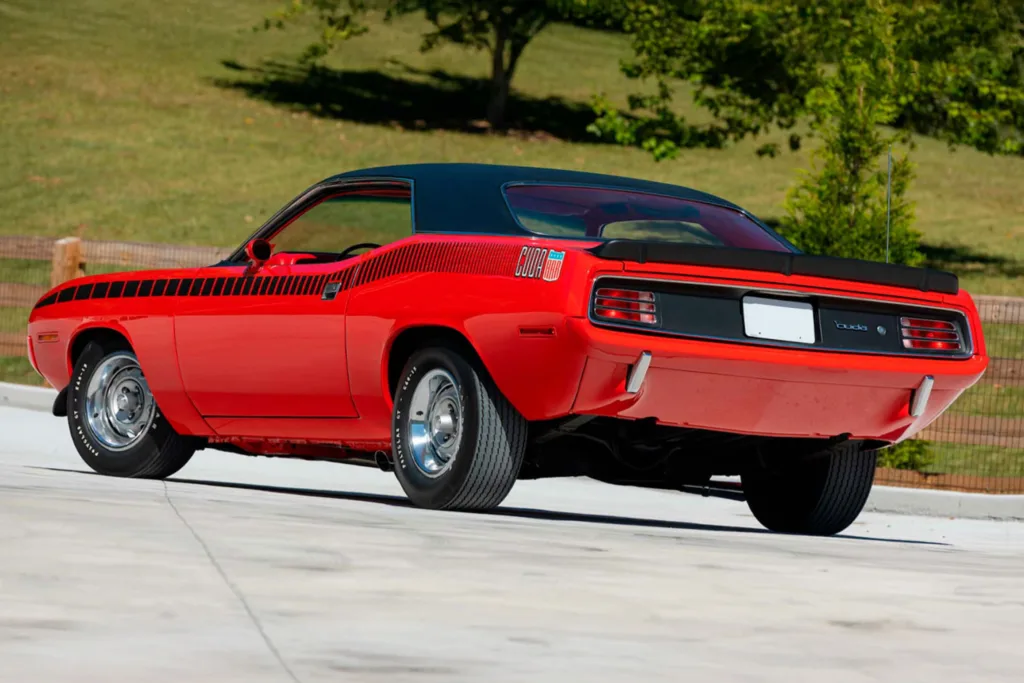
The “AAR” designation came from All American Racers, the racing team founded by American motorsport legend Dan Gurney. In 1970, Plymouth entered the Sports Car Club of America (SCCA) Trans-Am Series, an intensely competitive championship that pitted American automakers against each other with production-based road racing machines. Ford had its Boss 302 Mustang, Chevrolet fielded the Camaro Z/28, and Dodge introduced the Challenger T/A. To qualify for competition, manufacturers had to produce street-legal versions of their race cars, and thus, the AAR ’Cuda was born as Plymouth’s homologation special.
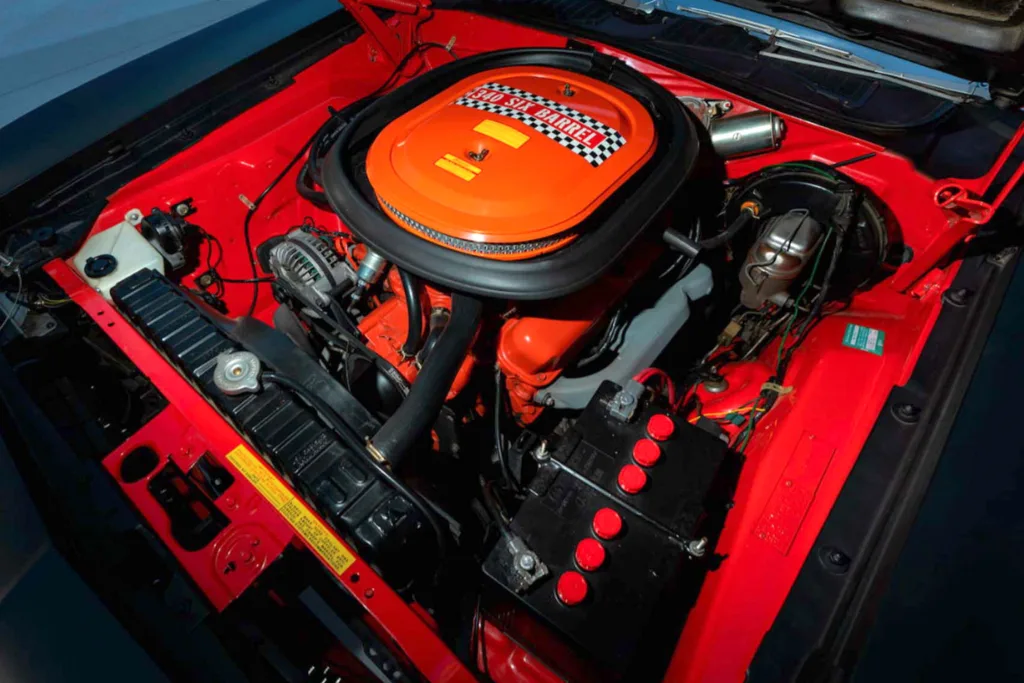
The 340 Six Barrel Powerplant
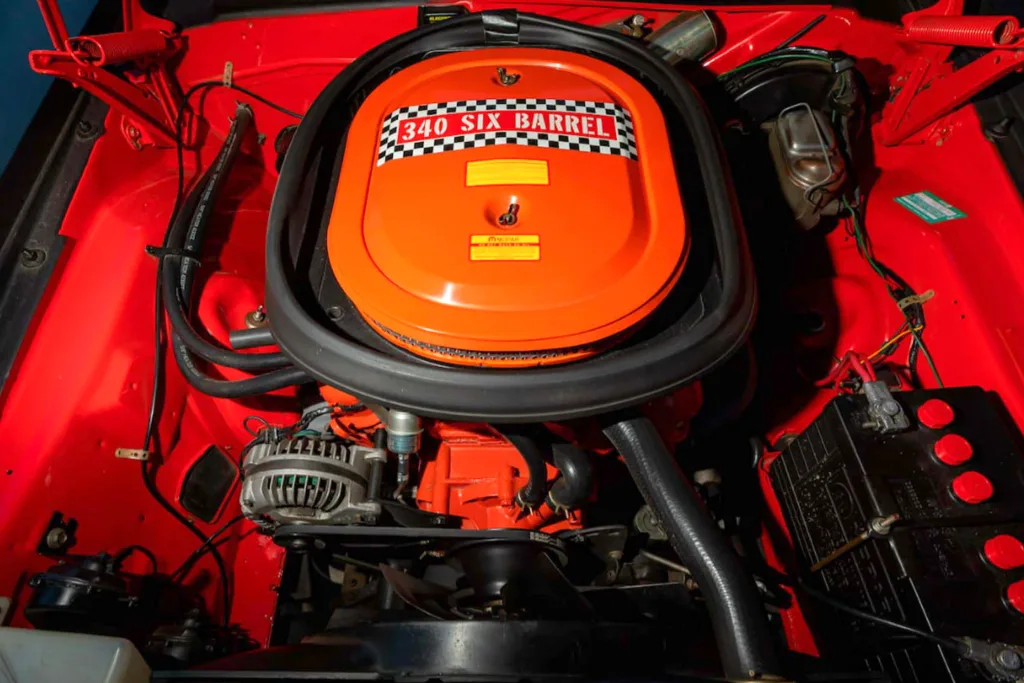
Under the hood of the AAR ’Cuda lay Chrysler’s 340-cubic-inch (5.6-liter) small-block V8 equipped with a triple two-barrel Holley “Six Barrel” carburetor setup. Officially rated at 290 horsepower, it was widely accepted that the true output was closer to 320–330 horsepower—detuned slightly on paper to comply with insurance and class restrictions. The engine featured heavy-duty internals: a reinforced block, high-flow cylinder heads, a solid-lifter camshaft, and a free-flow dual exhaust system designed to maximize mid-range torque and throttle response. When paired with either a four-speed manual or the Torqueflite automatic transmission, the AAR ’Cuda could sprint from 0 to 60 mph in just over 5.8 seconds, with a top speed nearing 135 mph—an impressive feat for a small-block street machine in 1970.
Handling Over Horsepower: Chassis and Suspension
What truly separated the AAR ’Cuda from its big-block siblings, however, was its balance. Whereas models with the 440 Six Pack and 426 Hemi delivered earth-shaking straight-line performance, the AAR was engineered for agility and precision. The small-block 340 engine sat farther back in the chassis, improving weight distribution and front-end response. Plymouth installed a race-bred suspension system featuring heavy-duty shocks, stiffer springs, and a thicker rear stabilizer bar. The result was sharper cornering dynamics, flatter body control, and quicker steering—exactly what was needed to compete in road racing instead of drag strips.
Distinctive Trans-Am Styling and Aerodynamics
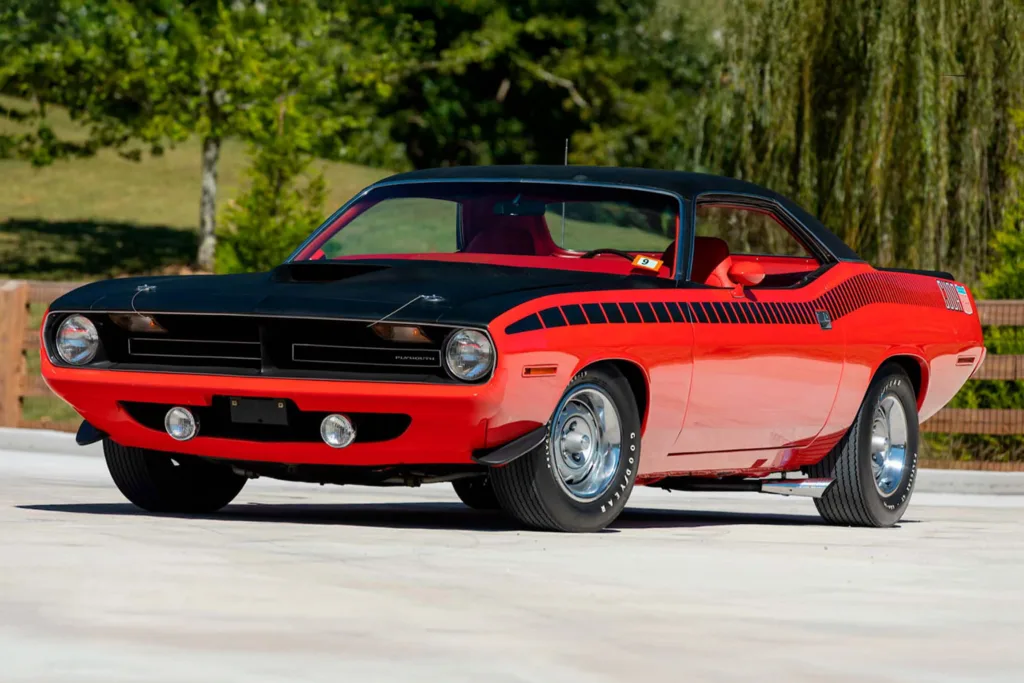
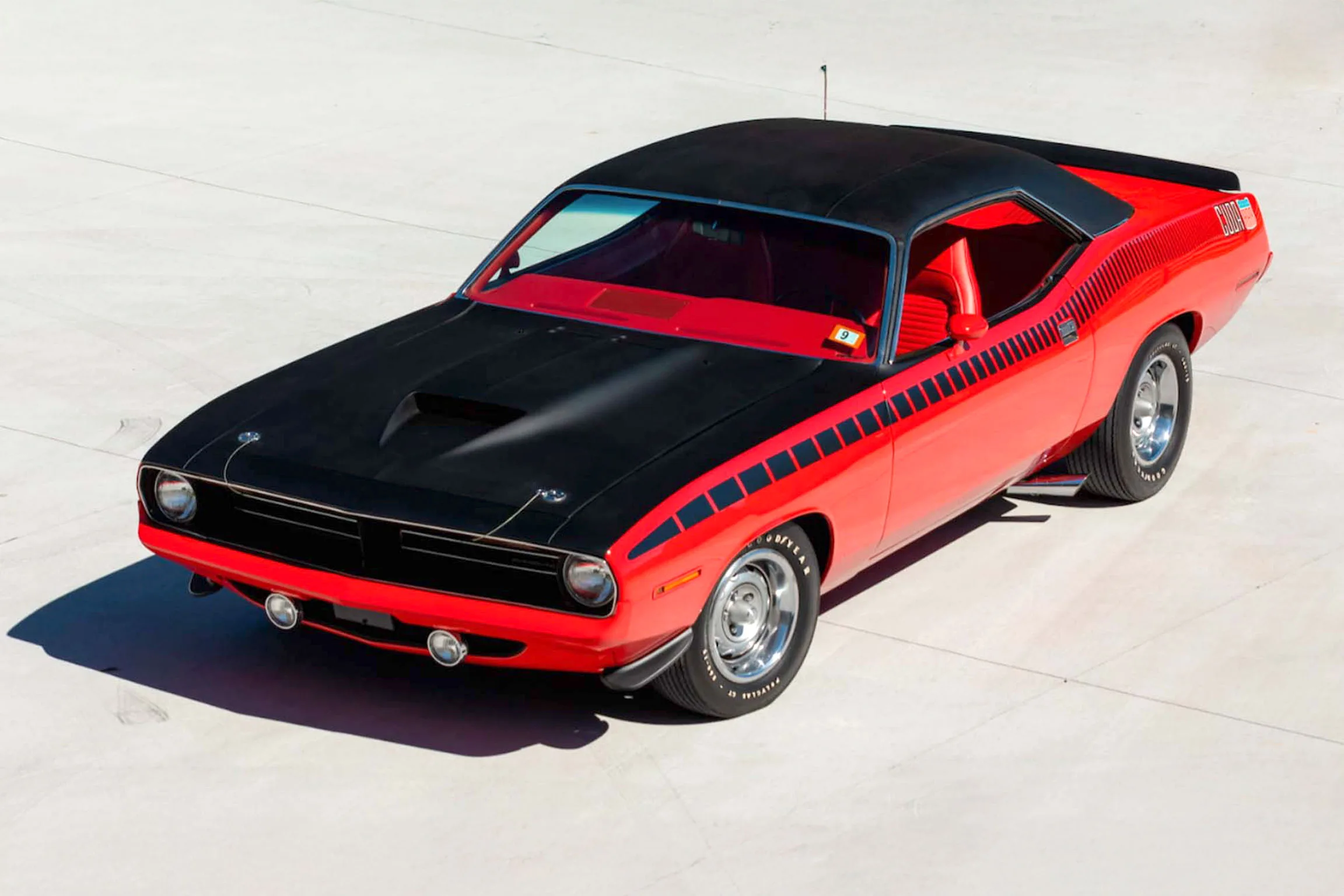
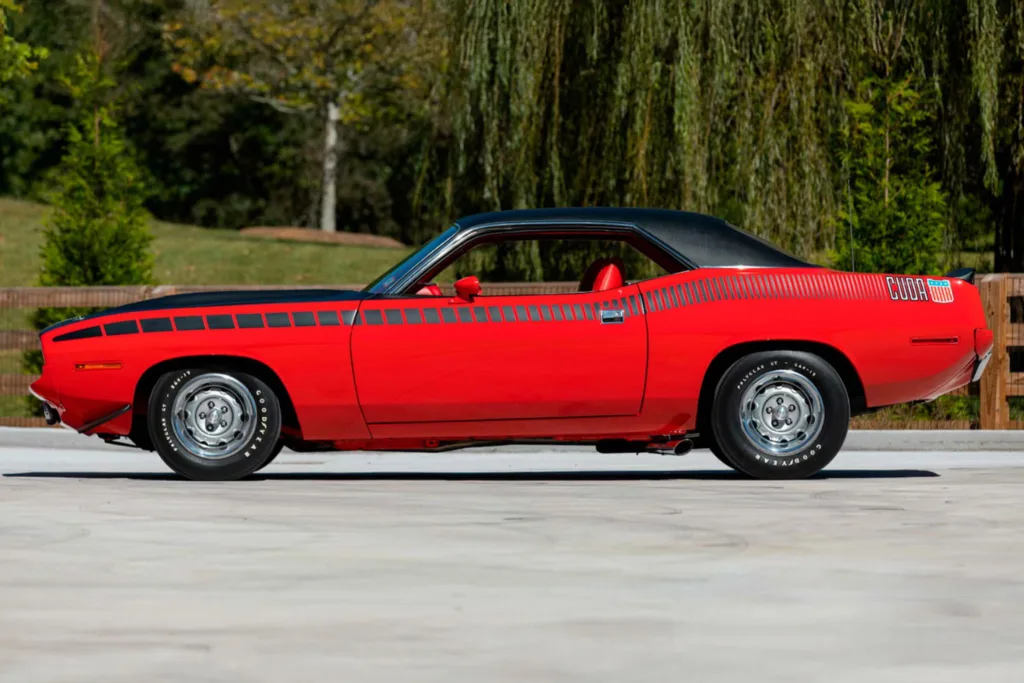
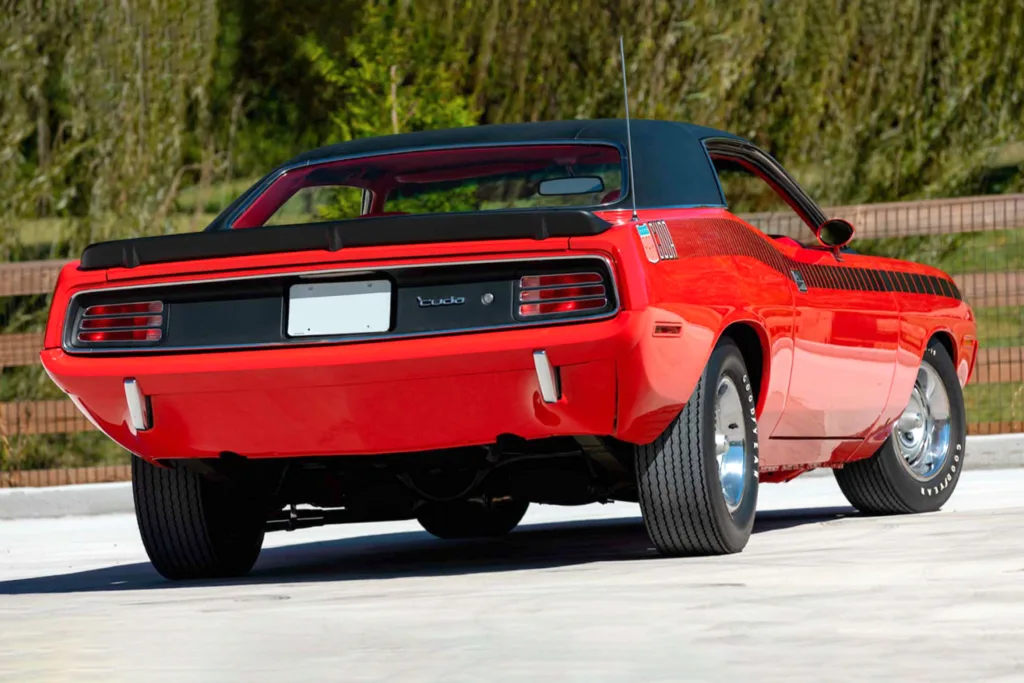
The AAR ’Cuda was also distinctive in design. It came with a lightweight fiberglass (FRP) hood featuring a functional matte-black scoop offset to the driver’s side, channeling cool air directly into the carburetors. Both the front and rear spoilers were inspired by Trans-Am aerodynamics, improving stability at high speeds. Side-exit exhausts positioned ahead of the rear wheels gave the AAR its signature aggressive growl. The ride height was slightly raised at the rear to accommodate larger Goodyear E60-15 tires in front and G60-15s in back, creating an unmistakable forward rake stance that contributed to traction and visual drama.
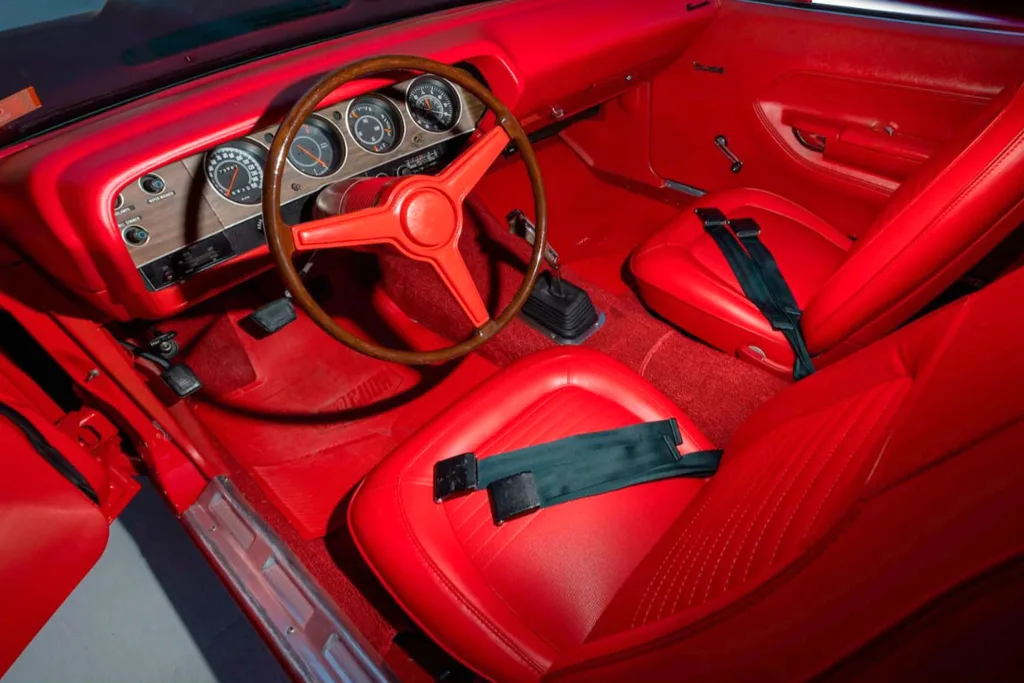
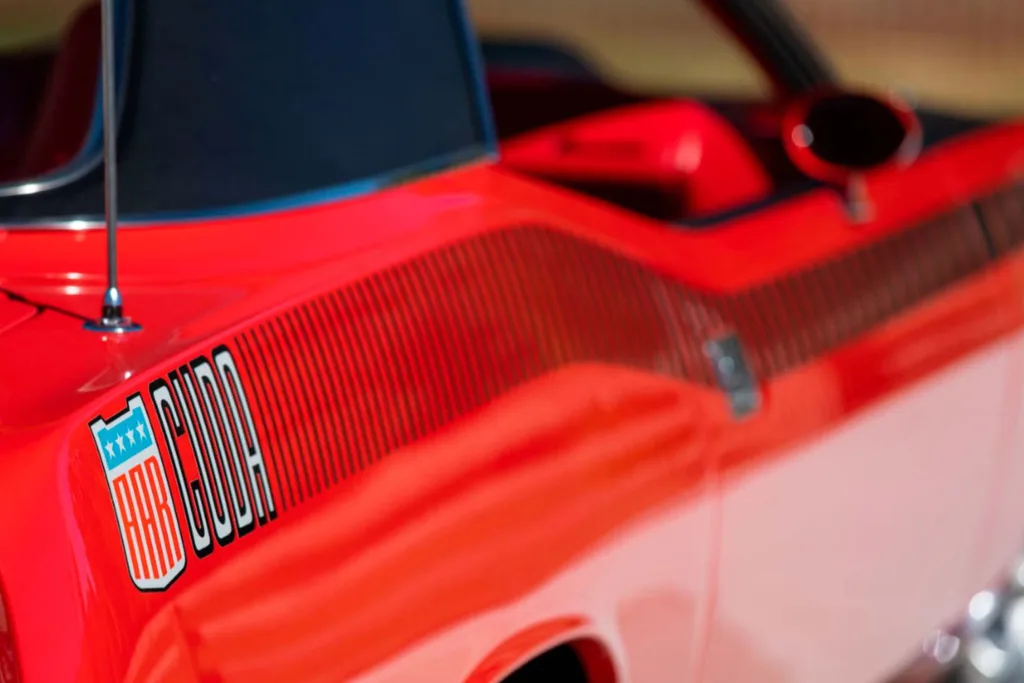
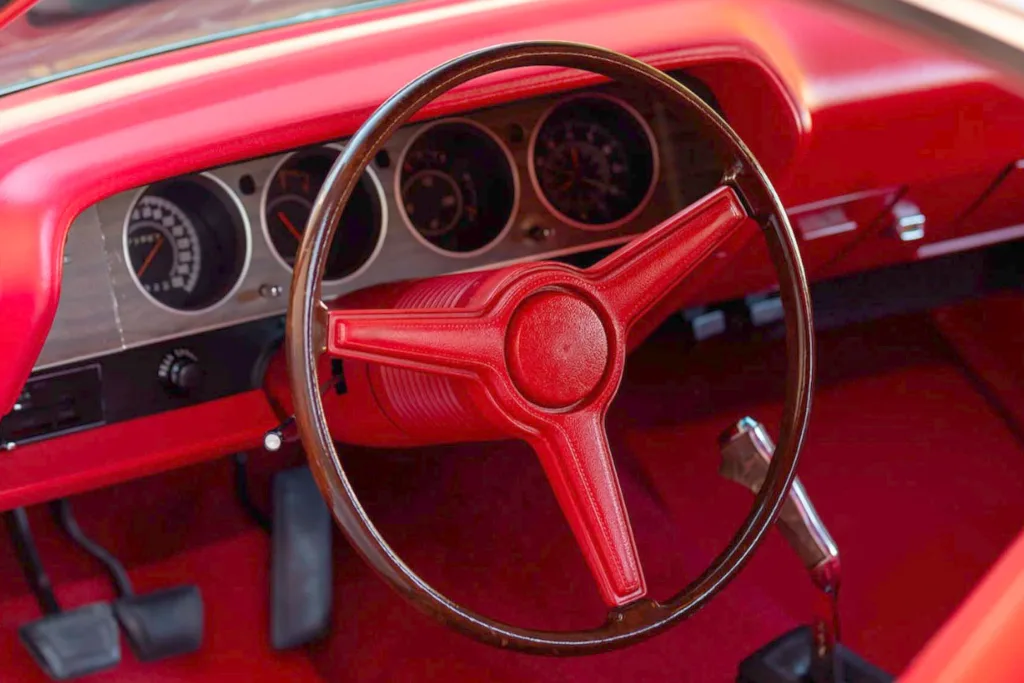
Every detail served performance and homologation requirements. Even elements like the blacked-out tail panel, side graphics featuring the AAR ’Cuda logo, and the flat black hood were functional touches intended to reduce glare and enhance identity. Inside, the cabin retained a spartan, driver-focused layout typical of late-1960s muscle cars. High-back vinyl bucket seats, a three-spoke steering wheel, and a Rallye instrument cluster underscored its purpose as both a road and track performer.
Legacy and Rarity
Despite all its attributes, the AAR ’Cuda’s production run was brief—lasting only one model year. Due to rising insurance costs, emission restrictions, and the waning profitability of factory racing programs, Chrysler ended its Trans-Am efforts after 1970. Only about 2,724 units of the AAR ’Cuda were ever built, making it a rare collectible prized for its combination of race engineering and everyday drivability. Among these, surviving examples with factory-original components are especially sought after, often commanding premium prices at auctions.
Though overshadowed in public memory by the fire-breathing Hemi ’Cuda, the AAR version holds a special place in muscle car history as a true handling benchmark. It was the first and only small-block ’Cuda created directly from a professional racing program, offering balance and control instead of brute force alone. In many ways, it previewed the philosophy that would define later performance cars: precision over power, handling over sheer displacement.
The 1970 Plymouth AAR ’Cuda remains a testament to a time when manufacturers were willing to build race cars for the street. It still embodies the unique mix of American engineering prowess and motorsport ambition that made the golden age of muscle unforgettable. Lightweight, responsive, and beautifully aggressive, the AAR ’Cuda was—and still is—a rolling symbol of Plymouth’s racing soul.