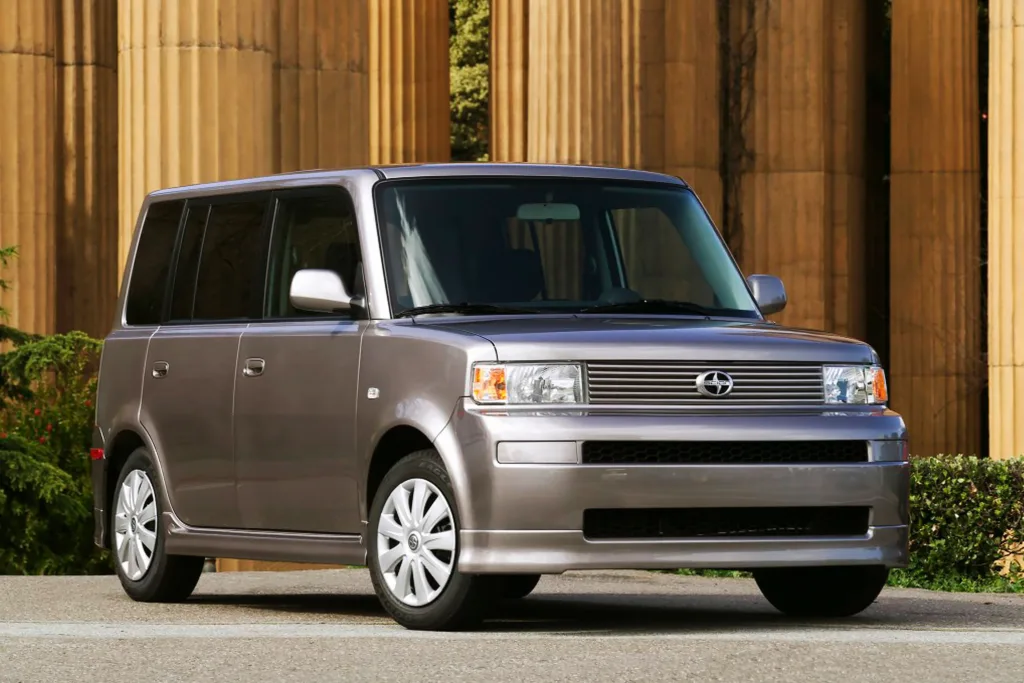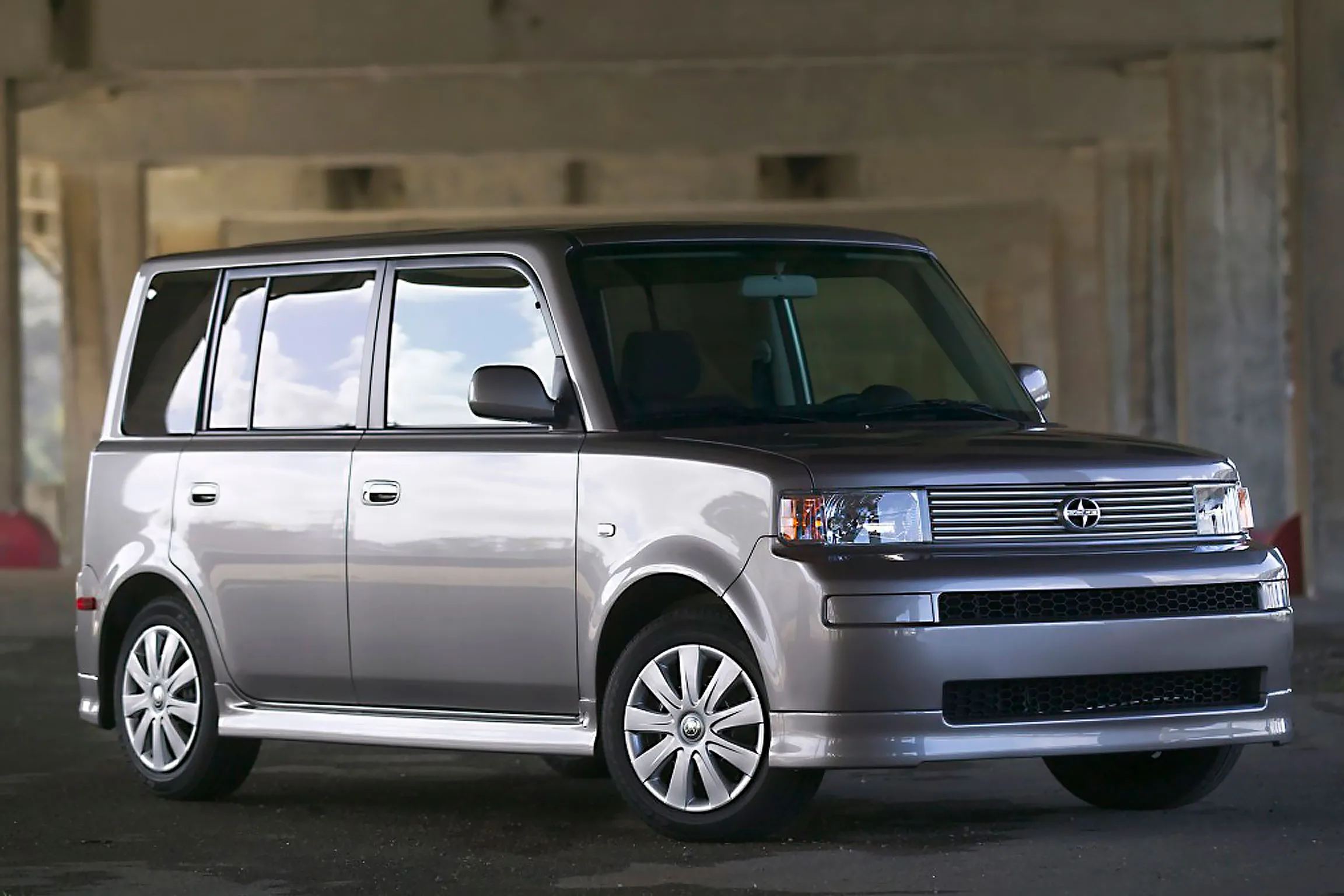
The Toyota bB, introduced in February 2000, was a compact hatchback designed to capture the attention of young urban drivers, particularly males in their 20s, who wanted a car that doubled as a fashionable lifestyle accessory.
The Toyota bB was sold as the Scion xB in the US.
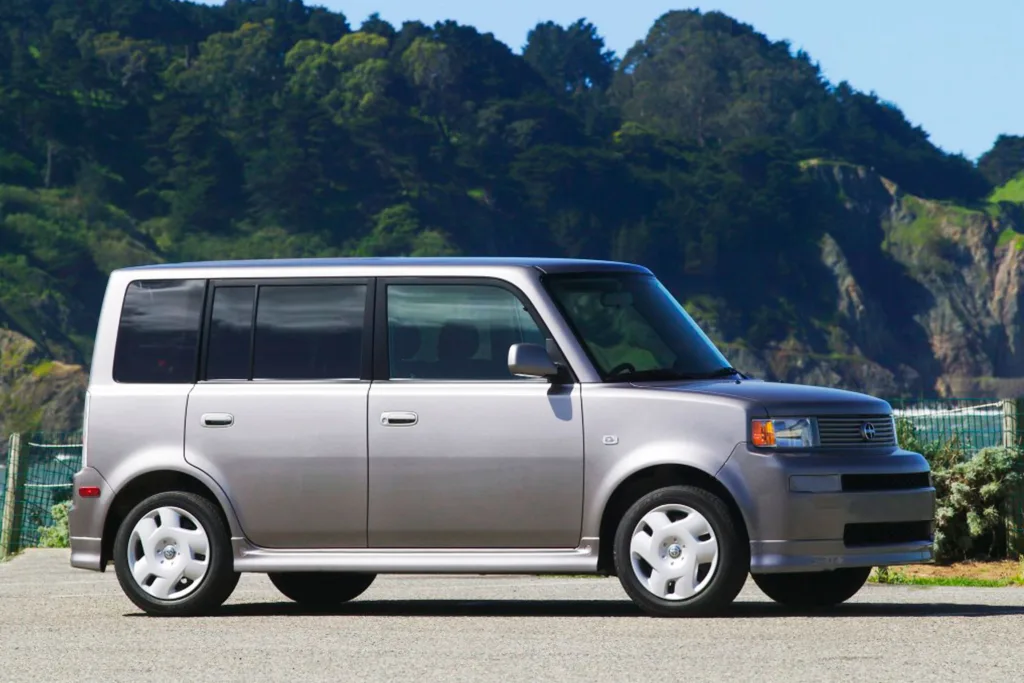
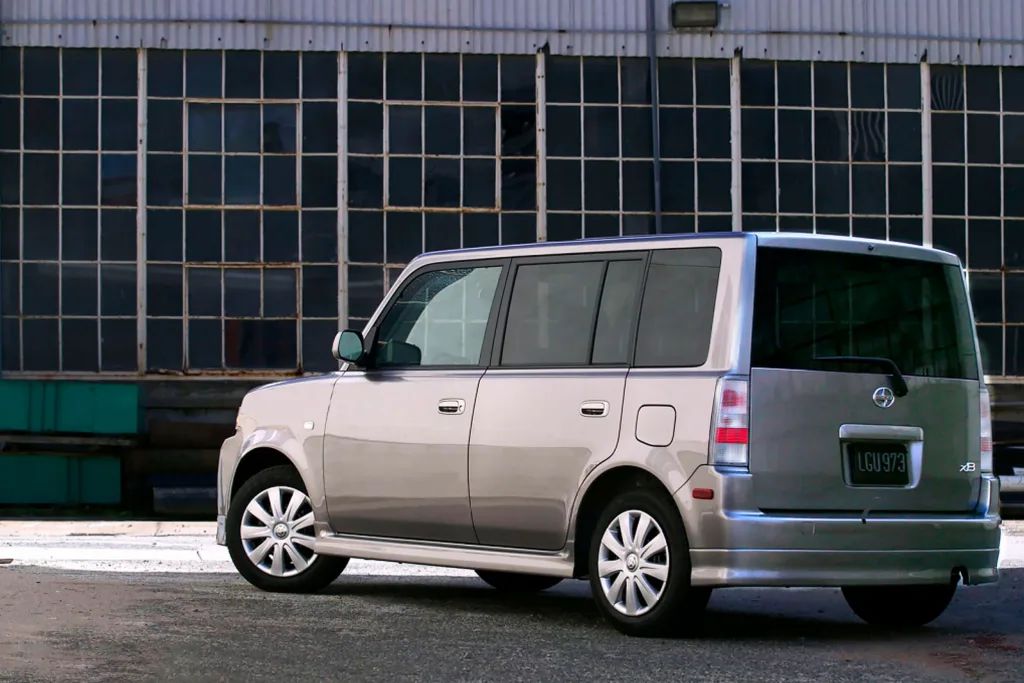
While sharing its platform with the Toyota Vitz (known as the Yaris in certain markets) and other Toyota compacts, the bB’s design was unequivocally distinctive and broke away from traditional compact car aesthetics. Its standout feature was its radical boxy shape, resembling two cubes stacked at the waistline—an audacious style choice that made it instantly recognizable. This design evoked classic American cars with long, grooved horizontal grilles and hefty bumpers but modernized with clean, minimalist lines, blending nostalgia with contemporary urban chic.
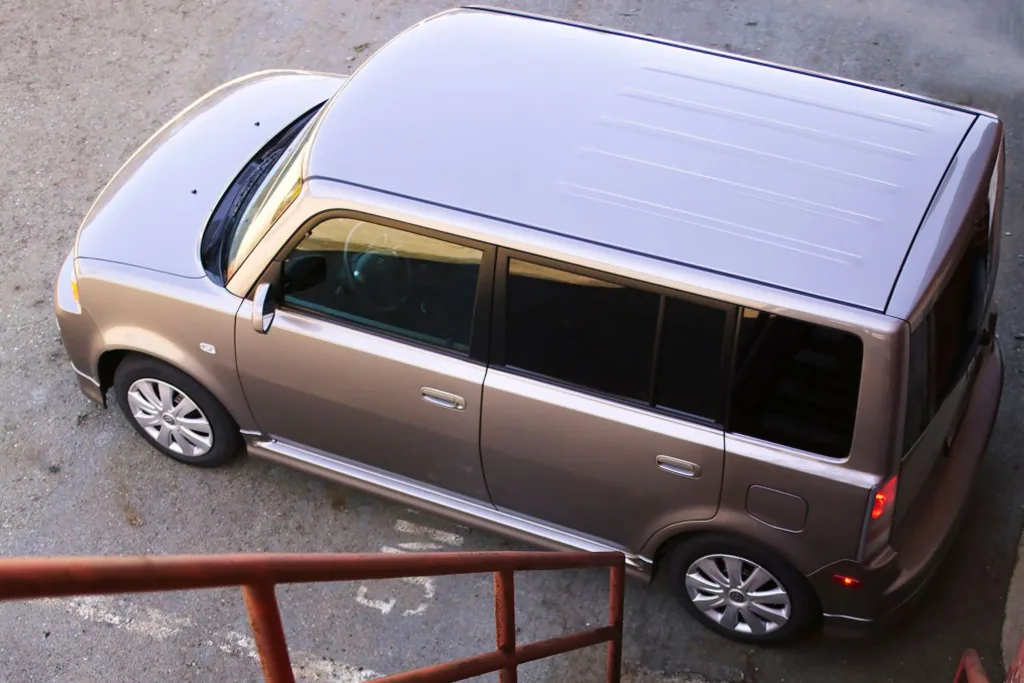
Design for Utility: Dimensions and Interior Space
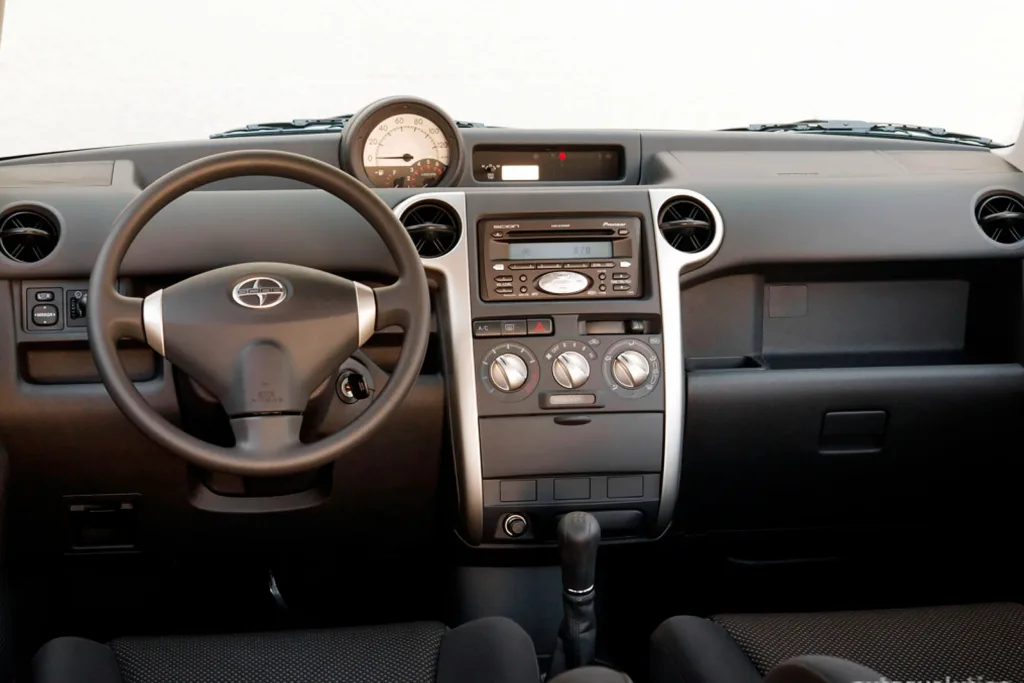
Measuring 3,845 mm in length, 1,690 mm wide, and 1,640 mm tall, the bB’s cubic body optimized interior space, offering the roomy feel of a small people-mover within a compact footprint. Despite its modest exterior dimensions, the cabin was extraordinarily spacious thanks to the boxy silhouette, which allowed for maximum headroom and storage capacity—a practical boon for city dwellers needing flexible lifestyle vehicles. The interior design mirrored the exterior’s simplicity with a linear dashboard punctuated by a prominent single, large, round instrument dial. The front bench seat with extensive armrests and multiple small storage compartments emphasized practicality, while all-black trim from panels to seats gave the cabin a sleek, unified appearance.
Drivetrain and Technical Specifications
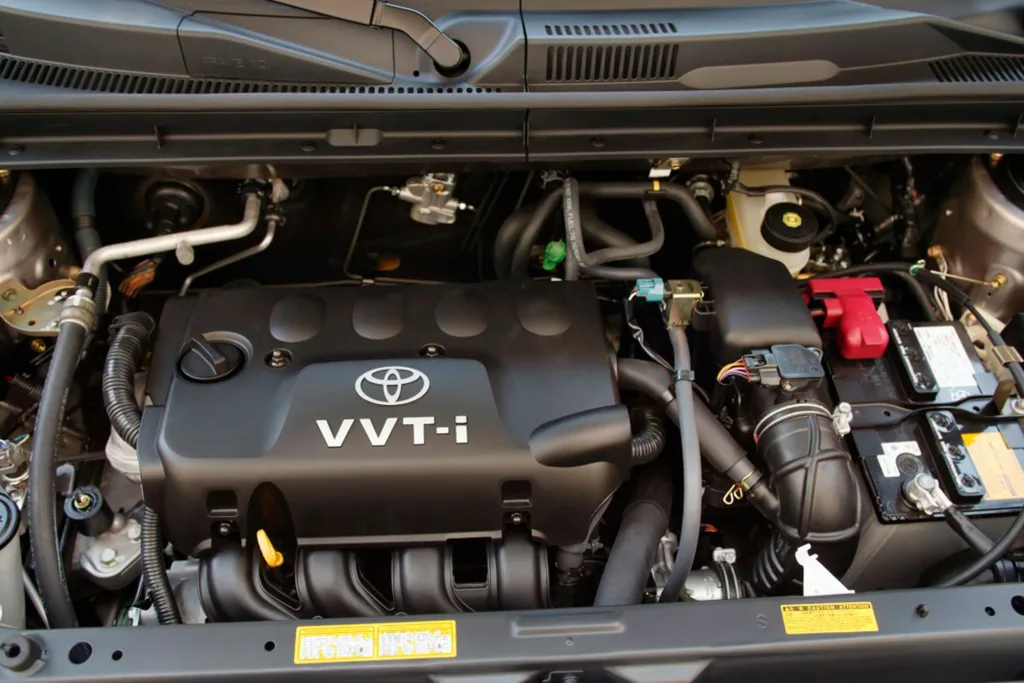
Under the hood, the bB featured either an 85 bhp 1.3-liter DOHC inline-four engine or a more potent 107 bhp 1.5-liter DOHC inline-four, delivering efficient, reliable performance ideal for urban driving. Front-wheel drive was standard, with an optional four-wheel-drive system available—an uncommon offering among subcompact cars of the era. The suspension setup utilized front struts and rear trailing arms, tuned to balance comfort and driving stability. Uniquely, the bB offered only a 4-speed automatic transmission with a column-mounted shifter, which contributed to the spacious interior by freeing up floor area and enabling the bench seat design. Safety equipment was comprehensive for its class, including dual front airbags and ABS braking for enhanced occupant protection.
North American Adaptation: The Scion xB
When Toyota brought the bB to North America under the Scion brand as the Scion xB, several adaptations were made to suit American tastes and regulatory standards. The most obvious change was shifting from the bB’s column shifter and bench seat configuration to a floor-mounted shifter and bucket seats for increased driver comfort and sportiness. Styling tweaks included youth-oriented exterior accents and trim options unique to Scion, emphasizing customization potential and making the xB a popular canvas for aftermarket modifications and personalization—key factors in building its cult following among young American drivers.
Platform Sharing and Market Influence
Interestingly, the bB platform spawned several variants beyond Toyota’s own rebadged Scion xB. Daihatsu marketed versions called the Coo and Materia, while Subaru offered a mechanically similar vehicle named the Dex. All of these shared the same underpinnings and drivetrain components but carried different brand-specific styling and minor feature differences, showcasing Toyota’s strategy of platform sharing to tailor vehicles to regional tastes and market niches.
The Toyota bB and Scion xB’s story is one of innovation in compact car design and marketing philosophy. Its deliberately polarizing but highly practical boxy design rejected mainstream automotive trends, carving out a distinct identity that resonated with a niche yet loyal audience craving individuality combined with urban functionality. The bB’s influence lingered long after its production ended, inspiring later generations of micro-SUVs and compact lifestyle vehicles, proving that unconventional design combined with thoughtful engineering can create lasting automotive impact.