
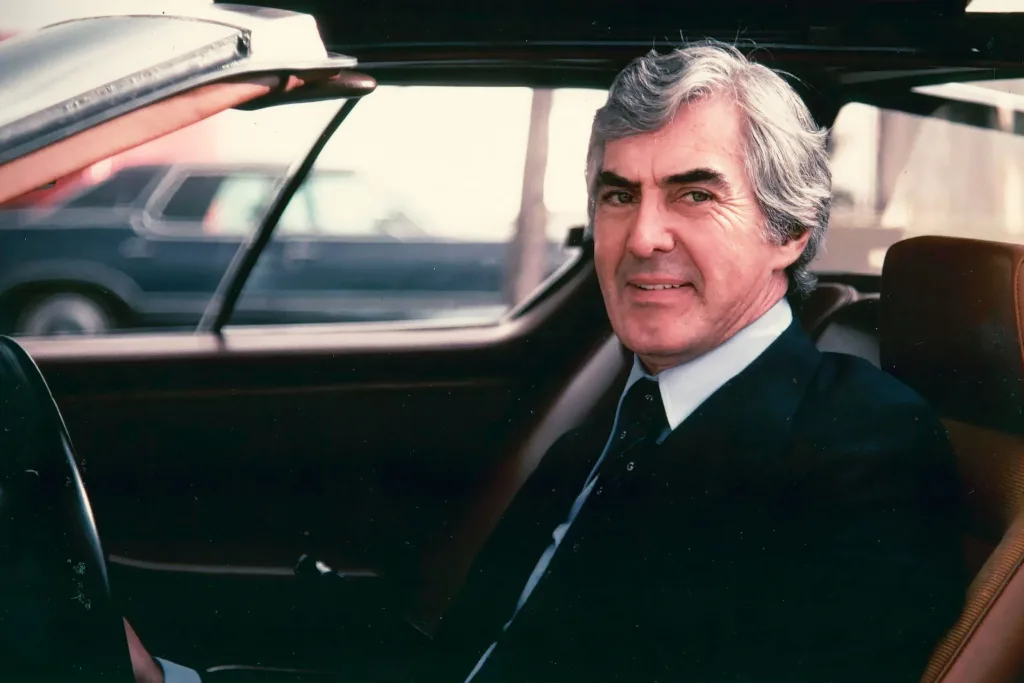
The story of the DeLorean Motor Company (DMC) starts with its charismatic founder, John Zachary DeLorean, a visionary engineer who reshaped American car culture.
Before launching his own brand, DeLorean rose rapidly through the ranks at General Motors, helping bring icons like the Pontiac GTO muscle car to market and influencing successful nameplates such as the Firebird and Grand Prix.
His blend of technical talent, bold styling ideas, and unconventional personal image made him one of the most recognizable figures in Detroit long before the stainless-steel sports car ever reached a showroom.
The Birth of the DeLorean and DMC-12
In 1975, DeLorean founded the DeLorean Motor Company with the goal of building an “ethical sports car” that emphasized safety, durability, and distinctive design over brute performance. The result was the DeLorean DMC-12, styled by celebrated designer Giorgetto Giugiaro.
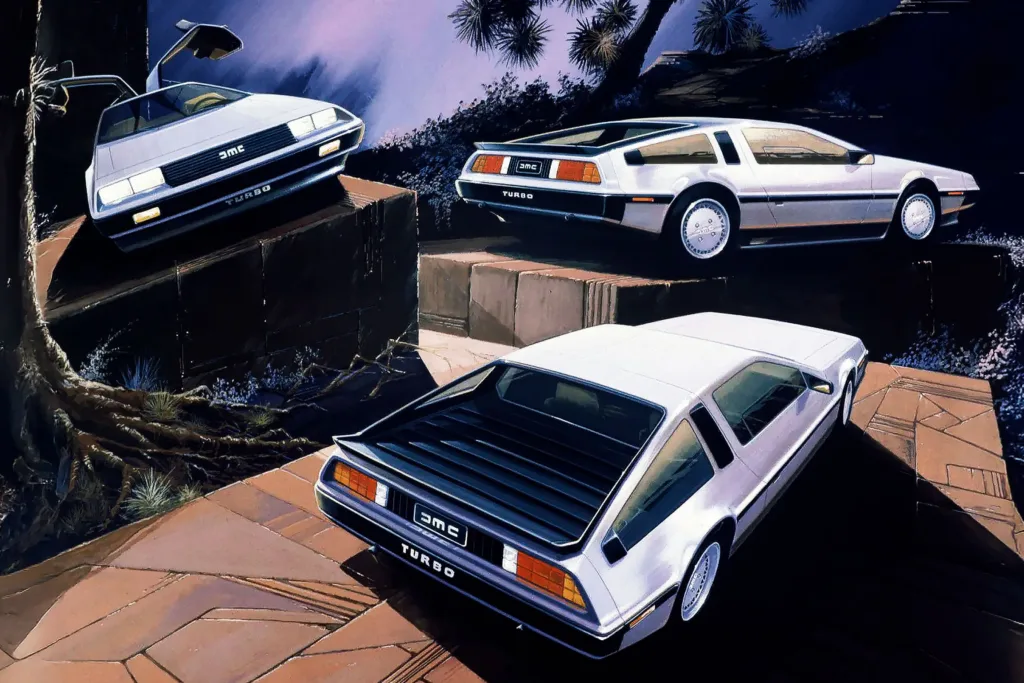
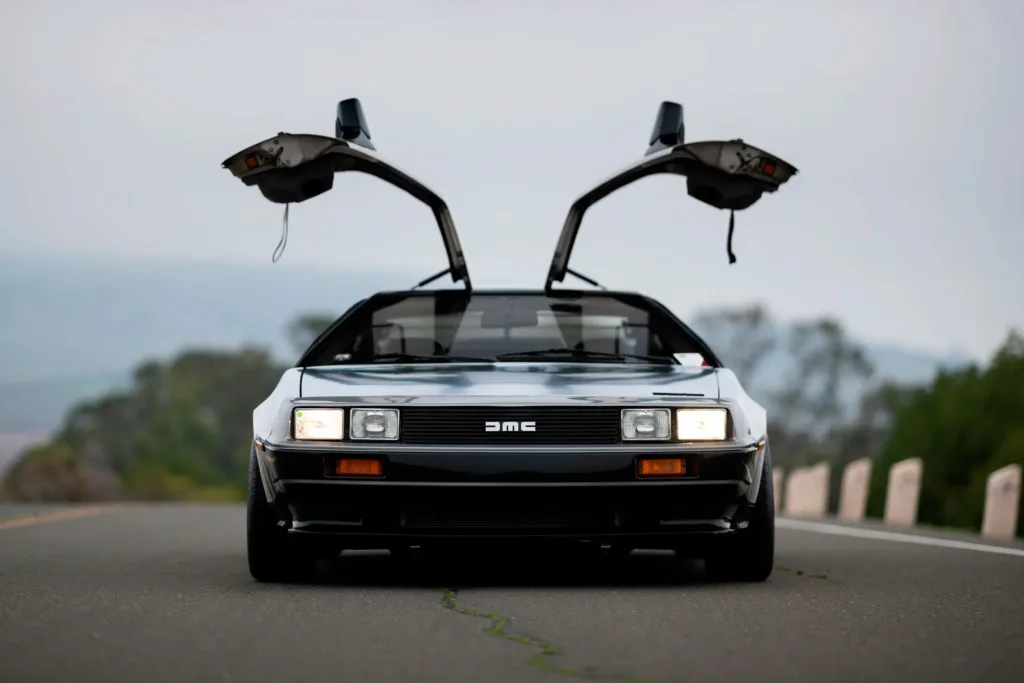
Its low, wedge-shaped profile, brushed stainless steel body panels, and dramatic gullwing doors instantly set it apart from traditional sports cars.

The choice of unpainted 304 stainless steel not only protected the body from rust but gave each DeLorean a slightly different surface grain, adding to the car’s unique character.
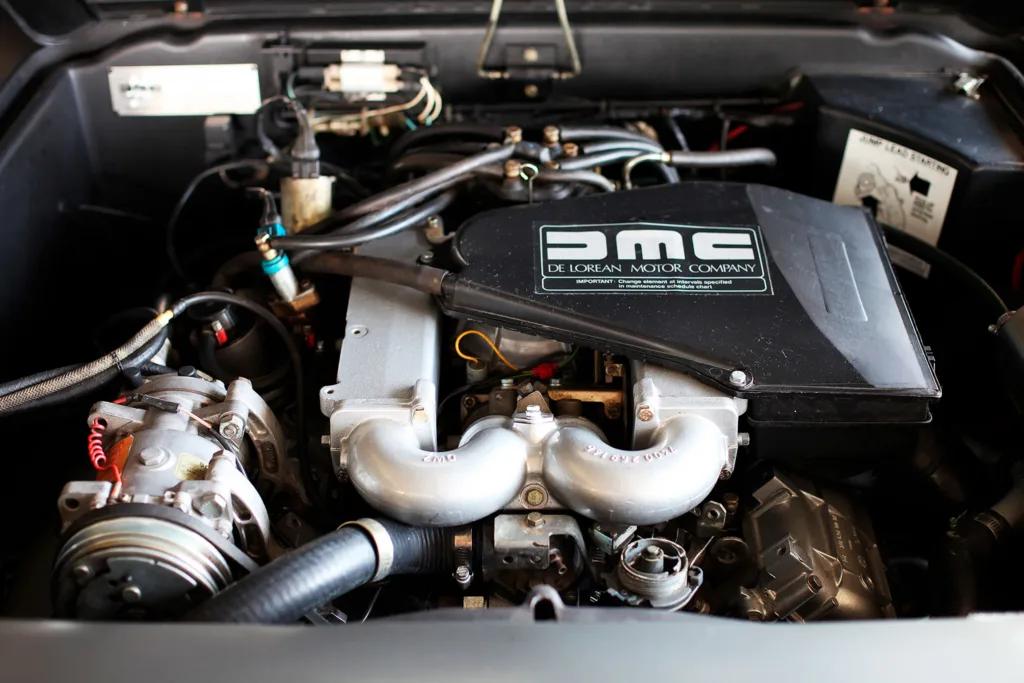
Under the skin, DMC partnered with Lotus and Colin Chapman to refine the chassis and suspension, and the production DMC-12 launched in 1981 with a rear-mounted 2.85-liter PRV V6 engine and independent suspension at all four corners.
While the design and concept drew huge attention, emissions equipment and weight held back performance, leaving some buyers underwhelmed by its acceleration compared with its exotic looks.
DMC’s Rise and Fall: The Belfast Experiment
To turn his ambitious dream into reality, John DeLorean sought substantial government backing and selected Dunmurry, near Belfast in Northern Ireland, as the home for a new factory. With significant financial support from the British government, the project was positioned as a job-creation lifeline in a region hit hard by unemployment and political unrest.
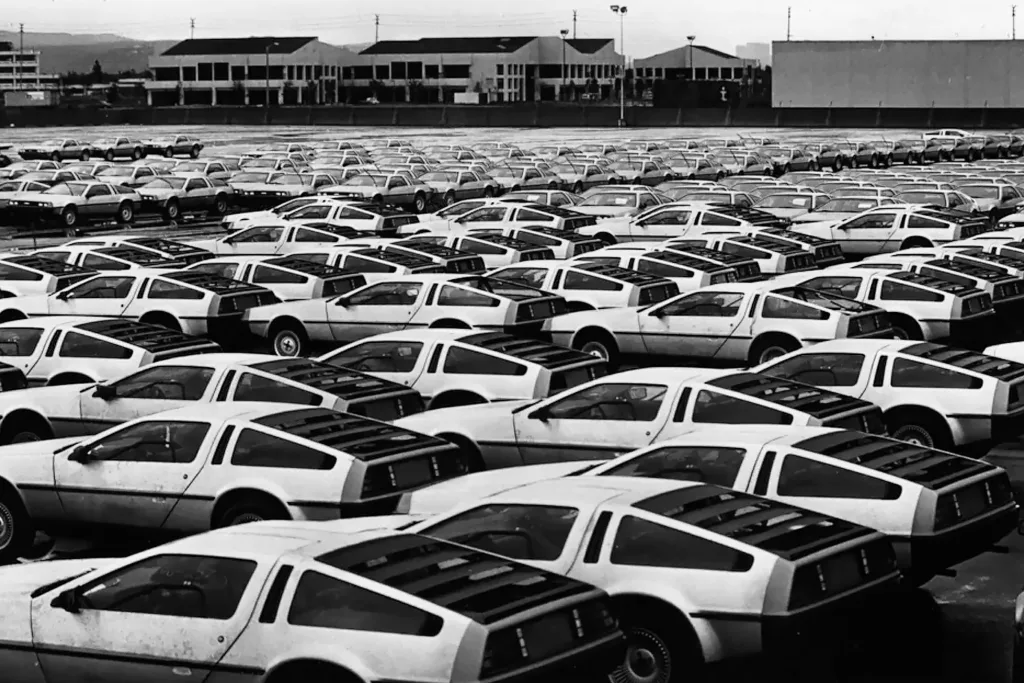
At its peak, the Dunmurry plant employed thousands of workers and produced roughly 9,000 DeLorean cars in just a few years of operation.
However, early quality issues, a global economic downturn, and the DMC-12’s premium price all contributed to slower-than-expected sales. By 1982, mounting debt, unsold inventory, and ongoing costs forced the British government to withdraw further support, pushing the DeLorean Motor Company into receivership and bringing production to a sudden halt.
Scandal and Legal Drama: The Downfall of DeLorean
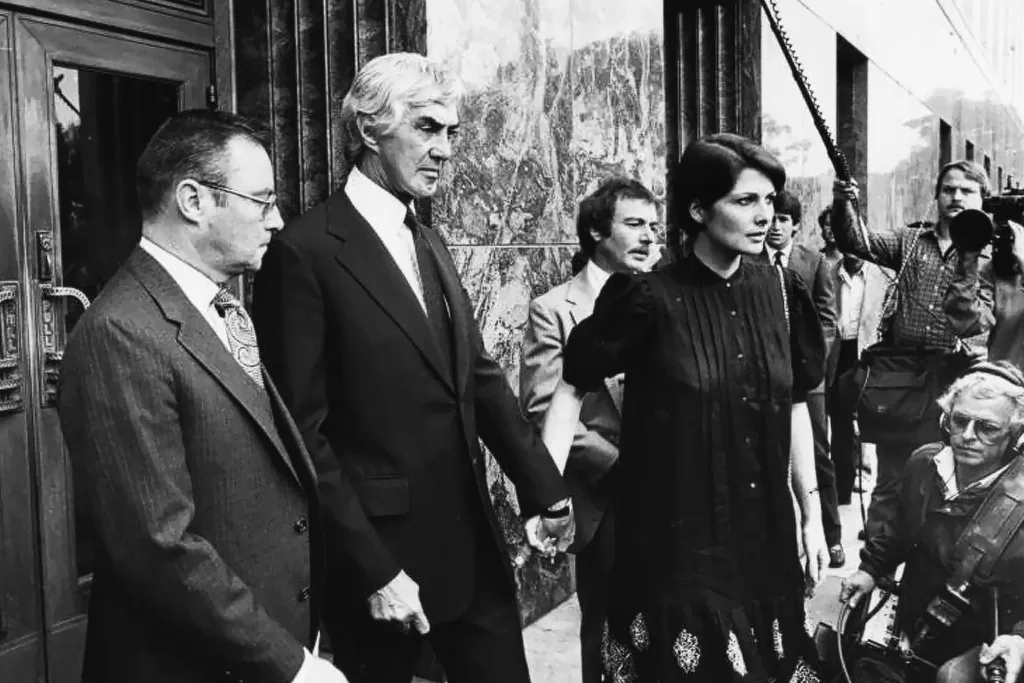
As the financial situation worsened, John DeLorean desperately searched for new capital to rescue his struggling company. That search culminated in a dramatic FBI sting operation in October 1982, when he was arrested on charges related to a cocaine trafficking scheme intended to raise millions in emergency funding.
The case became a media spectacle, aligning the collapse of the DeLorean Motor Company with allegations of high-stakes drug dealing.
In court, DeLorean’s lawyers argued he had been entrapped, and he was ultimately acquitted, but the scandal permanently damaged his reputation. By the end of 1982, the company was in receivership, production had ceased, and the DeLorean name had effectively disappeared from the new-car market.
The DMC-12’s Cinematic Resurrection: Back to the Future
The DeLorean DMC-12’s rise to pop culture stardom is tied closely to its starring role in the 1985 blockbuster film “Back to the Future.” Although the car initially struggled commercially, the movie’s filmmakers sought a vehicle that embodied futuristic and otherworldly design for their time-travel narrative.
The DMC-12’s distinctive brushed stainless steel body and gullwing doors made it the perfect fit for the eccentric inventor Doc Brown’s time machine.
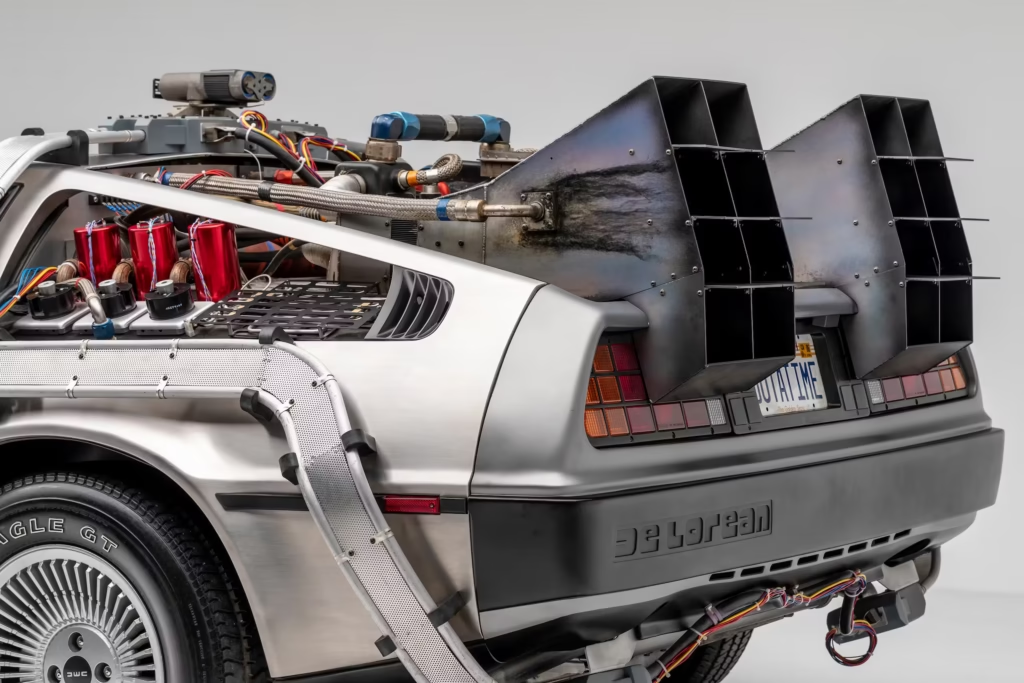
During production, a team led by special effects supervisor Kevin Pike and vehicle construction coordinator Mike Scheffe modified multiple DeLoreans to create different versions for stunts, interior shots, and flying scenes. Notably, six real DeLoreans and one fiberglass replica were used throughout the trilogy to bring the car’s time-traveling capabilities to life.
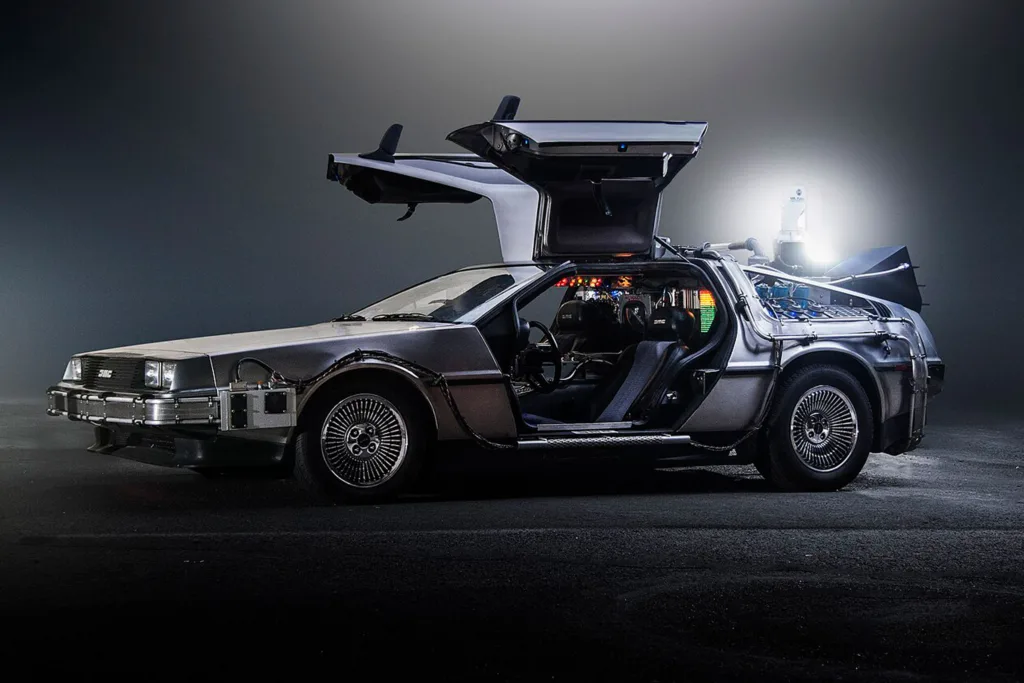
The car’s original engine sound was replaced with that of a Porsche 928 V8 for dramatic effect, enhancing its cinematic presence. A compelling twist was that the real DMC-12 had a speedometer capped at 85 mph due to federal regulations, which conflicted with the film’s plot requiring the car to reach 88 mph to activate time travel.
To solve this, the filmmakers swapped in a speedometer reading up to 95 mph. Filming posed challenges too: the gullwing doors occasionally malfunctioned in cold conditions, and cramped interiors required creative camera setups using a disassembled “C” car for interior scenes.
The film’s combination of practical effects, models, and innovative filming techniques helped make the DeLorean an instantly recognizable symbol of 1980s sci-fi and automotive design.
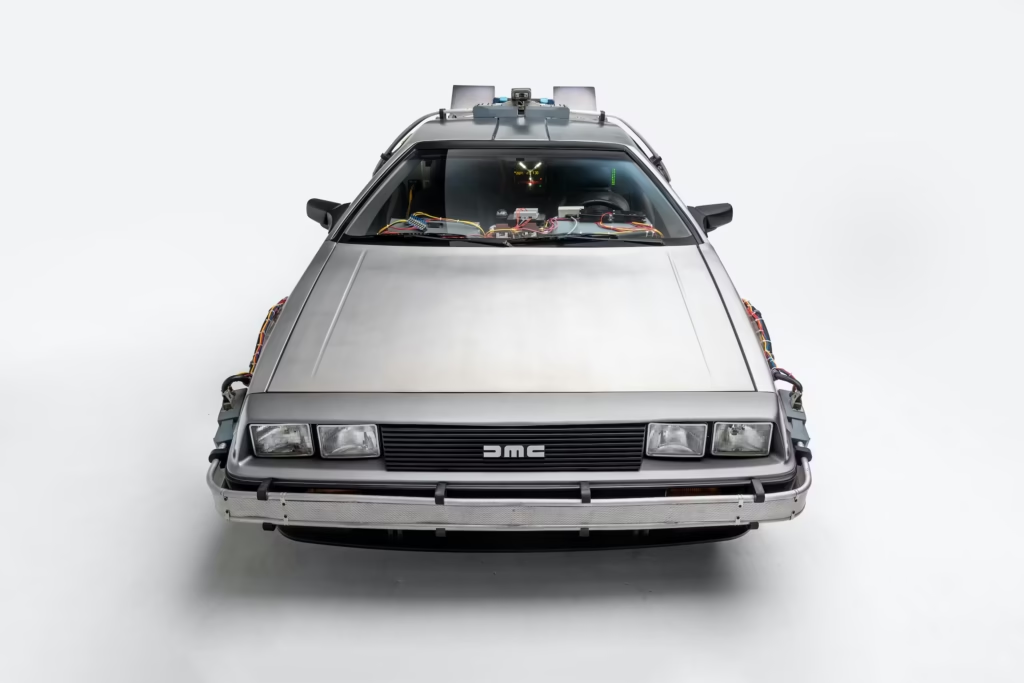
This cinematic portrayal redefined the DMC-12’s legacy, elevating the once commercially disappointing sports car to a legendary status within both automotive circles and popular culture. Its association with time travel and the beloved film trilogy has ensured the DeLorean’s enduring appeal and iconic identity far beyond its original production years.
Legacy and Collector Appeal
Today, the word “DeLorean” represents far more than a single model or a short-lived car maker. It stands as a cultural symbol that bridges automotive history, cinema, and enthusiast culture.
Surviving DMC-12s are prized by collectors, restored by specialists, and featured at car shows and fan events around the world.
Owners often preserve the original stainless-steel look, while some build faithful “Back to the Future” replicas complete with movie-inspired details. The DeLorean Motor Company’s rise, fall, and unexpected cinematic rebirth have turned the brand into a legend—an enduring reminder that a bold idea, even if commercially flawed, can achieve immortality in the hearts of enthusiasts and the broader world of car culture.



Functional Always active
Preferences
Statistics
Marketing