
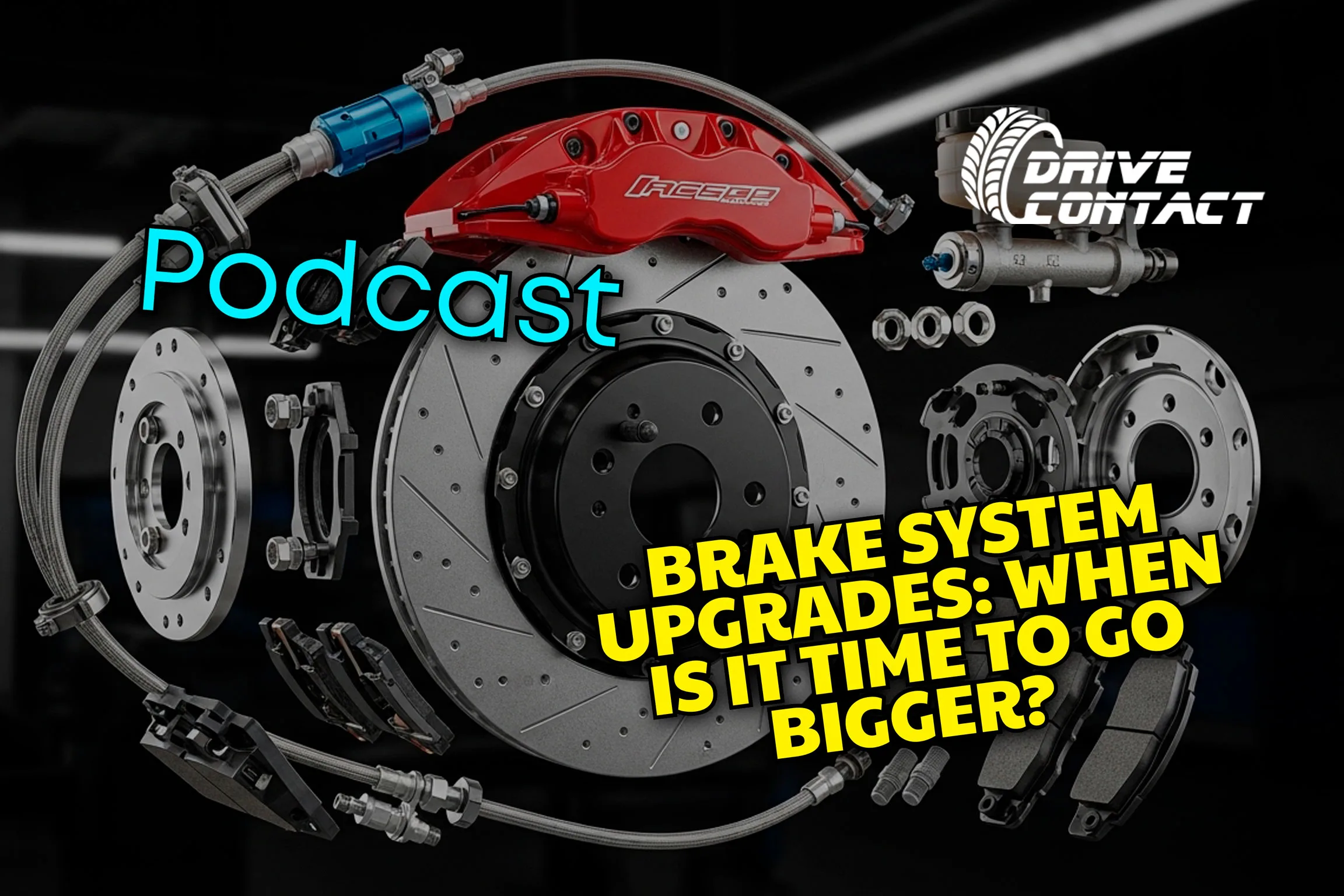
The decision to upgrade a vehicle’s braking system is one of the most critical choices any enthusiast makes. It directly impacts safety and performance capability.
At its core, a brake system converts kinetic energy into heat—so “going bigger” is almost always a matter of heat management and clamping force.
In this episode of the DriveContact podcast, we discuss when to step away from factory components and how to build a system that matches your car’s true potential.
Tap or click to follow to the podcast page
The Warning Signs: When Stock Fails
For many, the first sign that a system is inadequate is brake fade. This occurs when the system can no longer dissipate heat, leading to a soft pedal and terrifyingly long stopping distances.
- The Classic Struggle: Factory drum brakes on vintage cars simply cannot handle 2026 traffic speeds or modern mountain descents.
- The Power Gap: If you have increased your horsepower or moved to wider, stickier tires, you have likely exceeded the original engineering limits of your stock rotors.
- Thermal Capacity: Moving to a Big Brake Kit (BBK) isn’t just for looks; larger rotors provide the surface area needed to shed heat and the leverage required for high-speed deceleration.
Engineering the Full Circuit
Upgrading is about more than just bolting on massive calipers. To maintain Authenticity and safety, the entire hydraulic circuit must be in harmony:
- Master Cylinder & Bias: You must ensure the master cylinder bore size matches your new calipers. Without an adjustable proportioning valve, you risk dangerous premature rear-wheel lock-up.
- Power Assist: For high-performance engines with low vacuum, a Hydroboost system (using power steering pressure) can provide the necessary assist that a standard vacuum booster cannot.
- The System Approach: Pads, rotors, calipers, and fluid must work together. Skimping on high-quality fluid or using the wrong pad compound can negate the benefits of the most expensive hardware.
Final Verdict
Whether you are building a weekend cruiser or a track-day weapon, your braking system must match your driving style. Don’t let your car’s acceleration potential outpace its stopping power.
Success on the road—and the track—starts with the confidence that when you hit the pedal, the car responds with predictable, drama-free force.


Functional Always active
Preferences
Statistics
Marketing