
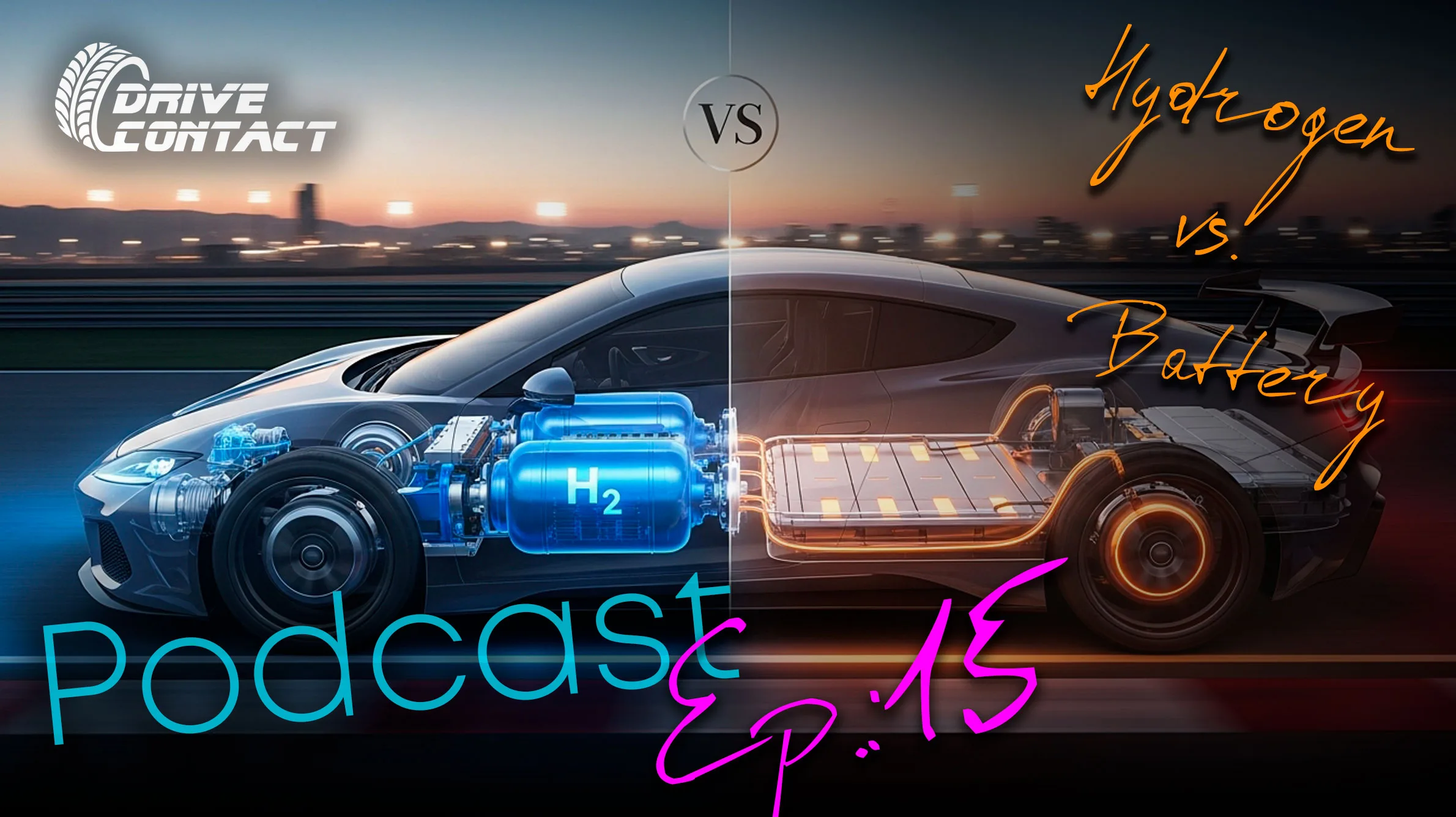
The internal combustion engine is facing its sunset, but what technology will ultimately power the next generation of speed? Welcome back to the DriveContact Podcast, your essential Dose of Car Culture.
In this episode, we tackle the ultimate battle for the future of Performance Vehicles: Hydrogen vs. Battery.
We break down the two-way race between the dominant Battery Electric Vehicle (BEV) and the challenger, the Hydrogen Fuel Cell Electric Vehicle (FCEV), looking at the hard numbers and engineering trade-offs that separate these competing visions for clean speed.
The Current Champion: The BEV Advantage & The Battery Problem
Currently, BEVs hold the advantage in market adoption and energy efficiency (around 80% compared to the FCEV’s 38%-60%). The BEV Advantage stems from its direct use of grid electricity, which delivers instant torque and a low center of gravity that has redefined performance driving. However, the Battery Problem is stark: massive lithium-ion packs limit the crucial power-to-weight ratios and charging times can still take hours (even advanced DC Fast Charging takes around 30 minutes for an 80% charge).
This reliance on charging time and the necessity of managing heat during extreme use (like on a track) leads to “range anxiety” and limits performance in certain high-demand driving scenarios.
The Challenger: The Hydrogen Promise & The Third Way
The Hydrogen Promise offers clear solutions to these EV drawbacks. FCEVs can be refueled in a scant 3 to 5 minutes, comparable to gasoline, and available models currently average around 373 miles of range. This makes FCEVs highly appealing for commercial transport, large SUVs, or endurance racing where quick turnaround is critical due to their superior power-to-weight ratio. We also dive into Hydrogen Combustion, the potential “third way” being tested by companies like Porsche. This technology burns hydrogen in modified internal combustion engines, which—unlike FCEVs—retains the traditional engine sound and mechanical feel beloved by Car Culture enthusiasts. The debate hinges on which technology offers the best blend of range, refueling speed, and pure driving thrill as we race toward a zero-emission future.




Functional Always active
Preferences
Statistics
Marketing