
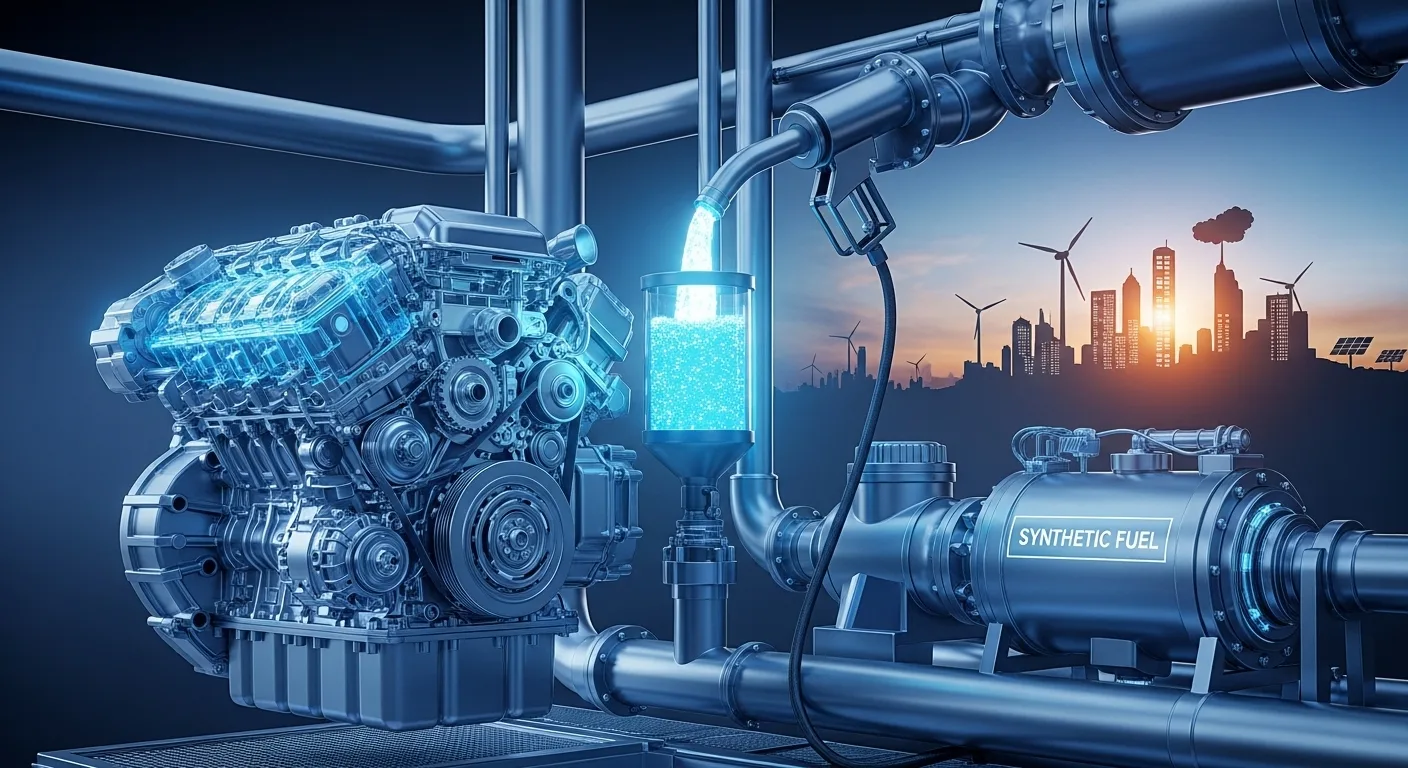
The looming transition to electric vehicles has ignited a high-octane debate: Can the Internal Combustion Engine (ICE) truly survive the decade?
Synthetic Fuels, or eFuels, have emerged as a promising technical lifeline for preserving the sound, feel, and heritage of gasoline power.
This technology isn’t about fighting electrification—it’s about providing a carbon-neutral alternative for the 1.5 billion ICE vehicles currently on the road.

Tap or click to follow to the podcast page
The Science of Net-Zero Combustion
The chemistry behind eFuels is elegantly simple but technologically profound. It involves synthesizing a hydrocarbon chemically identical to gasoline using hydrogen and captured CO2.
- Carbon Neutrality: When eFuel burns, it releases only the CO2 that was initially captured during production, making it net-zero on a well-to-wheel basis.
- Cleaner Burn: Engineered for purity, these fuels reduce particulate matter and NOx emissions compared to traditional fossil-based pump gas.
- The “Drop-in” Solution: No modifications are required. From vintage classics to modern supercars, eFuels work with existing engines and fuel infrastructure.+1
Scaling the Revolution: 2026 Benchmarks
While the technology is proven, the race is now about scale and cost. Major players are moving from pilot projects to industrial-level production.
| Metric | 2026 Target/Data |
| Global eFuel Market Size | ~$11.54 Billion |
| Porsche Haru Oni (Chile) Output | ~550 Million Liters (Projected) |
| F1 Requirement | 100% Sustainable Fuel mandated for all teams |
| Production Cost | ~$2.00 – $3.00 per liter (Estimated) |
| Consumer Gas Price (Ref) | ~$3.00 per gallon (U.S. Average) |
The Road Ahead: Coexistence
The future of the engine is likely one of coexistence. While EVs dominate the efficiency-focused mass market, eFuels carve out a sustainable niche for:
- Car Culture & Heritage: Defending the sensory experience of shifting gears and mechanical feedback.
- Motorsport: Formula 1 and other global series are now the primary R&D labs for fuel reliability.
- Heavy Transport: Providing solutions for aviation and shipping where battery weight remains a significant hurdle.
eFuels are a race against the regulatory clock. For enthusiasts, supporting this technology is about ensuring the piston keeps pumping long into the next century.




Functional Always active
Preferences
Statistics
Marketing