

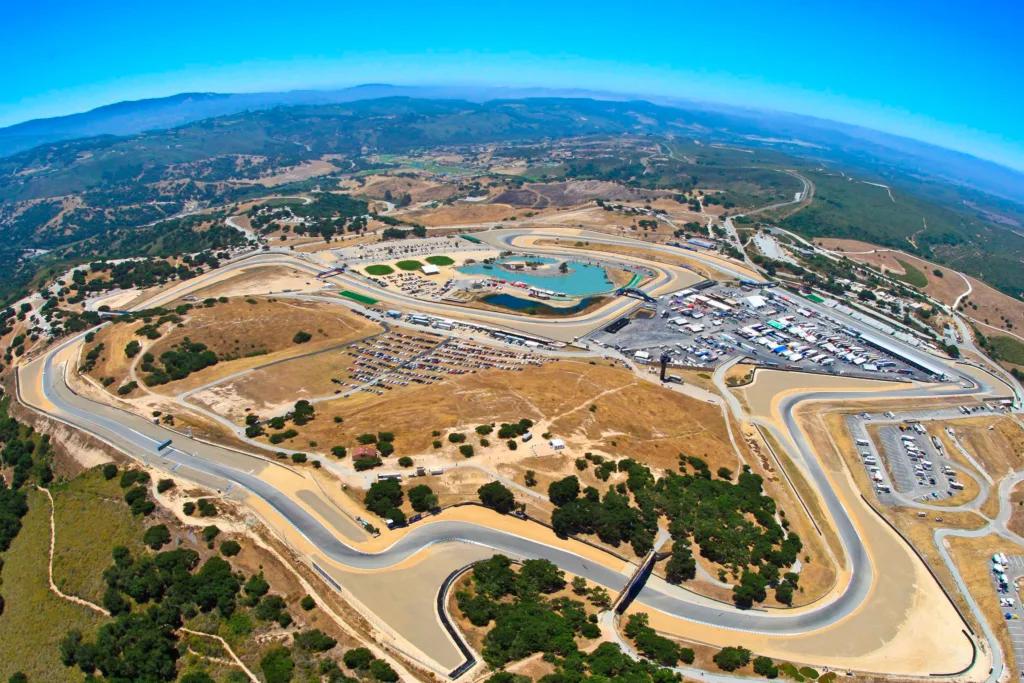
Laguna Seca Raceway, known today as WeatherTech Raceway Laguna Seca and formerly Mazda Raceway Laguna Seca, is a celebrated motorsports venue nestled on California’s picturesque Monterey Peninsula.
Since opening in 1957, this track has grown into an iconic symbol of American racing, revered for its storied past and its challenging layout that tests the skills of drivers and captivates racing enthusiasts around the globe.
Over the decades, Laguna Seca Raceway has hosted numerous prestigious racing series, elevating its status as a cornerstone of international motorsport.
The Roots and Evolution of Laguna Seca Raceway
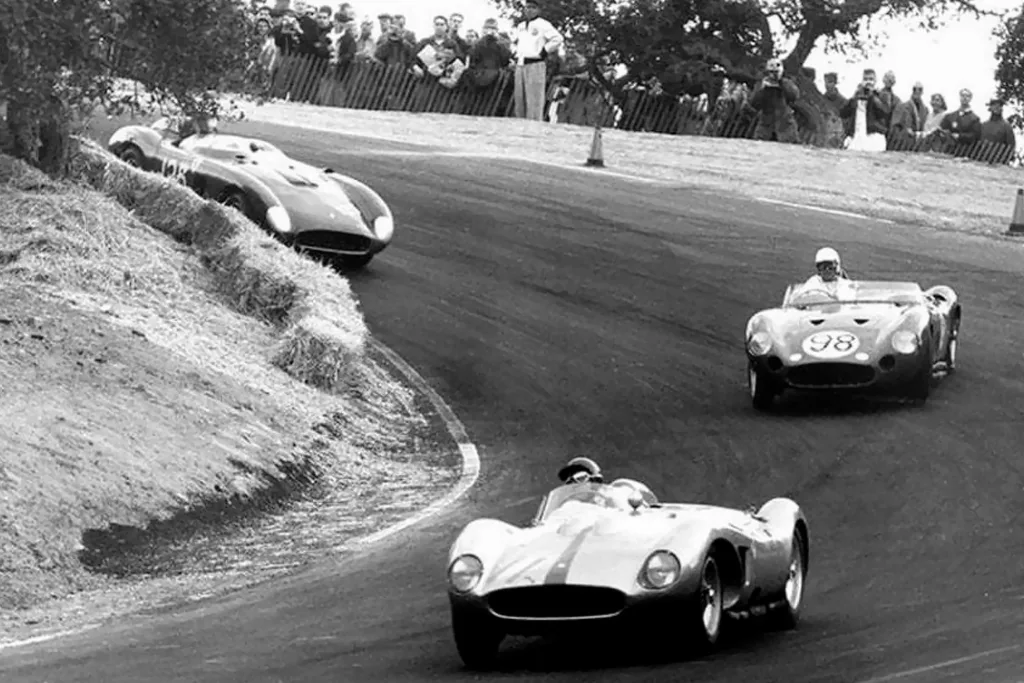
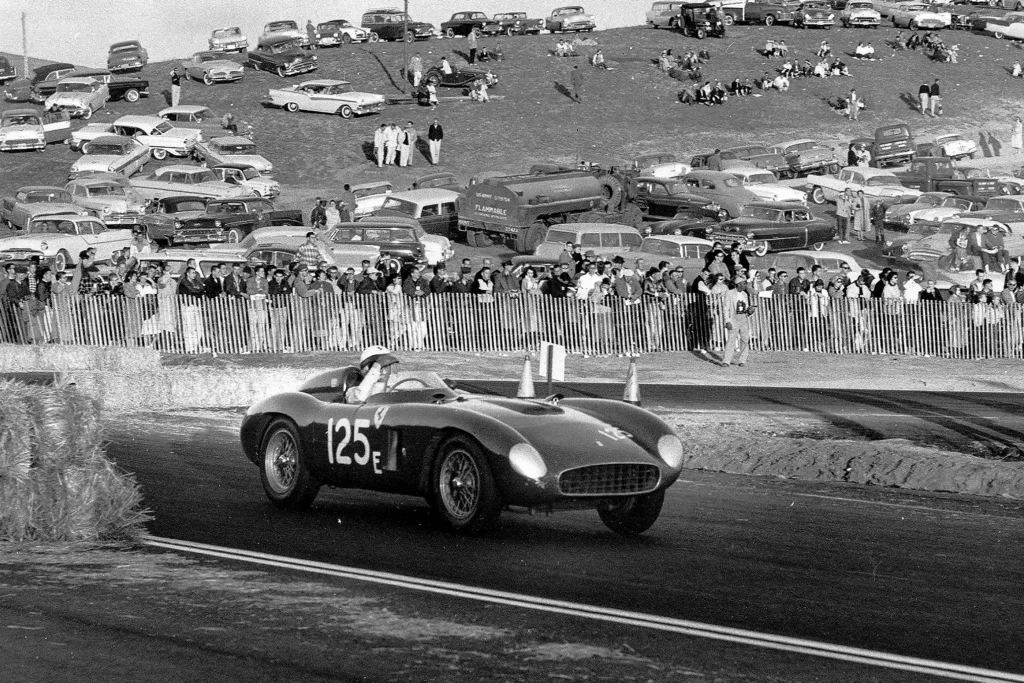
The dramatic genesis of the Laguna Seca raceway is directly tied to the thrilling, yet increasingly perilous, Pebble Beach Road Races of the 1950s. These high-octane competitions, staged on the narrow, winding public roads bordered by towering Monterey pines, attracted immense, passionate crowds, often swelling to 50,000 enthusiastic spectators.
However, the inherent risks of street racing ultimately led to tragedy, culminating in the fatal accident involving Ferrari driver Ernie McAfee in 1956.
This stark event amplified public safety concerns, creating an undeniable mandate: motorsports needed a dedicated, safe venue to preserve its spirit while protecting competitors and the public. A rapid and decisive response was led by a fervent coalition of local business leaders, racing advocates, and automotive enthusiasts who promptly established the Sports Car Racing Association of Monterey Peninsula (SCRAMP) in 1957.
This determined grassroots organization spearheaded a massive fundraising effort, securing a strategic land lease from the adjacent Fort Ord military base. With extraordinary community backing, SCRAMP successfully amassed $125,000 in crucial funding—a formidable sum for the era—to initiate construction swiftly.
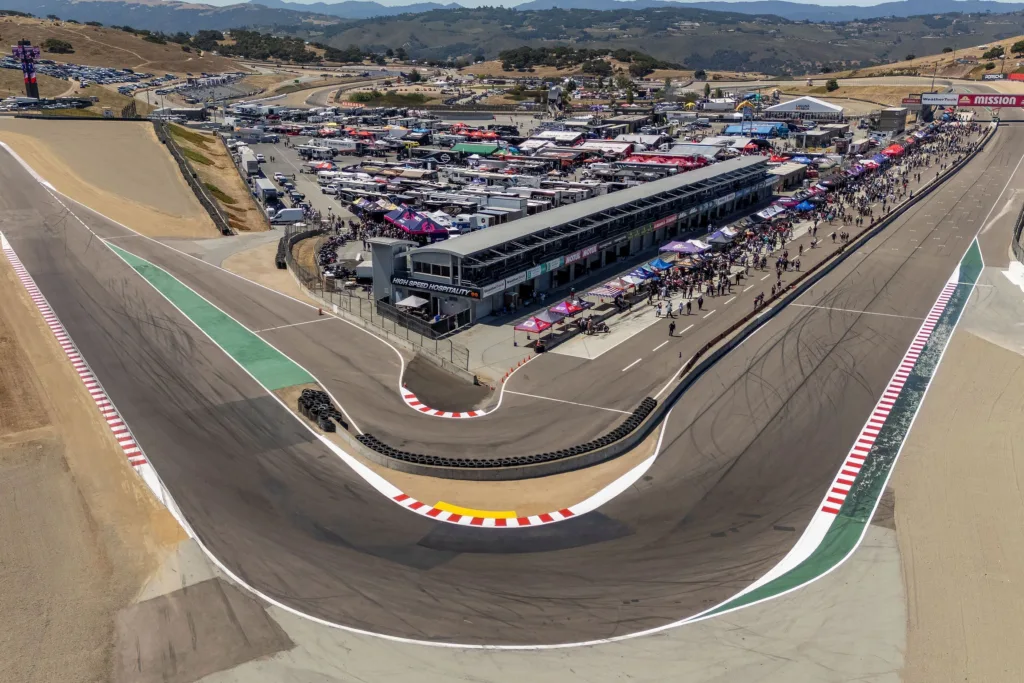
- The vision was clear: to build a purpose-designed 1.9-mile paved circuit that harmonized with the natural topography. The chosen location, nestled within a bowl-shaped terrain (a dry lake bed), proved ideal, providing unparalleled sightlines that allowed spectators to view virtually every corner and straightaway.
The inaugural event on November 9, 1957, cemented the track’s future as a motorsports mecca, with legendary driver Pete Lovely claiming the checkered flag in his Ferrari. What began as a community-driven imperative to curb the dangers of road racing evolved seamlessly into one of America’s most revered and technically challenging venues. The origin story of the WeatherTech Raceway Laguna Seca perfectly embodies a fusion of dedication, community spirit, and visionary track design, ensuring its legacy was defined by safety and world-class competition.
Dynamic Track Layout and Upgrades
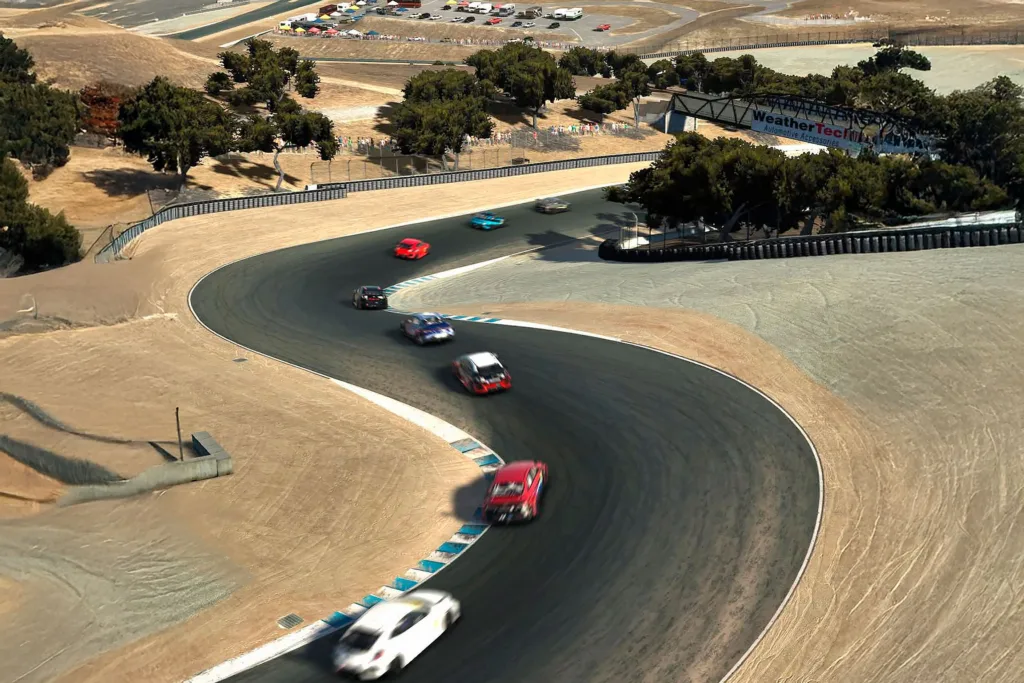
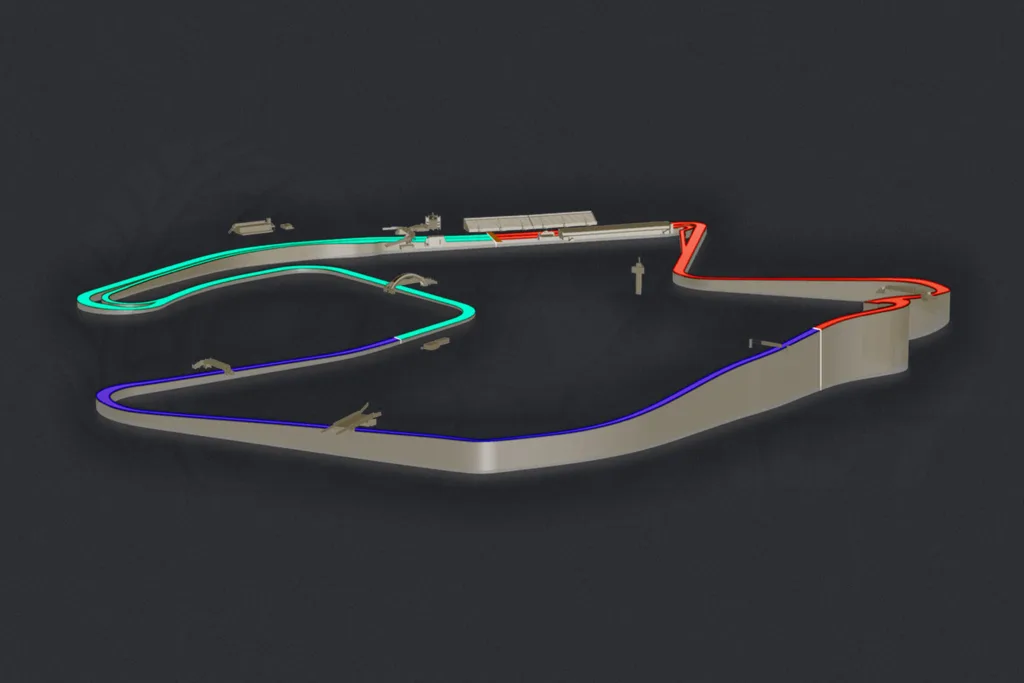
Laguna Seca Raceway’s original nine-turn layout was designed to incorporate the region’s natural rolling hills and elevation changes, making it an adventurous circuit for drivers of all levels. Its most renowned feature, the “Corkscrew” turns, offers a daunting combination of a blind, sharp left-right chicane with a precipitous drop that remains unmatched worldwide. In 1988, the track was extended to 2.238 miles with the addition of an infield section that introduced new corners (Turns 3, 4, and 5), enhancing both safety and racing dynamics. Continuous upgrades over the years have widened the track, relocated spectator bridges, and expanded runoff areas, addressing modern safety standards while maintaining the circuit’s challenging nature.
Prestigious Races and Global Recognition
Over the decades, Laguna Seca Raceway has provided the challenging backdrop for an immense variety of elite motorsport disciplines, cementing its reputation as a crucible for competition. The circuit’s prestige has consistently attracted the most significant North American and international racing series.
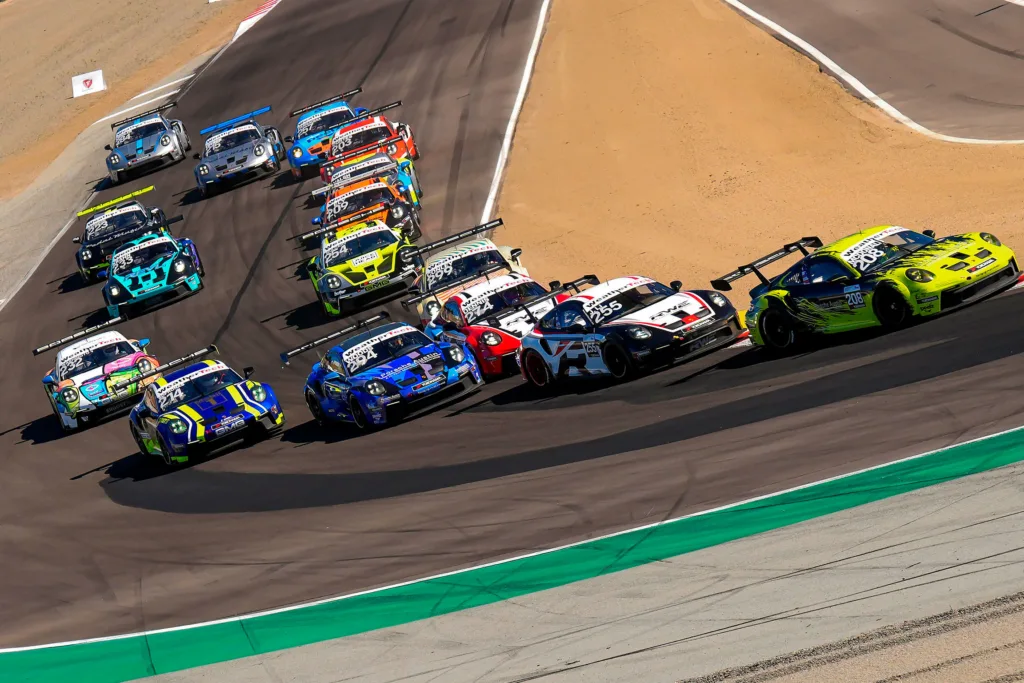
The list of legendary four-wheeled events held here is vast, including the original United States Road Racing Championship (USRRC), the thunderous Can-Am series, the fierce Trans-Am battles, the open-wheel speed of Formula 5000, and a host of endurance and sports car competitions like IMSA GT, American Le Mans Series (ALMS), and Grand-Am.
This venue has also historically been a favored stage for high-profile motorcycle events, hosting the raw power of AMA Superbike, the international spectacle of the World Superbike Championship (WSBK), and, famously, the pinnacle of two-wheeled racing, MotoGP.
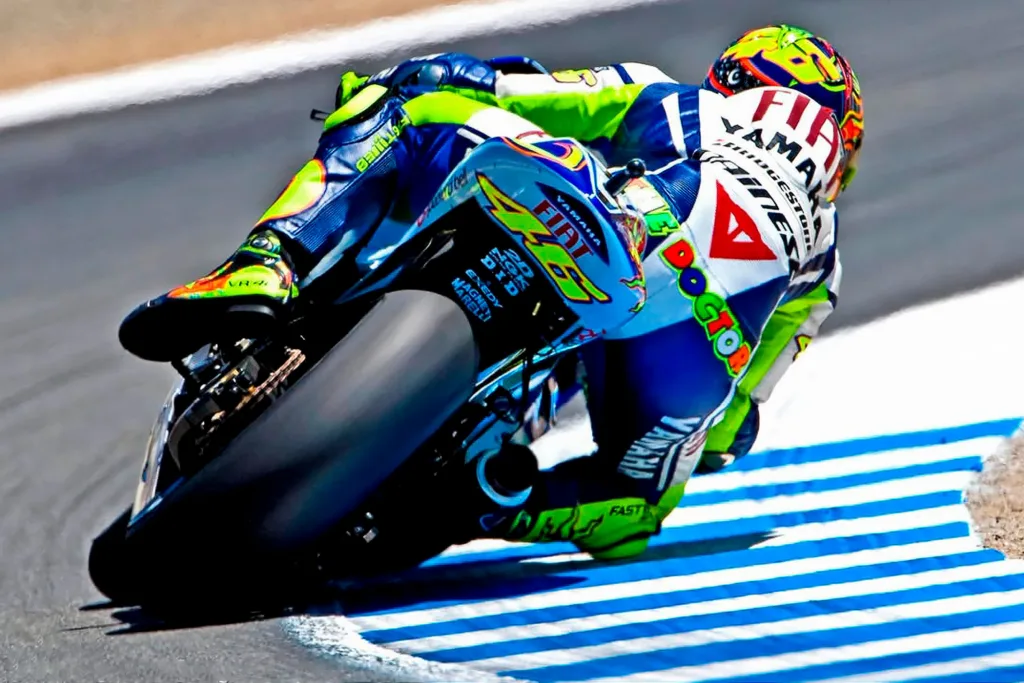
While the track narrowly missed securing a spot on the Formula One calendar, WeatherTech Raceway Laguna Seca remains synonymous with world-class competition.
Today, it continues to host celebrated annual events like the sophisticated Monterey Historic Automobile Races and the popular MotoAmerica Superbike Championship, ensuring its legacy as a top-tier US racing destination endures.
The Corkscrew: A Unique Challenge at Laguna Seca Raceway
A defining hallmark of Laguna Seca Raceway is the infamous Corkscrew, a sequence of turns 8 and 8A that plunges drivers down an almost vertical slope. This signature segment features a staggering 59-foot drop along a short 450-foot stretch, comparable to descending from a five-and-a-half-story building. Drivers encounter a blind crest before negotiating a sudden left-right combination with sharp elevation shifts, where the track drops 12 percent at Turn 8’s apex and an even steeper 18 percent at Turn 8A. This complex demands exceptional precision, bravery, and mastery—making it one of the most thrilling and technically demanding corners in global motorsport.
Elevation Extremes Across the Track
Beyond the Corkscrew, Laguna Seca Raceway boasts an elevation change of 180 feet, weaving drivers through a series of gradual climbs and descents that influence vehicle dynamics and driving strategy. The track’s elevation profile—from the intense drops of the Corkscrew to the sweeping downhill segment leading into Turn 9—requires continuous driver adaptation to maintain pace and control. These fluctuations contribute to Laguna Seca’s reputation as a physically and mentally taxing circuit revered by racers.
Cultural Significance and Fan Experience
More than a race track, Laguna Seca serves as a cultural landmark where motorsport history and passionate community converge. Its natural amphitheater setting around the dry lake bed affords fans panoramic views of the high-speed action and dramatic elevation changes. With renowned branding partnerships evolving from Mazda Raceway Laguna Seca to WeatherTech Raceway Laguna Seca, the circuit maintains a unique identity linked to automotive innovation and dedication to the racing community. Race weekends offer fans thrilling competition amidst California’s scenic coastline, creating unforgettable experiences.
Laguna Seca Raceway: A Living Legacy in Motorsports
Under the management of Monterey County Parks Department and SCRAMP, WeatherTech Raceway Laguna Seca remains a premier destination for professional racing and motorsport fans worldwide. Commitment to safety enhancements and facility modernization ensures the track preserves its historic character while meeting contemporary standards. Enduring as an essential part of American racing heritage, Laguna Seca continues to inspire generations of drivers and enthusiasts, affirming its place as a legendary pillar in motorsports culture.




Functional Always active
Preferences
Statistics
Marketing