By 1971, America’s golden era of high-performance muscle cars was beginning to fade under the weight of changing legislation, rising insurance costs, and tightening emission standards. Yet before the curtain fell, Dodge unleashed one final masterpiece that embodied everything raw and fearless about the muscle car age—the Dodge Charger Super Bee 426 Hemi.
From Coronet Roots to Charger Power
The Super Bee nameplate had debuted in 1968, originally based on the Dodge Coronet. It represented Dodge’s take on the affordable muscle machine—an everyman performance car powerful enough to square off against Plymouth’s Road Runner but offered at a more approachable price. The formula was simple: big engines, bold graphics, and unfiltered performance, all wrapped in a body that spoke with unmistakable Mopar attitude.
But by 1971, the automotive landscape had changed drastically. The Muskie Act (Clean Air Act of 1970) and insurance premium hikes were pressuring automakers to tame their engines and rethink their priorities. Dodge responded by giving the Super Bee a new identity: it would no longer be based on the Coronet midsize sedan. Instead, the Super Bee would become a new performance trim of the Dodge Charger, which had just undergone a complete model redesign for 1971.
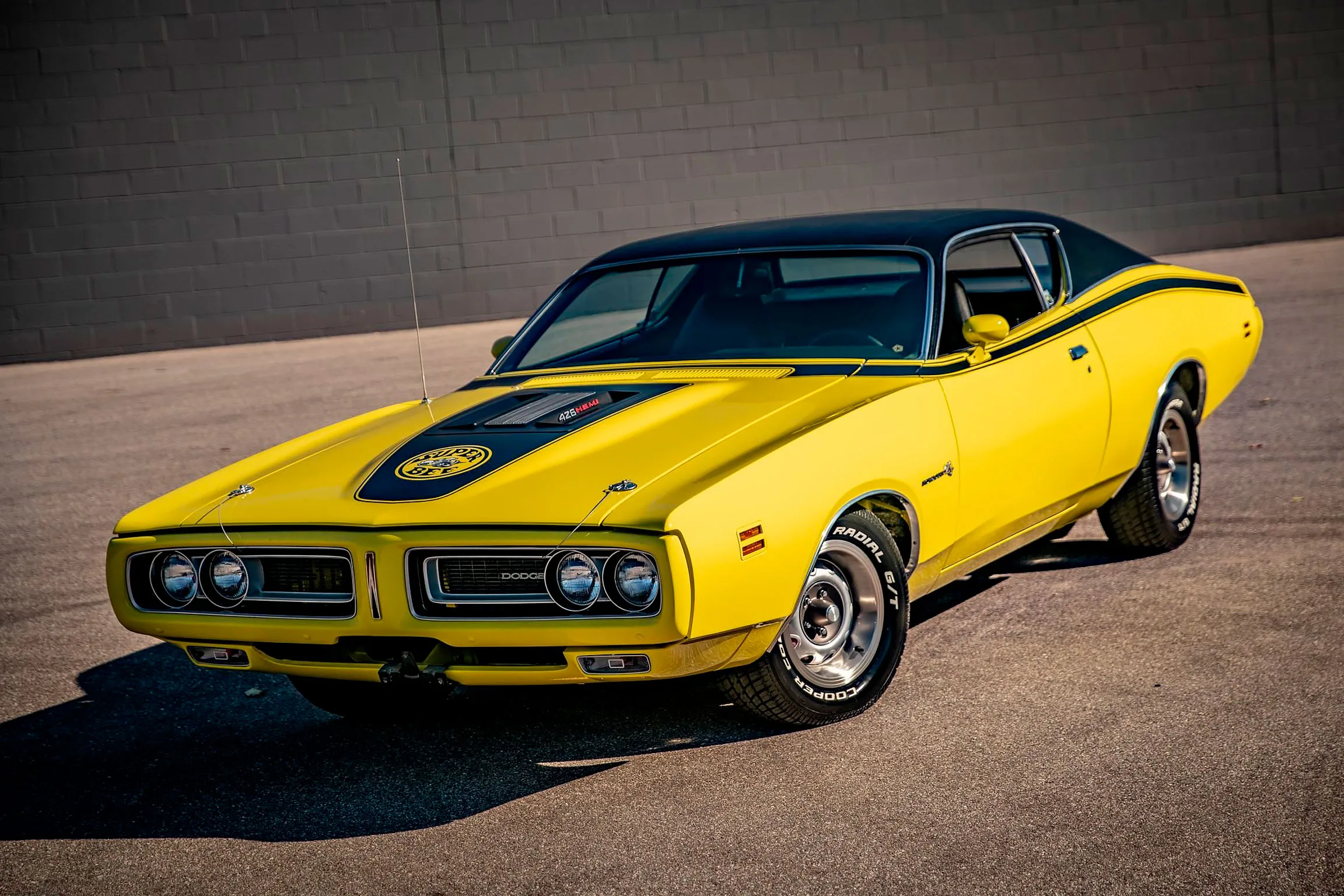
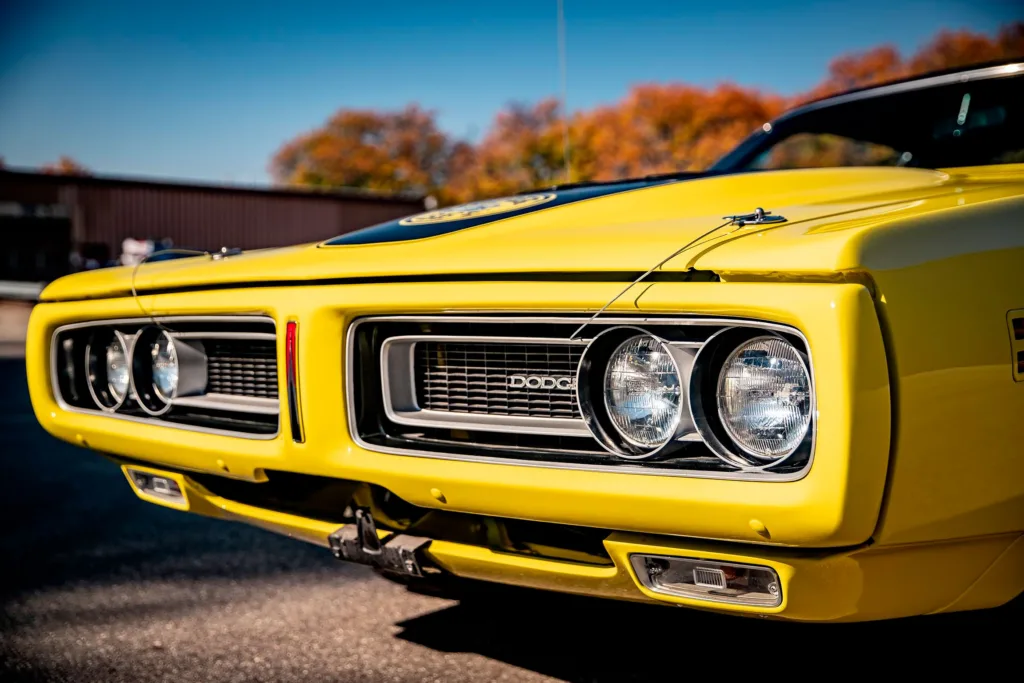
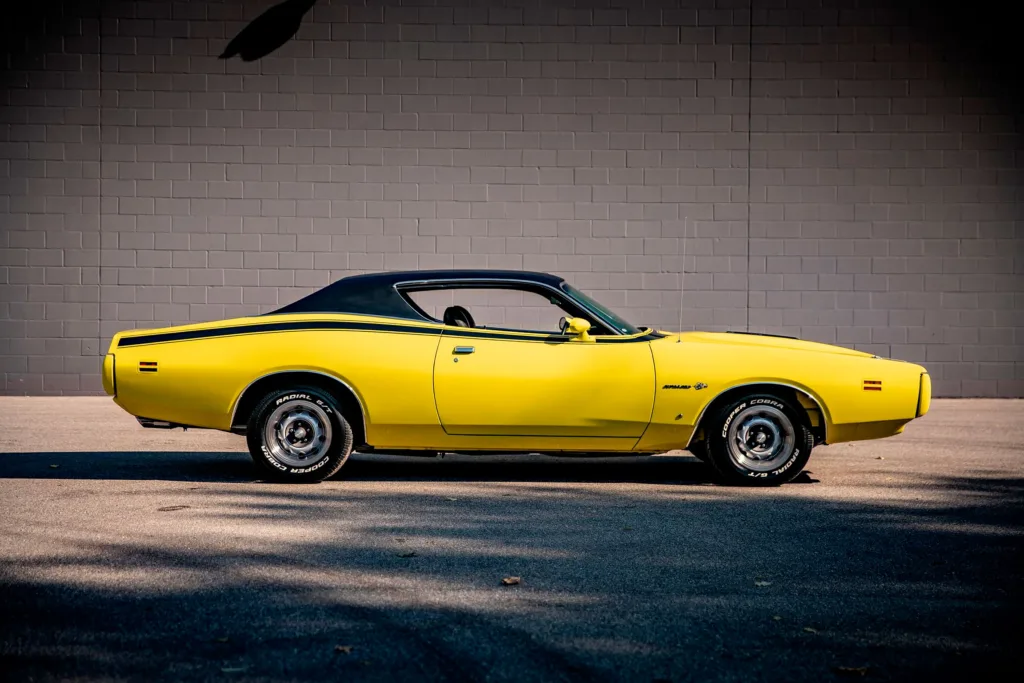
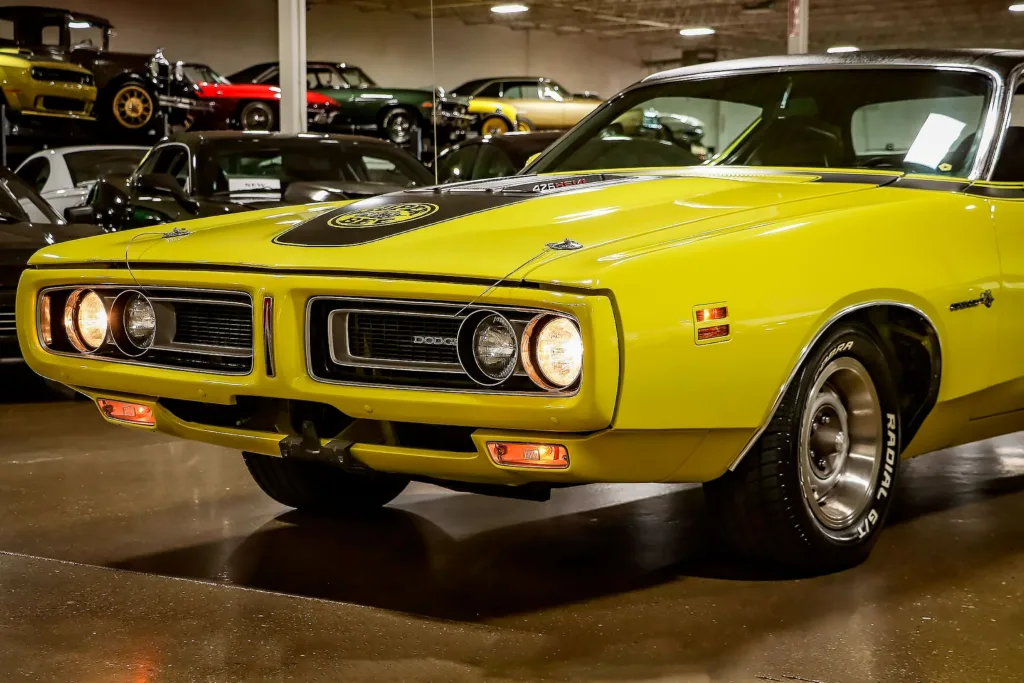
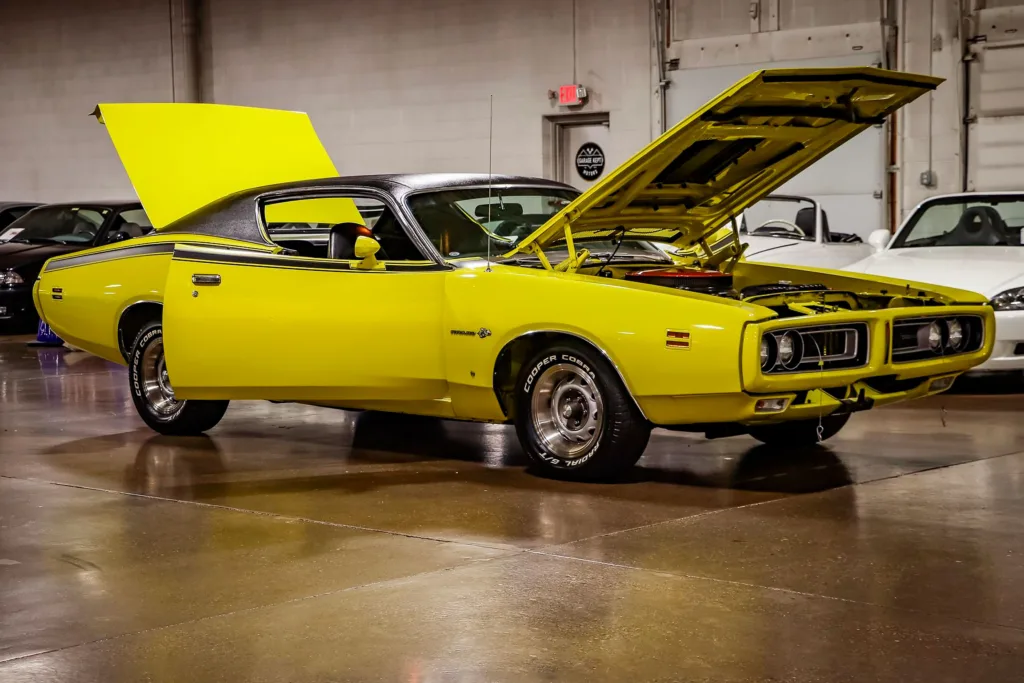
This transition meant the Charger Super Bee inherited the sleek, fastback-inspired styling of the third-generation Charger, distinguished by its hideaway headlights, sculpted Coke-bottle body lines, and “loop” bumper design that visually framed the grille and headlamps. It was an elegant yet aggressive evolution—a cross between a street brawler and a grand touring coupe.
Power Options: From Magnum to Hemi Fury
Under its long hood, the 1971 Charger Super Bee continued Dodge’s tradition of brute V8 power. The standard engine was the 383-cubic-inch Magnum V8, producing 330 horsepower. But Dodge’s real magic lay in the options list, where customers could choose from a lineup that read like a greatest hits compilation of Mopar performance.
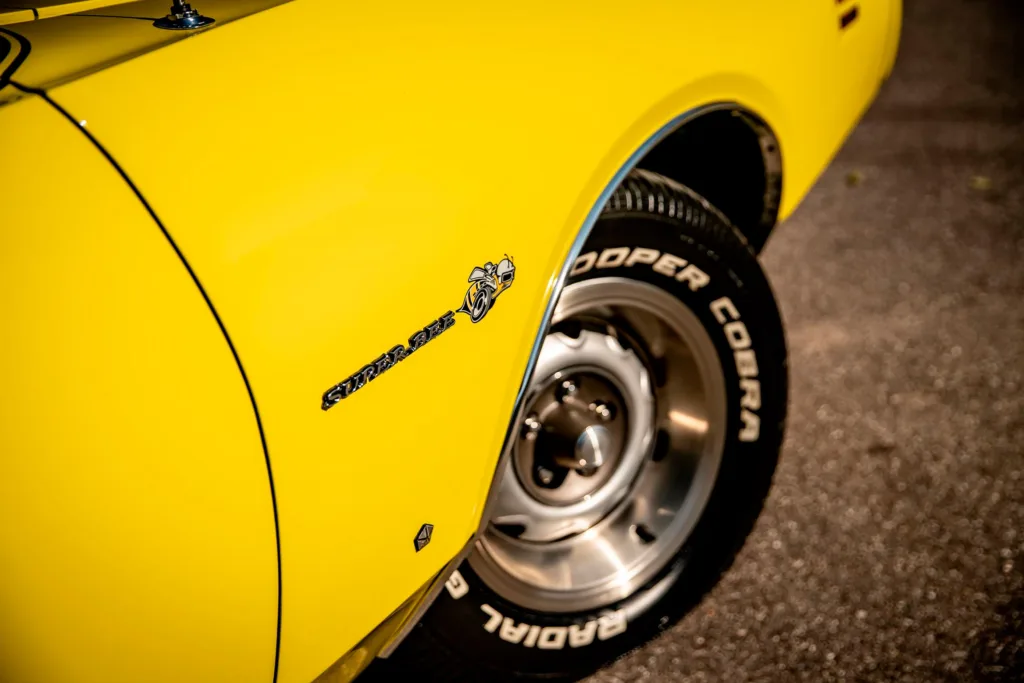
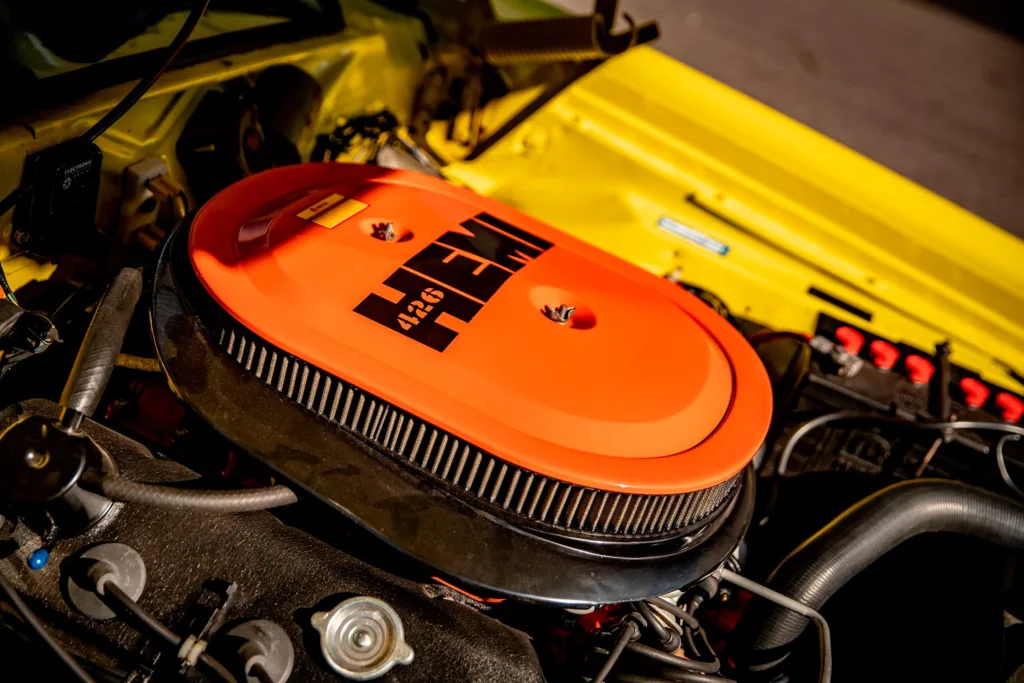
Buyers could upgrade to the 440 Magnum, delivering 375 hp, or the exotic 440 Six Pack, which used three dual-barrel carburetors to unleash 385 hp of throttle response and torque. Yet towering above them all was the legendary 426 Hemi V8, the engine that had cemented Dodge’s reputation in NASCAR and dragstrip dominance during the late 1960s.
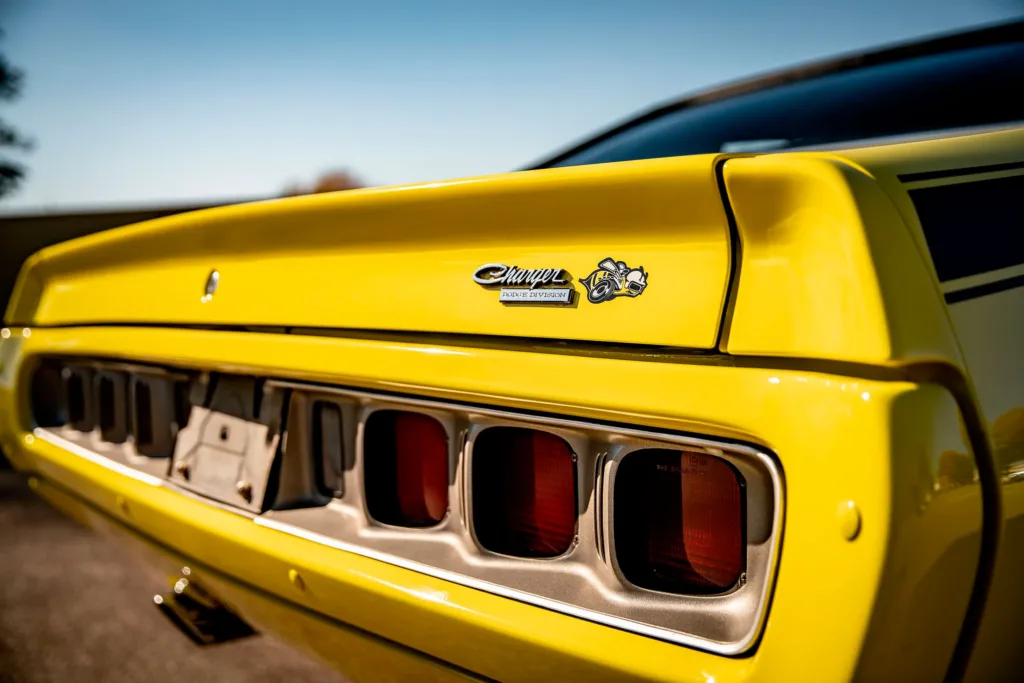
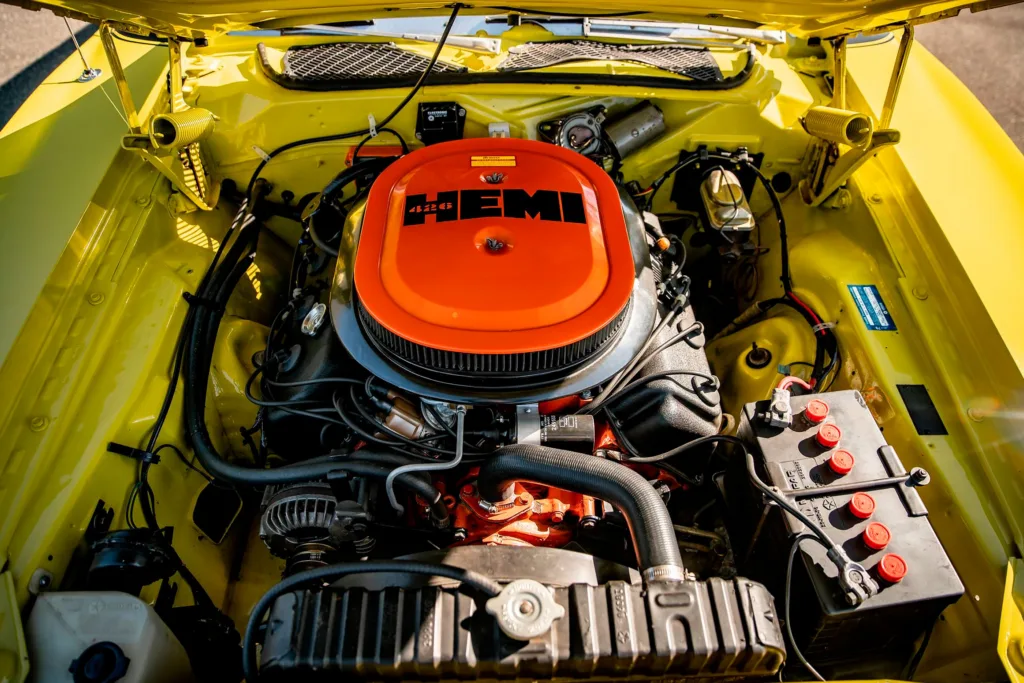
The 426 Hemi-equipped Super Bee was the ultimate expression of unrestrained performance. With 425 horsepower and 490 lb-ft of torque, it transformed the Charger into one of the most powerful factory-built cars ever offered by Chrysler. However, only 22 units were produced with the Hemi engine in 1971—making it one of the rarest muscle cars ever to leave Dodge’s production lines.
A Performance Icon Facing the End
There were several reasons behind the Super Bee’s ultra-low production numbers. First, the 426 Hemi option added nearly one-third of the car’s total cost, making it prohibitively expensive for most buyers. Second, the Hemi’s brutal, high-compression powerband was designed for racing, not daily driving; it idled roughly, drank fuel unapologetically, and demanded meticulous maintenance. Combine that with Dodge’s relatively weak dealer performance network and an increasingly cautious market, and it’s easy to understand why so few left the factory.
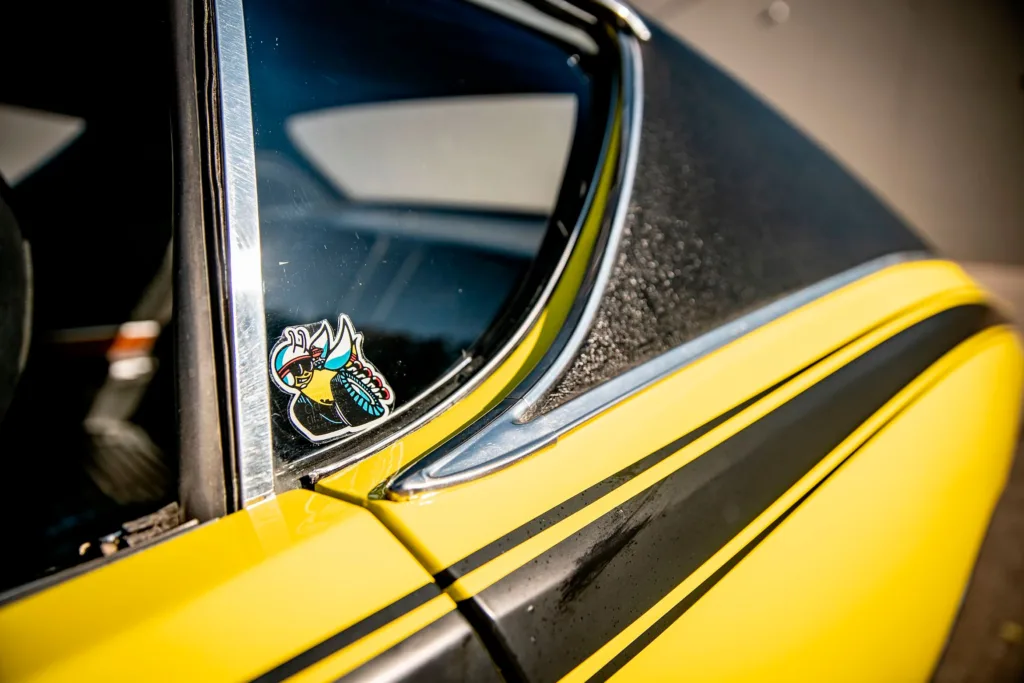
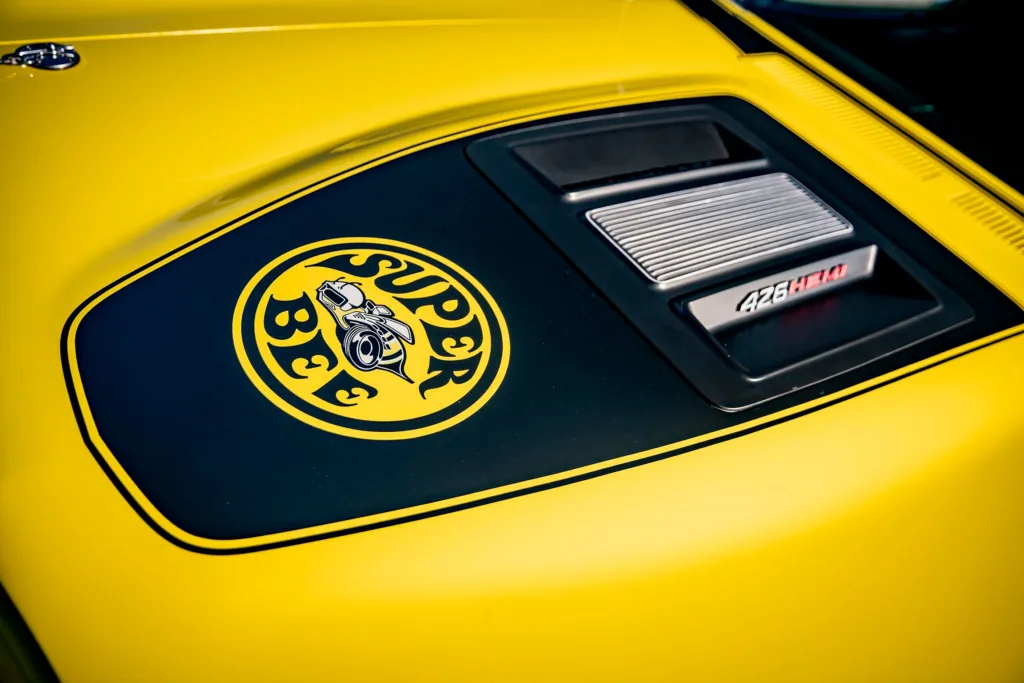
Interestingly, those seeking Hemi Fury could also purchase a Charger R/T with the same drivetrain configuration, of which 63 cars were built in 1971. The R/T offered similar performance, but the Super Bee retained its own identity—bolder graphics, a sportier presentation, and the famous cartoon “Bumble Bee” logo, which had become an enduring mascot of Dodge’s muscle heritage.
Unique Design and Driving Character
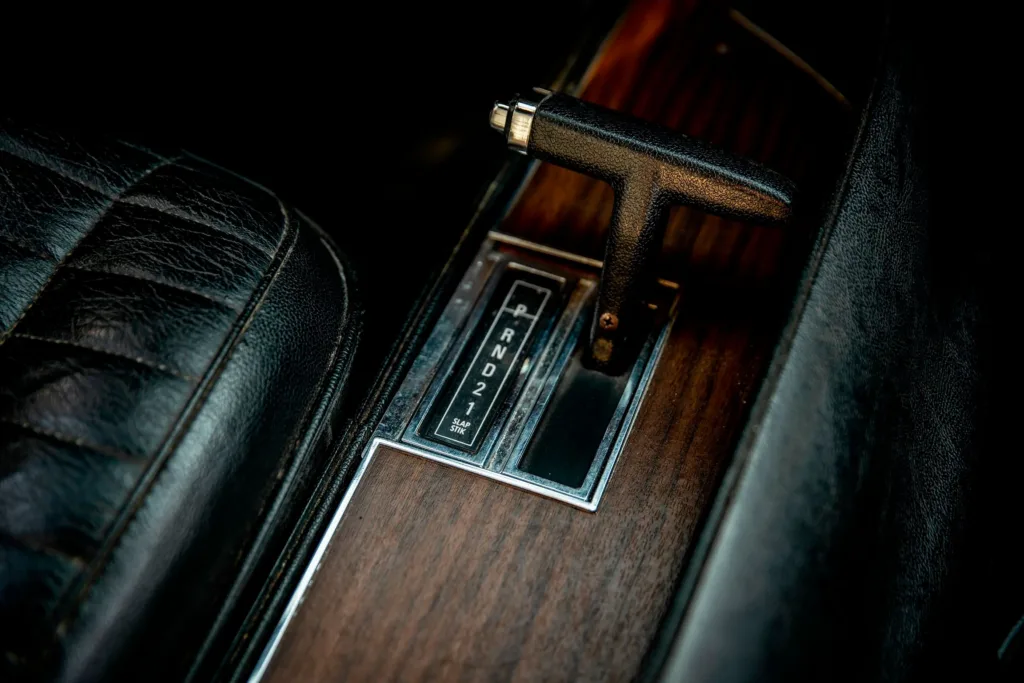
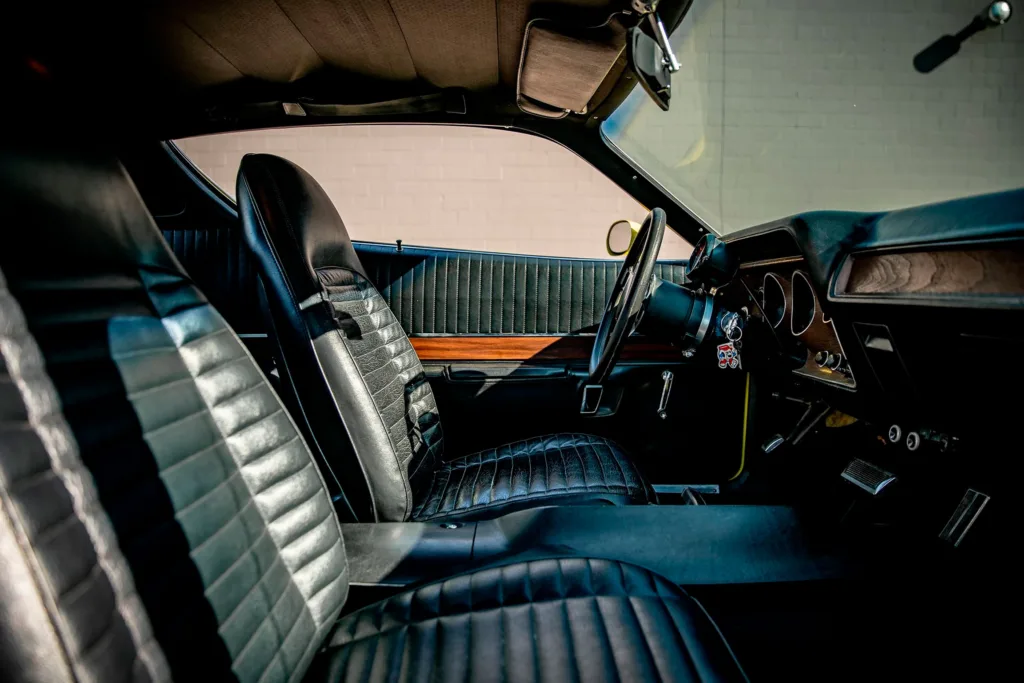
Visually, the 1971 Charger Super Bee stood apart through its expressive body graphics and sporty attitude. A dual-snub-nose hood with optional functional scoops, R/T-style grille, and striped rear fenders gave the car unmistakable presence. The interior featured Dodge’s signature cockpit-style layout, and while options were sparse compared to luxury-focused Chargers, the bucket seats, rallye instrumentation, and pistol-grip shifter left no doubt about the car’s intent.
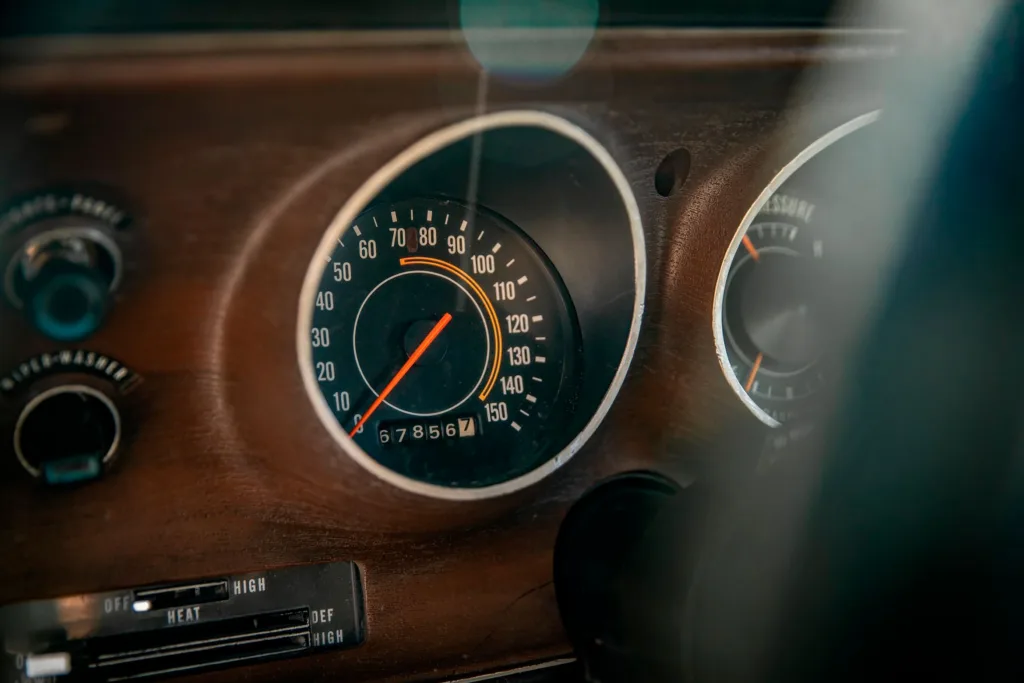
Despite its formidable size and curb weight, the Charger Super Bee 426 Hemi delivered explosive straight-line speed worthy of its legendary engine. Period road tests recorded 0–60 mph sprints in roughly 5.5 seconds and quarter-mile times around 13.7 seconds, placing it among the quickest production muscle cars of its generation. Though cornering ability naturally took a back seat to raw acceleration, its reinforced suspension and heavy-duty shock absorbers provided stability and control that few high-powered machines of the era could match. The result was a car of striking dual character—mechanical ferocity paired.
Discontinuation and Legacy
The 1971 Super Bee marked both a transition and an ending. In 1972, Dodge streamlined its performance lineup, merging the Super Bee and Charger R/T into a new package called the Charger Rallye. From that point on, the “Super Bee” badge disappeared from showrooms, only to reemerge decades later on limited-edition models celebrating Dodge’s muscle heritage.
Still, the 1971 Charger Super Bee 426 Hemi remains one of the most coveted Mopars in existence—a car that represents the final sting of the original muscle car movement. Today, surviving examples, particularly those with the factory Hemi engine, fetch astronomical values at auction and stand as rolling testaments to a time when horsepower defined American freedom.
Beyond its rarity, the Super Bee’s legacy lies in its symbolism. It marked the end of an era when Dodge’s engineers built cars not because the market demanded them, but because passion and performance still ruled the road.