
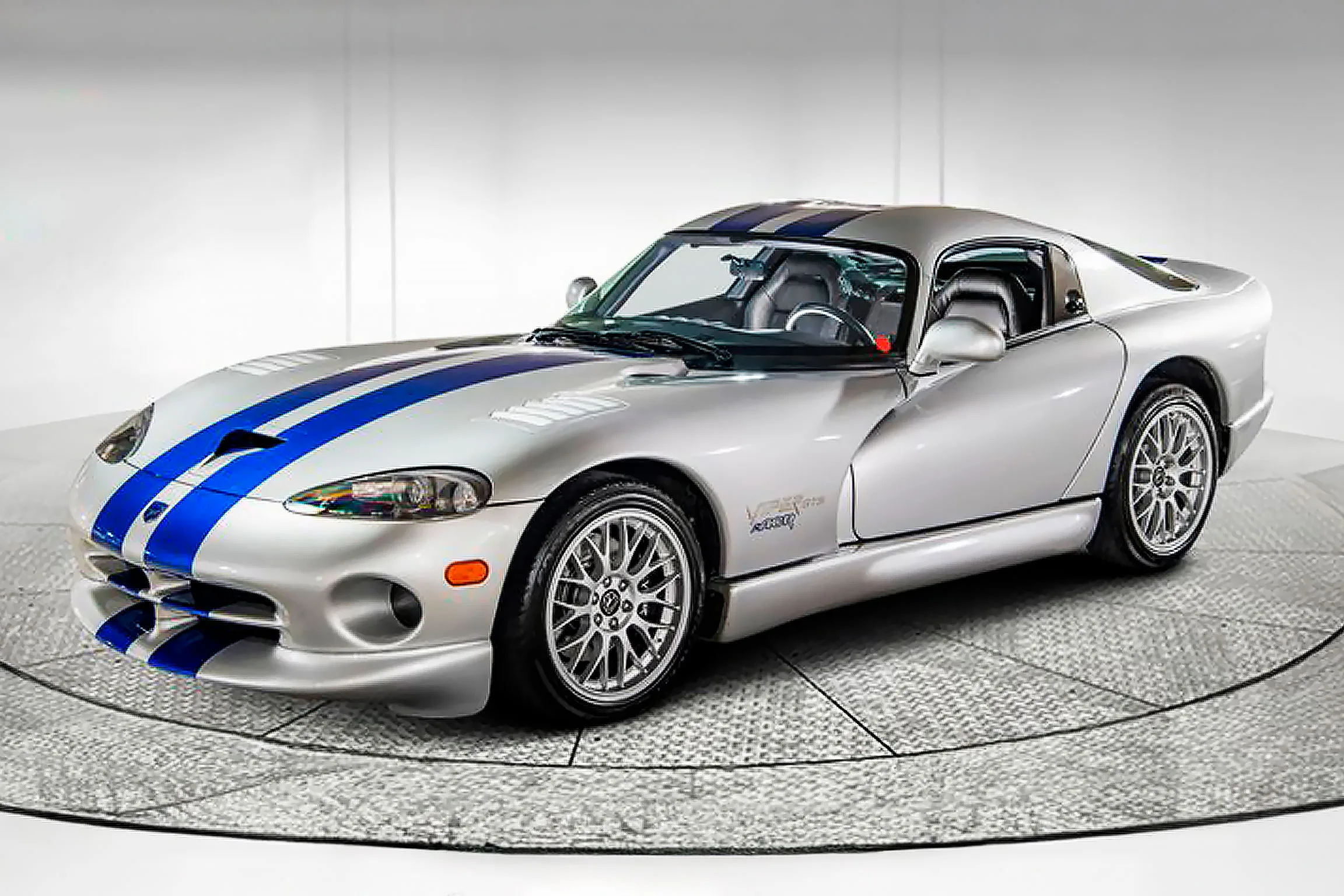
When the Dodge Viper first thundered onto the automotive stage in 1992, it was nothing short of an assault on the senses. Born from Chrysler’s ambition to recapture the spirit of 1960s American performance icons like the Shelby Cobra, the Viper was primal, unforgiving, and brutally fast. Its combination of a massive ten-cylinder engine, minimalist engineering, and no-nonsense styling turned it into an instant legend. But for all its raw appeal, early criticism claimed the original Viper RT/10 was more brute than balanced—designed for power rather than precision. That all changed with the arrival of the Viper GTS, a transformed machine that bridged muscle and modern supercar sophistication.
Evolution: From Roadster to Refined Weapon
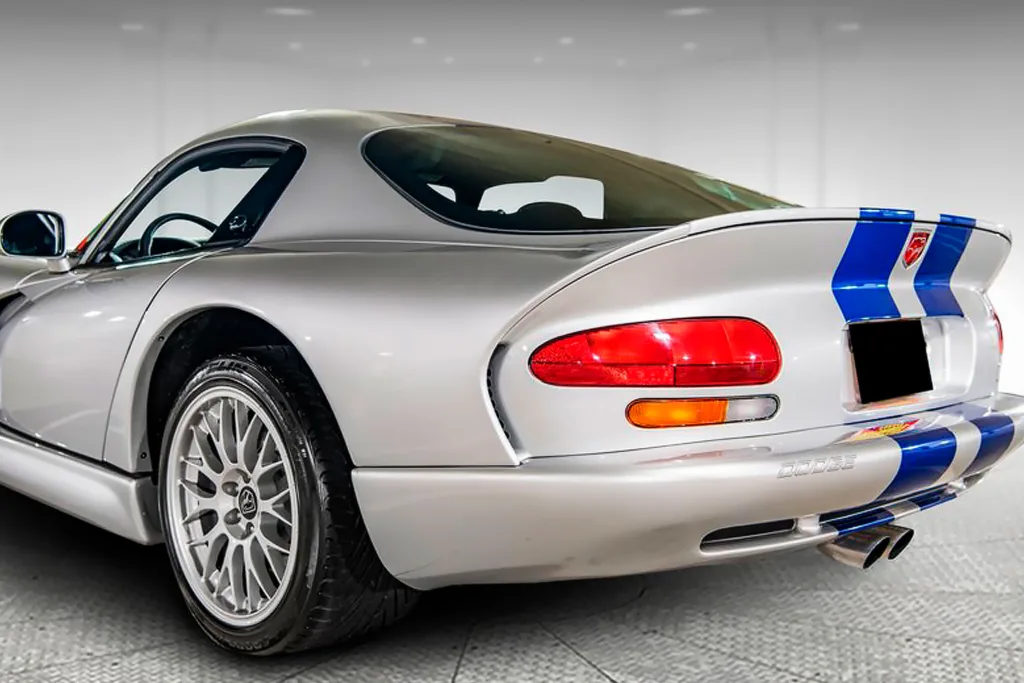
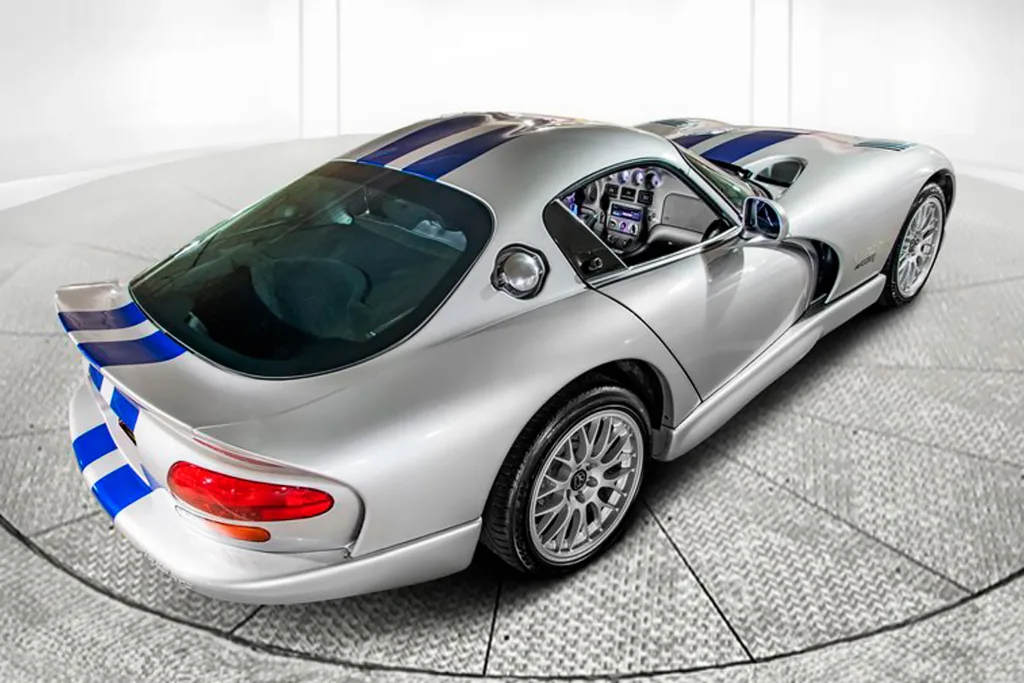
The Viper GTS made its debut in 1996 as part of the car’s second generation (codenamed SR II). While its design remained unmistakably Viper—with its long hood, side gills, and oversized tires—it introduced something entirely new: a fixed-roof coupe. This wasn’t just a stylistic evolution; it was a complete transformation of character. The closed body gave the GTS a new level of chassis rigidity, improving its handling, high-speed stability, and aerodynamic performance. Its sleek fastback shape was inspired by classic racing coupes of the 1960s, and its signature “double-bubble” roofline was purpose-built—allowing drivers to wear helmets during racing events.
The coupe’s debut silenced critics who had dismissed the original RT/10 as too primitive. The GTS wasn’t merely an open-road thrill ride; it was now a serious contender in the global supercar arena, capable of challenging European legends from Ferrari, Porsche, and Lotus on equal footing.
Engineering and Performance: The Beast Refined
At its heart, the 1999 Dodge Viper GTS carried forward the most audacious engine of the American 1990s—a hand-built 8.0-liter aluminum V10 developed in collaboration with Lamborghini, which Chrysler owned at the time. Engineers modified the truck-based block into an exotic high-performance masterpiece, producing 449 brake horsepower (up from 394 hp in the original RT/10) and nearly 490 lb-ft of torque. Unlike traditional American V8s, the V10 delivered its muscle through a tidal wave of midrange torque, catapulting the GTS forward with savage immediacy.
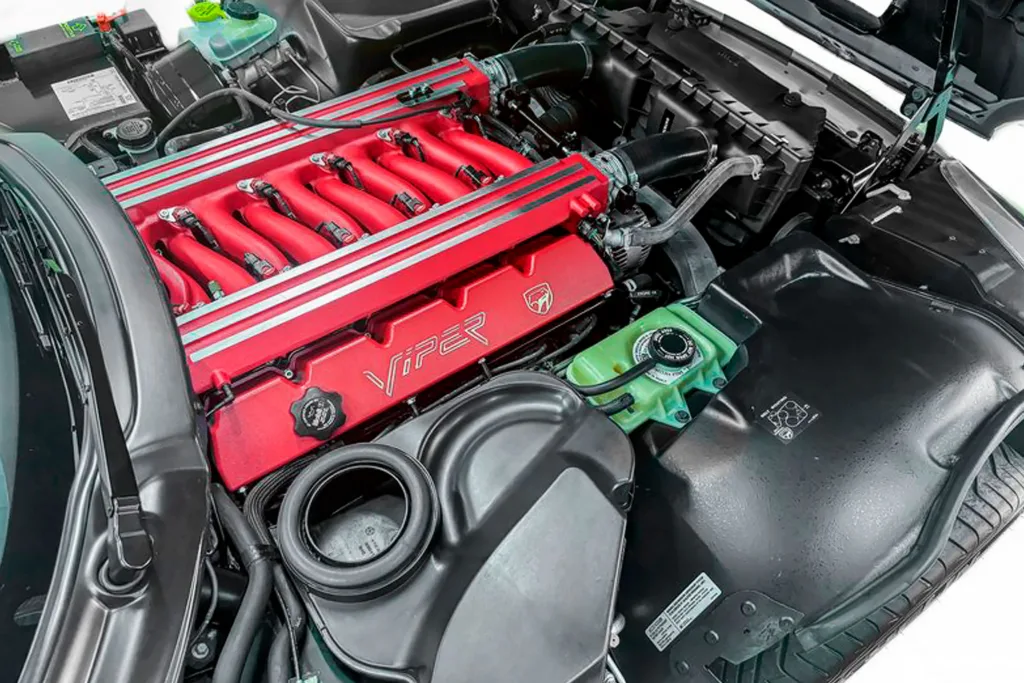
Coupled with a six-speed manual Tremec transmission, the car could sprint from 0–60 mph in just 4.0 seconds and cover the quarter-mile in around 12.2 seconds. Its top speed leapt to 185 mph, significantly higher than the RT/10 roadster’s 165 mph limit, thanks to superior aerodynamics and reduced drag. Despite the added rigidity of its structure, the coupe actually weighed about 60 kg less than the open-top version—a testament to its refined engineering.
Chassis, Handling, and Driving Character
Underneath, the GTS’s fundamentals mirrored the RT/10’s race-bred simplicity—front-engine, rear-wheel-drive layout, independent suspension, and a steel space-frame chassis—but with nuanced improvements. The fixed roof allowed for softer suspension tuning without sacrificing cornering precision, giving the GTS a better ride balance on both road and track. Reinforced components and reworked suspension geometry enhanced lateral grip, improving the car’s behavior in slalom tests and skidpad runs.
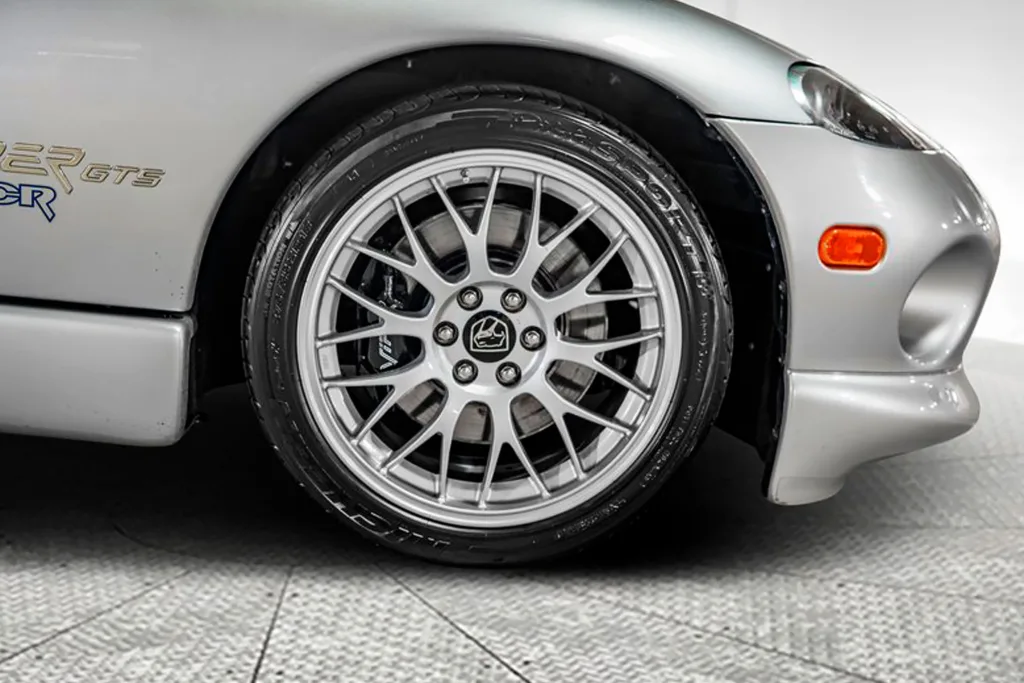
Dodge engineers focused on stability and aerodynamic control at speed. The coupe’s shape generated significantly less lift, allowing it to remain composed where earlier Vipers felt twitchy. Braking was handled by massive four-wheel ventilated discs, with optional ABS introduced in later models, a major step forward for the Viper line at the time.
Despite its handling improvements, the GTS retained the Viper’s untamed charm. There were no electronic aids—no stability control, traction nanny, or drive modes. This purist philosophy made the driving experience brutally honest. The GTS demanded respect from its driver but rewarded skill with an unmatched sense of mechanical connection and raw authenticity.
Racing Pedigree: The GTS-R and Global Recognition
Alongside the production GTS, Dodge introduced the Viper GTS-R, a purpose-built race version designed by Oreca and Chrysler’s SRT division to compete in endurance events. Built with carbon-fiber bodywork, advanced aerodynamics, and a race-prepped V10 tuned for reliability and torque, the GTS-R quickly became one of the most successful American GT race cars of the late 1990s.
The GTS-R achieved international fame by conquering events that had long been dominated by European marques. It won its class at the 1998 and 1999 24 Hours of Le Mans, as well as multiple championships in the FIA GT Series, American Le Mans Series (ALMS), and Daytona 24 Hours. These victories established the Viper not just as a muscle-bound road warrior, but as a legitimate endurance racing champion—something few American cars had previously accomplished since the Ford GT40’s triumphs decades earlier.
Design and Interior: Unmistakable Power
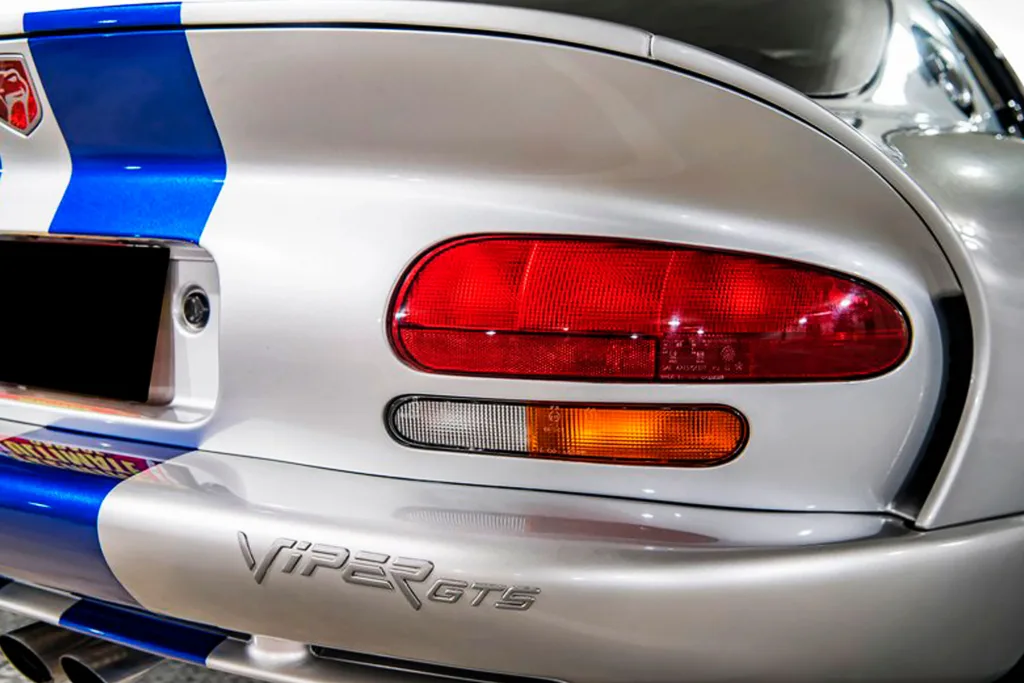
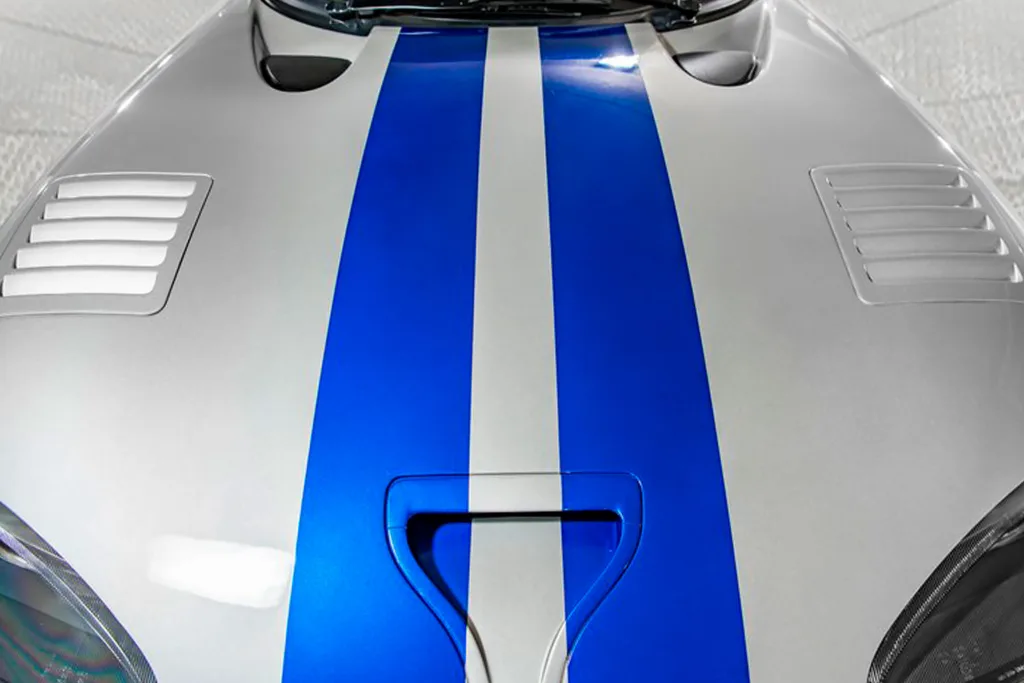
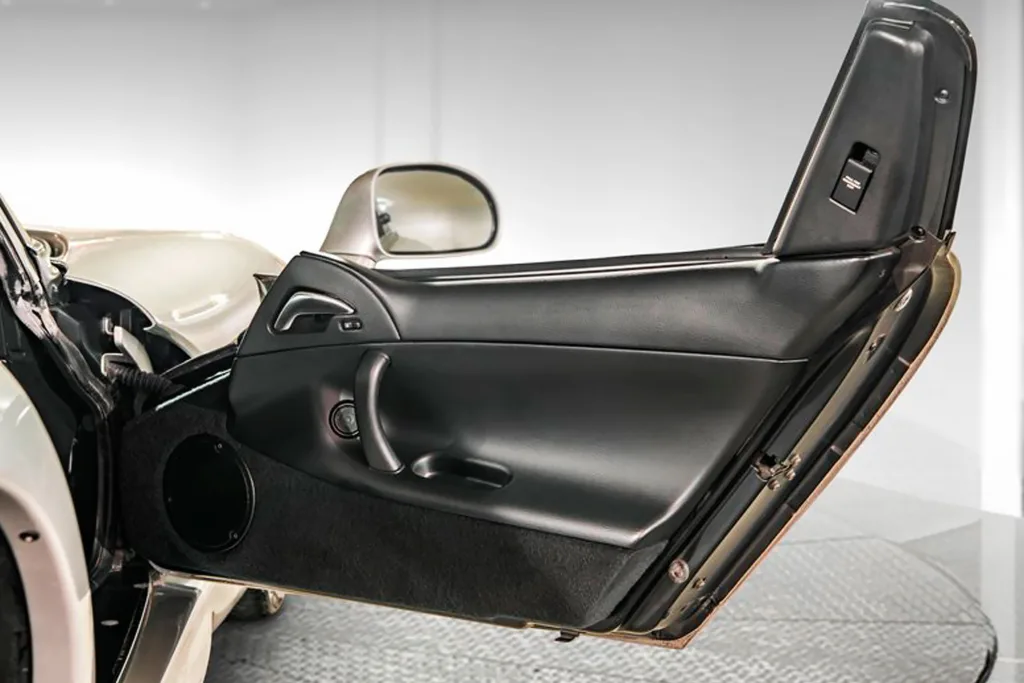
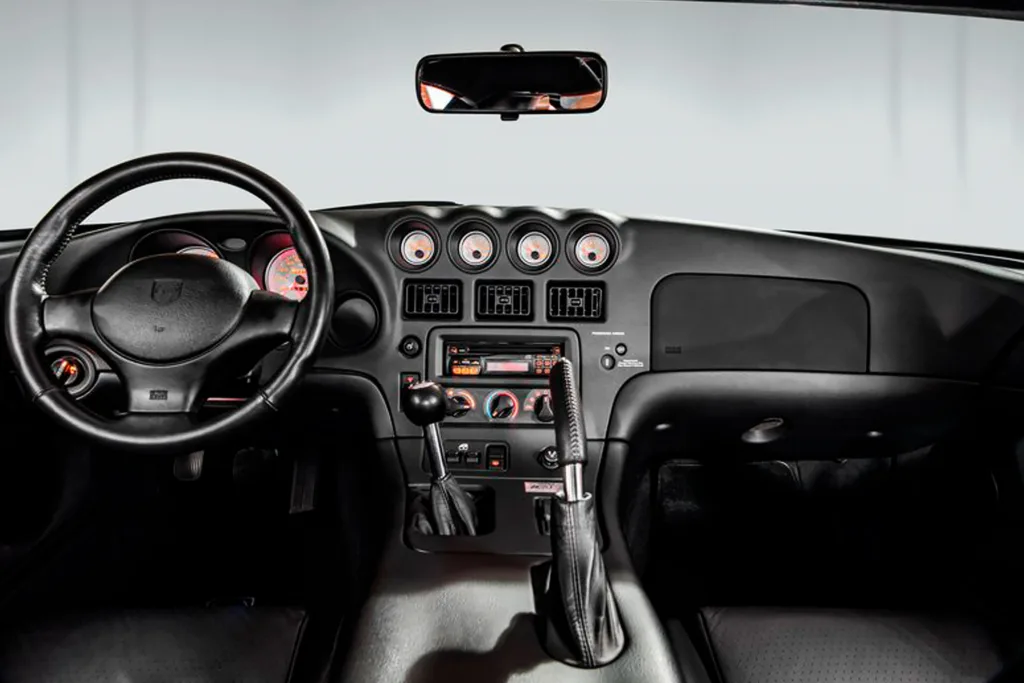
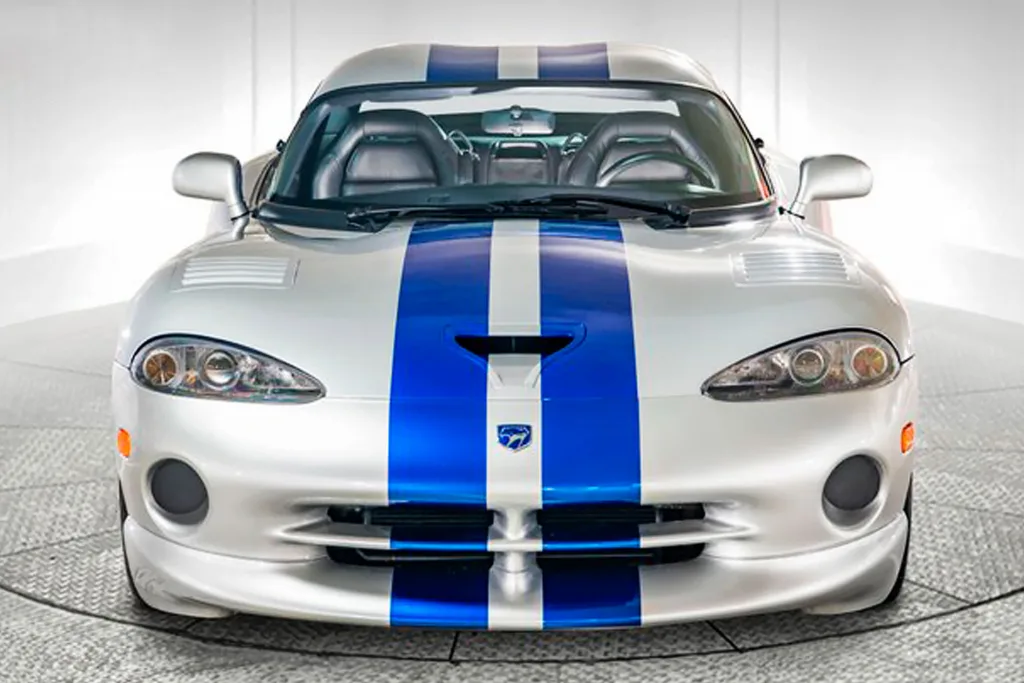
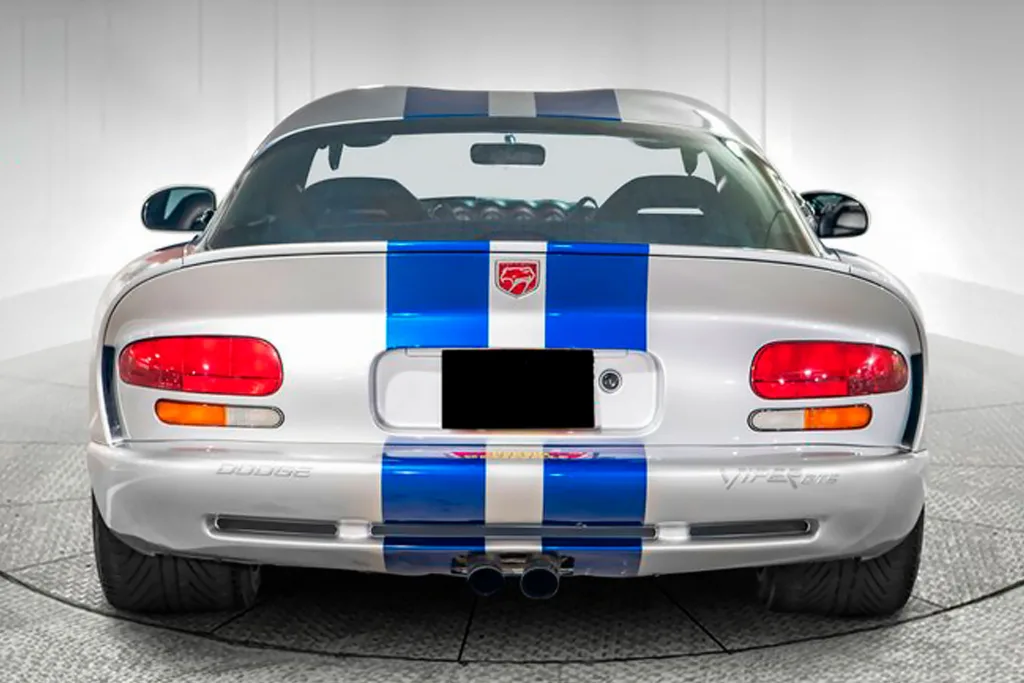
Visually, the 1999 Viper GTS was an icon of pure aggression. Its curvaceous fenders, deep side scoops, and thundering stance conveyed power even at rest. The Cobalt Blue with White Racing Stripes paint scheme became the car’s most recognizable configuration, directly inspired by Dodge’s GTS-R race cars. Inside, the cabin was significantly refined over the RT/10’s spartan layout. The GTS featured power windows, air conditioning, airbags, and leather-trimmed sport seats, bringing modern comfort into a car that was previously closer to a race car than a grand tourer.
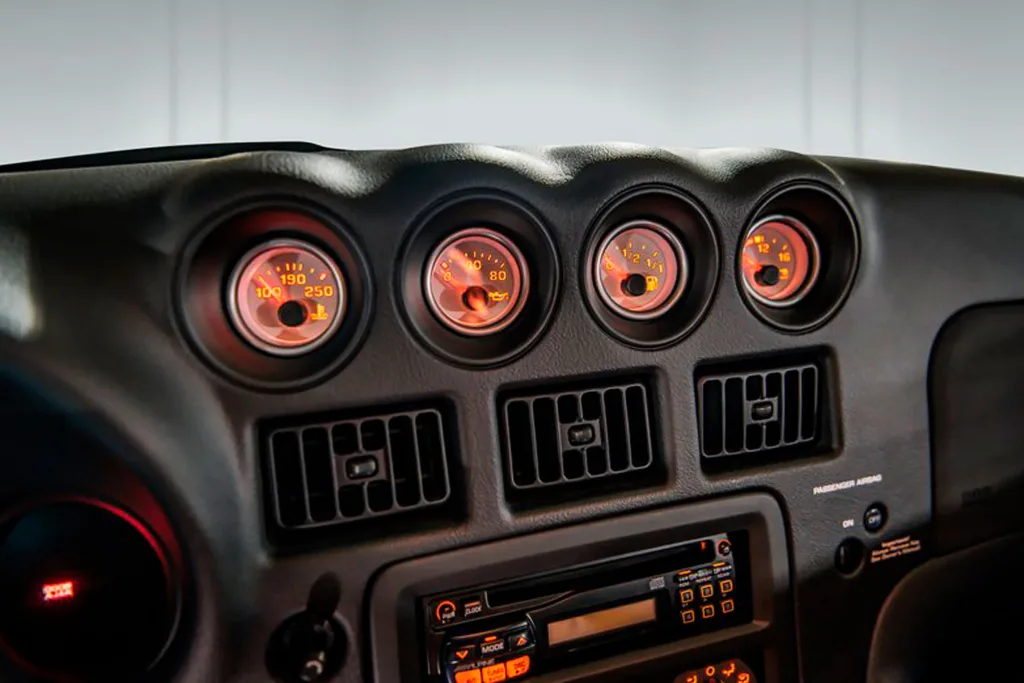
Still, everything inside served the driver. The three-spoke steering wheel, short-throw manual shifter, and deep gauge cluster reminded pilots that this was not a car for cruising—it was a machine built purely to perform.
Legacy: The Supercar That Defined American Muscle
The 1999 Dodge Viper GTS not only represented the peak of the first true supercar generation in America but also embodied the philosophy that raw mechanical purity could still coexist with modern refinement.
It was faster, lighter, more civilized, and undeniably more beautiful than the roadster that came before it. And with its racing DNA and uncompromising spirit, it redefined what an American sports car could be.
Today, the Viper GTS is revered among collectors and enthusiasts as the model that brought legitimacy to Dodge’s supercar ambitions. It bridged the gap between muscle and precision, between Detroit power and European finesse—a rare combination that has stood the test of time.



Functional Always active
Preferences
Statistics
Marketing