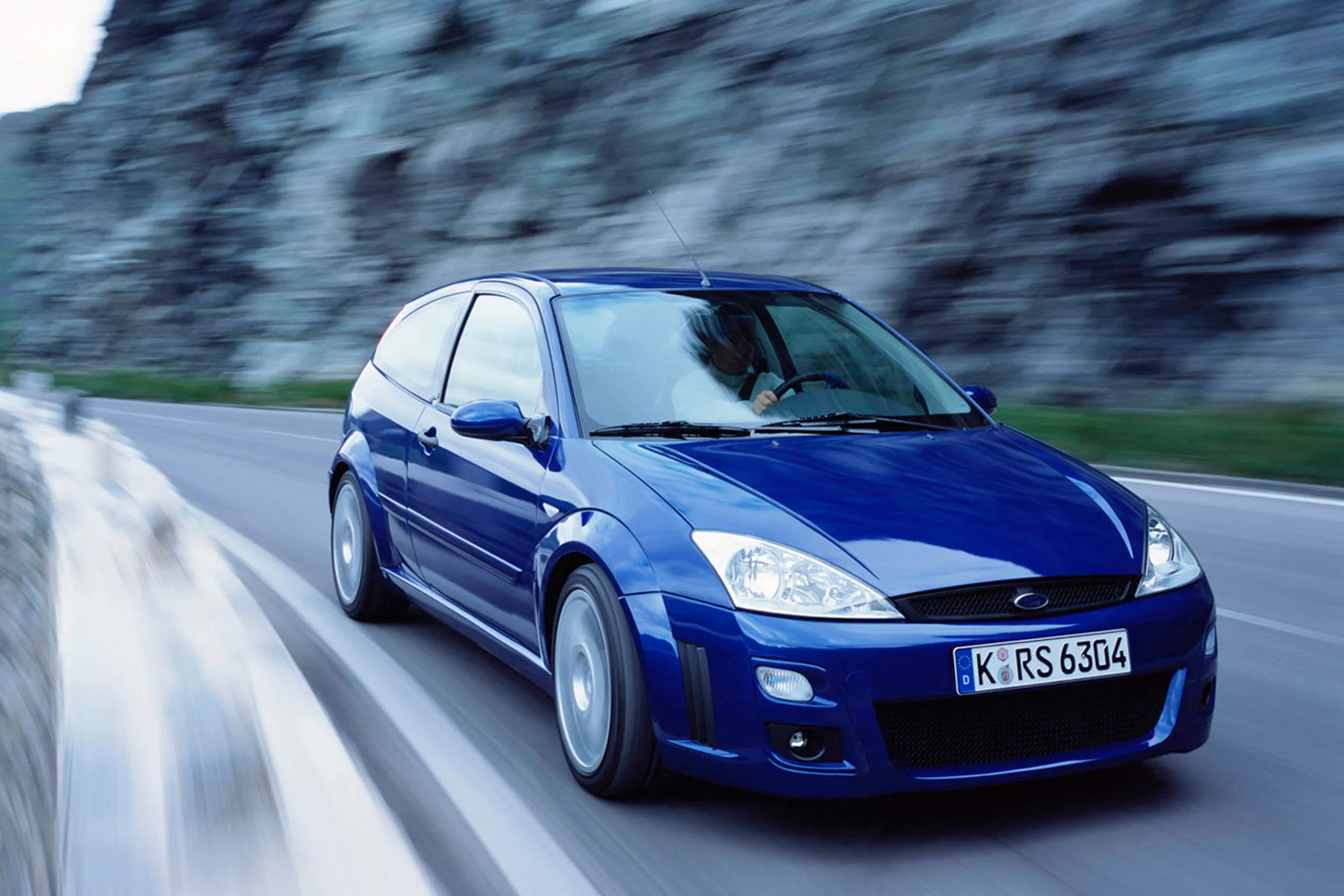
When the Ford Focus arrived on the European market in 1998, it instantly transformed expectations for compact cars. Replacing the long-serving Escort, the Focus introduced a new era for Ford’s C-segment lineup, offering class-leading handling, distinctive design, and a dynamic chassis that set benchmarks for years to come. It was available as a hatchback, sedan, estate, and later, as the family-oriented C-Max.
But while the regular Focus found success as a versatile commuter car, Ford’s performance division saw an even greater opportunity: to use it as the foundation for a genuine driver’s machine. By the turn of the millennium, the Focus RS (Rallye Sport) was born—a road-going, turbocharged statement of Ford’s motorsport heritage and one of the most focused front-wheel-drive cars ever produced by the Blue Oval.
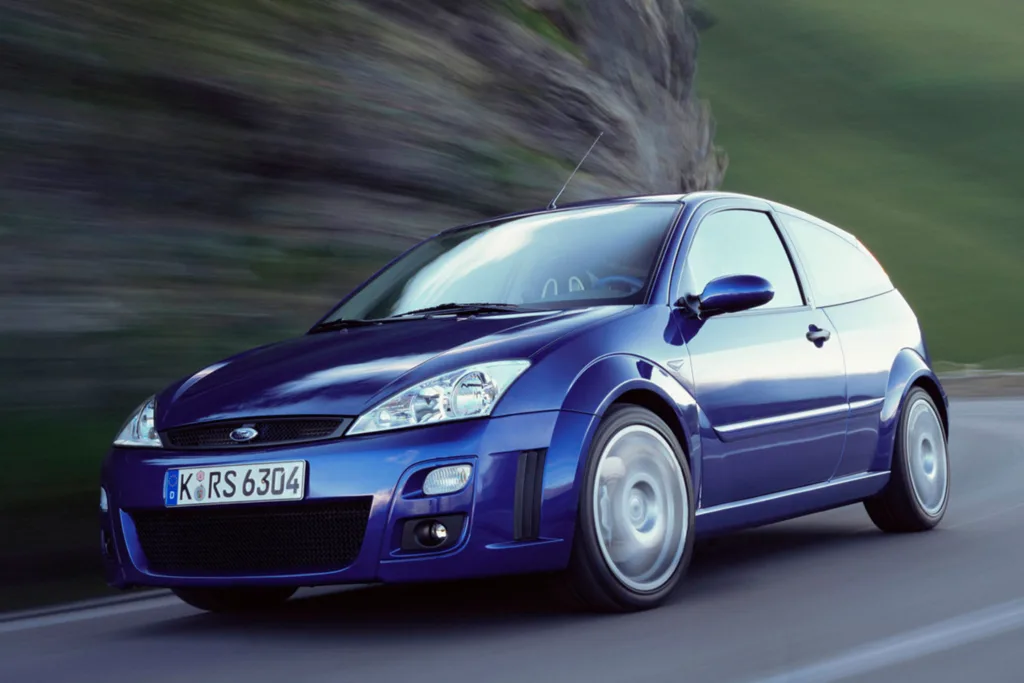
Rally Spirit on the Road
The Focus RS, revealed in 2002 (conceptually developed from 2000 onward), represented Ford’s determination to translate its World Rally Championship (WRC) success directly to the showroom. It drew inspiration from the Focus WRC rally car famously piloted by Colin McRae and Carlos Sainz, adopting not just the name but the essence of rally engineering.
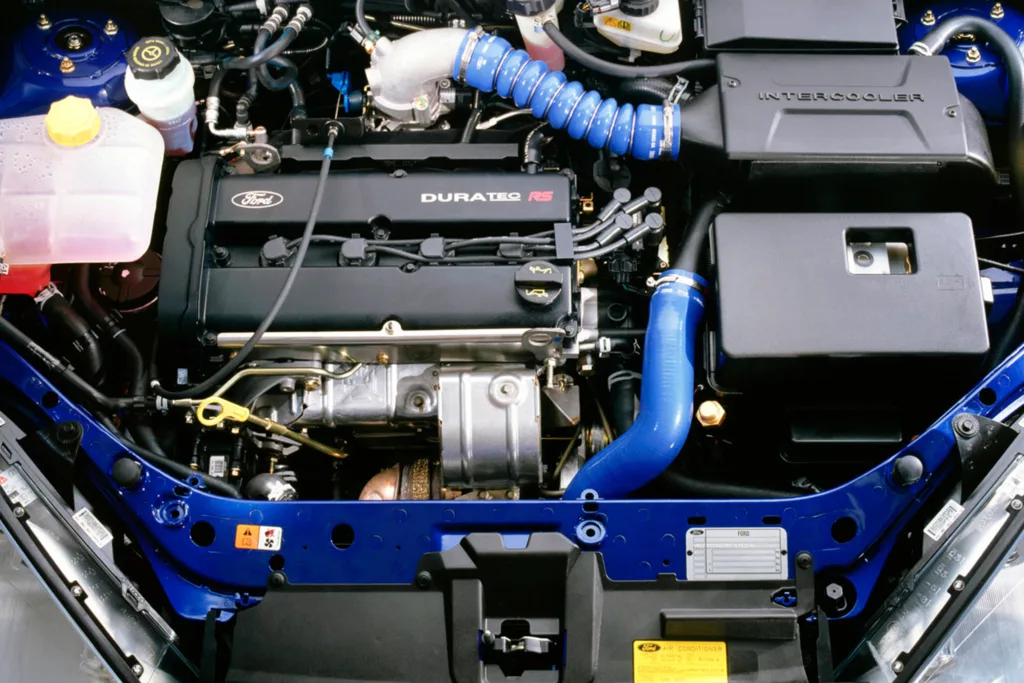
Under the hood sat a 2.0-liter inline-four Duratec RS engine, turbocharged by a Garrett GT25 unit. This setup generated 215 horsepower (158 kW) at 5,500 rpm and a massive 310 Nm of torque at just 3,500 rpm—figures that, at the time, put it head-to-head with legends like the Subaru Impreza WRX and Mitsubishi Lancer Evolution.
The power was sent exclusively to the front wheels through a Getrag 6-speed manual transmission with a limited-slip differential—no all-wheel drive, no electronic trickery, just pure mechanical precision. Launch control tests clocked 0–100 km/h (0–62 mph) in 6.4 seconds and a top speed of 235 km/h (146 mph), making it one of the quickest hatchbacks of its generation.
Engineering Precision from Ford Racing Technology
Unlike ordinary Focus models built on Ford’s global C-segment platform, the RS underwent extensive modification by Ford’s Special Vehicle Engineering (SVE) and Ford Racing Technology. Over 70 percent of the car’s components were unique to the RS version. The changes included reinforced driveshafts, custom suspension geometry, and larger fixed four-piston Brembo brakes mounted behind 18-inch OZ Racing wheels.
The suspension setup—MacPherson struts at the front and Control Blade multi-link rear suspension—received stiffer springs and revised dampers, increasing rigidity without compromising road usability. Combined with a Quaife automatic torque-biasing differential, the RS significantly reduced understeer, delivering sharp, predictable handling and exceptional traction for a front-wheel-drive machine.
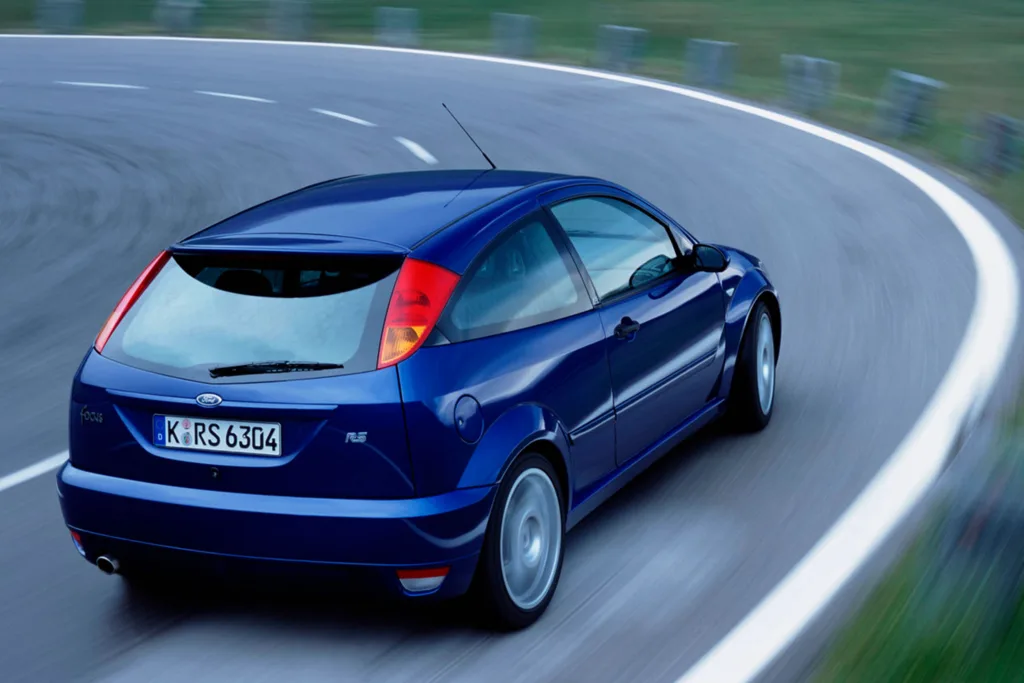
Ford’s use of motorsport-grade components didn’t stop there. The braking system offered unmatched stopping power for its class, while the recalibrated steering rack provided immediate response and road feel—crucial for precise cornering on twisting roads or tight rally stages. The result was a front-wheel-drive car that not only managed its torque gracefully but delivered genuine driver engagement.
Design: Functional Without Flash
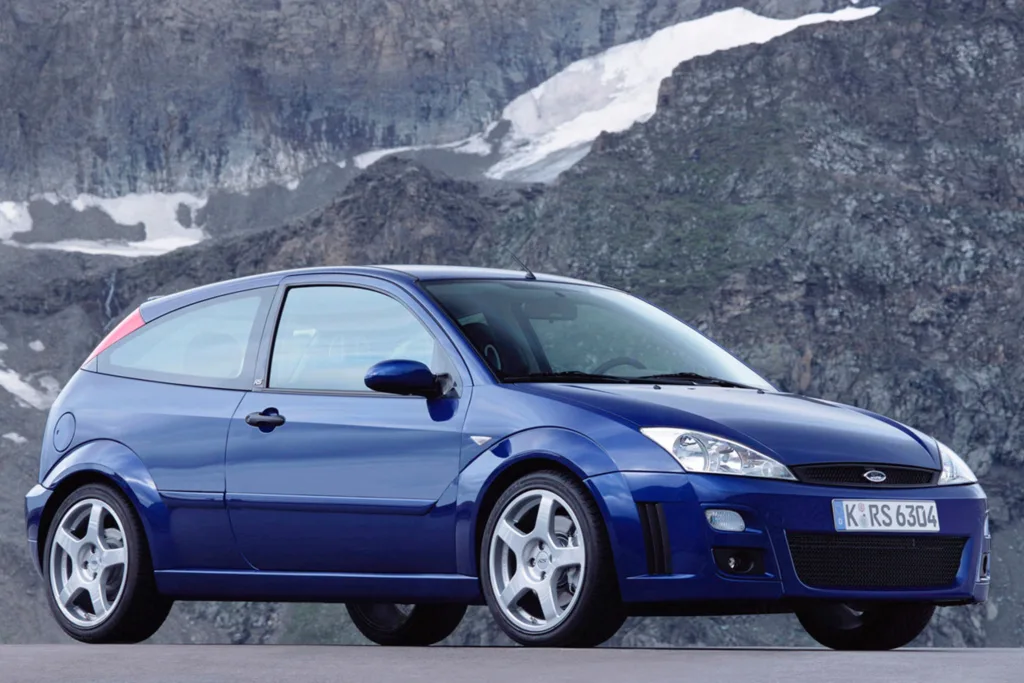
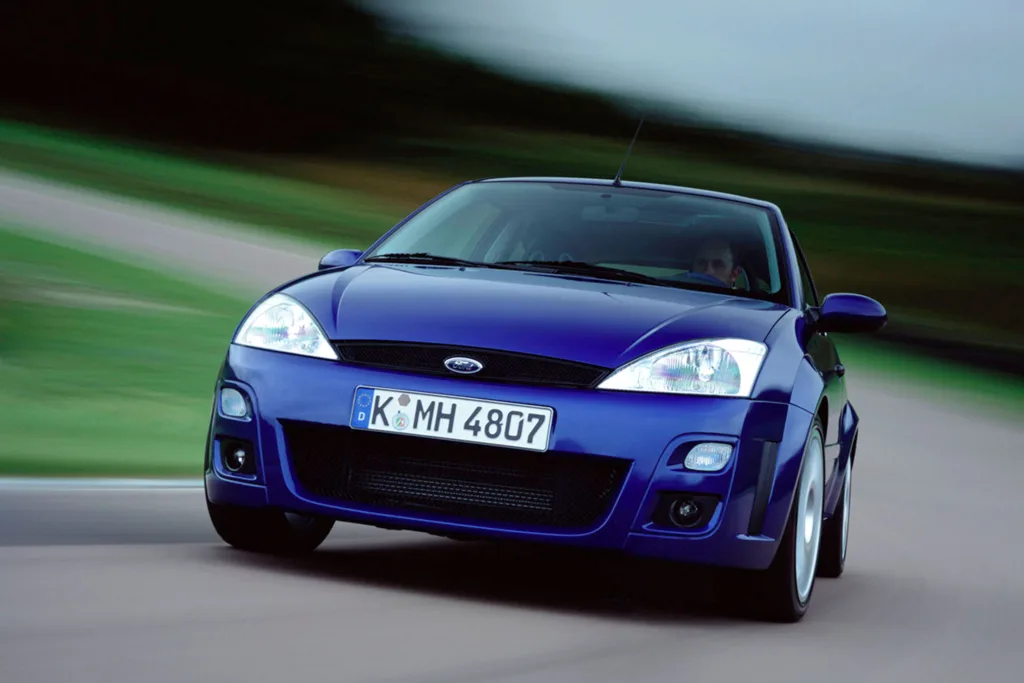
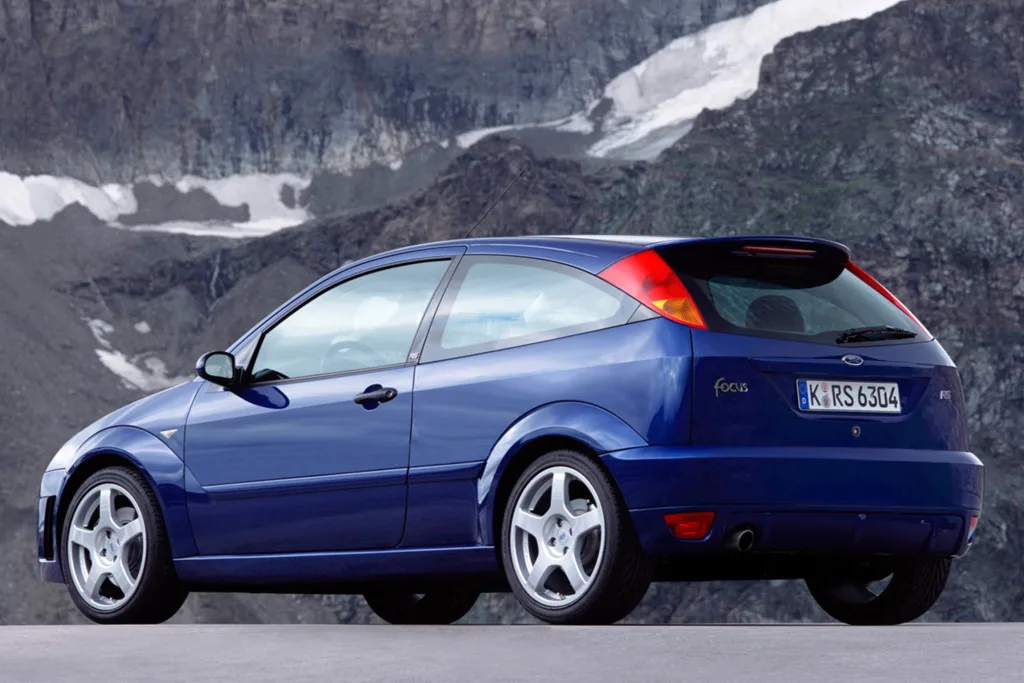
Visually, the Focus RS was unmistakably aggressive yet purposeful. Its wide front bumper integrated large air intakes for the turbocharger and intercooler, while a subtle hood bulge hinted at its boosted powerplant. The exterior featured flared arches, wider track, aluminum pedal set, and RS-specific badging—all finished in the now-iconic Imperial Blue paint, the only color available for the factory RS.
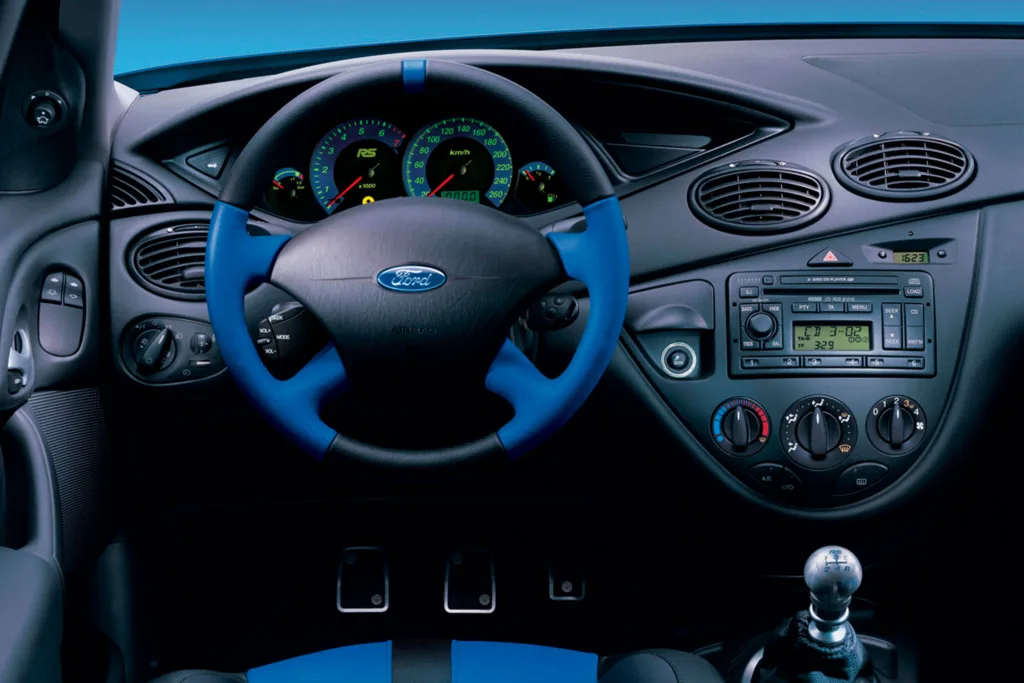
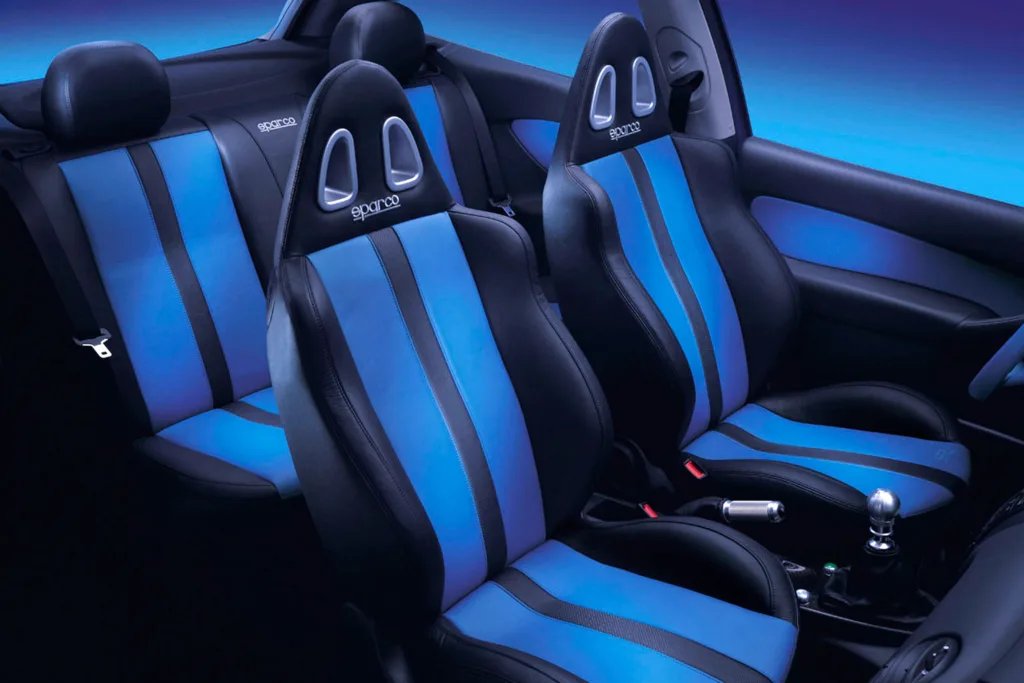
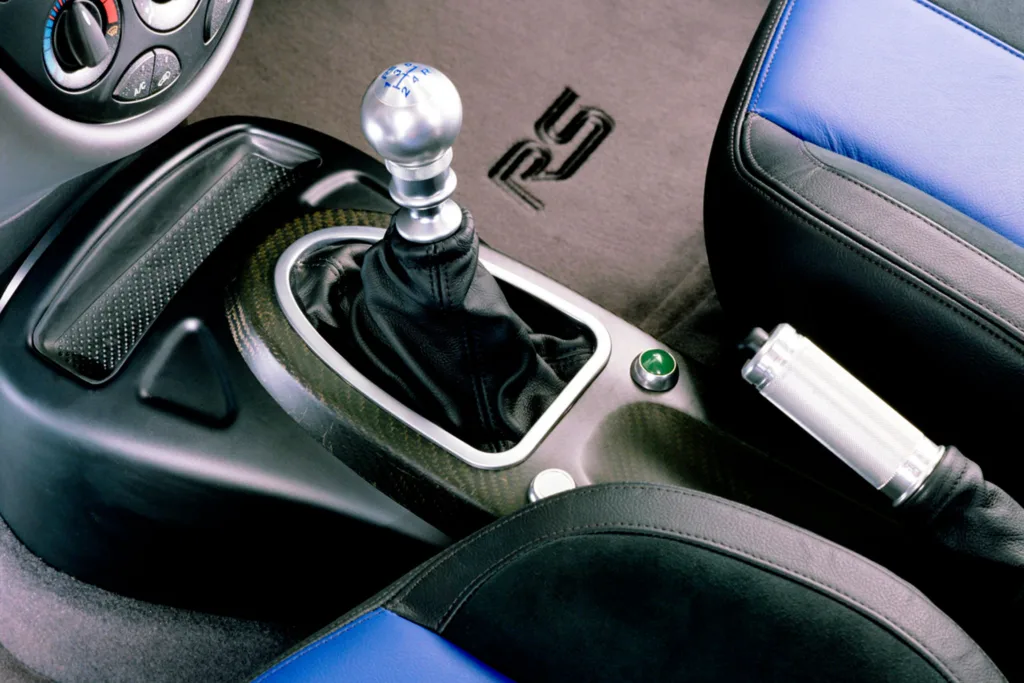
Inside, the transformation continued with Sparco sport seats, a signed RS plaque, and a focused, driver-oriented layout. The interior combined practicality with motorsport flair, creating an environment that reminded you this hatchback was designed for enthusiasts, not commuters.
ST170: The Refined Sibling
To complement the hard-edged RS, Ford also launched a milder version aimed at everyday performance fans: the Focus ST170 (known in some markets as the Focus SVT). Introduced in 2003, it was engineered by SVE and tuned for balance rather than outright aggression.
The ST170 used a naturally aspirated 2.0-liter Duratec engine producing 173 horsepower (127 kW) and 195 Nm of torque, featuring variable valve timing for improved power delivery and midrange flexibility. It came standard with a 6-speed manual transmission and 17-inch wheels fitted with 215/45R17 tires, while the suspension was stiffened by 10 percent over the base Focus for sharper handling.
If the RS was crafted as a road-legal rally car, the ST170 was its civilized cousin—a performance car for everyday roads, blending accessible performance with comfort.
The Legacy of the 2002 Focus RS
Production of the Focus RS Mk1 was limited to just 4,501 units, making it an instant collectible. Each example was hand-assembled at Ford’s Rheine plant in Germany between 2002 and 2003. Its exclusivity, combined with its razor-sharp handling and unmistakable character, cemented its position as one of the most important hot hatches of the early 21st century.
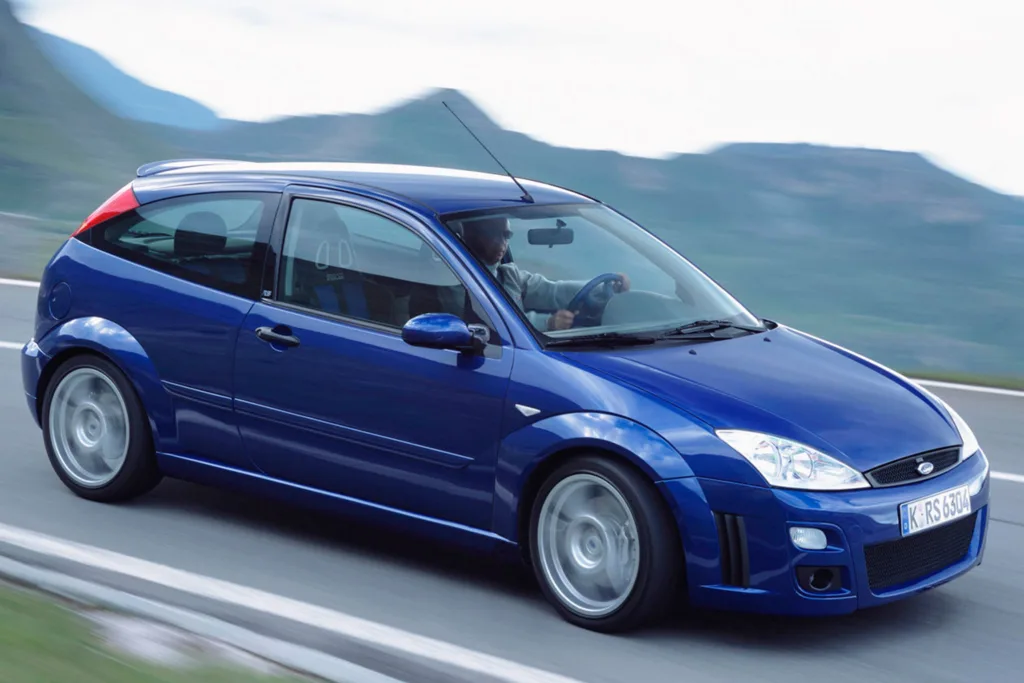
The RS nameplate itself would go on to inspire later icons such as the Focus RS Mk2 (2009) with 305 hp and RS Mk3 (2016) featuring all-wheel drive and 350 hp—but the original remained the purest expression of front-wheel-drive brilliance.
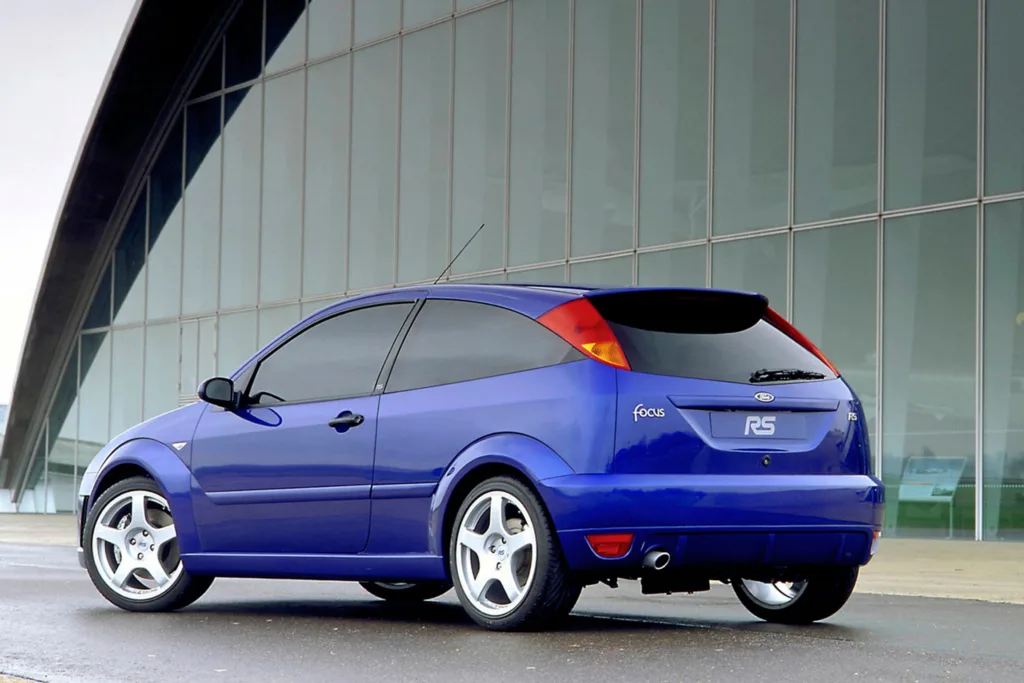
For purists, the 2002 Focus RS represents the sweet spot in performance car design—a compact, turbocharged hatch engineered with discipline and passion, built not to please the masses but to thrill real drivers. Its combination of precise handling, rally heritage, and unbeatable value still makes it one of Ford’s proudest achievements in modern performance history.