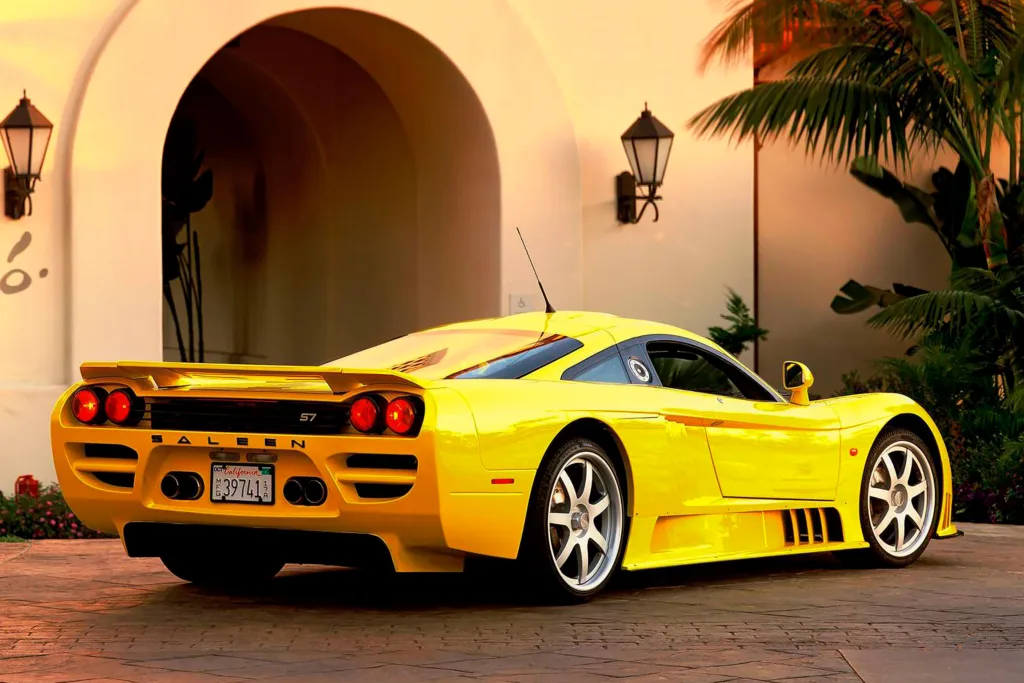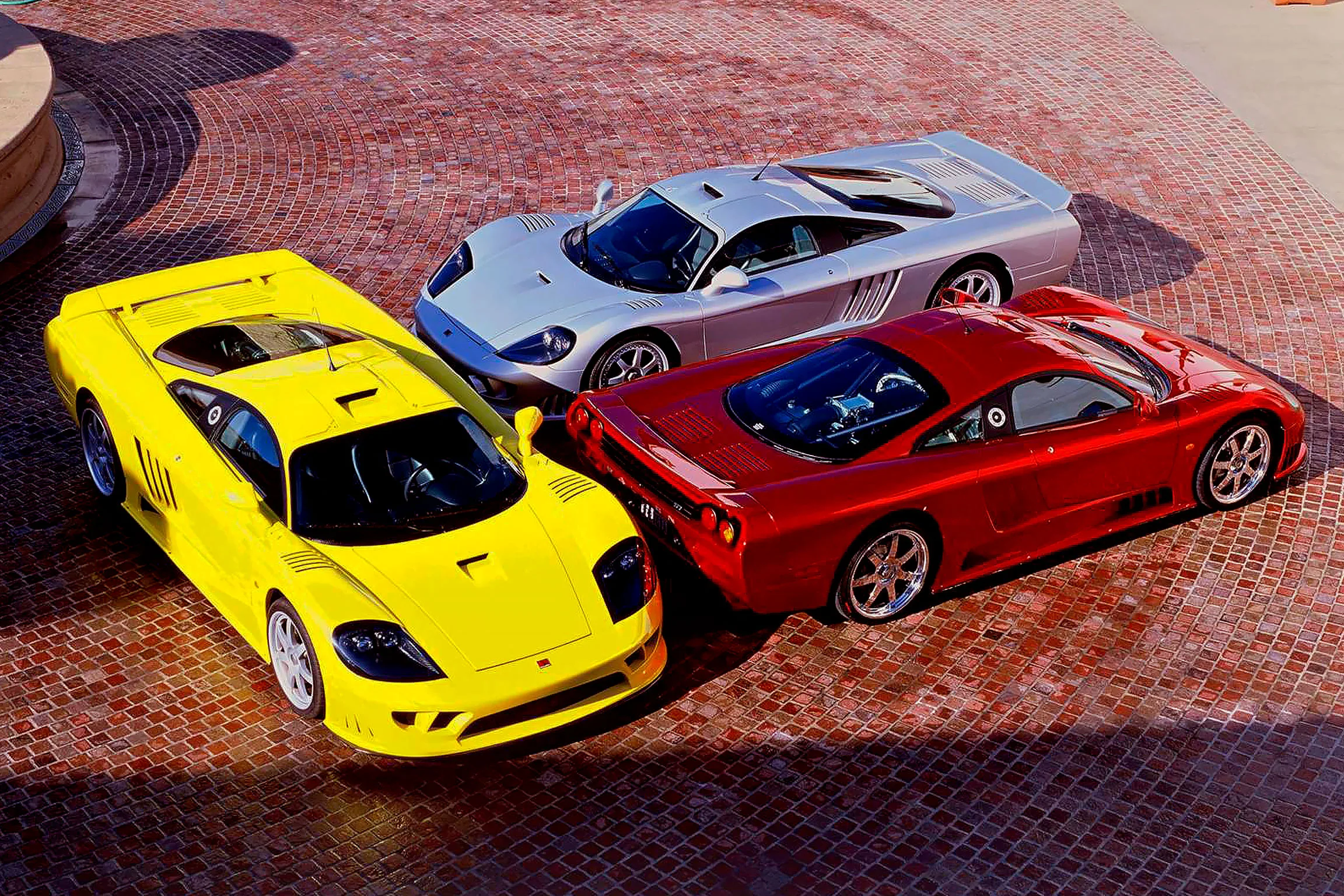
The Saleen S7, debuting in 2000 and launched as a 2002 model, represents one of America’s first true supercars and remains a rare high-performance legend in automotive history.
Its journey began with a motorsports-first philosophy: before its road-going version, the Le Mans-oriented S7R prototype was unleashed, giving the S7 an exclusive racing pedigree that shaped its design, engineering, and reputation.
Development and Engineering
The S7 was the first fully proprietary vehicle developed by Saleen Automotive Inc., driven by Steve Saleen’s vision and the collaboration of global partners like Ray Mallock Ltd. (handling chassis, suspension, and aerodynamics) and Phil Frank (spearheading CAD design for body and interior). Unlike the latest exotic rivals that utilized carbon fiber chassis, the Saleen S7 features an aluminum honeycomb composite center tub and a robust tubular steel spaceframe. This approach balanced low weight, repairability, and rigidity, crucial for a car that would see action on both tracks and roads.
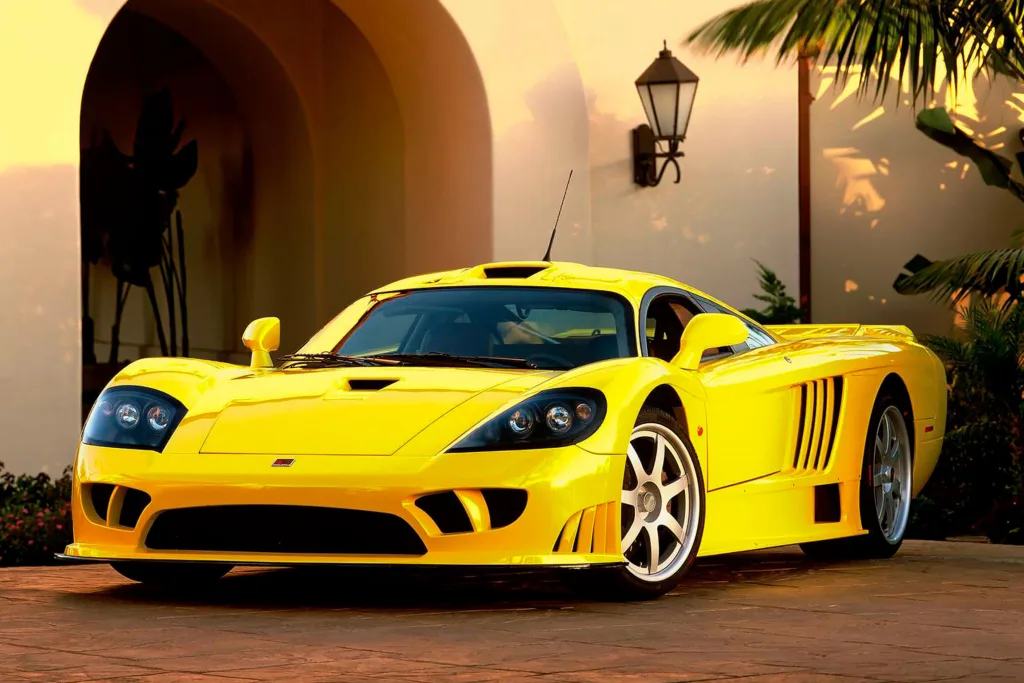
The S7’s minimalist yet purposeful racing roots shine through its technical choices. Racing-style double wishbone suspension front and rear, long control arms, and coil-over dampers are paired with racing-grade Brembo brakes, emphasizing competitive track capability and durability. These components echo the hardware on the S7R, its Le Mans prototype sibling, and underpin the S7’s handling precision.
Powertrain: Saleen’s American V8 Performance
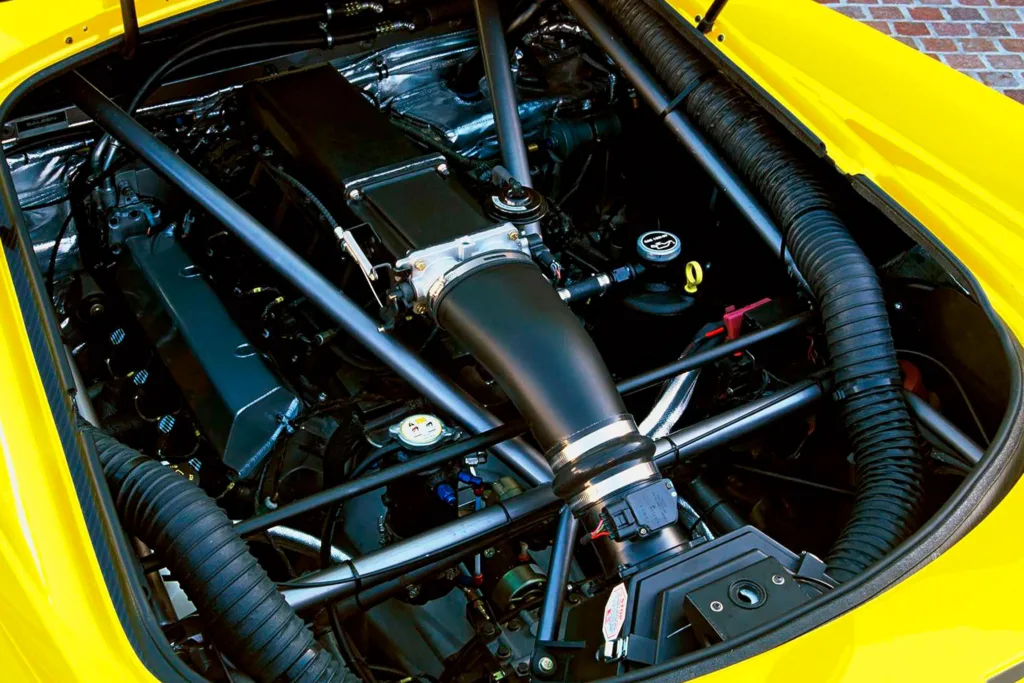
At the core of the S7 is a Saleen-original all-aluminum V8, evolved from the Ford Windsor block but massively reimagined with Cleveland-style canted valve heads and a displacement of 7.0 liters.
Despite its pushrod configuration and two valves per cylinder, it delivers 550 horsepower at 6,400 rpm and 525 lb-ft of torque, thanks largely to extensive internal reworking and racing lineage.
This V8 enables jaw-dropping performance:
- 0–60 mph in 3.3 seconds
- 0–100 mph in 8.9 seconds
- Quarter-mile in 11.8 seconds
- Top speed over 215 mph (with some independent tests claiming up to 220 mph)
These figures placed the S7 squarely in supercar territory, challenging European flagships during the early 2000s era.
Racing and Le Mans Legacy: S7R’s Dominance
The Saleen S7R was engineered explicitly for motorsport, entering major events like the American Le Mans Series, FIA GT Championship, and the 24 Hours of Le Mans. With a slightly more powerful unrestricted engine (up to 760 hp), the S7R saw success including numerous fastest laps, pole positions, and 19 outright race victories. Its reputation was sealed in 2004 at Imola, where it defeated established titans like Ferrari and Maserati on home soil—a moment regarded as one of the biggest upsets in endurance racing history.
Luxurious, Driver-Focused Interior
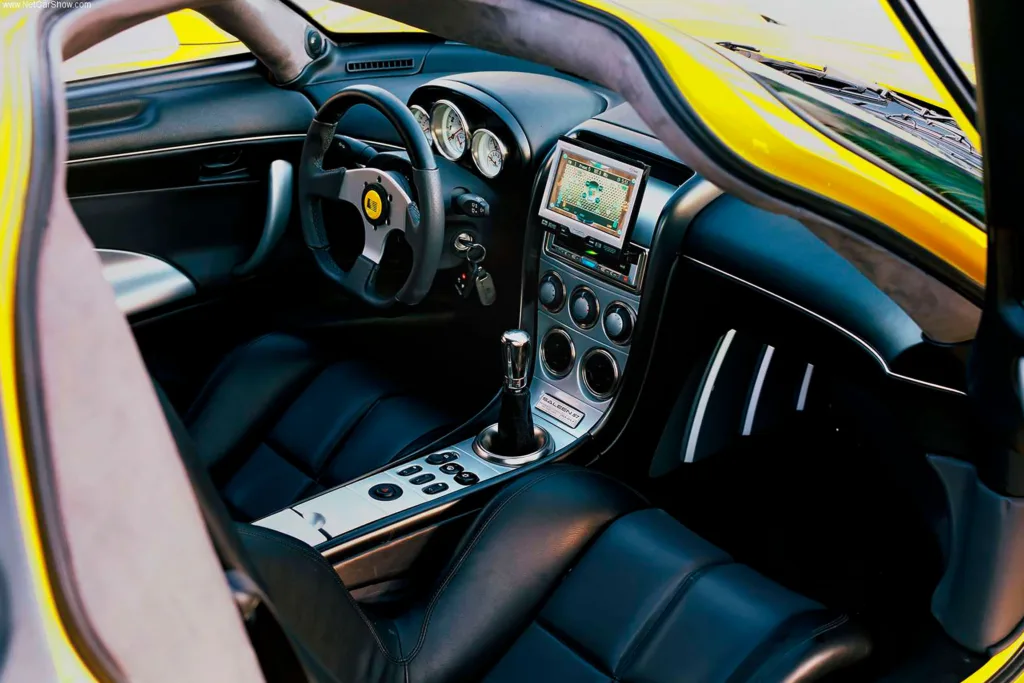
Unlike most race-inspired supercars of its time, the Saleen S7’s interior was designed to blend comfort with performance. While two Connolly leather bucket seats are standard, the driver’s seat is custom tailored for each buyer, echoing the exclusivity of boutique hypercars. Features such as air conditioning and a premium audio system were fitted as standard, underscoring the S7’s usability for daily or long-distance high-speed driving as well as track days.
Technical Features and Production
Saleen’s commitment to race engineering is evident throughout the S7’s structure:
- Lightweight glass fiber and carbon fiber body wrapping
- 4130 lightweight steel space frame chassis for improved safety and repairability
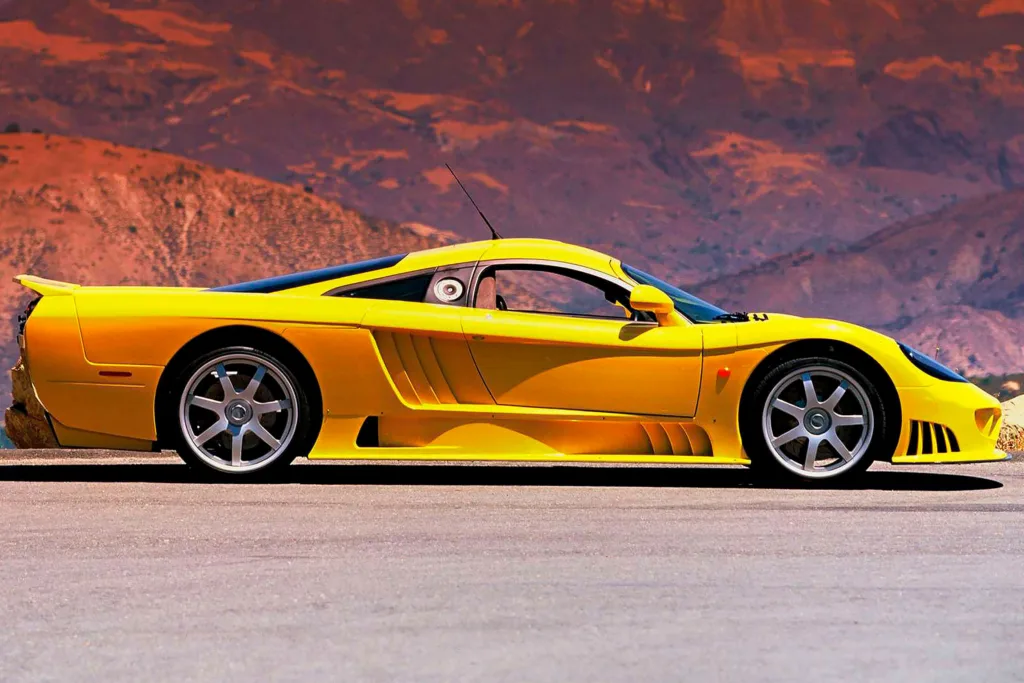
- Aerodynamic body designed to maximize downforce and stability at extreme speeds, with additional performance packages for track variants
- Saleen’s proprietary six-speed manual gearbox
Saleen produced the S7 in extremely limited numbers, further enhancing its rarity and collectability.
Between 2000 and 2009, it saw only a handful of units built, and its Twin Turbo evolution in 2005 raised output to a staggering 750 hp (with some competition packages reaching 1,000 hp or more).
Historical Impact and Modern Legacy
The Saleen S7’s unprecedented engineering and motorsport success helped establish American credentials in the supercar arena, previously dominated by European brands. Its combination of racing technology, bespoke craftsmanship, and outrageous speed set the template for modern hypercars, influencing future American performance vehicles and solidifying its place as a classic in collectors’ circles.