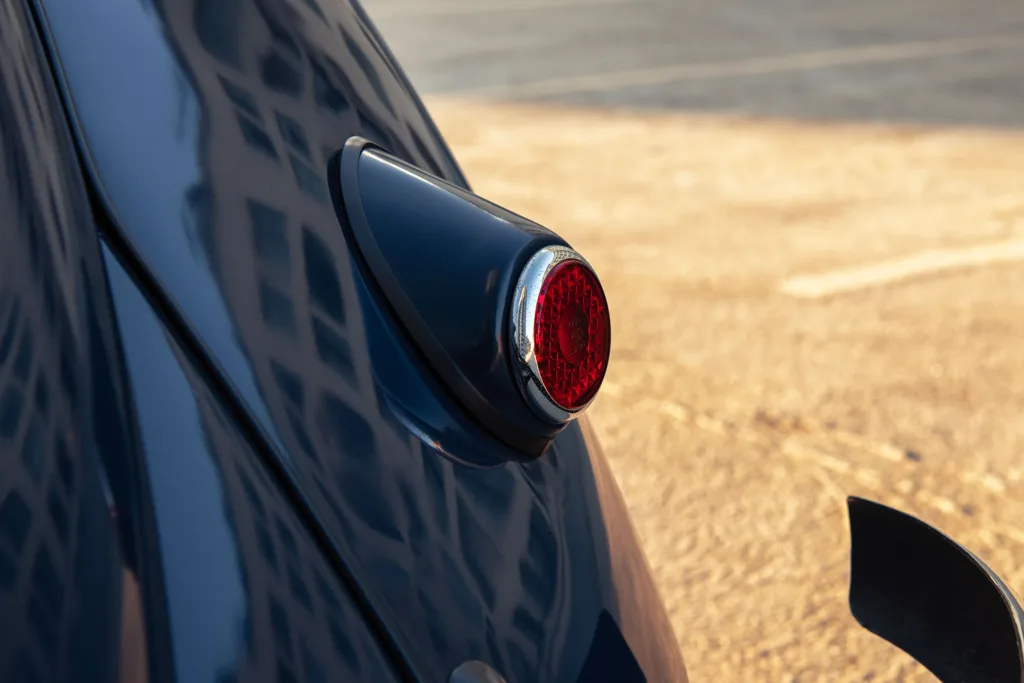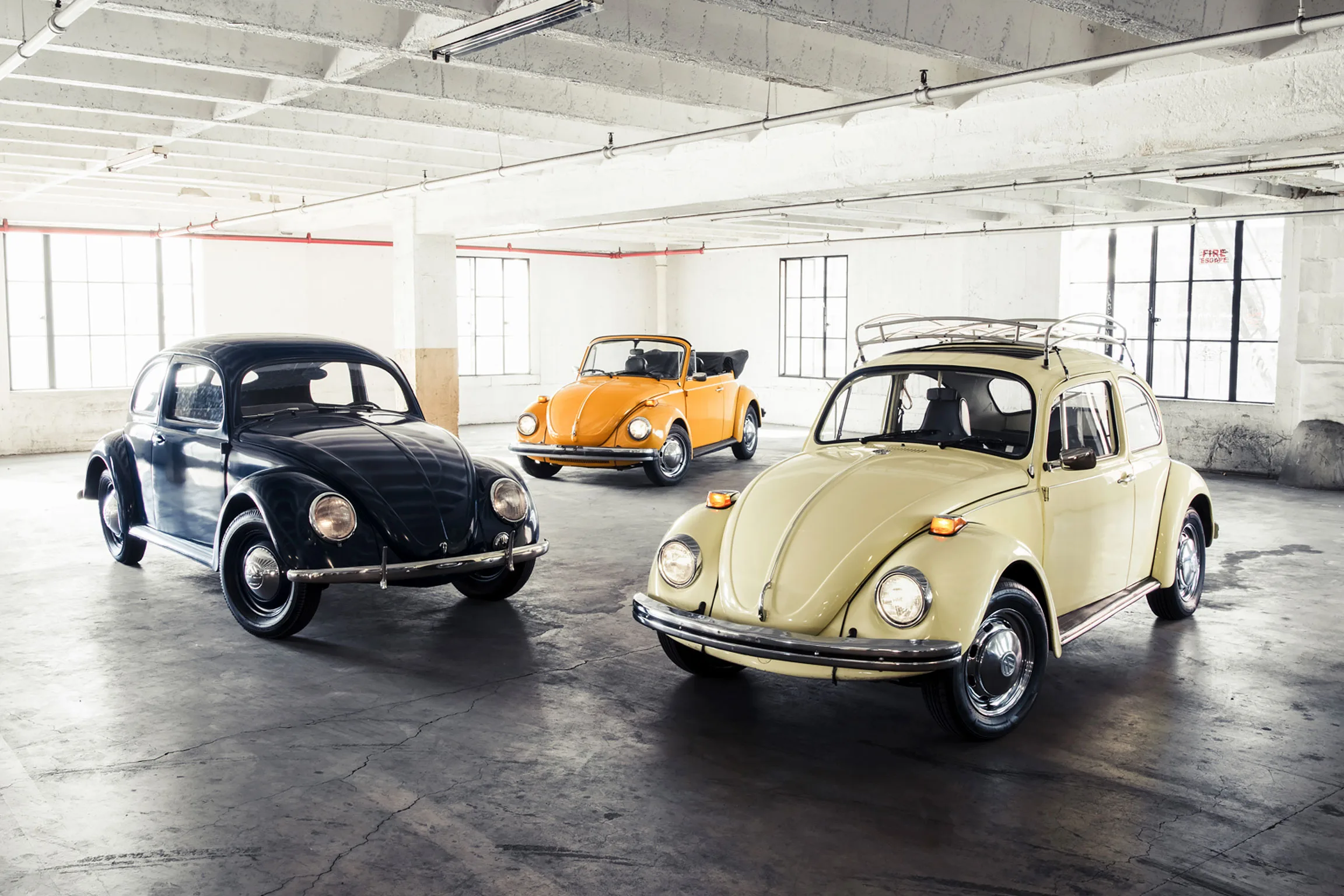
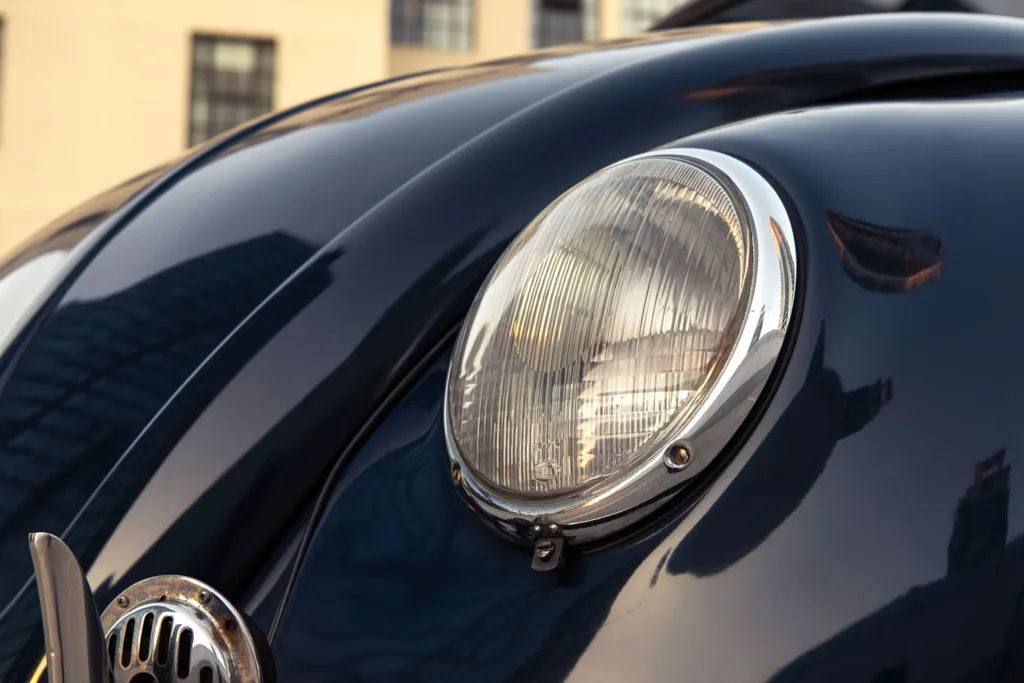
The 1949 Volkswagen Beetle 1100 Standard (Type-11) marks a significant chapter in automotive history, representing one of the earliest postwar efforts to provide affordable, reliable transportation to the masses.
Born from the vision of Ferdinand Porsche and originally commissioned by the German government before World War II, the project was initially known as the KdF-Wagen (“Kraft durch Freude” or “Strength through Joy”).
Although war shifted the factory to military production and damaged the Wolfsburg facility extensively, the Beetle’s post-war revival would shape a global automotive icon, ultimately transcending the challenging political climate of its beginnings to become an emblem of practicality and ingenuity.
Engineering and Performance Specifications
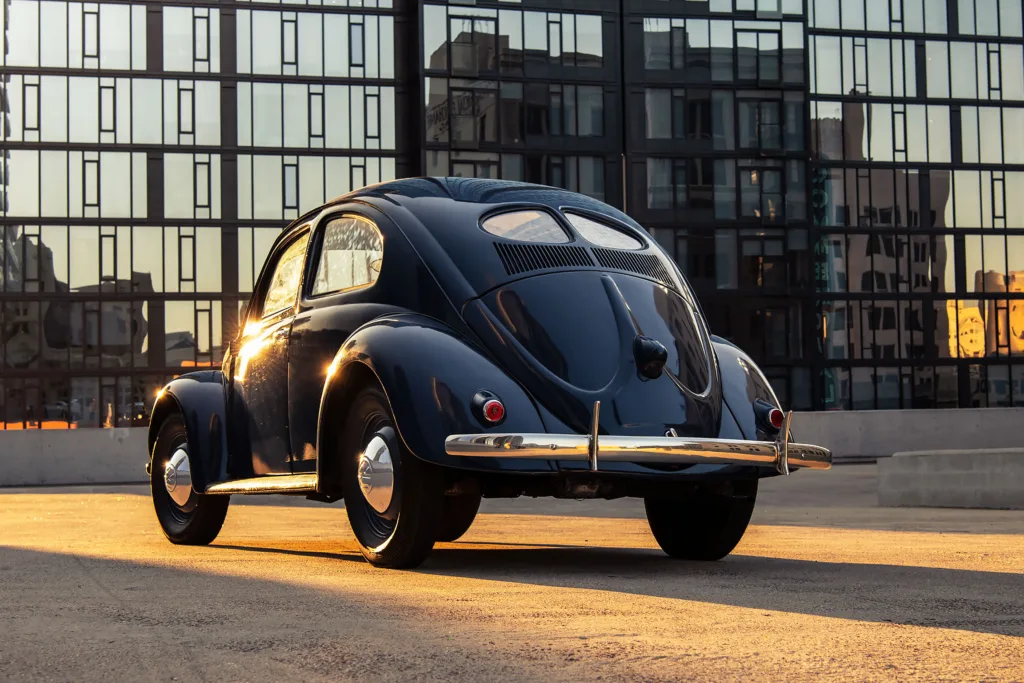
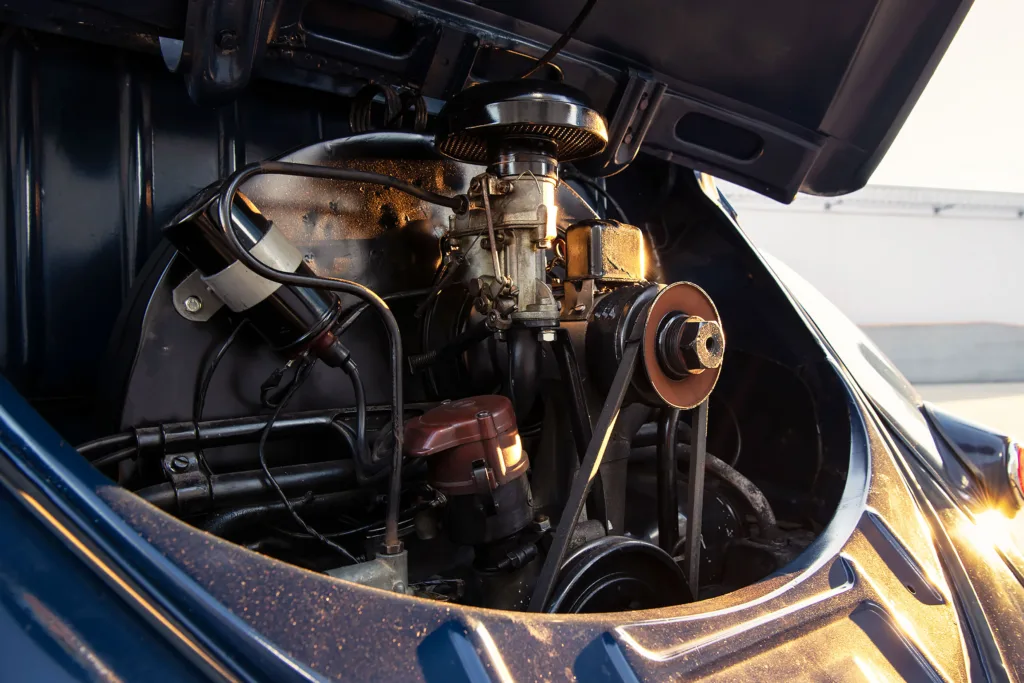
The 1949 Standard model remained largely faithful to the original pre-war KdF design, featuring the distinctive rounded, almost beetle-like silhouette that earned it its affectionate nickname. Sporting a rear-mounted air-cooled flat-four engine displacing 1,131 cubic centimeters, the engine produced around 25 horsepower and 49 Nm (36 lb-ft) of torque, delivering modest yet adequate performance with rear-wheel drive. This simple yet effective drivetrain greatly contributed to the car’s legendary reliability and ease of maintenance. With a four-speed manual transmission engaged via a column shifter and a 4.43:1 final drive ratio, the car could hit a top speed near 60-68 mph, sufficient for postwar road conditions and daily commuting.
Chassis and Design Simplicity
Measuring 94.5 inches (approximately 2400 mm) wheelbase with a curb weight of around 1600 lbs (725 kg), the Beetle’s compact dimensions made it maneuverable and practical in urban environments. The chassis used a central platform frame with a floorpan integral to the body structure, emphasizing simplicity and robustness. The front suspension comprised torsion bars while swing-axles managed the rear, offering straightforward engineering that could be serviced without complex tools—another factor in its widespread adoption in diverse international markets.

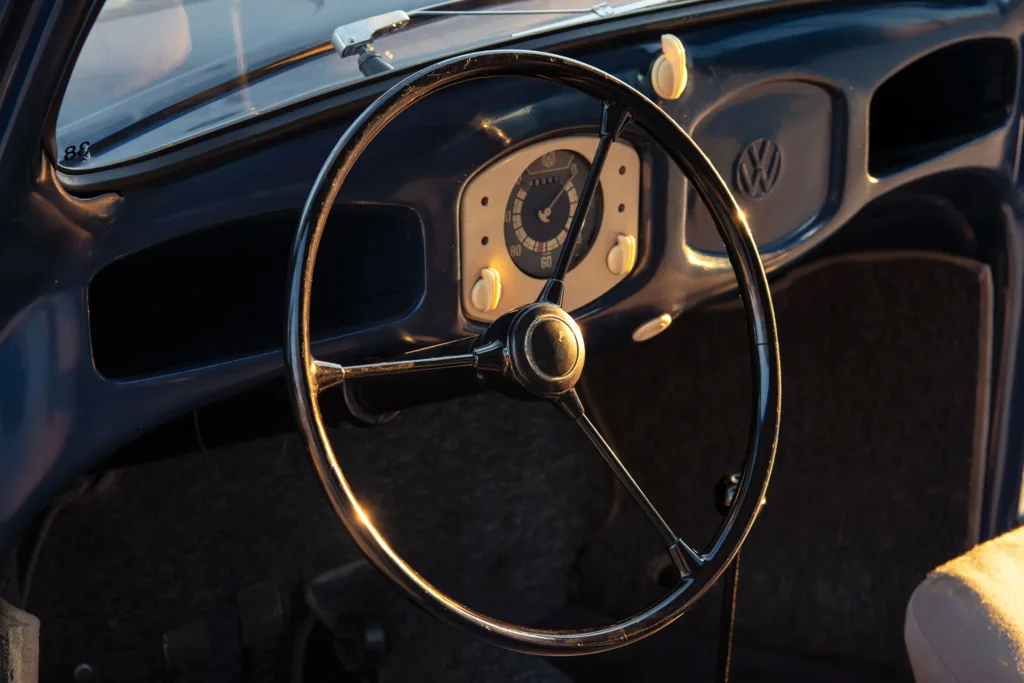
The 1949 model introduced several refinements over its earlier counterparts, including a reworked instrument panel featuring a large single gauge for ease of reading, an under-dash hood release replacing the previous locking handle on the exterior, and removal of license plate identifiers prominent on the rear deck. Though modest, these updates represented Volkswagen’s commitment to evolving the Beetle progressively while maintaining the core design virtues that made the car accessible and affordable.
Economic Accessibility and Global Impact
Economic accessibility was a major selling point, with the Volkswagen Beetle 1100 Standard priced competitively in the American market at $1,280 for the two-door sedan, and slightly higher trim levels offering enhanced features such as sunroofs. The vehicle’s durability and low operating costs sparked rapid adoption worldwide and catalyzed the mass motorization of postwar societies. Its straightforward mechanics, paired with air cooling (no radiator needed), allowed it to excel in varied climates and terrains, which contributed to its legendary global presence.
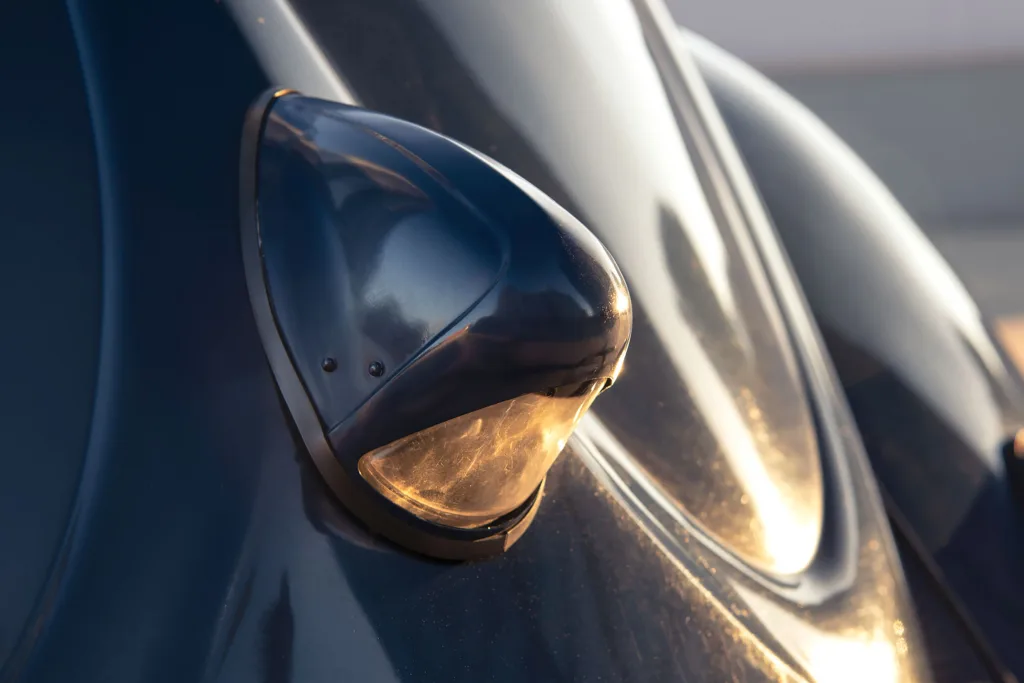
The Beetle’s production surged following 1949, leading to the eventual surpassing of the Ford Model T’s production record in 1972 after over 15 million units were produced. The model’s formula proved so successful that production continued, with incremental improvements, right through to 2003—cementing its position as one of the most enduring, influential automobiles in history.
Legacy and Conclusion
In essence, the 1949 Volkswagen Beetle 1100 Standard exemplifies the perfect blend of historical resilience, engineering simplicity, and societal impact, evolving from a wartime project into an everlasting automotive icon that changed personal transportation forever.