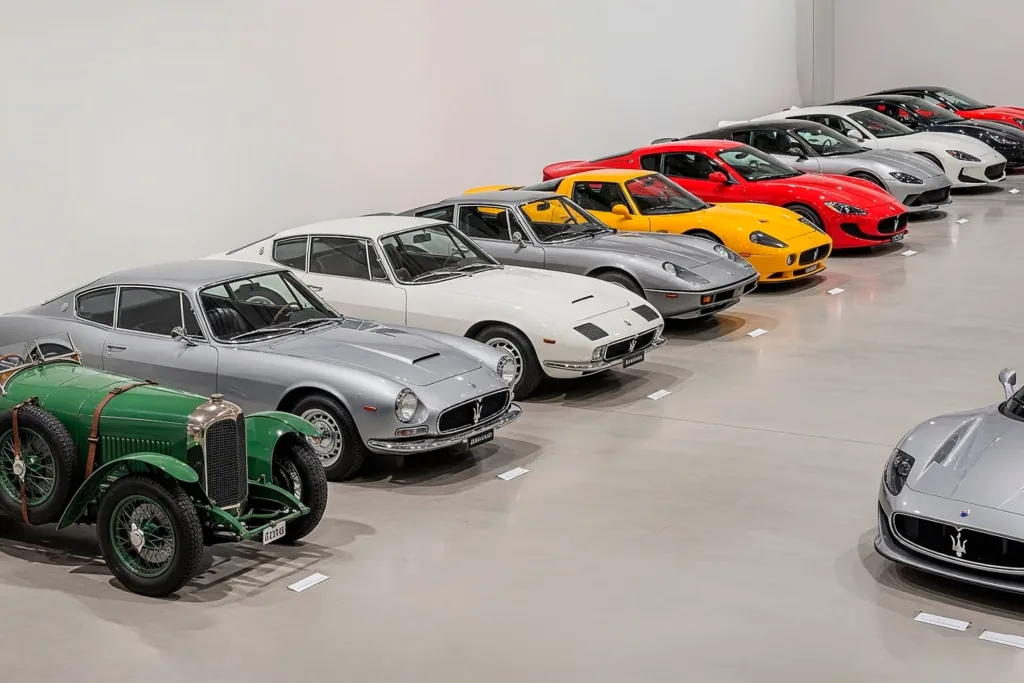
Maserati is one of the legendary car brands, its name evoking images of heroic drivers battling fiercely on the track. As with many other manufacturers, a glorious past wasn’t enough to prevent the company from ending up on the brink of extinction, but Maserati was reborn, producing a range of exceptional automobiles.
The 90th Anniversary Celebration
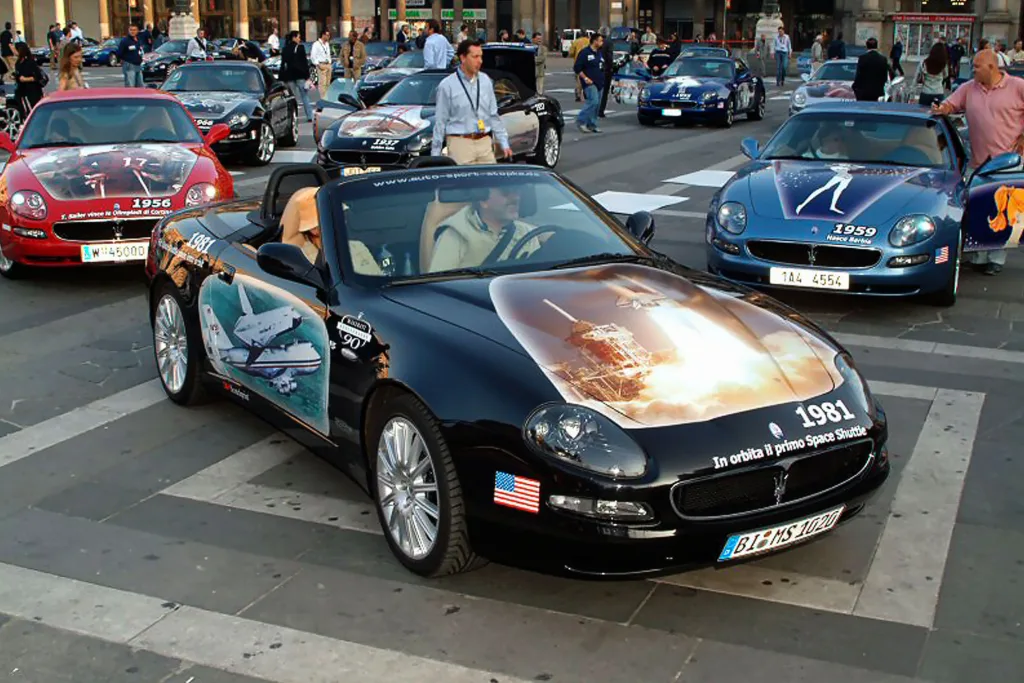
In the summer of 2004, Maserati celebrated its 90th anniversary. The company organized a rally from Milan to Rome for 90 specially decorated Maserati Coupés and Spyders—one car for each year of the company’s existence. Very few companies have lasted so long, making it a worthy cause for celebration.
The rally began in Milan’s central square, Piazza del Duomo, where the cars were parked in the shadow of the Gothic cathedral. The cars then proceeded to Modena, the epicenter of Italian sports car history and Maserati’s current home.
They drove into Piazza Roma and parked opposite the Palazzo Ducale. The stay in Modena was a highlight for participants, but the company also organized a special factory tour. For fans who had traveled from as far as America, seeing where these cars were made was thrilling, but some were even more impressed by the historical cars participating in the rally. The diversity, quality, and quantity of vintage Maseratis were astounding.
Founding and Early Racing Success ща Maserati
The rally continued to Rome, and as the cars passed the Colosseum, it was impossible not to reflect on history. While Maserati’s 90-year history is a blink compared to the Roman Empire’s longevity, its life has been quite remarkable.
The company was founded in 1914 when the automobile was still a novelty, fueling the imagination of millions worldwide.
Racing turned drivers into heroes and beckoned all who had earned enough to get behind the wheel. The Maserati brothers were inspired by cars. After their initial four-wheeled effort in the early 1900s, World War I interrupted their activities. Alfieri Maserati, who owned a spark plug factory, was already planning his next step.
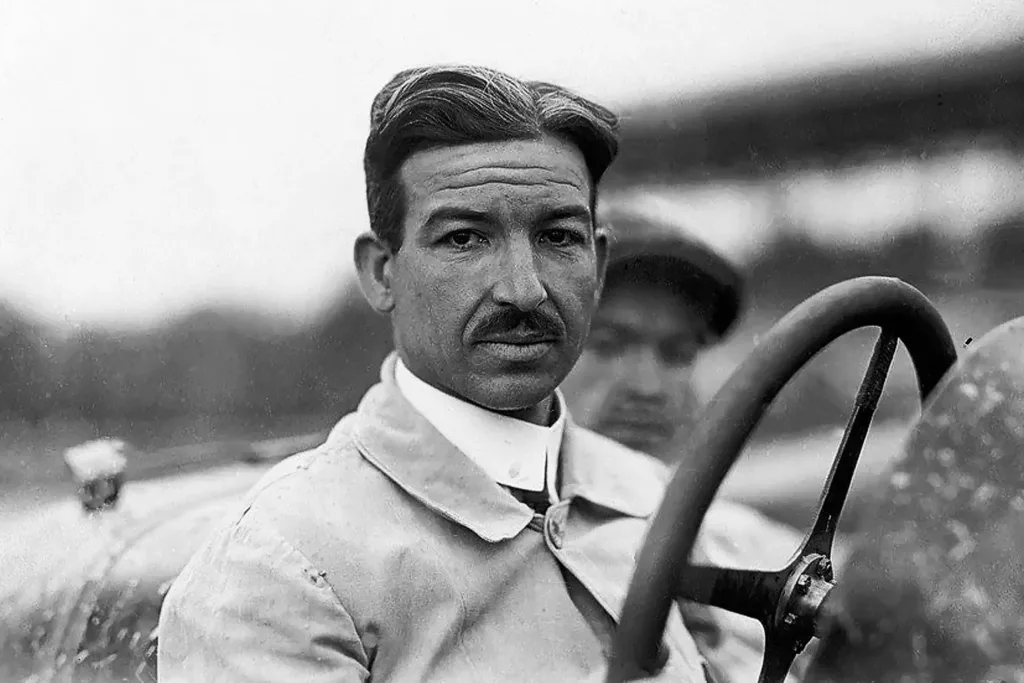
After the war, the Maserati brothers resumed work, modifying cars made by Isotta Fraschini. Even in basic trim, these attracted wealthy, speed-loving clients. They converted luxury Italian cars into racing machines for both clients and themselves to compete in races.
Alfieri planned to create a car under the Maserati name, and another brother designed the brand’s recognizable emblem: the Trident of Neptune.
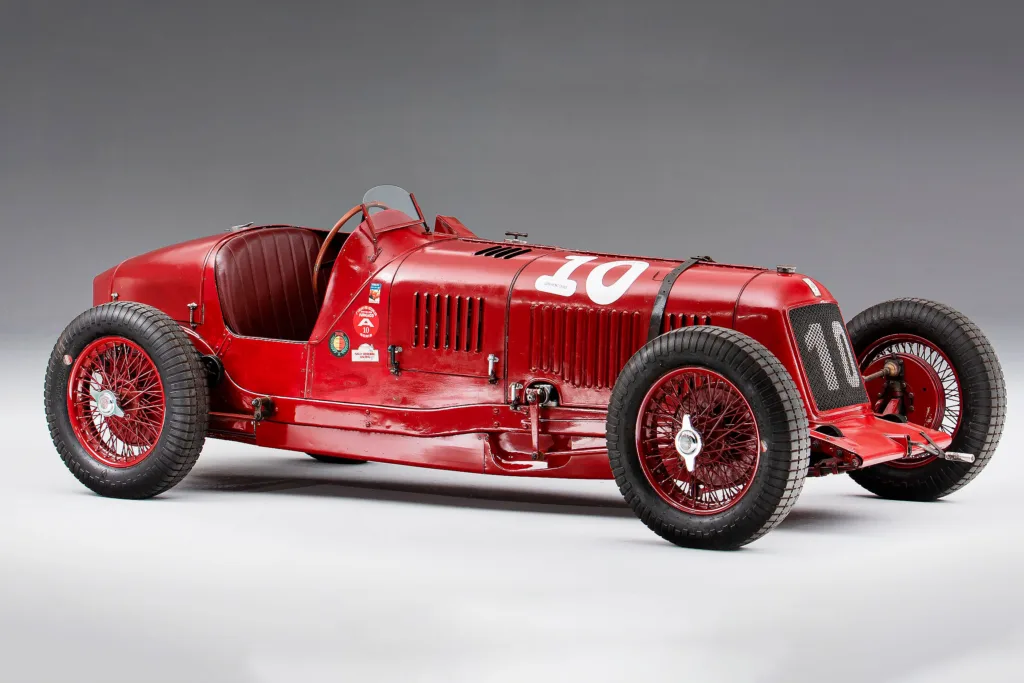
Their first car, the Maserati Tipo 26, was ready for its debut in April 1926. Its first outing was the incredibly challenging Targa Florio race in the hills of Sicily. The supercharged engine brought it victory. This was a glorious start for the Tipo 26 and its creator and driver, Alfieri Maserati.
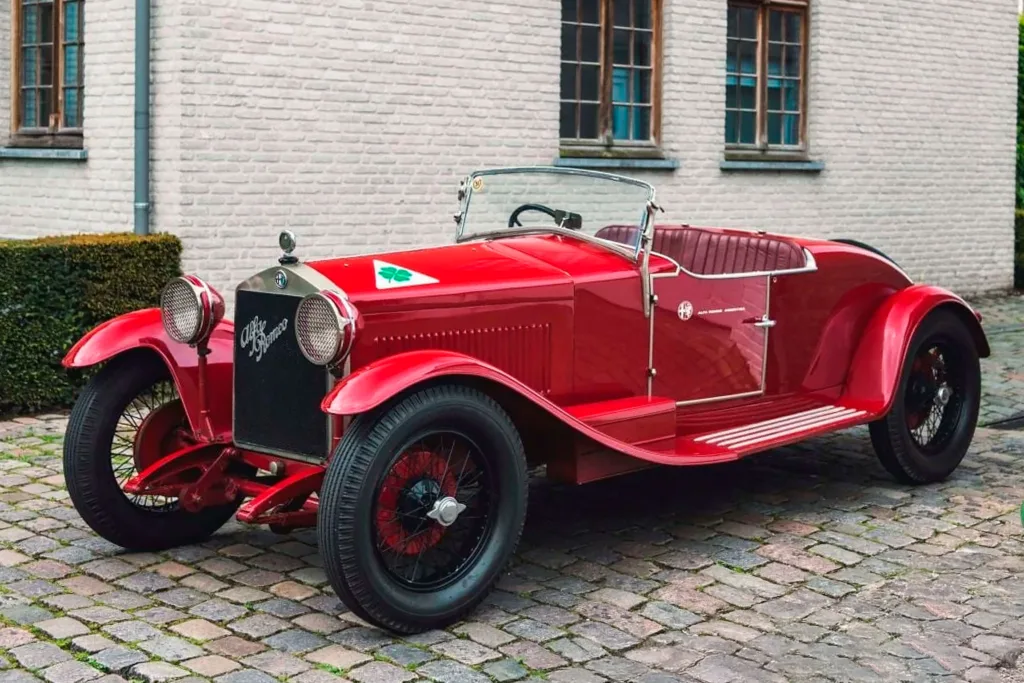
The strained situation at Alfa Romeo, where their lead driver Tazio Nuvolari overshadowed his teammates, gave the Maserati brothers a chance. They convinced Achille Varzi to join their team, and he began winning in their car, realizing his full potential with the new team.
Victories in the Coppa Acerbo, the Monza Grand Prix, and the Spanish Grand Prix brought him the title of Italian Champion. Other famous drivers, like Giuseppe Campari and even Nuvolari, moved to Maserati.
The growing number of victories enhanced the company’s fame. Alfieri also developed small, maneuverable cars that excelled in road races, such as the famous Mille Miglia (1000 miles). In the 1931 race, the team won in the sports car class. More victories followed in 1932, including the French Grand Prix with Campari and the Rome Grand Prix with Luigi Fagioli.
Tragedy and the German Challenge
Despite the successes, the company suffered a tragedy: Alfieri Maserati unexpectedly died in 1932 due to kidney problems at the age of 44. The arrival of new German cars in Grand Prix racing halted Maserati’s winning streak.
German racing programs received government support, making it difficult for privateer teams like Alfa Romeo and Maserati to compete with the giants—Mercedes and Auto Union.
Maserati lacked the necessary funds and engineers to rival them. They operated on an extremely limited budget, making it difficult to prepare and refine their cars on time.
In 1938, realizing the moment had come, the remaining brothers sold Maserati. The company was purchased by industrial magnates from Modena (the Orsi family), but the brothers received ten-year contracts to stay on.
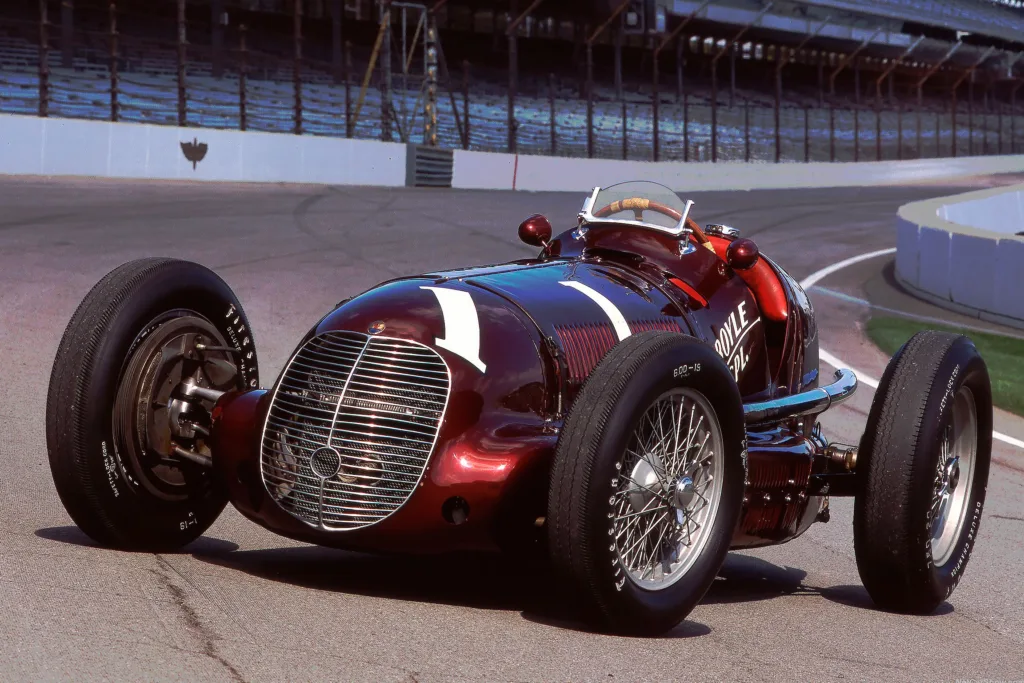
Although factory racing was winding down, victories still came, notably two consecutive Indianapolis 500 wins in 1939 and 1940 with driver Wilbur Shaw.
Maserati’s victory in the 500-mile race was the first for an Italian car on that track. World War II soon engulfed Europe again, stopping races, and the Maserati brothers were tasked with developing military trucks.
The Post-War Rivalry with Ferrari
After the war, Maserati resumed passenger car production and returned to racing, but the Maserati brothers left the company after their contracts expired. They founded their own company, OSCA, to continue building racing cars and a limited number of street cars.
Maserati, now without the brothers’ direct involvement, and Alfa Romeo resumed their fight for victories, no longer threatened by the Germans on the track.
Maserati released the new A6GCS model with a sleek body and a six-cylinder engine. Alberto Ascari drove the car to victory in its first race in Modena.
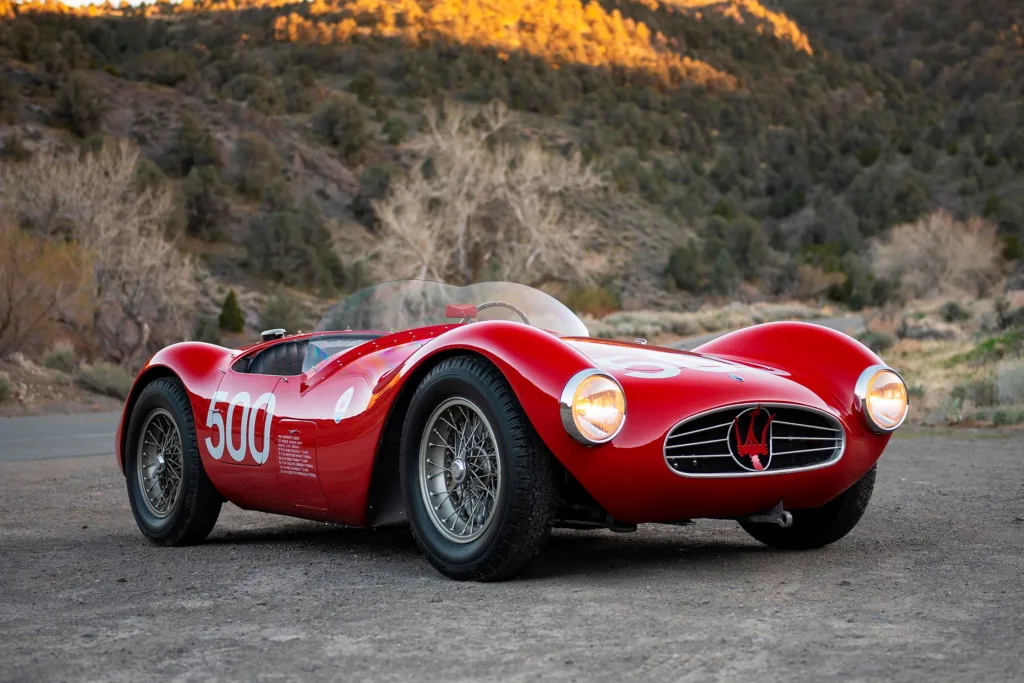
As the company experienced a renaissance, a new competitor entered the arena: Ferrari. In 1947, a purely Italian rivalry began between Maserati and Ferrari on the world’s major tracks.
In 1953, the team’s new driver, Juan Manuel Fangio, finished second in the World Championship behind Ferrari.
This convinced the company to develop a new car, leading to the 250F model, which started winning in 1954. This car brought Fangio victories in the Argentine Grand Prix and the World Champion title. Maserati’s Formula 1 peak was in 1957 when Fangio won his fifth World Championship title.
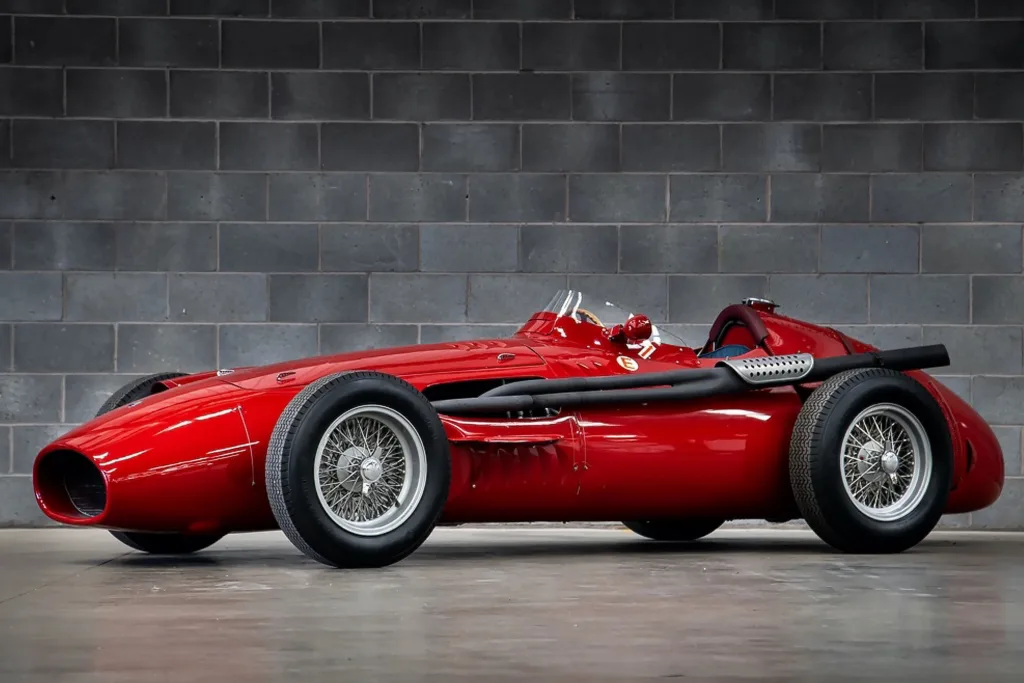
However, such extensive racing activities required significant financial resources. Maserati’s factory racing programs ended abruptly in 1957 after a catastrophic final race of the World Sports Car Championship in Caracas, Venezuela.
Multiple accidents and car breakdowns meant that none of the five Maserati cars finished, allowing Ferrari to win the championship.
The Rise of the Grand Tourers Maserati
Although the Maserati factory team was gone, the company developed racing cars for private and amateur drivers. The most famous were the Tipo 60 and Tipo 61, nicknamed “Birdcages” because their chassis consisted of approximately 200 thin tubes. These lightweight machines excelled on the track, even surpassing English sports cars and Porsches in some races.
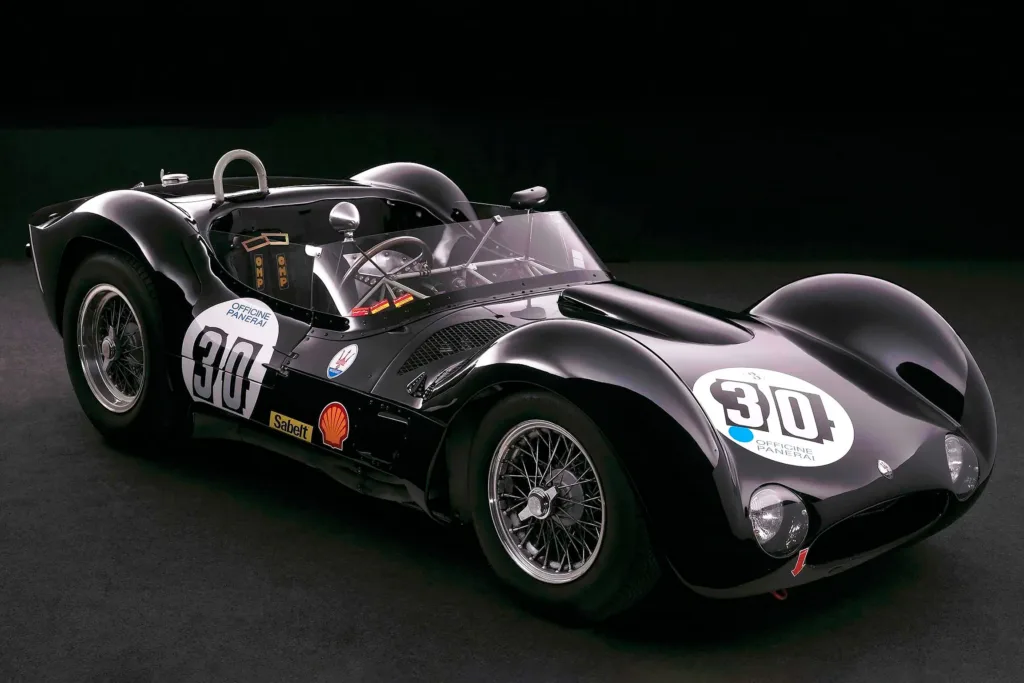
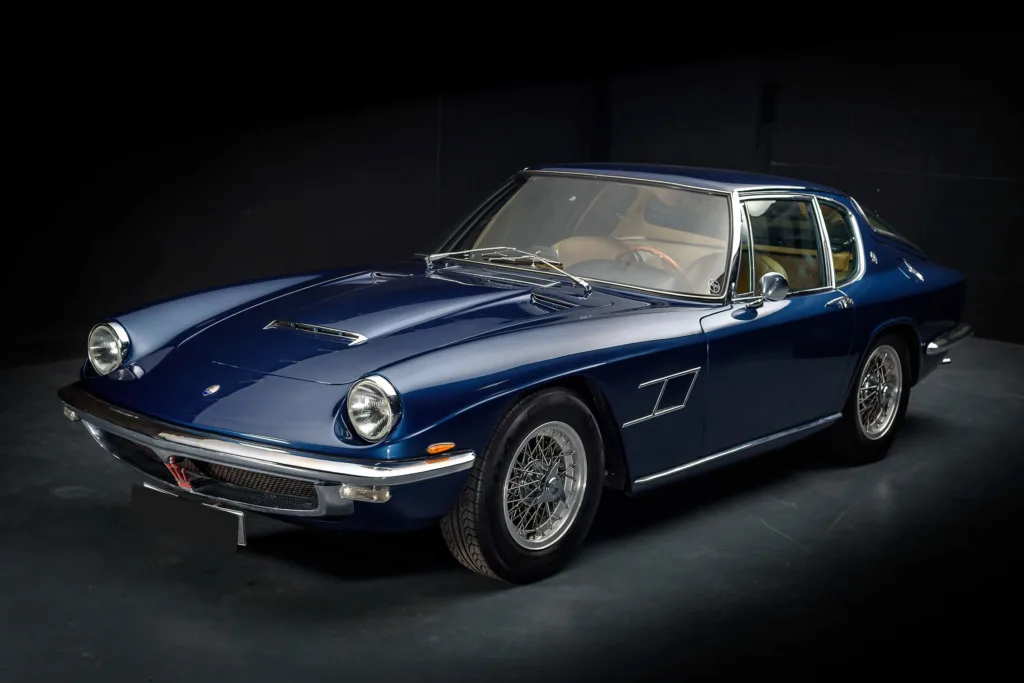
Maserati’s main focus shifted to producing sports cars for the open road, such as the Mistral (named after a strong wind), which appeared in 1963. It was one of the first production cars with a hatchback-style body. The Mistral, which could be optioned with manual or automatic transmission, was the last Maserati model equipped with a straight-six engine.
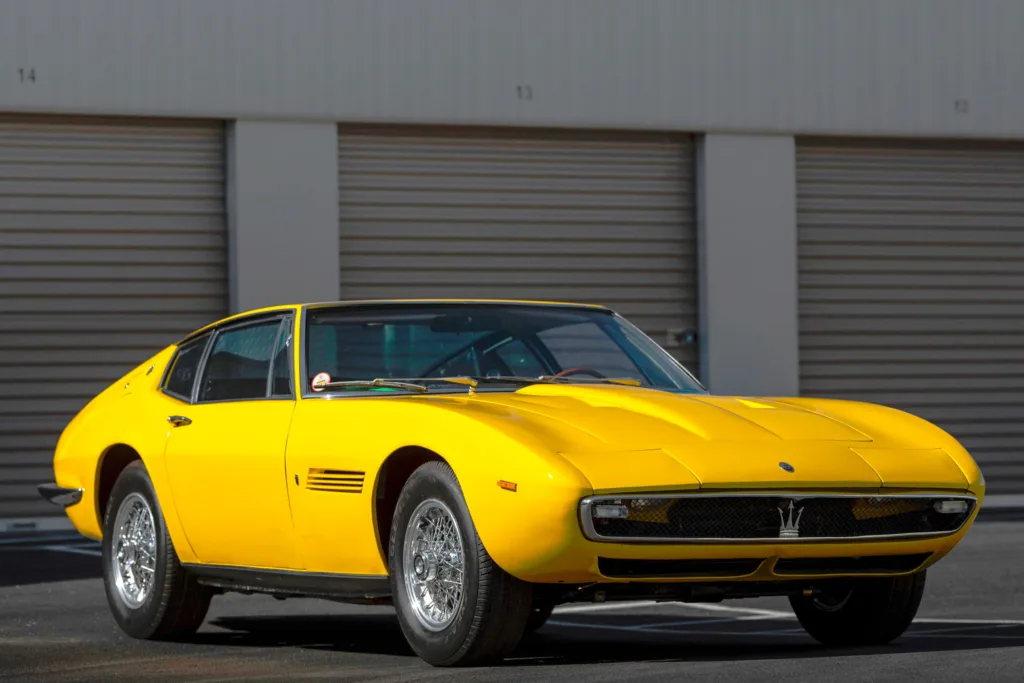
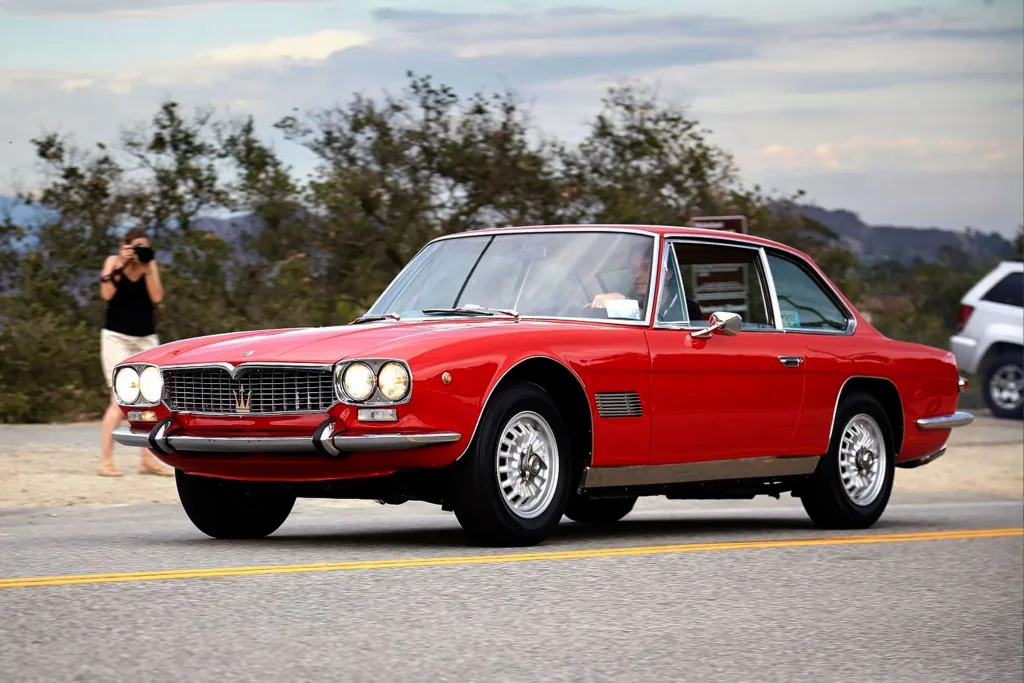
In 1966, Maserati released the limited-production four-seater Mexico and the stunning Ghibli coupé (named after an Egyptian wind), designed by Giorgetto Giugiaro. The Ghibli was one of the iconic cars of the period, so impressive that Henry Ford II reportedly wanted to buy the whole company.
Crisis, Detomaso, and Fiat Ownership
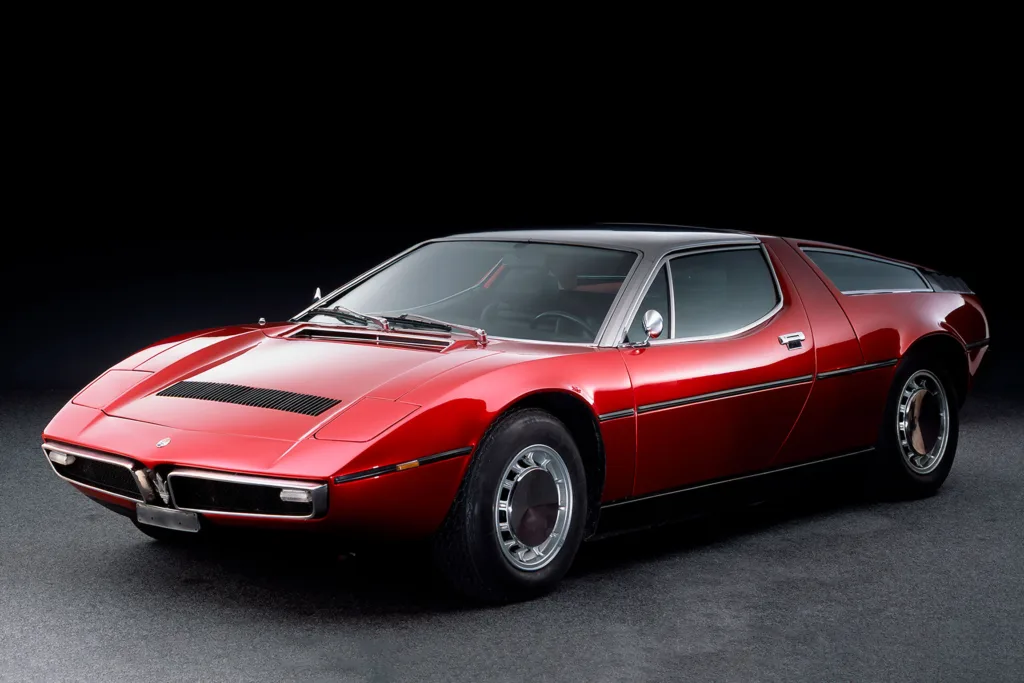
Tired of the car business, the company owners sold Maserati to Citroën in 1968. Citroën’s investment allowed Maserati to release the Bora, its first mid-engined model, in 1971. However, this era was short-lived.
The 1973 OPEC oil crisis caused a sharp surge in oil prices, plunging Maserati and most car companies into a deep crisis.
Citroën was then sold to Renault, leaving Maserati without a parent company. With the help of the Italian government, Maserati was eventually sold to Alejandro De Tomaso.
In 1981, De Tomaso introduced the Biturbo, a sporty sedan. This car was a success, selling over 6,000 units. It was conceived as a more accessible, everyday Maserati aimed at a wider market.
De Tomaso also briefly returned the company to racing with the Barchetta mono-series in the early 1990s.
In 1993, as De Tomaso faced health and business issues, Fiat acquired Maserati. By 1997, 100% of Maserati’s assets were transferred to its former rival, Ferrari.
Sharing history and similar features, the new relationship helped Maserati develop a new lineup of cars.
Ferrari strategically used Maserati for expansion while maintaining Ferrari’s exclusivity. The first global model of this new era was the Spyder, launched in 2001. In 2003, Maserati released the Quattroporte, offering a new vision for the sedan concept with unparalleled style.
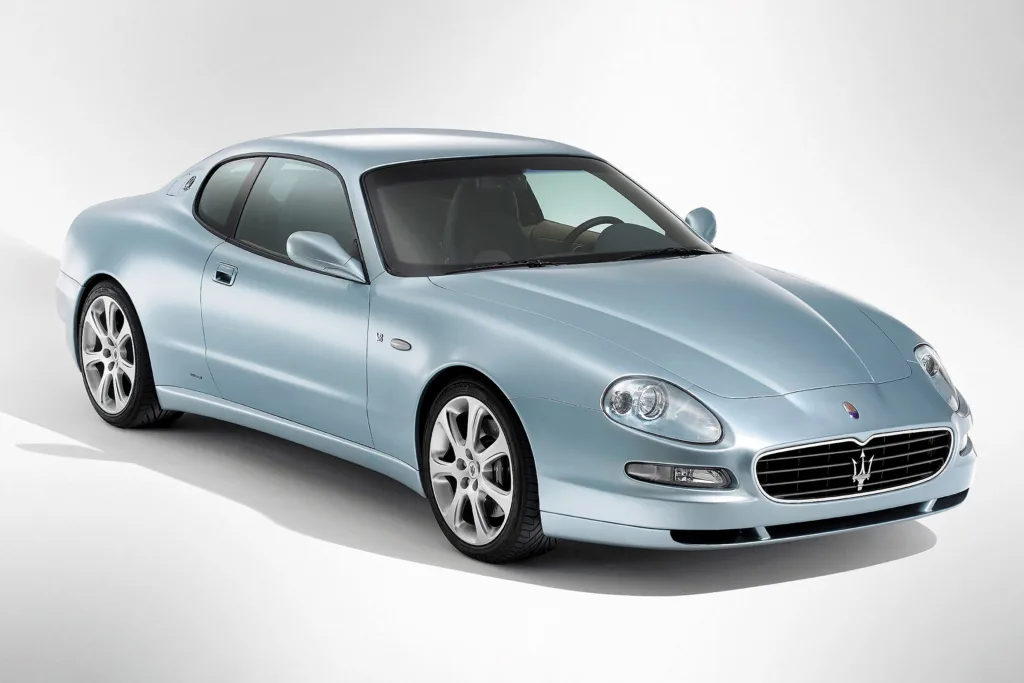
Other projects, such as the GranSport model, affirmed that Maserati had found itself again.
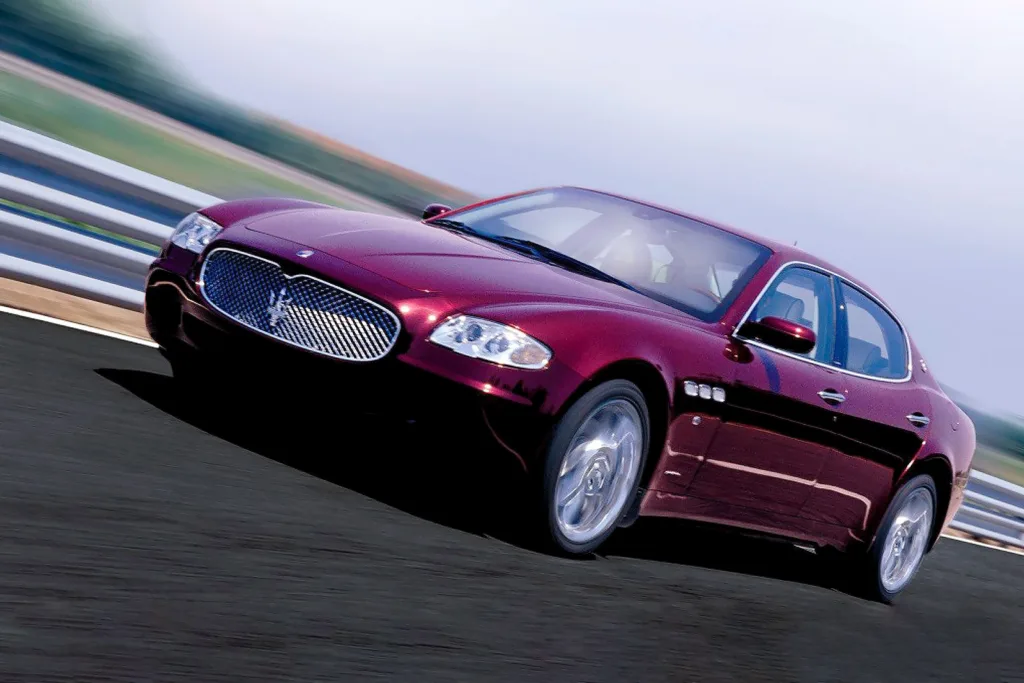
For over 90 years, Maserati has created exceptional cars for both the racetrack and the road. The company survived financial crises, wars, and changing fashions, and it has regained its place among the world’s best car manufacturers.
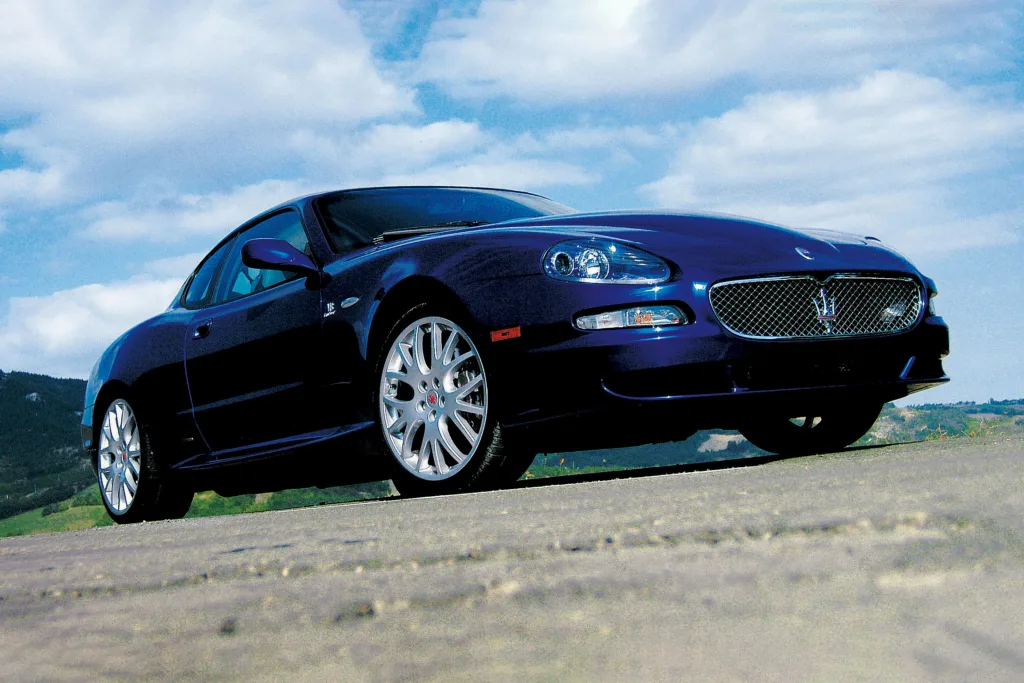
Maserati in the Modern Era (2010s-Present)
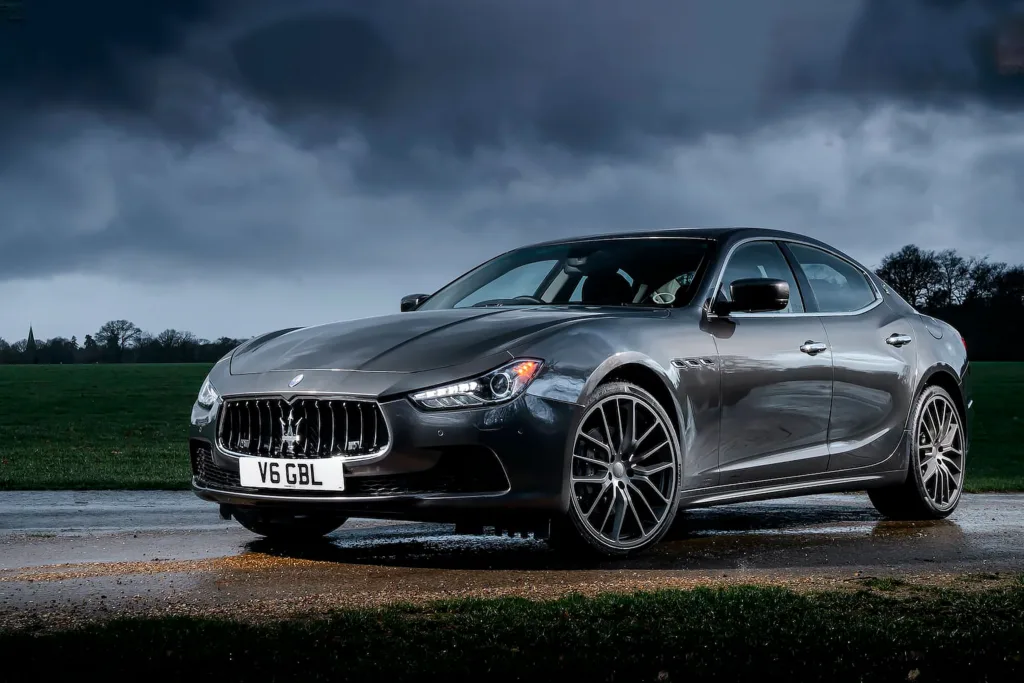
Following its period under Ferrari control (which ended around 2005), Maserati was integrated directly into the Fiat Group (now Stellantis) and embarked on an ambitious strategy of volume expansion, focusing on filling key luxury market segments. This led to the introduction of models designed for broader appeal:
- Ghibli (2013): A smaller, executive sedan that served as a volume driver.
- Levante (2016): The brand’s first-ever SUV, capitalizing on the high demand for luxury crossovers.
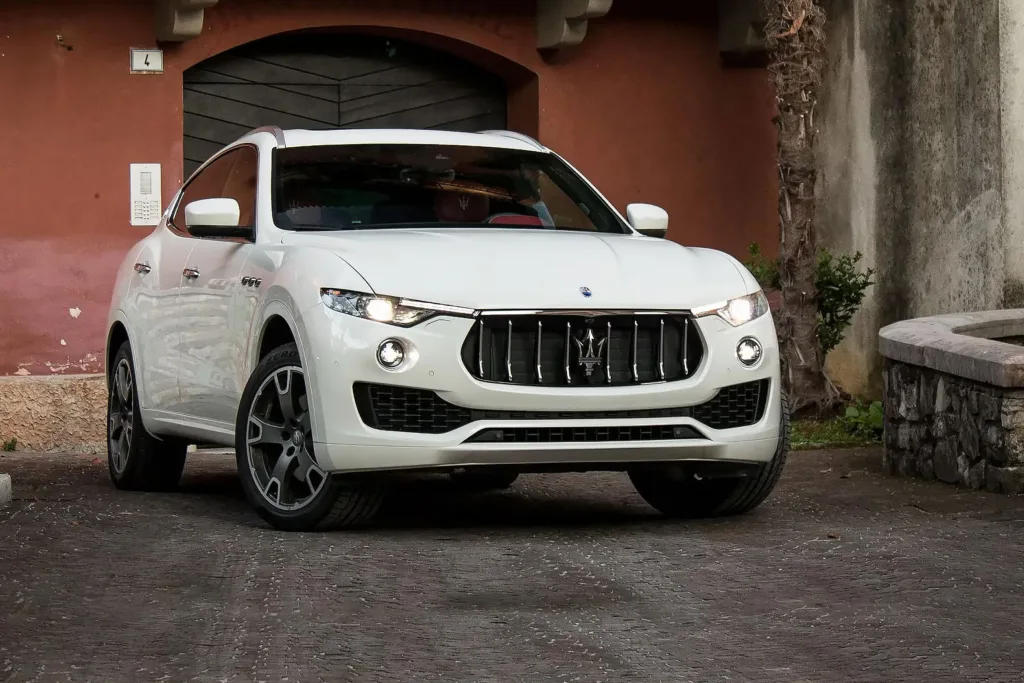
While these models significantly boosted production, some enthusiasts felt the brand’s unique identity was diluted.
The New Era of Performance and Electrification
In the 2020s, Maserati began a dedicated effort to return to its high-performance, exclusive roots while embracing electrification. This shift is centered on the concept of “Folgore” (Italian for lightning), which designates its all-electric models. Key recent introductions and developments include:
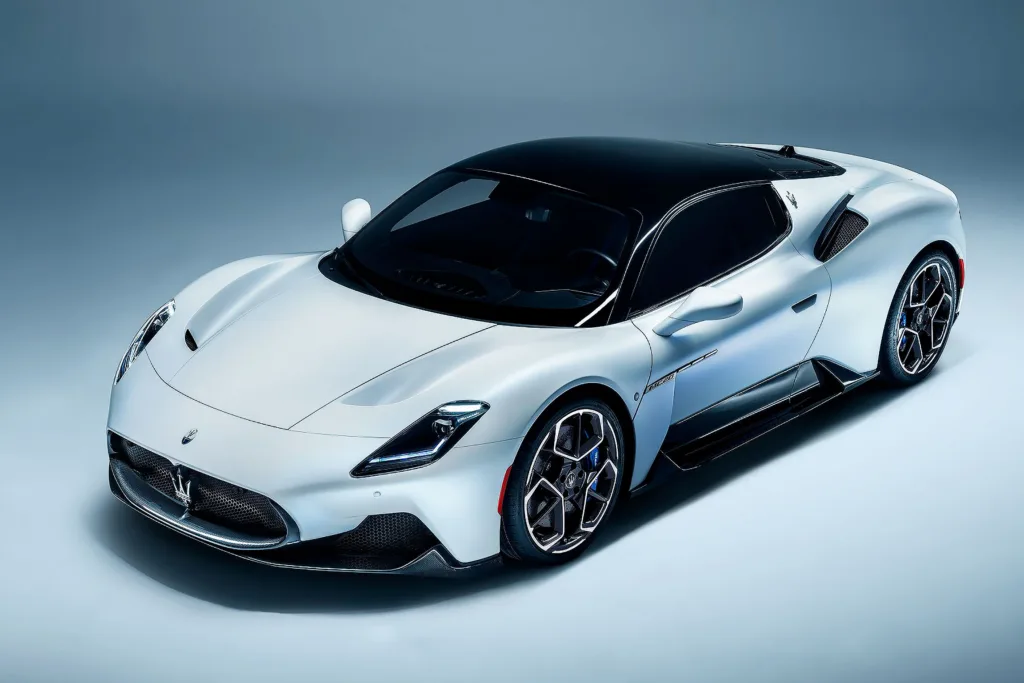
- MC20 (2020): A mid-engined supercar that marks the true return of Maserati to high-performance exclusivity. It features the Nettuno engine, a highly advanced V6 with F1-derived twin-combustion technology—the first engine designed and built by Maserati in over 20 years.
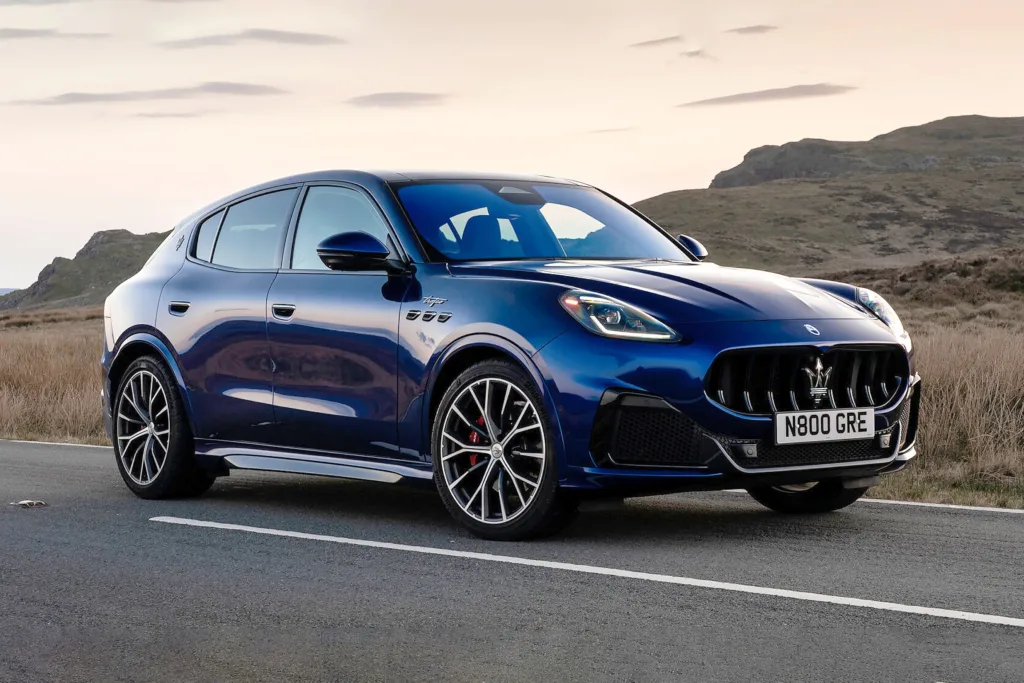
- Grecale (2022): A compact luxury SUV positioned below the Levante, offering performance versions and, significantly, the first all-electric Maserati, the Grecale Folgore.
- GranTurismo (2023): The return of the iconic GT coupé, offered with both the Nettuno V6 engine and a powerful all-electric GranTurismo Folgore version, which boasts three electric motors and over 750 horsepower.
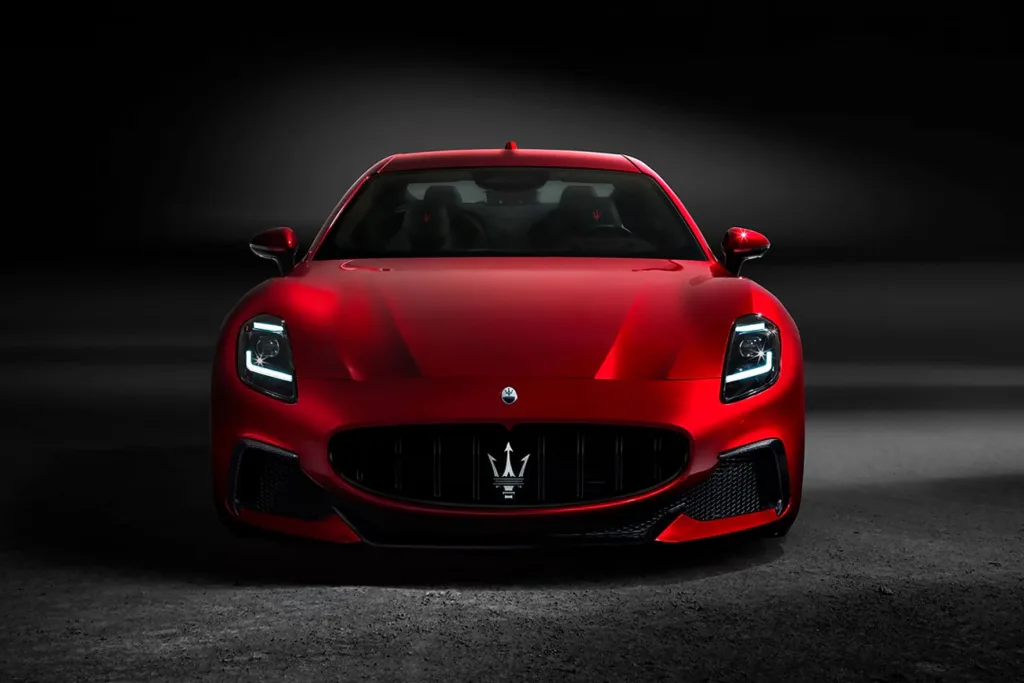
Today, Maserati is positioning itself as a leader in high-end, Italian-made luxury performance, committed to being the first luxury brand to offer an electric version of every model by 2025 and to fully electrify its lineup by 2030.
This strategy aims to blend its historic racing DNA with cutting-edge electric powertrain technology.