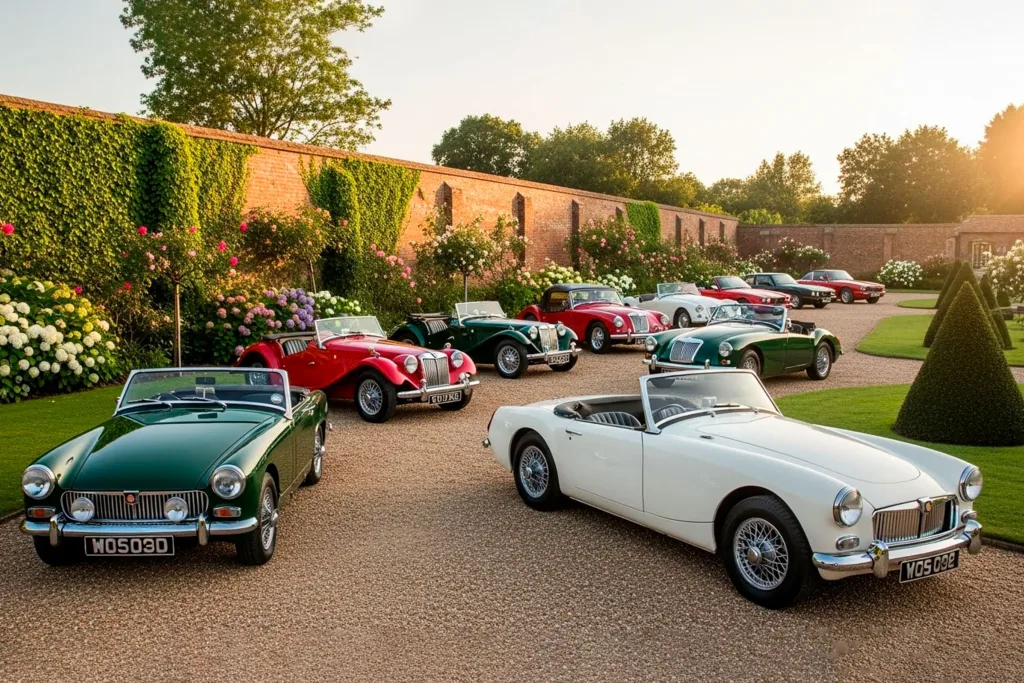
Classic MG roadsters brought the joy of driving a light, responsive car to millions of people around the world. This car was obedient, created a feeling of speed, and justified every dollar invested in it. MG continues to prove that driving pleasure doesn’t have to be expensive; you don’t need to be wealthy to drive an MG on the road.
The Origin of MG
MG is an abbreviation for Morris Garages, an Oxford-based dealer of Morris cars. Cecil Kimber took charge in 1922 and began modifying the Morris Cowley, significantly lowering the chassis and giving the body a sportier look. The result was the “Old Number One,” the first MG sports car. Morris Garages moved three times before relocating to Abingdon in 1929, where the company was officially renamed MG.
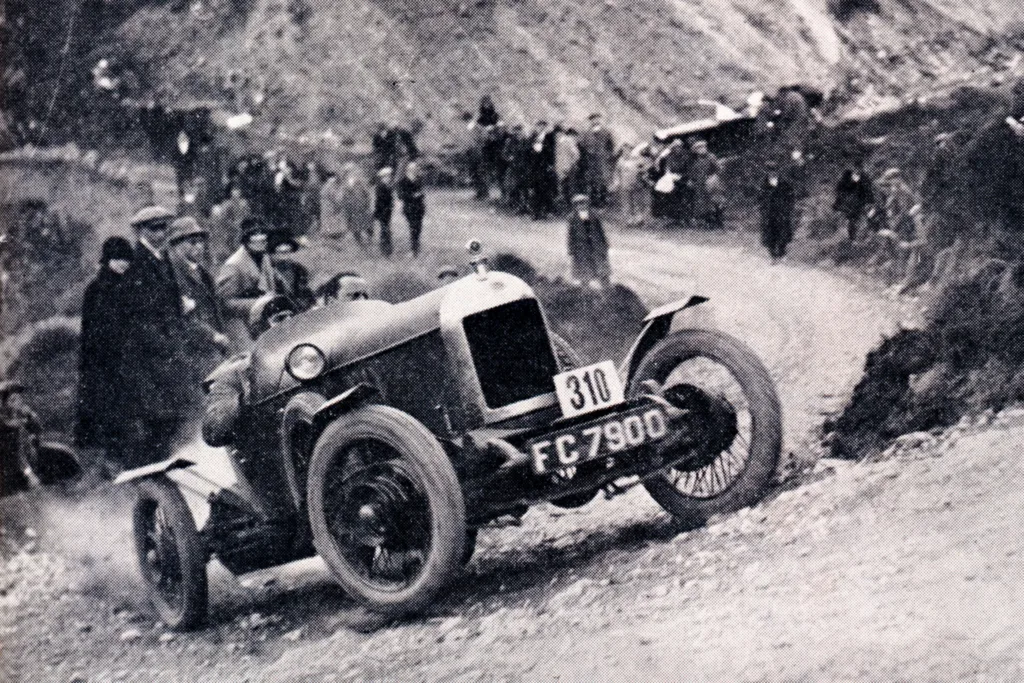
Cecil Kimber’s small sports cars became a sales hit. This was exactly the car buyers needed: a small, fast car for Sunday races. Most importantly, its price was moderate. The Great Depression had just begun, and most people couldn’t afford to buy a Bentley or a Mercedes. The “MG Midget” was the ideal option. Despite the low cost, every MG was hand-assembled by skilled craftsmen.
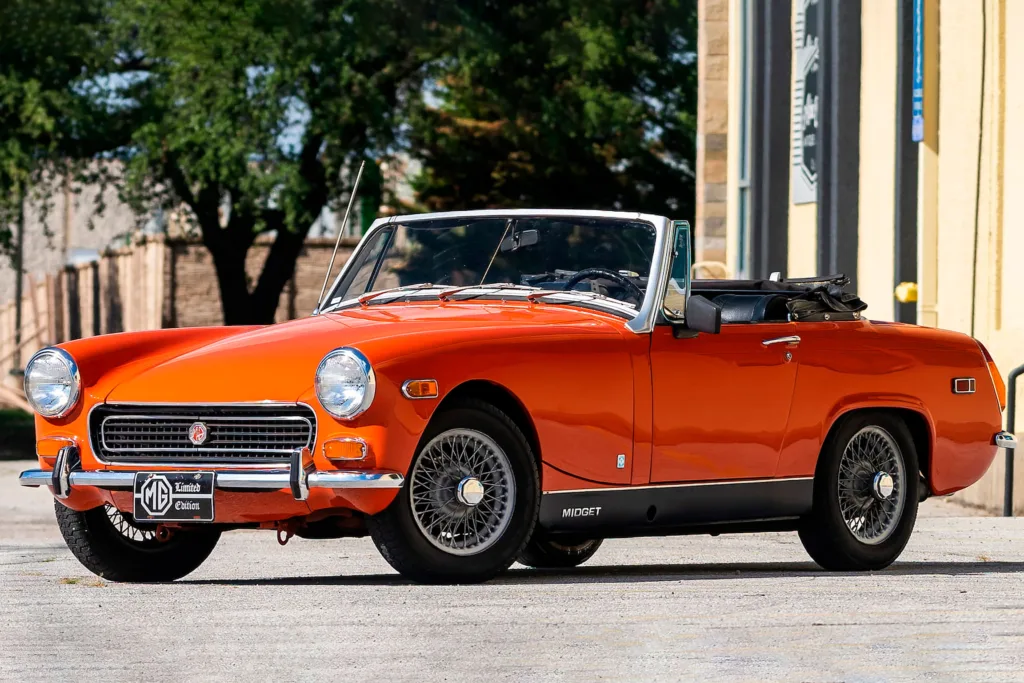
Each car was tested, hand-painted, and underwent pre-sale preparation. Buyers didn’t have to wait for the car to reach a dealer; MG allowed customers to pick them up directly from the factory.
Many buyers immediately headed to a local rally, and the small but reliable car showed its mettle on the most difficult terrain.
The first racing success for MG came in 1930 at the Brooklands track. Built in 1907, the Brooklands circuit was the world’s first purpose-built banked concrete motor racing track. The two-day races there were comparable to the 24 Hours of Le Mans. From the very first run, the tiny MGs defeated the powerful Bentleys. One of the Bentley racers even exclaimed, “We were beaten by fleas!” MGs continued to dominate sports car racing in the early 1930s. They won the Irish Grand Prix, the Tourist Trophy on the Isle of Man, the Ulster Tourist Trophy (not “in Volster”), and they achieved victories in Italy, Germany, Czechoslovakia, and Monaco.
Speed Records and American Interest
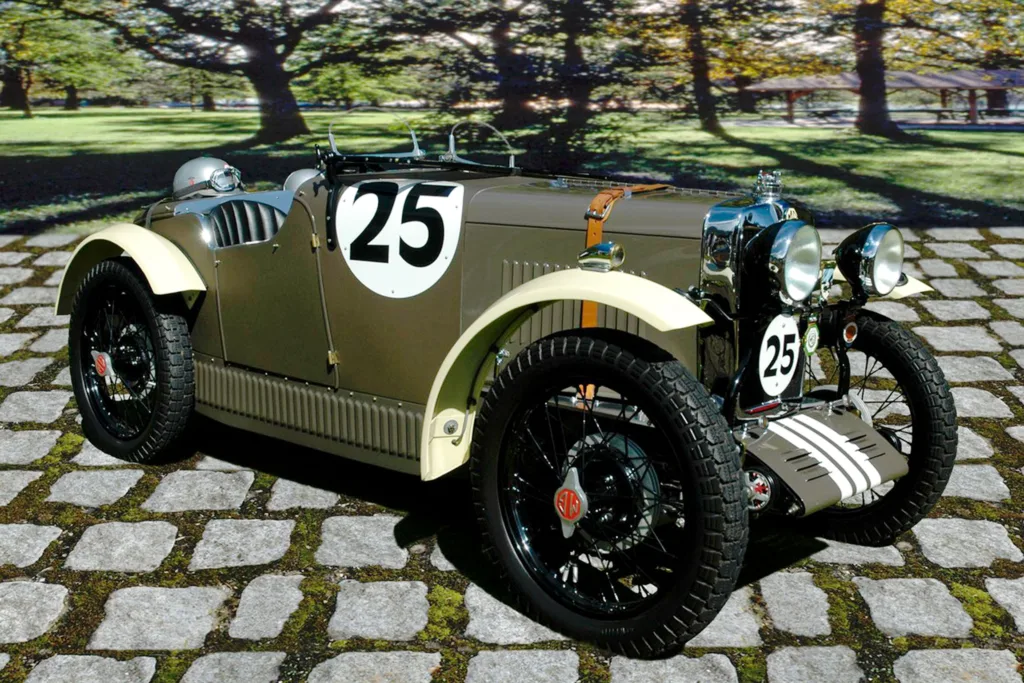
Strengthening MG’s reputation on the race track led to increased sales. Racing fans often came to the factory to see the final work on their cars and chat with the craftsmen. Some lucky individuals even got to talk with famous rally drivers, like Ian Appleyard, on the eve of a competition.
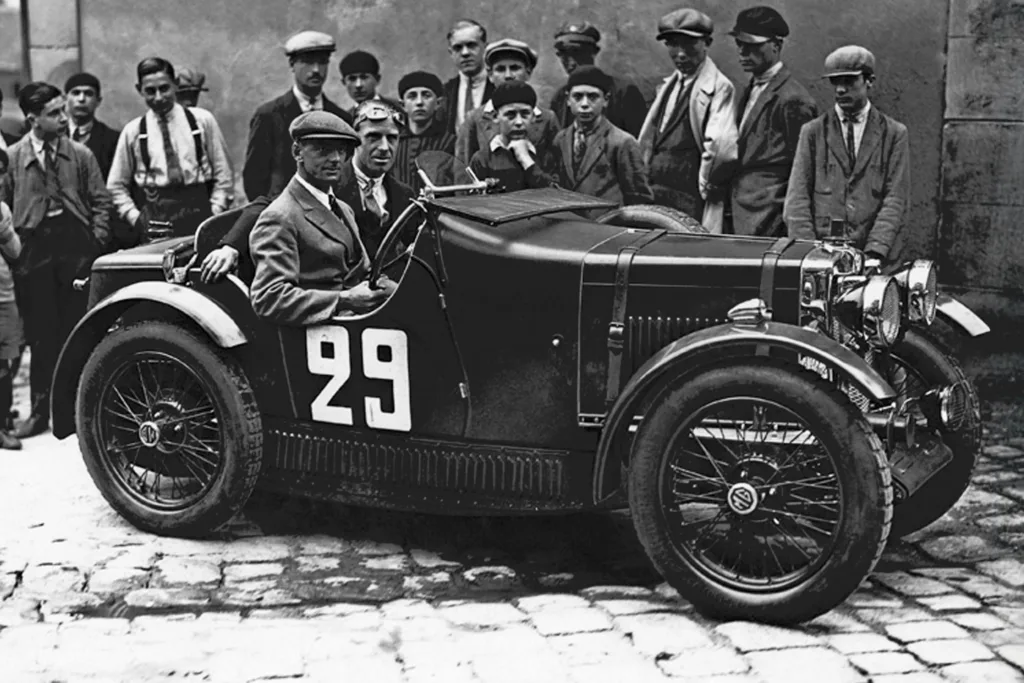
The MG Midget began to gain popularity in the USA thanks to the heirs of a publishing empire, the Collier brothers. They started practicing racing on their parents’ estate in New York in the 1930s. They built a track and invited their friends to participate in races. Brothers Baron Jr., Miles, and Sam (not Maelez) read about European road racing.
Once they saw it, they were immediately immersed in it. Initially, thanks to Baron’s wife, the MG was the favorite in their races.
She had seen these small sports cars at Brooklands and bought one as a wedding gift for her husband. The Colliers and their friends enjoyed this activity so much that they founded the Automobile Racing Club of America (ARCA) (not “Overlook” racing club). Numerous races were held on the estate. They soon began holding races on road courses they prepared throughout New England. They changed the name to the ARCA and began working to increase interest in this exclusively European type of competition. Their first race in Alexandria Bay, New York, attracted 10,000 spectators.
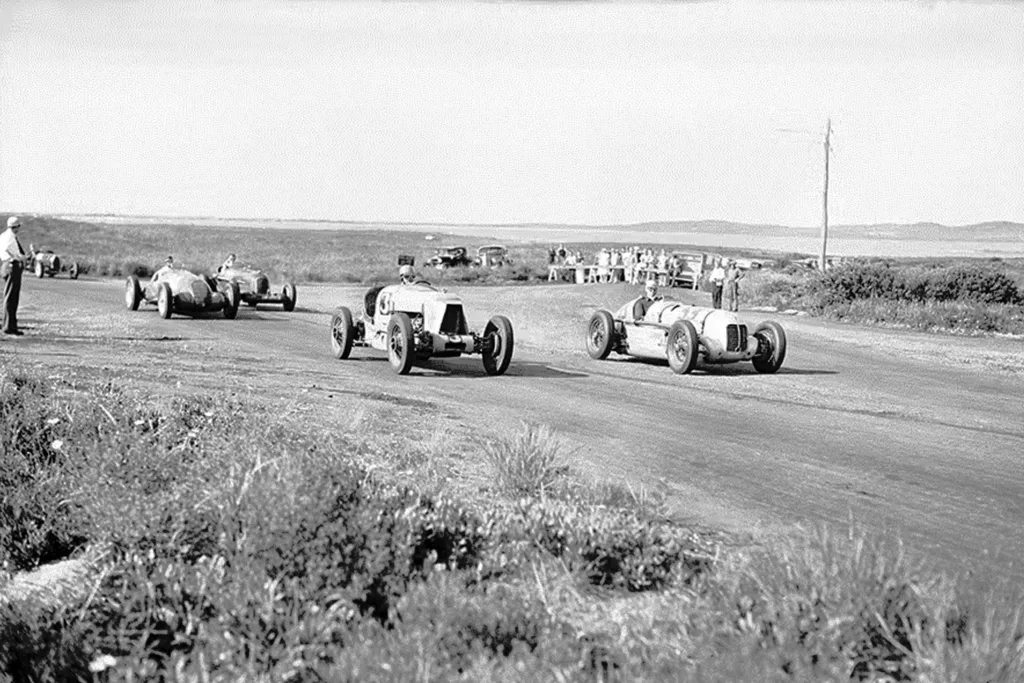
During this time, MG focused on speed records. A special car, the “Magic Midget,” was developed. In December 1930, the Magic Midget reached 140 km/h, breaking the previous Austin record of 135 km/h. In 1932, driver George Eyston was determined to exceed the 120 mph (193 km/h) mark on the Pendine Sands in Wales. Captain Eyston described this attempt to break the record:
“Arriving at the location, we found that it was covered with sharp shells. We had to ask the local school director; she canceled all classes, and the children helped us collect the sharp shells in a basket. Finally, everything was done, but as it turned out, with every tide, the sand accumulated a lot of water, which prevented us from achieving the maximum speed we were capable of.”
Eyston accelerated to 190 km/h but was determined to surpass the 193 km/h mark. For this purpose, the MG EX127 was created. It was a scaled-down version of the Magic Midget, so small that Eyston no longer fit in it. The record was broken by his replacement, driver Bert Denly. The car later reached 225 km/h on a German autobahn and was then given to Mercedes-Benz for research.
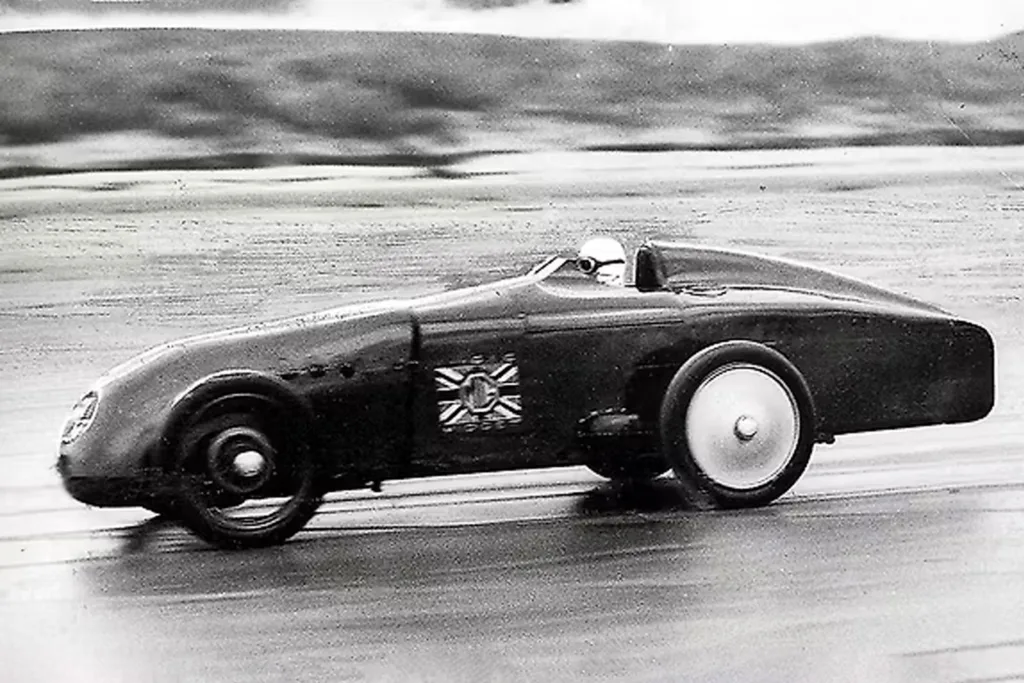
In 1935, MG made an announcement that stunned English racing fans: the company discontinued funding for its factory team. It stated that in the pursuit of victories and speed, it had already achieved its goal. Enough advanced technology had been developed that could be used in production cars for many years, and there was no race left that the company hadn’t already won. But before it was all over, the MG EX135 was assembled. It was MG’s most advanced model, with a futuristic, streamlined design that Mercedes and Auto Union later used.
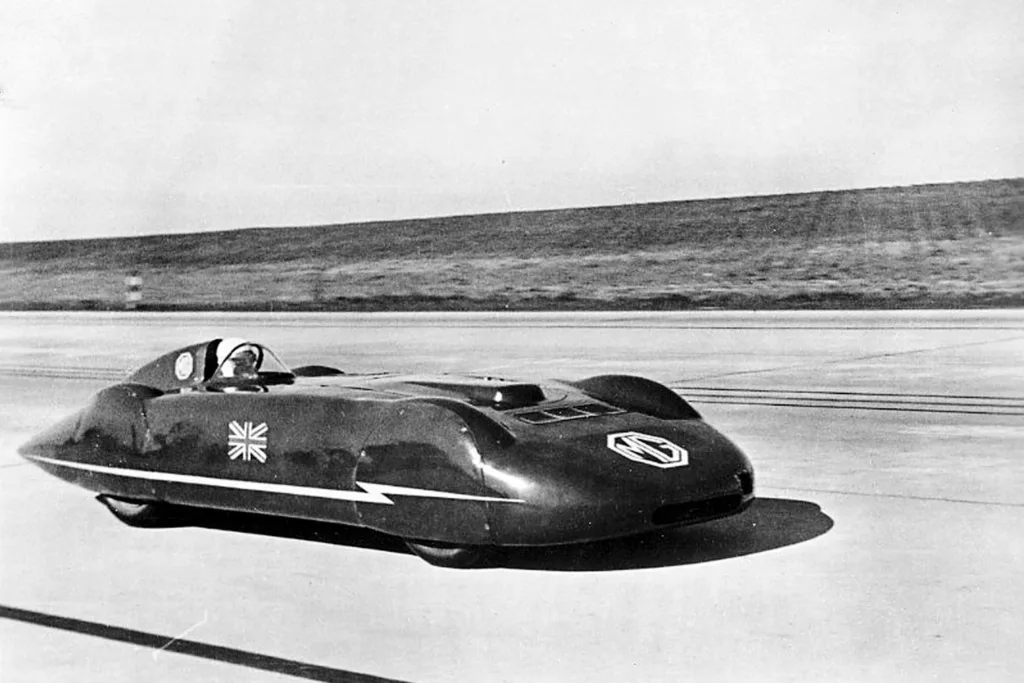
For many years, it belonged to various private owners until it finally came into the hands of Major Goldie Gardner. Thanks to the supercharged engine, Gardner managed to accelerate the EX135 on the German autobahn to a record speed of 331 km/h in its class (achieved in 1939, not on the autobahn, but on a section of road). The Abingdon factory was preparing for the future, introducing the MG TA model, which was supposed to replace the Midget series. Unfortunately, the TA was met coolly. When the improved MG TB model was prepared, the world war broke out.
Post-War Revival and Global Expansion
In 1939, with the start of the war, the MG factory shifted its production to military needs. One of its first orders involved repairing Matilda tanks. In 1941, MG won a tender for the assembly of parts for British bombers.
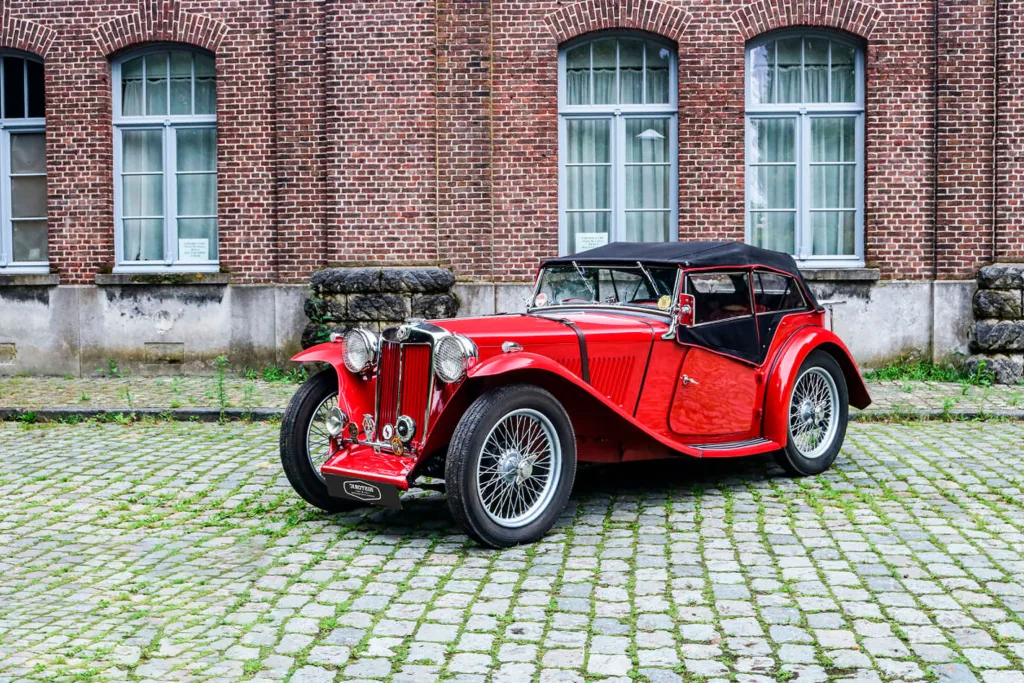
After the fire of the war was extinguished, Britain faced the difficult choice of how to restore its economy. Before the war, MG had announced the MG TC model, which was supposed to replace the TB.
Despite the fact that the car was outdated in terms of both technology and design, young war veterans were eager to participate in rallies and quickly bought up the cars.
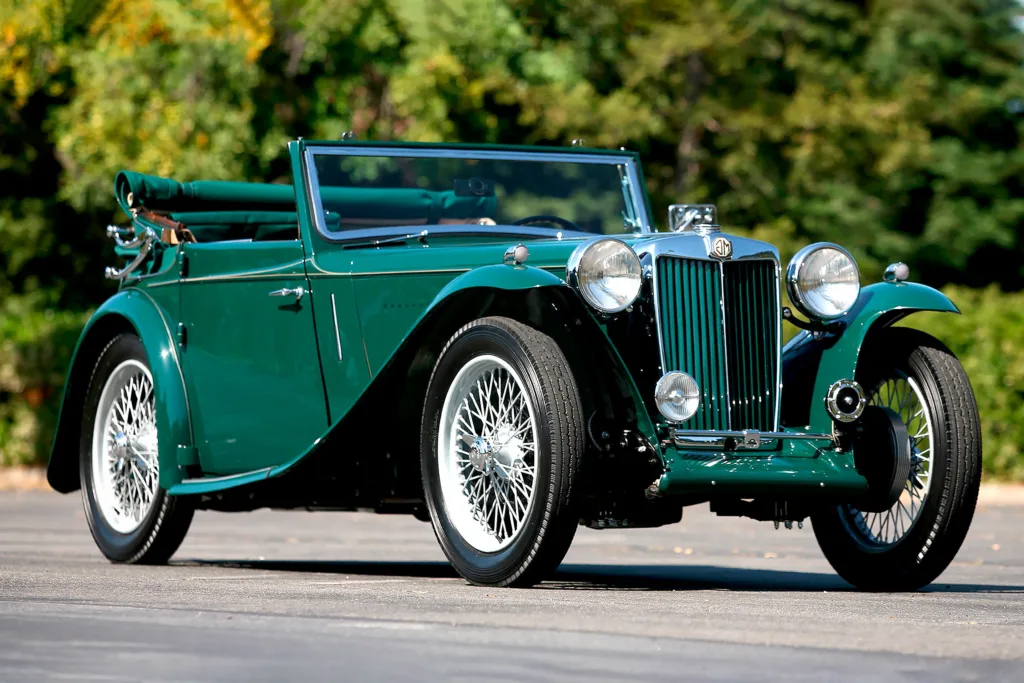
MG realized that the more cars exported, the more raw materials could be bought abroad. Therefore, attempts were made to sell cars worldwide to obtain much-needed currency. American soldiers returning from Europe sparked the MG phenomenon in the USA. Some of these young men had seen the MGs during their overseas travels and simply fell in love with these low and nimble cars.
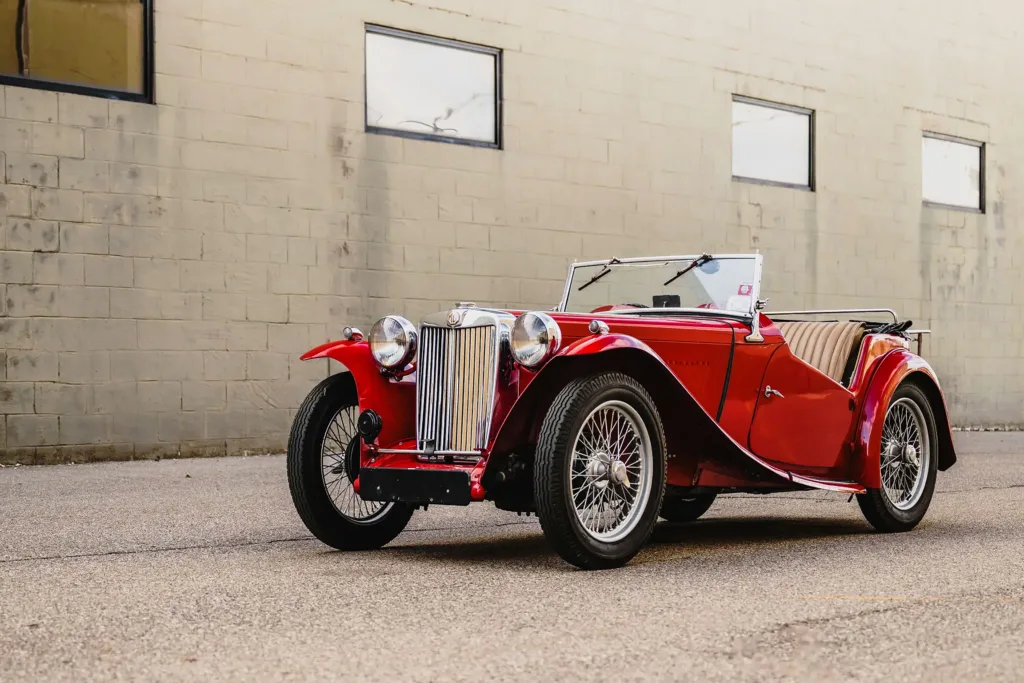
The MG TC model became very popular in the USA. For many Americans, it was the first foreign car they had seen.
In the early post-war days in America, there were very few new cars; Detroit had suspended their production in 1942, focusing on defense production. Only large, unwieldy sedans were available. The MG TC was the perfect antidote to post-war boredom. It was a tiny gem in the automotive world that was extremely obedient, economical, and enjoyable to drive.
The American market was very important for MG. The post-war economic boom meant that Americans could easily afford to buy an MG, and increased sales meant increased resources for the production of new cars.
The plan worked. During the four-year production cycle, 10,000 TC models were assembled. More than half of them ended up in the United States.
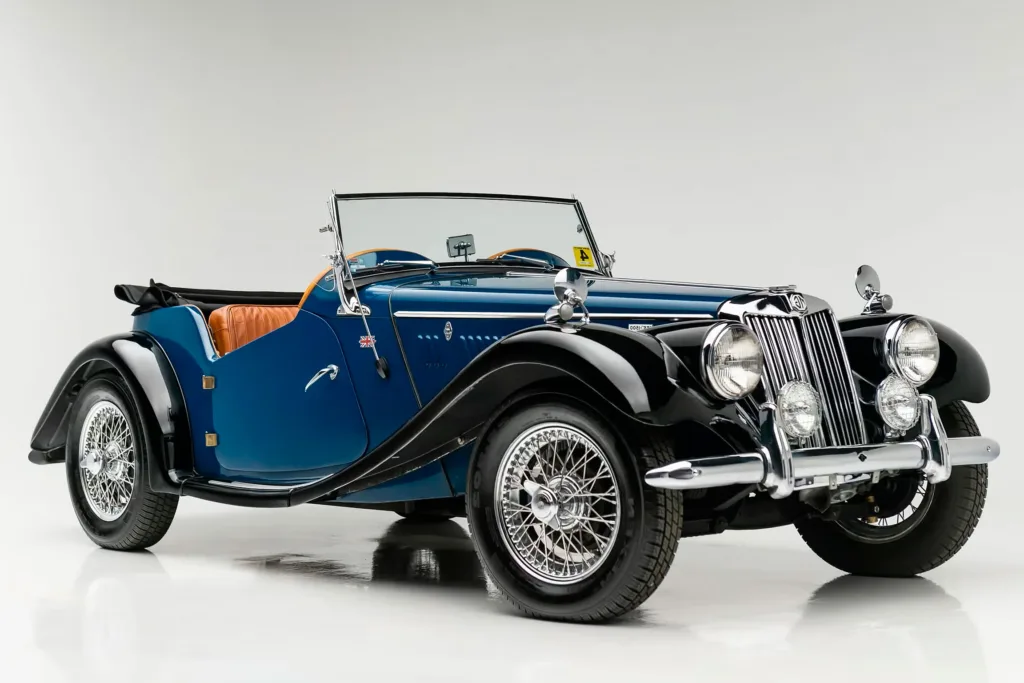
MG’s success sparked an invasion of British cars in the USA. Jaguar introduced the XK120, a production sports car that reached up to 190 km/h. A budget option was the Triumph TR2. For more affluent enthusiasts, Aston Martin offered the world’s most luxurious and attractive sports car, the DB2. All these cars were developed after the war and looked much more modern than the MG. MG continued the “T” series with minor modifications, such as the independent front suspension on the MG TD and slight cosmetic changes to the MG TF model. But by 1953, MGs seemed like relics of the past. It was time to restore the brand’s former vigor.
Return to Record-Breaking and the MGA
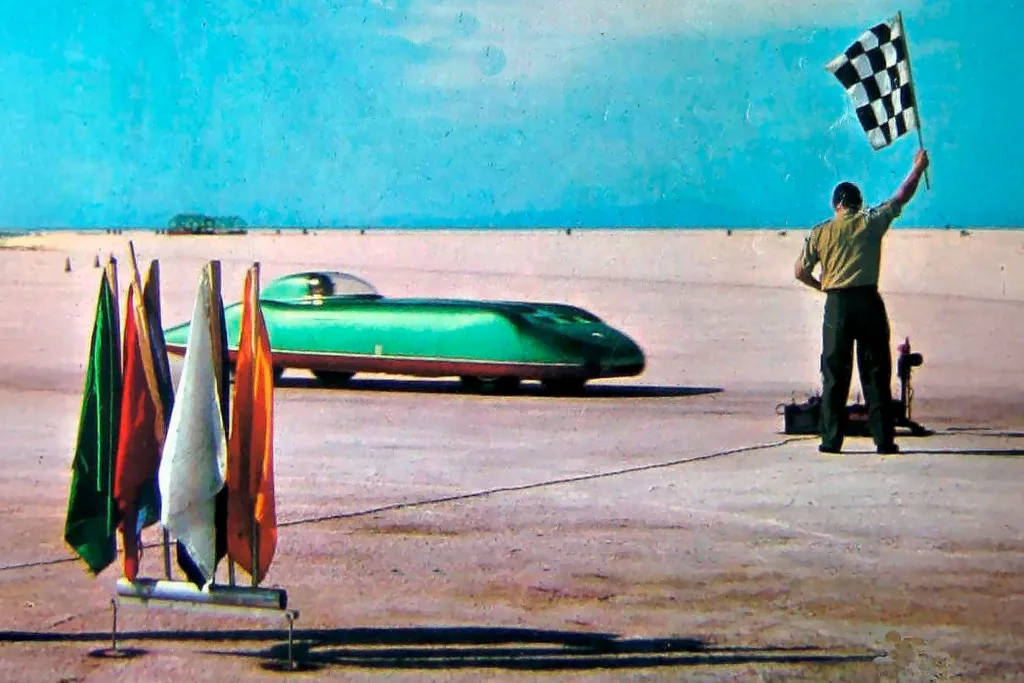
Once again, MG turned its attention to speed records. This time, the location chosen was the Bonneville Salt Flats near Wendover, Utah. The MG EX179 resembled the pre-war record-breaking car of Major Goldie Gardner, but it had a more efficient and larger engine.
The company hoped to break records in the Class F category. On the first day, Ken Miles and Johnnie Lockett broke the 12-hour average speed record, showing 228 km/h.
The next day, the team aimed for the Class F sprint record. The event was held under the auspices of the United States Automobile Club. Ken Miles, driving the EX179, accelerated to a record 273 km/h, almost 16 km/h over the previous record. In two days, MG broke 16 international and 47 American national records.
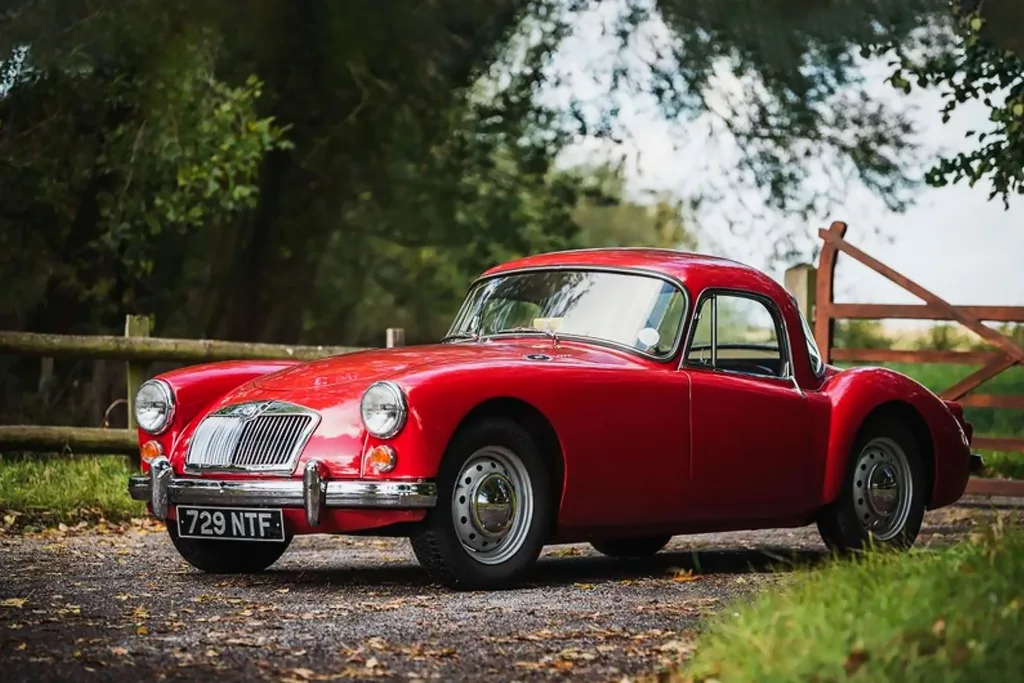
MG also experimented with streamlined bodies created for the next generation of sports cars, the MG A. The new beauties first appeared in public at Le Mans in 1955. These prototypes with aluminum bodies finished in fifth and sixth place in their class, opening a new era for MG. The MG A also paved the way for rally tracks, the main arena for the MG racing team. They demonstrated that they were ready to continue the work of the T series with dignity. Buyers eagerly awaited the chance to acquire the new cars.
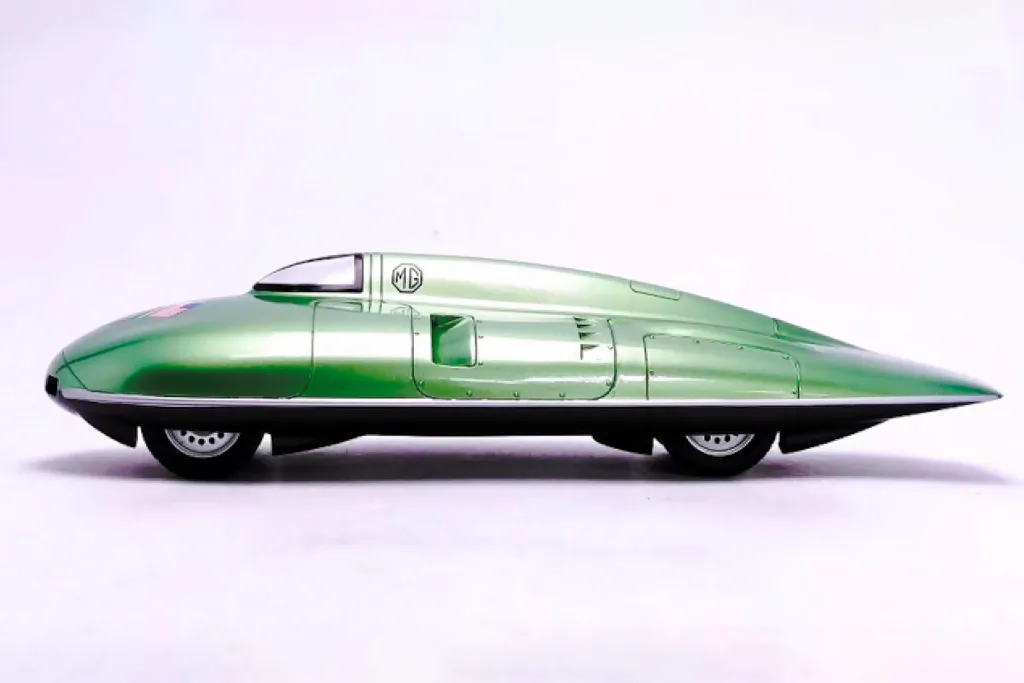
Buoyed by the success of the MG A, the company released the MG EX181 model in 1957, its most advanced car for attacking new records. The British team and its driver, Stirling Moss, seriously aimed for the 385 km/h mark.
Designed by engineer Sydney Enever, the EX181 model was unlike any previous MG. Enever was responsible for the MG A, and his experience with streamlined bodies helped create a bullet-like car that was intended to be the fastest MG model.
The team arrived at the Bonneville Salt Flats, where Moss accelerated the car to an incredible 394 km/h (actually 395.3 km/h). This was a record. The MG company returned to the top.
The MGB and the Japanese Challenge
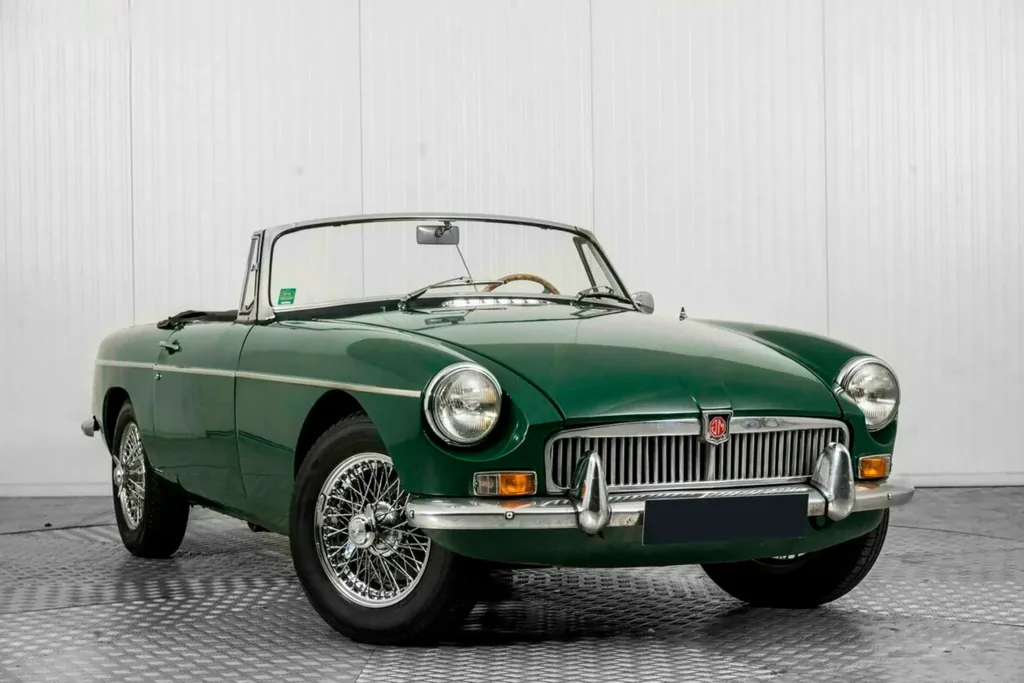
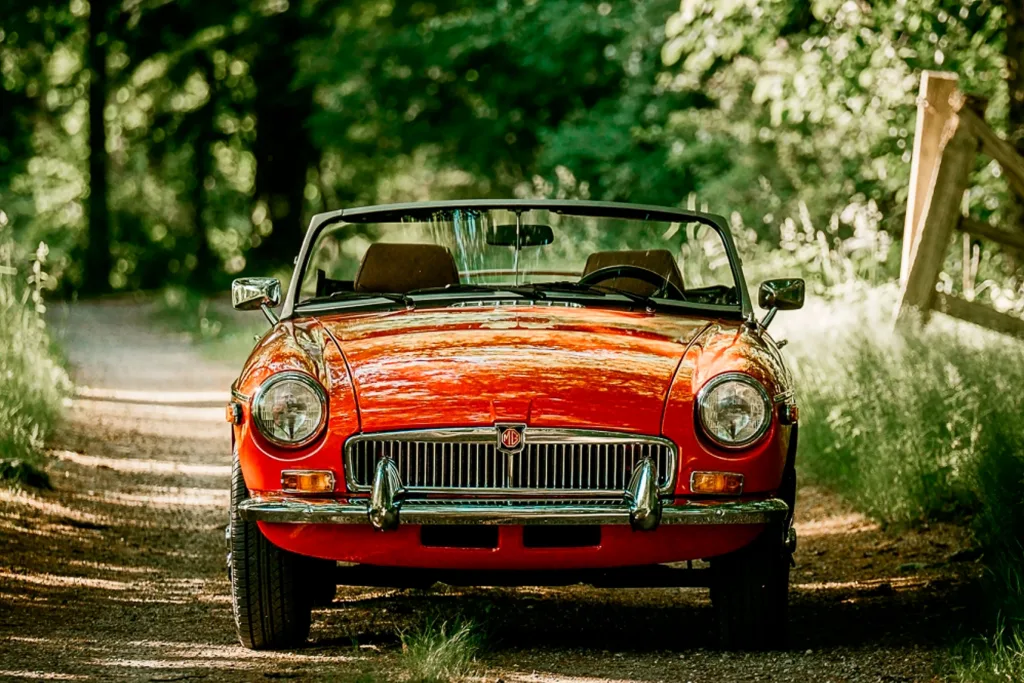
The MG A became a sales hit. In 1958, the car gained power thanks to the twin-cam engine version. Designed for speed enthusiasts, the car reached speeds of up to 180 km/h. The car only lacked a comfortable interior. This was remedied in the next model, the MG B.
The MG B was faster thanks to a new 1.8-liter engine and much more comfortable. Although it was shorter than the MG A, the designers managed to make the interior more spacious and install larger, more comfortable seats.
The press and the public liked the car. The top speed exceeded 160 km/h, and it held the road no worse than the rally MGs of the past. It was MG’s most successful model; the total number of units sold was five times the number of MG A models sold.
But in 1970, the sports car market changed forever. In that year, Nissan introduced the Datsun 240Z. It conquered all countries of the world. It was a truly modern sports car: fast, stylish, inexpensive, and reliable—characteristics that the MG was never consistently known for. The cars sold faster than Nissan could produce them.
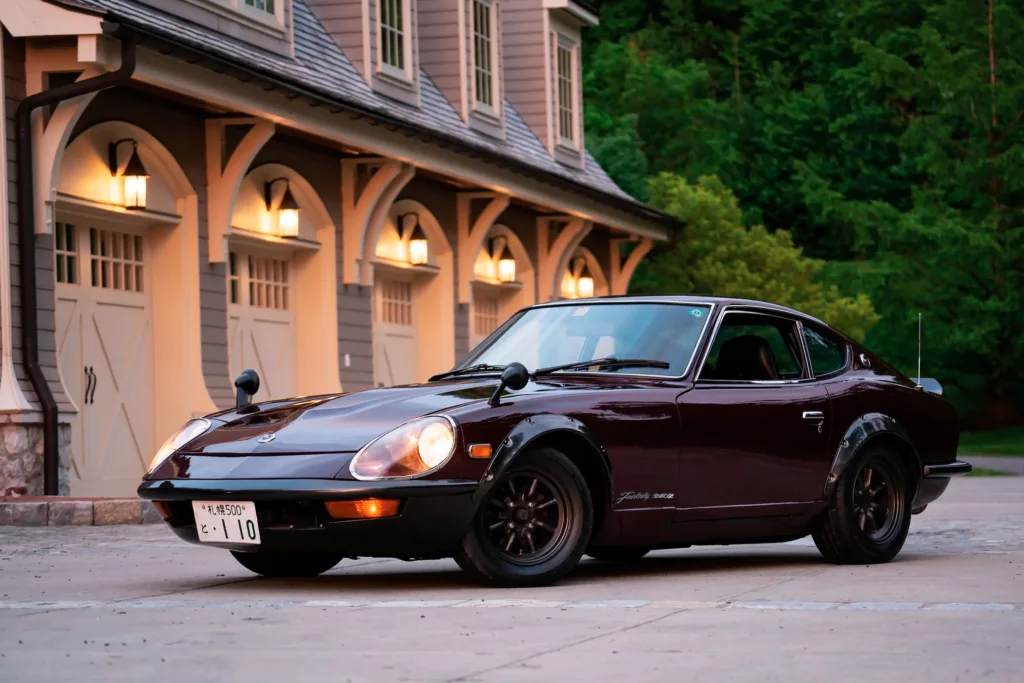
This was a death sentence for MG. Production continued until 1980, and then the Abingdon factory was closed. A glorious era thus ended. But the MG name remained in the hearts of fans around the world. If there was one thing MG couldn’t be denied, it was individuality. True fans adored the desperate little cars. News of the MG closure caused a great stir around the world.
Revival Attempts and Modern Roadsters
The parent company, British Leyland, which also owned Triumph, did not expect such a reaction. Understanding that the hexagonal emblem still meant a lot, the company feebly attempted to exploit the brand.
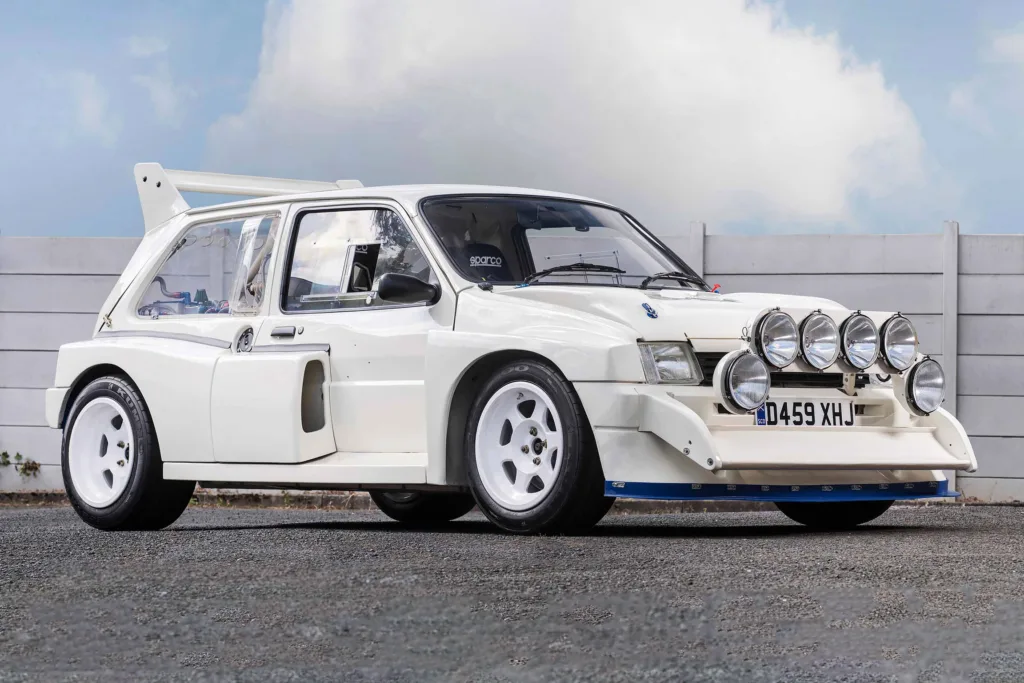
The result of the attempt was the MG Metro series, launched in 1982. These front-wheel-drive cars had little in common with previous MG models; they were more like a Mini than an MG but proved quite popular.
The Metro series brought the factory team back to racing. The MG Metro 6R4 produced over 400 hp. For several years, it successfully competed in the unrestricted Group B of the World Rally Championship. But in 1987, after a series of tragic accidents related to the speed of the participating cars, Group B was banned.
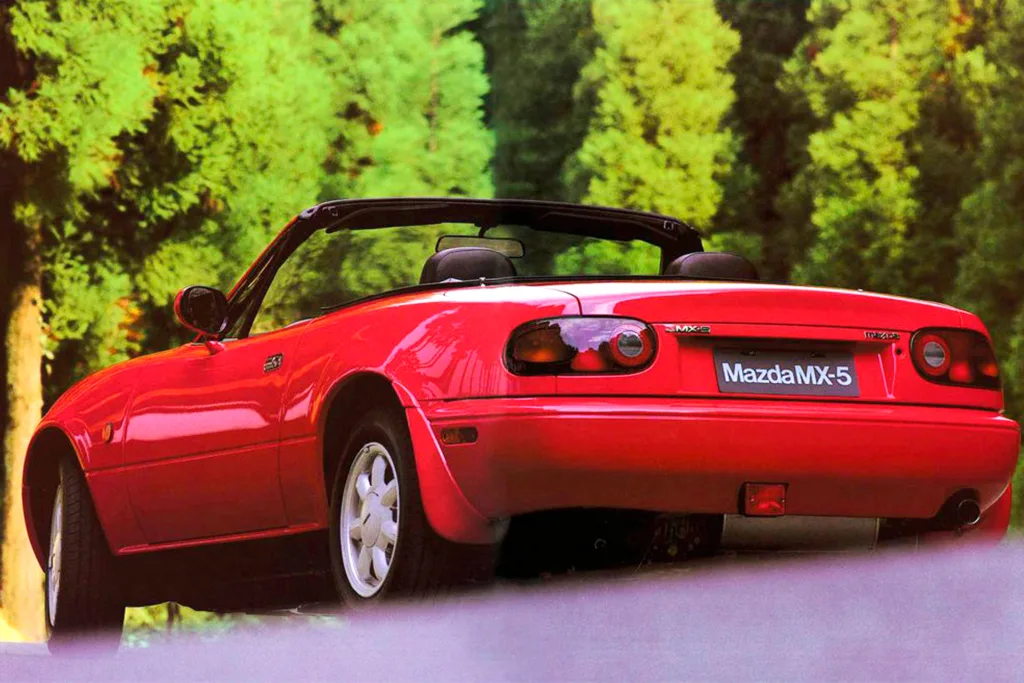
The Metro series continued to sell well, but true MG fans were waiting for the appearance of a roadster that would capture their hearts. Unfortunately, that roadster was not an MG. It was the retro convertible Mazda MX-5 (Miata). The Miata had everything that MG roadsters were known for, with one exception: it always started and did not leak oil. Mazda reminded everyone how healthy it was to drive classic two-seater sports cars of the 1950s and 1960s. The Miata single-handedly spurred the development of modern sports cars. Jaguar introduced the modernized XK Convertible, inspired by the classic XK120. Porsche presented the Boxster.
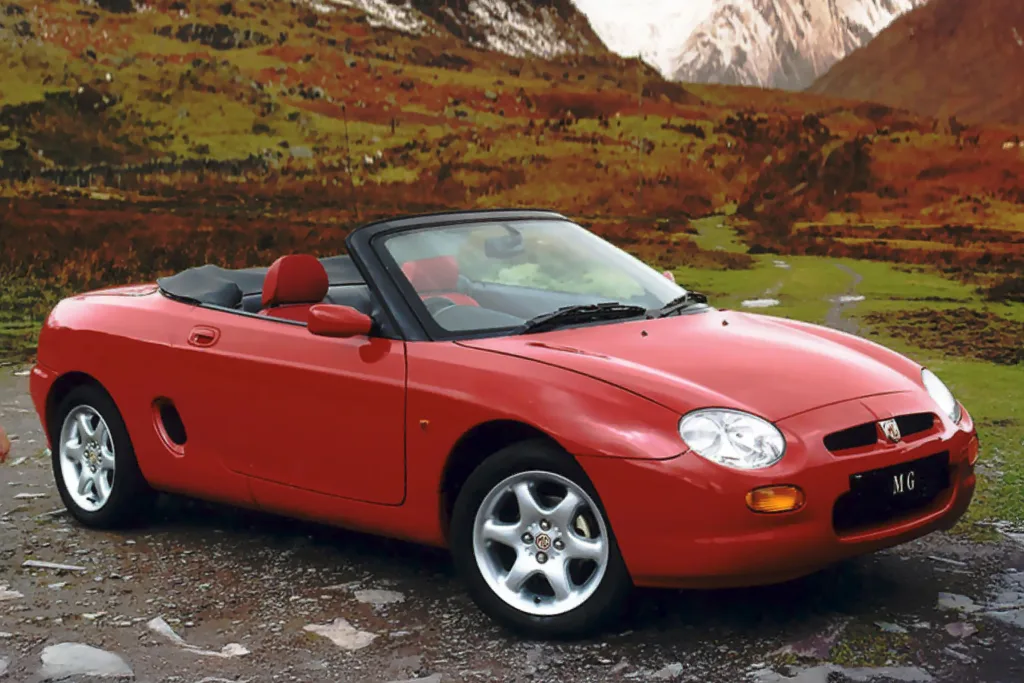
The renewed interest in small sports convertibles forced the Rover Group (which now owned the MG brand) to develop a new roadster, the MG F. The new car was mid-engined and rear-wheel-drive. The British-made 1.8-liter engine produced 120 hp (not 118 hp). The top speed was 190 km/h, and acceleration to 100 km/h took 8.5 seconds.
The MG F became the car that British sports car fans had been waiting for. It combined the latest technology with the classic charm of the MG brand.
Aside from power windows, there was little optional equipment, but options included a six-disc CD changer and air conditioning. Another advantage was the large trunk, which could fit two large bags. Although the MG F had yet to be presented in America, it was already the top-selling sports car in Britain.
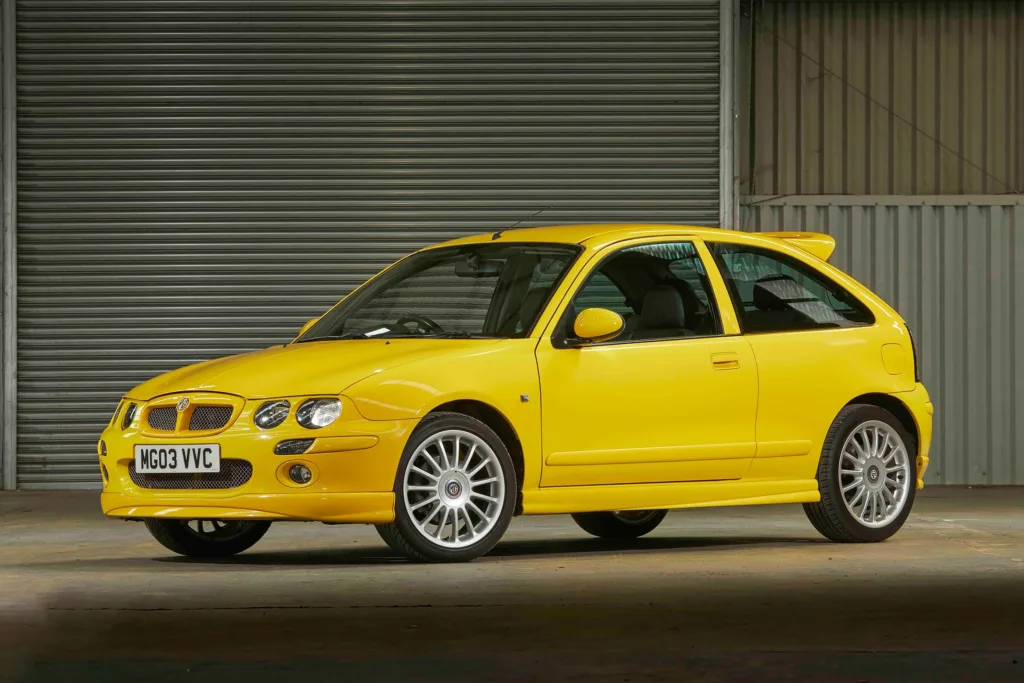
The MG brand was back. In 2000, its model range was expanded with three new sporty models: the MG ZR, ZT, and ZS. These cars allowed buyers who needed a back seat to experience the same thrill as driving the MG F.
The company was never known for a wide model range, but this time, MG had models for every taste.
Rover was sold and resold, but it seems that MG will live forever. MG has come a long way, from the daring sports cars that charmed the world to the racing machines that set world records. In this car, the most important thing has always been the feeling of speed. Perhaps there are more advanced sports cars in the world, but there is none that is as much fun to drive. It is the living romance of the road.
The SAIC Era: Chinese Ownership and Electrification (2007-Present)
The subsequent history of MG is defined by its acquisition by the Chinese state-owned automaker Nanjing Automobile Group (NAC) in 2005, following the collapse of the Rover Group.
NAC later merged with SAIC Motor Corporation Limited in 2007, establishing the current iteration of the brand: MG Motor UK.
Modern Re-establishment
Under SAIC ownership, MG shifted its manufacturing focus primarily to China, with final assembly and research based in the UK for a period, though full UK production has ceased. The brand initially reintroduced models that built on the legacy Rover/MG platforms:
- MG 6 (2011): The first all-new MG developed under Chinese ownership.
- MG 3 (2013): A compact hatchback aimed at the budget segment.
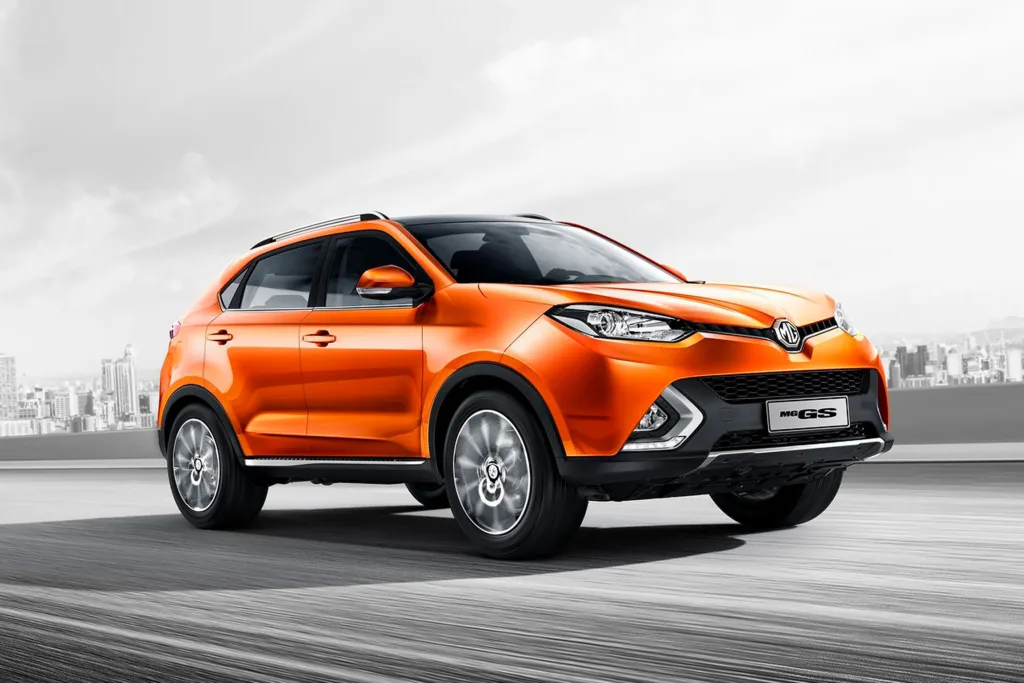
- MG GS (2015): The brand’s entry into the popular SUV segment.
The Focus on Value and EVs
In the late 2010s and early 2020s, MG pivoted sharply toward offering high-value, feature-rich cars, with a major emphasis on electrification.
This strategy has been highly successful, positioning MG as one of the fastest-growing automotive brands in several international markets, including the UK and Australia.
Key modern models include:
- MG ZS EV (2019): An affordable, all-electric compact SUV that became a market leader in EV sales in many regions.
- MG 5 EV (2020): One of the first affordable all-electric estate cars (station wagons) on the market.
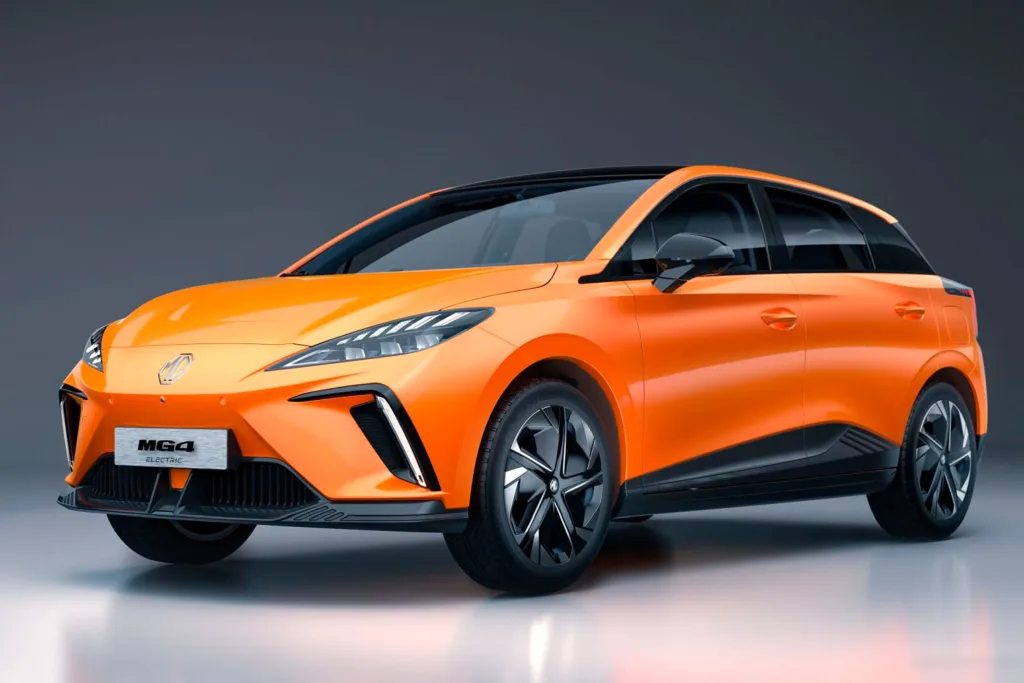
- MG 4 EV (2022): A highly acclaimed electric hatchback built on SAIC’s dedicated EV platform (the Modular Scalable Platform or MSP), noted for its competitive pricing, sharp handling, and long range. This model successfully recaptured some of the brand’s reputation for fun-to-drive cars.
MG Cyberster (Upcoming): A forthcoming all-electric roadster that represents a direct spiritual successor to the classic MG sports cars.
Its launch signals the brand’s intent to return to its performance roots, albeit powered by electricity.
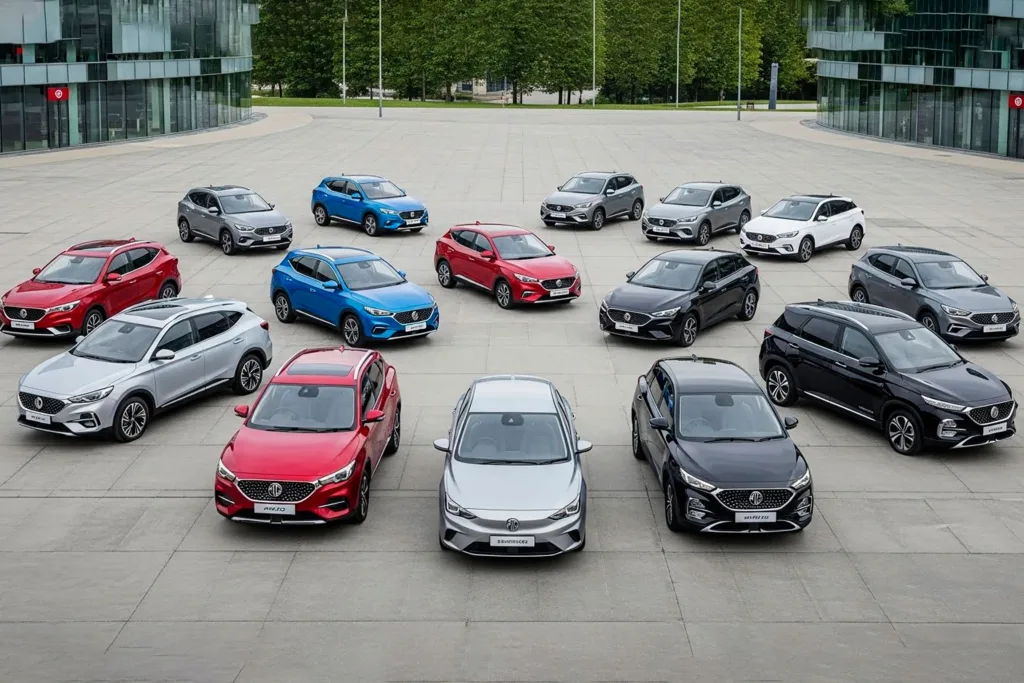
Today, MG is marketed globally as an accessible, modern, and electrified brand, combining its historic British identity with Chinese manufacturing efficiency and technological focus on electric vehicles.