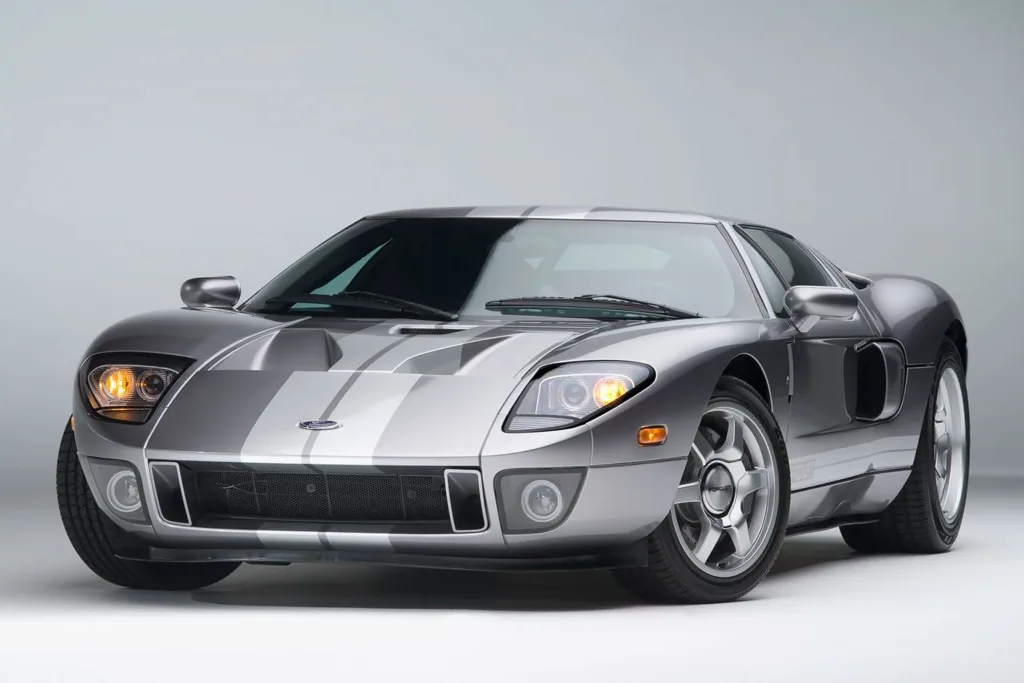
In 2004, Ford launched a stunning new model, the Ford GT. Its creation was inspired by the Ford GT40 of the 1960s, a car commissioned by Henry Ford II to challenge Ferrari and assert Ford’s racing superiority. That challenge grew into one of the most exciting and costly battles on the world’s racetracks.
Conception of the Modern GT
The public and press reaction to the Ford GT prototype was exceptionally positive, and the company was flooded with inquiries about when the supercar would go into production. This happened on the eve of Ford’s 100th anniversary, making it fitting to enter the new century with a legendary car. Just 45 days after the car’s presentation at the Detroit Auto Show in January, Ford announced, “The answer is, we’re going to build it!”
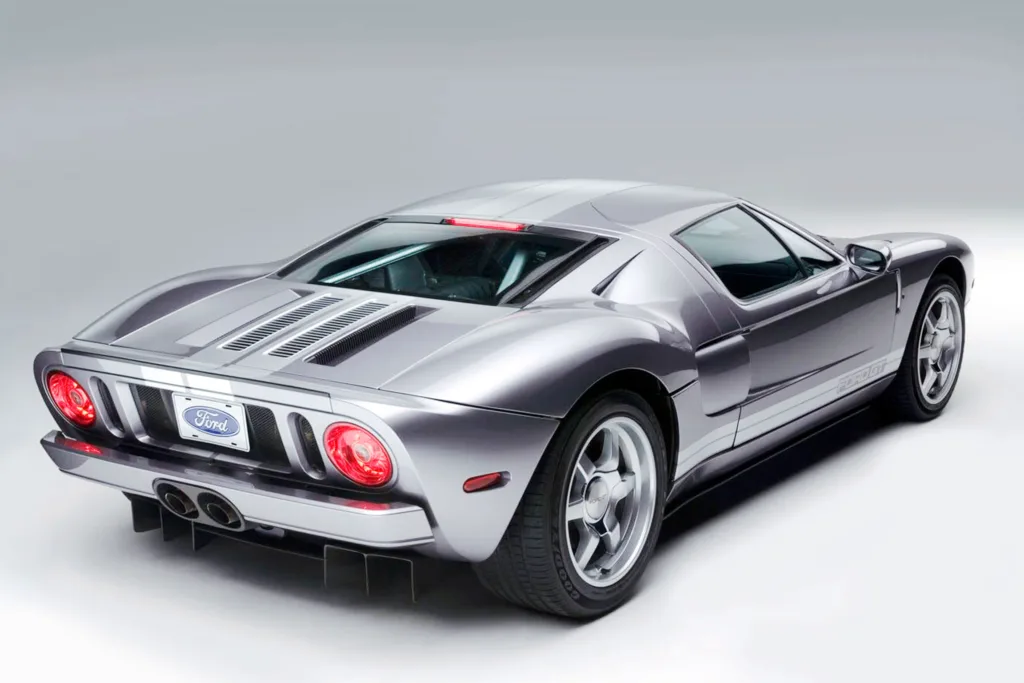
A group of engineers, nicknamed “The Petunias,” was tasked with preparing a working prototype for Chairman William Ford to drive during the summer anniversary celebration. Working frantically to meet the unrealistic deadline, the team delved into the racing history of the model and Ford as a whole.
Ford’s Early Racing Roots
Ford’s racing tradition is older than the company itself, dating back to 1901 when founder Henry Ford built the Sweepstakes. This was a wagon with wheels and an 8.8-liter, two-cylinder engine. It was not very fast and was terrifying to drive because it lacked self-centering steering technology. Ford and the Sweepstakes won their first race in October 1901, defeating the local champion favorite at the Grosse Pointe track in Michigan. His average speed during the 16-kilometer (10-mile) race was just under 72 km/h (45 mph). News of his victory immediately hit the newspapers and helped Ford find investors to open his company.
His next racing model, the “999,” brought Ford even greater fame. On October 25, 1902, Barney Oldfield set a world record in the “999,” driving one mile in one minute.
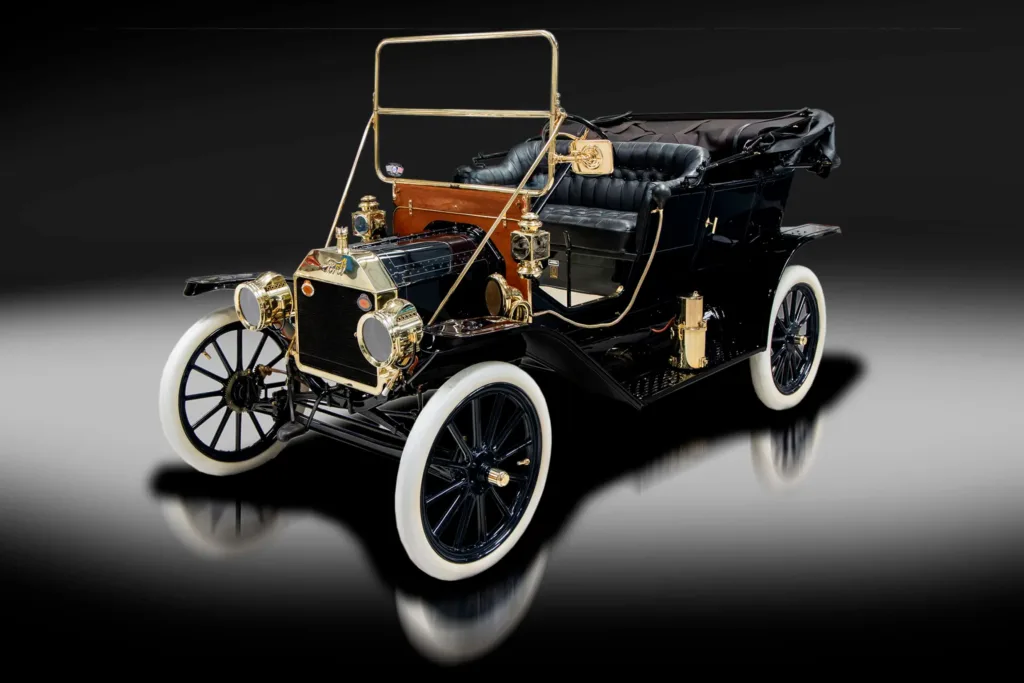
Ford’s main goal soon became creating and selling cars. His affordable and spacious Model T made him incredibly wealthy and turned his company into an international corporation. Ford continued to sponsor racing, even after building his colossal automotive empire. Following the advice of Preston Tucker, Ford’s son Edsel directed company efforts to fund Harry Miller’s participation in the Indianapolis 500 in the late 1920s. The production 1932 Ford V8 became an icon for “hot rod” builders.
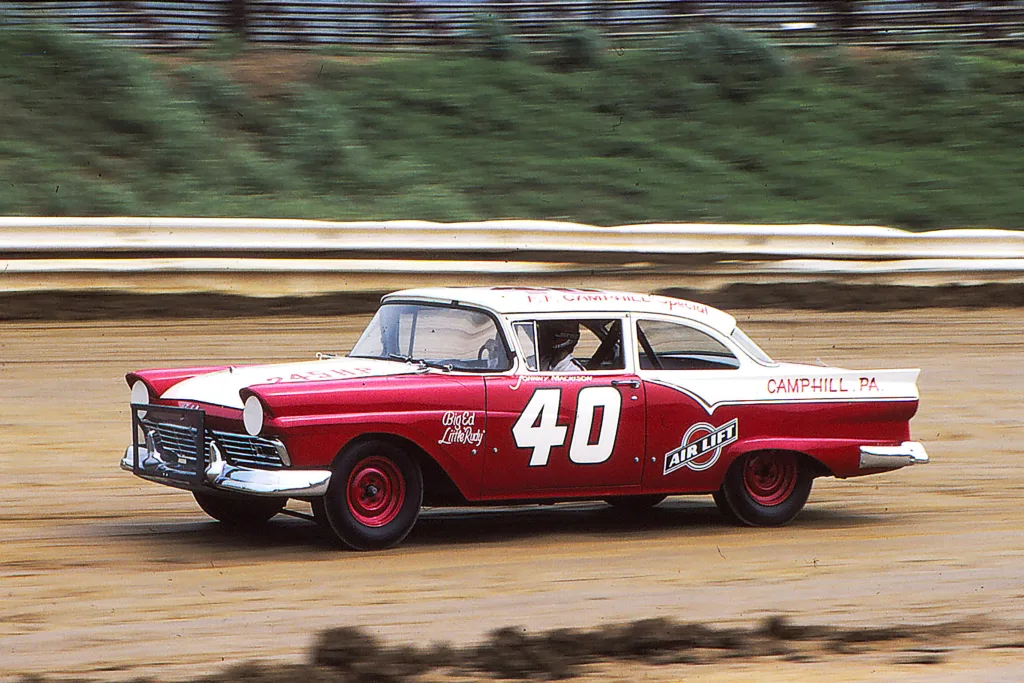
After World War II, Ford participated in NASCAR racing. However, by 1957, General Motors and Chrysler agreed to stop officially sponsoring racing, which led to a decline in sales due to the lack of “adrenaline fever” and “win on Sunday, sell on Monday” publicity.
The Duel with Ferrari
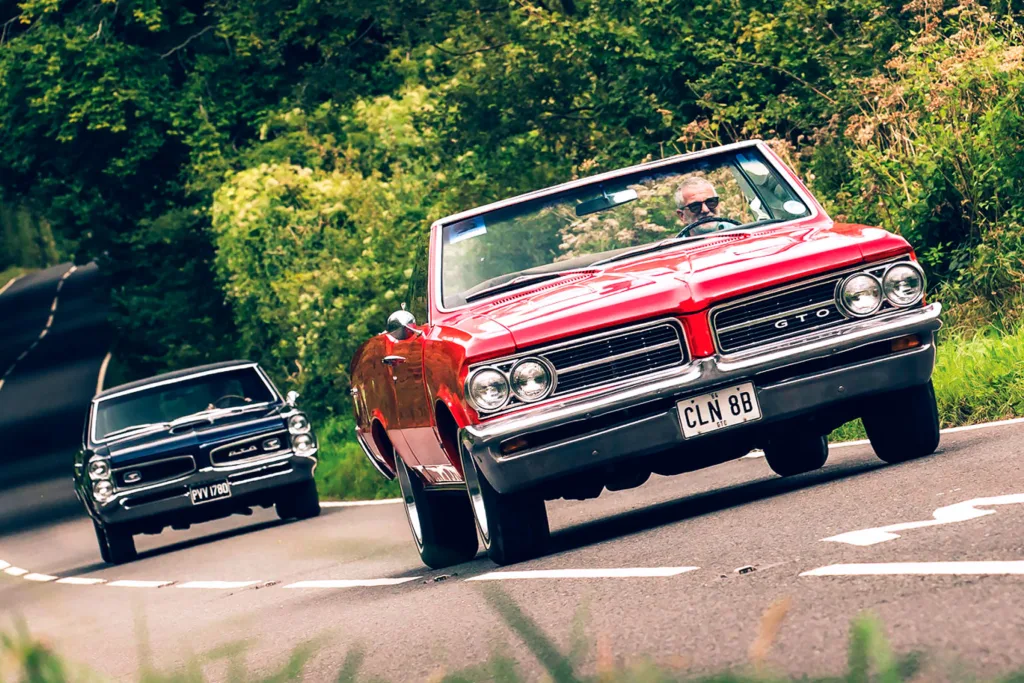
In Europe, there were no racing bans, and the GT (Grand Touring) class flourished. GT cars of the 1950s and 1960s were considered the most advanced in the world—complex, expensive, and exceptionally fast. By the mid-1960s, American automakers’ attitude toward speed had changed. Pontiac released the powerful GTO for younger buyers, and Ford, having supported Lee Iacocca and Don Frey’s initiative to create the Mustang, also engaged its British subsidiary in racing at Indianapolis.
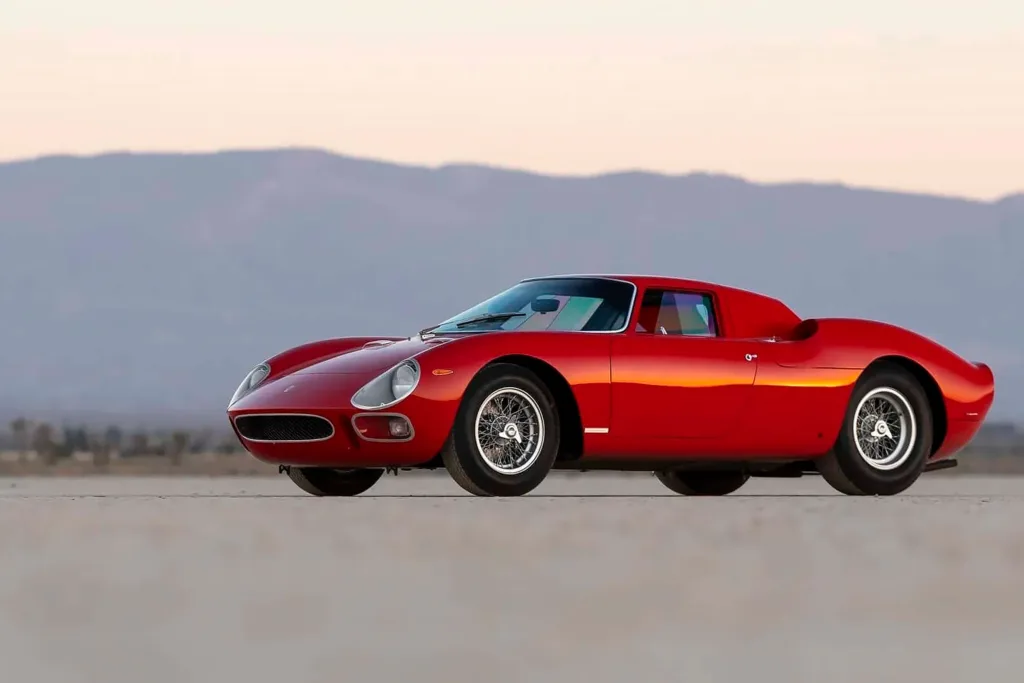
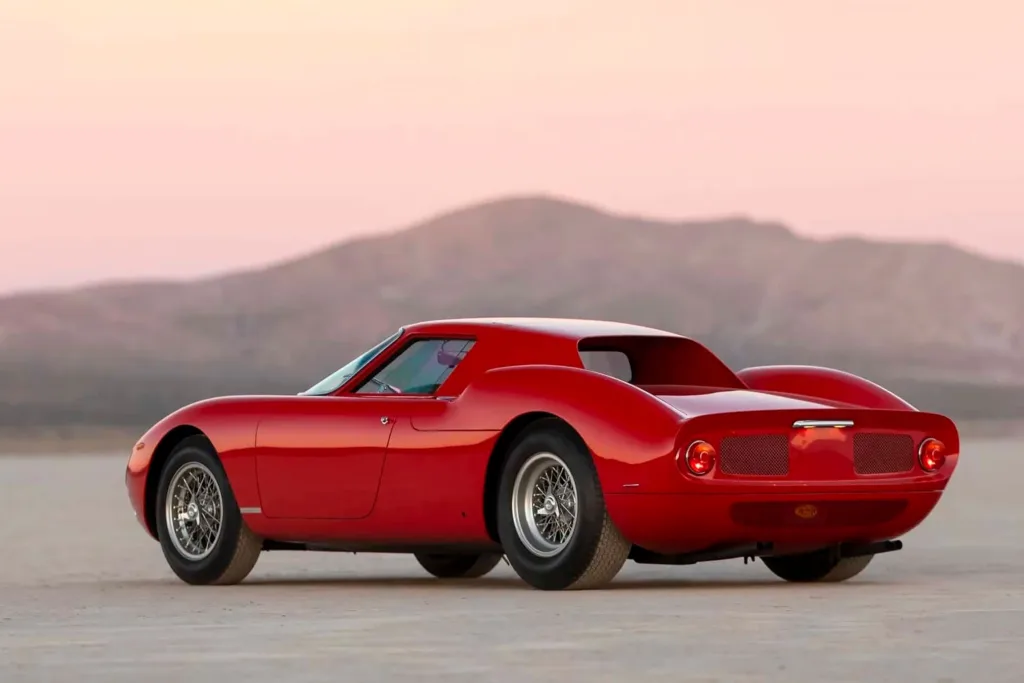
However, Ford management wanted European racing success, specifically against Ferrari. Ferrari, with its 250 LM GT car, dominated the famous 24 Hours of Le Mans race. Racing victories allowed Enzo Ferrari to sell his extremely expensive cars to wealthy clients. Ford wanted to elevate its reputation and decided to buy Ferrari.
A delegation was sent to Italy to negotiate with Enzo Ferrari. They reached an agreement for Ford to purchase the company for $16 million. As the final details were being ironed out, Ferrari declared, “I do not wish to participate in the Indy 500 race.” Ferrari did not want his sophisticated cars competing on the oval track, but Indianapolis was critically important to Ford. Henry Ford II was slighted and enraged, reportedly saying, “All right, we’ll beat him!”
The GT40 Project Begins
To defeat Ferrari, Ford had to challenge the GT class leader at the ultimate automotive endurance contest: the 24 Hours of Le Mans. Ford quickly assembled a team led by Le Mans veteran John Wyer (formerly of Aston Martin), with a single goal: win Le Mans and defeat Ferrari. The project was based on the English Lola GT prototype. Henry Ford II did not worry about costs; his pride and honor were at stake.
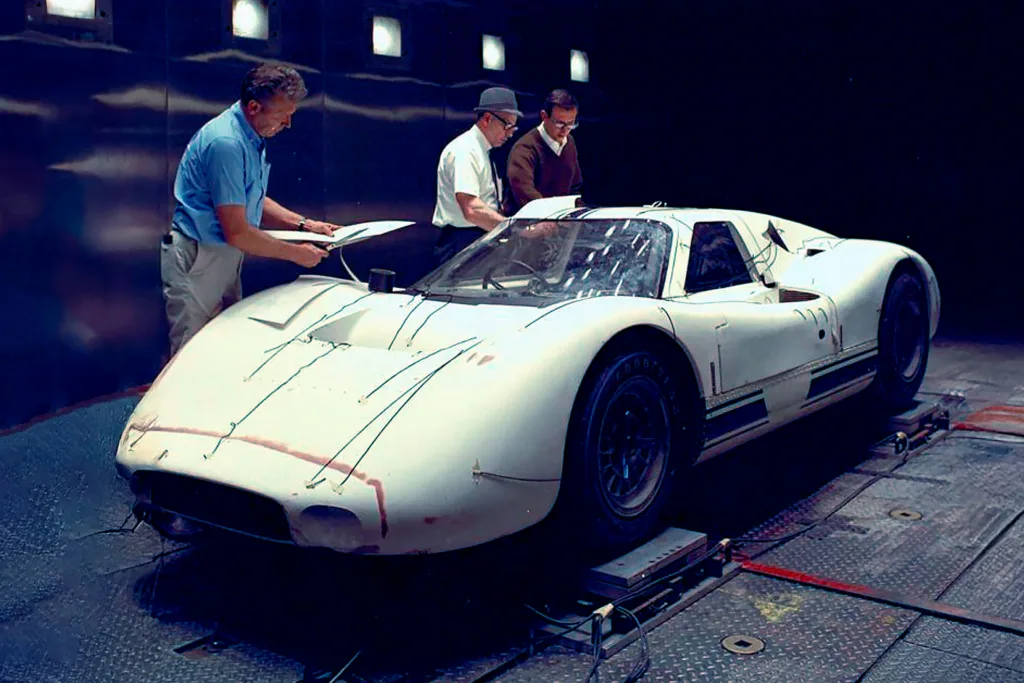
The car project was named “GT40”: GT for Grand Touring and 40 for the car’s height in inches.
The engine was based on Ford’s Indianapolis motors—a 4.2-liter (255 cubic inch) engine (not 4-liter) that produced 350 horsepower, which engineers believed would propel the GT40 to 320 km/h (200 mph).
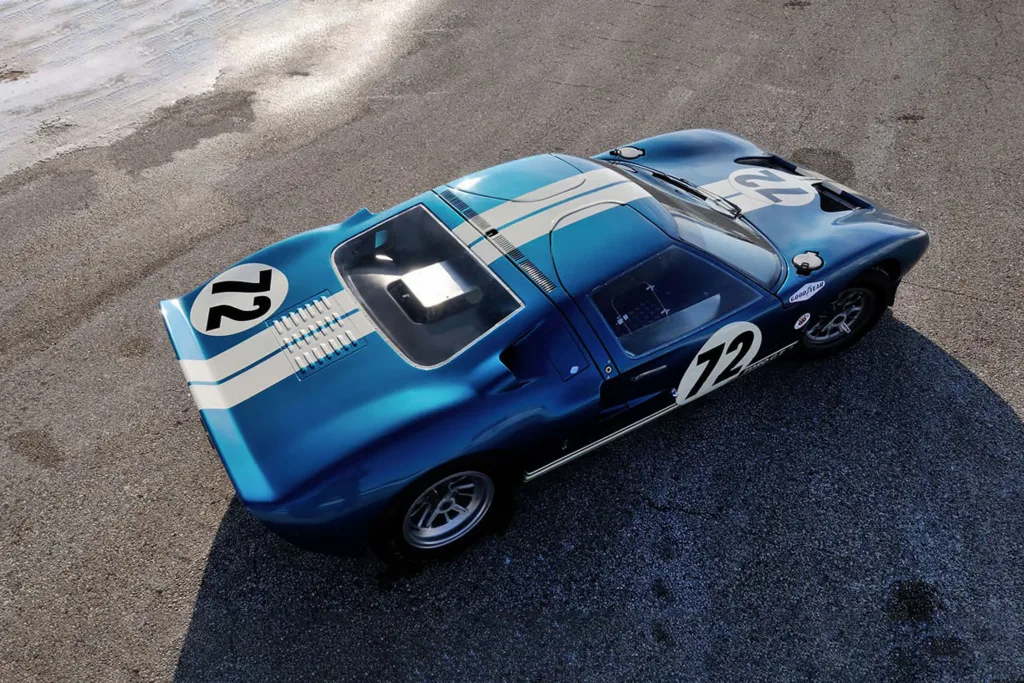
By April 1964, the GT40 was ready for its public debut. Despite high expectations, the fiberglass-bodied cars encountered problems during early Le Mans testing. One of the Ford drivers crashed at 250 km/h after losing control, and another GT40 was also damaged. Subsequent testing at the Nürburgring in May also resulted in failure due to transmission problems caused by track vibration. These early races, however, exposed handling issues that were addressed with the addition of front and rear spoilers.
Failure at Le Mans (1964)
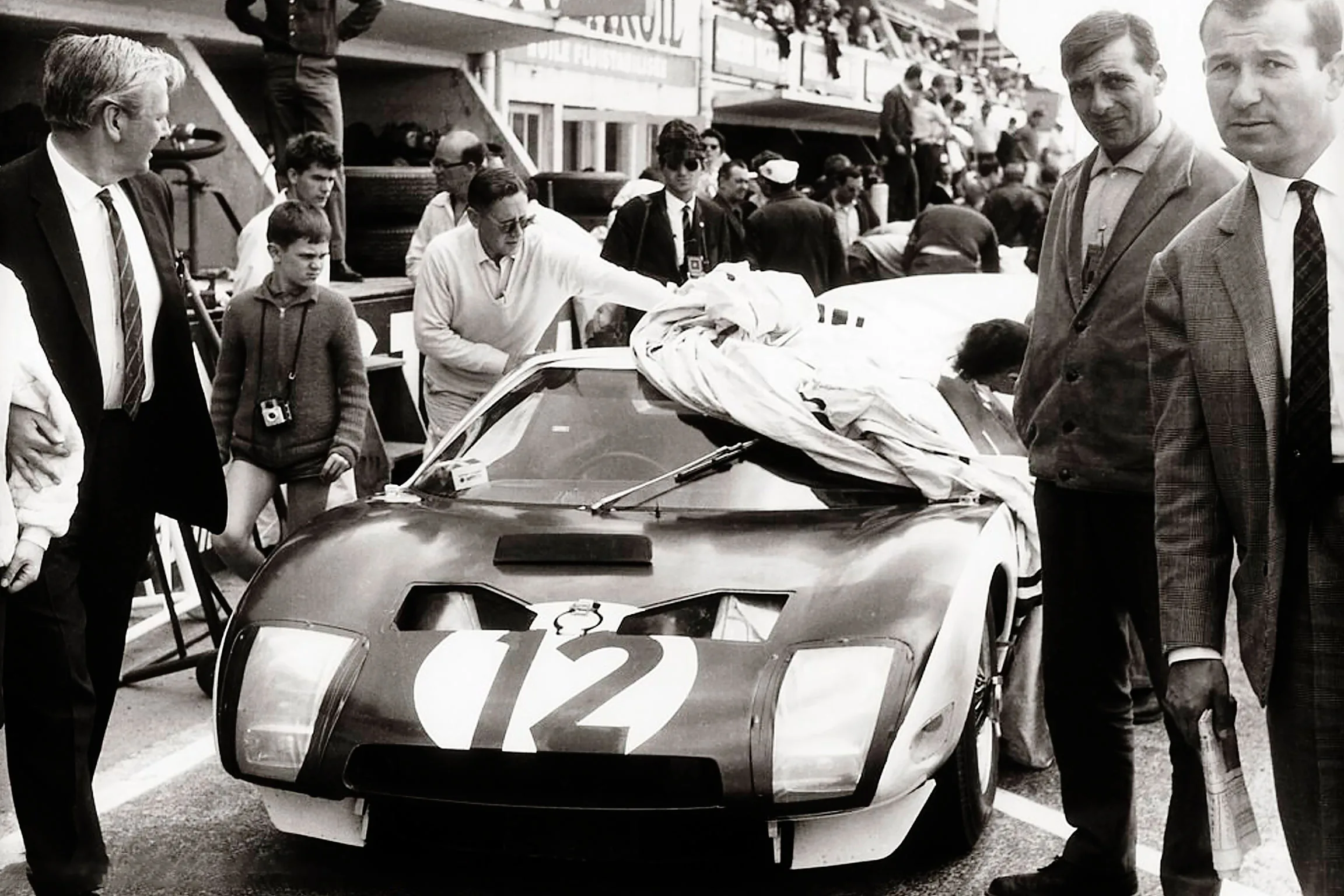
The Le Mans race began on June 20, 1964. Three Ford GT40s entered the grueling 24-hour race. The start was poor: Phil Hill’s car failed to move due to vapor lock.
Although Richie Ginther took the lead, reaching over 320 km/h on the Mulsanne Straight, and Hill set a lap record with an average speed of over 210 km/h, disaster struck.
Two GT40s retired with transmission failure, and the third had fuel feed issues. The race was over for Ford, and the victory went to Ferrari. Failures continued to plague the GT40 in later races in Reims and Nassau.
Carroll Shelby Takes Over
Henry Ford II was dissatisfied and decided to call on Texan Carroll Shelby. Shelby had won Le Mans as a driver for Aston Martin in 1959 but was forced to retire due to heart problems. He had since followed Enzo Ferrari’s path, creating his own car, the Cobra, and founding an independent racing team.

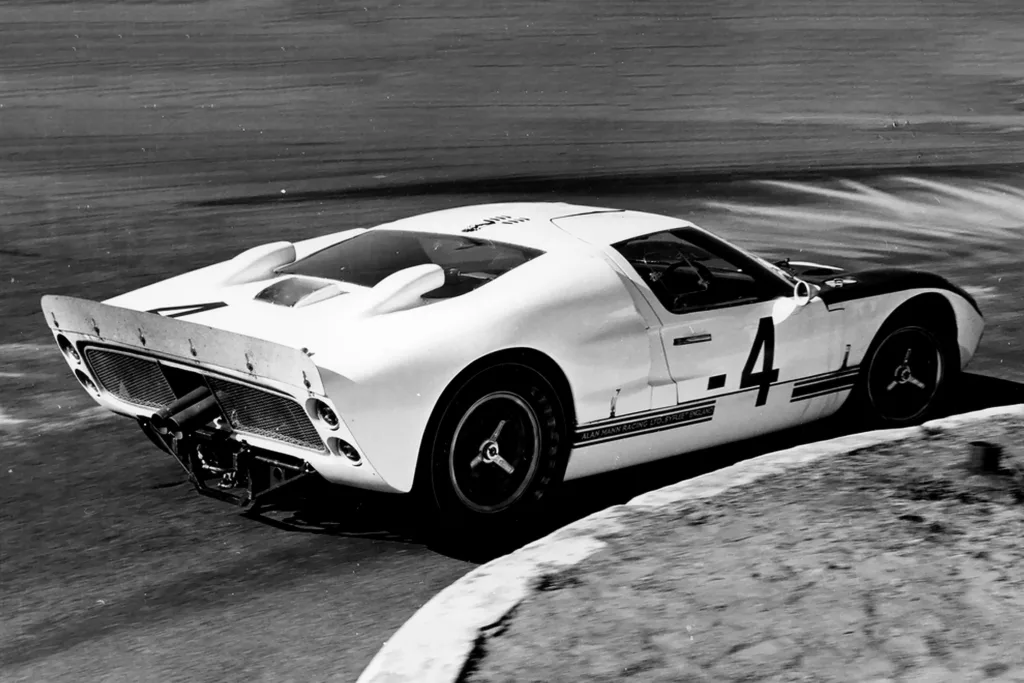
Shelby’s Cobras and Daytona Cobra Coupés had already made a name for themselves in racing, and he agreed to lead the GT40 project. He had just two months to prepare the car for the 2,000 km (1,240 mi) race at Daytona. With Ford’s financial and engineering resources, Shelby’s imagination was the only limit. He transformed the GT40, enlisting help from Ford Aeroneutronics (not Ford Aerospace) to fix aerodynamic problems and installing the 4.7-liter (289 cubic inch) engine (not 4.5-liter) he used in his Cobras.
First Victories (1965)
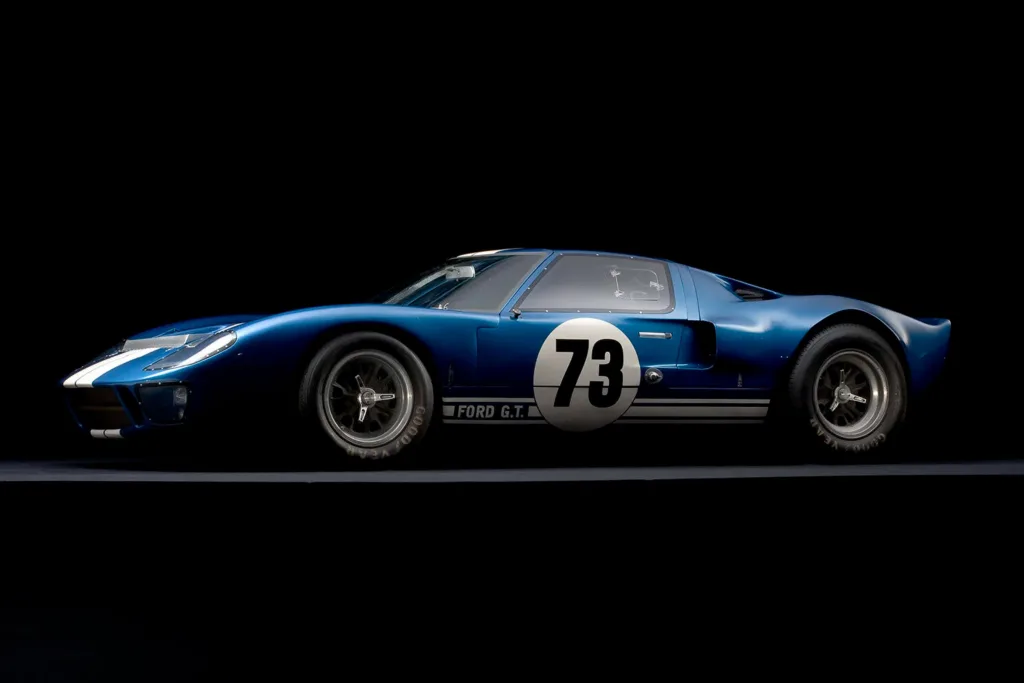
At the Daytona race, Shelby entered two GT40s and two Cobras. Ferrari also competed, and the world watched to see if the Texan could outmatch the sophisticated Italian team.
The answer was clear after 2,000 km: the GT40s took 1st and 3rd place, with the Shelby Cobra Coupé finishing second—a great start for the new team.
The next race was at Sebring. Despite one GT40 retiring due to suspension problems and a strong challenge from the Chaparral 2 (not Chapo Rali) team, the remaining GT40 finished second after the leading Ferrari broke its rear suspension, forcing its retirement. Shelby and his team were ready to conquer the world.
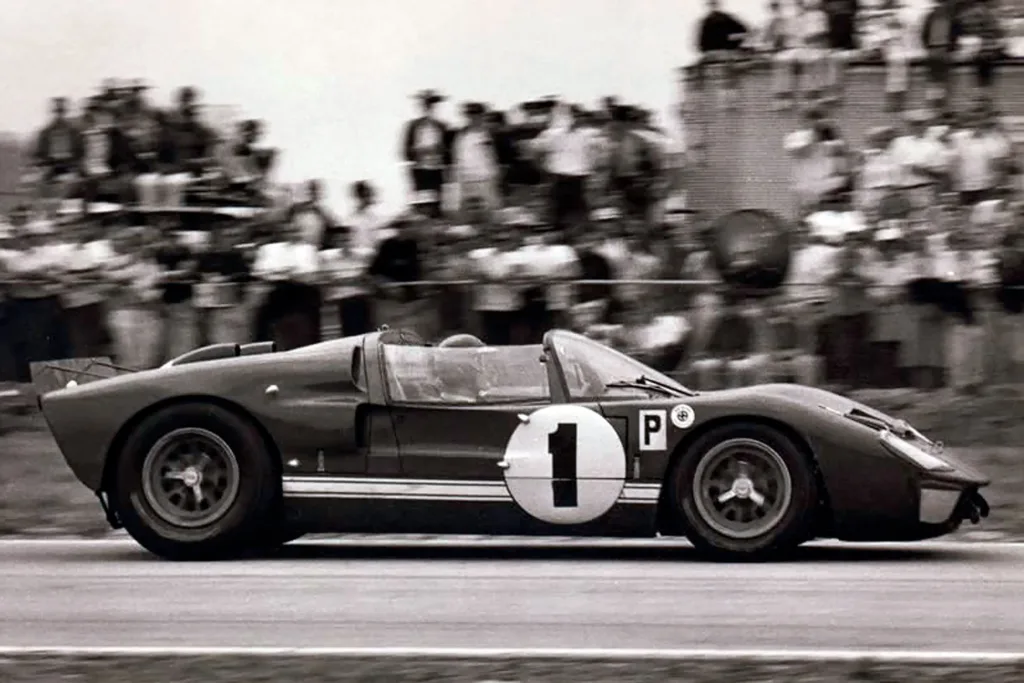
Ford decided to enter the Targa Florio in Sicily just before Le Mans. The Targa Florio, a race on winding Sicilian hill roads, was a true test for cars and drivers, and it was known that the Ferraris were designed to “hug” those turns. The GT40, driven by Bob Bondurant and John Whitmore, struggled.
Whitmore lost a wheel, and Bondurant crashed, resulting in another Ferrari victory.
The GT40 Mark II: Unstoppable Force
Shelby, however, had a surprise for Ferrari: the GT40 Mark II. He installed a more powerful engine in both the GT40 and his Cobras. The Mark II was equipped with a massive 7.0-liter (427 cubic inch) engine (not 6,670 cc) producing 460 horsepower. Two Mark II examples were brought to Le Mans in 1965, but, having not been fully tested, both failed to finish.
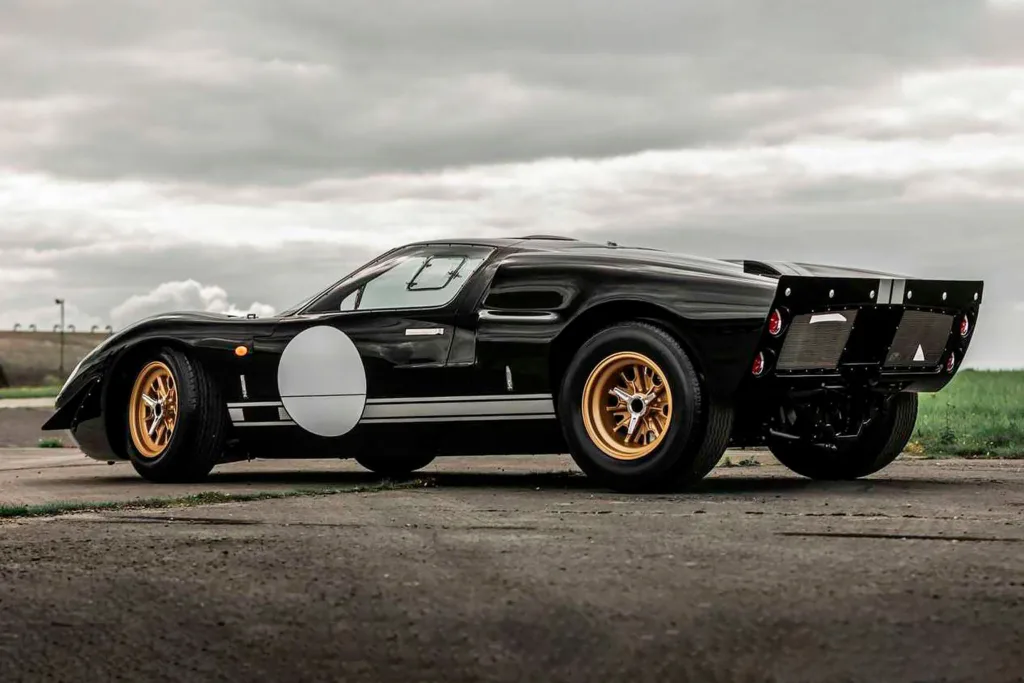
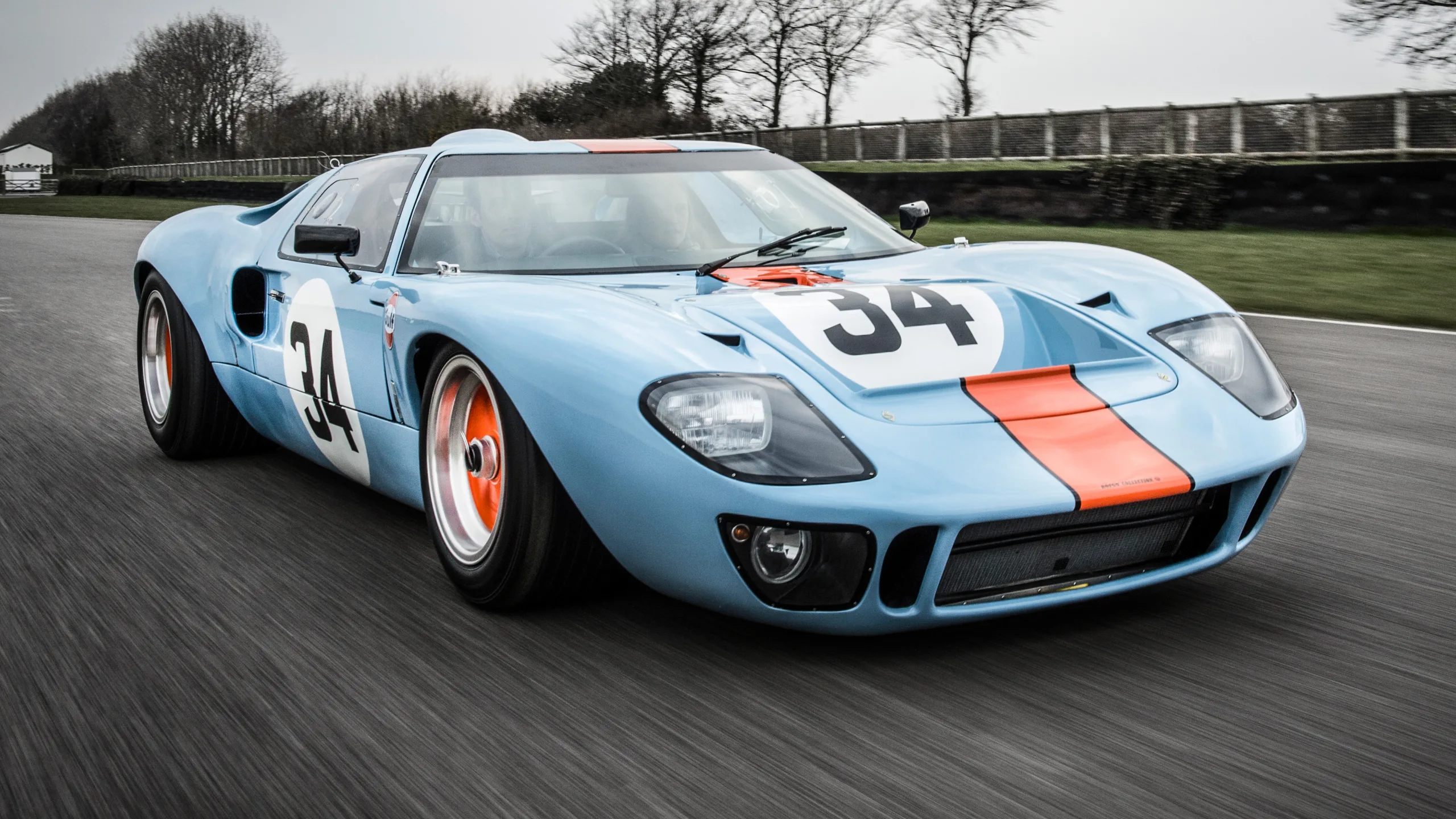
Ford promised to return in 1966. Ford sent eight Mark IIs and five smaller-engined GT40s. Ferrari entered seven of its own cars, plus three in a lower class. The two brands’ battle was a full-scale war. As night fell, Shelby’s car, driven by Ken Miles, was running well. By dawn, only five GT40s remained. An hour later, the last Ferrari of the same class retired due to transmission failure. No one could now stop Ford, and Henry Ford II finally secured his long-desired victory.
The GT40s finished 1st, 2nd, and 3rd, surpassing Ferrari and setting a new average speed record of 203 km/h (126 mph). The GT40s secured the 1966 Manufacturers’ Championship title for prototypes.
The All-American Victory (1967)
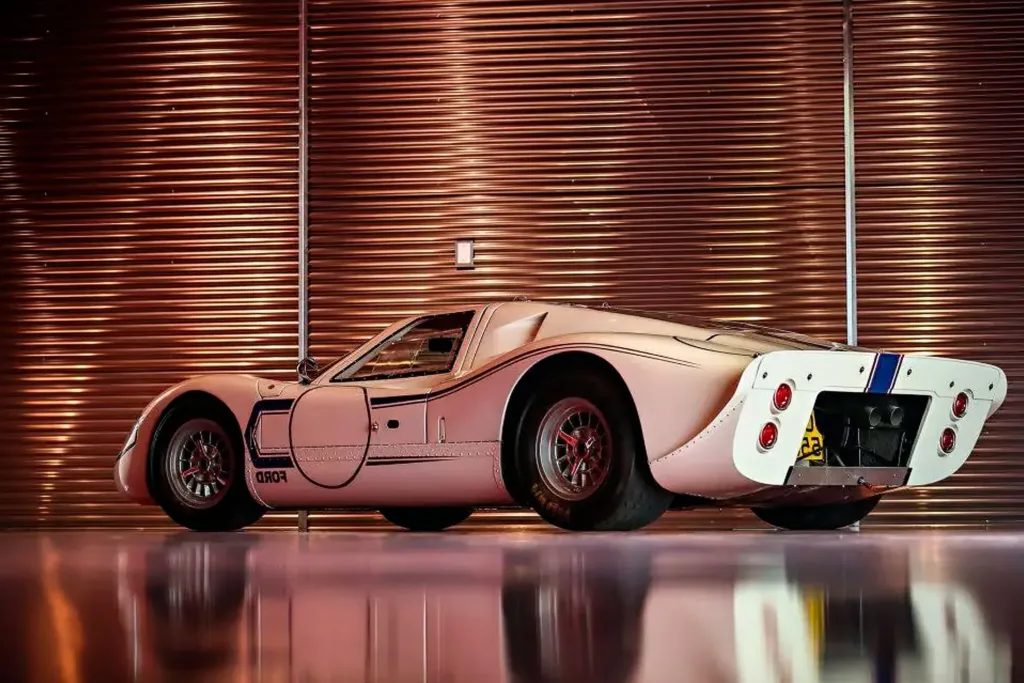
Ford was not satisfied; he wanted a truly all-American victory at Le Mans, with an American car and American drivers. He returned in 1967 with the improved GT40 Mark IV. The chassis was constructed from aluminum honeycomb, clad in fiberglass-reinforced bodywork, making the car light and strong. Aerodynamic testing and engine tuning increased the power by 20 horsepower. Four Mark IVs were prepared for the exclusive all-American victory Ford craved.
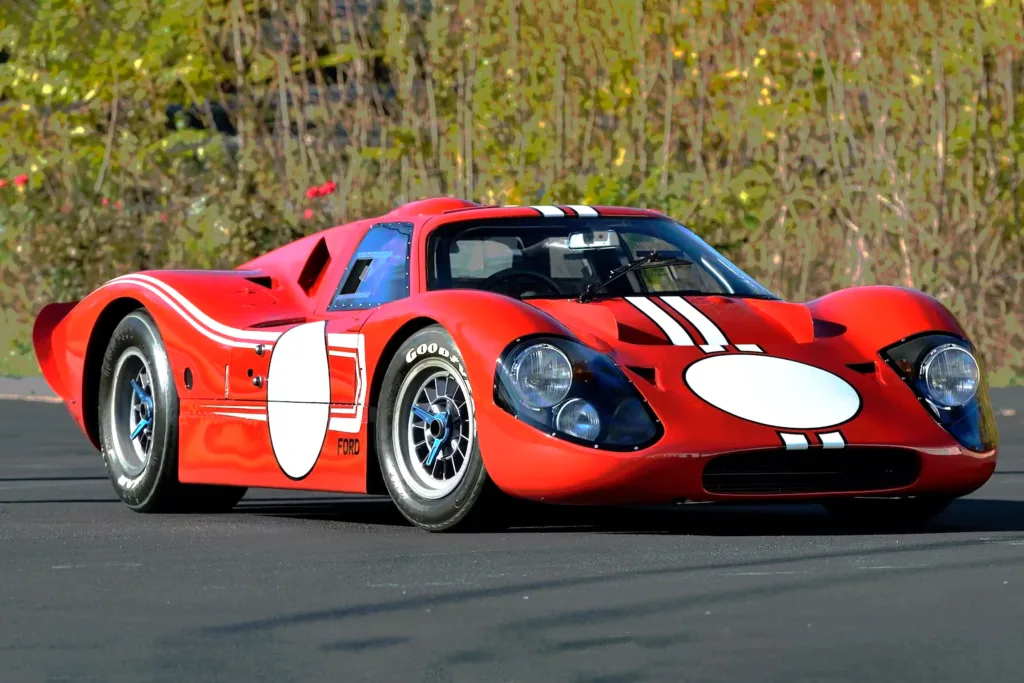
The veteran team of A.J. Foyt and Dan Gurney, along with others like Mario Andretti and Dennis Hulme, were chosen as drivers. Foyt and Gurney’s Mark IV took the lead and held it. After nine hours, Ford held the top three places. Hulme set a new average speed record of 238 km/h (148 mph). Unfortunately, Andretti crashed, and two other Mark IVs piled up behind him.
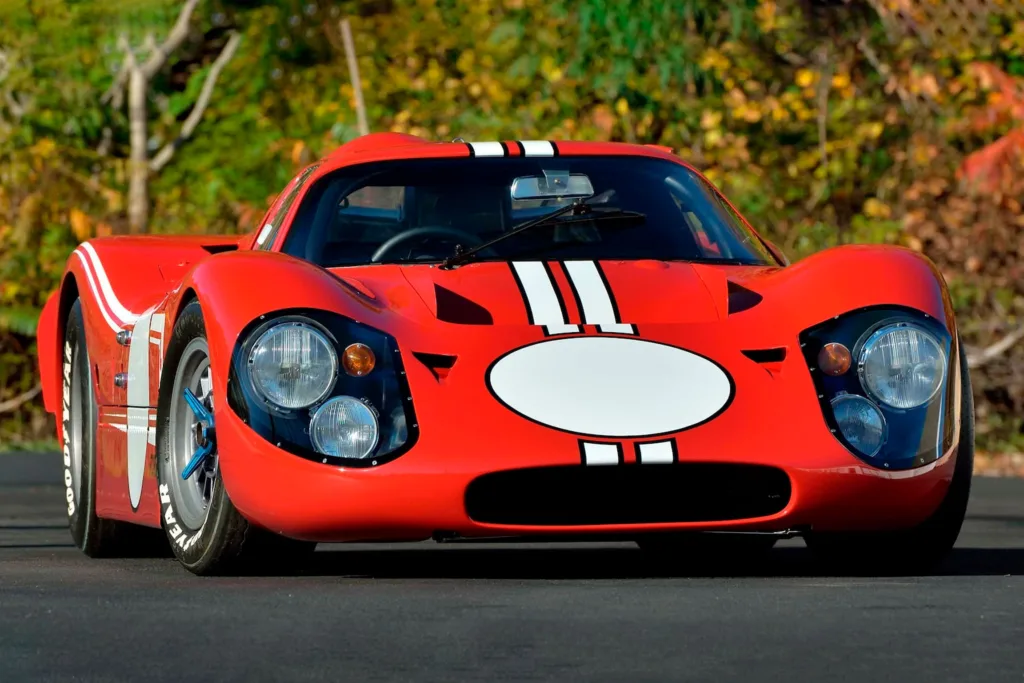
On Sunday morning, Ford still led, but two Ferraris chased the leader. Gurney and Foyt maintained a confident five-lap lead and took the victory, followed by two Ferraris and one older GT40 in fourth. Henry Ford achieved his American victory, which reportedly cost him nearly a billion dollars (adjusted for inflation, the total estimated cost of the GT40 program was over $500 million in 1960s currency, making it an extremely costly project).
The GT Project Ends and the Legend Lives On
The GT40 project was immediately concluded; Henry Ford had won and lost interest, with nothing left to prove. However, independent teams continued to race the GT40 for several years.
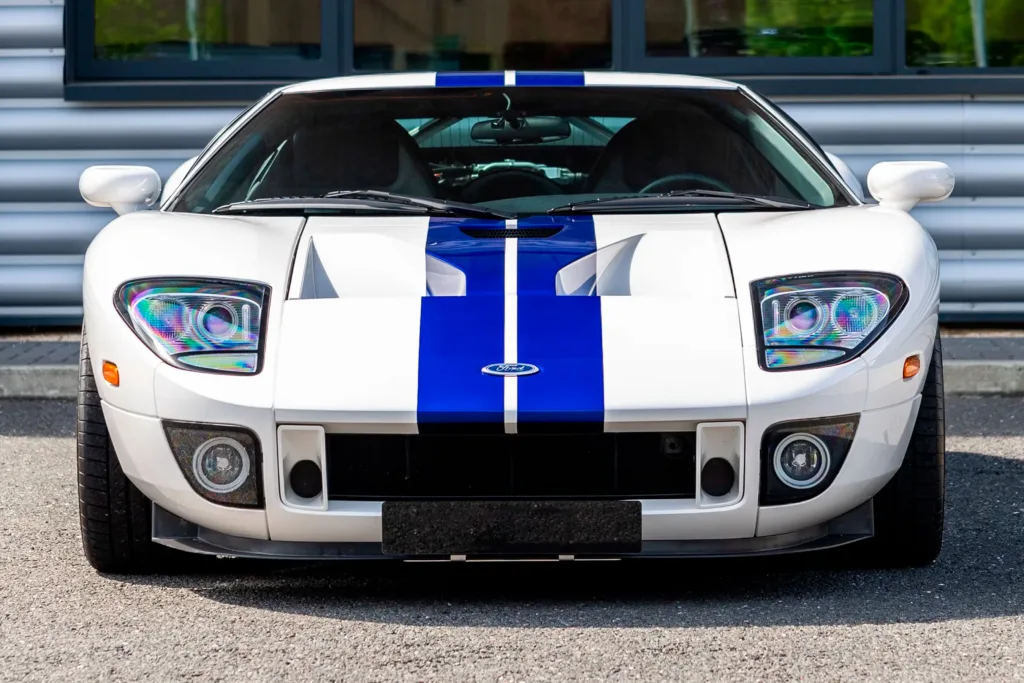
Three Ford Vice Presidents, discussing a modern GT40 on a corporate plane, decided to launch a new GT concept. Design chief J Mays sketched the idea on a napkin, and the new project was born. The challenging task for the designers and engineers was to create a car that honored the past yet was completely modern. Just over a year later, the new GT appeared. It was 45 cm (17.7 in) longer and 10 cm (3.9 in) taller than the original but its shape immediately evoked the classic GT40.
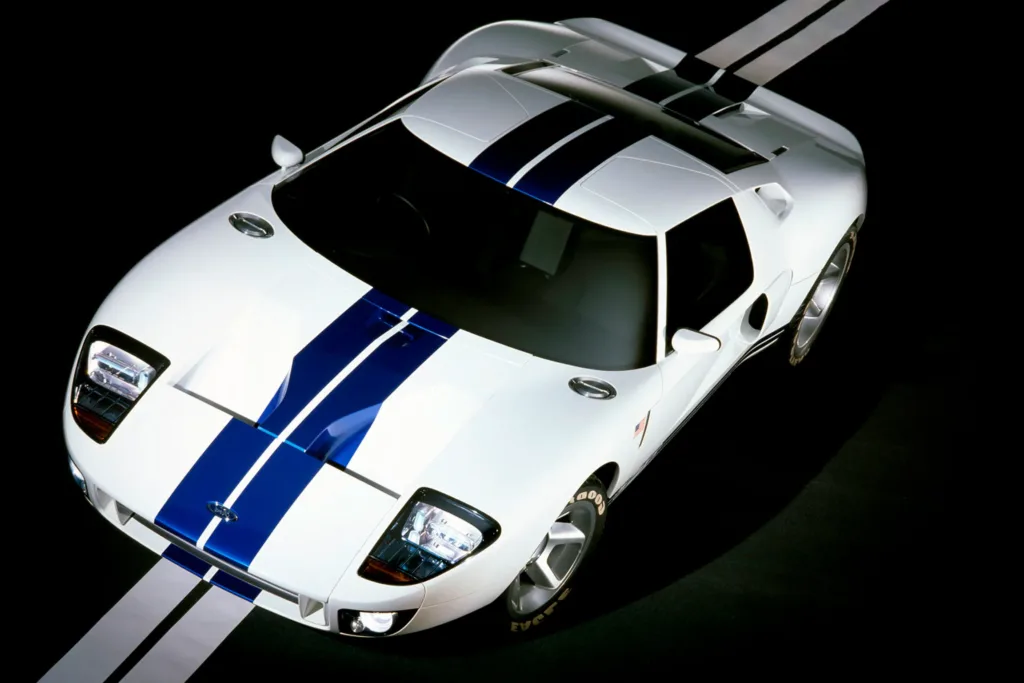
The design successfully captured the original’s long front overhang and sensual forms. The team managed to prepare the vehicle in time for Chairman Bill Ford to drive it at the opening of the company’s 100th-anniversary celebration.
The new GT recalled the glorious racing machines of the 1960s, driven by legends like Jackie Stewart.
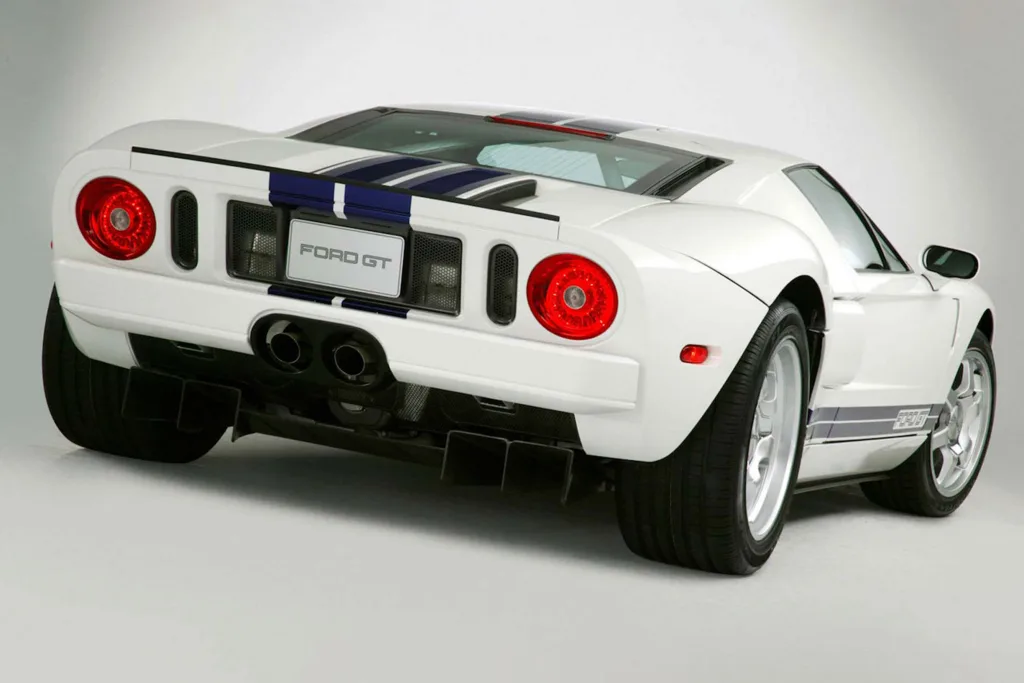
The 1960s cars conquered the world, defeating Ferrari on the most famous racetracks, and creating a legend that lives on today. The 2004 Ford GT once again challenged Ferrari, this time on American streets. The all-new Ford GT was released in honor of the American supercar that changed the history of high-speed car manufacturing.
The Second Revival: The Ford GT (2016) and Modern Racing
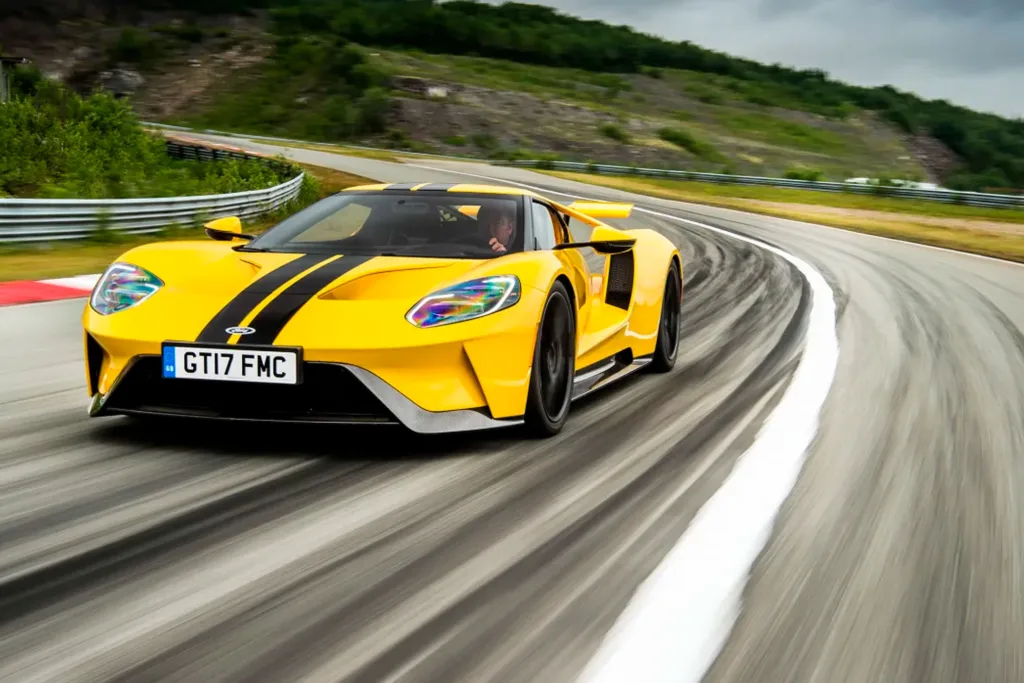
The 2004 Ford GT production ended in 2006. However, in 2016, Ford introduced a new generation of the supercar, the Ford GT (Mk III), to mark the 50th anniversary of its 1966 Le Mans victory.
A New Design Philosophy
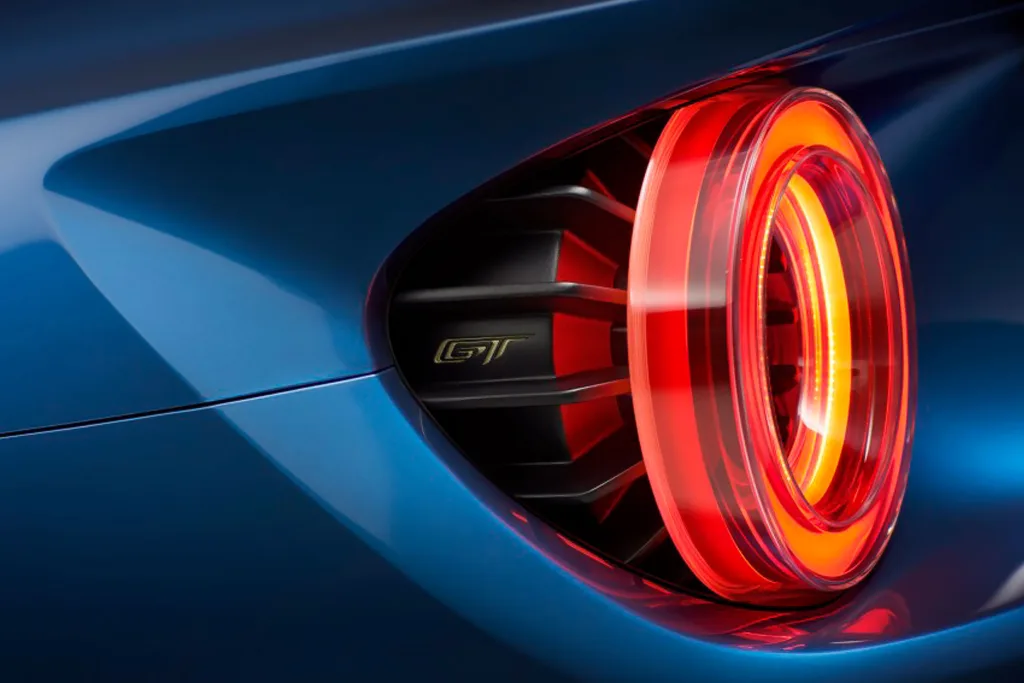
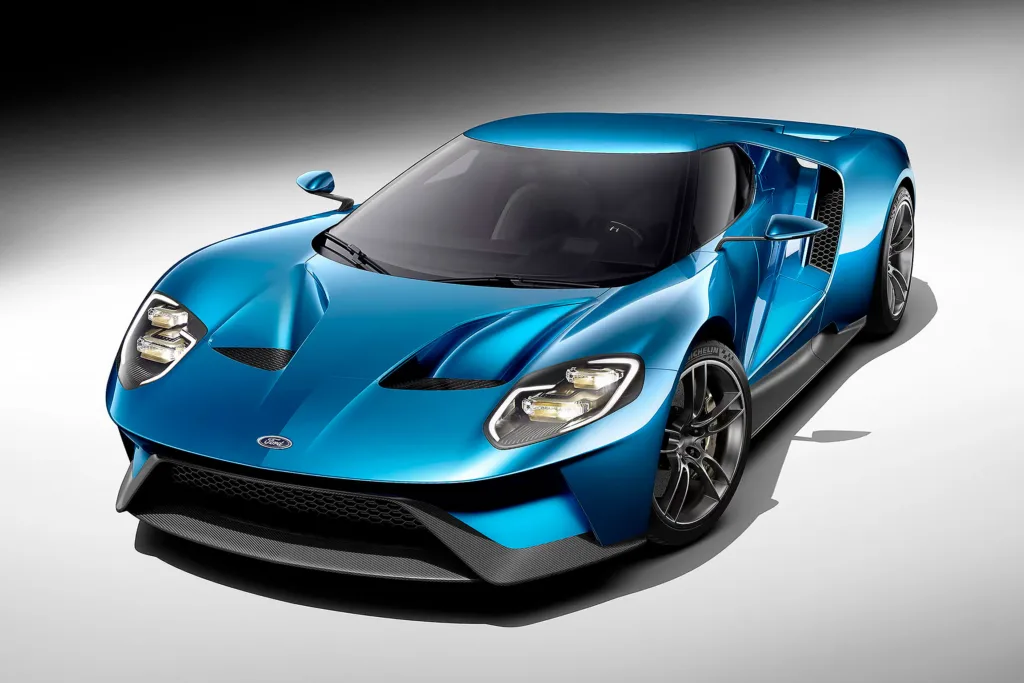
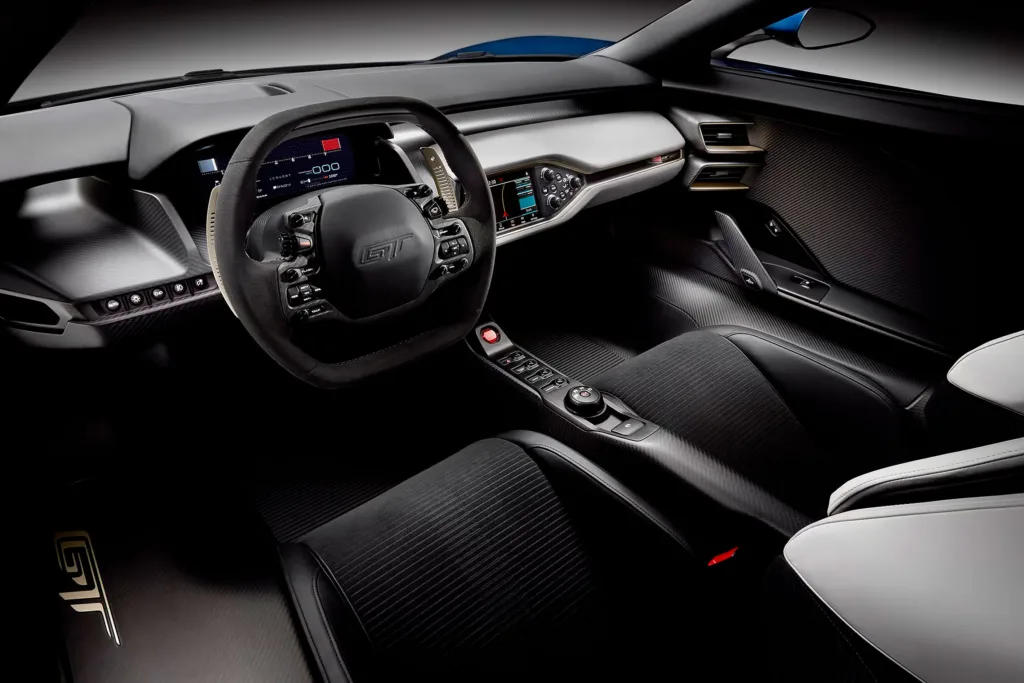
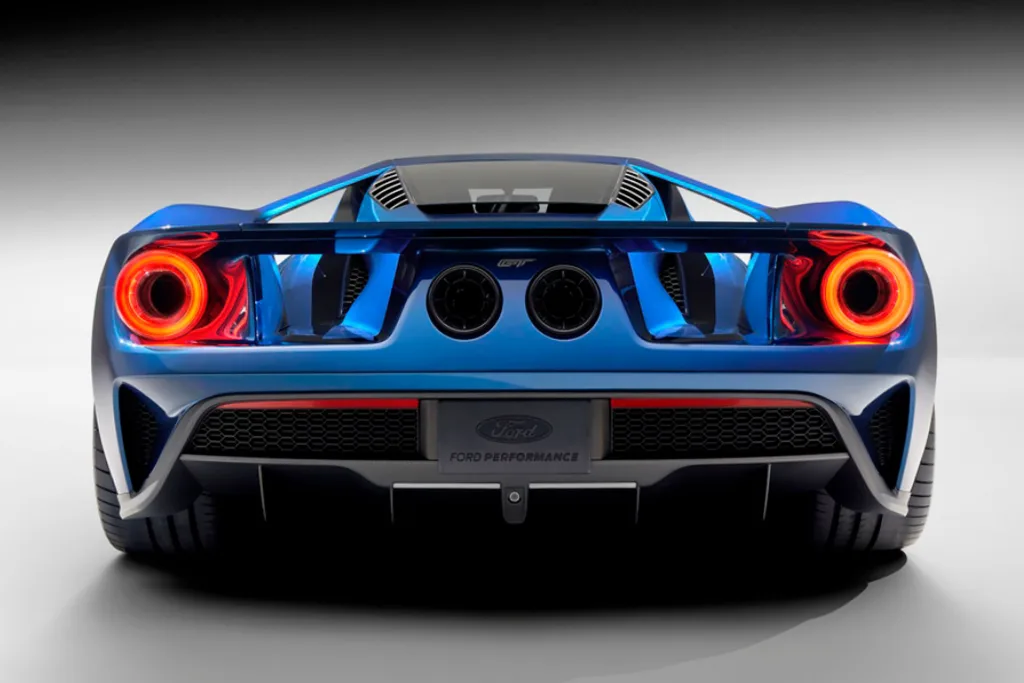
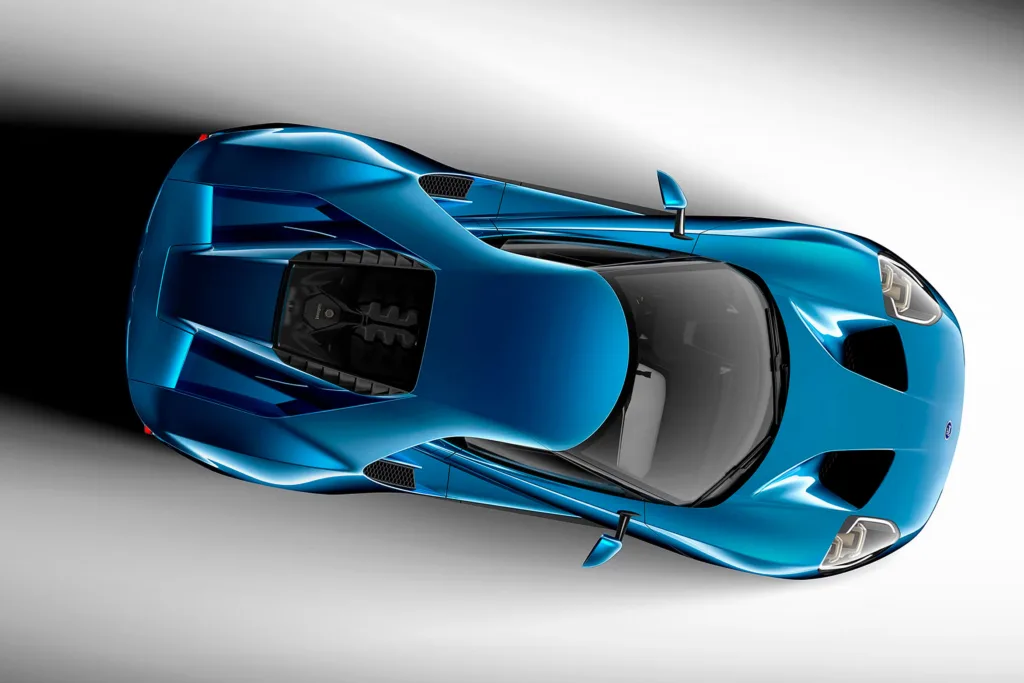
Unlike the 2004 model, which was retro-styled, the 2016 GT features a hyper-modern, aggressive design defined by extreme aerodynamics. Its unique shape, incorporating flying buttresses and advanced active aero elements, was driven purely by performance. The car uses a carbon fiber monocoque chassis and features an unexpectedly smaller engine: a 3.5-liter EcoBoost V6 producing over 647 horsepower, demonstrating Ford’s modern focus on efficiency combined with extreme power.
Return to Le Mans
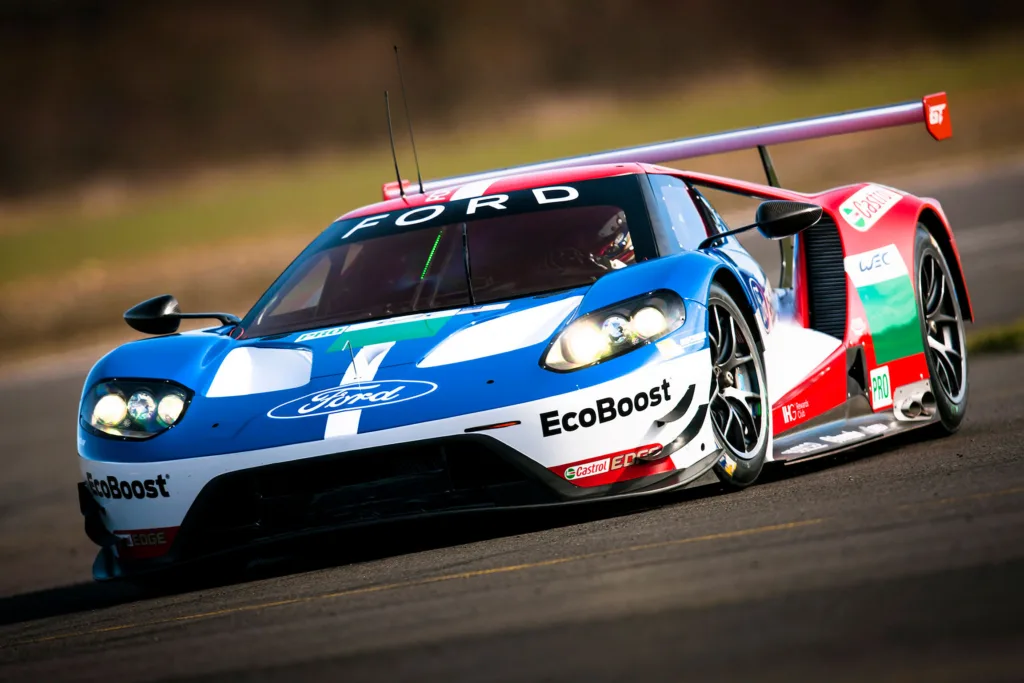
The primary reason for the new GT’s development was a return to racing. Ford entered the 2016 24 Hours of Le Mans with a factory team of four Ford GT race cars in the GTE Pro class. Exactly 50 years after the original victory, the new Ford GT won its class, beating Ferrari again and proving the enduring dominance of the GT nameplate.
Production and Collectibility
The production run for the 2016 Ford GT was highly exclusive, limited to approximately 1,350 units globally and requiring a selective application process for potential owners. Its limited availability, cutting-edge technology, and racing heritage have made it an instant collectible, ensuring the Ford GT legend continues to represent the pinnacle of American performance and a lasting challenge to the world’s elite automakers.