Meet the ultimate underdog of the Green Hell. Read how a swapped first-gen Dacia Logan survived crashes and penalties to conquer the Nürburgring 24 Hours.

Tap or click to follow to the podcast page
When the grid aligns for the legendary ADAC Ravenol 24 Hours of Nürburgring, global attention naturally gravitates toward the elite. The multi-million dollar factory SP9 teams, cutting-edge aerodynamics, and high-profile grid entries dominate the headlines.
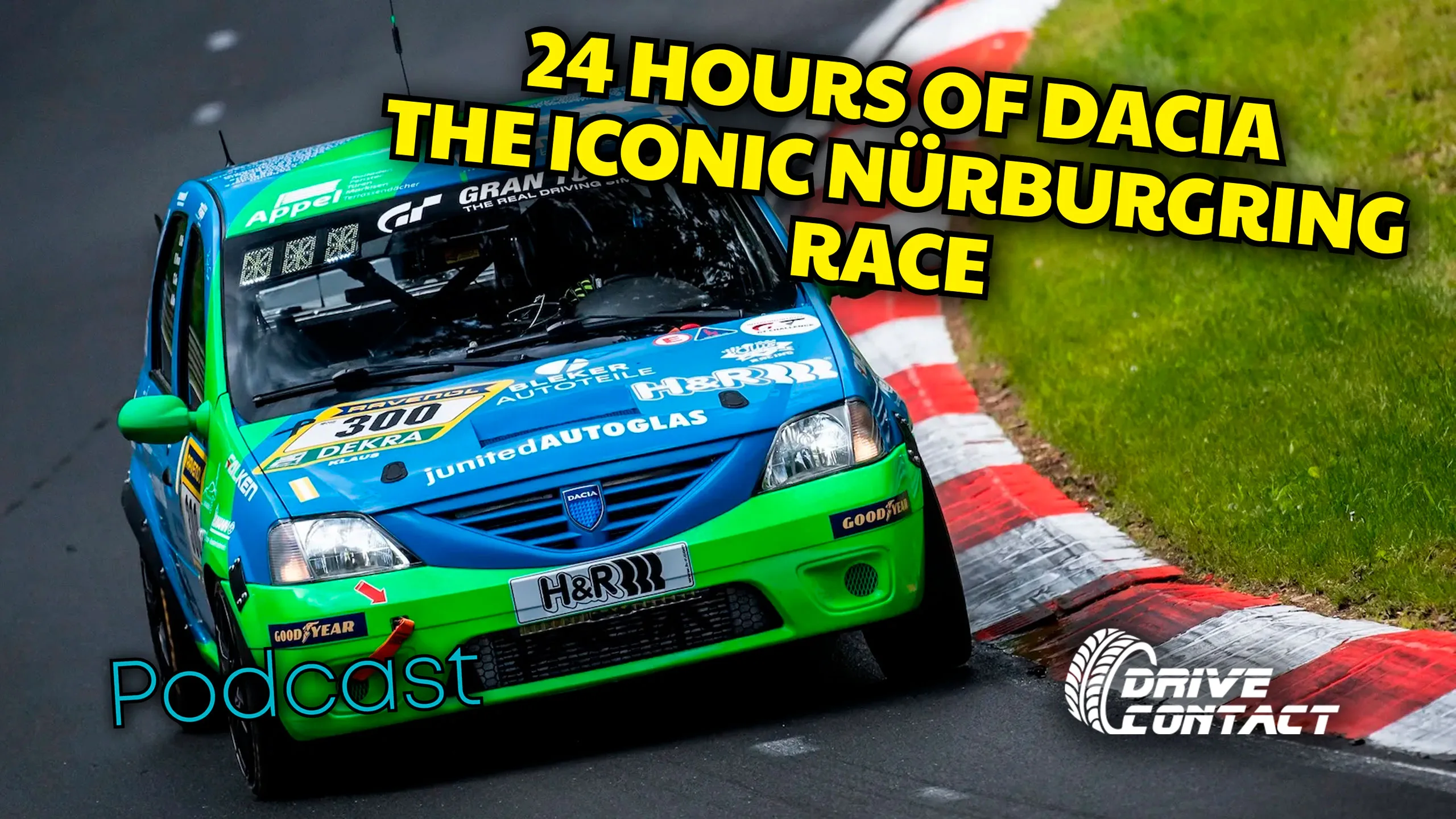
But as the grueling reality of the Green Hell unfolded during this year’s mid-May marathon, the global motorsport community didn’t lose its heart to a pristine GT3 machine. Instead, the undisputed icon of the weekend was a bright blue and green, first-generation Dacia Logan sedan carrying the number 300.
Engineering an Underdog: The Tech Breakdown
This was no novelty parade lap. Built by Olli’s Garage Racing—a dedicated German privateer squad backed by crowd-funding and sheer passion—this vehicle represents the absolute pinnacle of “slow car fast” engineering. To survive the Nordschleife while sharing asphalt with elite factory prototypes, the team executed a serious mechanical overhaul:
- The Powerplant: The sluggish, factory commuter engine was replaced with a heavily tuned Renault Megane RS turbo engine, sending a fierce 280 horsepower to the front wheels.
- The Drivetrain: Power delivery is managed via a genuine 6-speed sequential gearbox built to handle intense track abuse.
- The Pace: During qualifying, the brick-shaped sedan shocked the paddock by clocking an 11:03.438 lap time, reliably outrunning several specialized BMW 325i entries and cup-spec Audi RS3 LMS DSG cars. On the massive Döttinger Höhe straightaway, the Logan achieved a verified top speed of 178 km/h.
Chaos, Crashes, and the Will to Finish
Endurance racing on the Nordschleife is a test of resilience, and the No. 300 crew faced an uphill battle from the first turn. The team inherited a five-place grid penalty before the green flag even dropped due to an unauthorized U-turn during practice sessions, followed later by a 74-second stop-and-go penalty for a Code 60 speeding violation.
Mechanically, the engine suffered from severe, persistent misfires above 4,500 RPM. The solution? The paddock pit crew manually replaced the camshaft sensor during every single routine stop.
The true test arrived with less than three hours remaining in the race. Trapped in dense multi-class traffic, the Logan suffered a violent collision with the barriers, completely ripping away the front-left wheel assembly. For a corporate team, a structural impact of that magnitude is an immediate day-ender. For a grassroots team, it’s just another setback.
The Spirit of Car Culture
While elite, factory-backed entries suffered late-stage retirements due to catastrophic mechanical failures, the mechanics at Olli’s Garage Racing spent hours thrashing in the garage. They hammered out the sheet metal, replaced the suspension links, and rebuilt the front end.
With only minutes left on the clock, the battered, reassembled Dacia Logan rolled back onto the tarmac. Under immense cheers from the trackside crowds, it crossed the finish line to claim 107th place overall and secure an official finish.
This is the exact ethos behind DriveContact. It’s a powerful reminder that automotive culture isn’t defined by corporate budgets or wind-tunnel testing. It is driven by the raw desire to build something unique, push it to the absolute limit, and refuse to back down when the wheels come off.
🎧 Want the full story? Listen to the audio breakdown on the latest episode of the DriveContact Podcast!